Interviews
Carrie Mae Weems Gets to the Heart of the Matter
The artist reflects on how ideas of history, identity, and power have always informed her acclaimed photography.
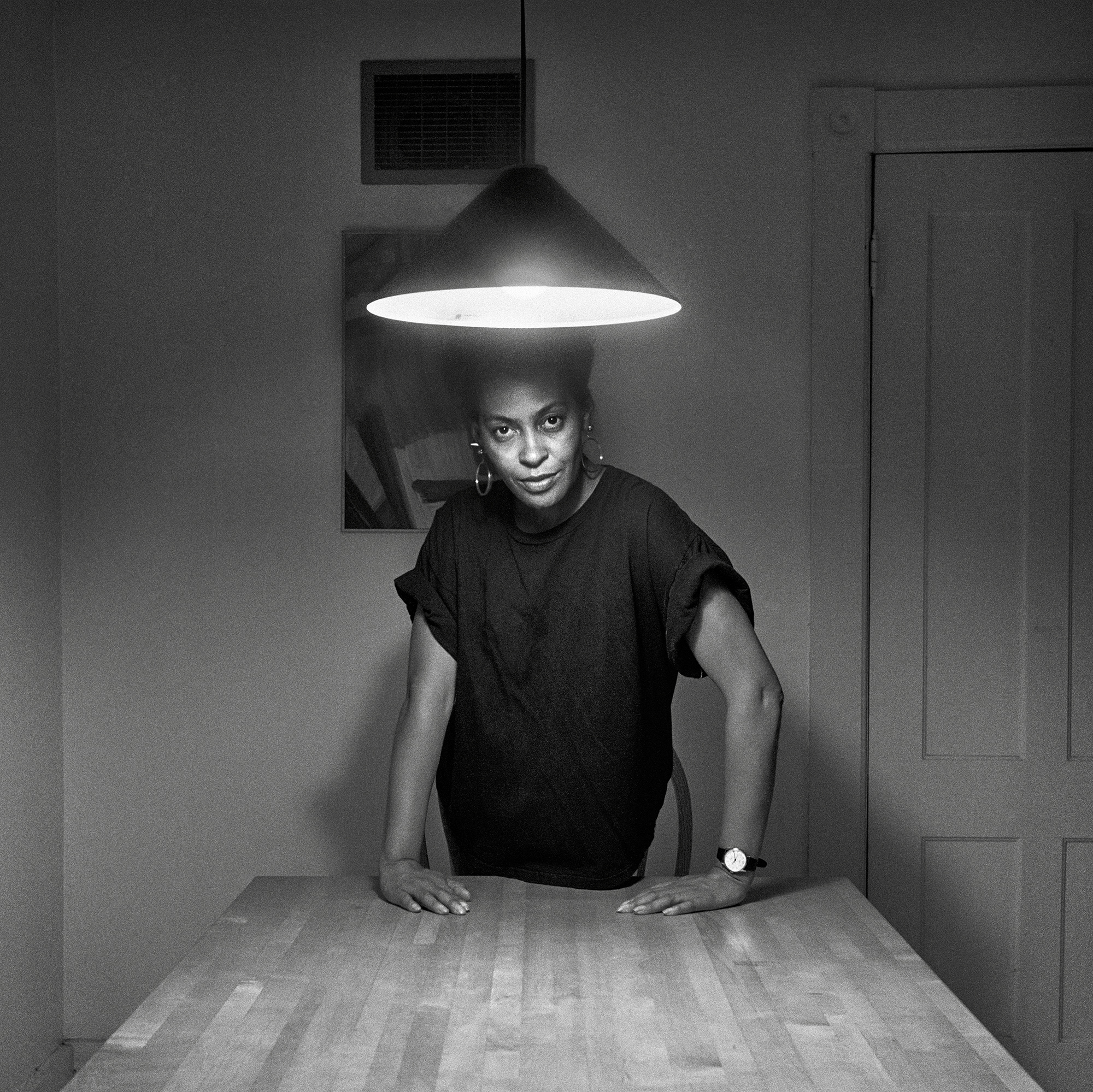
Carrie Mae Weems is a touchstone artist, renowned for her work investigating history, identity, and power. Last year, Aperture and Allemandi Editore copublished The Heart of the Matter, a comprehensive monograph that gathers Weems’s landmark bodies of work from Family Pictures and Stories (1978–84) to her most recent series on the Black Church. Transcending medium, chronology, and geography, the volume puts Weems—as well as her spiritual and philosophical journeys—at the center of the discourse, underscoring the singular value of her vision in grappling with the complexities and injustices of the world around us.
Accompanying the book is a related touring exhibition I curated, which first premiered at the Gallerie d’Italia, in Turin, and opened this month at the Fotomuseum Antwerpen. Here, we revisit our conversation (condensed and edited for clarity) from last April in Turin, in which we discuss translating five decades of work into an exhibition, how spirituality and artistic vision are interwoven, and the multifaceted layers of self.
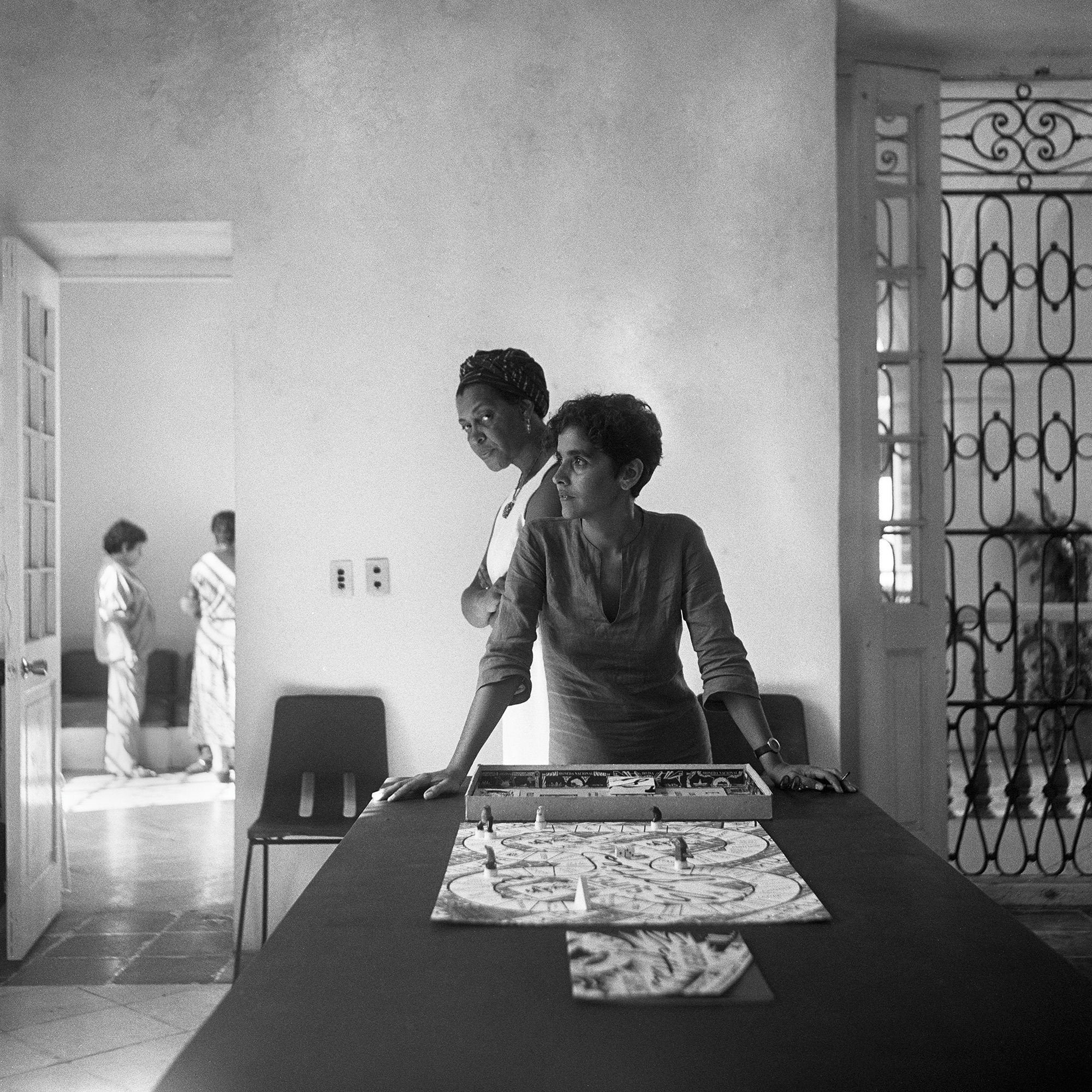
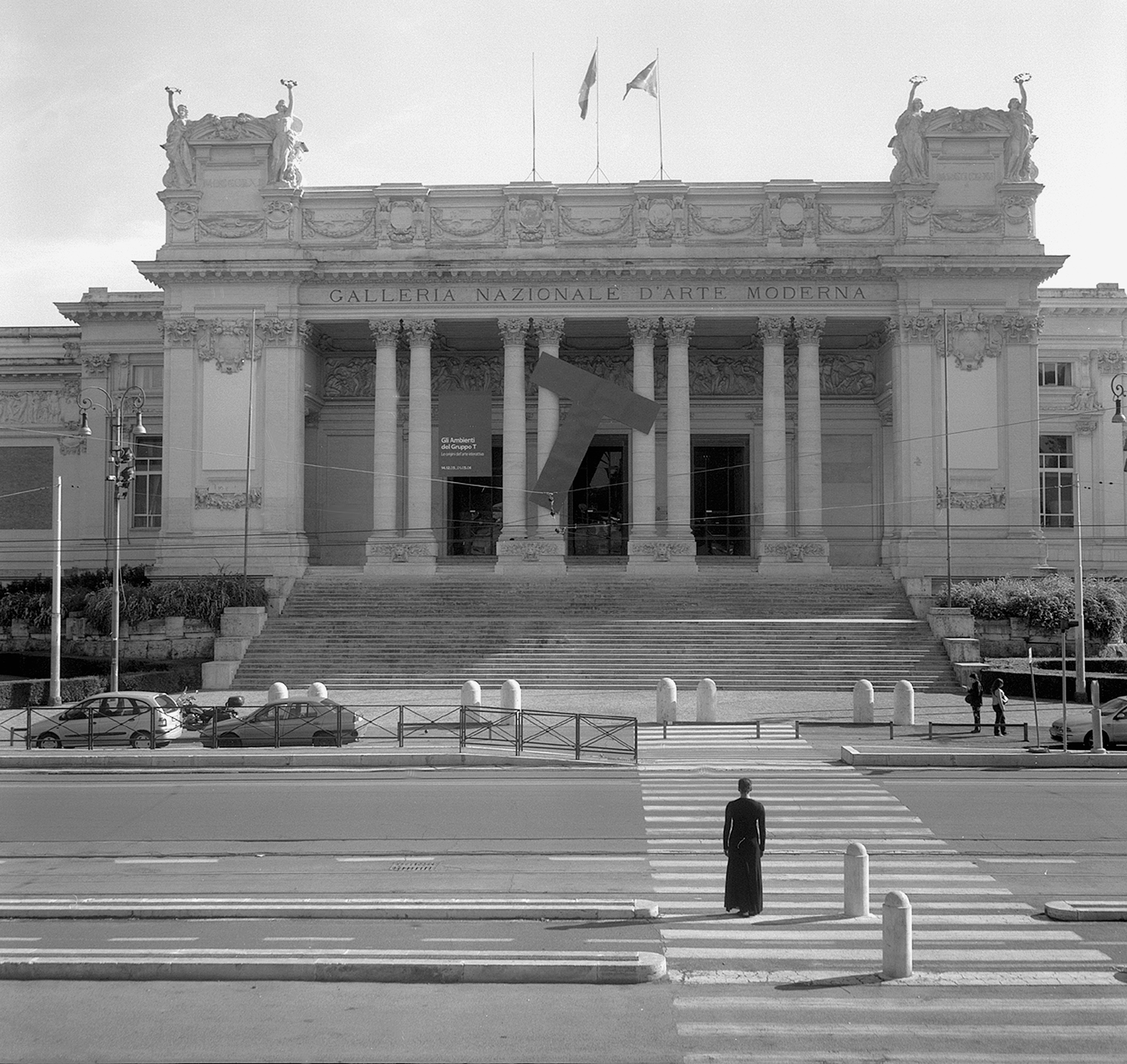
Sarah Meister: So, first, I just want to say thank you, Carrie. Thank you for the joy of working on this show. Thank you for sharing these works. We are going to make this a true conversation, although because I’m a photo nerd, I have questions written down.
The esteemed American scholar Henry Louis Gates Jr. noted in 2012 that there is “little space between Weems and her work.” I think what he meant was that Carrie is someone who lives her life intertwined with her work in ways that bring it particular power and meaning. In some ways, that was the inspiration for the structure of this show, putting that “little space” at the heart of the conversation. With that personal spirit in mind, I want to begin by asking, How are you feeling? This big show just opened last night. Here we are in this amazing room surrounded by your work. How are you doing today?
Carrie Mae Weems: I’m really exhausted. I’m really tired. And I’m also really excited. I think the thing that’s most interesting for me in doing any exhibition, first of all, is that I get a chance to see the work because I don’t have wall space in my home big enough to see most of my work. So it allows me to really see the work, and it allows me to see the ideas. It also really allows me, as I feel as though I’m a part of the audience, that I’m not simply the maker but that I’m the audience experiencing the work along with you. And there’s something interesting about that, right? That sense that you’re right there, that there is very little separation between me and the work. And so, I am always operating in some way as a participant-observer in the work, that I am both in it and outside of it.
And being outside of it allows me to see it. It allows me to see the problems, but it also allows me to see the resolve. And it also allows me to see a kind of persistence of vision that has happened over a long period of time. And so, to that extent, I’m really grateful for the opportunity to be showing the work and sharing the work here at Gallerie d’Italia. It’s really exciting and more than I actually anticipated.
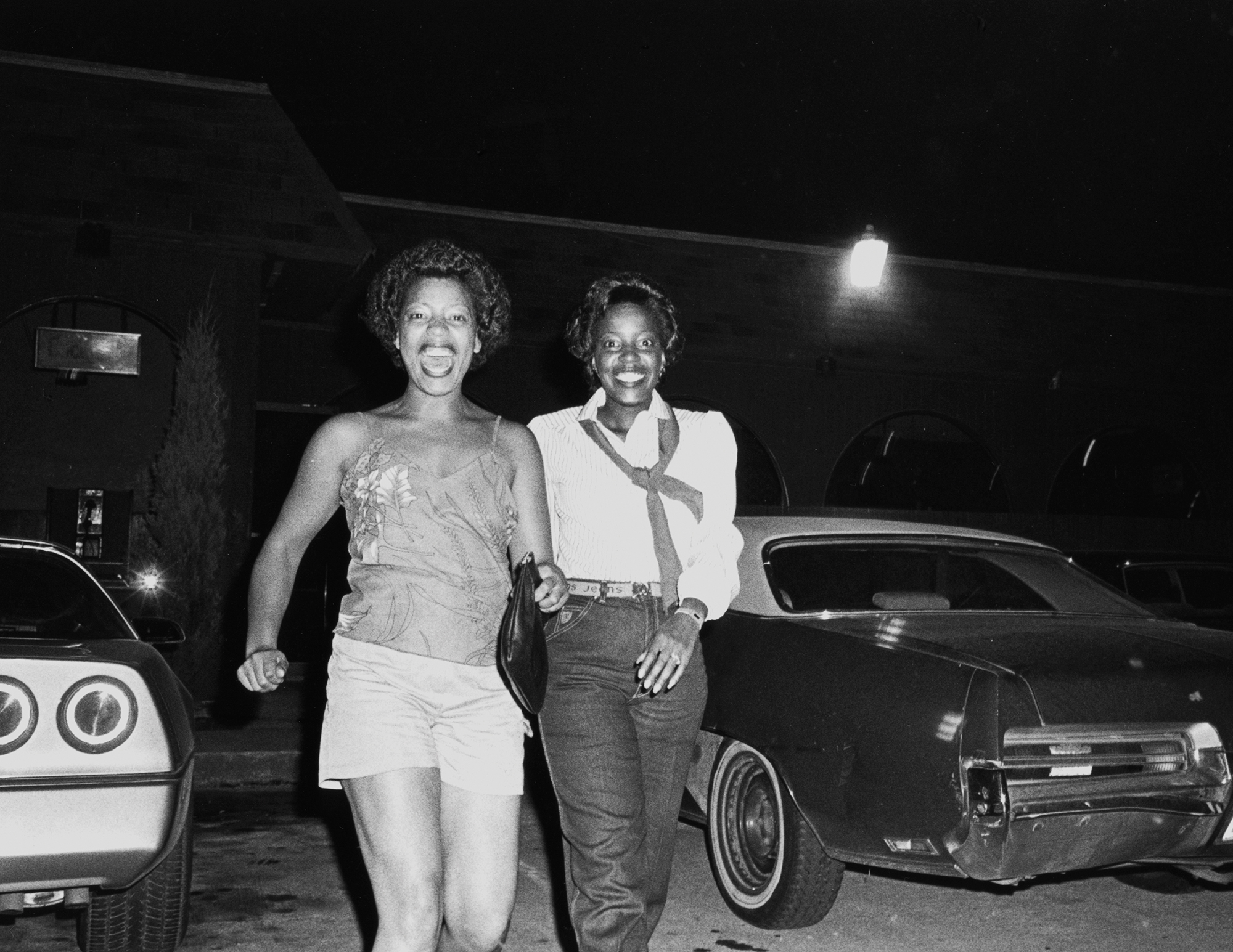
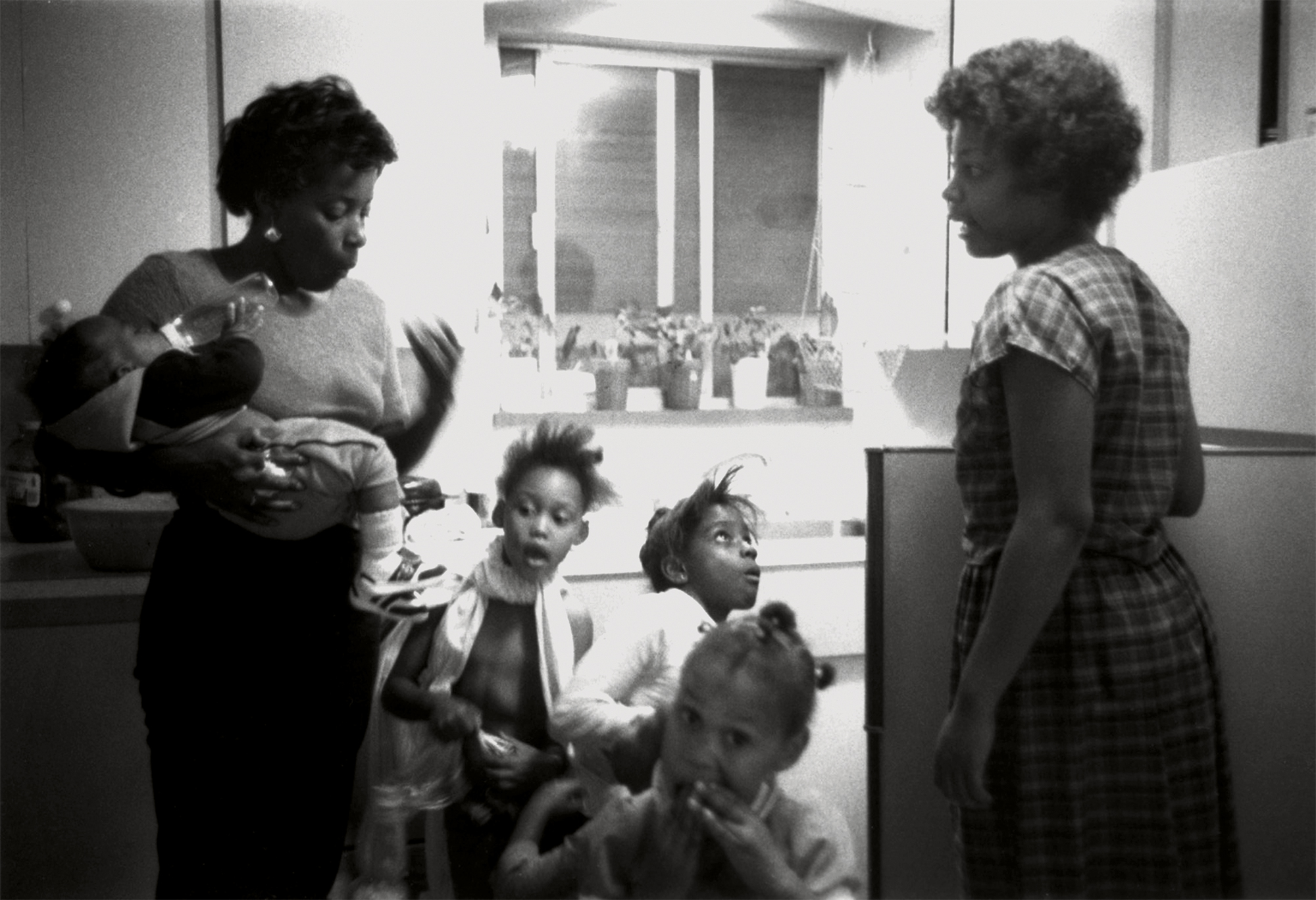
Meister: That persistence of vision was actually part of my second question because while this is a retrospective that covers five decades of achievement, there are certain concerns that were central focal points from the start. I’m thinking of Family Pictures and Stories, for instance, which is installed here next to Leave Now!, which was made much more recently. Each of these engages with your family history. And I’m curious when you think about how much time has passed since the person you were in 1978, when you started Family Pictures and Stories, and now. Can you reflect back into where you were when you started this journey and how it feels to see those works now?
Weems: Somehow, I’ve always had this feeling. I wonder how those of you in the audience also feel. I’ve always felt that I was exactly the same person. I remember being eight years old, about seven or eight, sitting on the back porch of my house at sunset, looking out at the sky, wondering who I was and what this universe was, what this world was that I happened to be living in. At eight years old, I already felt like an existentialist. But this sort of feeling that you are who you are, that you are who you are and that the thing that you are changes over time is simply you growing deeper into yourself, and you’re learning to express yourself more specifically, in more complicated ways as you age. But that feeling, the feeling that I’ve always had has been very, very persistent. So the ideas of beginning with something like Family Pictures and Stories and ending with something like Leave! Leave Now! or, for that matter, Preach, they’re all out of the same package. They’re all out of the same suitcase. It’s all out of the same luggage, right?
I am Carrie Mae Weems, the daughter of Myrlie and Carrie Weems. I have six brothers and sisters. I am and we are the children of sharecroppers. And that understanding of where I come from, where my family comes from, how my family evolved, and their relationship to other families is socialization that has simply been a part of my imagination for a long period of time. And so, while Family Pictures and Stories was made forty-five years ago, it looks exactly like Preach, and Preach looks exactly like Leave Now! And all the material is essentially the same because all the material is really coming from someone with a very particular kind of DNA. And I just want to say one other thing about this, this idea that you have this sense that you are who you are, and you are that from the very beginning. And the thing that’s changing all the time is your ability to express who you are now, who you are now, right? So you’re growing deeper into yourself. But the thing that’s amazing and extraordinary to me about who we are as individuals and the power of that is that every single thing that you have touched in the course of your life carries your DNA. That seat that you’re sitting in will carry your DNA. This layer upon layer, upon layer, upon layer, upon layer, upon layer, upon layer will carry your DNA. And that idea of tapping into the possibility of understanding the magnificence of this, that you are leaving behind remnants of yourself everywhere you go is really a fascinating and extraordinary idea.
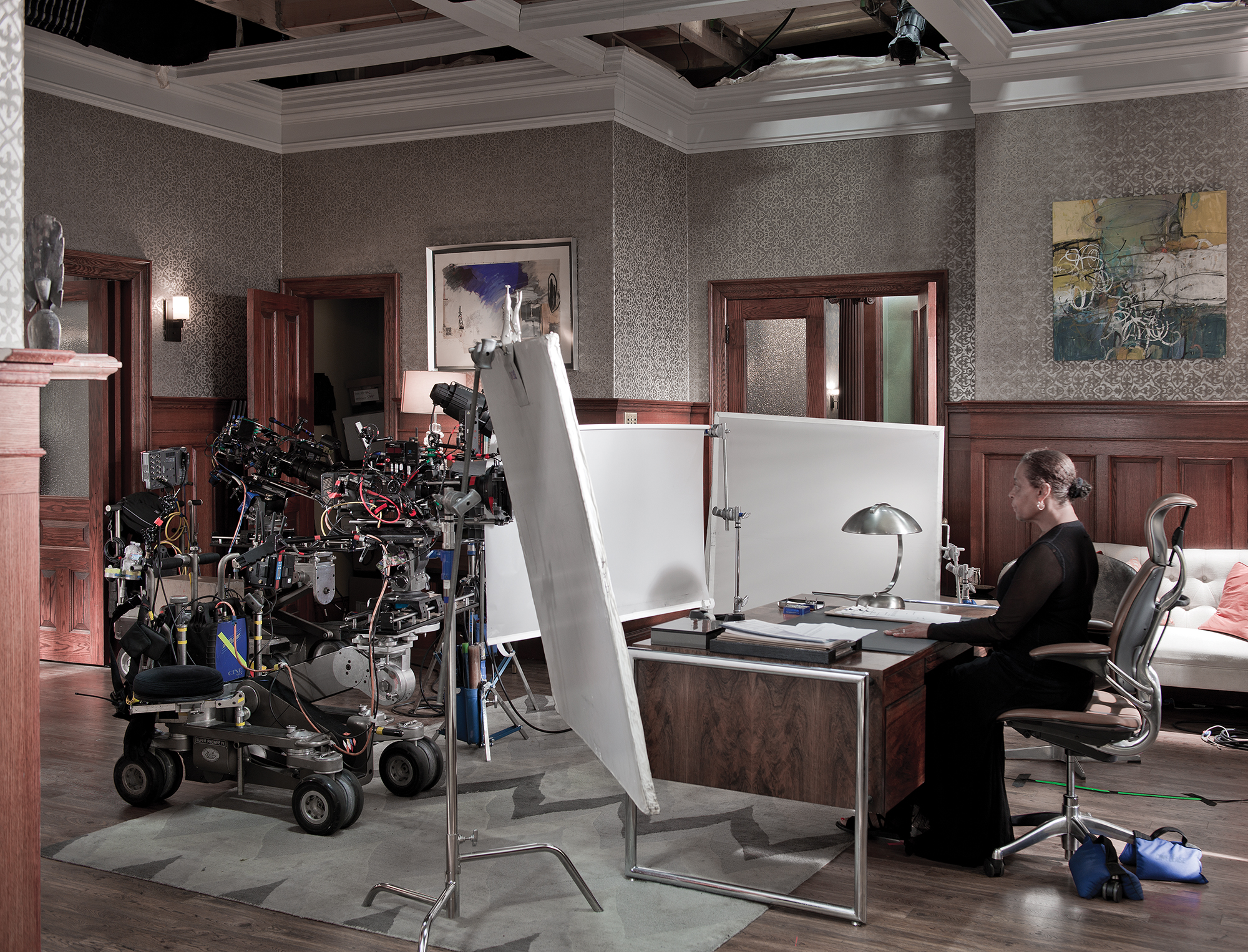
Meister: Wow. It’s interesting. I’m not sure if I have ever thought of myself as the same person I was as an eight-year-old, but I think there’s a real truth to that. Part of what I’ve loved about this project is that, for all that I can read about you and all that I can study about the work, it feels like there’s always something more to learn. That wasn’t how I thought you were going to answer that question.
Weems: What did you think I was going to say?
Meister: I guess I was approaching it from a more art-historical perspective, in terms of how you were using a documentary-style image and text to approach, to question, the very authenticity of a language of family albums and photographs. And then, I see those same documentary photographs reemerge in Leave Now! in a very different way. But I actually prefer your analysis. That just wasn’t what I was expecting.
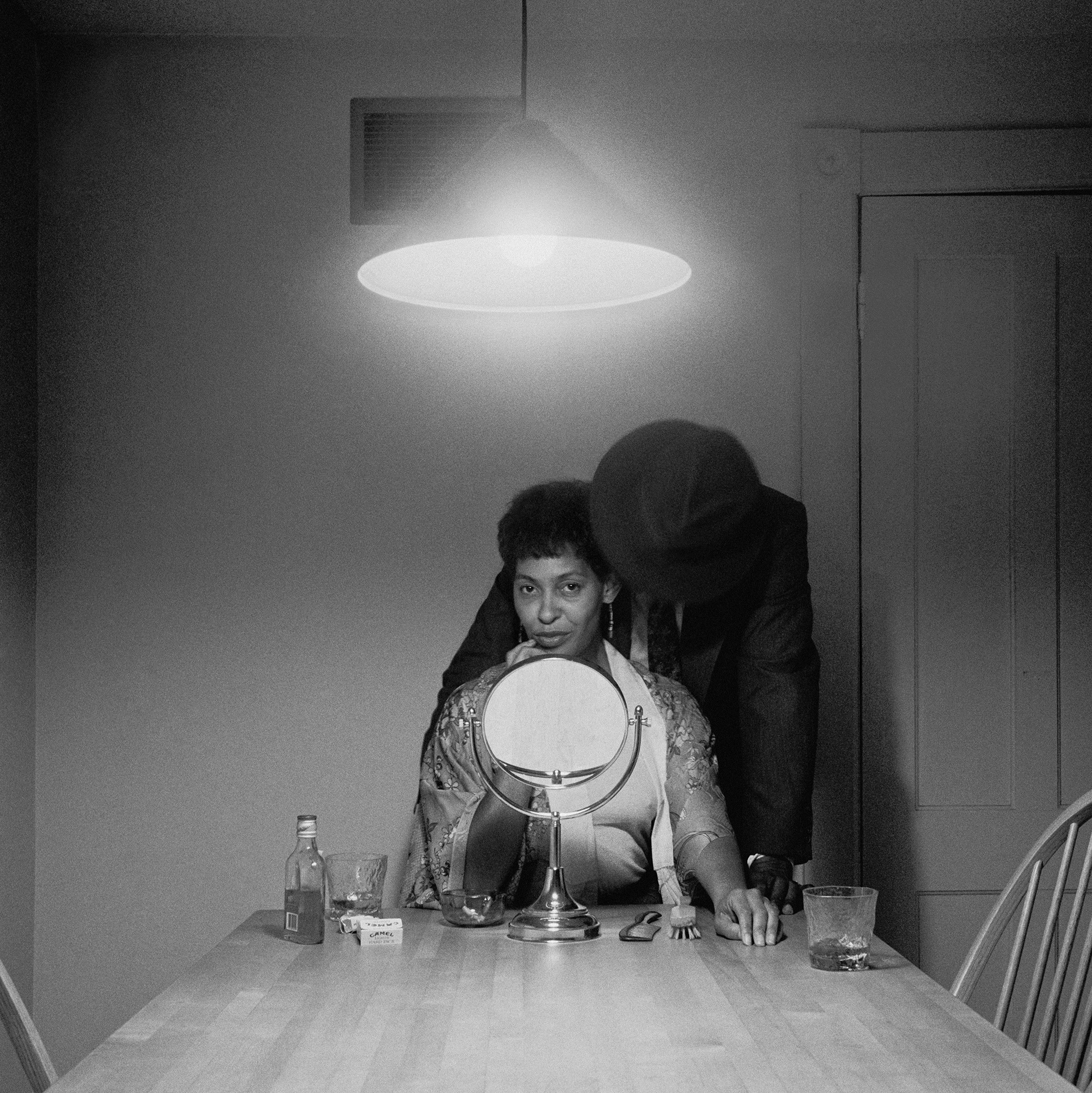
Weems: No, you’re not wrong. I think that there was something . . . It’s really interesting to look at, to compare Family Pictures and Stories, for instance, with Kitchen Table Series. At a certain point, one of the things that became important to me as an image maker was that I was not interested in moving through the world and just taking photographs of people indiscriminately, that there was really a method, and that there was a respect for people in the world, and that it was inappropriate really to simply take someone’s photograph and put it on a wall and claim it, right? That there had to be another way. And so, finding that way, finding a way to use the material, to use the tool of photography as a way of inscribing became very important, but also how to bend it using documentary, using that mode, right? Using that kind of expression, but then developing something like the Kitchen Table Series so that it feels as though it’s a documentary, a set of images, but really it’s simply highly constructed.
So that actually became the challenge of how do you make an image now, knowing what you know, having your moral ground where it stands. How do you then interact with both the subject and the object of the photograph? And so, that, of course, then led me into using my own body as a site and as a ground for that kind of exploration, moving from documentary, paying attention to documentary as a wonderful and powerful form, a narrative form that had such ability and expansiveness, but then bending it in a way that allowed me to play with the field and the form in, I think, a rather unique way.

Carrie Mae Weems: The Heart of the Matter
75.00

Meister: Another thing that I learned about you over the course of this project is that you are a deeply spiritual person, that religion plays more of a central role in your life than I had understood. I had an inkling when I first read this quote from an interview you and Deb Willis did for To Make Their Own Way in the World: The Enduring Legacy of the Zealy Daguerreotypes (Aperture and Peabody Museum Press, 2020). You said, “I understood this photographic self to be a muse and a guide into the unknown miraculously.” And I think that word muse has a particular meaning we can get to—“The muse evolved out of my resistance to photographing people without permission. And in the process, I discovered an entirely new way of working and indeed discovered myself. Praise God.” And it’s really only over the course of doing this project that I realized that that wasn’t just about you grappling with questions of consent in photography. That was what suggested to me, like Skip Gates’s quote, that centering your self could be the organizing principle. You weren’t just a leitmotif. You as a muse, you as a guide, also feels like where you’re pulling us into Preach. Would you tell everyone here a little bit about how this new series emerged?
Weems: I’ll try. I’ll try. In one way or another, I’ve been photographing . . . I’ve been stepping in and out of churches for a long time, stepping in and out of churches for a very long . . . I’m actually not a deeply spiritual person.
Meister: Really?
Weems: I’m a big sinner.
Meister: You can be a sinner and be spiritual.
Weems: Right? Yes. No, right? I appear to be that way, right? It’s a wonderful trick.
Meister: You fooled me.
Weems: No, but I’m interested in it. And of course, as I age, as I age, this question of mortality is looming large. I wake up every morning like, I’m really still here. I am still here.
Meister: Thank goodness.
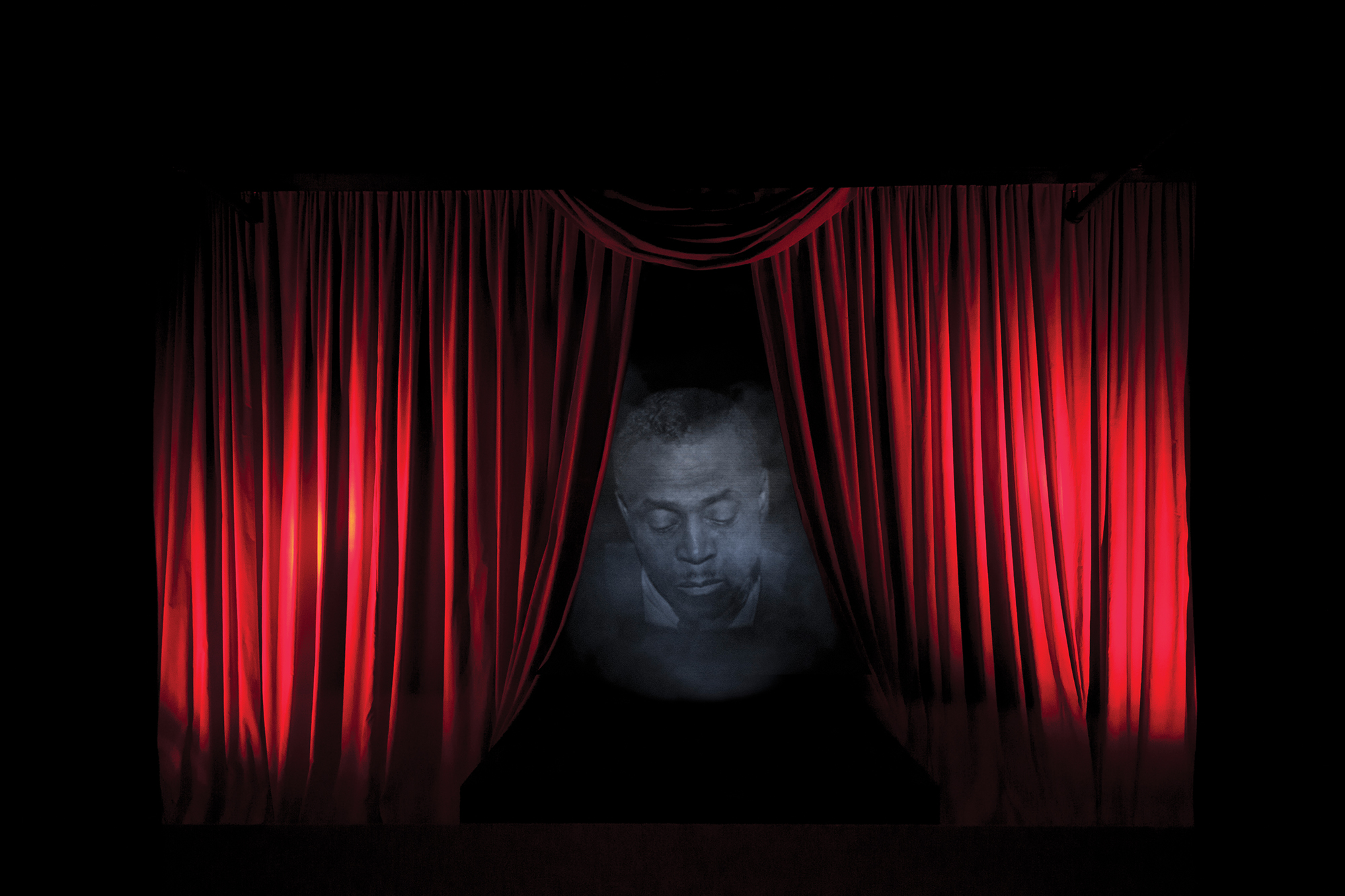
Weems: Thank goodness. And I have all these questions. And I think in part, I go to church. I have a church that I go to, and I very much like my pastor. It’s a very progressive church. The church in the Black community is unique. I have a couple of things that I’d like to say that I think are important that maybe haven’t become clear. I think of Preach as being a great sign and Family Pictures and Stories and Leave! Leave Now! as being extraordinary sites of resilience, of incredible resiliency.
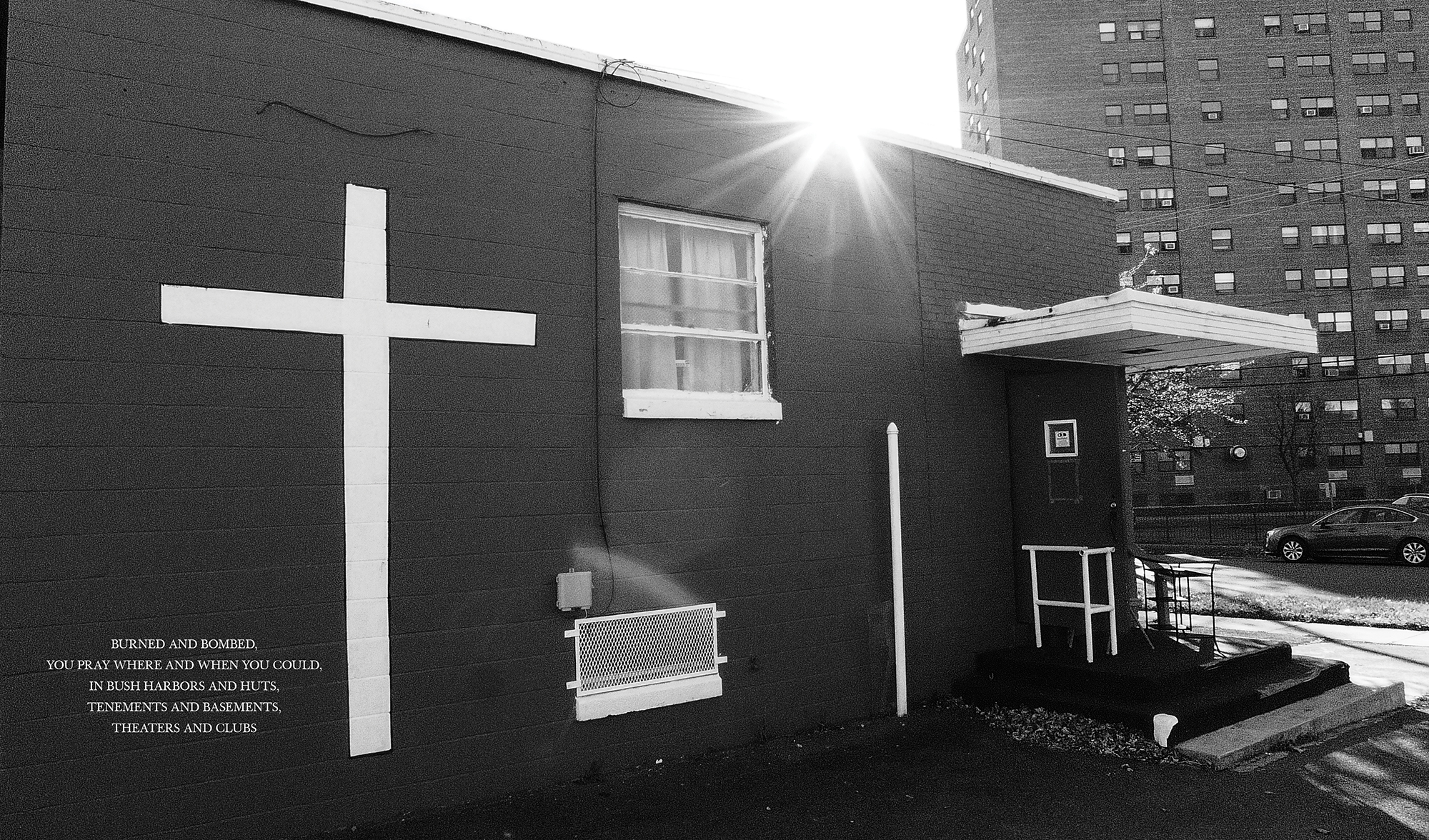
So, when I started looking at the church, I’d been photographing, as I said, in and out of the church for a very, very long time, thirty-five, forty-five years. The first photographs I made were actually in a Black church. The Black Church is a social organization. It’s a social tool. It’s not just for religion. It was really the fundamental way in which Black people in the United States primarily organized themselves for resistance. It was the one place where you could be safe. Every major civil rights movement in the United States was essentially organized within the Black Church, not the quote, unquote, “Black community,” in a sort of broad way, but rather in a very specific way.
So Martin Luther King Jr. arises out of the Black Church. Rosa Parks arises out of the Black Church. Malcolm X arises out of the Black Church. Muhammad Ali arises out of the Black Church. It’s a very important and, again, safe place. And at the same time, of course, the Black Church was always a church under attack. So they were bombed, they were burned, they were destroyed, they were hunted, and this, of course, continues to be true. The number of bombings that happen around Black churches continuously throughout the South is real. It didn’t happen fifty years ago or twenty years ago. It is an ongoing occurrence, right? Throughout the 2000s, there were Black churches bombed all throughout the South, burned all throughout the South. It doesn’t make a lot of news, but that is the reality.
And so, for me, going to the Black Church was not simply a matter of my spiritual practice, but rather going there as a site of community, as a space where Black people are allowed to be who they are in a society that ultimately does not welcome them and as a place where they are able to organize in a more consistent and persistent way. It’s a really important aspect to how the Black community and how Black people have actually formulated themselves in the United States. And it’s really very, very important. So, this idea about resiliency, about the ability to overcome, is one of the reasons that the church has been so important. And, of course, the great song “We Shall Overcome,” right? It’s anchored in the very root of the church and this idea that we should overcome. And the song is there for us all to know and all to hear. So, yes, I am a big sinner. I drink, I smoke, I curse, I swear, I hang out, and then, I go to church on Sunday and talk about it.
Meister: I suspect a few of us can relate.
Weems: So, this idea that there’s this crooked road, it’s very important. It’s very important. It’s very important to understand.

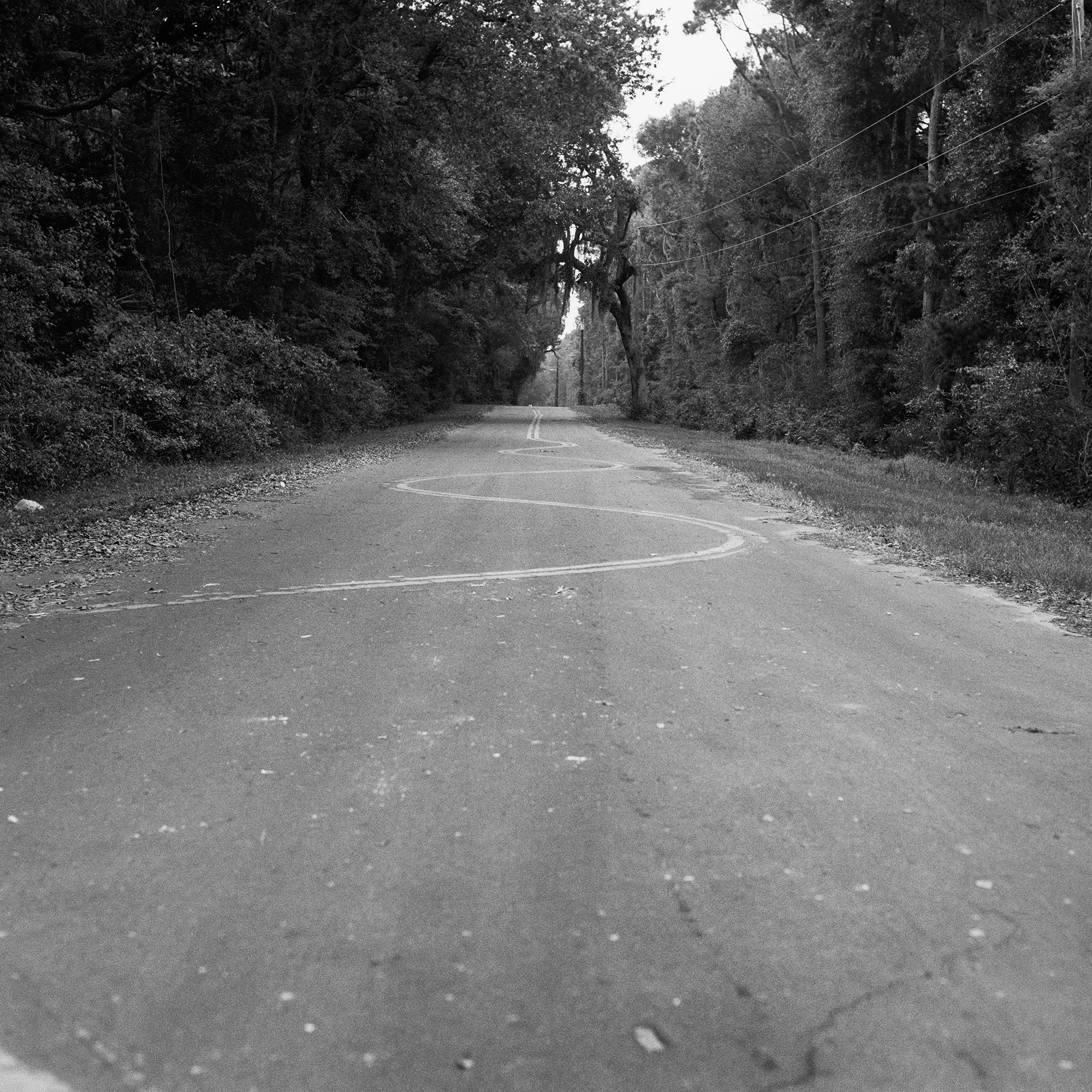
All photographs courtesy the artist and Gladstone Gallery, New York; Fraenkel Gallery, San Francisco; and Galerie Barbara Thumm, Berlin
Meister: That crooked road image is a recurring motif, a picture you made in the early ’90s, but that more recently has been integrated into Leave Now! and Preach in different forms.
Weems: One of the things that’s always interesting to me is trying to understand. I realized, for instance, that this work is very much in dialogue with my audience here, that it has the same kinds of questions that I’m asking or being asked here, perhaps in a slightly different way, but the issues and the ideas are fairly consistent.
I was wondering for you and for Antonio [Carloni, deputy director, Gallerie d’Italia, Turin], when did you decide that you really wanted to work with me. What was it about the work that you thought might translate well in a larger exhibition? What were you trying to get at, and why did you think that this work might be important to share with a larger audience?
Meister: Well, I’ll start by saying I think that now is a moment where being willing to ask where you’re coming from with respect to the most critical issues we’re facing as a society is important. The need to be brave and vulnerable, to hold to your convictions, but also, to actually listen. I think these are skills that you don’t have to be young or old, American or from anywhere else, Black or white, to know that these skills need our urgent attention. And to my mind, there is no artist whose work points in directions that all of us can follow to get us there more than yours.
Weems: It’s so interesting.
Meister: Ultimately, I think that when you put yourself at the heart of the matter that is not only an invitation to each of us, but it’s also an expectation. It’s asking us, “What are you doing?” And I think there’s a bravery in that. There’s a centeredness in that, and I think that, honestly, every human being on this planet would benefit from being in that space, from asking oneself the questions that you’re laying down. We should be picking them up.
Weems: And then, I’ll just say this as well. I’ve tried to very much live my life in a multifaceted way. I enjoy having friends from every conceivable walk of life. And so, my friends are Black, and they’re white, and they’re Jewish, and they’re Italian, and they’re French, and they’re Japanese. And it’s through that mix of having this dynamic life that matters to me. If being engaged with the politics of difference is important, then I really need to live my life in that way, right? That I need to have friends from and be in dialogue with a multiplicity of people in order to evolve. And so, to the extent that we are narrow, to the extent that our lives are built around the thing that makes us most comfortable, which is usually people that look exactly like us, is to the extent that we’ve lost sight of the deeper complexities of our humanity, that everybody looks like me. Everybody looks like me.
So, this, I think, is really important. How do you then live your life? If you want change, then how do you live your life? If you want diversity, then how do you live your life? How do you bring diversity into your life? This is my question. And it’s the question that really then is instilled in all the work. If you are interested in diversity, then how do you bring that in a dynamic way into your life. And diversity among many, many different kinds of things, not simply along the boundaries of race but also along the stratospheres of reality and possibility.
Carrie Mae Weems: The Heart of the Matter is on view at Fotomuseum Antwerpen through August 23, 2026.