Portfolios
Hashem Shakeri’s Portrait of a Climate Hotspot in Iran
In the drylands of Balochistan, a photographer chronicles the art of everyday survival.
Editors’ Note: This story was assigned before the US-Israeli attacks on Iran, which have since escalated into a regional crisis that puts tens of millions of people at risk—including those depicted here and the photographer, who is based in Tehran.
We reached out to Hashem by email at the start of the war, and after a few days of silence due to limited internet access, he responded. “I’m glad that when wars are driven by political power, we can still keep a dialogue through art,” he wrote. “Perhaps it’s one of the few ways left for those of us who believe in peace.”
*
If Hashem Shakeri’s recent and ongoing series of photographs were a novel, its main characters would be a short-snouted crocodile and a resplendent kahur tree. Both are native to the wetlands of Balochistan, a region pounded by drought, covering the far southeast of Iran as well as southern and western portions of Afghanistan and Pakistan, respectively. Both carry heavy meaning for the people who live there.
The kahur, which grows in dry, salty soil and is able to thrive with minimal water, embodies the resilience and endurance necessary to withstand a climate of extreme heat, pervasive aridity, and brutal seasonal winds. The crocodile, known locally as gando, symbolizes life, blessings, and survival. The presence of healthy gandos is taken for a sign that water is plentiful. If gandos die or disappear, it is considered a bad omen, a warning “that the land has become thirsty,” said Shakeri. Local residents consider gandos sacred. Some go to great lengths to care for the gandos and ensure their livelihood. Others are justifiably afraid. “A few years ago, I met Hawa, a ten-year-old girl who had gone to fetch water for her mother when a gando attacked her and tore off her right hand,” Shakeri said.
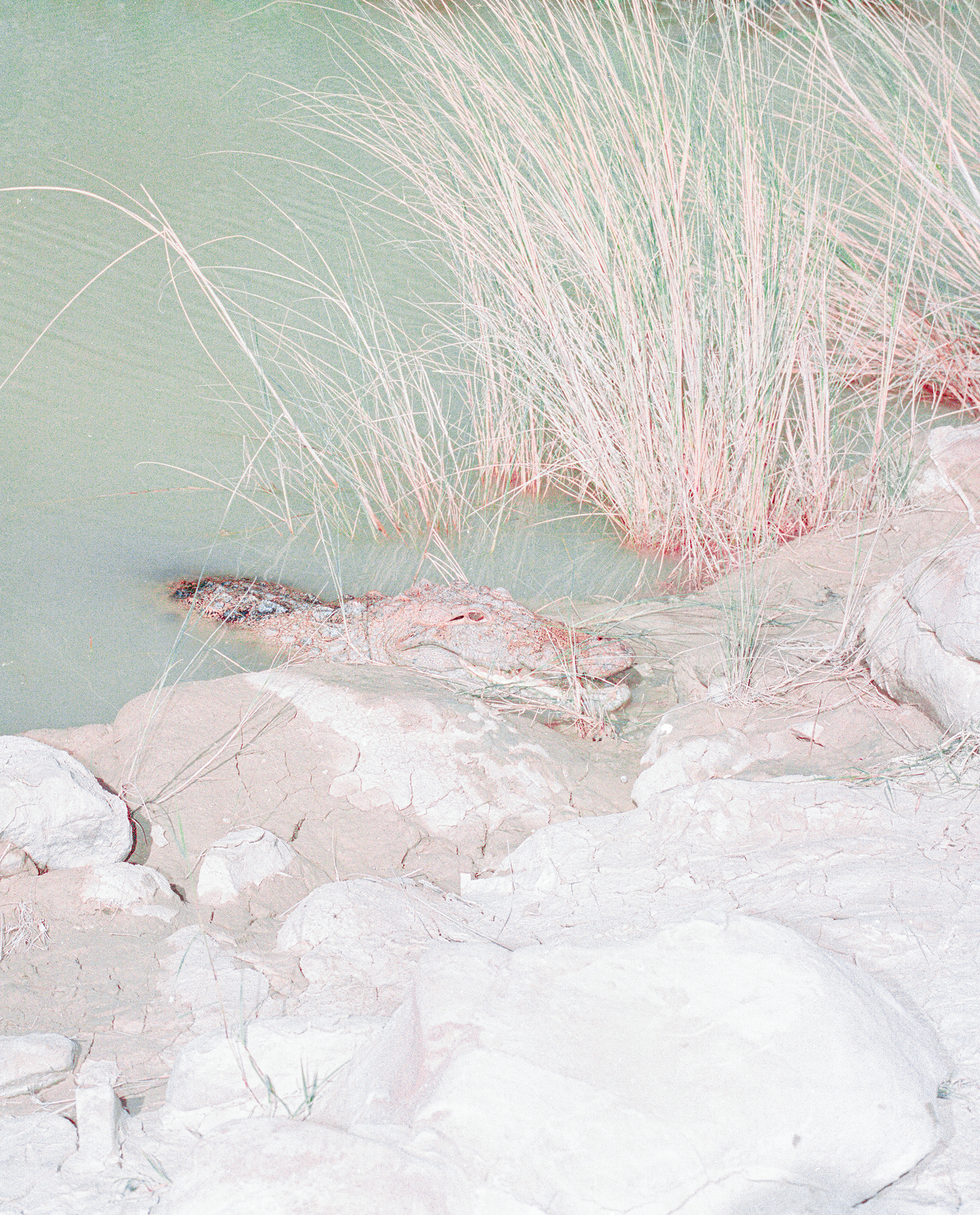
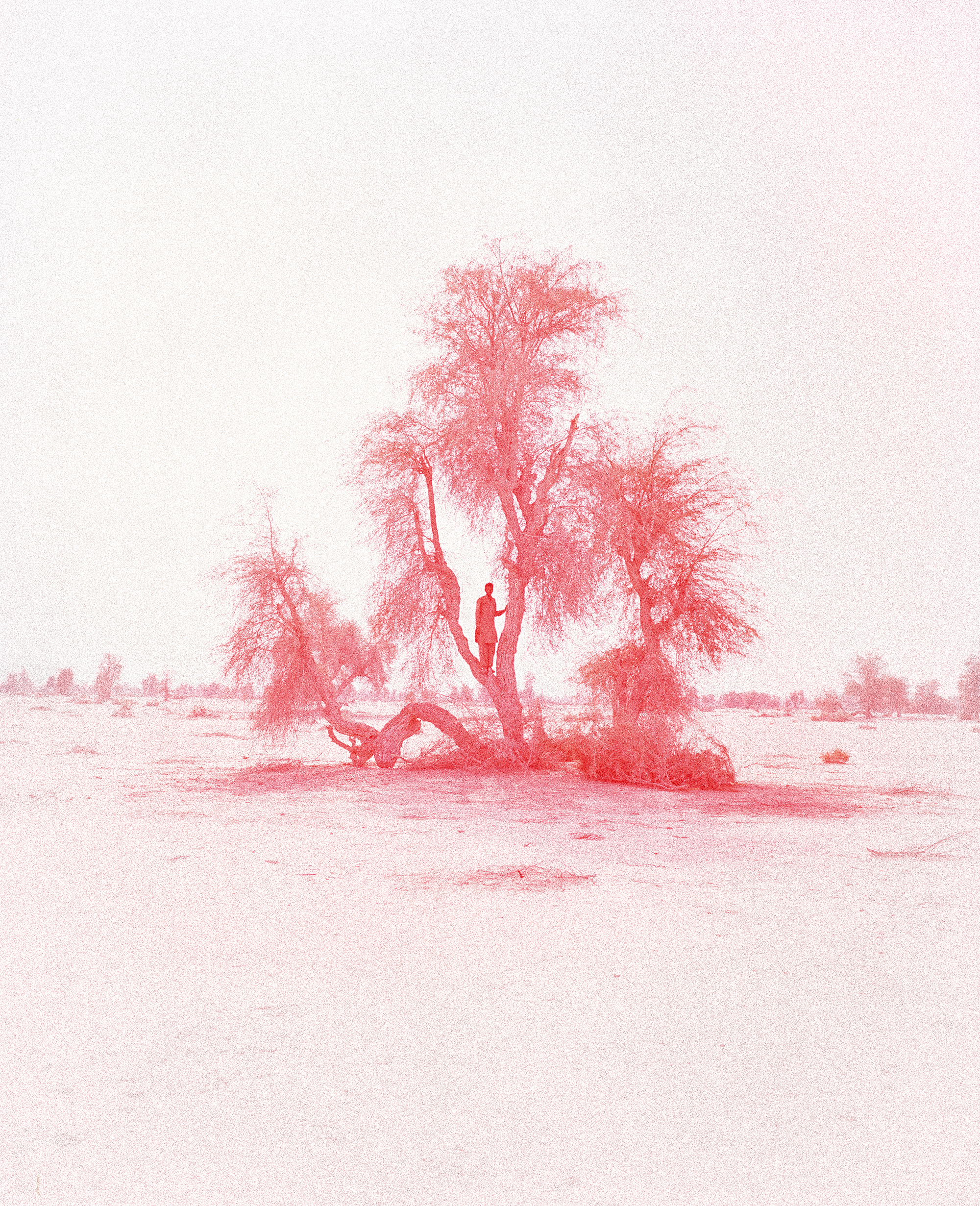
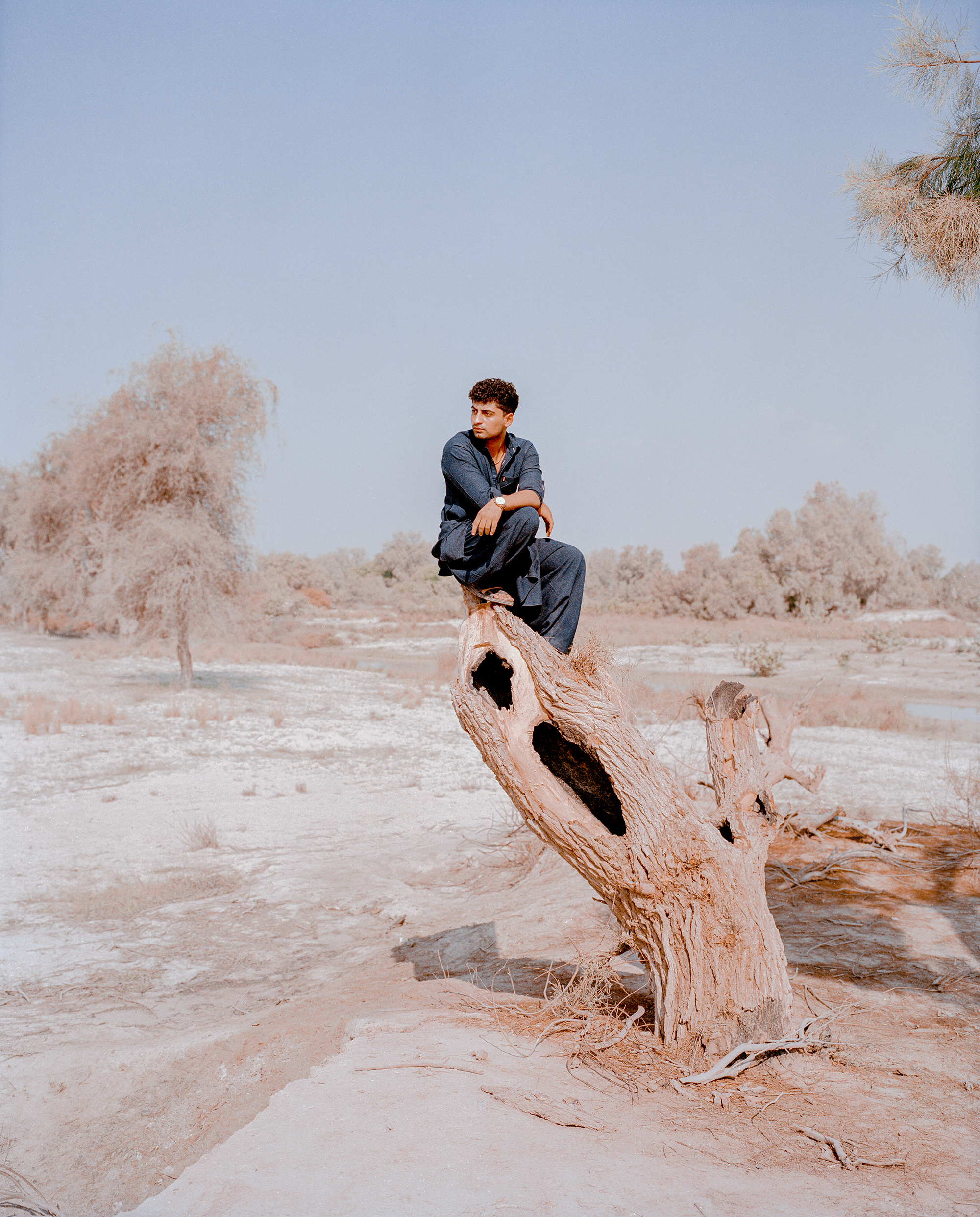
The gando and the kahur face each other with sly majesty in a pair of images from Shakeri’s series The Kahur Does Not Fall Unless the Earth Wills It (2018–ongoing). The crocodile, which lives in rivers and ponds and finds refuge in deep pits when water is scarce, is half submerged in an eerie green pool edged with tall grasses. The kahur, set against a sun-blasted landscape, is rendered in a vivid, electrifying red. A man in dramatic silhouette stands on its low branches. The red was initially a glitch that appeared on Shakeri’s screen while he was at home in Tehran, scanning negatives.
This was during the 2022 Women, Life, Freedom uprising in Iran. “The people of Balochistan, especially in Zahedan, the provincial capital, joined the movement with remarkable persistence,” Shakeri explained. “Every Friday, under the pretext of Friday prayers, they gathered to protest against injustice and oppression.” During the first demonstration, Iranian security forces opened fire on the crowd, killing at least ninety-six people. The crackdown intensified, and protests across the country waned. But not in Balochistan. For Shakeri, the man in the kahur tree represents “the stubborn will to live under the most unforgiving conditions,” and Balochistan itself, “parched and wounded, yet unyielding.”

Aperture Magazine Subscription
0.00

Shakeri often describes himself as self-taught in photography. “My formal education is in architecture. I also have a background in theater.” He explained that soon after entering university, “I saw an image from the Iran-Iraq War in a conference hall, and it affected me so deeply that from the very next day, I saw myself as a photographer and devoted myself to it with immense passion.” That was nineteen years ago, and since then, Shakeri has proceeded largely through cycles of self-study and intuition. For nearly a decade, he has been pursuing a long-term project on the effects of drought, resource deprivation, and climate change among marginalized people living in the Iranian province of Sistan and Balochistan.
One component of that project is a trilogy: The first part is An Elegy for the Death of Hamun (2018–ongoing), about the seasonal lakes and reservoirs that dried up due to drought and the mismanagement (some would say corruption) of water resources in Sistan. The second, Cast Out of Heaven (2016–ongoing), looks at the housing crisis on the outskirts of Tehran, where people find themselves abandoned in so-called new cities that are ill-conceived and far away from the jobs the residents depend on to get by. The third, as yet untitled, considers the place of oil in the history, ecology, and culture of Iran. As proof of how capacious Shakeri’s working method has become, The Kahur Does Not Fall Unless the Earth Wills It is also part of the same ongoing project.
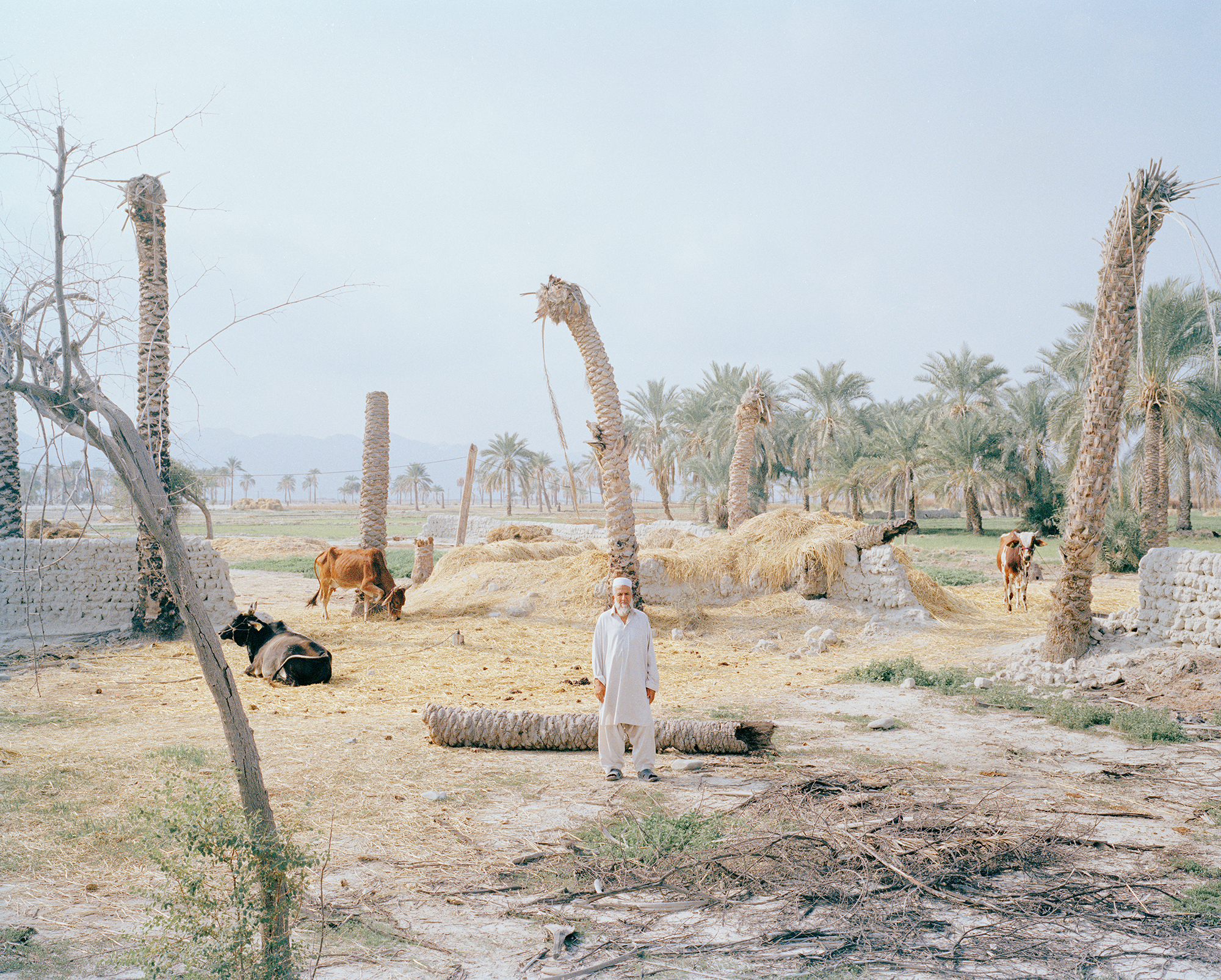
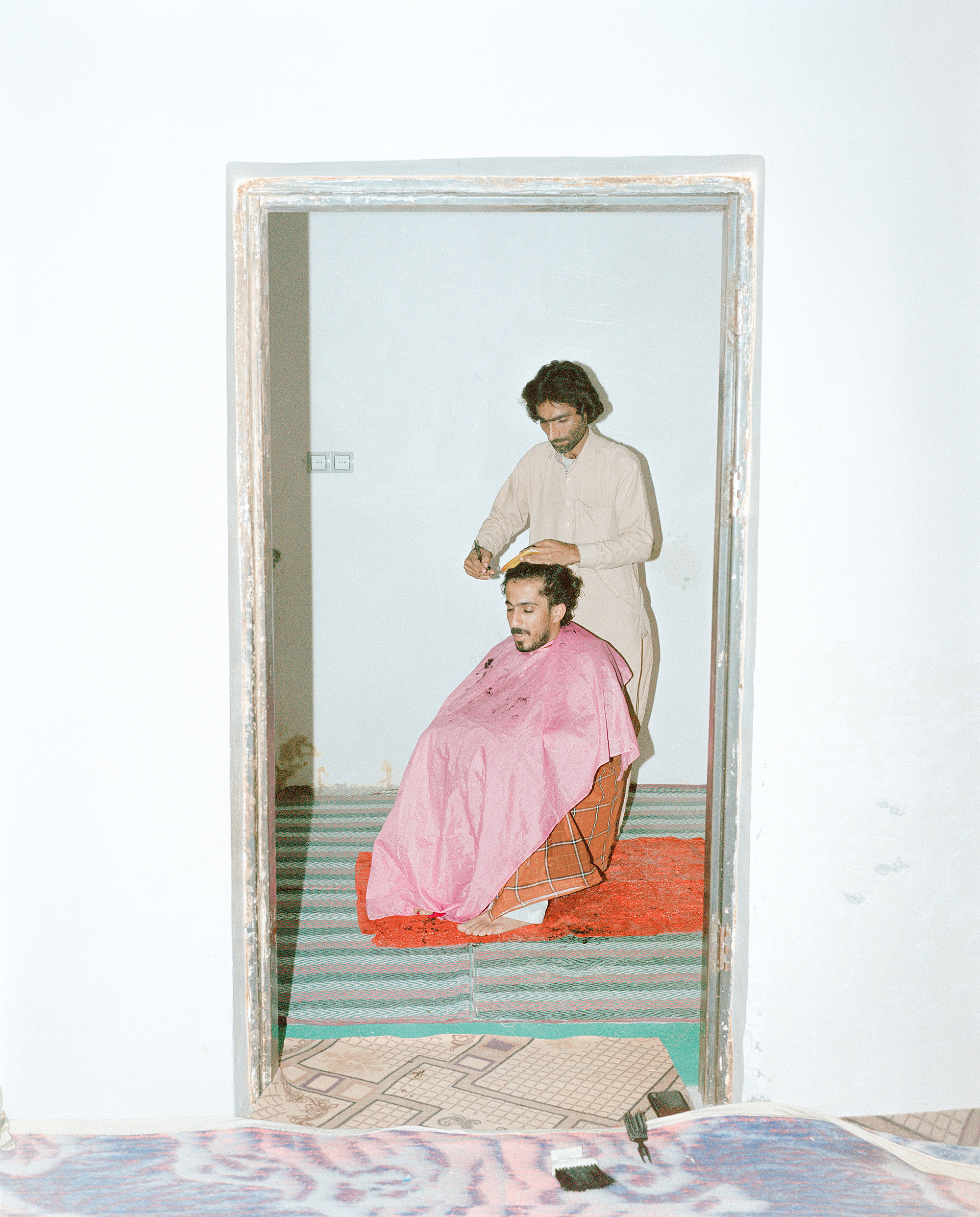
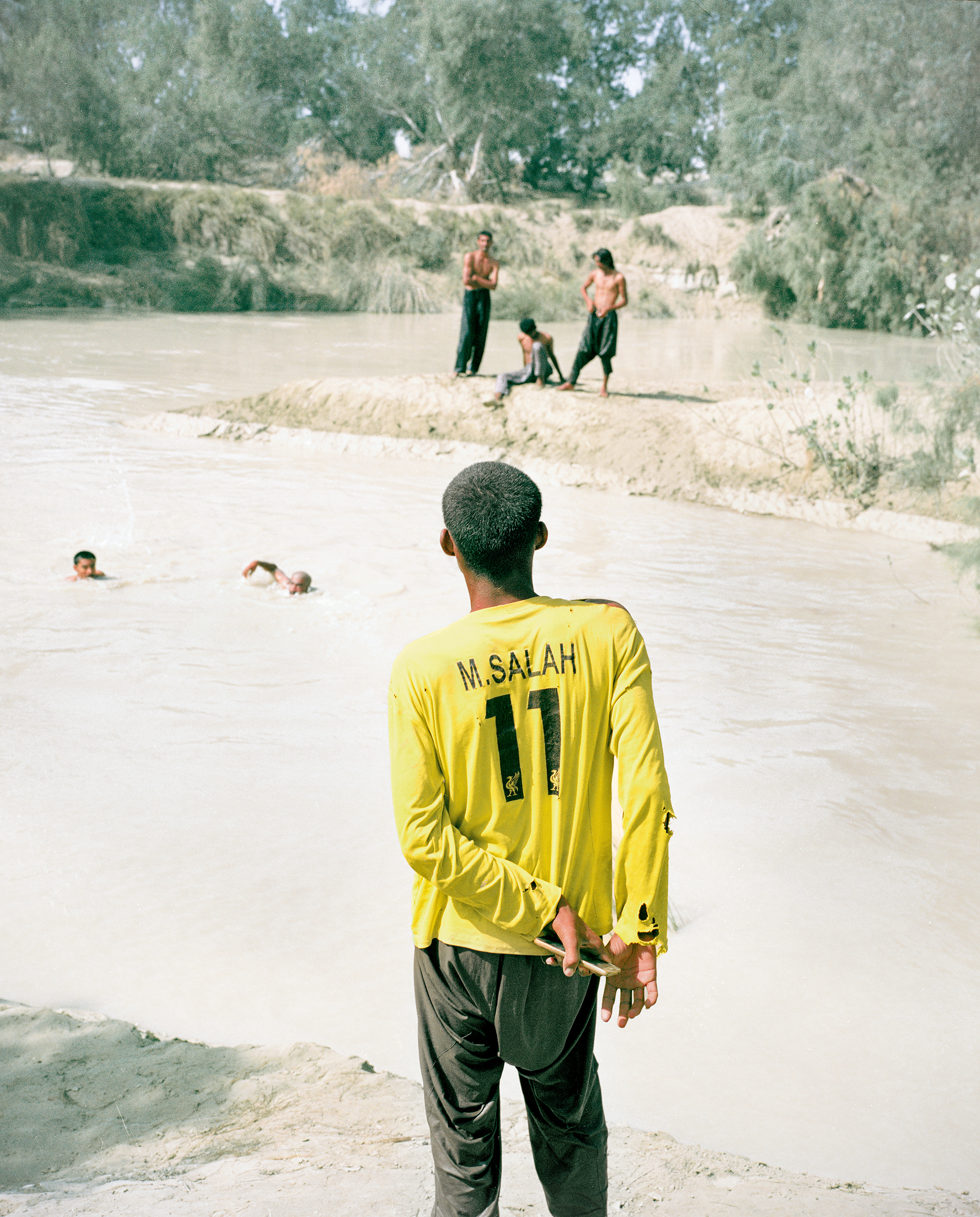
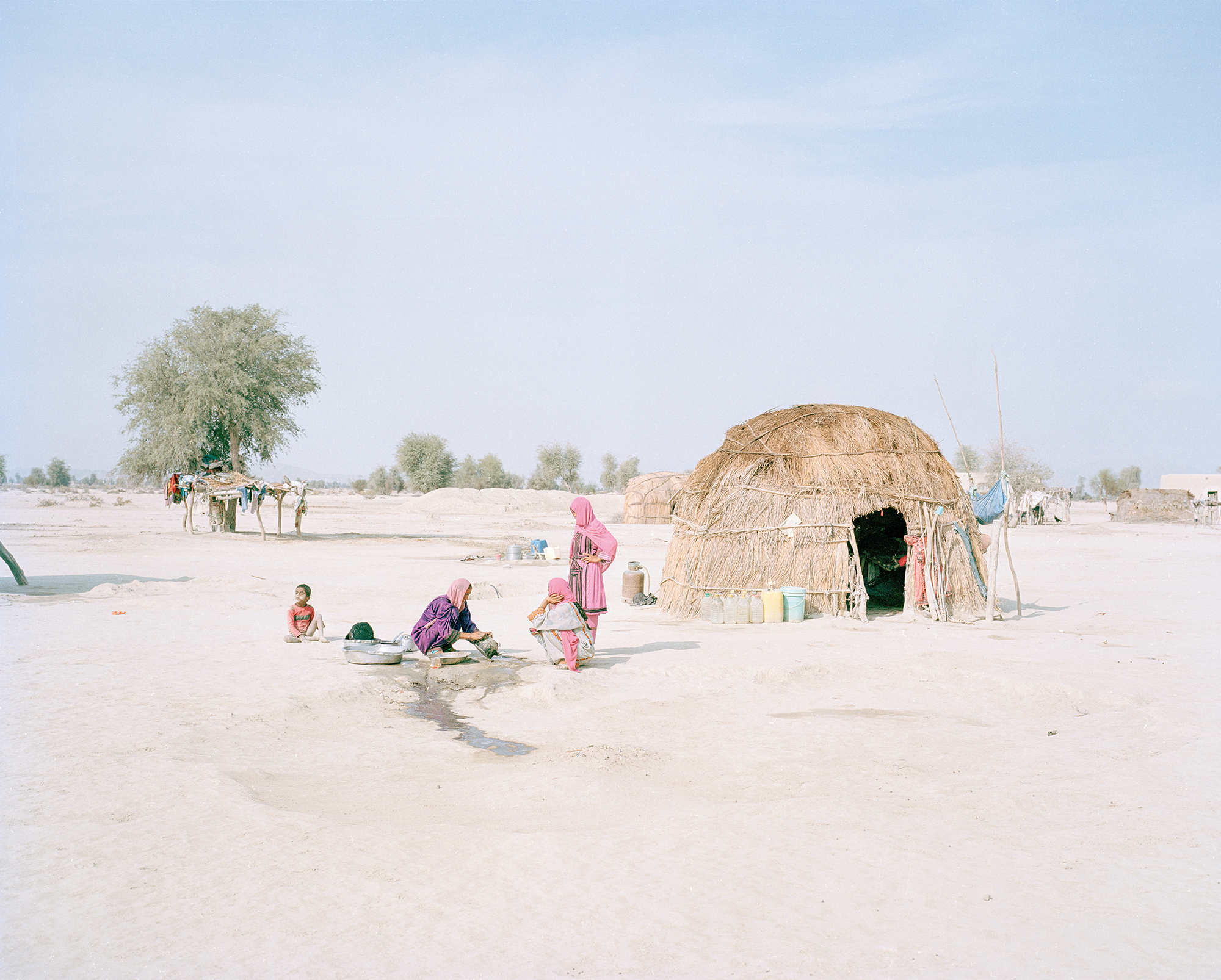
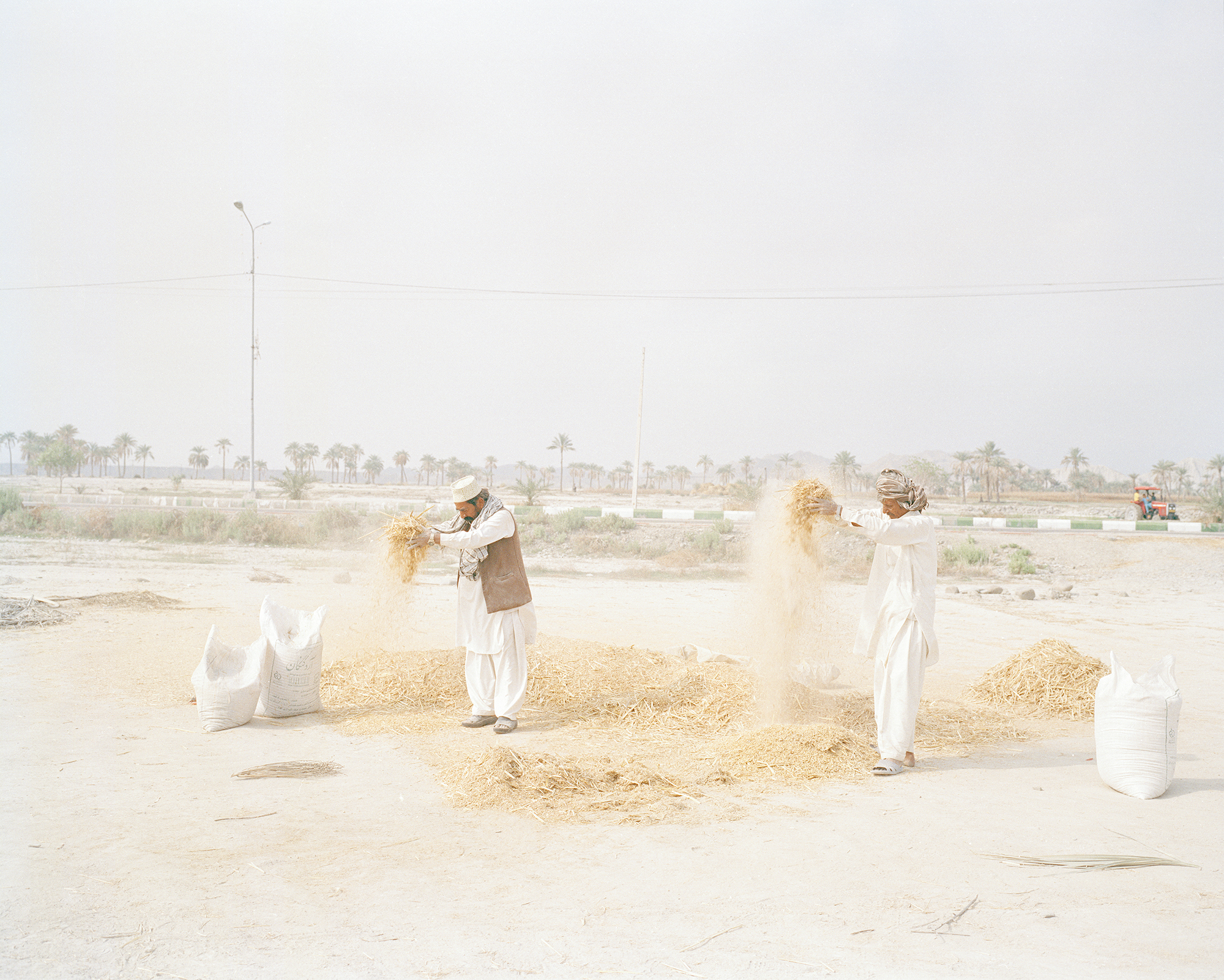
Thousands of years ago, Sistan and Balochistan were covered by forests. For generations, these were agricultural lands. People lived by fishing, farming, and animal husbandry. Now, the drying lakes and wetlands have pushed the local population far below the poverty line. This situation appears in Shakeri’s work in two ways. He forms deep bonds with inhabitants of this region, allowing him to capture the conditions of their lives, as seen here in the pictures of women doing laundry, men cutting each other’s hair, and youngsters swimming in brown waters. Shakeri also tends to photograph in the middle of the day, so that the blinding intensity of the noontime sun sweeps across all his images, lending them a clear aesthetic. Shakeri describes his photographic world as melancholic, populated by “human beings who, after relentless exploitation of nature, now find themselves defeated by it.” His narrative, his novel in visual form, pin-points a crucial intersection between suffering and beauty: “To me, art is perhaps the only reason we can endure so much ugliness and monotony in life.”
Supported by Magnum Foundation
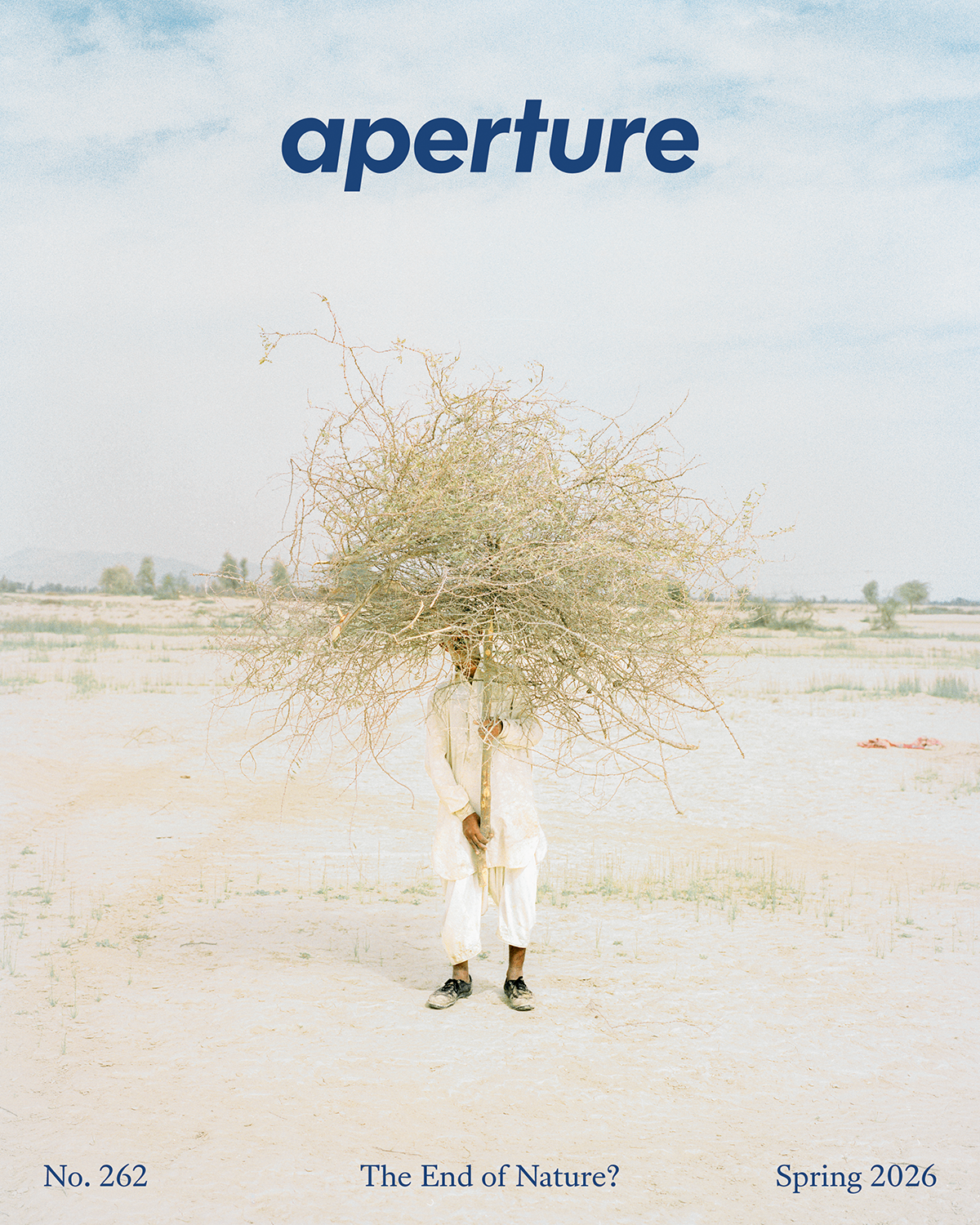
This article originally appeared in Aperture No. 262, “The End of Nature?”