Introducing
Illuminating the Shared History Between South Africa and Botswana
In his documentary-style images, Thero Makepe pursues a visual language that references fables, current affairs, and family dynamics.
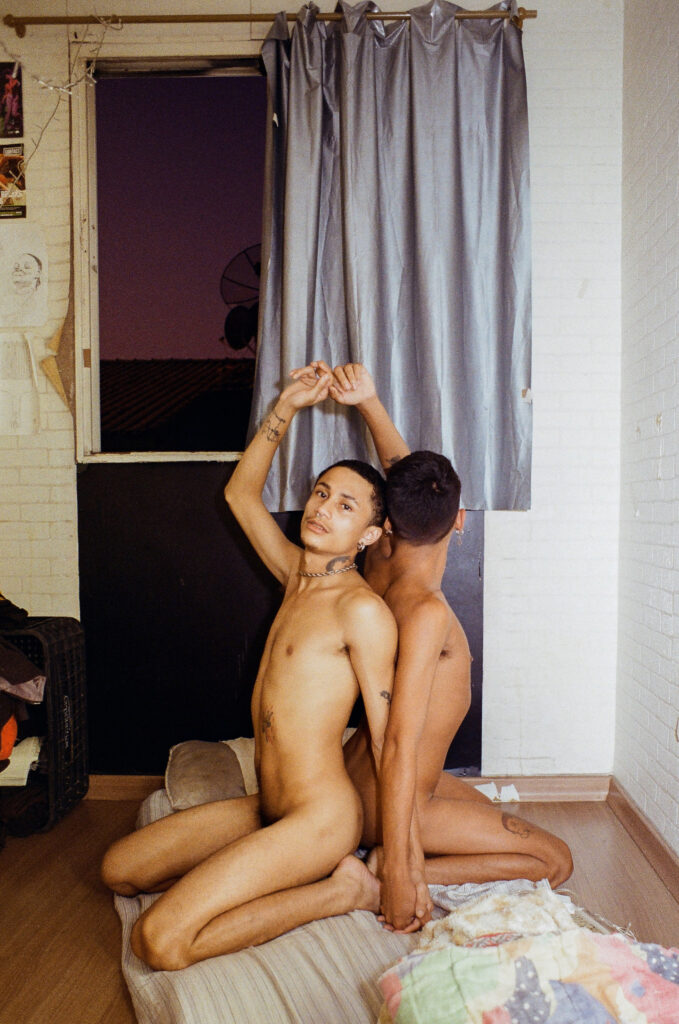
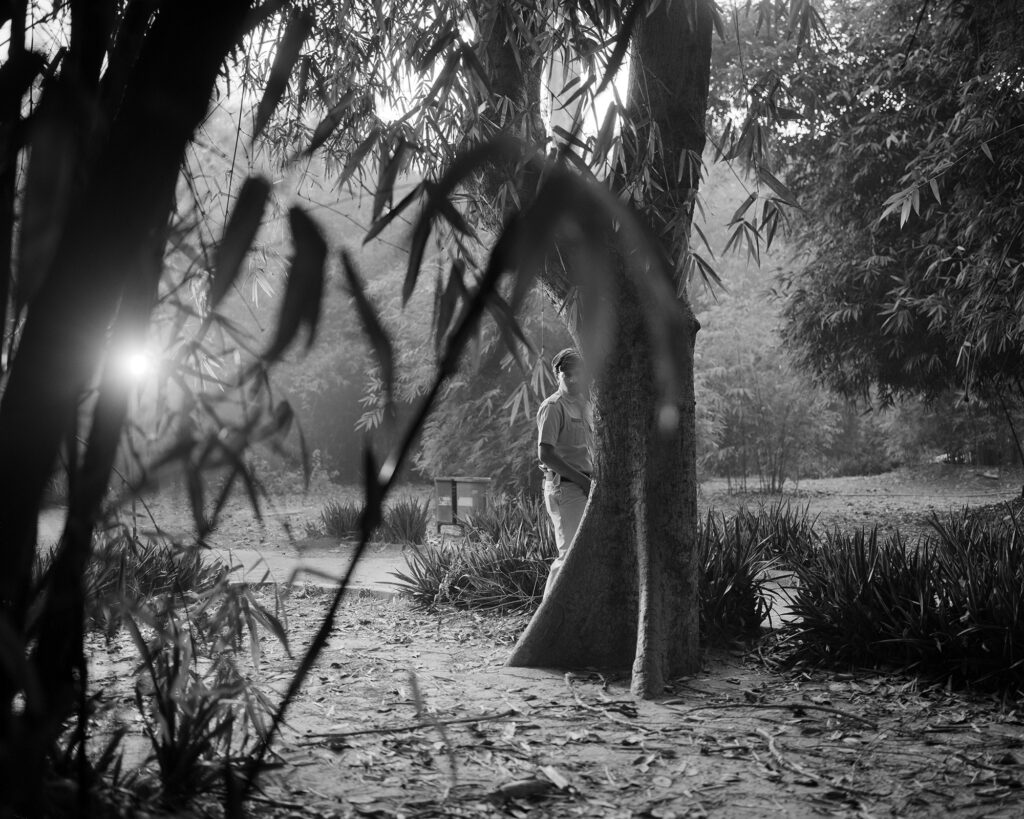
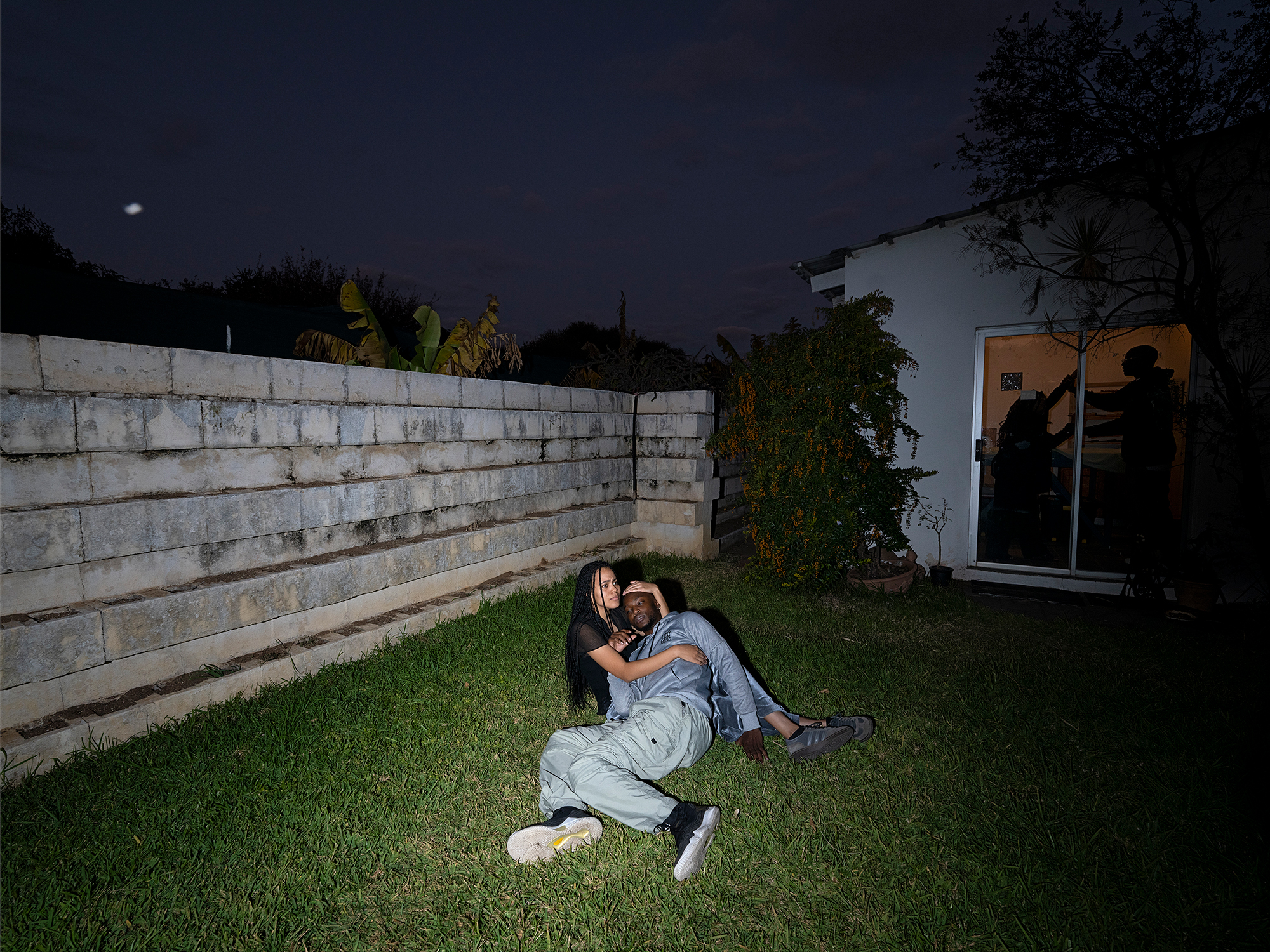
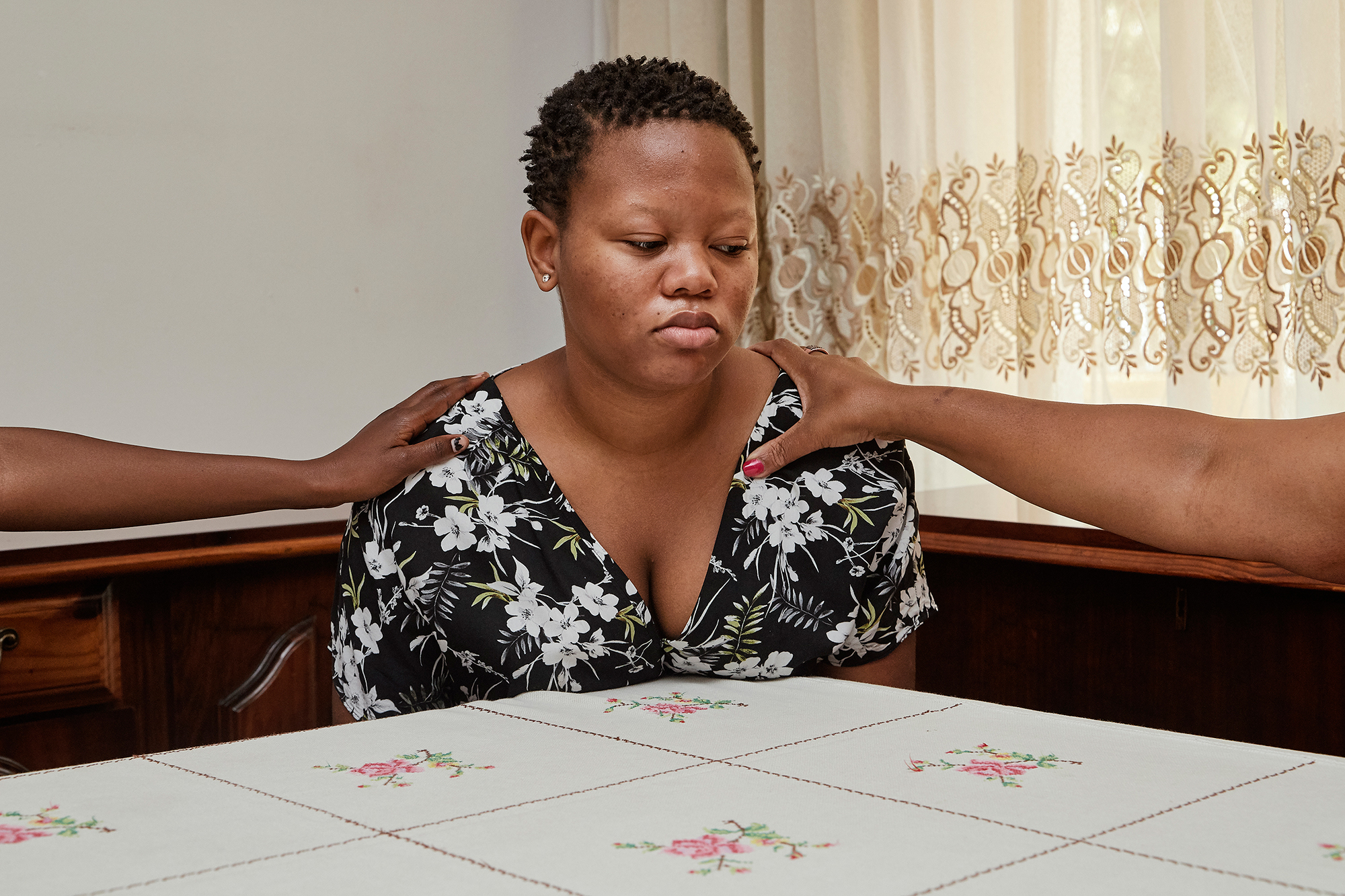
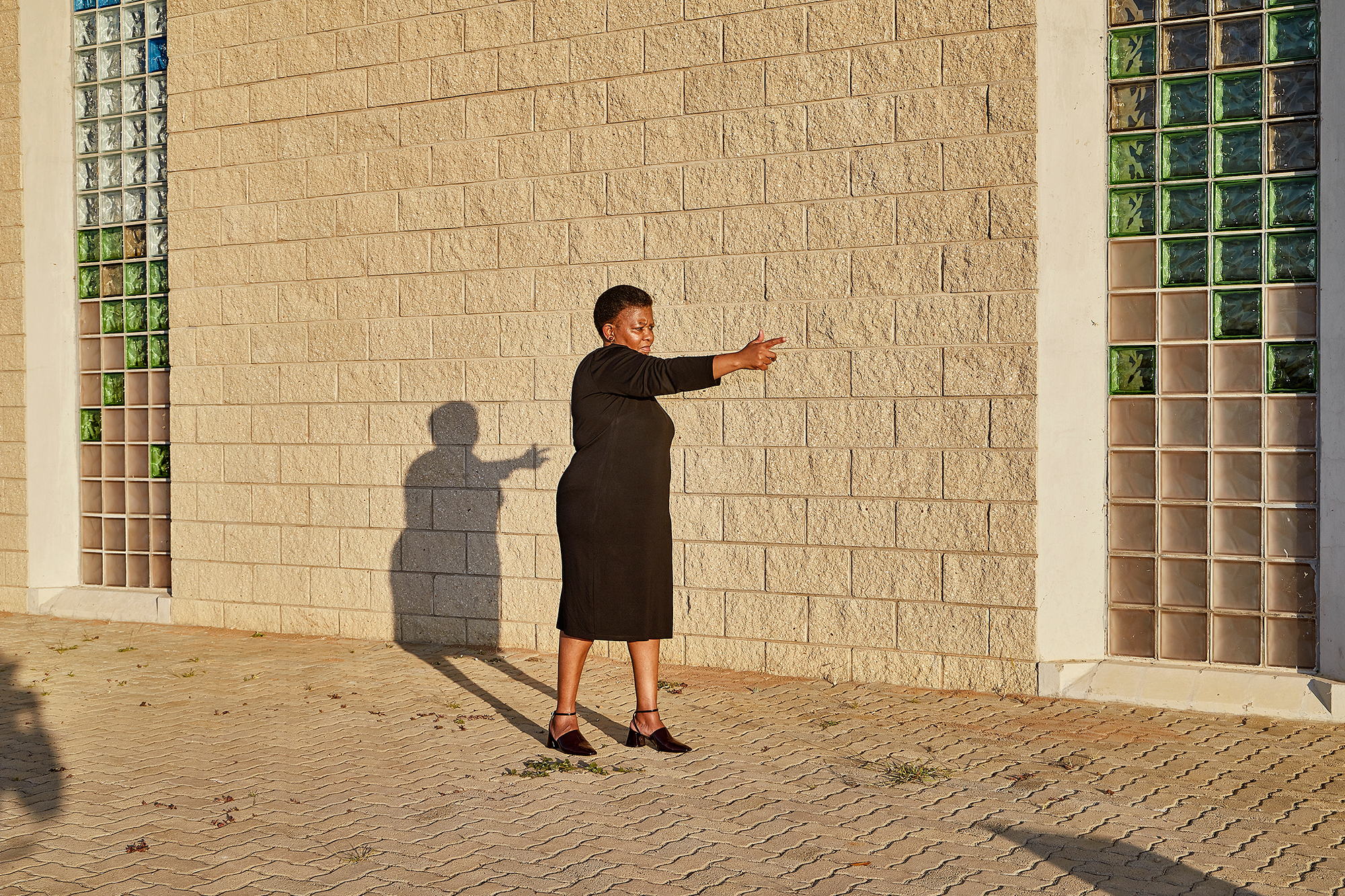
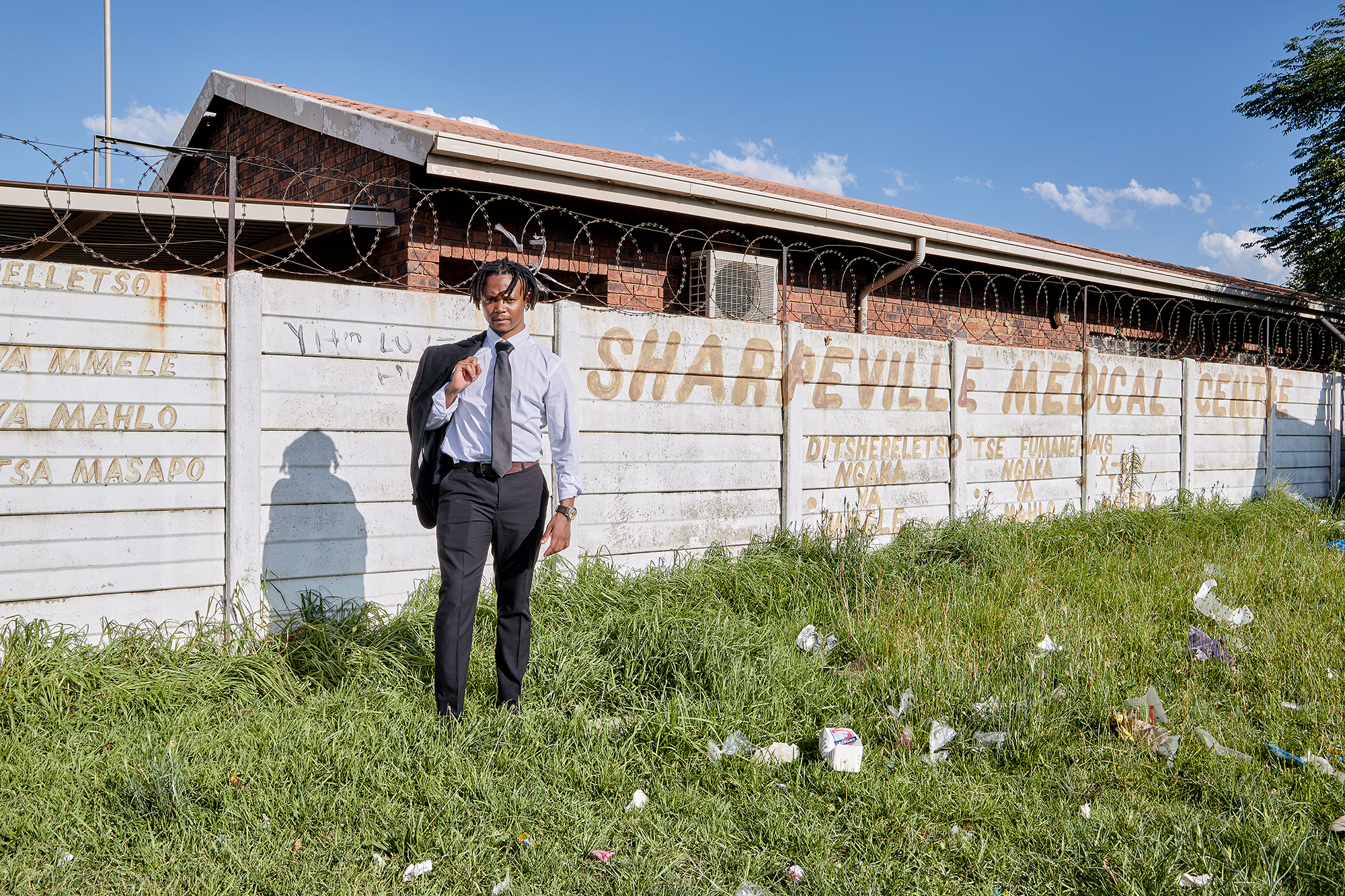
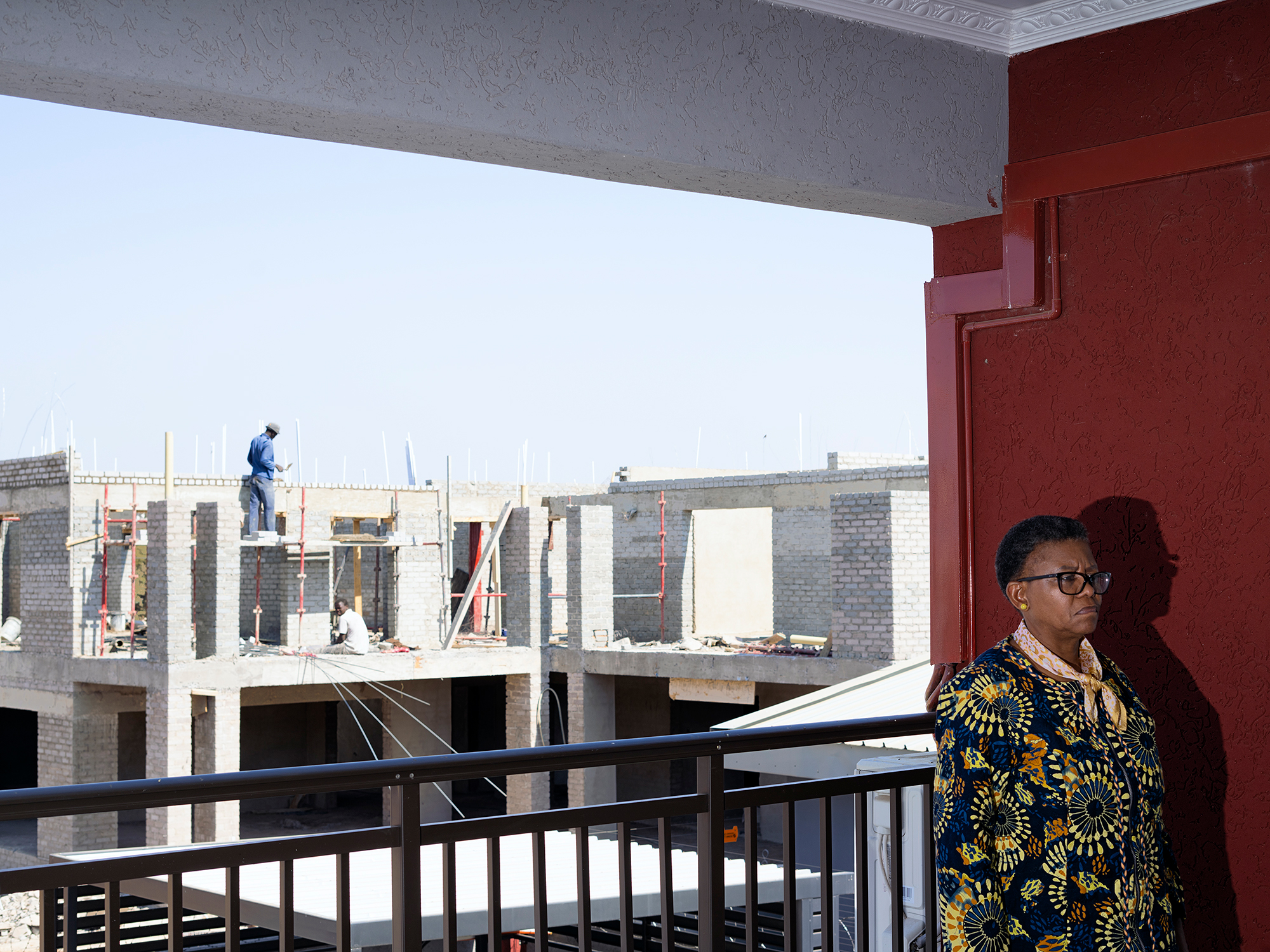
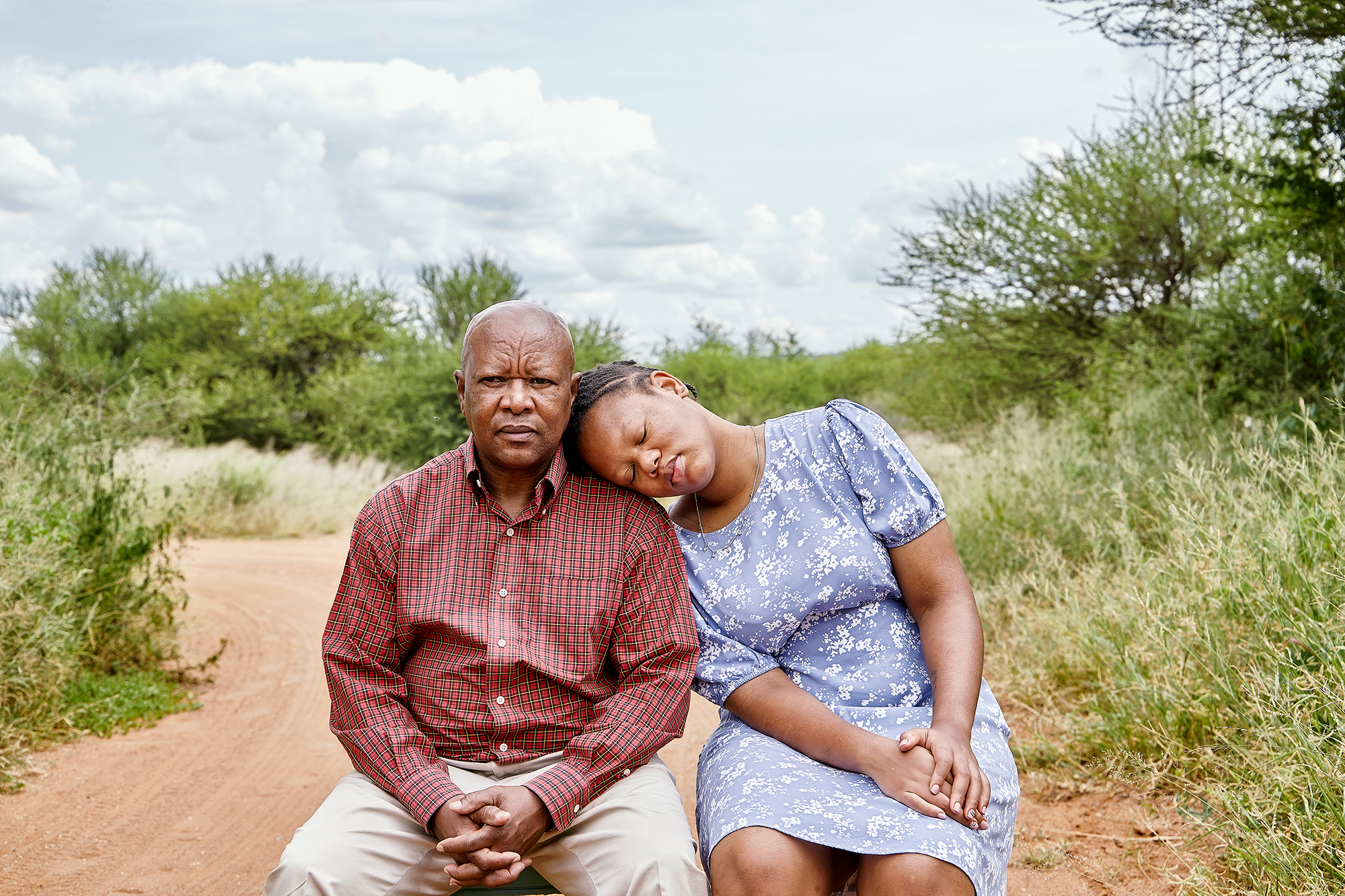
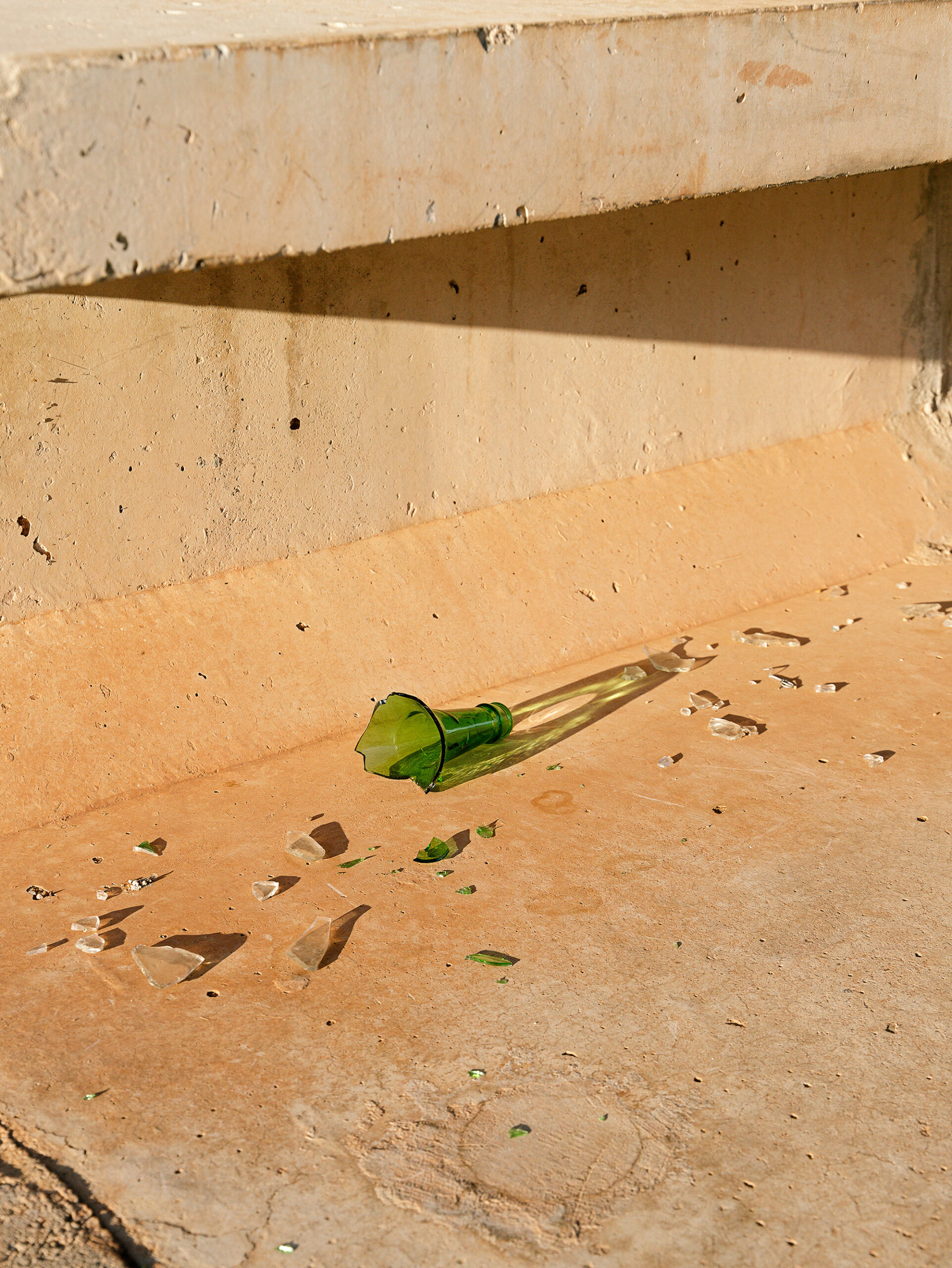
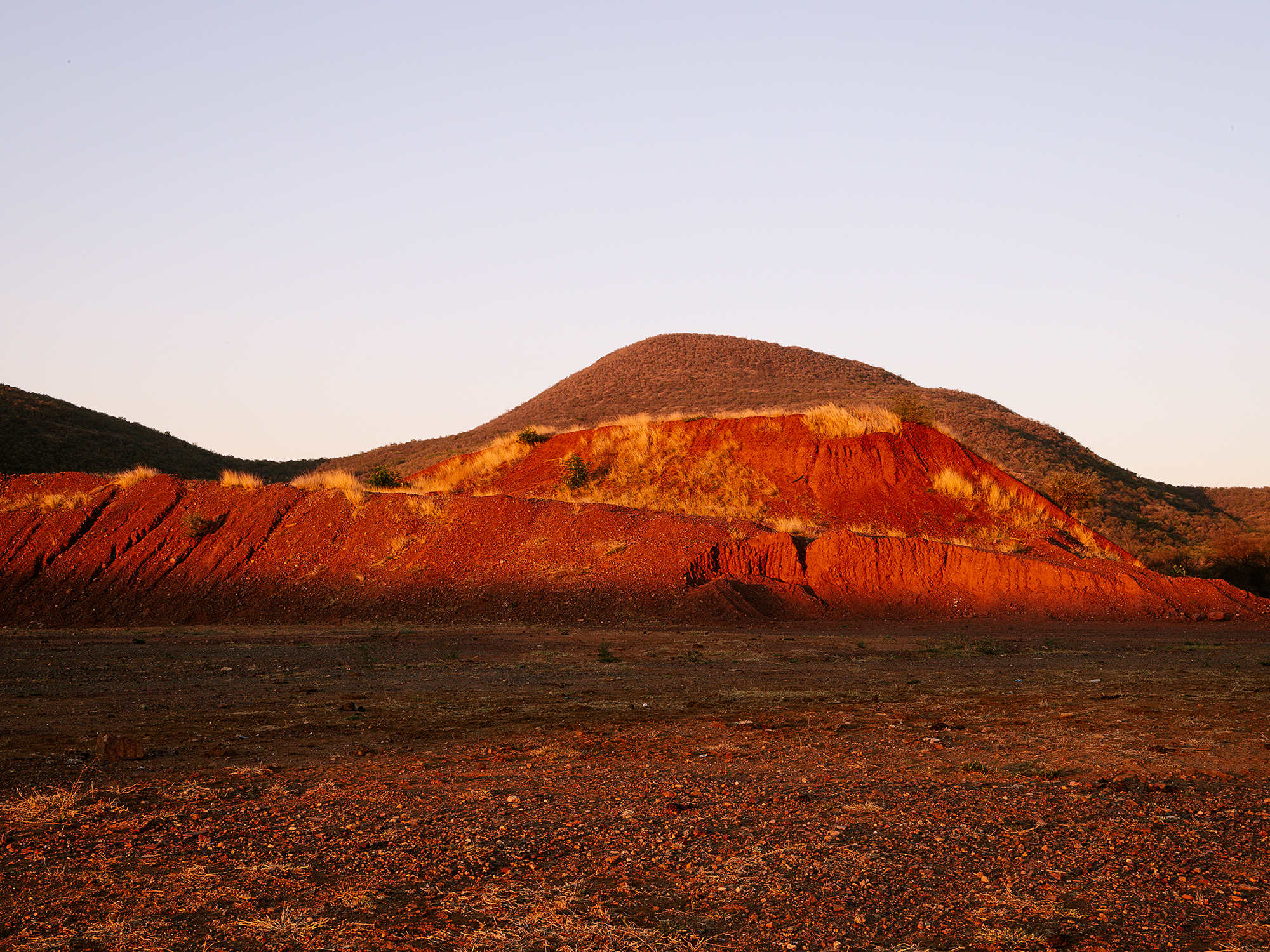
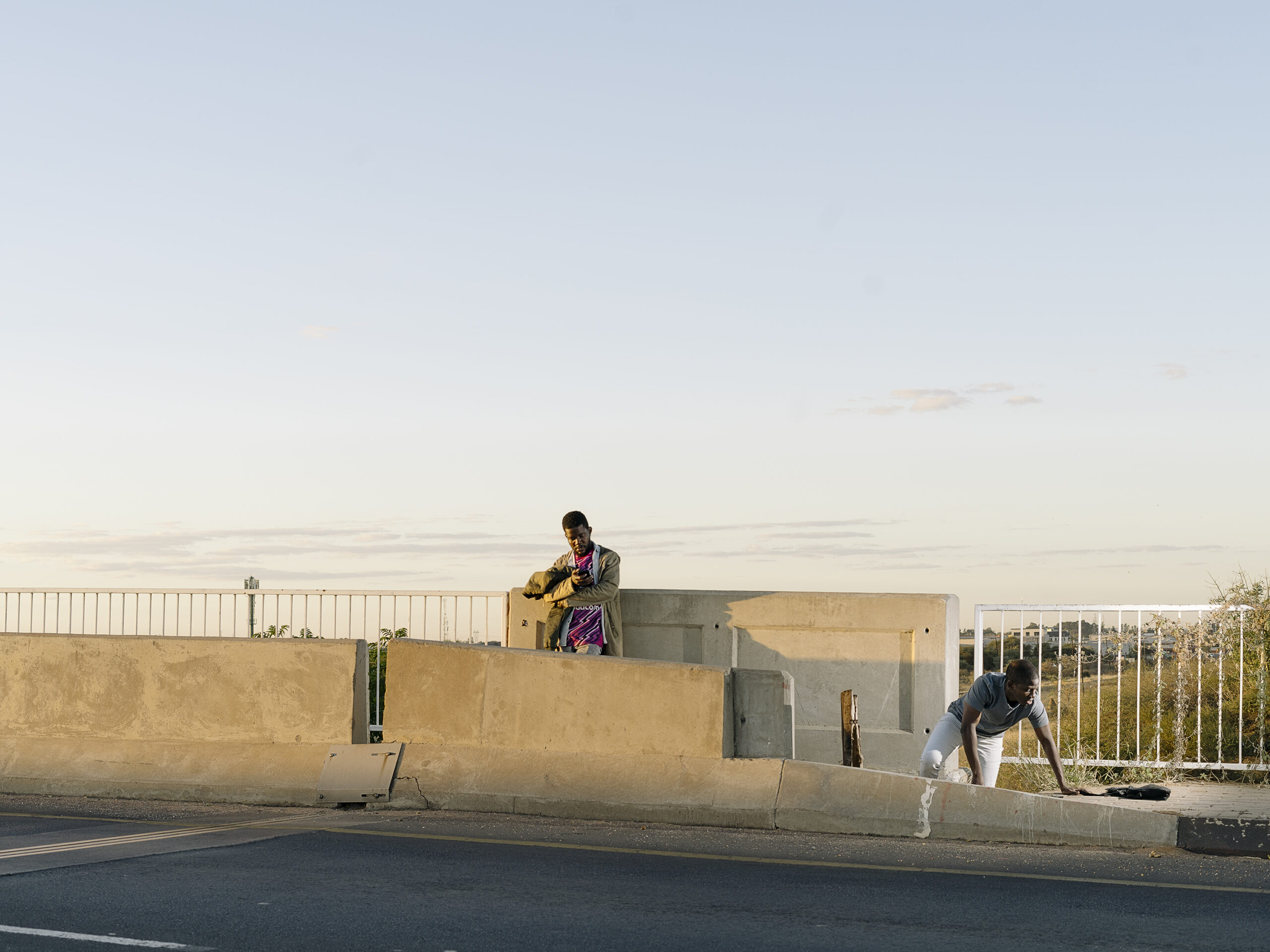
The protagonists in Thero Makepe’s photographic series It’s Not Going to Get Better (2024) avert their eyes in pensive avoidance. Some exhibit muted distress or are captured in states of adrenaline overload, oblivious to scenes elsewhere in the same tableau. That the dysfunction stalks rather than overwhelms these images is intentional, but so is the counterbalancing po-faced denial of tangible evidence. It’s Not Going to Get Better is perhaps the closest Makepe has come to a social-documentary style, yet ironically, it is the work’s fictive strands that accord a measure of truth.
Completed mostly in 2024, the same year that citizens of several African nations took to the polls in fateful elections, It’s Not Going to Get Better homes in on the squandered promises of long-held incumbency. It’s a familiar story throughout the Frontline States (the clutch of southern African countries, including Zambia, Botswana, and Angola, that collectively opposed apartheid), where the wheels of democracy have turned full circle, quickening expectations while heightening the sensation of free fall. In Botswana, Makepe’s home country, the Botswana Democratic Party enjoyed fifty-eight years of uninterrupted political power until November 2024, when a three-party coalition led by Duma Boko won the popular vote. Once considered one of Africa’s more stable economies (diamonds were discovered in 1967, a year after independence), Botswana endured the tumult of Seretse Khama Ian Khama’s rule from 2008 to 2018, and the ensuing years that tore that legacy asunder.

Born in 1996 to parents who both worked as accountants, Makepe studied photography at the Michaelis School of Fine Art in Cape Town, where he began to refine a visual language that includes staged portraiture and reenactments that sometimes reference fables, current affairs, and family history. His dynamic, long-form approach offers viewers multiple entry points to the maze of political, professional, and personal ties that preoccupy him, flattening the boundary between South Africa and Botswana.
Makepe’s maternal grandfather was Hippolytus Mothopeng, a jazz musician who left apartheid South Africa for Botswana (then called Bechuanaland) in 1958 and worked in both Francistown and Gaborone. Hippolytus’s uncle was Zephania “Zeph” Mothopeng, a teacher and president of the liberation movement Pan Africanist Congress of Azania, a man with unflinching eyes fittingly nicknamed “the Lion of Azania.” Zeph’s son, Johnny, played with the influential Afro jazz bands Batsumi and Marumo. With so much of this lineage to unpack, the long-form essay has been Makepe’s preferred mode of operation, encompassing diorama, immersive installation, and lighting experiments, both in reference to photography’s history and as commentary on the present. Forlorn afternoons and twilight are recurring motifs in Makepe’s oeuvre, evoking interiority as opposed to illuminating his scenes.

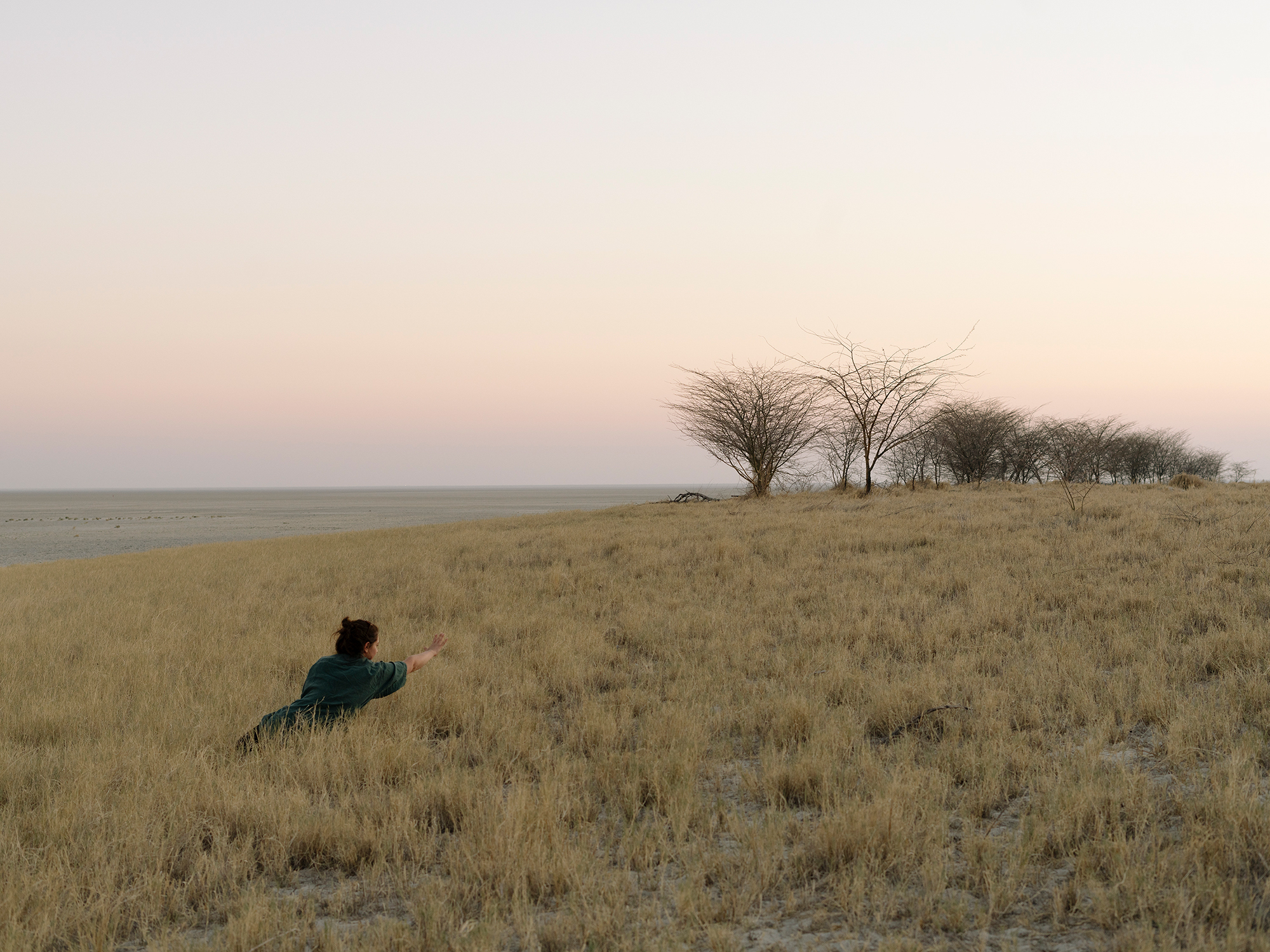
It’s Not Going to Get Better, initially conceived for a solo exhibition at Vela Projects in Cape Town, is a departure point for the artist. Brevity replaces the speculative sprawl of series such as Music from My Good Eye (2019) and its companion piece, We Didn’t Choose to Be Born Here (2020–ongoing), which both grapple with the legacy of his matrilineal family’s twin heirlooms, music and resistance. This tighter focus led him to present the work as midsize prints. “I’d never made work in that format before,” Makepe told me recently. “I knew that, okay, these are the sorts of themes that I want to touch upon. These are the different people I know in my life, and I’m drawing upon their real lives and their situations.”
The seed for It’s Not Going to Get Better was planted in 2023 through Lee Chang-dong’s 2018 film Burning. “I was like, Wow! This feels a lot like Botswana, in terms of the conservatism that you have in [South] Korea; the military influence, the surveillance on people, and the way in which Koreans are very within themselves.” Makepe says Burning also offered a searing take on the elusiveness of class ascendancy, which surfaces in his images as both an embodied angst in his peers and a kind of intergenerational fallout.
A landlocked country of fewer than 2.5 million people, Botswana has a GDP of 19.4 billion dollars and an unemployment rate of nearly 30 percent—a figure president Duma Boko characterized as “a ticking time bomb.” The country’s shrinking economy (it registered negative three percent growth in 2024) has been overly reliant on diamonds at the expense of broader economic development, resulting in instability as synthetic diamonds increasingly erode their value. Botswana exported around five billion dollars worth of diamonds in 2022, but since then global prices have fallen by around 40 percent. Mining Weekly reported that Debswana, a joint venture between De Beers and Botswana’s government, saw a 52 percent drop in sales during the first nine months of 2024—all while the government pushes for a controlling stake in the company and a diversification of its economy.
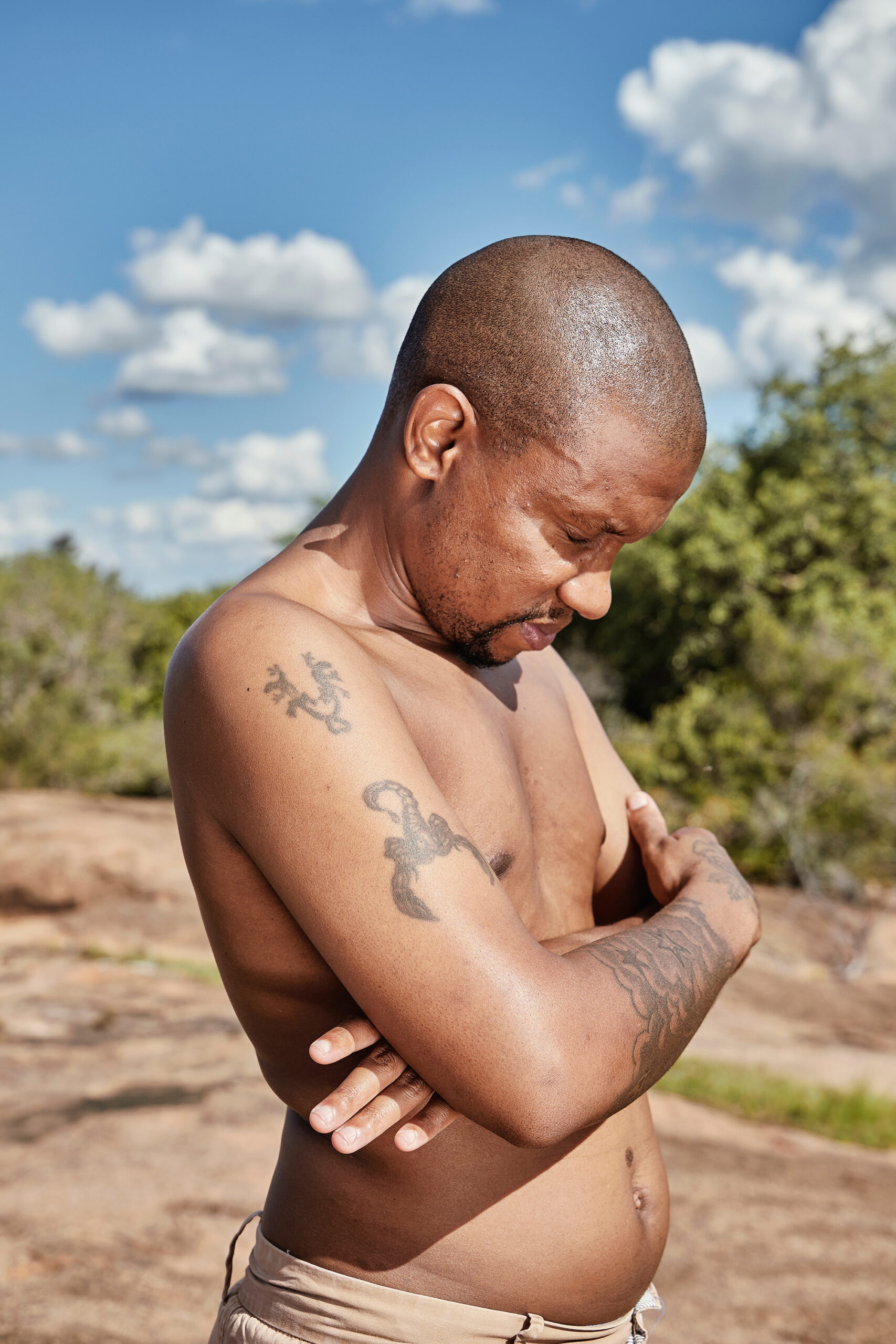
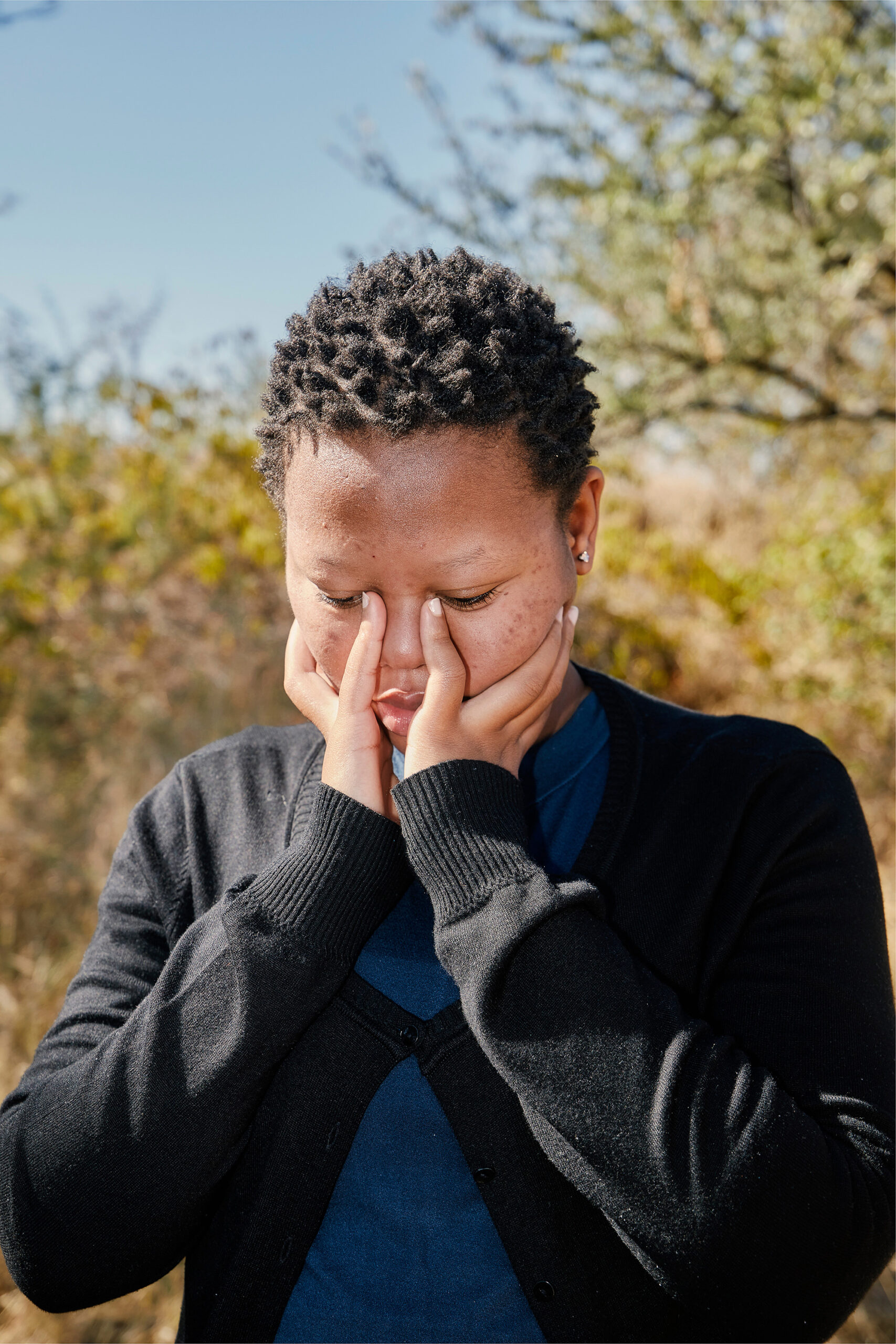
“In my lifetime there’s never been a more hopeless time when it comes to what you can get from politicians,” says Makepe. “There’s always been some sort of symbol of hope. It started with Nelson Mandela, and then, by the time I was a teenager, came Barack Obama. And then, you know, from my late teens to early twenties, there hasn’t ever really been a hero or icon figure like that. So when I listened to a song by rapper billy woods, whose father was part of the Pan-African struggle in Zimbabwe, he says, ‘It’s not going to get better,’ I was like, Yeah, that’s it. There’s a sense of grounding in not pretending.”
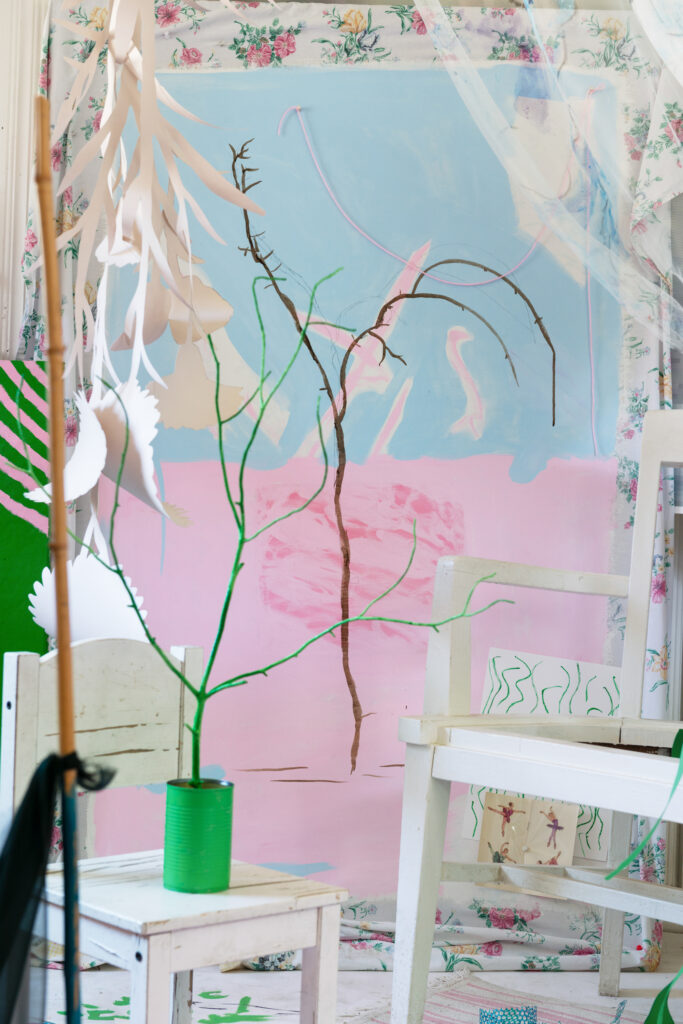
While Makepe draws from a wide pool of references—Alex Webb’s densely composed street scenes or his fellow artists of TBP Artist Collective, like Rrangwane, Kim Karabo Makin, and Legakwanaleo Makgekgenene—he always cites South African artist Lebohang Kganye, whose work has been on view recently in exhibitions at the Museum of Modern Art, New York, and Fotografiska Berlin. “She was instrumental to my development as a photographer and what I perceived as what could be done within this medium—that you don’t have to just be a traditionalist,” he says. Makepe’s earlier work, particularly Monna O Montsho (2018), which uses cardboard cutouts and miniature furniture to reconstruct mythological tales from his childhood, borrows from the trajectory of Kganye, who has increasingly incorporated theatrical sets, three dimensionality, and variations of scale into her work. For now, Makepe is certain that he wants to continue in the vein of experimental works like Fly Machine/Mogaka (2018), which uses diorama and a camera obscura to reconstruct the 2018 plane crash of Botswana Defence Force pilot Major Cliff Manyuni. “I want to get back to doing things that are a little bit more surreal,” he says. Given the burden of shared histories between Botswana and South Africa, perhaps this decision is as much about creative expansion as it is about self-care.

Read more from our series “Introducing,” which highlights exciting new voices in photography.