© Richard Baltauss
From the Archive
Sophie Calle’s Art of Games and Chance
The artist has squatted in an abandoned Parisian hotel, worked as a nosy chambermaid, and followed an unsuspecting stranger across Venice—all to create uncanny works with the pulse of detective stories.

This article originally appeared in Aperture, Summer 2022, “Sleepwalking.”
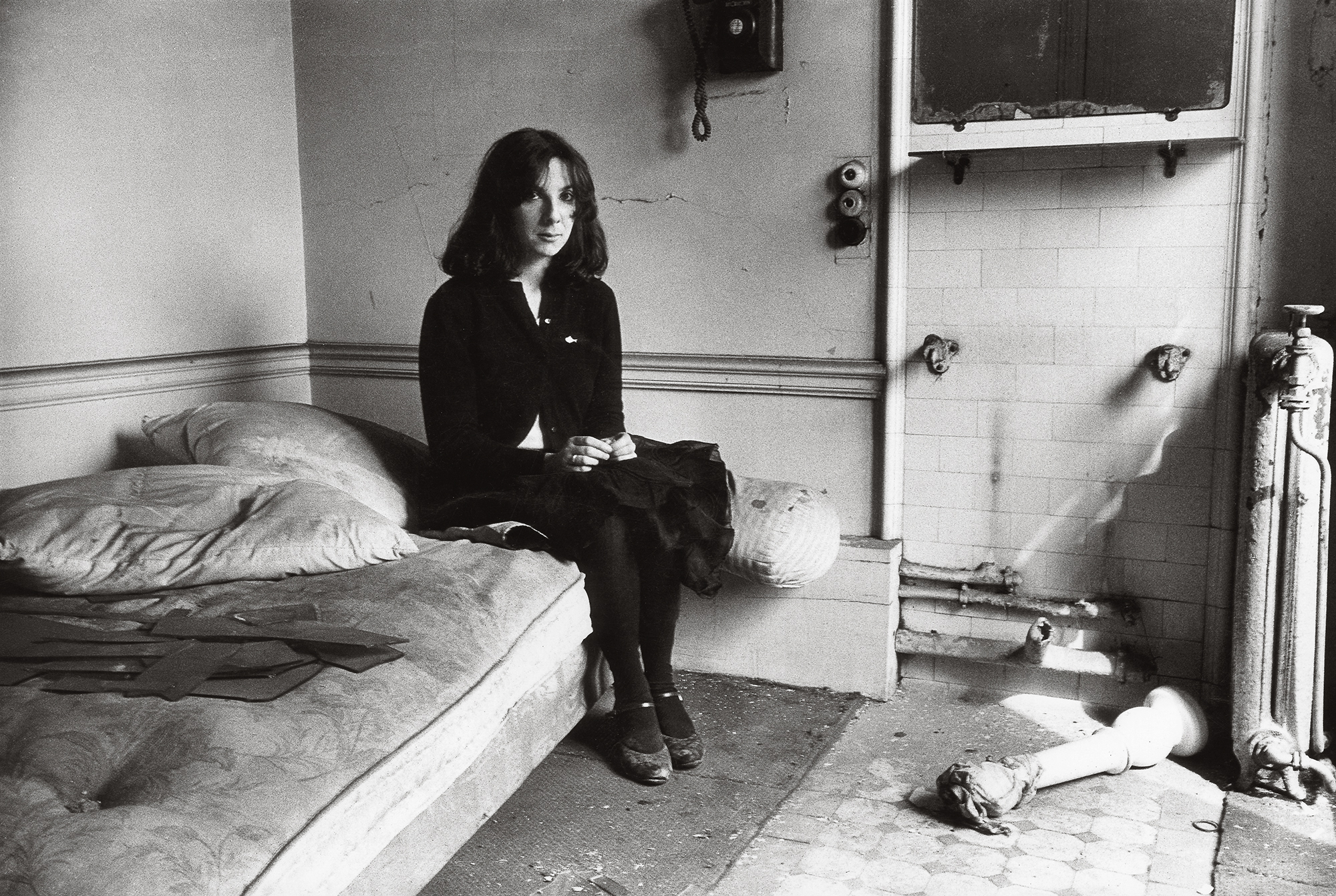
Her artistic career began with a kind of sleepwalking. In 1978, Sophie Calle spent her days strolling Paris. She had just returned to France after seven years of travel. Like so many artists and writers before her, she walked the French capital. On one of her ambles, she noticed a door ajar. It opened into an abandoned hotel connected to the former Orsay train station. It was as if she had drifted into a dream. She wandered the empty building and then left, taking note to come back. That year, Calle started making the work that she would become known for: following people, inviting them to sleep in her bed while she photographed them, taking on personas. A year later, she returned to Orsay. The building had remained abandoned. Calle took pictures, found discarded objects and documents. She even settled into a room on the fifth floor, 501. Nearly forty years later, Calle found herself at a dinner party where she was seated across the table from Donatien Grau, the head of contemporary programs at the Musée d’Orsay. She let slip something that no one at the museum knew: that Calle had squatted in the building, when it was abandoned, before it became the site of a museum. She told Grau that she had also kept a number of items from the old hotel and station.
© the artist and ADAGP, Paris and courtesy Musée d’Orsay
© the artist and ADAGP, Paris and courtesy Musée d’Orsay
Calle is the daughter of a well-known art collector and a journalist. A one-time student of the theorist Jean Baudrillard, who helped her get her first book published in 1983, Calle tells stories that question the relationship between self and other, the stories we tell about ourselves, or the traces that others leave. From her early to most recent books, such as The Hotel in 1984 to 2022’s The Elevator Resides in 501, she mixes a variety of formats and mediums simultaneously. More than many other artists of her stature, though, the name Sophie Calle conjures different things to different people. The art historian Yve-Alain Bois claims her “favorite mode of display” is “intertwining text and photo,” while others, such as the writer Heidi Julavits, in a conversation with the artist for Interview magazine, focus on describing the performance elements of her output. The novelist Paul Auster, Calle’s longtime friend and erstwhile collaborator, made the fascinating claim that she is “essentially a writer.” If so, perhaps she is among the first to write in an “expanded field,” to borrow a phrase from the art critic Rosalind Krauss, for the ways in which her stories rely on not only photography but also exhibitions, which many others have since followed. Discussing her significance, Grau remarks: “She has explored at once literature and the visual arts, and assembled them with many other methodologies, while unearthing and inventing new narrative forms that are simultaneously deeply personal and universal.” She herself apparently likes the phrase “narrative artist.”
Calle’s narratives are a precursor to contemporary autofiction, while also fitting in a longer twentieth-century literary tradition that juxtaposes text with image.
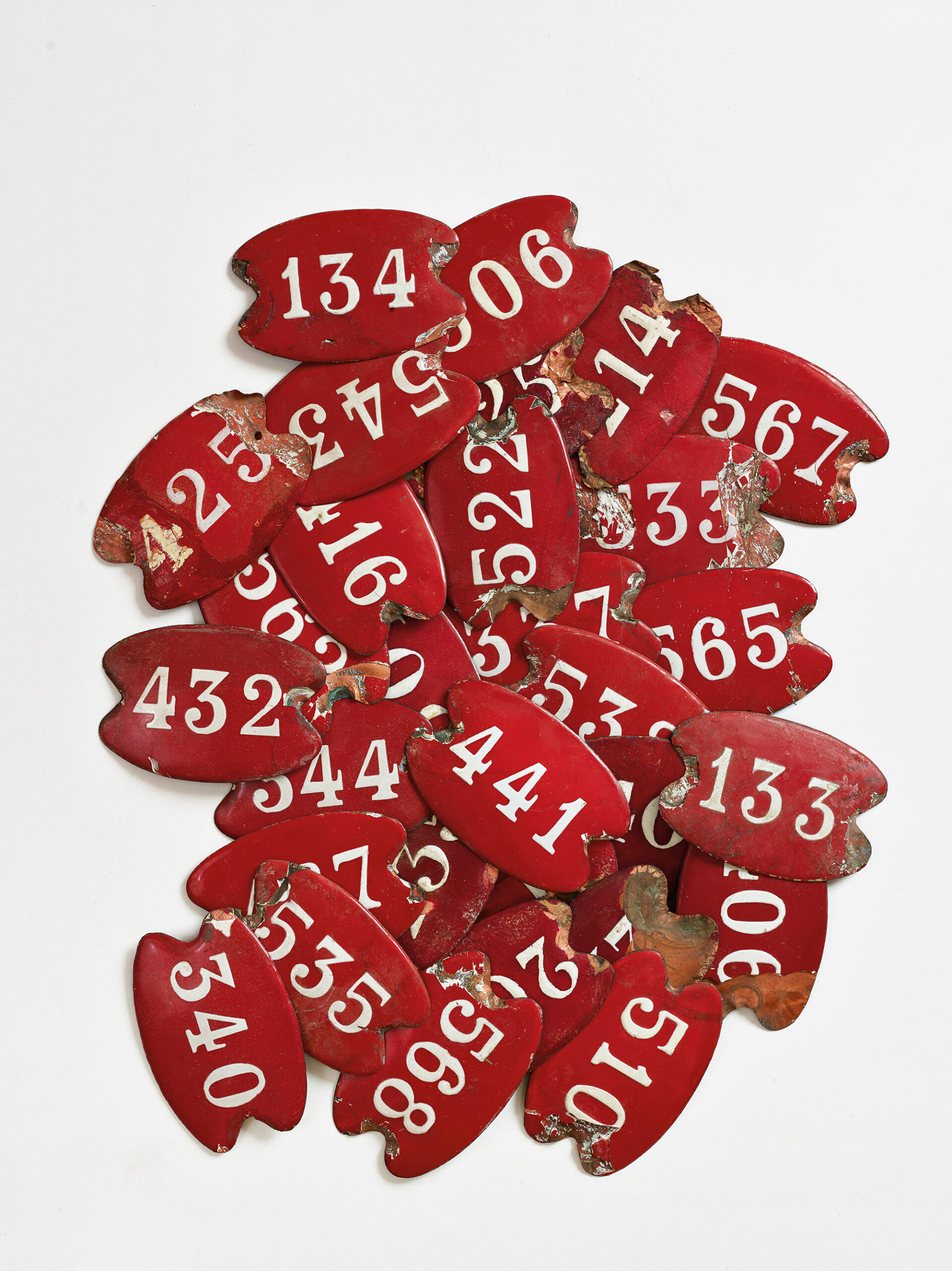
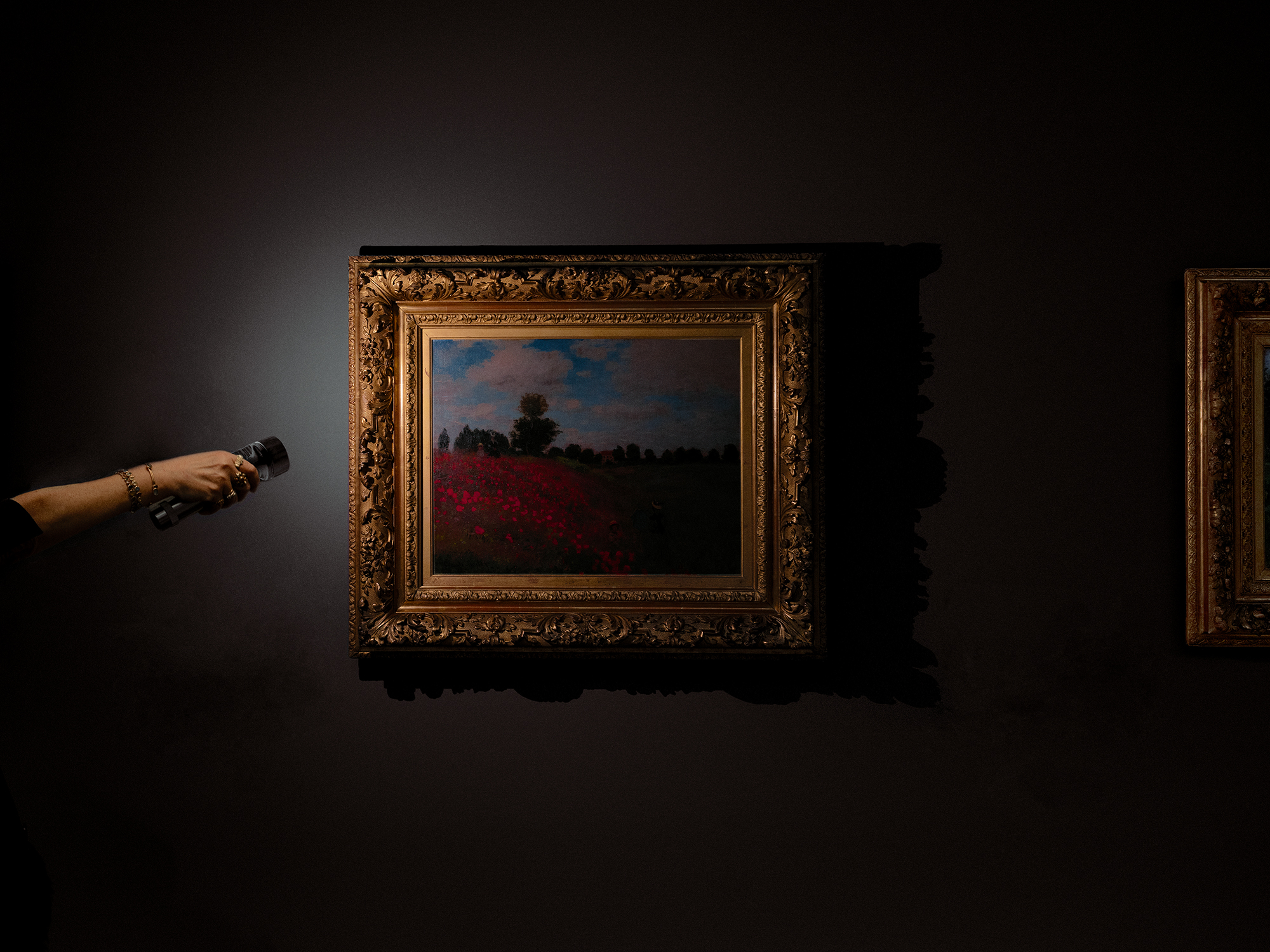
After that dinner party, Grau informed Laurence des Cars, then director of the Musée d’Orsay and Musée de l’Orangerie, who set up a meeting with Calle. Now, decades after she squatted in the building, the museum has exhibited The Ghosts of Orsay, an installation consisting of her photographs and detritus collected from the former train station and its hotel. The exhibition also coincides with the book The Elevator Resides in 501, published in both French and English editions by the Arles-based publishing house Actes Sud. For this book, Calle invited the celebrated French archaeologist Jean-Paul Demoule to write fictional ethnographic notes about the material. A short autobiographical text by Calle and the pieces by Demoule thread through her images of dilapidated rooms, exposed pipes, ledgers, empty hallways, abandoned mattresses, former room keys. The material has an oneiric quality, as if the museum were now manifesting a dream of its forgotten past.

Aperture Magazine Subscription
Courtesy the artist and Siglio
Courtesy the artist and Siglio
This exhibition and book further add to a wider reconsideration of Calle’s early work, particularly, as seen in her publications, how she blends writing with quasi-documentary photography—that is, a kind of documentary photography that may not quite aspire to truthfulness. Her narratives are, in some senses, a precursor to contemporary autofiction, writers such as Chris Kraus and Sheila Heti, while also fitting in a much longer twentieth-century literary tradition that juxtaposes text with image, from its Surrealistic origins in André Breton’s 1928 Nadja (about, indeed, a man who follows a woman around Paris) to the 1990s books by W. G. Sebald. In the United States, over the past decade, Siglio Press has been reprinting elegant editions of Calle’s early pieces, most recently The Hotel (reprint 2021; first published 1984, work from 1981), but also Venetian Suite (reprint 2015; first published 1983, work from 1980) and Address Book (reprint 2009; first published 1983 in the newspaper Libération, work from 1983).
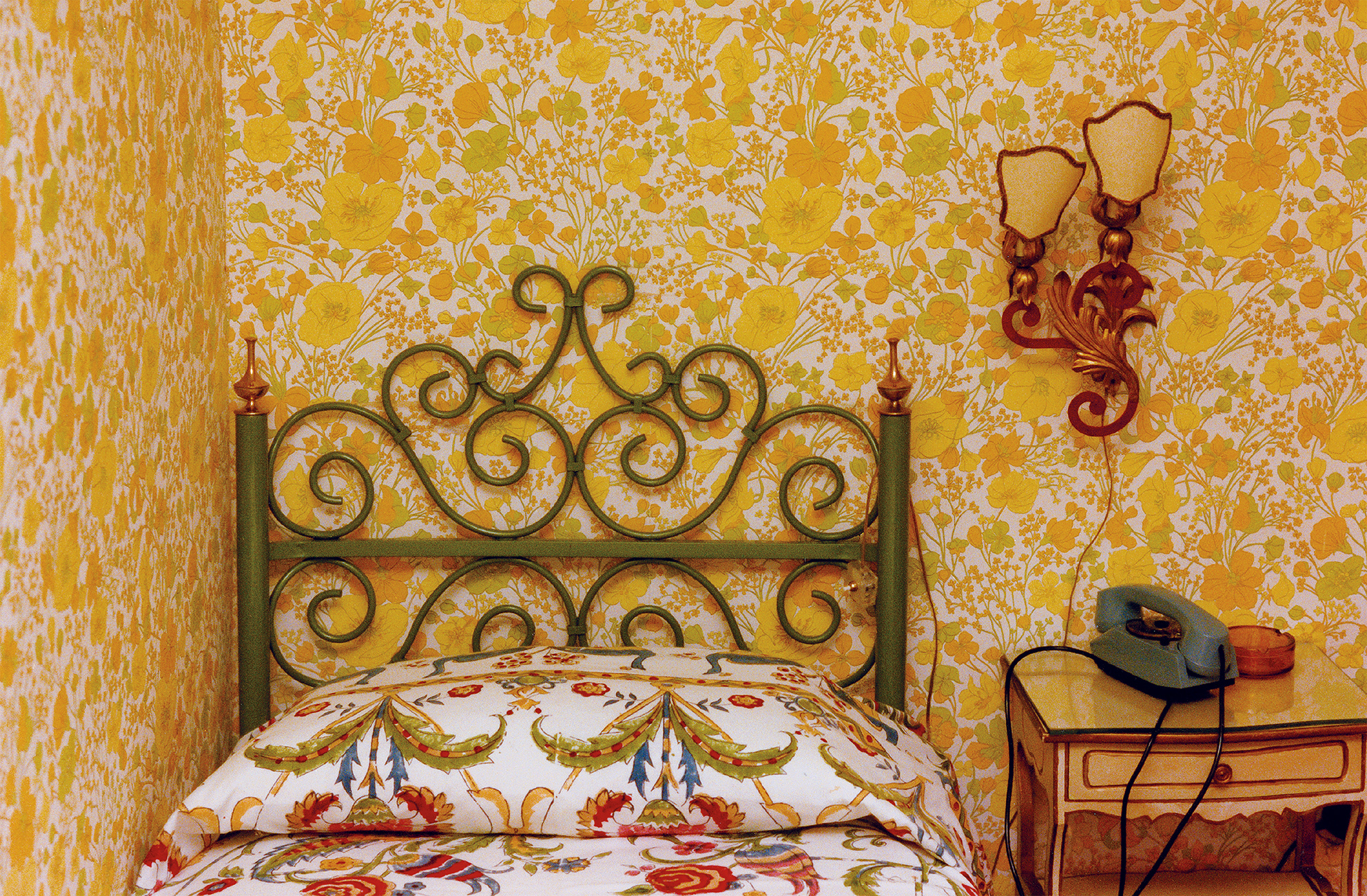
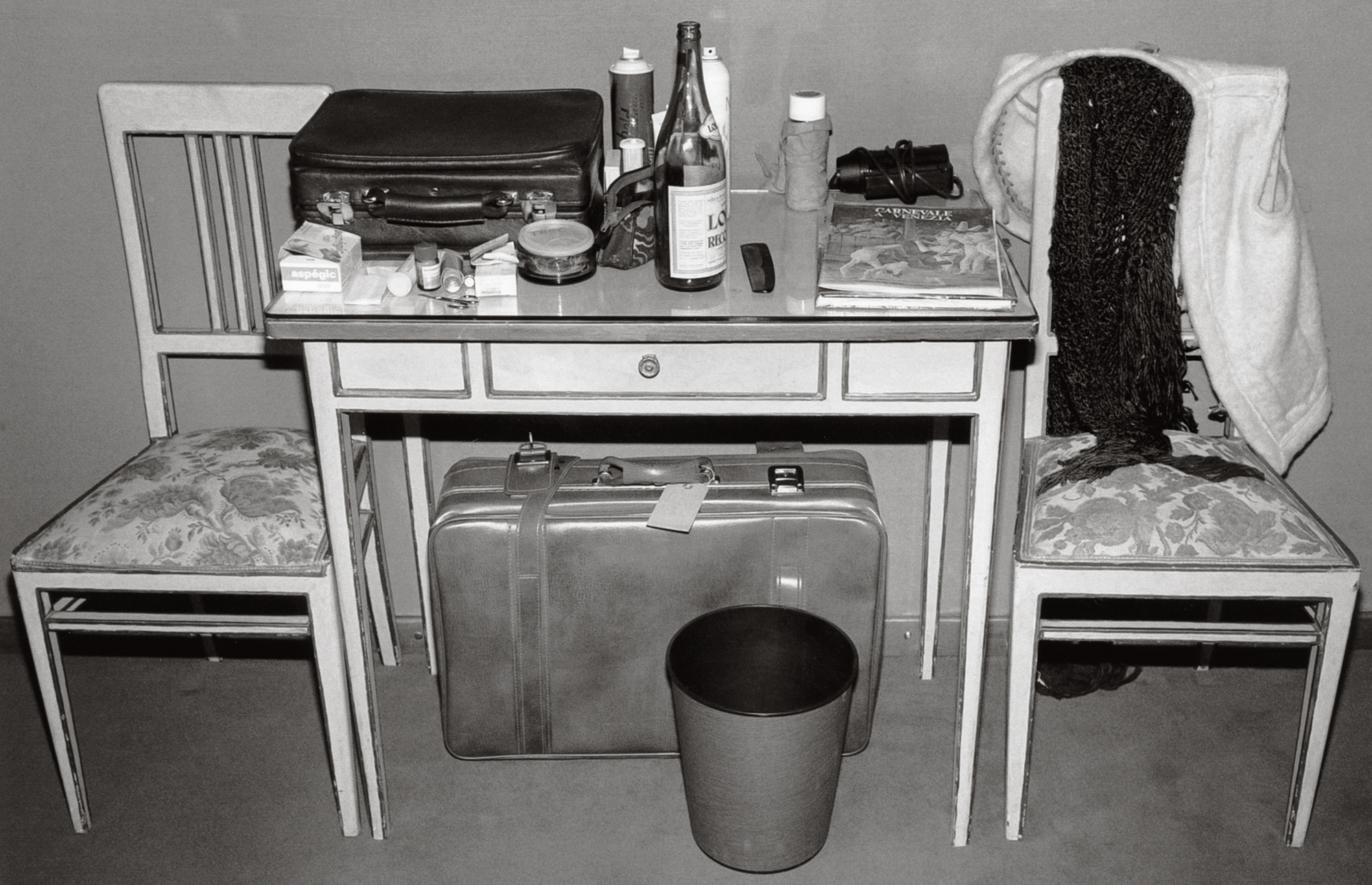
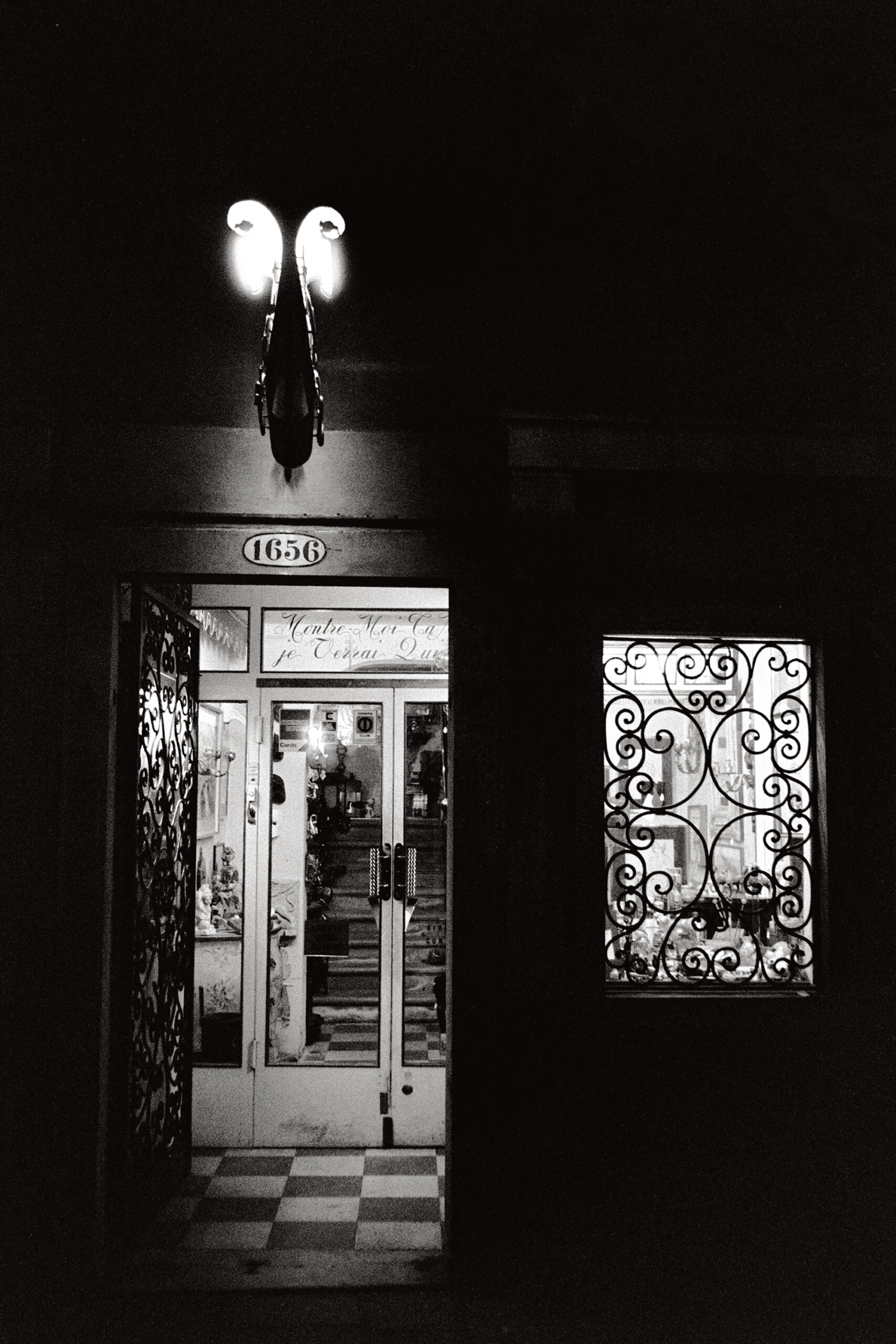
In Address Book, Calle found a misplaced address book. Before returning it, she photocopied its contents and began contacting all of the people listed to render a portrait of its owner; her written notes of the meetings were published in Libération, presented alongside photographs. Venetian Suite chronicles her surveillance of a man in Venice. One afternoon in Paris, Calle had been following a random man only to lose him in a crowd. A few hours later, by chance, she was introduced to him at an art opening. He mentioned to her that he was going to Venice the next day. So, she, too, left for Venice, to continue shadowing him while taking clandestine photographs of his activities, like a private investigator. In 1981, Calle returned to Venice for the project that became The Hotel. Securing a job as a chambermaid, she photographed the sundry belongings of the hotel guests, while she made their beds, in order to attempt to reconstruct who they were. The Hotel, which includes her written observations and photographs, appeared as a book in 1984 after being exhibited the previous year at Galerie Chantal Crousel in Paris. Her seemingly matter-of-fact photographs are uncanny next to the narrative account of cleaning rooms and snapping pictures.
While photography is central to Calle’s art, there was for decades a long-standing truism that she was not particularly good at it. Her friend the French writer and photographer Hervé Guibert, who wrote an essay on her at her invitation, “Panégyrique d’une faiseuse d’histoire” (1991), claimed that she “can’t even manage to take a proper photograph.” Her New York gallerist, Paula Cooper, once admitted that her photographs are not what people think about when they think of her art. She is not the sort of person who carries a camera with her; she only takes pictures when they are part of the rules of a project. (In a 2010 interview with Michel Guerrin in Foam magazine, the same year she received the Hasselblad Award, Calle stated that only with Take Care of Yourself, in 2007, did she begin to take more interest in the craft of photography.) But the loose compositions of her early work—the “bad” quality of the pictures, the poor or unbalanced framing, the out-of-focus subjects—have powerful effects. They provide the texts with an awkward intimacy, even in The Hotel where there are no human figures. Feeling as if they were taken quickly before a guest may return and interrupt her clandestine project, they also have the effect of disrupting the flow of reading. Her use of photographs is, in this way, less about documentation than it is about editing.
Courtesy the artist and Siglio
Throughout her pieces, inconsistencies in detail further emerge that give them a surreal quality. A number of the photographs of abandoned rooms seen in The Elevator Resides in 501, for example, were also used in Address Book. In 1993, Calle confessed to the art historian Bice Curiger that everything in The Hotel was truthful except the contents of one room, which she staged. In The Hotel, after days of being unable to enter room 45, she gains access, feeling “a certain lack of interest,” she writes. She claimed that she had only ten minutes. “I content myself with taking a few photographs: the carnival masks hung on the sconces, the Pierrot costume, the iron I noticed in the suitcase, two pairs of slippers waiting at the foot of each bed. In the folds of the sheets, I find a lobster claw.”
All of this feels like it comes out of a dream, the waking dream of a young woman who opens the door to an abandoned building, or an occupied hotel room. Over the past forty years, Calle has, in many ways, invented her own genre, somewhere between the traditional photobook and a literary piece. The juxtaposition of autobiographical writing with her particular style of quasi-documentary photography is her major aesthetic contribution, the skeleton key to her practice. Just as her photographs defamiliarize her texts, Calle’s work reflects on the relationship between self and other, how each of us remains a stranger to ourself. From 1980s books such as The Hotel up to her latest (based on material from those early years), she mixes writing and photography in ways that result in disrupting the absorptive experience of reading, as if jarring a sleeper out of a dream, or stepping into an even deeper one. “The dread of doors that won’t close,” states the cultural critic Walter Benjamin, “is something that everyone knows from dreams.” Her pictures are like the unclosed doors of her narratives.
This article originally appeared in Aperture, Summer 2022, “Sleepwalking.”