Featured
6 Photographers on Lee Friedlander’s Timeless Influence
How do Friedlander’s disorienting visions of the United States continue to endure and delight?

For over seventy years, Lee Friedlander has been one of photography’s most celebrated and enduring figures. His keen ability to capture the intersections of public and private space, with wit and formal complexity, has taught us to see a vast collective unconscious—revealing the dreams, desires, and delusions hidden in the markers of the everyday world. His disorienting visions of street scenes, storefronts, signage, and, on occasion, himself have inspired generations of photographers and filmmakers alike.
In his latest monograph, Life Still, his first collaboration with Aperture, Friedlander playfully reimagines the presentation of his oeuvre at age ninety-one, bringing together rarely seen and unpublished images from the past sixty years alongside new work to stage a visual dialogue between past and present. Here, six photographers reflect on how Friedlander’s photographs continue to resonate and endure.
Daniel Arnold
Obviously, a distillation of eerie harmonic order from chaos is the persistent Lee Friedlander knockout. The calling card. It’s only worth mentioning here to accentuate how rare it is to look at his work and relate to anything beyond the compulsion of looking. He’s just too good at it. In that regard, there’s not much evidence in the hit parade of his vulnerability—even in the self-portraits. At his most unflatteringly double-chinned, his photos are still so inventively executed that the subject feels divorced from, even mocked by, the photographer.
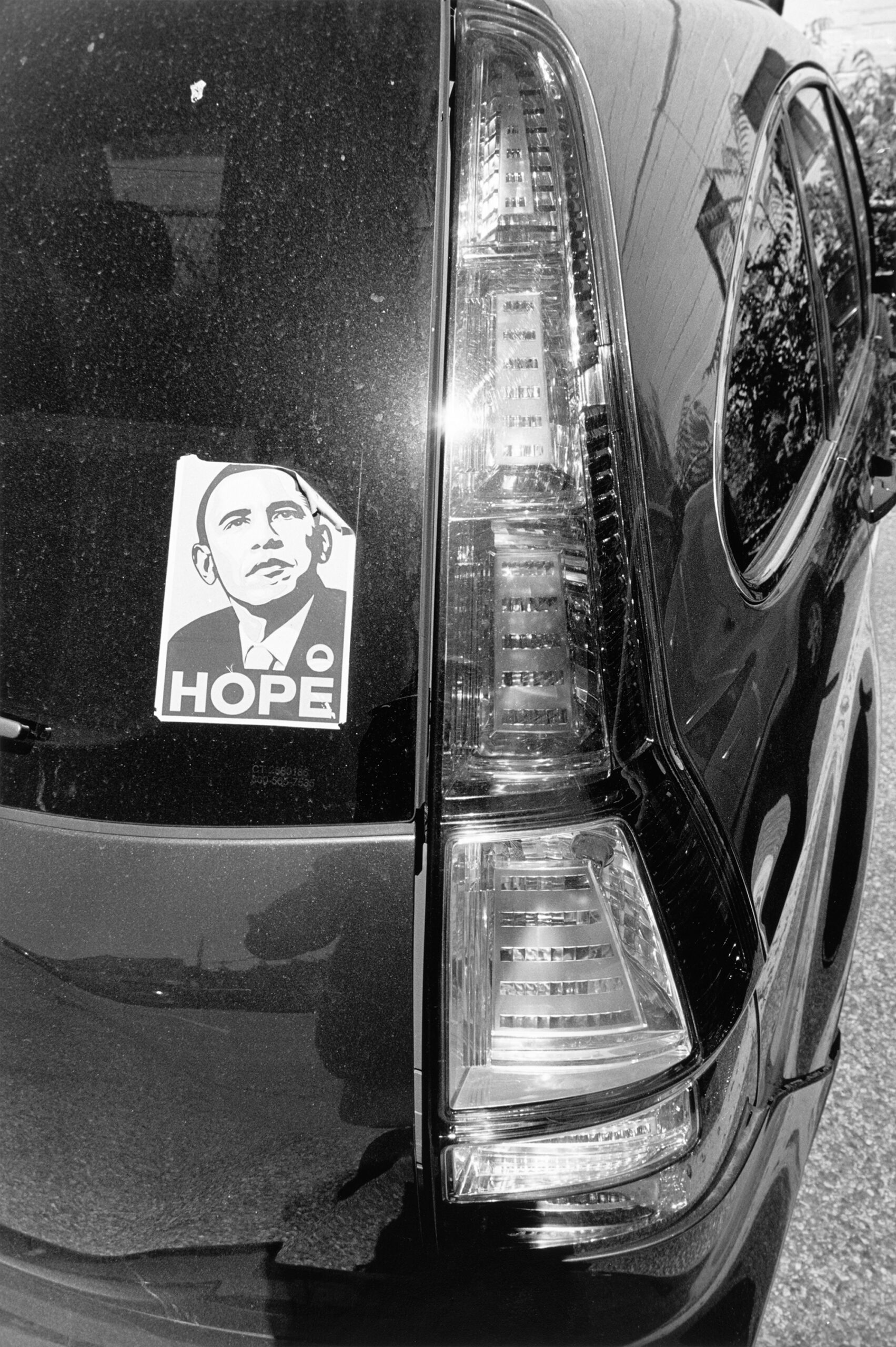
Life Still is the end of all that, and what a pleasure it is to meet Lee there. A book of invitations! Many of them are eloquent and intentional (see an image of a dumpster with fuck spray-painted on its surface next to a tongue-in-cheek auto-store slogan that reads “Time to retire”), but where I find Lee to be so vulnerably present that I could cry is in this simple shot of an Obama sticker on a minivan window. A photo that would be right at home in my mom’s phone gallery. Talk about a self-portrait! To see him in his nineties, still snapping instinctively at shapes and shadows, even with an unparalleled body of work trailing endlessly behind him—it’s beyond moving. It’s relatable. The photographer’s dream.
Awol Erizku
My first and only memory of meeting Lee Friedlander was during a class visit with Tod Papageorge to Yale University Press in 2013. We watched Friedlander hover over a set of proofs for Family in the Picture, 1958–2013 the way a pianist listens for the softest note. He studied the tonal range with austere precision. I remember him asking for alternative pulls because one set needed just a touch more contrast, reminding us how much feeling a great black-and-white reproduction can carry.
That same vigilance runs through his whole oeuvre: the cluttered American stage, the ever-present mirror that turns the camera back on its maker. I’ve long dubbed Friedlander the original “selfie king,” not out of vanity but for his unorthodox investigation of self-portraiture (see In the Picture: Self-Portraits, 1958–2011). In his practice, he becomes shadow, reflection, interruption, a figure folded into the world’s signage and glare. He makes the ordinary strange, then honest. He reminds us that the overlooked structure is often the story.
But my favorite turn in the work comes after knee replacements and forced stillness, when he turns to the flowers from his wife’s garden, stripped of their petals, and studies what holds them up. Stems (2003) is my favorite conceptual detour: portraits of endurance, born from necessity, with no patience for sentimentality. And that refusal of sentimentality is the throughline from then to Life Still.
Sara Cwynar
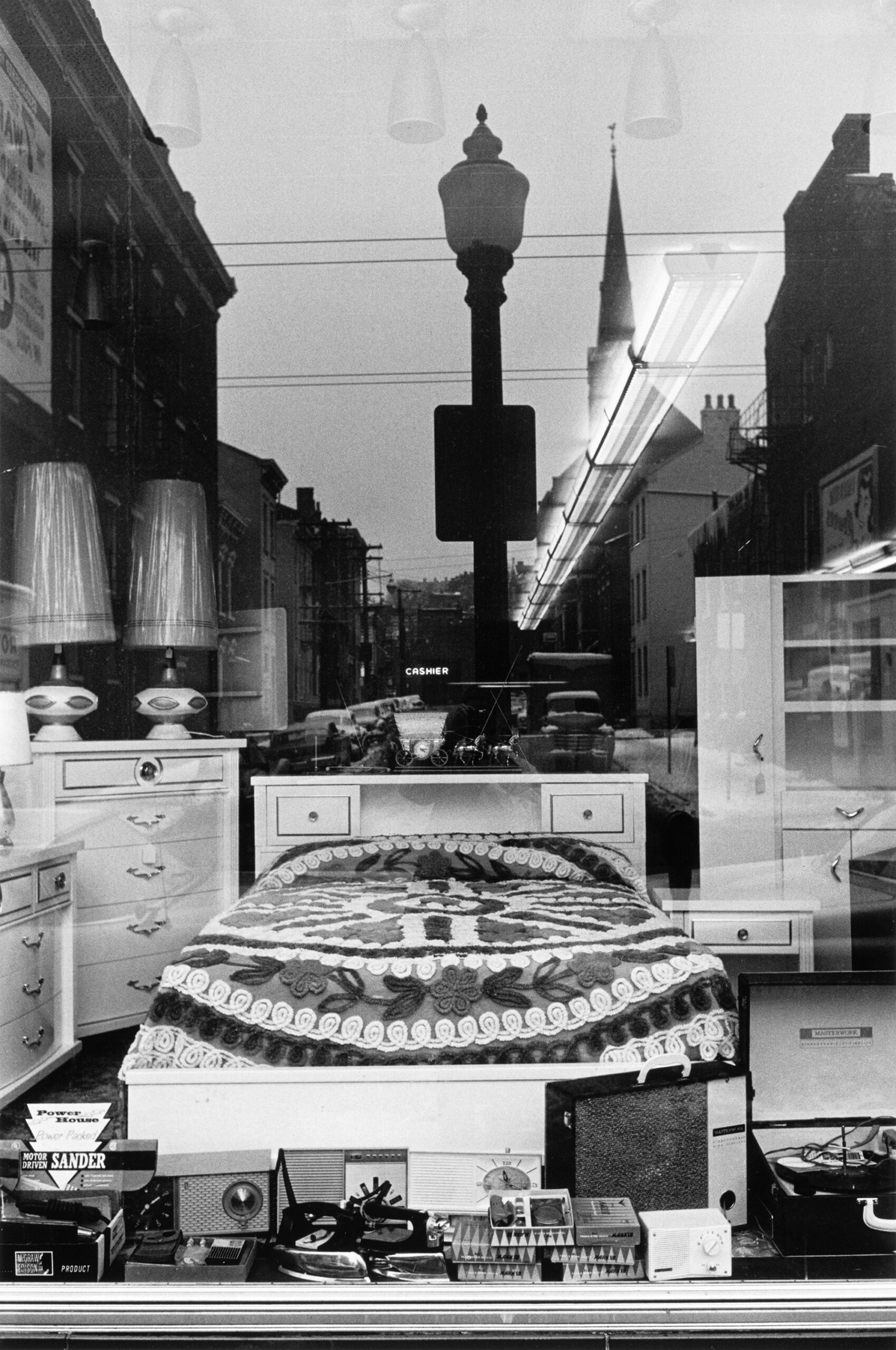
In this picture from 1963, a fully furnished bedroom set (bed, side table, two lamps, multiple chests of drawers, and an ornate floral bedspread) sits behind a store window at street level, available to view and purchase. The weight of the photo comes from the reflection of the street seen on the store window and how the sky mashes itself into this view of a bedroom set—these features lend it language more in common with that of a dream sequence from a movie, or a modern nightmare, than a display window. It is an example of Friedlander’s ability to find collages in the real world made out of furniture, asphalt, unloved objects, sky, and light. This picture, taken twelve years before Michel Foucault famously wrote about the panoptic nature of modern life, feels like a harbinger of something to come, foreshadowing the way that sleep is now the only place where technology, surveillance, and commerce can’t get you, the way that all our private thoughts and feelings and spaces are churned out for public view through social media. This bedroom is no longer private, sacred, or safe, displayed as it is to Friedlander, the stranger reflected on the glass overlaid with a row of fluorescent lights shooting straight down Main Street.
Gillian Laub
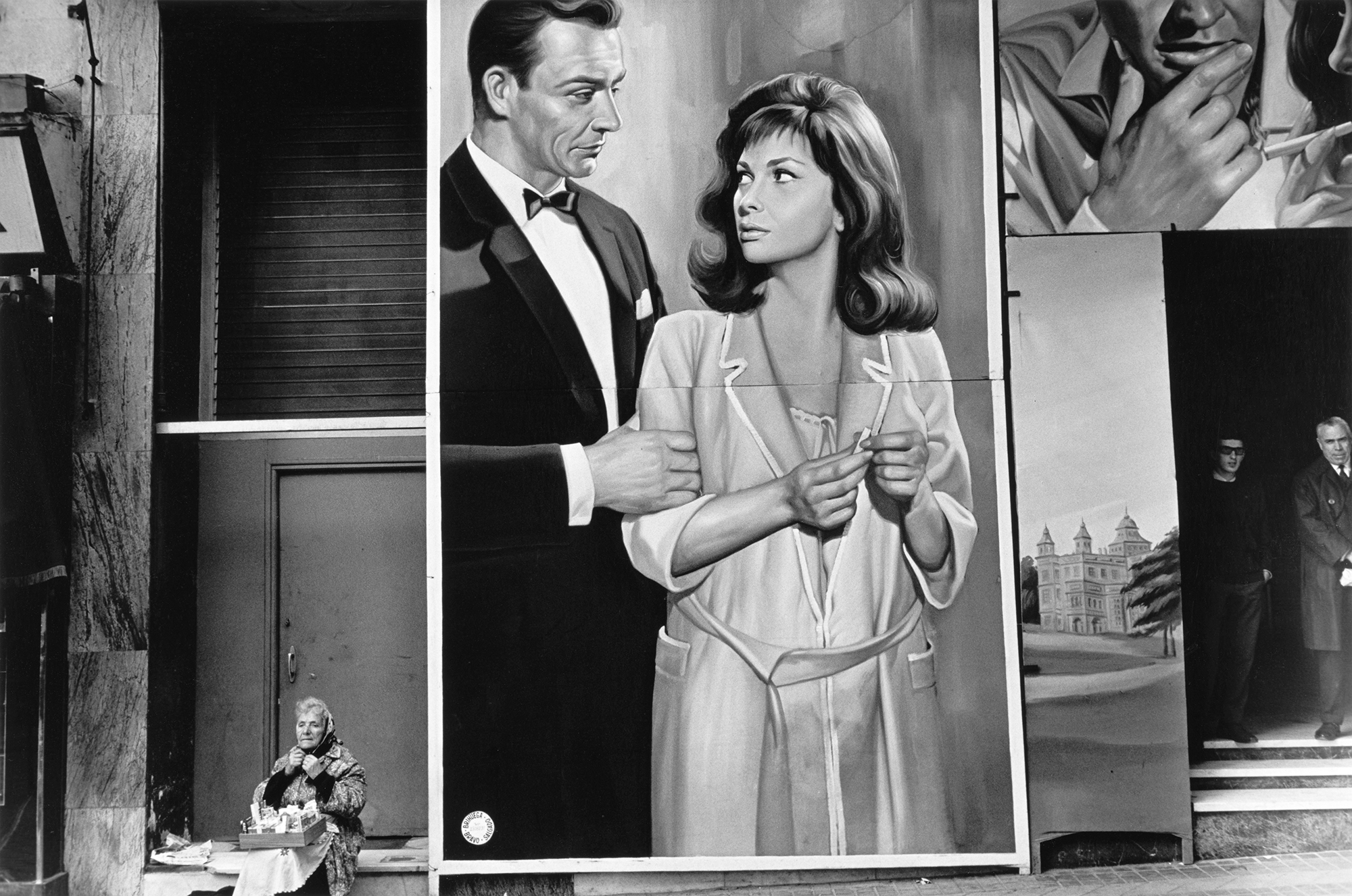
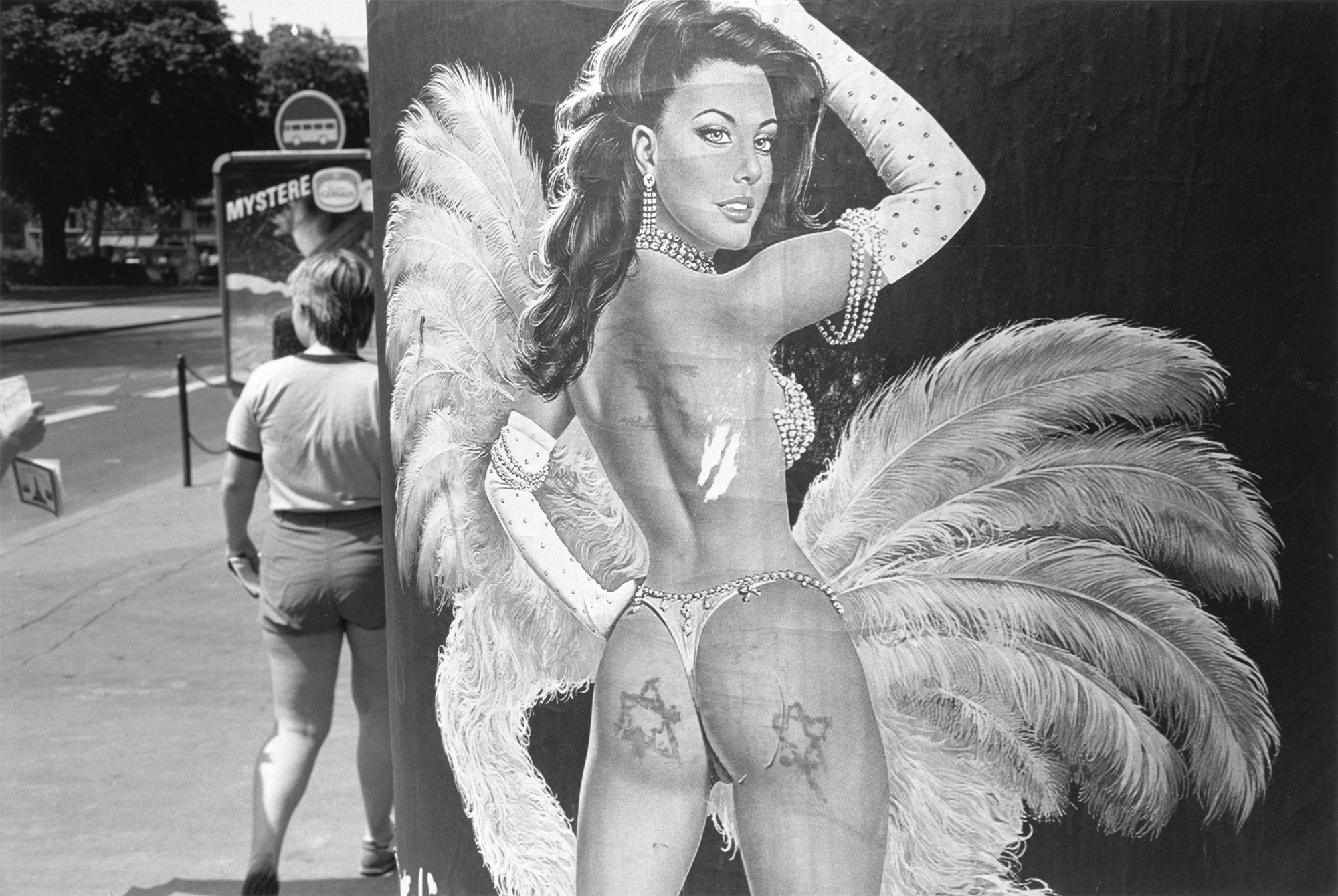
Lee Friedlander’s photographs are always brilliantly layered, composed with multiple worlds coexisting inside a single frame. I love how he finds intimate moments inside the public spaces and does it with humor, wit, and a generosity toward his subjects. I was particularly drawn to this pairing: two images, made twenty years apart in Spain and Paris, that feel timeless and universal. The first photograph carries a quiet melancholy, expressed through a solitary figure dwarfed by the towering fantasy of the world around her. The second depicts ordinary life colliding with spectacle in a way that makes you want to laugh and look closer at the same time. Each plays with aspiration and reality, with the gap between the world we are sold and the one we actually inhabit. They form a conversation about fantasy and everyday life and show how effortlessly—almost comically—the two collide. What I admire most about Friedlander is the quality that runs through all his work: an insatiable curiosity without judgment. These two images are a perfect distillation of everything that makes his vision so enduring.
Anastasia Samoylova
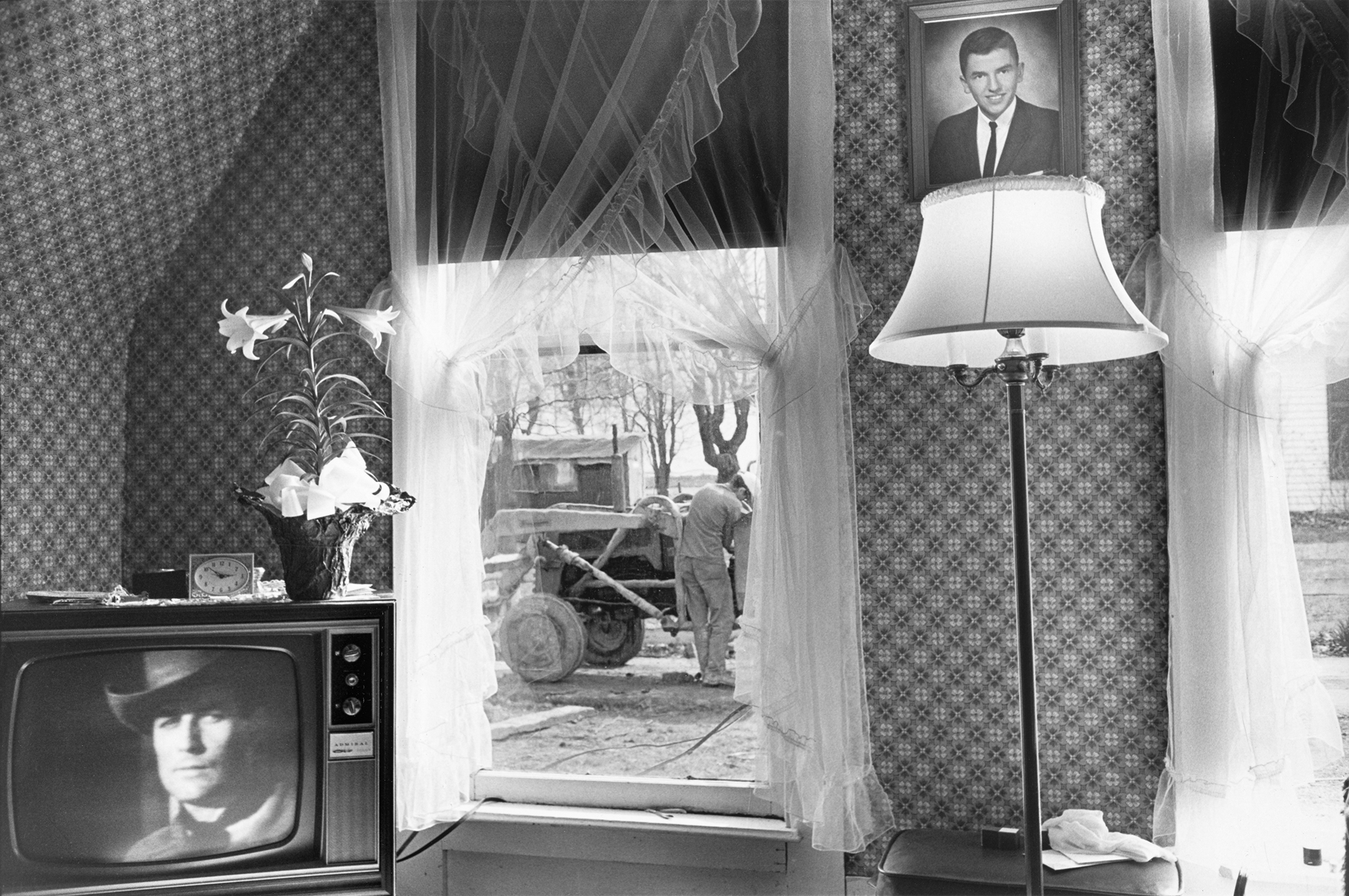
In Waddy, Kentucky (1969), Lee Friedlander composes a world that seems to look back at itself. A solitary cowboy flickers on the television, his chiseled profile and sidelong glance set against a smiling young man in a formal portrait above the lamp. Beyond the window, another figure—a rugged mechanic, perhaps an echo of that same man from the portrait—bends over a piece of farm equipment, absorbed in a task we cannot fully see. There is both mystery and quiet humor in this trio of archetypes, as if the image were gently staging its own internal dialogue. These presences do not connect so much as resonate, like variations on a theme, each contained, each distant.
The wallpaper hums across the surface, its dense pattern recalling Friedlander’s chain-link fences—that familiar screen through which the world is both revealed and withheld. Frilly curtains soften the view. A subtle misalignment between expression and setting, image and world, carries a sense of endearment.
Nothing fully resolves. Inside and outside fold into one another. Meaning gathers gently through proximity and repetition.
A small, complete world. A short film, stilled.
Stephen Shore
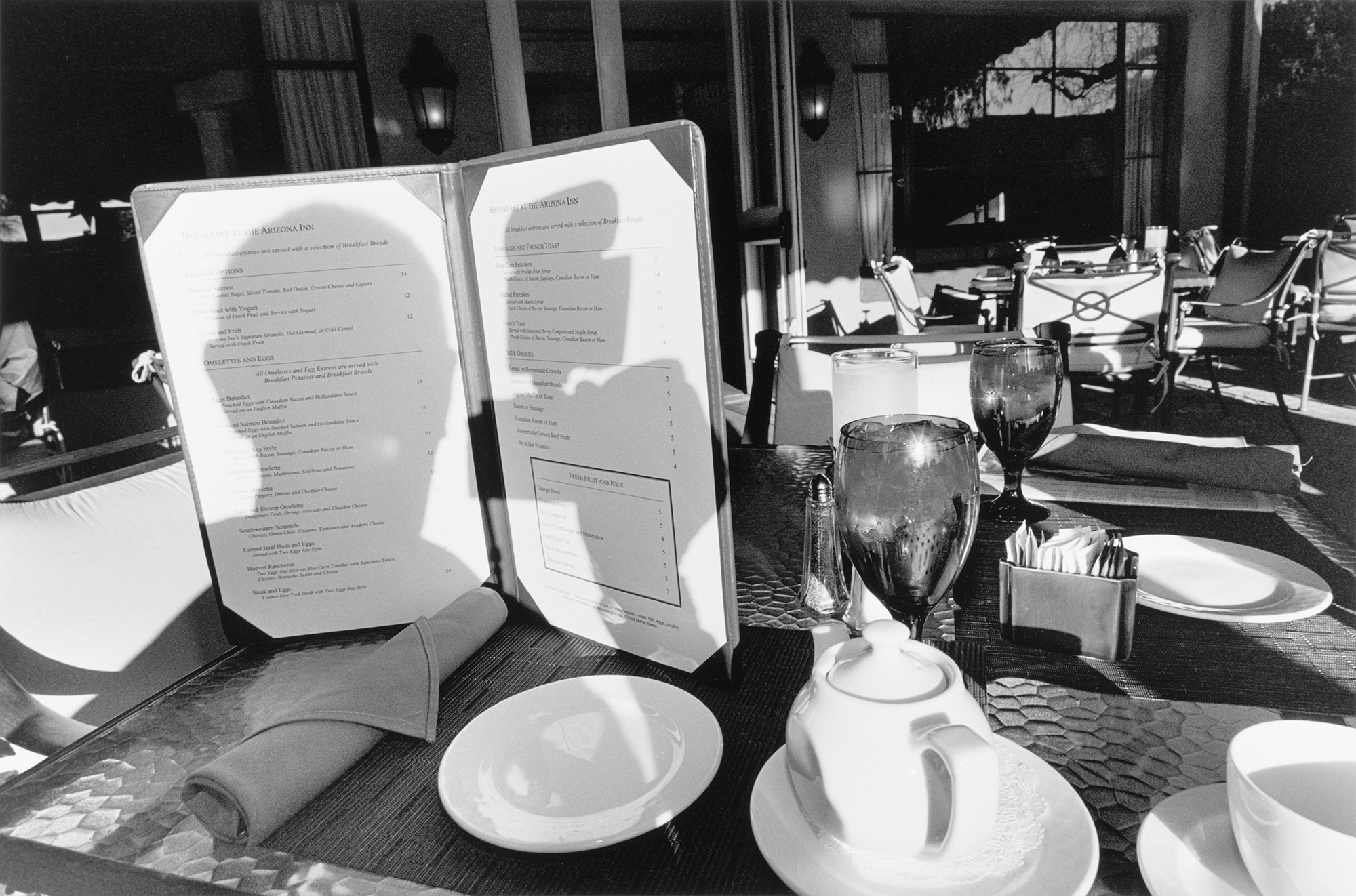
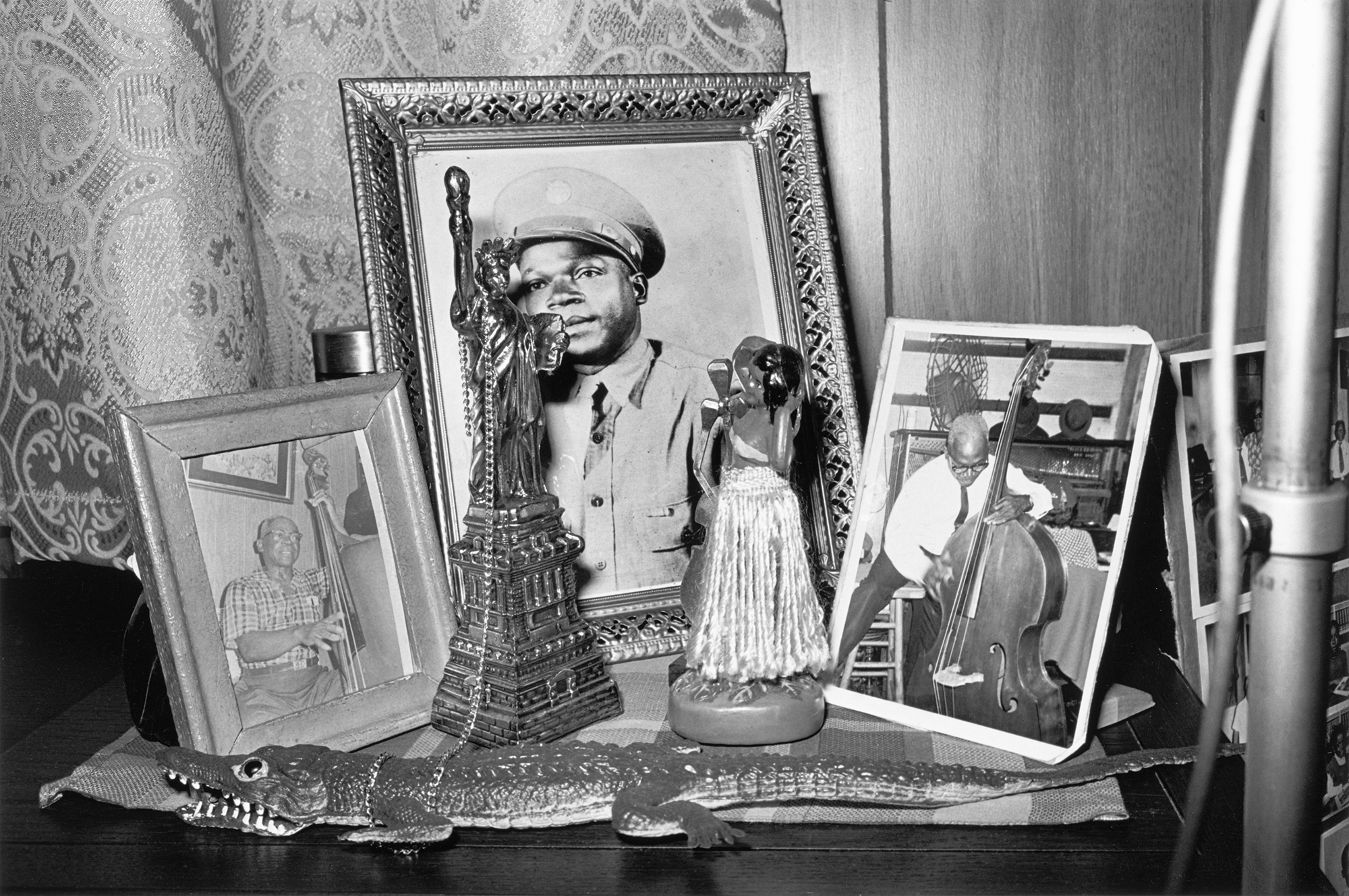
Lee Friedlander’s path and mine crossed at Monet’s House and Garden in Giverny, France, in the early 1980s. Over lunch at the nearby Auberge St. Eustache, Lee told me that he’d been photographing arrangements on tabletops and windowsills. He said that he was so impressed with these arrangements, that he could never have conceived them. I was stunned. Here was the photographer with, perhaps, the most intense formal imagination telling me how impressed he was with the imagination behind these tabletops. Then it occurred to me that there are two kinds of imagination. Some of us can see an empty tabletop, or a blank canvas, and know what to fill it with. Then there are those of us who can stand on a street corner or in a living room or in a forest and know where to stand and where to place the frame and when to take a picture. Those of us who have an instinct for making sense of things—more than envisioning things out of thin air—we’re the ones who are drawn to photography.
See more in Lee Friedlander: Life Still (Aperture, 2026).