Introducing
A Photographer Turns Up the Color in His Family Portraits
In Mexico and New York, Luis Manuel Diaz takes the drama and beauty of Catholic religious painting and applies it to everyday life.
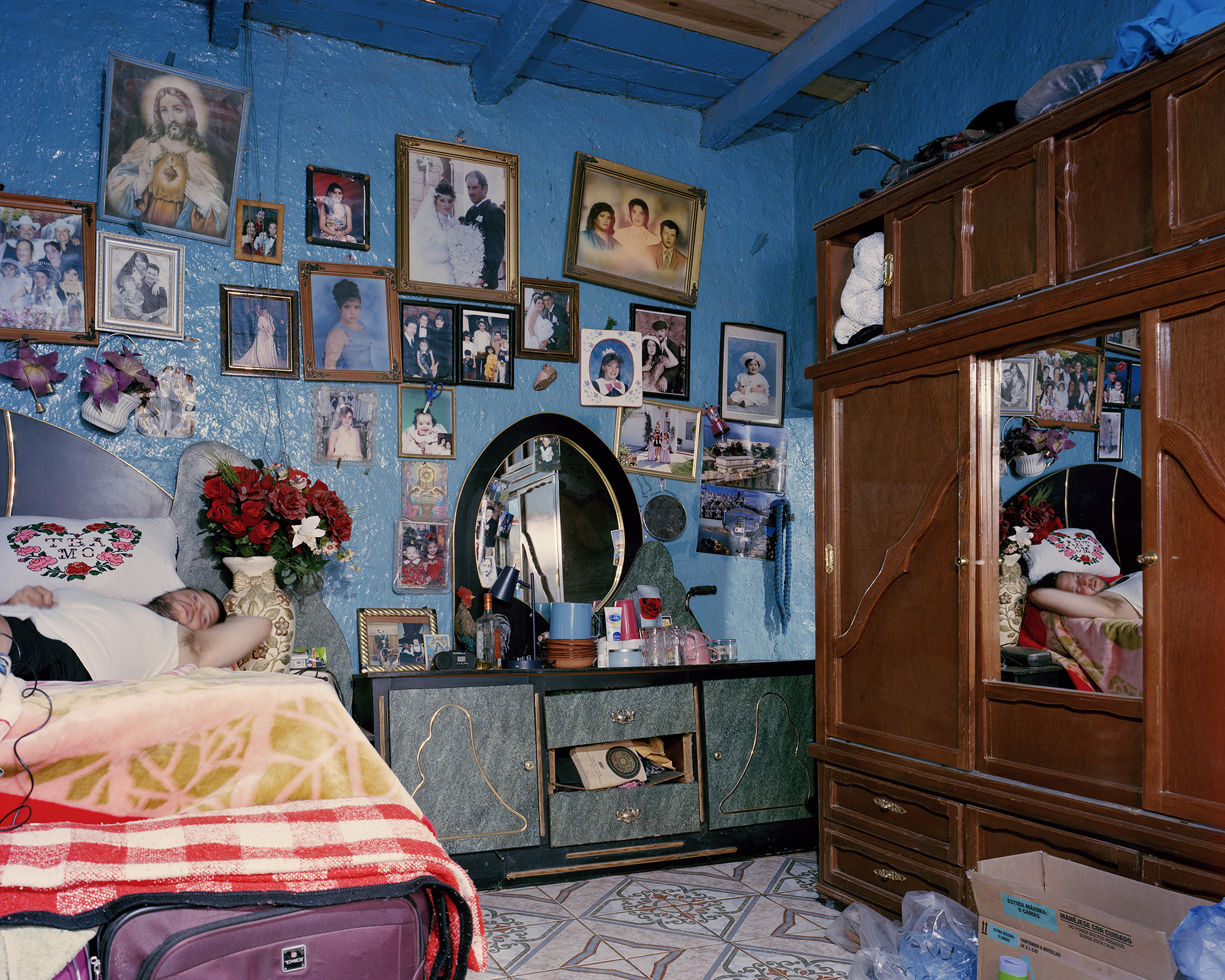
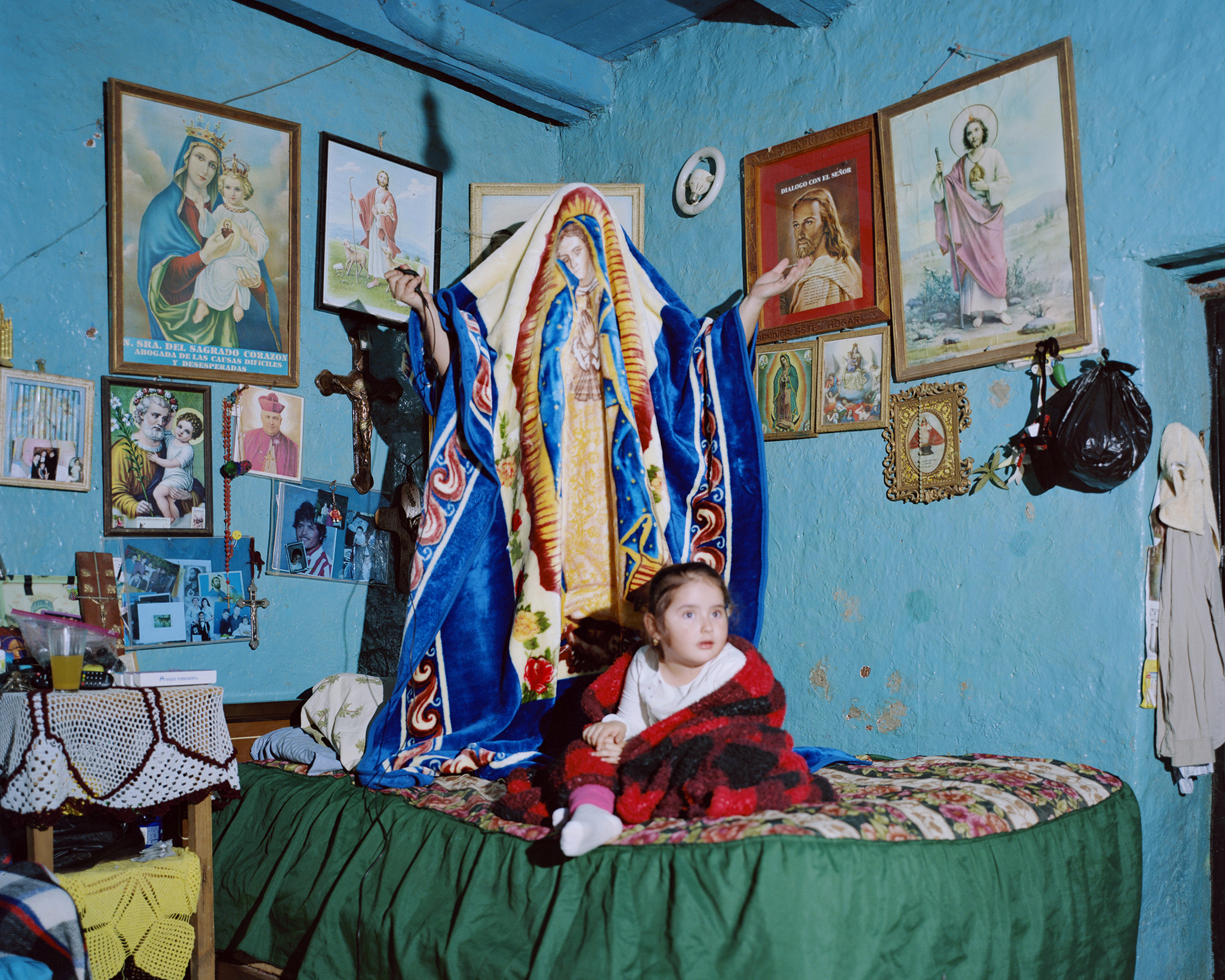
Luis Manuel Diaz lay on his grandmother’s bed in a small town in rural Mexico, reclining beside a vase brimming with roses. The cobalt-blue room has no windows—instead, its adobe walls, lit by a single exposed lightbulb, are crowded with family portraits, Catholic religious icons, mirrors, and the relics of his grandparents’ lives. Turning his head toward a mirror embedded in a wardrobe, Diaz clicked the shutter release cable on his large-format view camera, catching the slight blur of his movement. The resulting photograph, Untitled (Self-Portrait and the Family Tree) (2024), recently presented in the Upstate Photography Biennial at the Center for Photography at Woodstock (CPW), is an arresting glimpse into the domestic life that Diaz has spent the past decade capturing in his series Canta y No Llores (Sing and Don’t Cry) (2016–present).
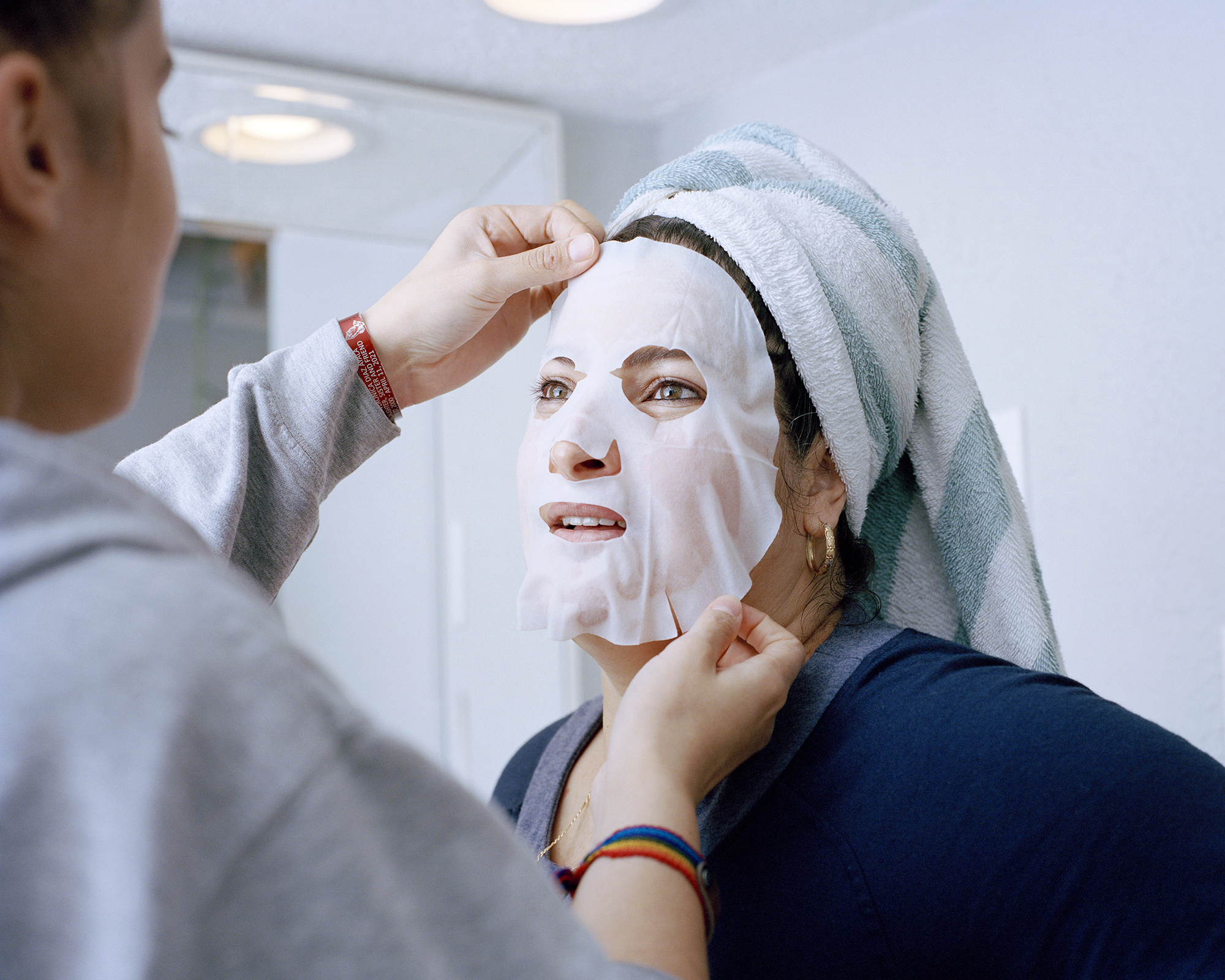
Diaz was born in that small town in Michoacán, Mexico, and cites his grandmother’s bedroom as his most important early influence. “I remember being five years old and just going and getting lost in the different modes of photography I saw there,” he explained during an artist talk at CPW. Photographs were also a way for his family to maintain ties across vast distances; images can traverse international borders even when their subjects cannot. For much of Diaz’s childhood, his father was based in the United States working full time in construction while the rest of the family remained in Mexico, meaning that they could only gather together on holidays. “My understanding of my father and how his face looked was heavily tied to these photographs of him,” Diaz said. “I was really interested in the performance that took place when he would make these portraits.”
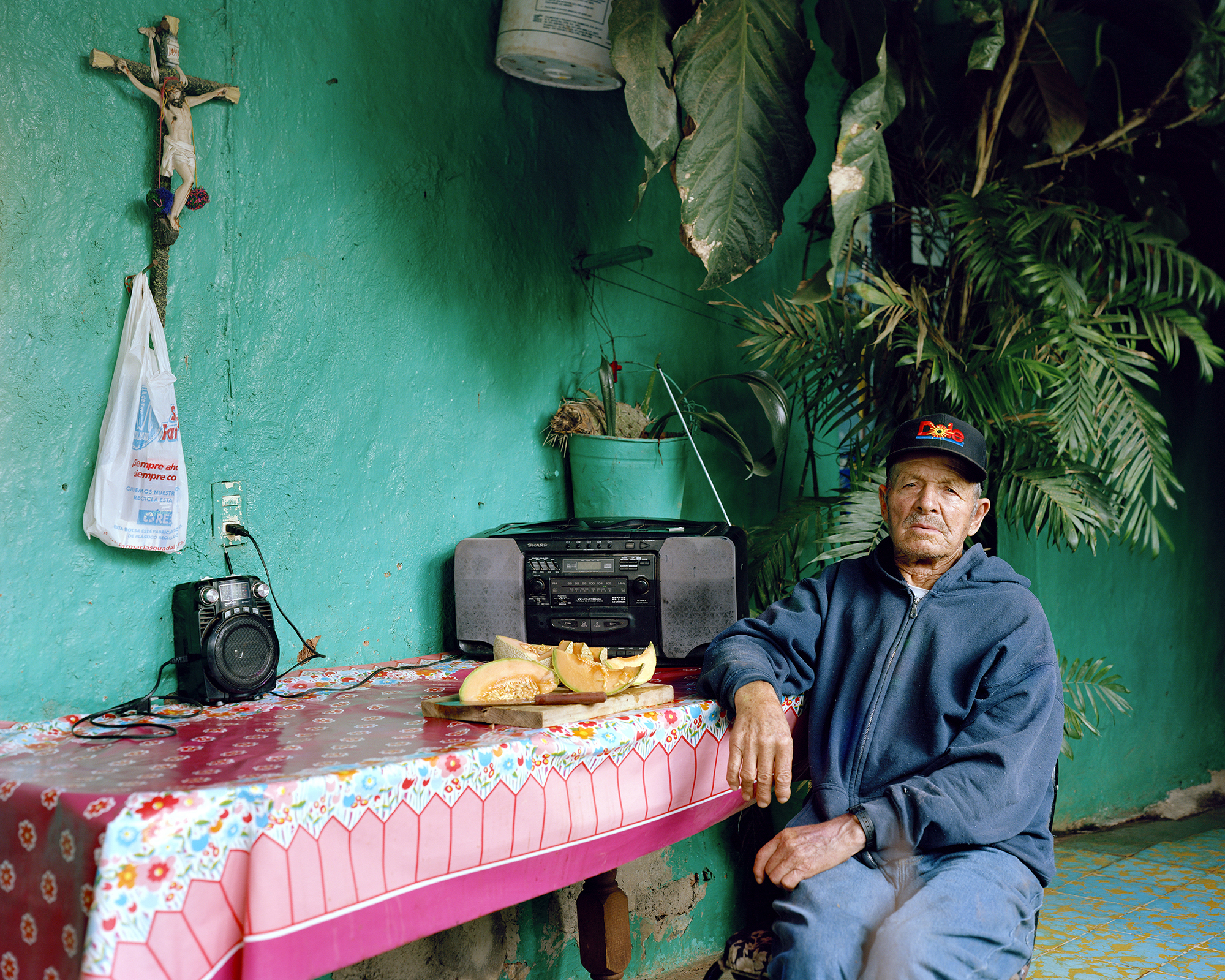
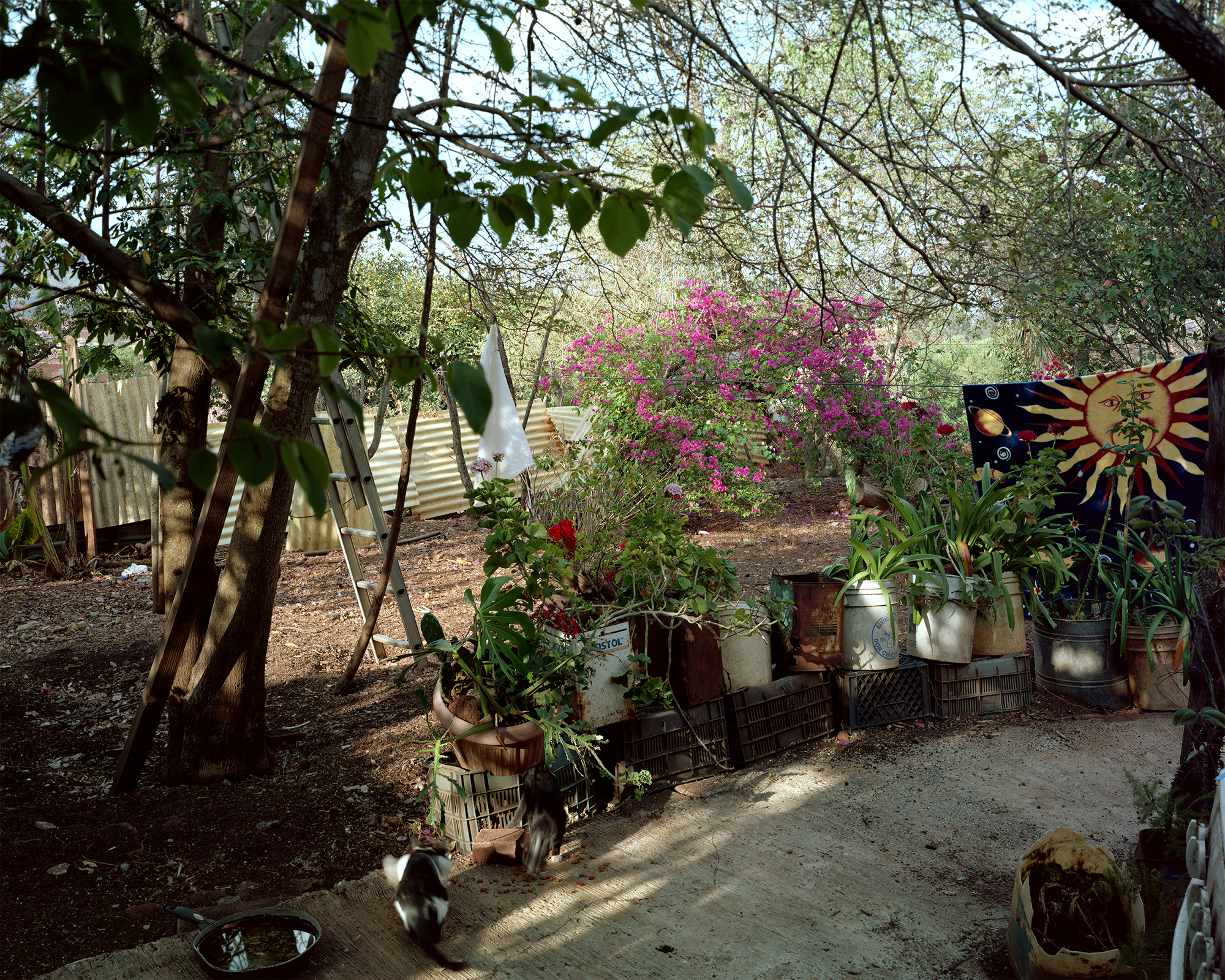
In 2005, when Diaz was nine years old, his family permanently reunited in the United States, moving to the suburbs of Westchester, New York. After a childhood spent swimming in local lagoons and picking fruit from trees, New York’s concrete landscape was jarring. The photographer likes to joke that as he travels north after visiting his grandparents in Mexico to his parents’ house, the color drains out of the world. Michoacán is filled with lush hues and patterns, both in nature and in its homes; the Northeastern United States, by contrast, trends pretty greige. Diaz’s photographs make the infamous sepia-tinted “Mexico filter” that US media tends to slap on to anything south of the border seem all the more comical in comparison—the imperialist expansion of the American monochrome revealed for what it is.
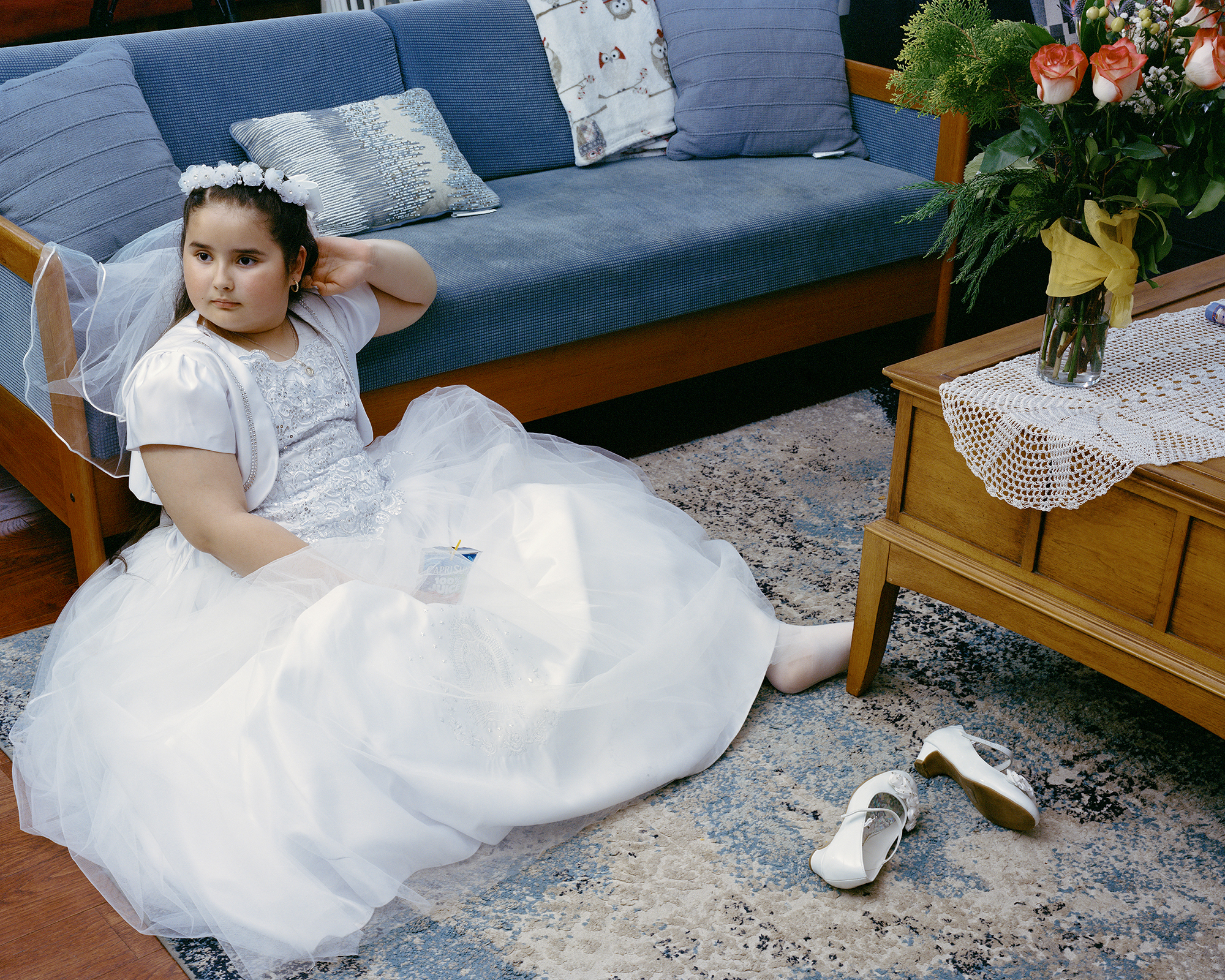
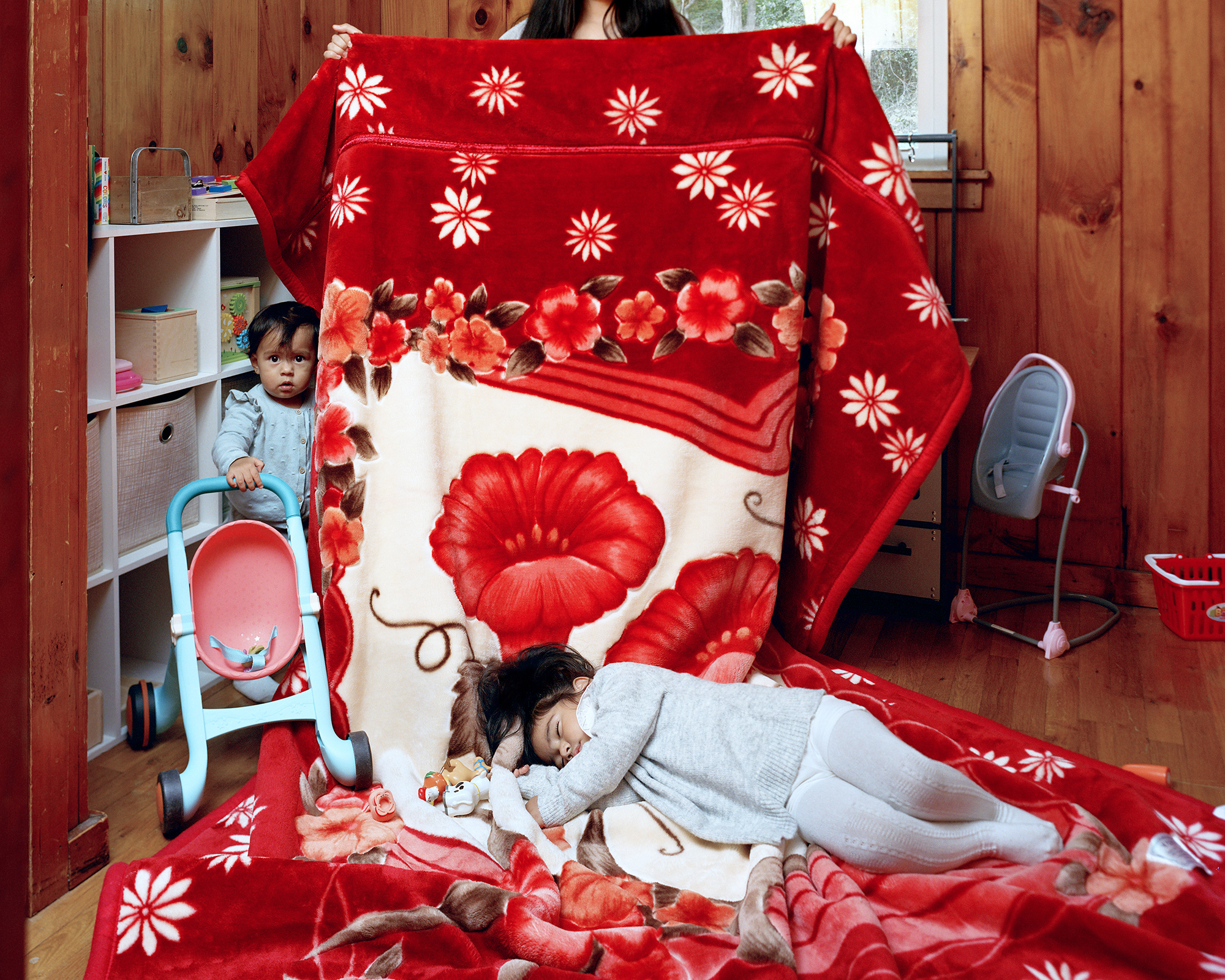
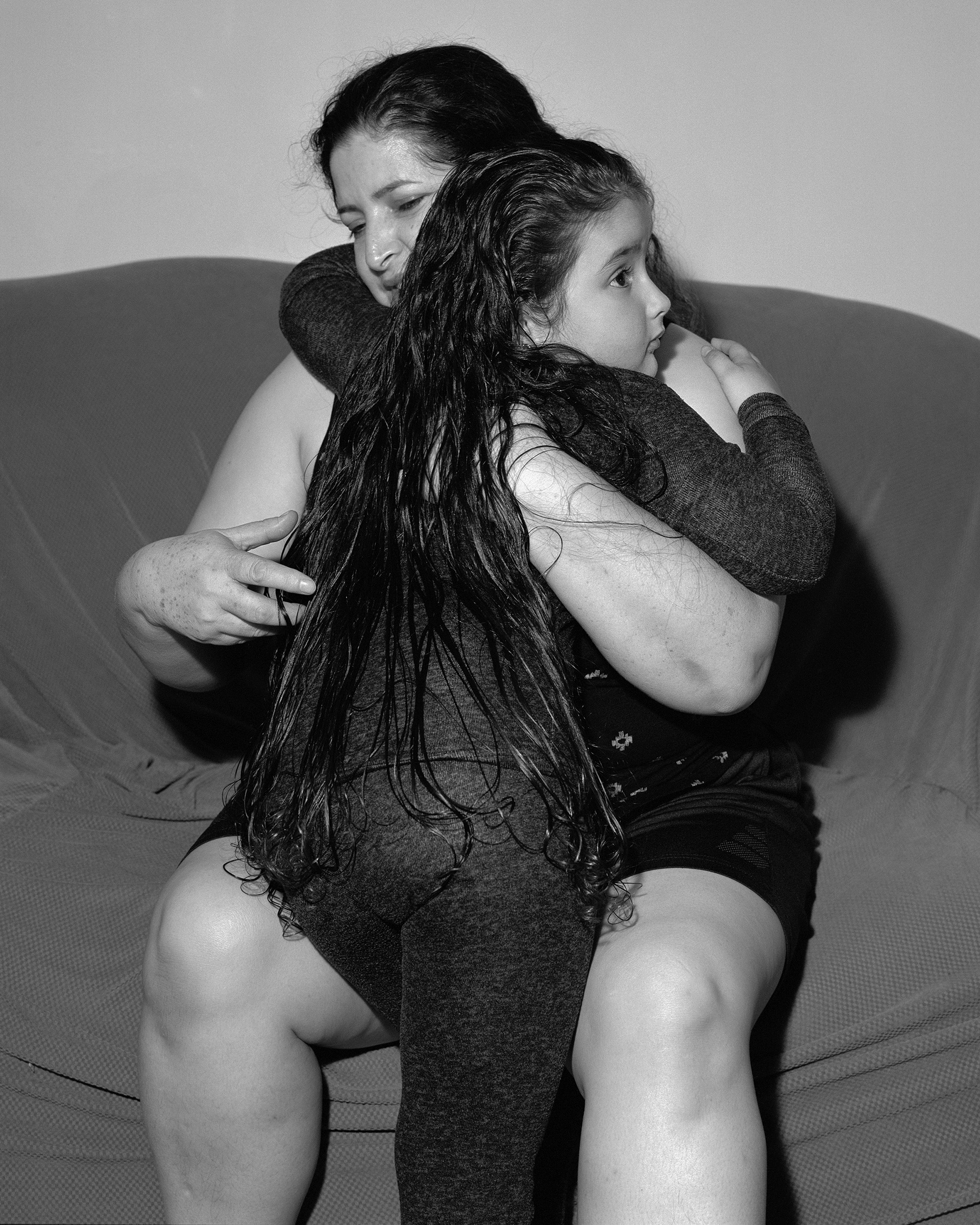
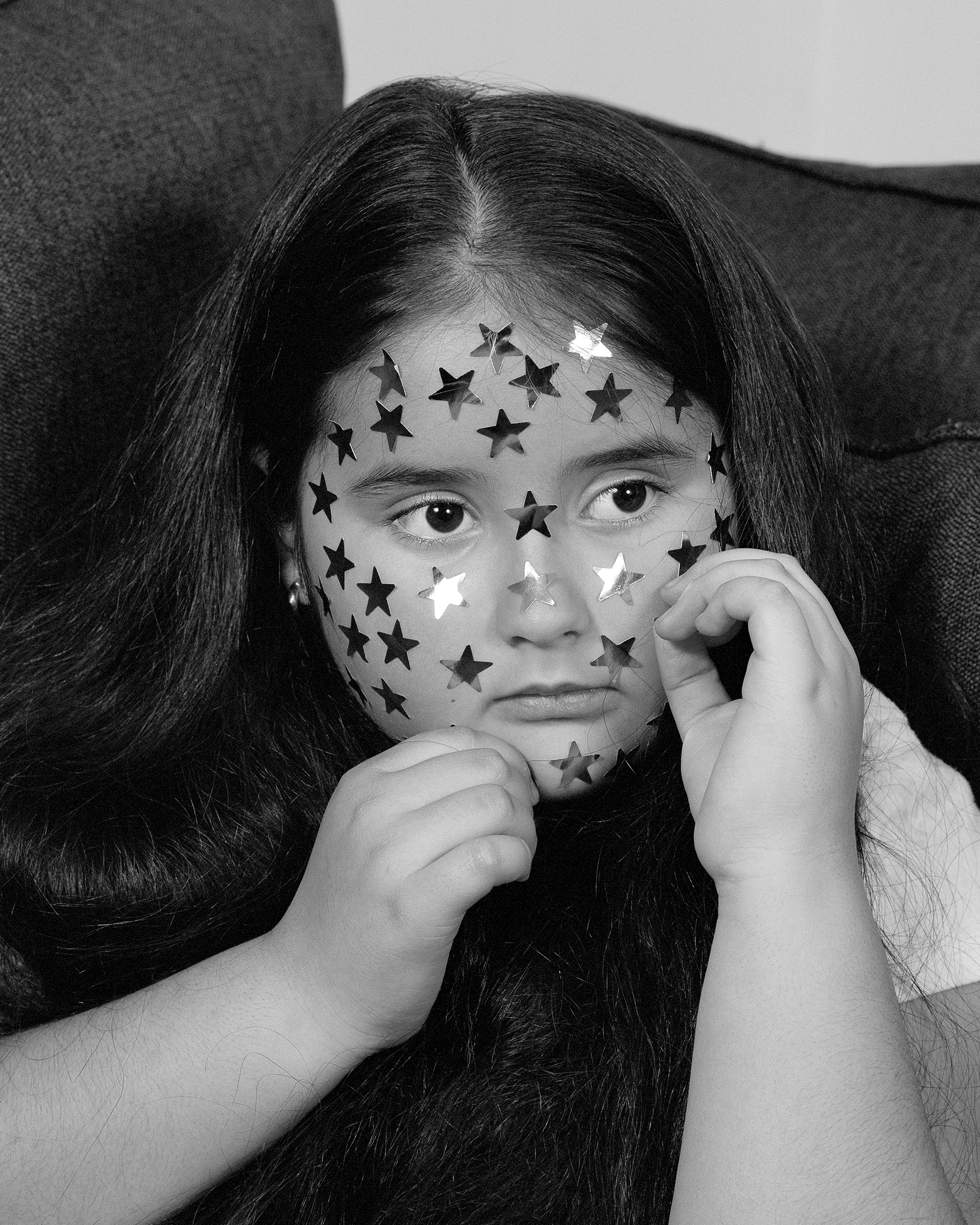
Not only does Diaz have an eye for color, he also takes the drama and beauty of Catholic religious painting and applies it to everyday life. If one were to describe the subject of Untitled (Hidden Mother) (2023) literally, for example, it would be banal: A mother holds up a blanket behind her daughters in a suburban New York home. Diaz’s lens, however, imbues it with cosmic significance. The unseen mother—only hinted at near the edges of the frame—seems to protect her older daughter, who lies asleep, angelic, framed by the rich red flowers of the blanket and the glow of white around her body. Likewise, Untitled (First Communion), a 2025 portrait of Diaz’s youngest sister, Stephanie, captures her sitting on the floor, shoes off, drinking Capri-Sun after her first communion. But with the gentle light on her skin, the translucent white ruffles of her dress, and her veil draped over the edge of the sofa, she seems positively lifted from a Renaissance painting. “Growing up Catholic, I was really drawn to the religious narrative tableaux that I would see everywhere,” Diaz explained. “Particularly the emphasis they put on the body—either the body in pain, or just living life.”
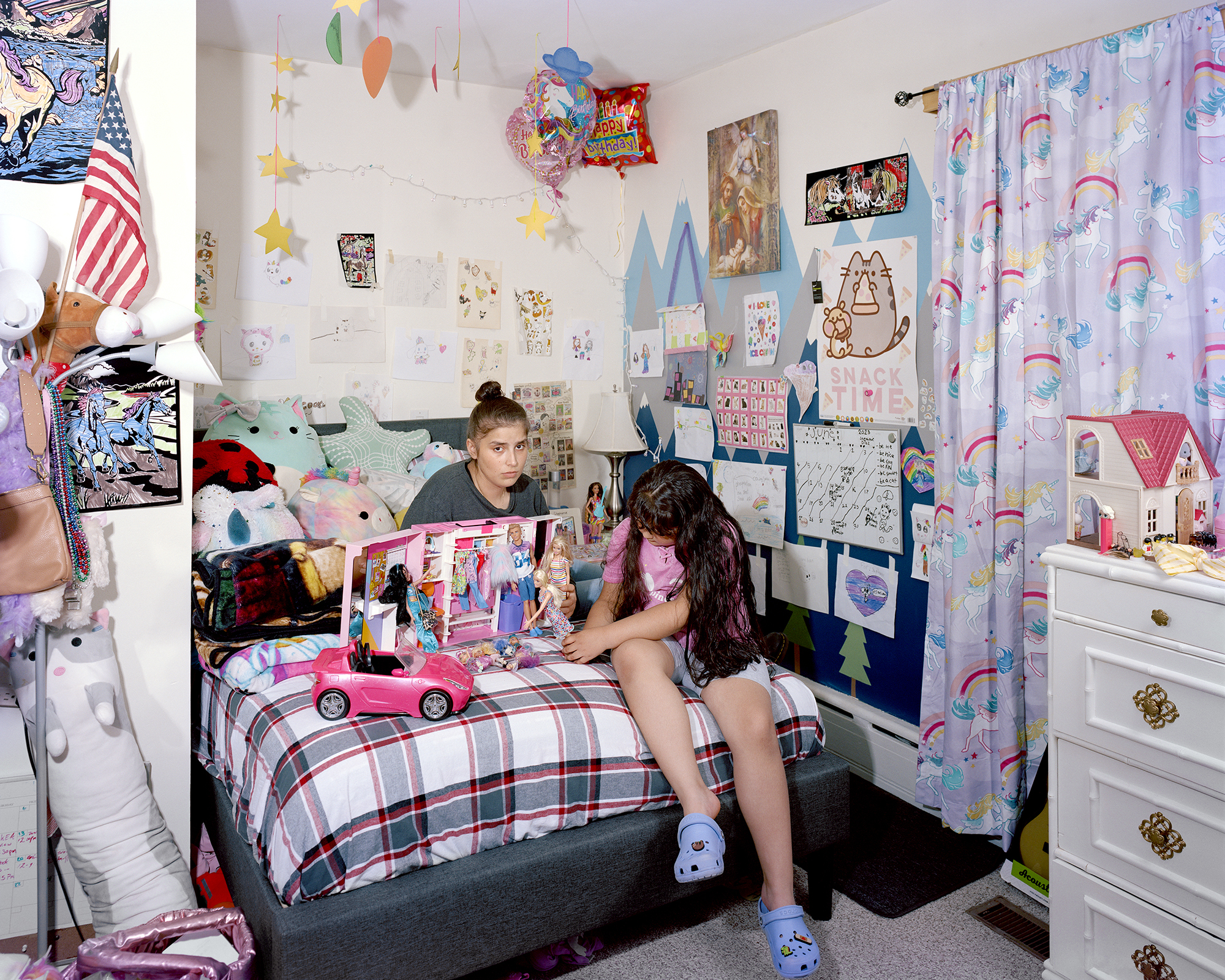
More than anything, it seems, Diaz is enchanted by the body at rest. Not that he does much resting himself. After seeing his parents labor for so many years doing construction and housekeeping and the toll it took on their bodies—in 2017, his father was almost buried alive on a job site and suffered severe injuries—Diaz knows better than anyone what’s at stake in his practice. He has honored his parents’ sacrifice by working nonstop. Since getting his BFA from Parsons School of Design (2019) and MFA from Yale University (2025), he has built a portfolio that a mid-career professional—let alone a recent graduate—would be proud of. “Weirdly enough, what provides a sense of rest for me is making images, even though it’s so laborious,” Diaz said. “Through the ground glass, I get to witness my youngest sister becoming more self-aware, my mom or dad getting new gray hairs or wrinkles. I find it really centering, but this passage of time also ups the stakes—and what’s more beautiful than sharing an experience, mediated through photography, that allows me to spend time with my family?”

Read more from our series “Introducing,” which highlights exciting new voices in photography.