Essays
New York’s Sidewalks Are His Studio
For decades, Louis Mendes and his press camera have been a staple of the city’s street life.
Photograph by Sinna Nasseri for Aperture
It is the second day of fall, and the steps of the Metropolitan Museum of Art are alive with the layered rhythms of New York. A performance artist slathered in white paint moves slowly across the plaza as a saxophonist bends a bluesy note nearby. Anti-Trump protesters chant along Fifth Avenue. Painters hawk canvases from folding tables, tourists pose for pictures, and fashionistas stage their own impromptu photoshoots on the museum’s iconic steps.
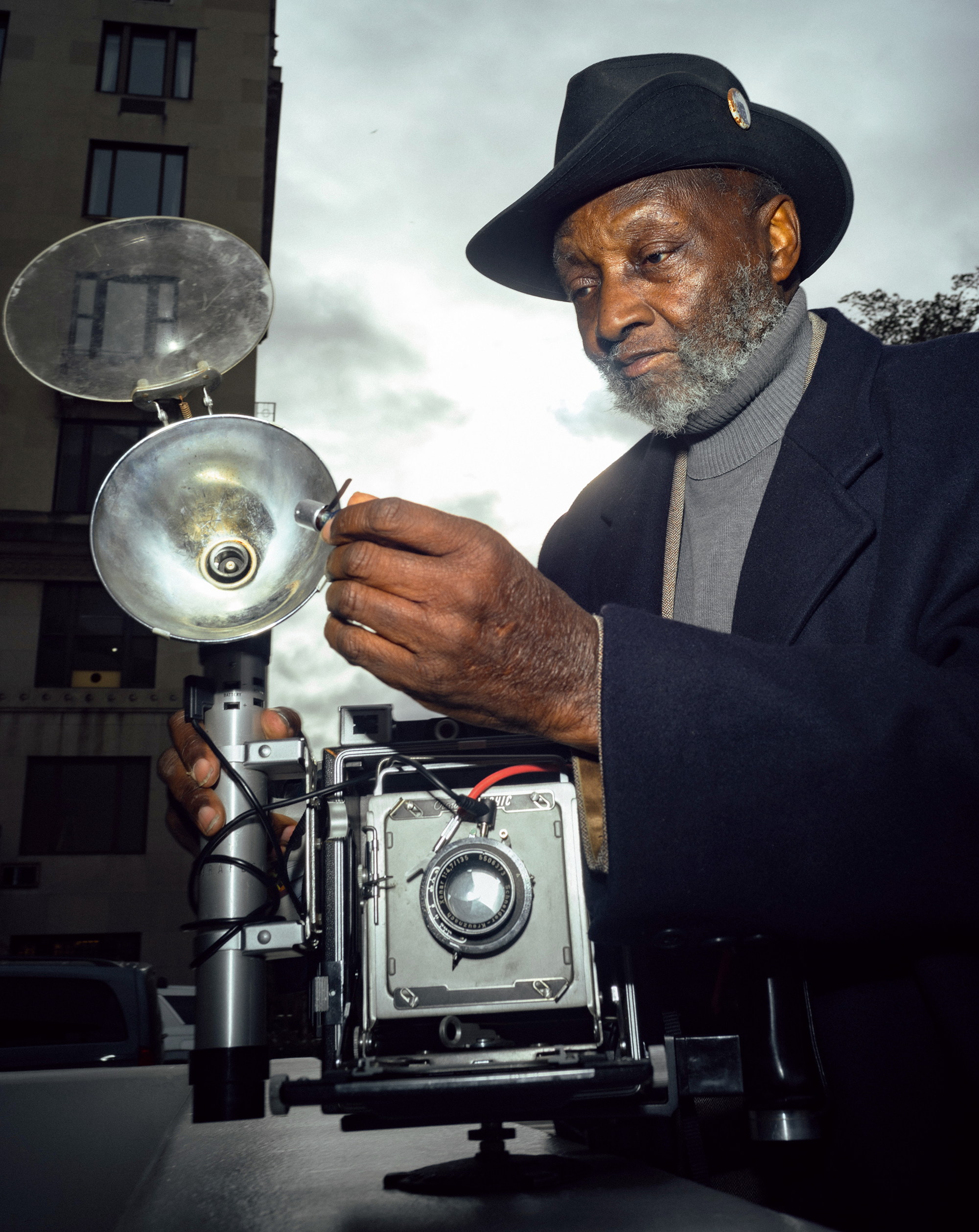
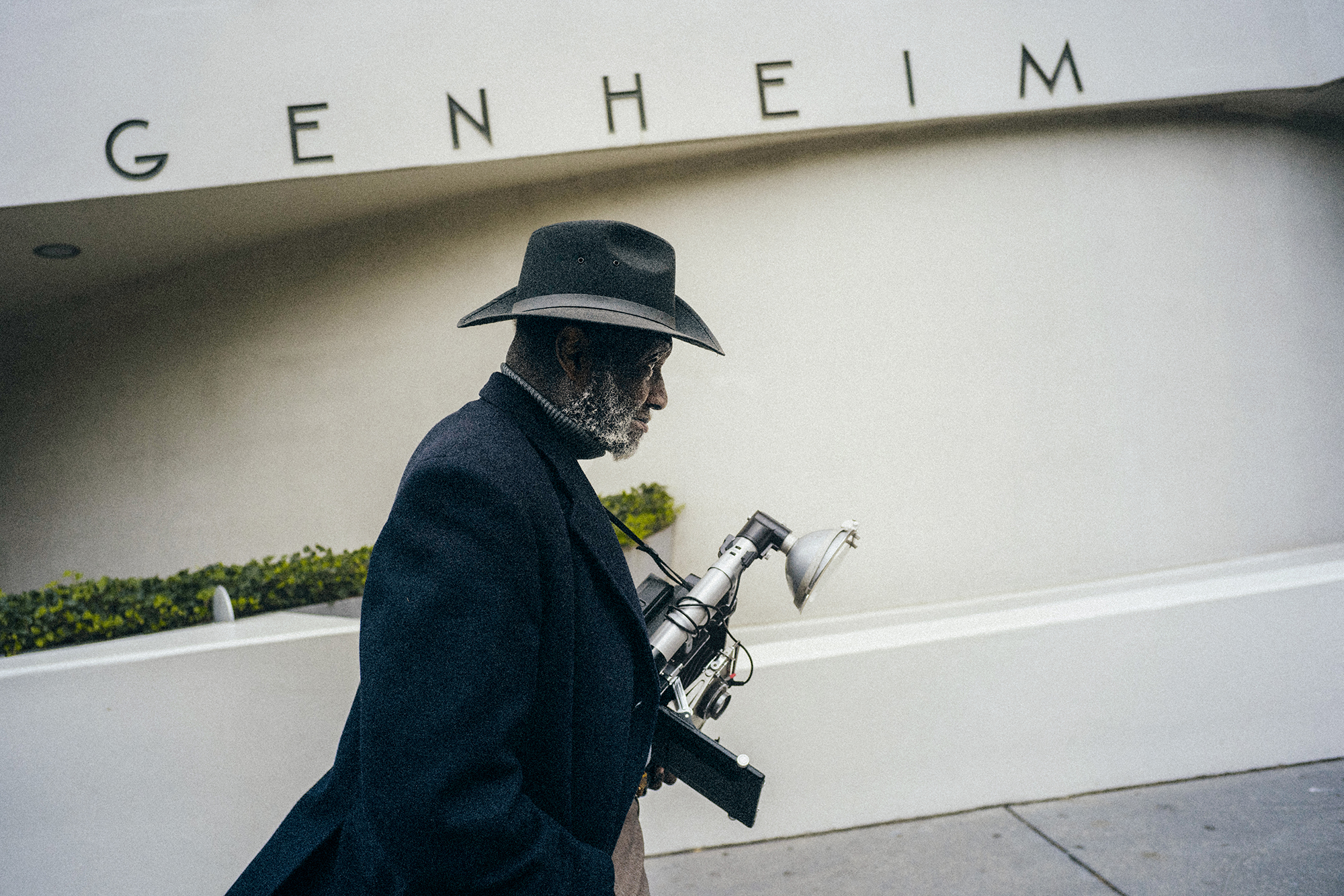
Into this scene steps Louis Mendes, eighty-five years old and impeccably dressed in a beige suit, oxblood turtleneck, and brimmed hat. Around his shoulder, a massive vintage Speed Graphic press camera fitted with old-style flash bulbs, a relic from a bygone era. In one sense, Mendes is just another participant in this street-side economy, offering his wares to passersby. Yet he also stands apart. A New York fixture since 1959, he has mastered what he calls the place “where commerce meets art.” Mendes no longer hawks his services as he once did, when he would call out to strangers, “You could get a picture right away! Take a look at what I could do of you!” Now, his very presence is his sales pitch.
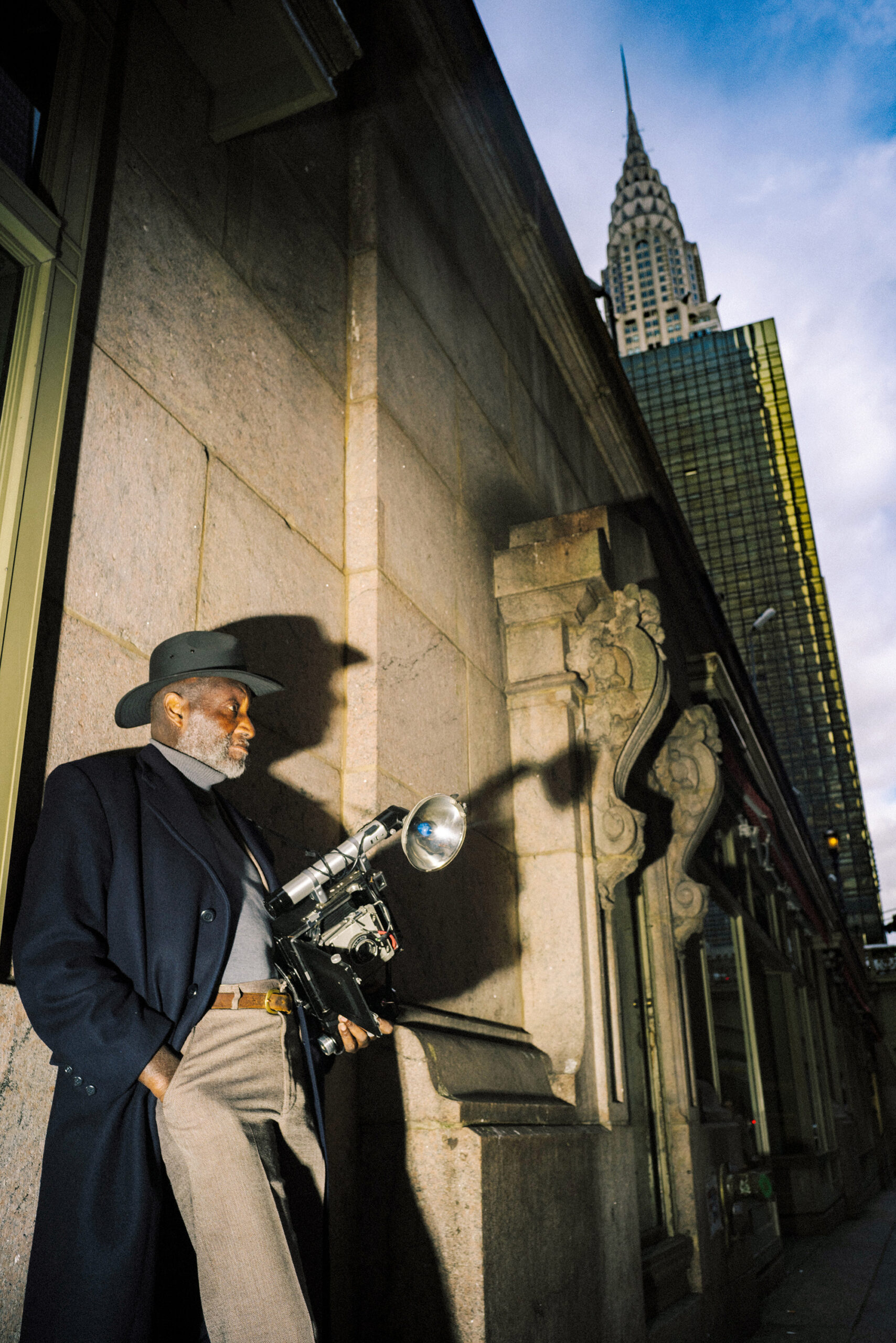
Curiosity draws people toward him. Many ask about the old camera. “Google me,” he tells a woman who stops to chat. When she does, she smiles and says, “It’s an honor to meet you.” Others want to photograph him, and he strikes a subtle pose while keeping his eyes peeled on the crowds. “It happens every day,” Mendes said. “And I capitalize on it as much as I can.” He often proposes a trade to the curious person who thinks their quick snap has gone unnoticed: “I let you take a photograph of me, now let me take one of you.”

Aperture Magazine Subscription
0.00

This afternoon, a middle-aged Black man with a camera around his neck approaches to shake Mendes’s hand. He tells him he grew up in New York and remembers seeing him in action decades ago. After a brief exchange, the man disappears into the crowd.
Such encounters point to a long, storied career. Mendes was born in Jamaica, Queens, in 1940. He started taking photographs in 1954, when his older sister, the family photographer, handed him the camera so she could be included in a portrait. “A week later, I got the results back, and I liked what I did,” he recalled. “That’s when the bug hit me.” By 1959, he had begun photographing parties and weddings. That same year, he bought the camera he still uses. One night, he was working a party at the famed Audubon Ballroom, in Harlem. “This camera can make a living for you if you use it that way,” a man told him. Mendes took the advice to heart: “I’ve been using it that way ever since.”
As Mendes learned the trade, he made the street his studio. Those early years taught him the physical and creative demands of the job. “You try to do both day and night, you kill yourself,” he said. “A little day, and a little night, and you got the week done.” The street itself is both teacher and collaborator. “The street is always difficult,” Mendes told me. “There are so many different people, constantly interacting. You learn more, and you do more.”
All photographs by Sinna Nasseri for Aperture
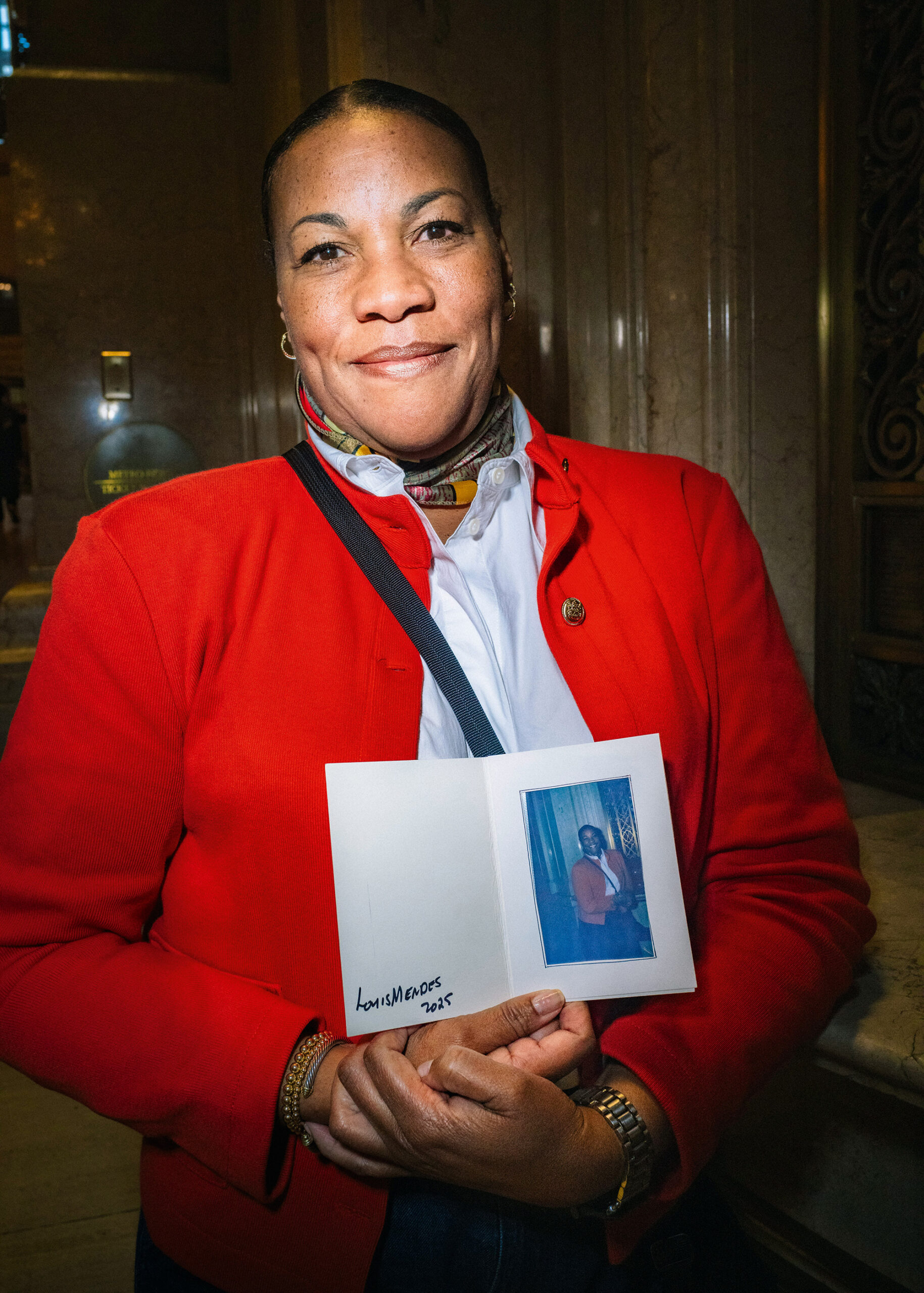
Mendes once used Polaroid film but now works with Fujifilm Instax Wide. His archive includes decades of test shots and outtakes. But most often, the client leaves with the only copy of the photograph. “I have the memory and the money,” he said. Occasionally, those memories return. A photograph he took of Gordon Parks and gave away resurfaced years later, and others reappear online when clients tag him on Instagram. These moments show what Mendes’s practice is about: a simple commercial transaction that becomes a shared imprint, the material trace of a fleeting connection.
Mendes’s work has evolved in step with the city itself. He photographed through the pandemic, even when Times Square was nearly empty. He has adapted to an increasingly cashless society. Yet the core of his work remains unchanged. His compositions are consistent, and his focus has always been on people, capturing something essential about the humanity of everyday life. “I photograph everywhere I can,” he said. “Every day, nine days a week.”
This article originally appeared in Aperture No. 262, “The End of Nature?”, under the column Studio Visit.