Essays
Nikki S. Lee Stays in the Picture
She was a rising star in New York’s late-’90s art world—then she walked away. Can the artist reinvent herself in Seoul?
Photograph by Woojeong Lee for Aperture

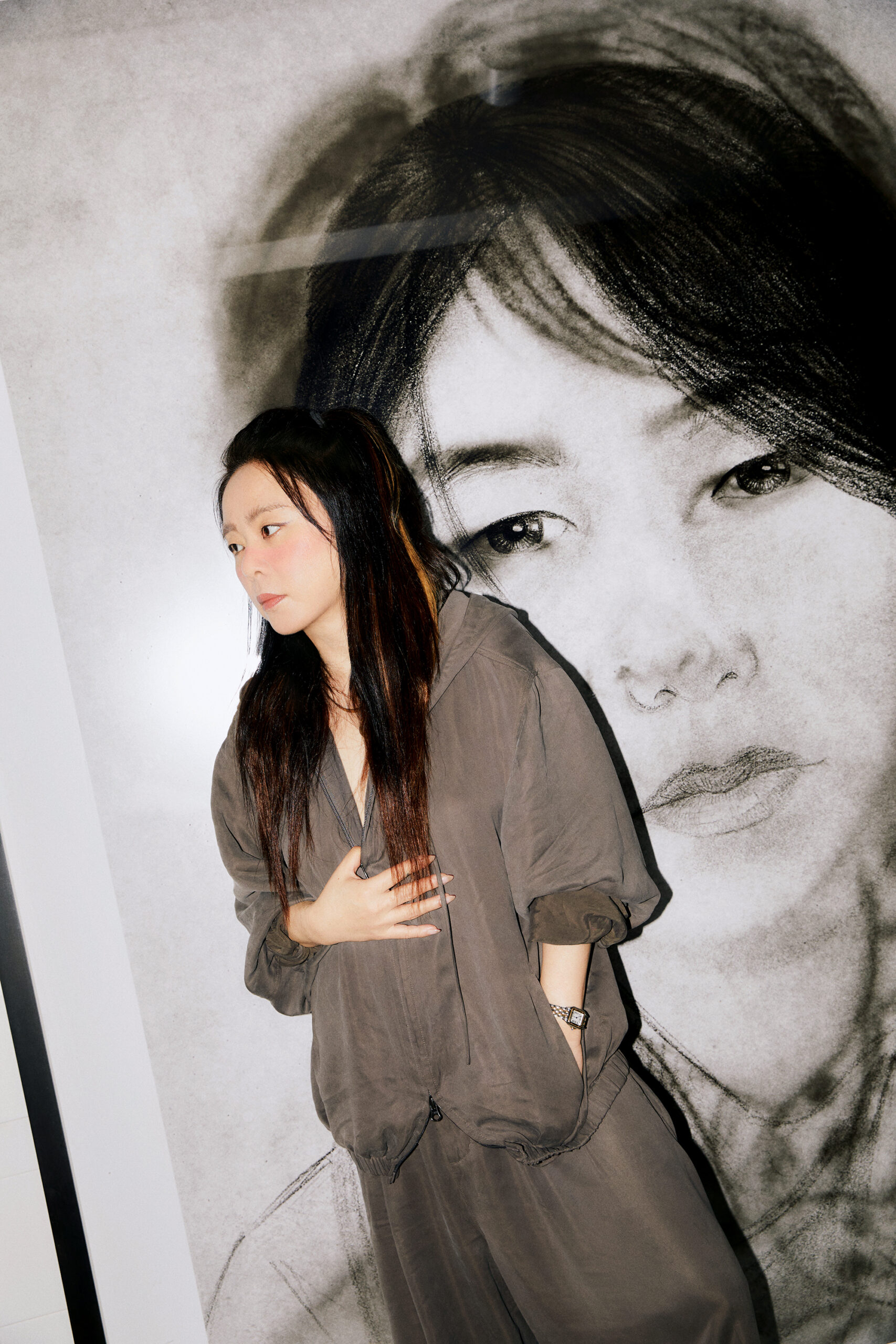
Nikki S. Lee’s name carries a strange currency in the Korean art world, sparking instant recognition but also a sense of enduring mystery. After all, Lee’s breakout series, Projects (1997–2001), which began as a graduate-school project and was first exhibited while she was in her twenties and living in New York, saw the artist assume the guise of over a dozen of characters as she descended into different US subcultures, photographing herself amid drag queens, punks, skateboarders, strippers, and other communities mostly on the fringes of society. The series catapulted Lee to international stardom, while establishing her as something of an enfant terrible, all while raising a question that was never really answered: Who is the “real” Nikki S. Lee? Her mystique deepened in the aughts when Lee, whose work is so preoccupied with what it means to belong, chose to walk away from the New York art world entirely.
I encountered Lee and her art for the first time through a part-time job. In 2013, as an undergraduate art history student, I worked as a gallery guide at one of her solo exhibitions in Seoul, where she has long been based. Day after day, I stood among her large-scale prints, reciting information to visitors while observing how they responded—some with recognition, some with confusion, and others with quiet reverence. By then, series such as Projects, Parts (2002–5), and Layers (2008) had already cemented Lee’s reputation. For Korean students of photography and visual art, she was foundational. Unlike many contemporaries whose imagery was geared toward geopolitical history, political activism, or typical national narratives, Lee’s gaze turned inward, exploring identity as something performative, fluid, and unresolved. Her reputation as an artist who was even more famous overseas made her career particularly fascinating.
When I met Lee again this past spring at her studio in Seoul’s Itaewon neighborhood, over a decade later, she was radiant and quietly reflective, generous with her stories but never indulgent. Our conversation stretched across a long afternoon in her studio, touching on her singular practice, her relationship with identity, and her enduring desire to remain in motion, always chasing the present while never quite escaping the past. Her father was a photographer, and Lee, who was born in 1970, grew up surrounded by images. “I was ambitious, driven,” she said. “I wasn’t afraid to throw myself into whatever I wanted to do. But at the same time, I had a strong literary sensibility. Even as I chased my goals, I often felt a deep emptiness about life. There was always this quiet sadness inside me—a tenderness, maybe.” Still, she never really thought of picking up the camera herself until she decided to study photography at Seoul’s Chung-Ang University, where the curriculum was highly technical and traditional. She grew curious about other creative fields and, after graduating, moved to the United States and enrolled at New York’s Fashion Institute of Technology, where she took fashion-design classes alongside her photography studies. It was the era of supermodels and grunge, and the line between art and commerce, and art and life, was becoming harder to find. Lee had hopes of becoming a fashion photographer, and she needed an English name. One day, flipping through an issue of Vogue while applying for an assistant position with David LaChapelle (a job she would get), she came across the model Niki Taylor. For some reason, the name spoke to her.
Lee subjected the New York art world’s newfound ideals of inclusivity to an ambiguous acid test.
During her graduate studies in photography at New York University, Lee’s practice took a sharp turn. At NYU she was given space to step away from commercial work and focus on defining her own language as a fine artist. But more than any institution, the city itself changed her. “I lived in the East Village. It was rough but also magical,” she said. “From 1994 to around 2009, I think New York had this golden period. There was a balance between freedom and safety, between chaos and creativity. There was energy in the streets, a sense that anything was possible. You could live however you wanted and invent your own rules. It was a place where fixed ideas didn’t really exist. It felt like the right place for someone like me, who didn’t want to follow convention.”
Aperture Magazine Subscription
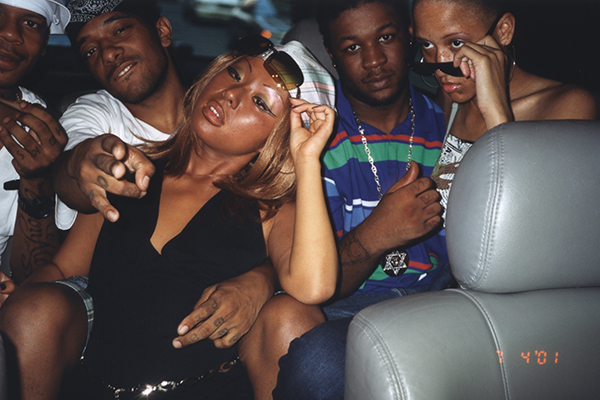
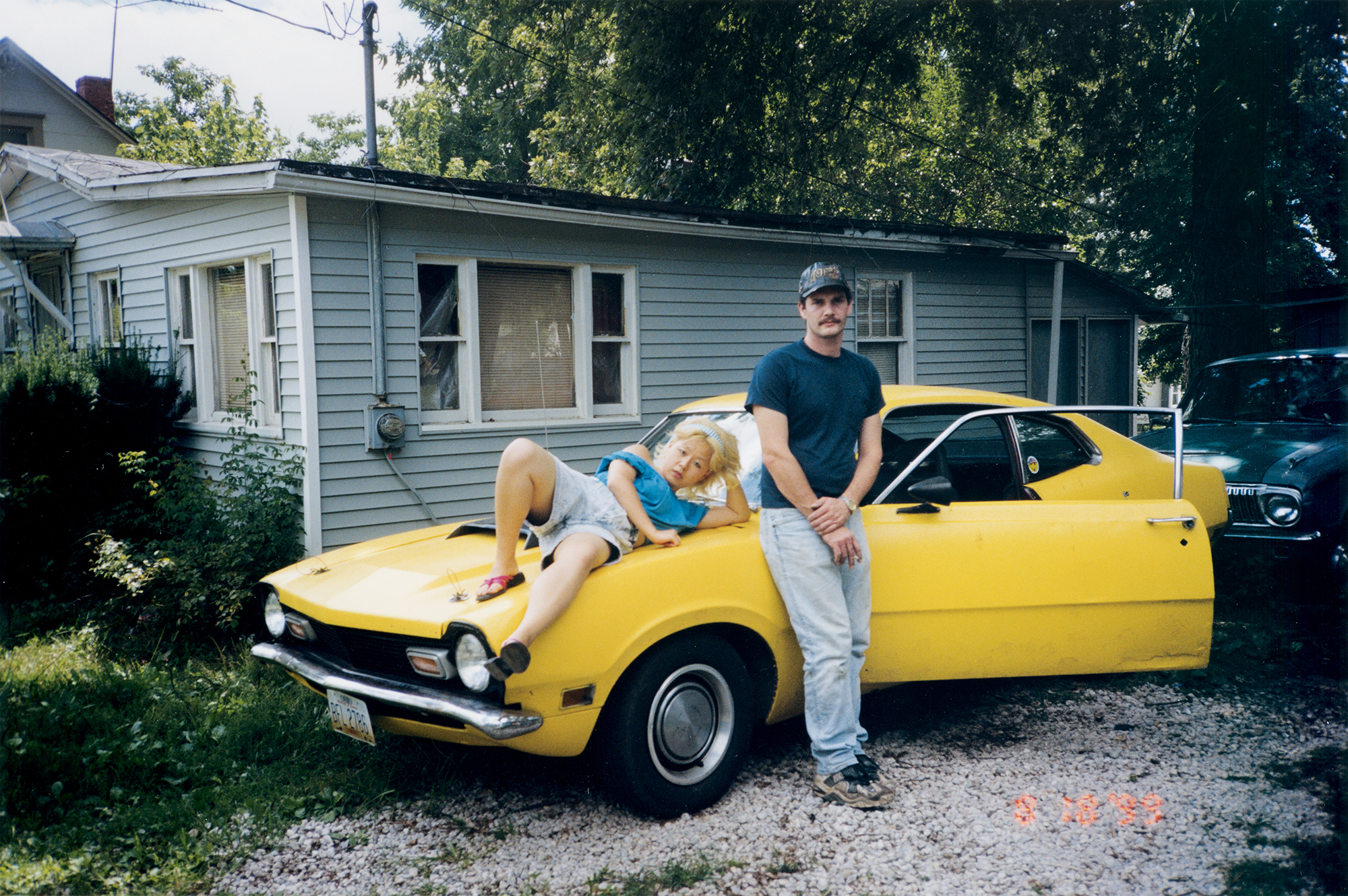
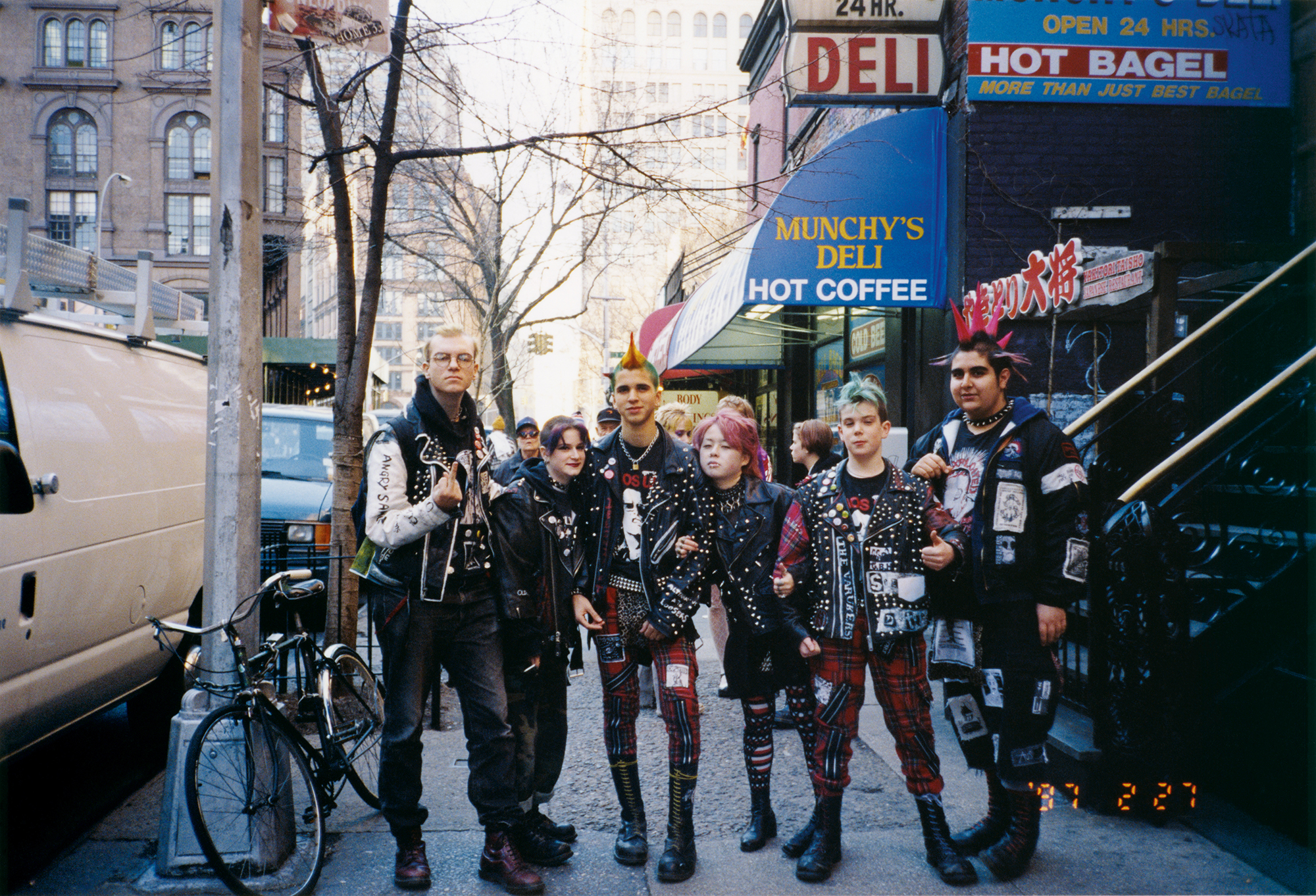
After finishing her MFA at NYU, Lee rose to prominence with Projects, her now-iconic series documenting her immersion into various demimondes: skateboarders, punks, yuppies, lesbians, hip-hop fans, high-school students, seniors, and more. Like the New York–based artists Cindy Sherman and Adrian Piper, Lee used performance to negotiate the construction of gender, race, and the self. Yet unlike them, Lee didn’t emerge from the context of American second-wave feminism, and her images, which at first glance resemble candid snapshots, were, in fact, the result of monthslong embedding and assimilation. Lee would adopt the clothing, gestures, slang, and social rituals of each group, documenting her transformations with the help of a friend or stranger who would release the shutter. Lee began Projects in 1997, at a time of reckoning around issues of representation and identity within the US art world, and her chameleonic provocations, teetering between irony and sincerity, seemed to subject its newfound ideals of multiculturalism and inclusivity to an ambiguous acid test.
One of the most physically grueling chapters of the series was The Skateboarders Project (2000). “I fell so many times,” Lee said. “My body was sore the entire time. I had to wear patches on my arms and legs. Physically, it was exhausting. I remember skating near the East River—there were a lot of makeshift skate parks there. Usually, my projects last about three or four months, but this one took a real toll on me.” Another challenging chapter was The Exotic Dancers Project (2000), for which Lee worked at a strip club on the outskirts of Hartford, Connecticut, and undertook a strict dietary and training regimen. “That one was so lonely,” she remembered. “I stayed in a motel near a highway, in this desolate, isolated place. The motel was in the middle of nowhere. Every night, I went out to the clubs, and during the day, I was alone. That solitude really got to me.”
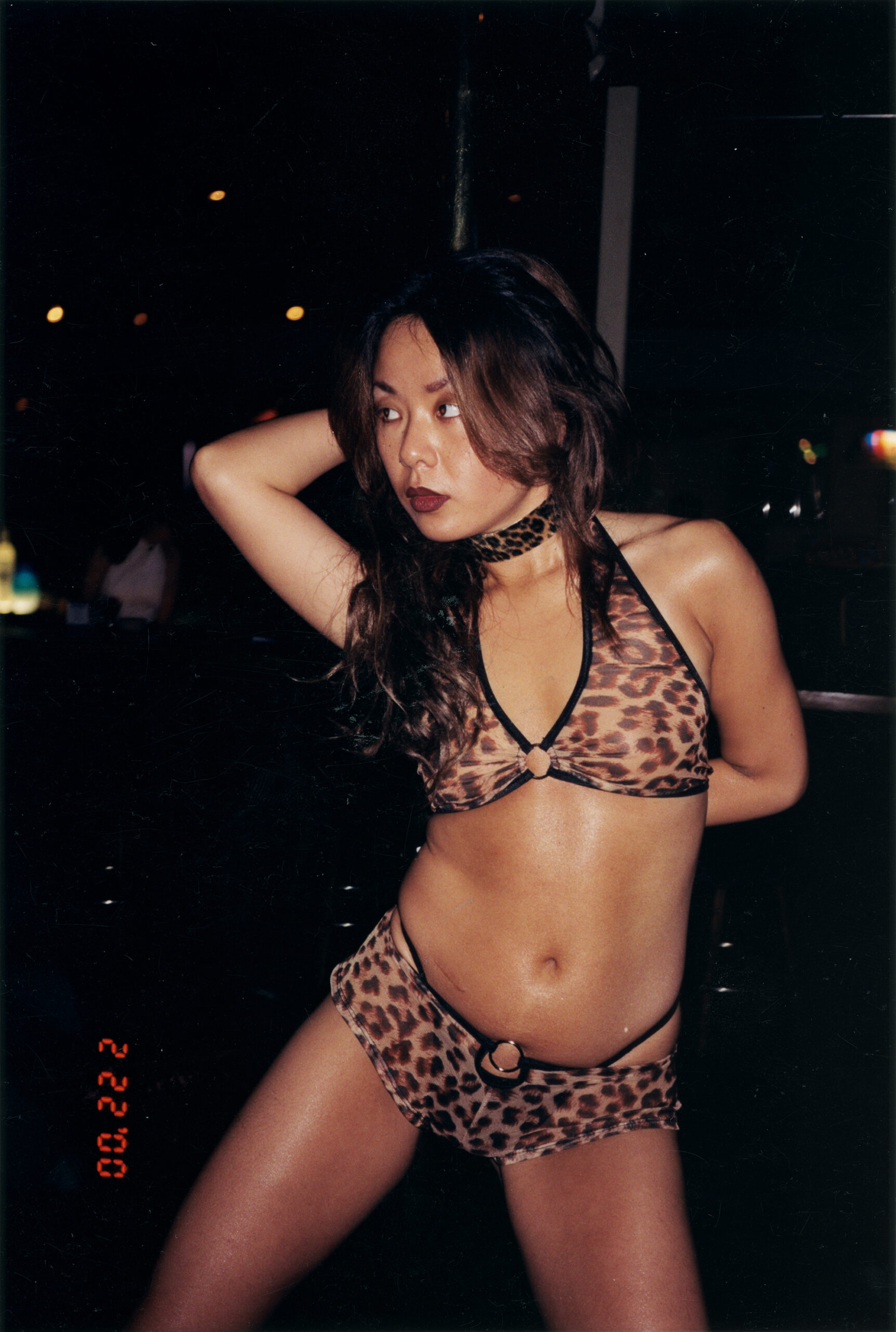
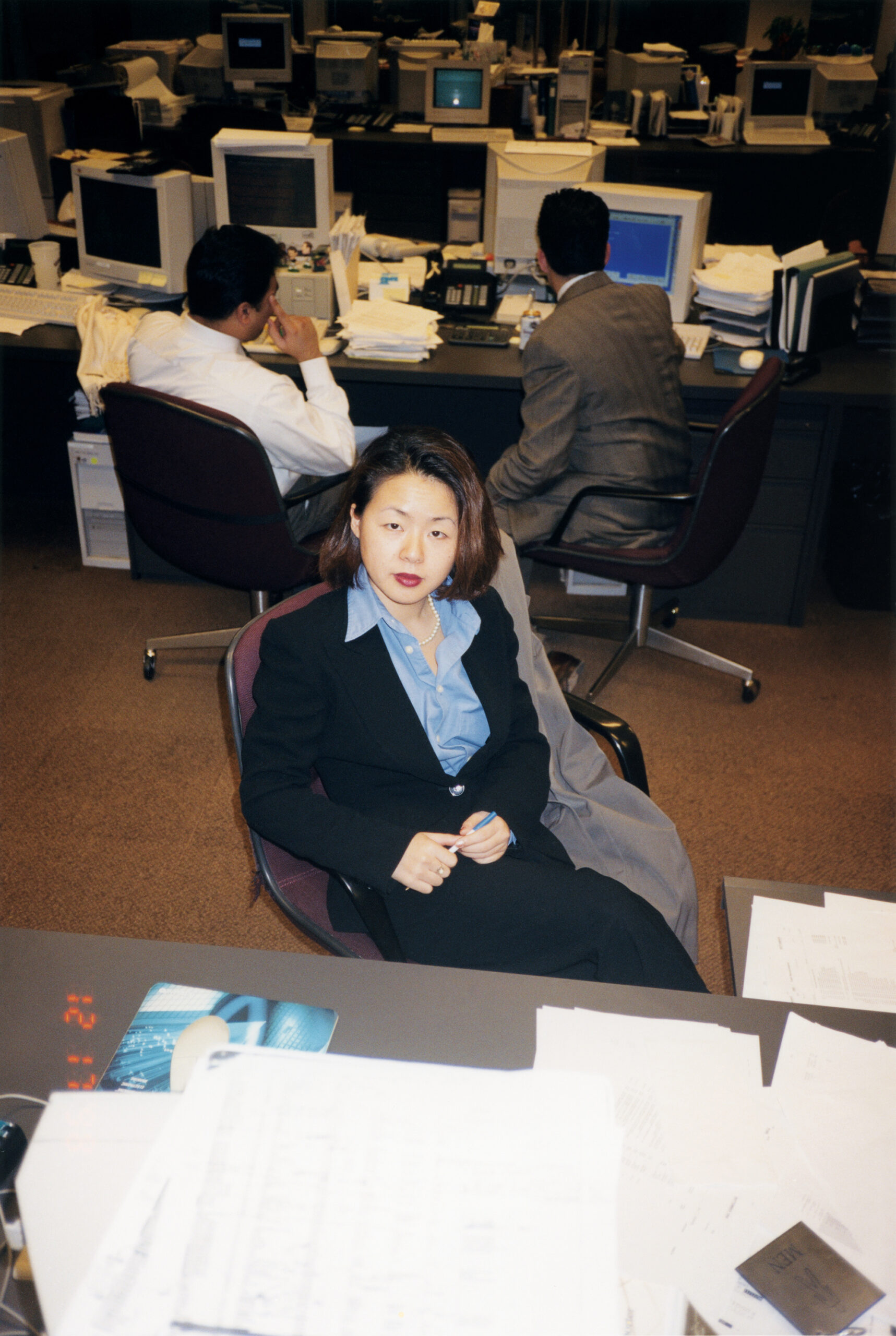
With Projects, Lee became a star almost overnight. “My very first work was reviewed by The New York Times,” she recalled. “Honestly, I didn’t even know I was going to become an artist. I was just doing a school project. Suddenly, everyone was calling me an artist.”
The attention, though thrilling, was disorienting. The pressure was less about being in the spotlight than about the fear of being a one-hit wonder. “I remember thinking, If I don’t do well with my next project, maybe I was just lucky. Maybe it’ll all fade away. I didn’t want to be that kind of artist—the kind who peaks early and disappears.”
Lee’s embrace of stereotypes, especially in Projects, has drawn accusations of cultural appropriation, and she could sometimes resort to racist caricature, as in The Hip Hop Project, for which she appeared in blackface. Such photographs reveal less about the limits of assimilation than they do about the limits of Lee’s own series, whose often nuanced commentary on power dynamics and liberal visibility politics could, without a sense of emotional authenticity, succumb to empty farce. But Lee remains unfazed. “Projects is timeless,” she said, laughing. “I think I did well. Depending on the political climate, sure, it could be controversial. But that’s not the point. The point is, people are still talking about it twenty, twenty-five years later. That’s what matters.” There’s a saying in Korea: What’s scarier than criticism is silence. In other words, indifference is more humiliating than disapproval.
That pressure led to Parts, a series in which Lee photographed herself with various male partners, later cropping the men out of the frame so that only fragments of their bodies remained. The gesture underscored the idea that identity, especially in intimate relationships, is shaped relationally, sometimes even erased in the process. She followed that line of inquiry with Layers, made the year Lee moved from New York back to Seoul. For Layers, Lee traveled to various cities around the world, asking local street artists to draw her portrait. She then superimposed three of these interpretations in a single light box, creating a hybrid image that was at once hers and not hers—a visual echo of the mutability she has always explored.
While many critics and curators have framed her work as an inquiry into Asian American identity, Lee resists that reading. “People always say my work is about identity,” she said. “But I’ve never questioned my own identity. I was born in Korea. I grew up Korean. That’s never been in doubt. My sense of self has always been fluid but not uncertain. I wasn’t searching for an identity—I was just trying to show that identity is something you can perform, mold, and play with. It wasn’t about proving anything. It was about saying, ‘Look—I can do this too.’”


All photographs © the artist and courtesy Sikkema Malloy Jenkins, New York
Though best known for her photographic series, Lee was never entirely comfortable with the label of photographer. “I’ve never once dreamed of being a photographer,” she stated. “To me, photography was just one medium I happened to use. I never saw it as the end goal.” This is probably why Lee took a break from still photography for a while, turning instead to video and painting. An emblematic 2006 video piece, a.k.a. Nikki S. Lee, is a pseudodocumentary in which she plays herself—or rather, several versions of herself, blurring the line between fiction and reality. More recently, she has returned to painting, a medium she rarely discusses publicly. “The paintings I’m working on now are totally different in character from my earlier works,” she said. “They’re not even related, really. But I’m following my instincts.”
This year, Lee will release a new video, exhibit in a group show, and publish a book cowritten with the essayist Im Ji-eun, a close friend. “We meet almost every day,” Lee said. “We start with lunch and end up talking until dinner. One day, we joked about starting a podcast, but then we thought, Why not turn these conversations into a book?” The result is about artificial beauty, a meditation on aesthetics, artifice, and the human-made. “People always talk about the beauty of nature,” Lee said. “But I love artificial beauty. Art is human. It’s artificial by definition. And I think there’s something really beautiful about that.” Seoul—a site of ceaseless reinvention, and now a viable candidate for the plastic surgery capital of the world—is perhaps a fitting home for an artist so invested in the malleability of the self.
Recently, Lee founded a creative management agency called Beatnik in the city. Currently, Beatnik manages one actor—her partner, Teo Yoo—and is preparing to sign a young actress. “It’s not a separate thing from my art,” Lee said. “It’s just another way of being in the world creatively.” Lee and Yoo married in 2007, and Yoo’s recent success with films such as Celine Song’s Past Lives (2023) has rekindled interest in Lee’s work locally, though her art has long been circulating in Korea, and was featured in the 1999 Gwangju Biennale.
When I asked what her long-term goals are, she laughed. “I don’t usually set big goals. I focus on short-term things . . . I just want to make sure I’m enjoying the moment. If I don’t want to do something, I won’t do it.” She added, “But there is one big goal. When I’m on my deathbed, I want to be able to say: ‘I lived as an artist.’ If I can say that, I think I’ll be at peace.”
This article originally appeared in Aperture No. 260, “The Seoul Issue.”