Interviews
Dionne Lee Is Reinventing the Landscape Photograph
In a conversation from her new book, the artist speaks about the interwoven histories of land, power, survival, and Black identity.
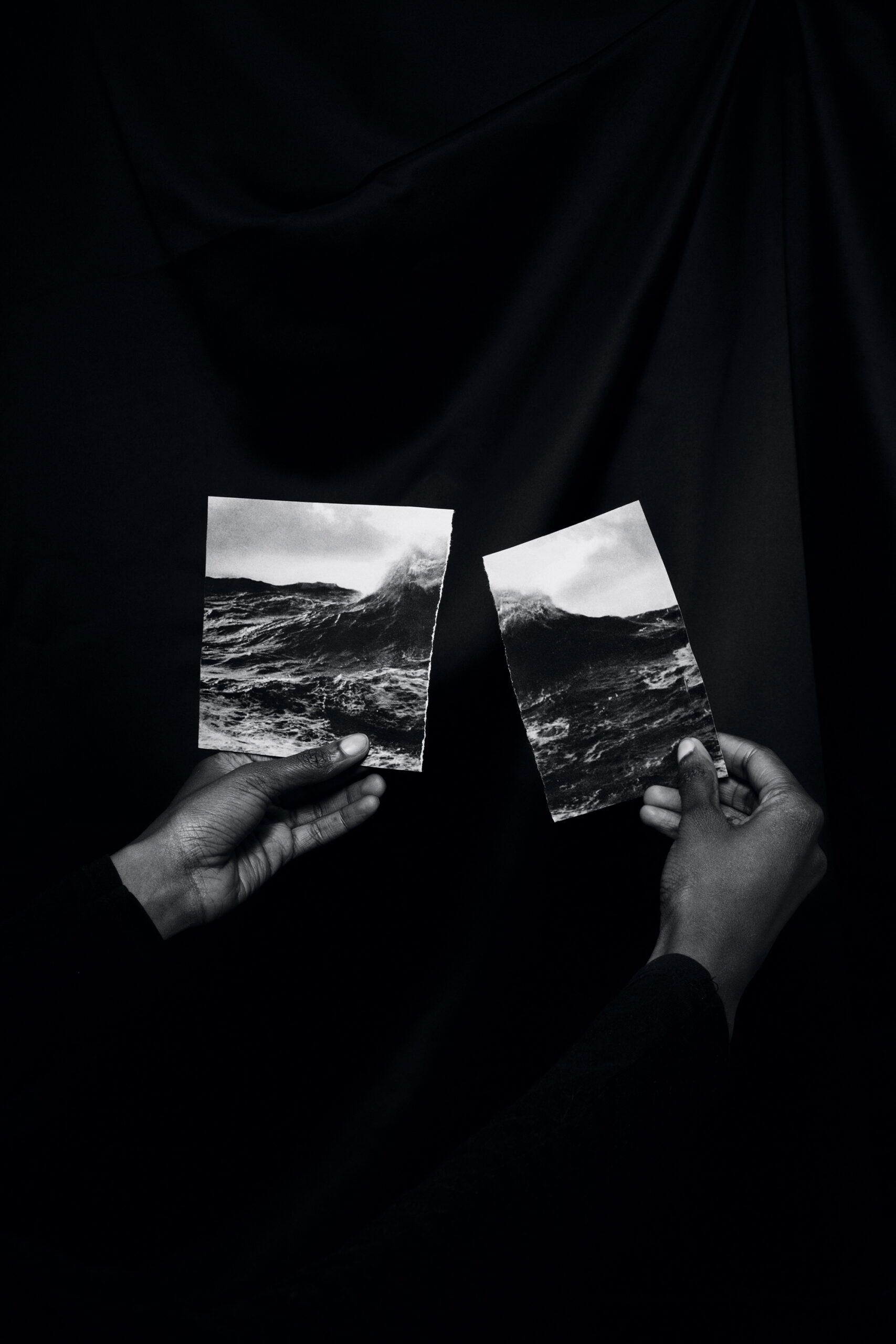
Dionne Lee: Currents brings together key works from over a decade of Lee’s career, offering a deeper look at a visionary artist reshaping how we see—and choose to imagine—the great outdoors. In this wide-ranging conversation from the book, Lee and Gabrielle L’Hirondelle Hill speak about the imperatives of contemporary art, image-making, impermanence, displacement, and embodied knowledge. Both Lee—a Black American who was raised in Harlem and has worked across varied geographies in the United States—and Hill—a Cree, Métis, and settler artist working primarily on the unceded territories of the Musqueam, Squamish, and Tsleil-Waututh Nations—bring distinct yet parallel perspectives to questions of land and lineage.
This is not a conversation about answers. It’s a record of thinking-with—a kind of slow mapping of grief, repair, and return. What emerges is a model for art-making that is less about output and more about orientation, less about what is made and more about how we come to understand ourselves through the act of making.
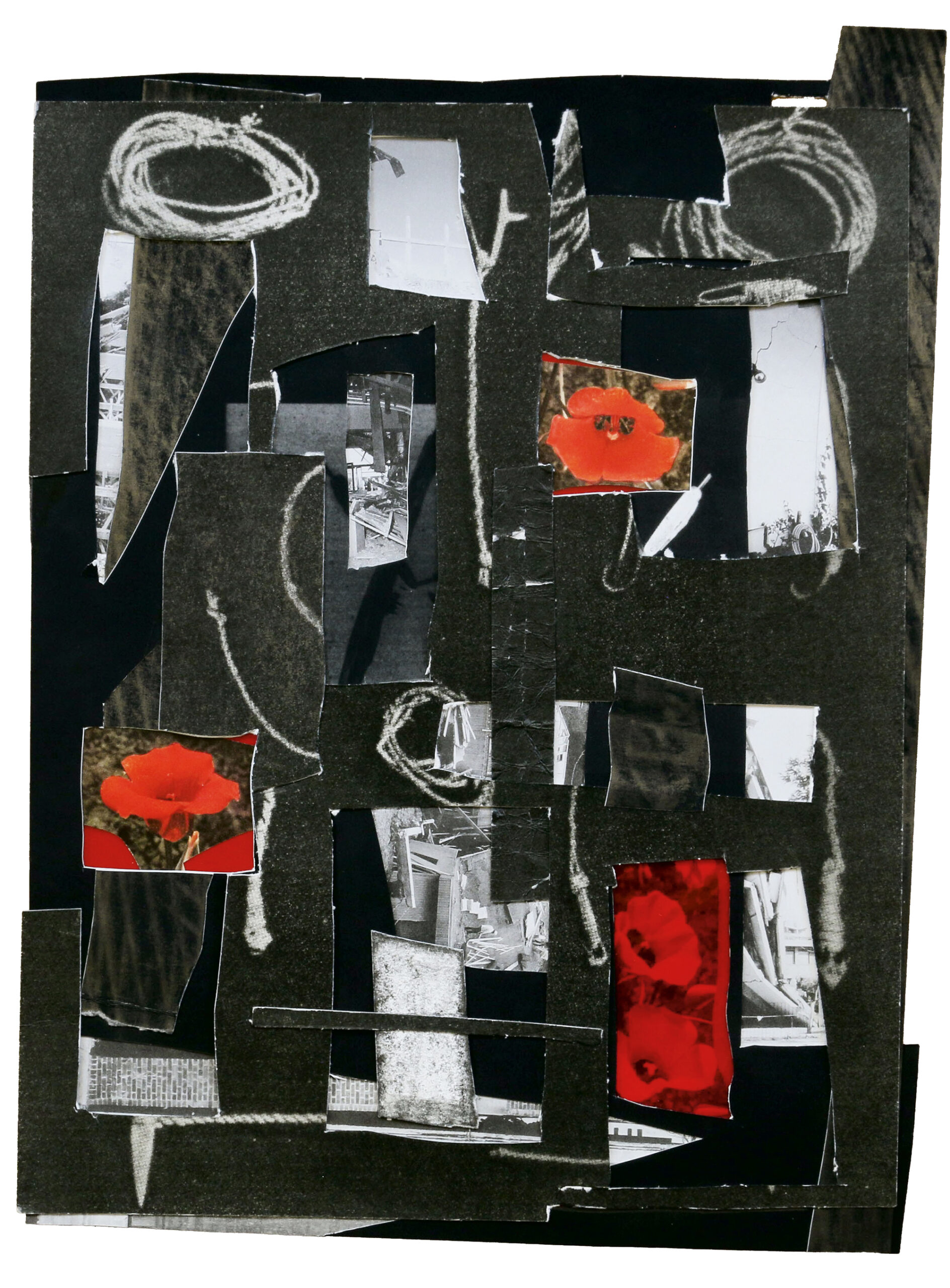
Gabrielle L’Hirondelle Hill: You’re making work on Indigenous lands, as am I. And both of us, in some ways, are not from the lands that we’re making the work on, right? Me being Cree, I’m making work on the lands of Musqueam and Squamish and Tsleil-Waututh most of the time. But I also feel like this resonates with you as a Black American. So much of my work is about, in a way, this very slow moving toward thinking about that beingness of not being from the land I live on and realizing that on a deeper level every year.
Dionne Lee: I call that the conflict of belonging.
Hill: Belonging is kind of scary to people. I’m curious about how you navigate that understanding of Indigenous lands and Indigenous rights on the lands.
Lee: Growing up in New York City—Lenape land—Indigenous history felt very distant. Since the East has been colonized longer than the West, and New York City is a highly built environment, the imprint of Indigenous life feels really invisible.
During my residency with Land Arts of the American West [at Texas Tech University, Lubbock], we drove through a lot of reservations, and one of the sites we went to was Chaco Canyon in New Mexico. Chaco Canyon is a national park, but it was a major cultural center for Ancestral Puebloans. It has these impressive sprawling, city-like structures with different degrees of preservation. It was amazing to be somewhere that was that ancient and of such a direct importance to people who still live nearby. But then I was like, What am I doing here? I got really agitated—I couldn’t reconcile my outsiderness and my “right” to be there. I eventually realized my agitation was grief. I don’t have any place like that to go to and connect to a deep ancestral past, and wherever my ancestral lands are, I wouldn’t be able to access it with the specificity I witnessed at Chaco Canyon.
Hill: Yeah.
Lee: I don’t think to belong somewhere is an entirely cozy experience. It’s fraught and complicated. Or to belong here, I guess, in America. Technically a lot of Black Americans would say, Well, we belong here more than anyone because we built it. I don’t know how to recognize that as true and in the same breath say I don’t think that that necessarily means that I belong here.

Dionne Lee: Currents — Unsigned
$65.00
A powerful meditation on the land as a site of refuge and loss.
Hill: I think that’s the tricky thing when talking about not belonging. There’s a way that can be weaponized against people who have been brought here against their will, enslaved, or economically forced through various colonial powers to migrate and have their bodies used violently.
Would you say that idea influences how you think of your work as research and your relationship with the land? And photography?
Lee: Yeah, I think so. Either way, I think, belonging is something to be cultivated.
In regard to photography, I’m very aware that images of land teach us how to relate to land. This is true from fine art photography to advertising and technical images. A perspective that’s distant or aerial, et cetera, all tend to reinforce our role as “conquerors.” I’ve been looking at and sourcing images from geology books for the past couple of years—geology is a field very much tied to extraction, so it’s not surprising that even in those photos, it’s a similar kind of visioning.
Hill: It seems like the history of photography is very linked to extraction—
Lee: People thought originally the cameras were taking their souls.
Hill: Yeah. I still think about that. When you take an image of something you have power over that thing. So it is an act of power. I’ve thought of photography as an extractive process, especially for people who have been photographed in a way that was meant to be visual proof of why we don’t need or deserve land or rights. One thing that I was curious to talk to you about is how you use your process of making work as research. What is your making process?
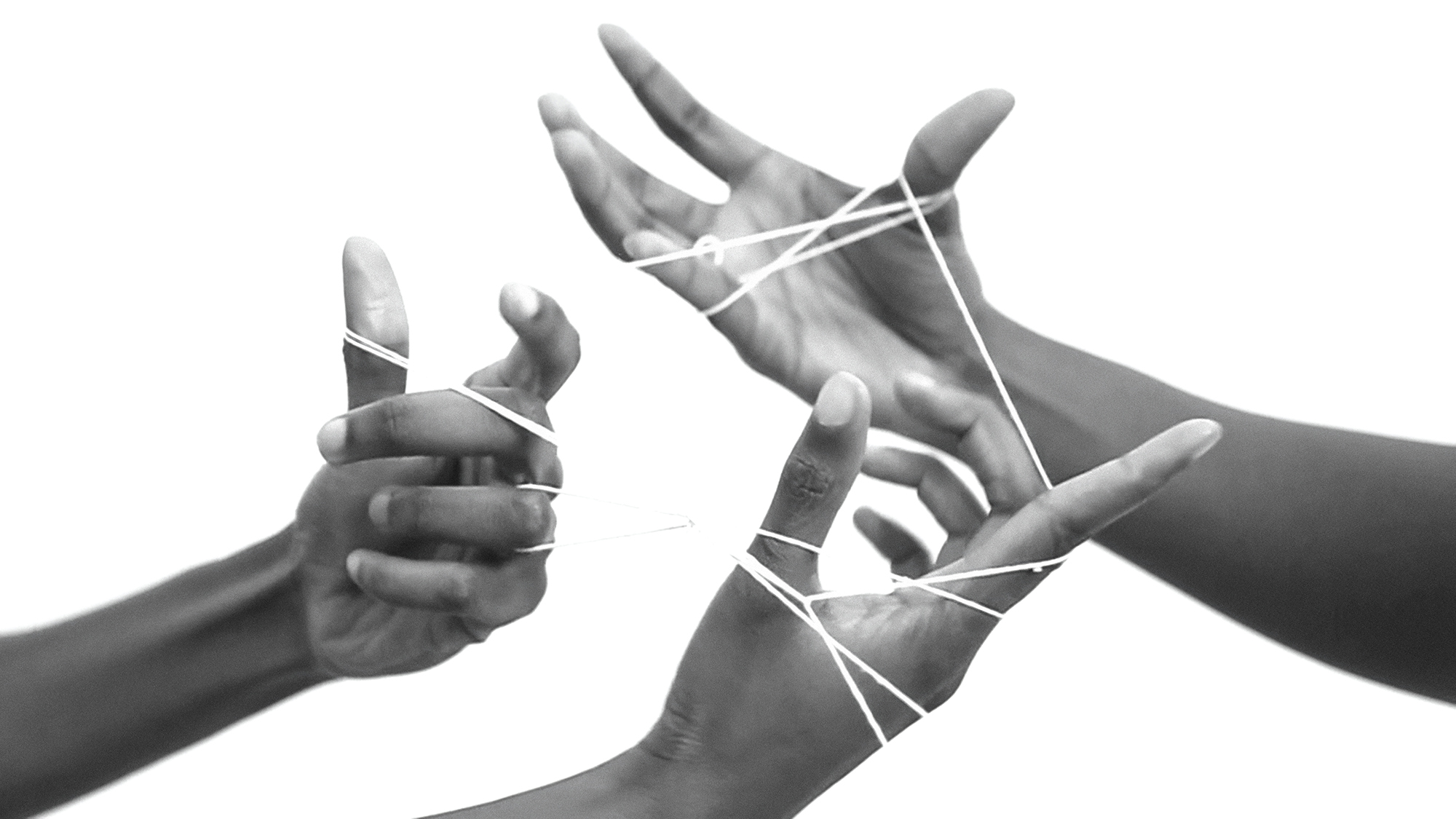
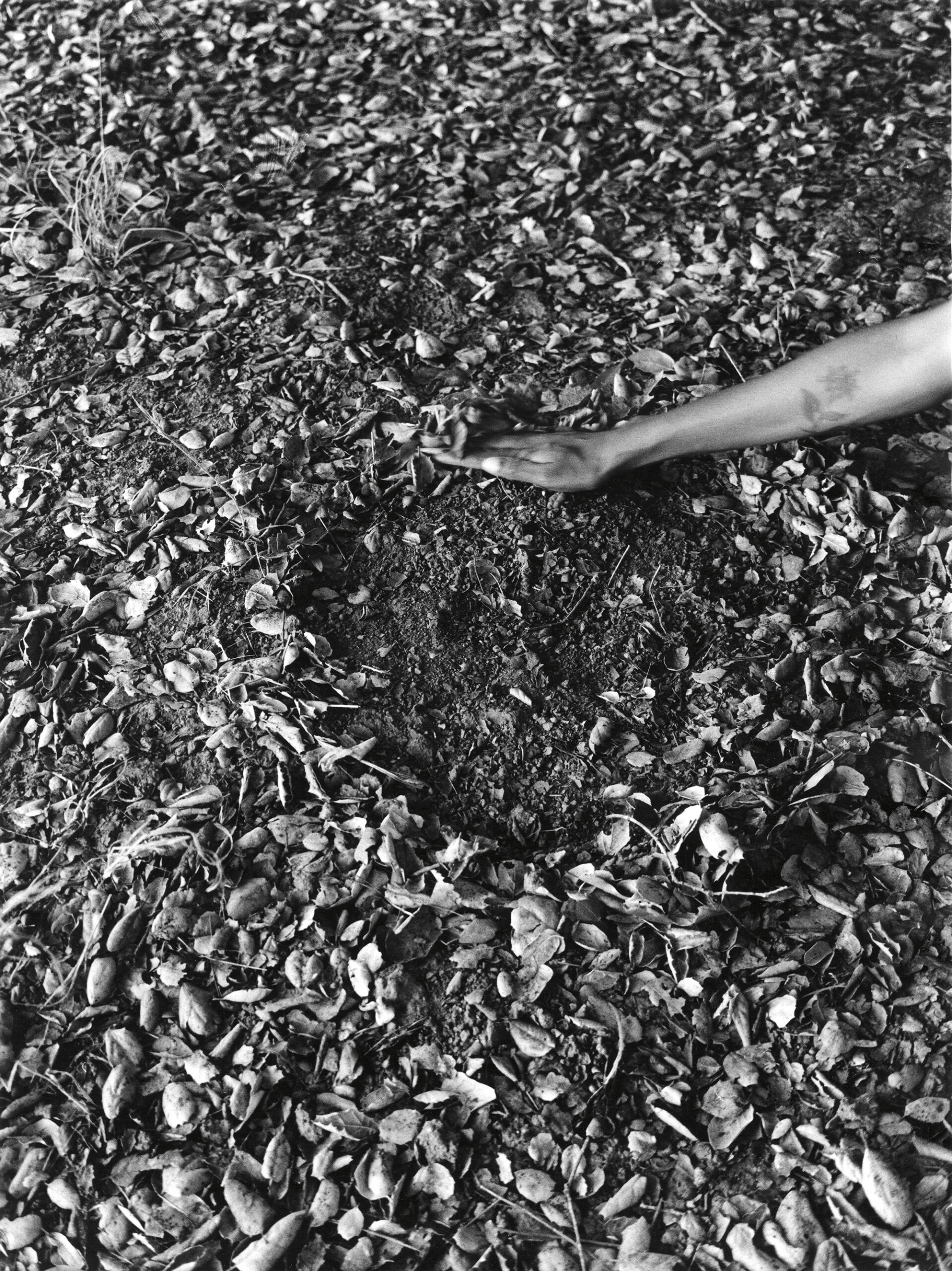
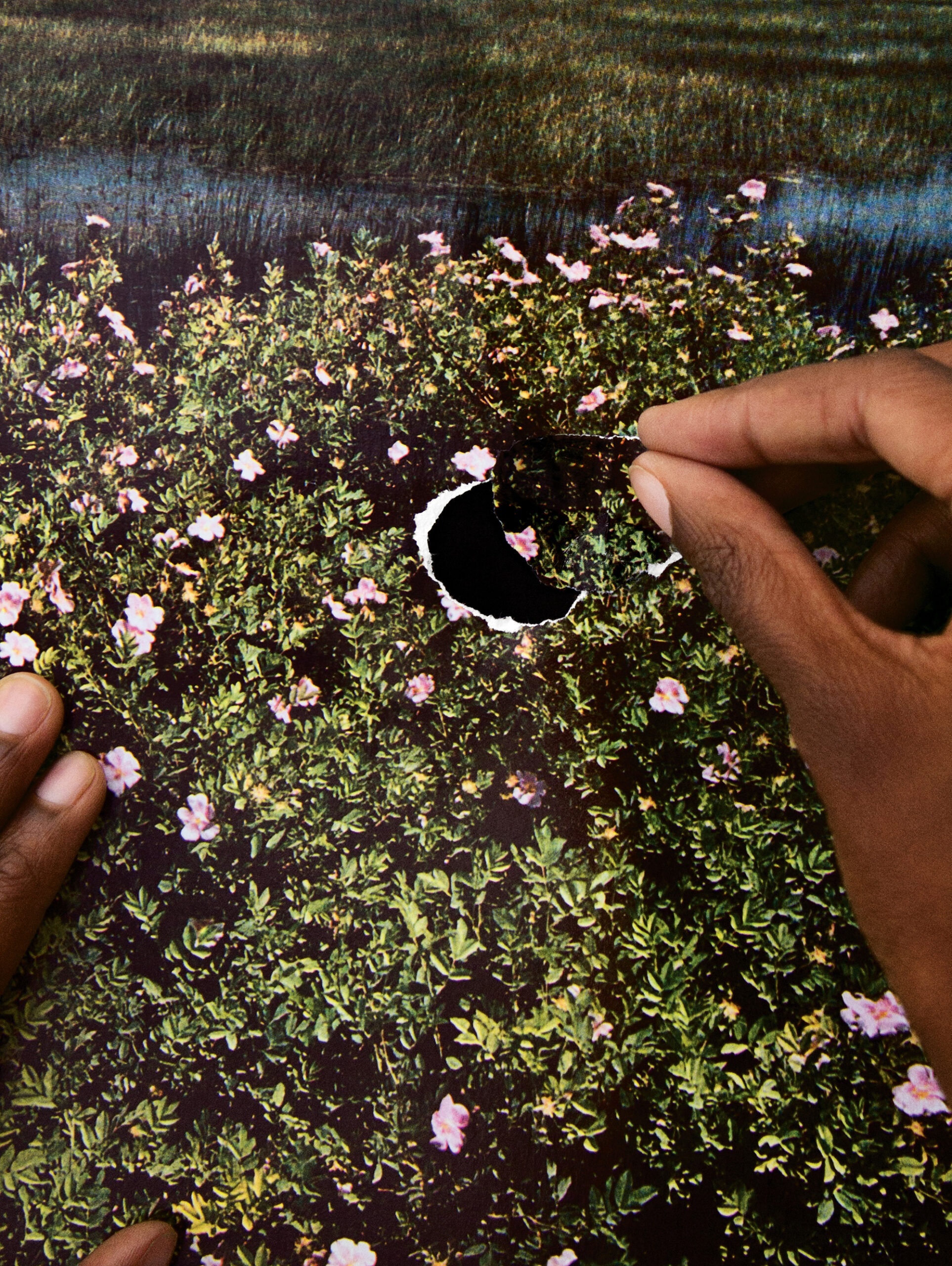
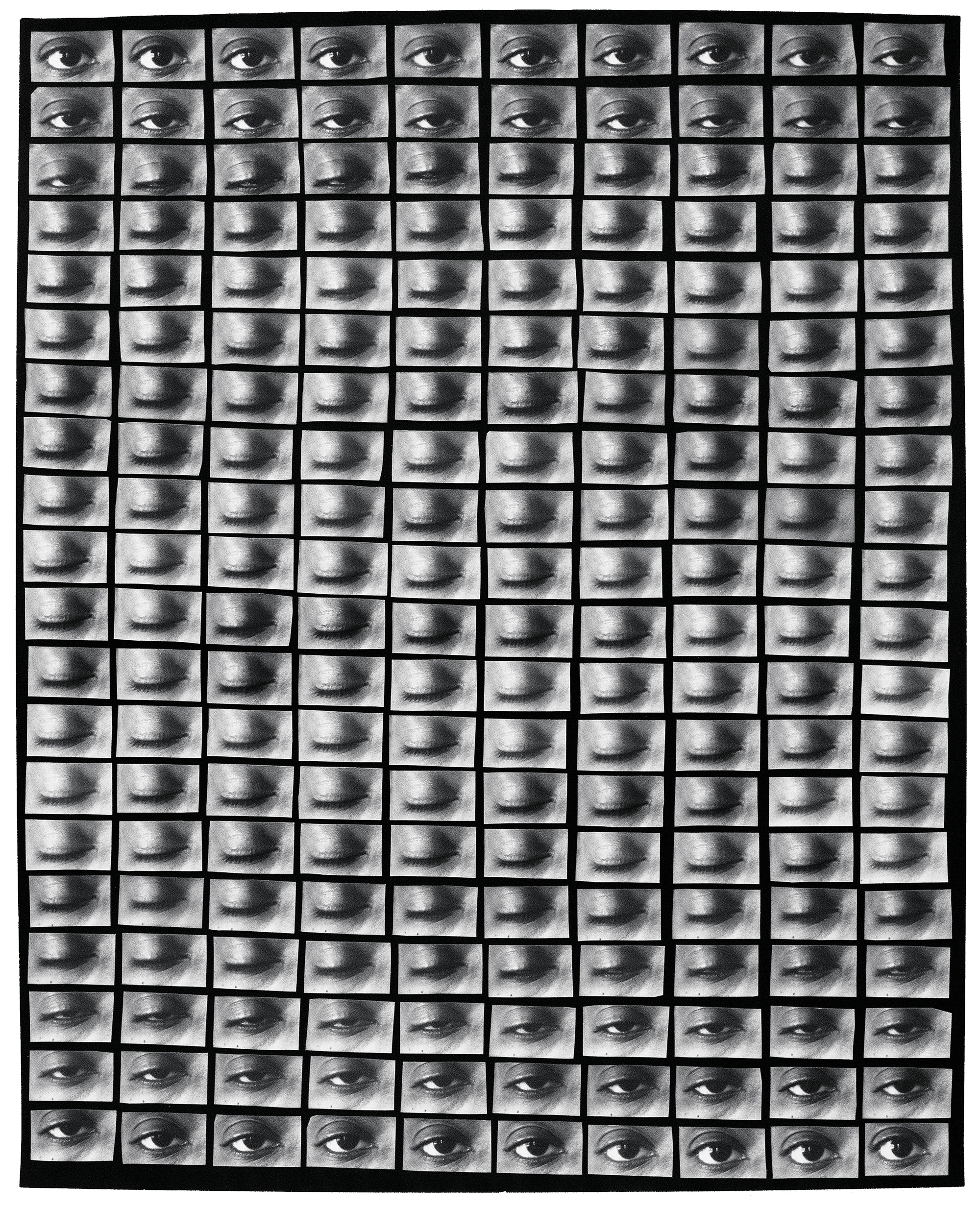
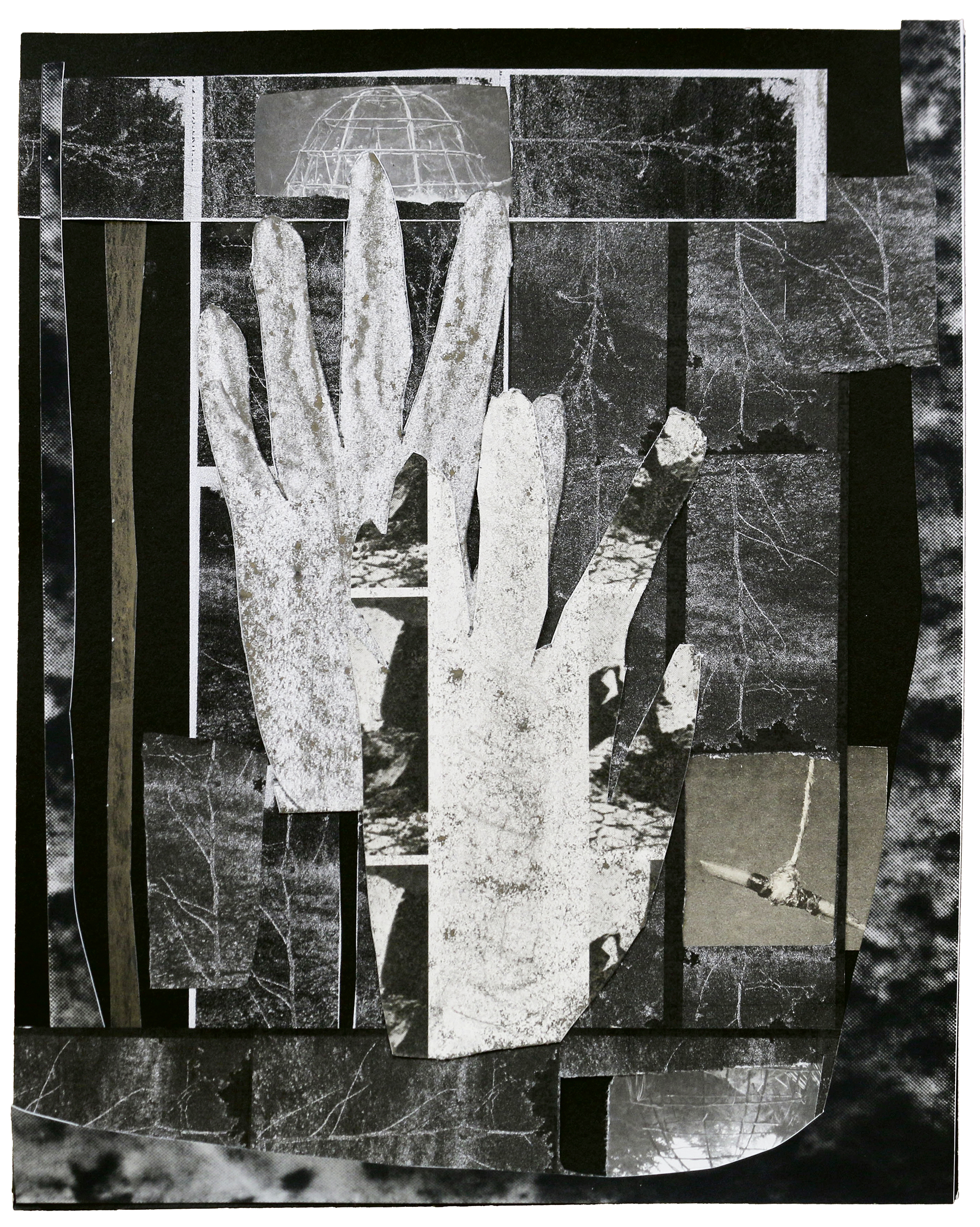
Lee: I think it’s different if it’s a photo or a video or a collage. The collage is usually started by collecting a lot of physical things and having them around and trying to figure out how to make a picture from the pieces. Photographing is different. I don’t take that many photographs. Part of it is, I think, trying to figure out when it makes sense to do so, both conceptually for the work, but also how I’m relating to a place. I got interested in making rock drawings, and at first, I was putting things on rocks and photographing them. And then I was at this creek by my old house, and I was like, Let me use this water as a drawing tool. And that was a great moment because I figured out how to make a drawing that would leave no trace because the water would evaporate. The “leave no trace” strategy has also translated into my more recent videos. I have one where I let a string float on water (Currents II, 2024), and another where I film dowsing-rod shadows (the series Walking Sticks, 2019–ongoing).
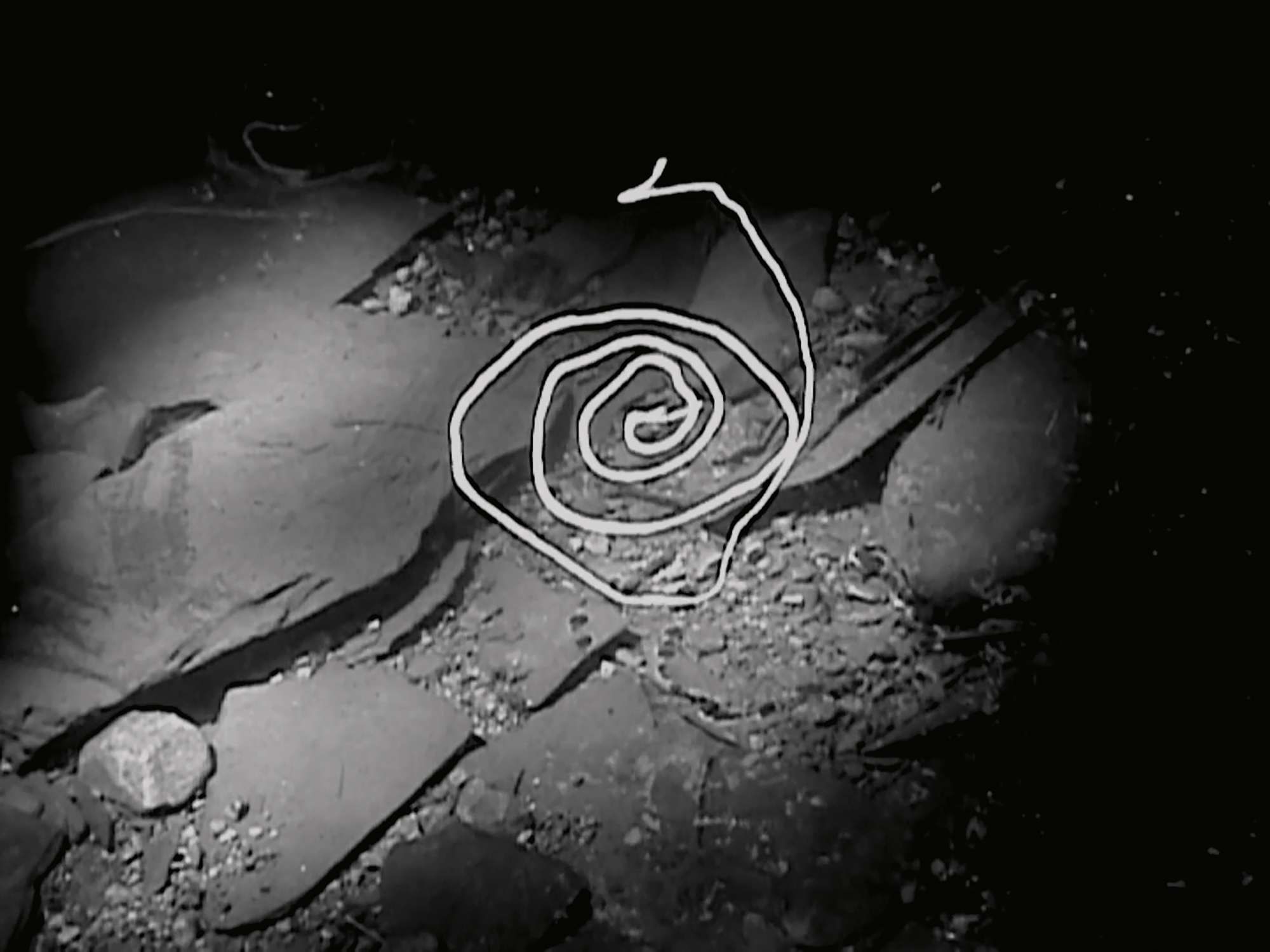
Hill: That’s what showed at the Whitney Biennial?
Lee: No. Challenger Deep showed at the Whitney. I made that in 2019. That was my first dowsing-rod video. Walking Sticks came later. My first one was made after I moved to Columbus in 2021. I think I was trying to figure out what this new place was. I walked around my neighborhood documenting shadow for about twenty minutes. Sometime after I realized I had made a piece. But there is no climax or thing that happens. I joke that I make videos like a photographer, because I tend to just point the camera at one thing. It’s just a wandering shadow.
Hill: It sounds like it has a similarity to the video of the string floating on water—Currents II—in that there’s a link to dance and to drawing.
Lee: There is a link to drawing.
Hill: And it’s the small act that is clearly an act of learning.
Lee: Yes, totally.
Hill: But it’s like learning without a—
Lee: A lesson?
Hill: Without a lesson.
Lee: Lesson plan.
Hill: Or the lesson is maybe more something that you feel rather than that you can name. It’s an action that’s about learning.
Lee: Yeah. That feels really accurate. I do feel like there’s a link to drawing, but I never know how to talk about that or figure that out.
Hill: Yeah. It’s like drawing, but it’s animated, or it’s a moving drawing.
When I saw Currents II, I was really thinking about that because you’re watching a line. A lot of people have said, especially when I first started making sculptures, that there’s such a link to drawing. What is drawing? You’re often trying to make a shape to understand it. Or if you’re thinking about something like portraiture or drawing—even the land—you’re trying to understand it through the line. And I’d say there’s a relationship there to Currents II because you’re watching this line, and the line is interpreting the land, in a way.
Lee: It also makes me think about how we orient ourselves through mapping or the line that your steps make when you take a walk or what line comes from meandering. And that spiral form—it’s such a classic shape that has a lot of attachments. I like thinking about all those associations.
Hill: What are the associations that you’re thinking of?
Lee: Well, first I think about petroglyphs.
Hill: Oh, are there a lot of spirals in petroglyphs?
Lee: Yeah, that form shows up a lot all over the world. Going back to that experience at Chaco Canyon, there is a petroglyph of a spiral there that functioned as a calendar, where line and shadow line up just so to mark the [spring and fall] equinoxes and [winter and summer] solstices. This part of Chaco is closed to the public now because it received too many visitors—the ground beneath it sunk. The line and shadow no longer line up. There is a lot there . . . human intelligence and ingenuity, the power of line and shadow, and the “rights” of visitors to places never meant for them.
I see the spiral shape as this way that represented how I was feeling at that time at Chaco during that whole field experience and afterward. I was literally spiraling [in my thoughts], but I also think a lot about orientation, particularly with the dowsing rods, which I don’t use for water-finding. I think about them as navigational tools. What does it mean to come from a diasporic people, through forced migration, and try to make a home? It’s like you’ve been rotated through other forces. There’s also a therapy version: Where can you place yourself in the spiral? Are you spiraling down, are you climbing out, and how?
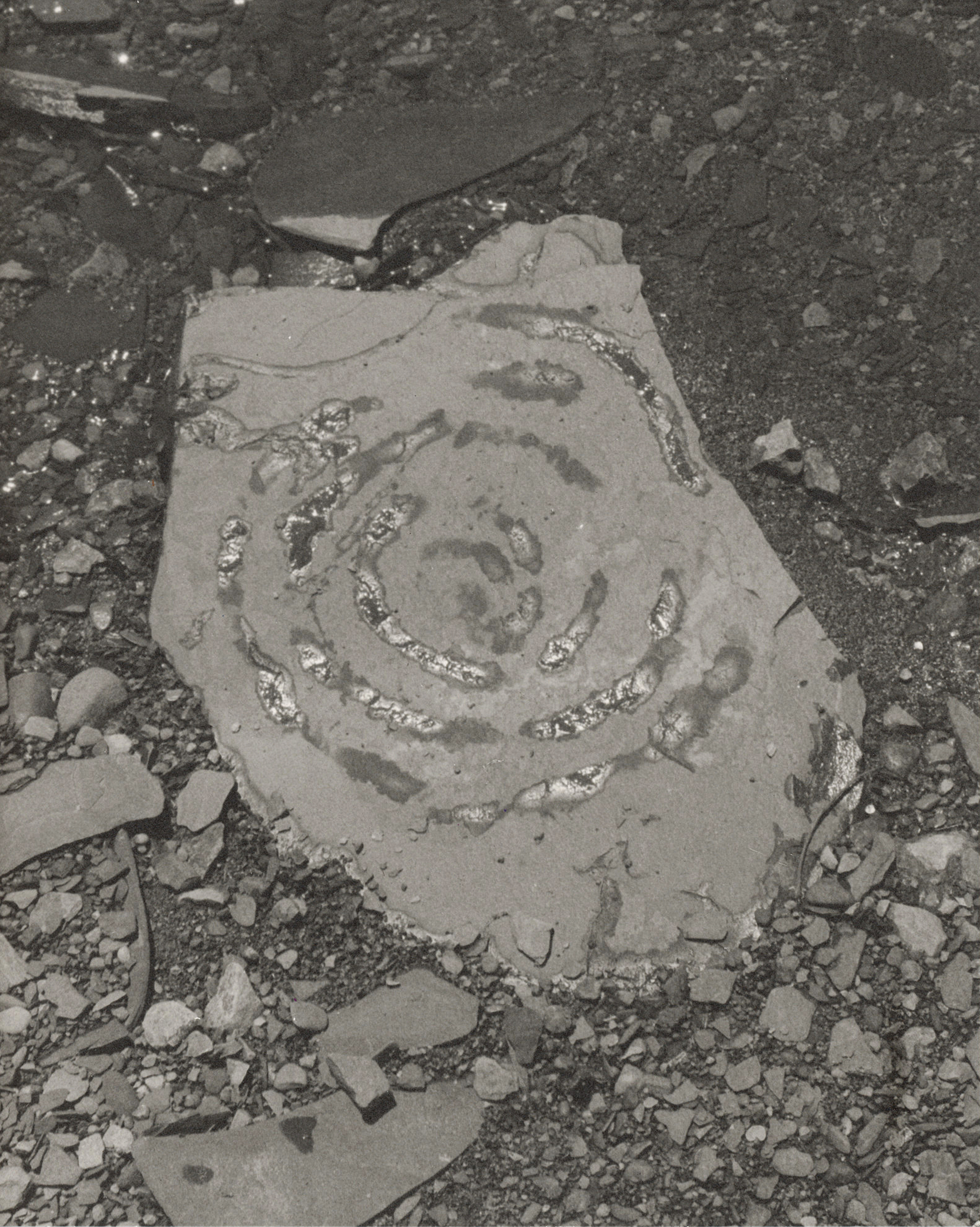
Hill: I was also thinking there’s a meditative aspect of it.
Lee: For sure.
Hill: I was thinking about how the spiral ties into the idea of research, too, the kind of research that we’re talking about. I think I told you recently, I’ve been writing this application where I’ve had to completely transform the way I think about research in order to fit their guidelines and the expectations of research mandates. Like your research, mine is personal, and it’s not meant to blow the minds of the scientific community forever; it’s meant to change my life. It’s also not linear, and it doesn’t have an outcome that is publishable. And it’s not always new ideas. There’s not a focus on the new for me, which research always has—to be contributing something, there’s this idea of discovery. It makes me think of what you’ve said [from Aspen Mays, who teaches at California College of the Arts] about artists in a pond working together without even necessarily convening.
Lee: Yeah, totally. But the pond is the—
Hill: What’s the pond? Is it knowledge?
Lee: They’re not convening; it’s like you’re swimming past, but you’re all making this ecosystem together.
Hill: Yeah, I think so. I struggle to figure out how my own work communicates to others. Not that it needs to. But people always want that neat, tidy package at the end. And for me, I’m like, No, I’m just coming up with ideas and thoughts. And I think that’s how knowledge is created. It’s created because we talk to each other, like this. We look at each other’s work; we read each other’s writing. I think of knowledge as really formed communally through experience.
Lee: Totally.
This addresses the conflict of belonging—you may not belong to a physical place, but we do all belong to a lineage.
Hill: I like the aspect of impermanence in your work. It’s something that I relate to and is sort of interesting in the art world, because the art world is so much about preservation and the stability of the object. What are you attracted to about impermanence?
Lee: I think on some level I do make things permanent, because I photograph them. I could have done the water on the rocks and had a nice experience with it and not photographed it. But I made it into something that can be sold and has been sold. But I think when I can opt out of that—like [my installation of cyanotype rocks] at Storm King, no one can buy that work. They did ask me if I wanted to keep the work. Honestly, it would have forced me to sell it. I decided I didn’t want it to belong to anyone, so instead the rocks will be flipped over and returned to the land. I’m interested in trying to figure these things out: How do I make work that can have a life outside of commerce? How can mark-making inform how I choose to live in the world as a responsible human? Essentially, how do I leave the smallest footprint?
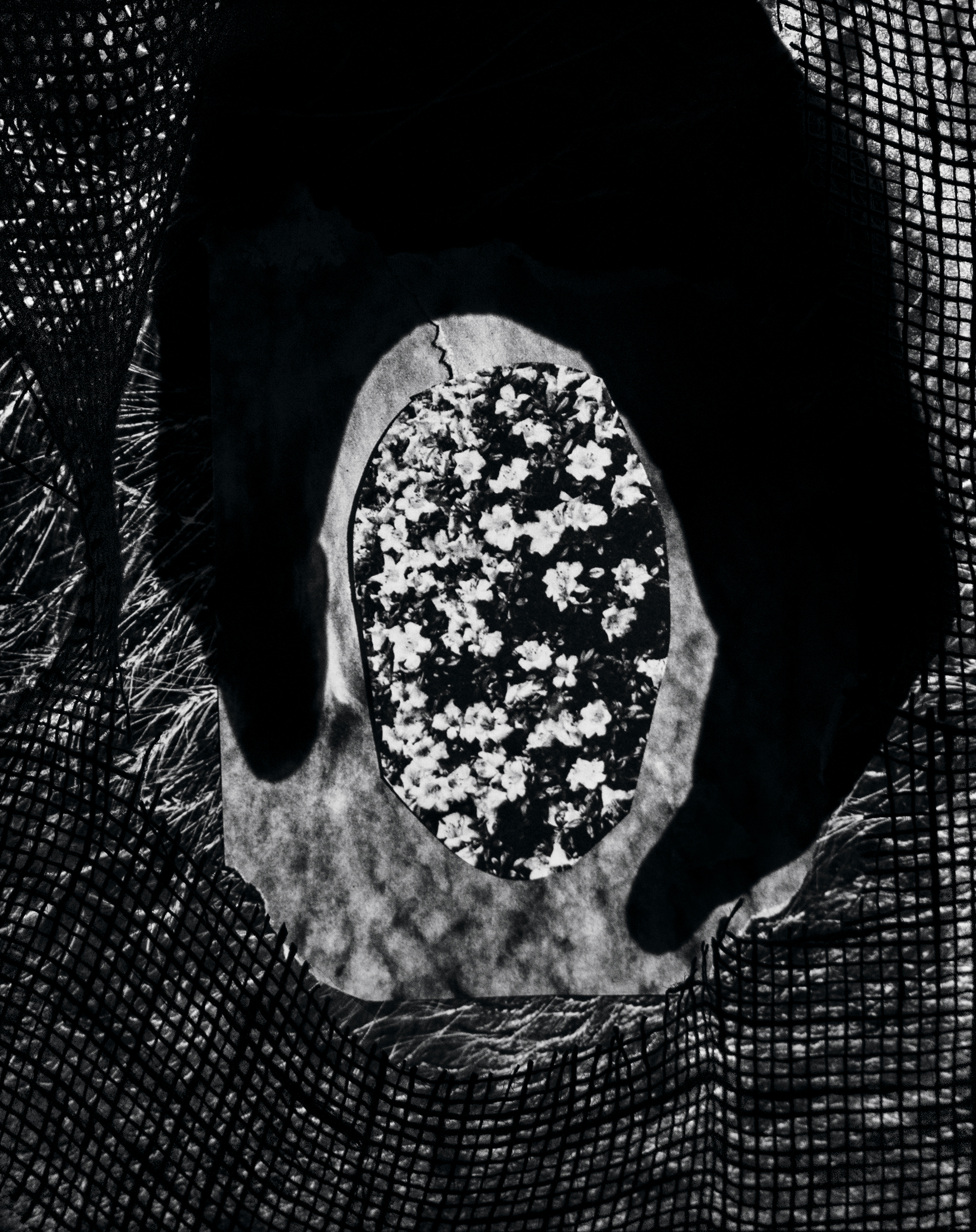
Hill: I like the smaller scale that I work in, but I also feel like there’s a gendered and racialized way that people take up space.
Lee: There’s an argument that we should be taking up more space.
Hill: Right.
Lee: Or it’s taking up the space the work demands. I’ve never used a large-format camera, which I think surprises some people since my focus is landscape. I don’t see a reason why I would use that right now. Not saying I wouldn’t ever, but the work isn’t asking for things to be made that way.
Hill: Yes. Your collages are small.
Lee: Small.
Hill: I read the Audre Lorde piece that you sent me, which was so beautiful.
Lee: “Poetry Is Not a Luxury”?
Hill: What do you think about the worth of art? Who’s it valuable for?
Lee: I don’t always believe in art.
Hill: Yeah.
Lee: I mean, I do believe in art, but I think it wavers. Believe is such a loaded word. There are a few essays by Toni Morrison where she talks about this too. She’s really saying it sustains life. And I think that that’s true. What do you think?
Hill: What Audre Lorde talked about that struck home to me was something that we’ve been saying, which is that art is a way of thinking. It’s a way of thinking that accesses something that the world wants to delete in you.
Lee: Yes!
Hill: And that’s your inner self.
Lee: Yeah, it’s aiding in accumulating knowledge, but also the way you described it, something the world wants to delete in you also goes back to the effects of colonization. All of those are modes to delete that source—that source is also what helps you sustain life. It’s all connected.
Hill: And for Audre Lorde, she’s saying that force is also what will lead you to the actions, which I really do believe. But I think art now, it’s so separated from the rest of life.
Lee: It is.
Hill: And I think that’s a problem. There’s this idea that some people are making better art than others, which whether this is true is so not important. It’s the making that’s important to me.
Lee: Totally.
Hill: I think the way that I was schooled was that knowledge is in the brain, and then art taught me the knowledge that’s in your body, right? And not just as a metaphor or something, but as in literally, your body stores experiences from your ancestors, that through movement, you have different types of ideas.
Lee: Which came up a lot in my earlier work that I made right out of grad school—I was thinking about the ancestral body, and I was studying survival and wilderness skills. Learning to make a fire from scratch taught me that I had latent muscles in my body I didn’t even know were there because they haven’t been used that way for generations. Or even carving into the rock. I mean, I felt a little guilty making the work for Storm King, literally altering the face of rocks. I gave myself permission to do it when I remembered it is one of the early forms of human expression. Somebody did this in my ancestral lineage. And maybe this addresses the conflict of belonging—you may not belong to a physical place, but we do all belong to a lineage.
Hill: Every year I start to know more about how much I don’t know, and how in terms of my separation from the land, how deep that separation is. It’s something I’m coming to understand more now. I think I always understood it as political rights, land rights, but now I’m starting to think about it as a knowledge base.
What I realized through making my exhibition M***** was there’s the knowledge in your body, but there’s also the knowledge in your relationship to the land and in your ancestral relationship to the land, right? And that is a whole amount of knowledge that I don’t think I would’ve ever thought about if I hadn’t been an artist and been able to hang out with my friends at BUSH Gallery—like Tania Willard, Peter Morin, and Jeneen Frei Njootli—and do art activities that started to connect me to a different way of thinking.
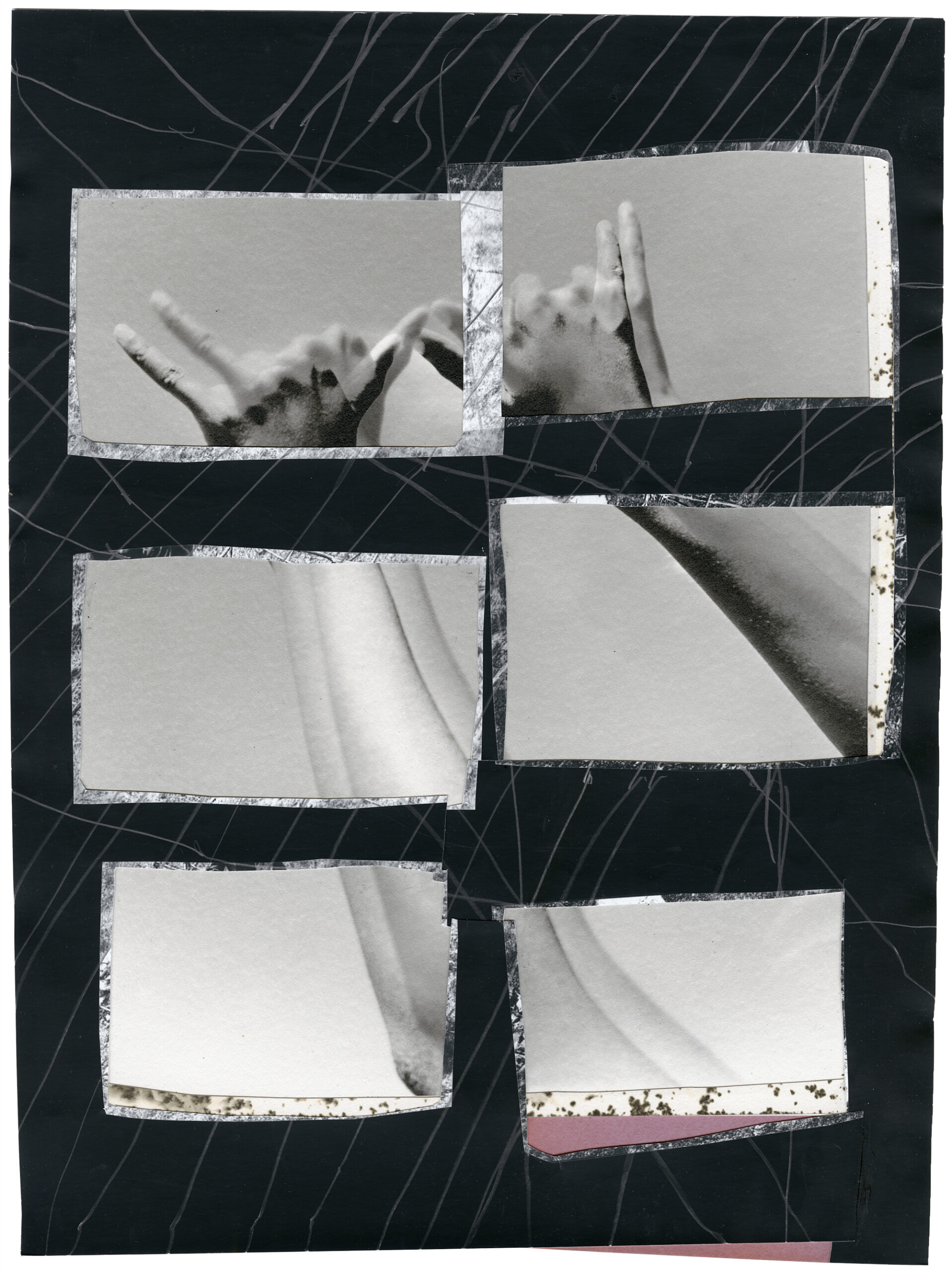
Lee: There are two photographs I made that I turned into collages, where I was holding my hands in a position that would help one measure the sky and locate the North Star (North and True North, both 2019). That, to me, was one of those things where it felt very much like an ancestral portal, obviously because of the significance of the North Star for people escaping enslavement.
But in terms of my own ancestry, what’s funny is that I haven’t really made work in the American South or spent much time there. That is the plan for my Guggenheim [Fellowship] years: to spend some time down there.
Hill: Well, I feel like we’re on the same path. I’m 100 percent there. I’m going back to Treaty 6. I feel like that’s where I’ve been taking these slow steps to.
Lee: And why is it slow?
That’s my question. I’ve been wondering for myself: Why has this taken so long? I went out West because an old boss of mine was like, You’re into landscape photography? You should go to California! Which I understood—the state plays such a huge role in the canon of landscape photography. I did learn a lot, but then how do I apply that to something that is personal to me but also feels so distant because my family has been in New York City for three generations?
Hill: I’m honestly shocked at the slowness, because I’ve always been a part of a really amazing group of friends who live in their home territory and who have been learning these things decades earlier than me. But I was friends with them through that whole time, so why did it take me an extra decade or more? For me, at least in part, it is that extremely violent history of expulsion and separation.
Lee: And then we embody that. That separation has an impact. You follow it even if everything in your being wants to be against that.
Hill: Even if intellectually you know that that’s fucked, I still had a sense of not really having a place to go back to.
Lee: Because the separation and expulsion worked. It all worked really well, and that’s why—
Hill: But not entirely.
Lee: But not entirely.
Hill: Which is why we are doing what we’re doing, because it didn’t work entirely, and that’s the thing that I hold on to as hopeful.
Lee: And how amazing that we get to that place through art-making.
This interview originally appeared in Dionne Lee: Currents (Aperture, 2026).