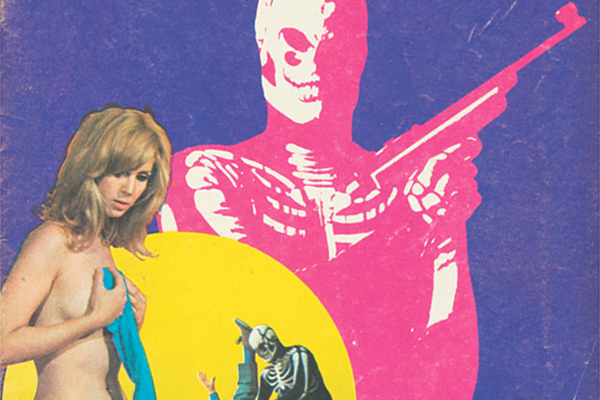
How comic books illustrated with photographs became a great popular art form.
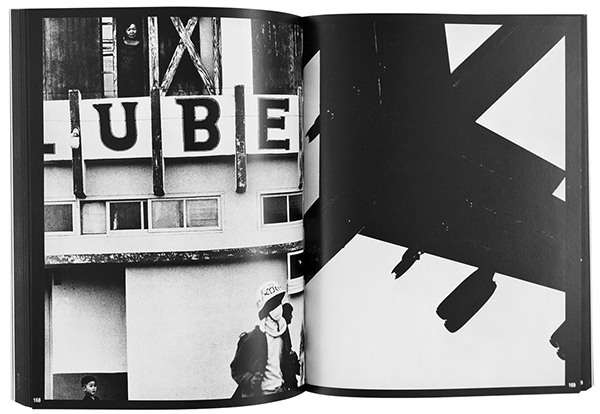
In an unusual photobook, images move like the rhythm of free jazz.
How does the designer of the sold-out Provoke catalogue conceive of new photobooks?
How do filmmakers such as Jean-Luc Godard and Sofia Coppola translate moving images to the printed page?
For Bronwyn Law-Viljoen, publisher of Fourthwall Books, the photobook is a space for political and social history.
A book with “cinematic flair”; “a quasicinematic, nonlinear narrative”; “raw, cinematic, stream-of-consciousness”—you hear these things about photobooks…
D. H. Lawrence admired the American Southwest but found Southern California troubling: “In a way, it has…
Darius Himes on Robert Spector The Pizza Hut Story Melcher…
As photography developed in the wake of its invention in 1839, constant improvement in processing and…
Amos Mulder is a video artist whose works include visual responses to found footage, texts, and photographic…
TBW Books Matthew Leifheit in conversation with Paul Schiek So often in art—as in life—the decision to…
The essential goal of publishing is to make public. But when publishing photobooks, who do we consider…
America is defined as much by its open spaces—where the hand of man is invisible or…
We are at a moment when the community of photobook makers and collectors is expanding rapidly, yet…
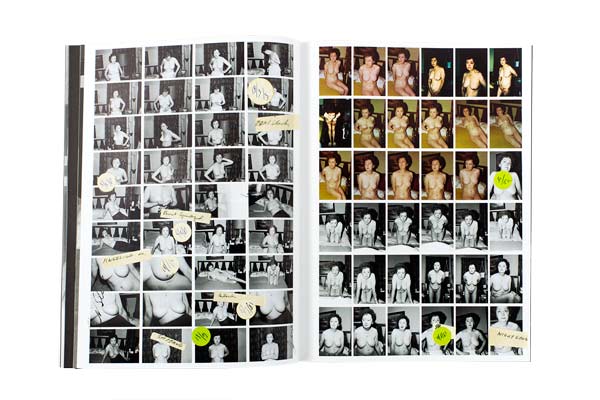
A photographer’s obsessive relationship with his wife, and the powerful yet peculiar work that resulted.
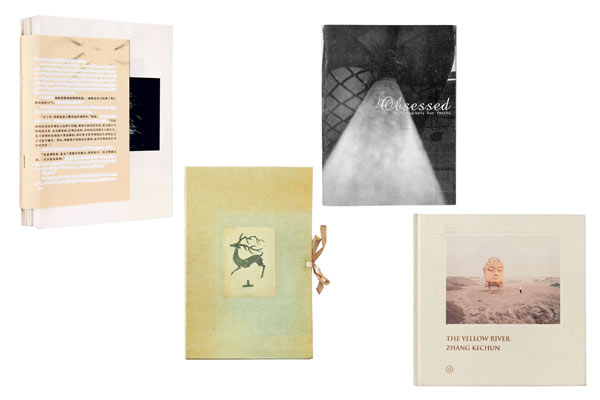
Ruben Lundgren speaks with Yuan Di about his independent Chinese publishing house, Jiazazhi Press
My first encounter with In Flagrante (1988) was in San Francisco, where the year it was released…
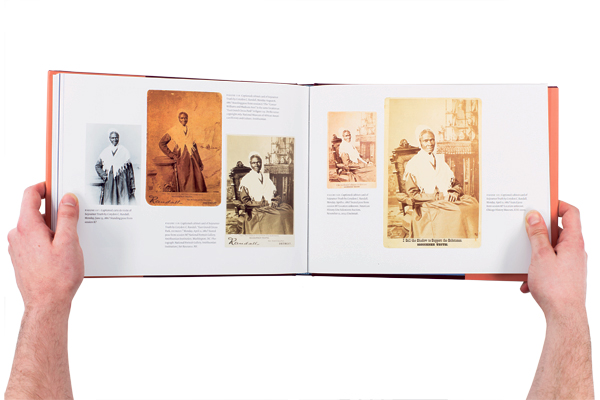
In 1826 a thirty-year-old slave escapes captivity becoming a legally free, outspoken and effective supporter of the abolitionist cause.
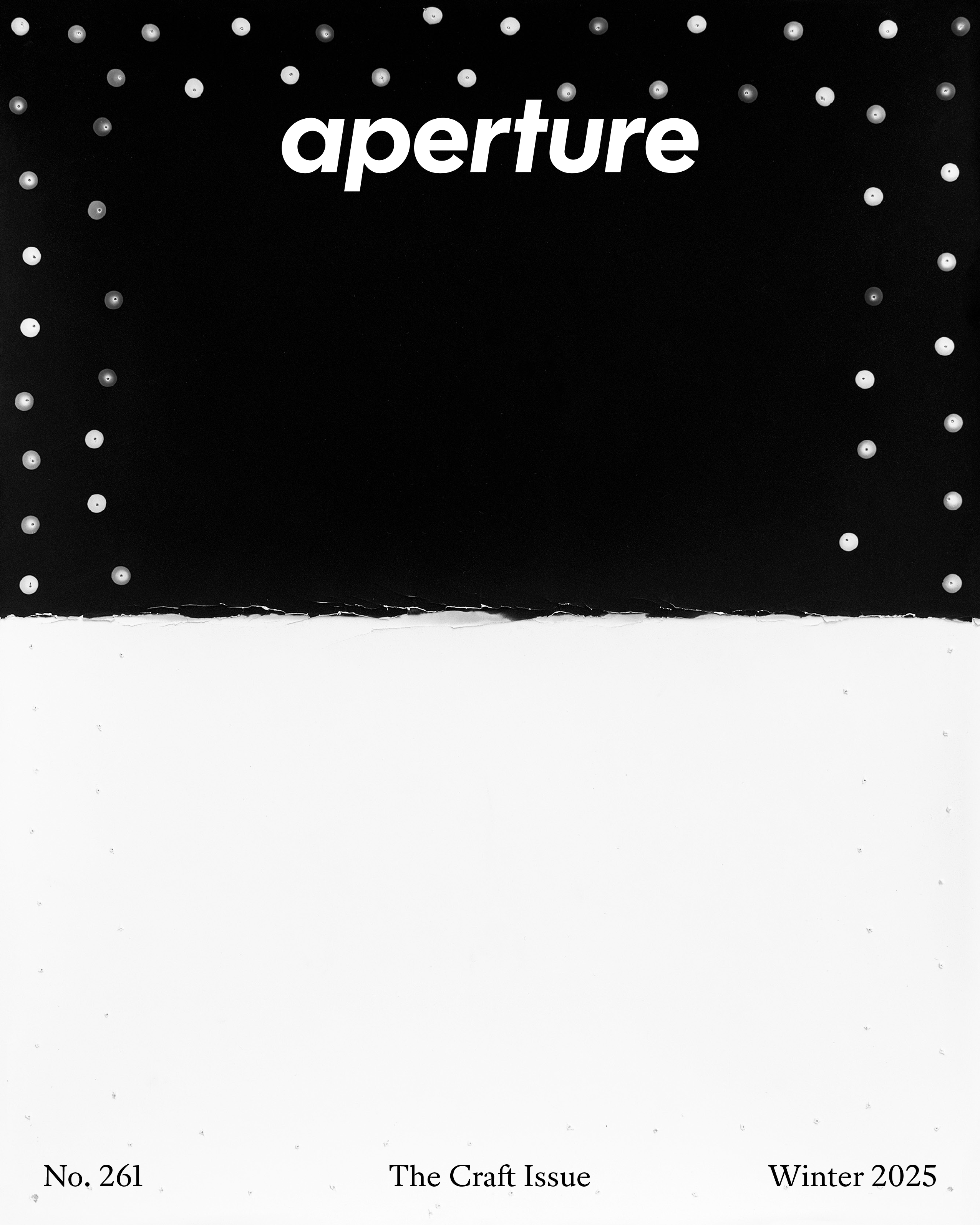
Aperture’s issue on craft features photographers who make pictures the slow way—building camera obscuras, creating photograms, and laboring in traditional darkrooms to make handmade, unrepeatable forms.