Essays
Szilveszter Makó Wants to Be in Control
With his distinct theatricality and closely guarded process, the photographer conjures his own private world. It’s become a public obsession.
I’ve read that Goethe, Hans Christian Andersen, and Lewis Carroll were managers of their own miniature theaters. There must have been many other such playhouses in the world. We study the history and literature of the period, but we know nothing about these plays that were being performed for an audience of one.
—Charles Simic, Dime-Store Alchemy: The Art of Joseph Cornell, 1992
Szilveszter Makó wants to be in control. Order appeals to him, but only if self-imposed. “I once had a breakdown on a shoot because it was so structured,” he recalled. “There were three blackboards behind me, covered in printed references. Every detail was laid out, haunting me. I told them: ‘You chose the wrong photographer.’ They were extreme control freaks, and that was the problem—I am the control freak. You cannot have two. It becomes murderous.” His protectiveness extends to the postproduction process: Not even his closest collaborators know exactly how his images are made in the darkroom. Interviews unfold only through slow, heavily filtered written exchanges.
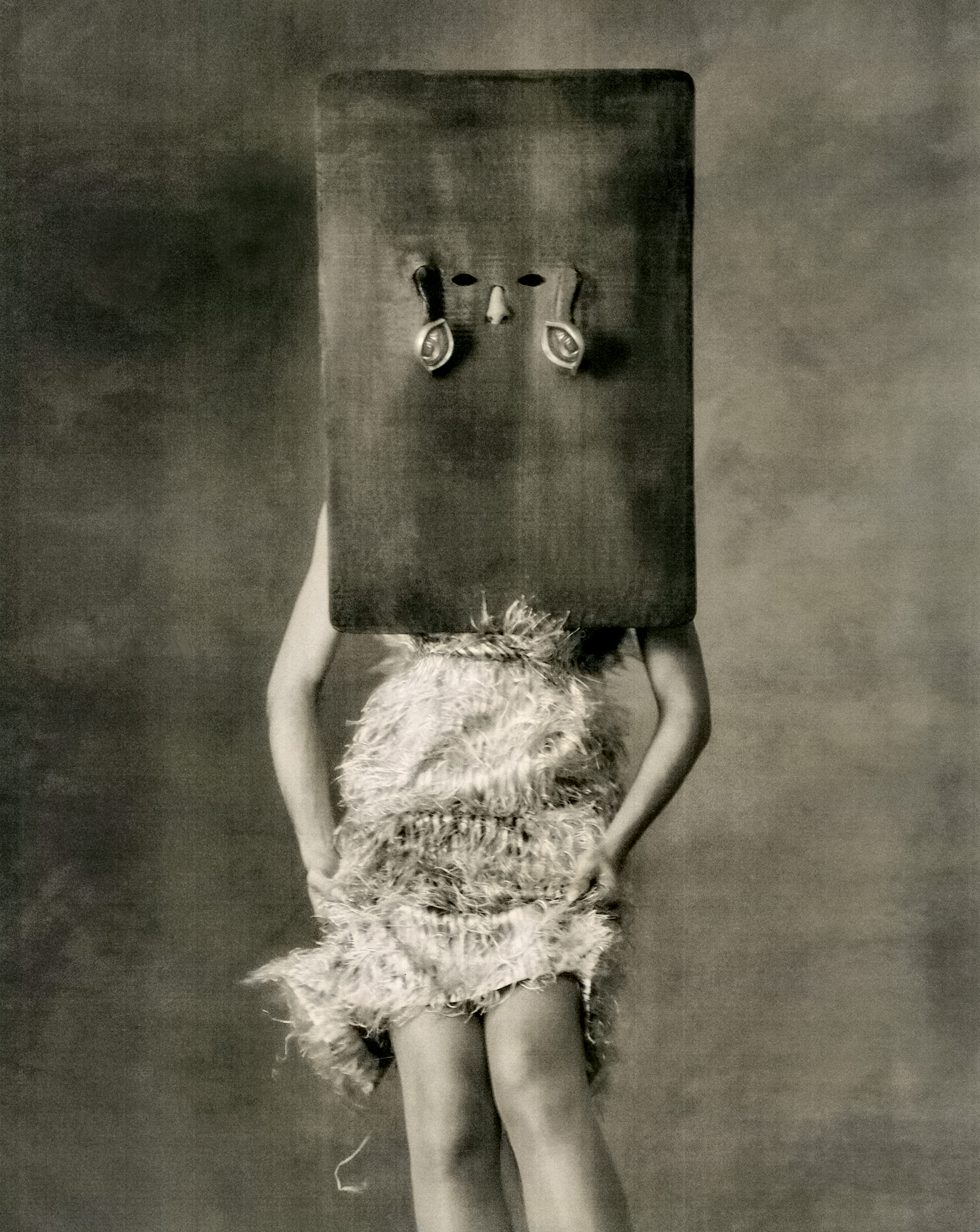
Perhaps not surprisingly, Makó doesn’t subscribe to the label of photographer—not entirely, at least. He might just as well be the manager of his own miniature theater, putting up shows for an audience of one. He takes pictures mainly to satisfy his own eye, he said. Should others be moved, wonderful; should they not, the performance would remain untouched. Makó’s mystique is intensified by a knot of contradictions. The young Hungarian artist claims to resist the culture of “fast images, fast production, fast consumption,” yet each of his photoshoots becomes a social media sensation. He once wanted to be a painter but found the medium too slow; photography keeps pace with his mind, which moves quickly, restlessly. He told me he unsettles people, yet he is a favorite among A-list celebrities—arguably the most easily unsettled demographic. He constructs fantasies but insists that whatever stands before his lens must actually be there: no Photoshop, no CGI, no AI.

Aperture Magazine Subscription
0.00

“I often think in opposites,” he said. “I enjoy holding tension between severity and play.” It seems that this underlying tension is the key to Makó’s poetics: He manages to move seamlessly from one world to the next, one day on set with Elle Fanning; the next with New York City’s First Lady, Rama Duwaji; then collaborations with brands such as Maison Margiela, Dior, and Ami Paris. Understanding Makó means accepting the friction at the heart of his work, screening his images for hidden clues, and tracing them back to their point of origin.
“There is this Hungarian saying, you either work from A to Z or A to B,” he told me. “I work from A to B.”
Now based in Milan, a city he admires for its restrained, melancholic elegance, Makó was born in northeastern Hungary and grew up in Lillafüred, a small town nestled at the foot of the Bükk Mountains. If you google it, it looks like something out of a fairy tale: a Grand Hotel rising like a storybook castle, a waterfall spilling into a pristine lake, and woods that look like theatrical props.
For two formative years, Makó attended a Waldorf school, an experience that made a deep impression. He sewed his own clothes, knitted basketball nets, planted seeds, studied herbal medicine, and cared for animals. It was an education grounded in slowness and tactility, an early training in constructing worlds from the ground up.
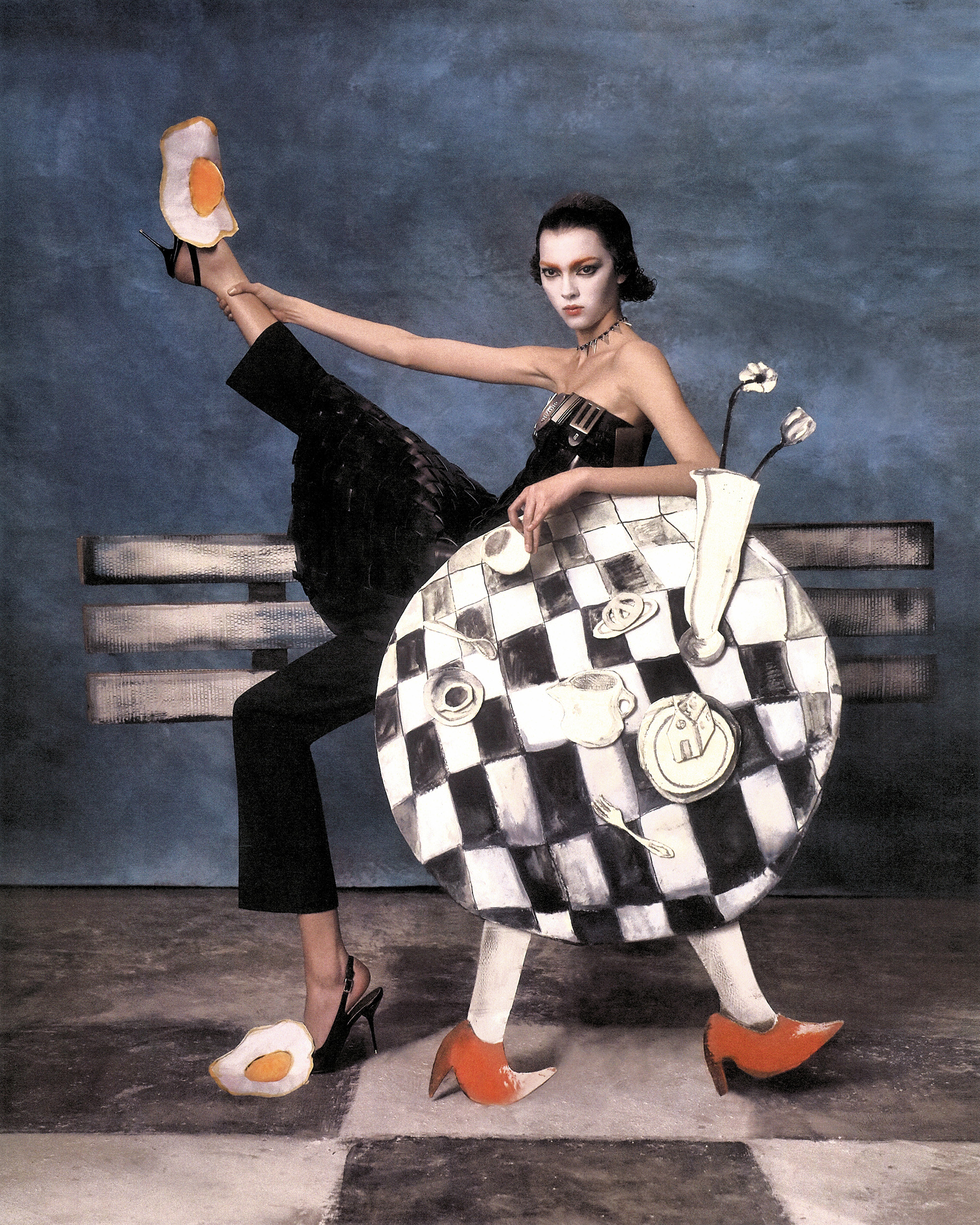
The scenery may have bordered on the idyllic, but his household operated on firmer ground. Makó was raised by his conservative, postcommunist grandparents, a generation forged in coal dust and factory rhythms. “I grew up inside a structure built on discipline, tradition, and rules,” he said. “That framework is still deeply embedded in me, and I prefer it that way. It runs through the work whether I allow it or not.”
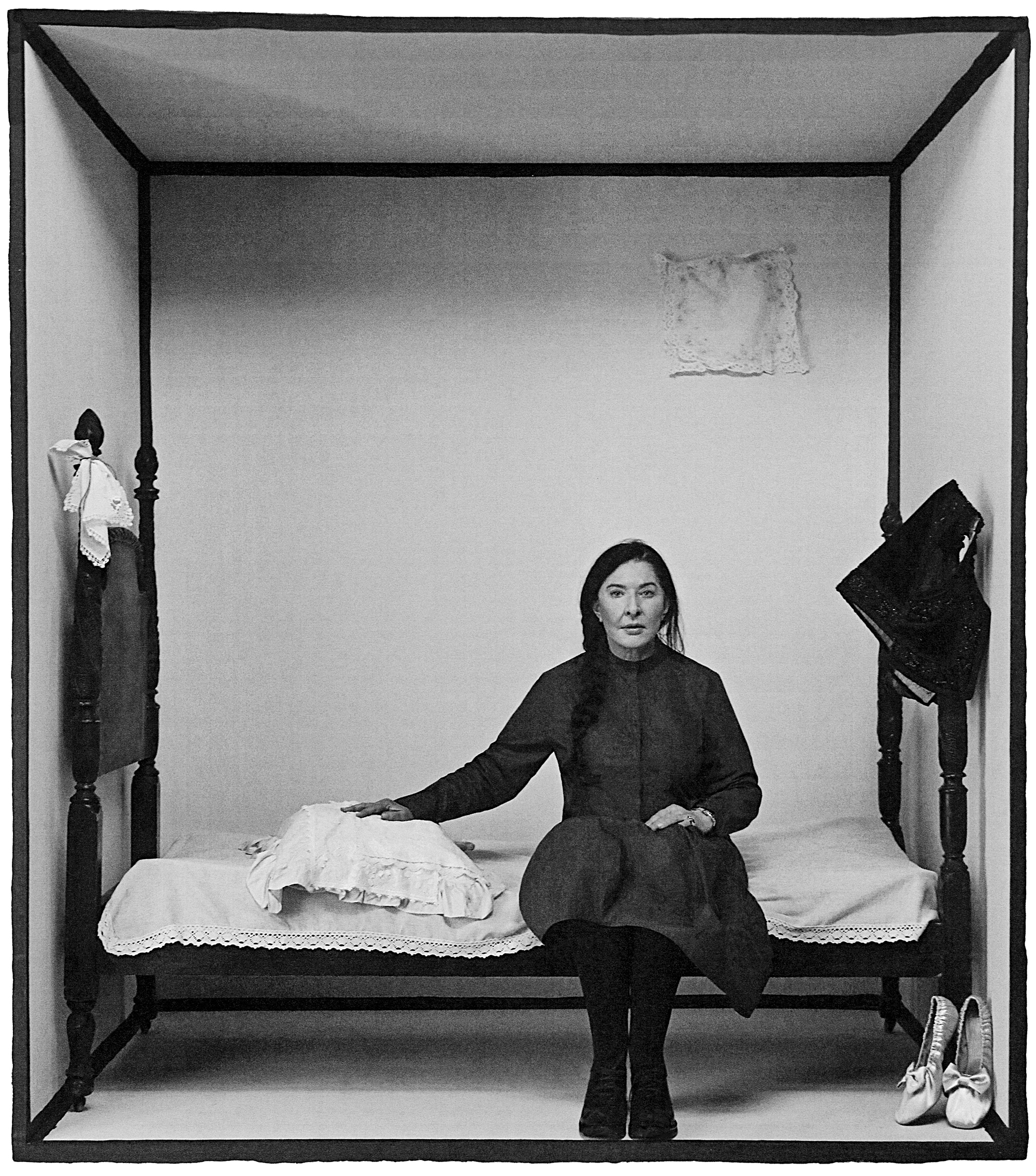
For Makó, boundaries are not a metaphor but a method: He is a master of thinking inside the box. “There is this Hungarian saying, you either work from A to Z or A to B,” he told me. “I work from A to B. It is remarkable what you can produce within a restricted parameter.” The box is a recurring theme throughout his work. It is a playhouse, a safe space where imagination can roam free under watchful control: “My childhood and adolescence were strict, yes, but never without play. I found a game inside every rule.” His portrait of the performance artist Marina Abramović—at ease on a small Victorian bed squeezed into a hermetic white cube, ballet slippers propped up on a wooden leg—perfectly conveys the willful intensity of her defenselessness, her un-Makó-esque art of surrendering control.
Makó says he exists somewhere on the autism spectrum, suggesting that what others might perceive as compulsions are, for him, simply the mechanics of daily functioning. He is detail-oriented to a degree that borders on obsession. Recently, his team noted that he brings the same lipstick to every shoot, the only shade that on his set can be used as blush—a small signal that everything is precisely as it should be.
When discussing his influences, the artist repeatedly invokes the same nineteenth-century Hungarian ballad, “Ágnes asszony” by János Arany. The poem is set in a rural village where a woman is seen washing bedsheets in the river. They are stained with blood: She murdered her husband in his sleep the night before. From that day forward, she returns to the river over and over again, scrubbing at a stain that will not disappear. It is a story of madness embedded in the mundane—of repetition, of imagined stains, of performing the same gesture with the same objects until reality itself begins to fray.
In a sense, this is precisely what Makó does with his props. He reuses, recycles, and reimagines them until they break, until they have exhausted all their potential. He finds waste “the most irregular,” an adjective that comes up often when he describes his worldview. “It’s a kind of slow fashion; it builds a language,” he said. “I’m not interested in producing something new for the sake of it, and I don’t think photographing the same objects or concepts over and over again makes the work any less effective.”
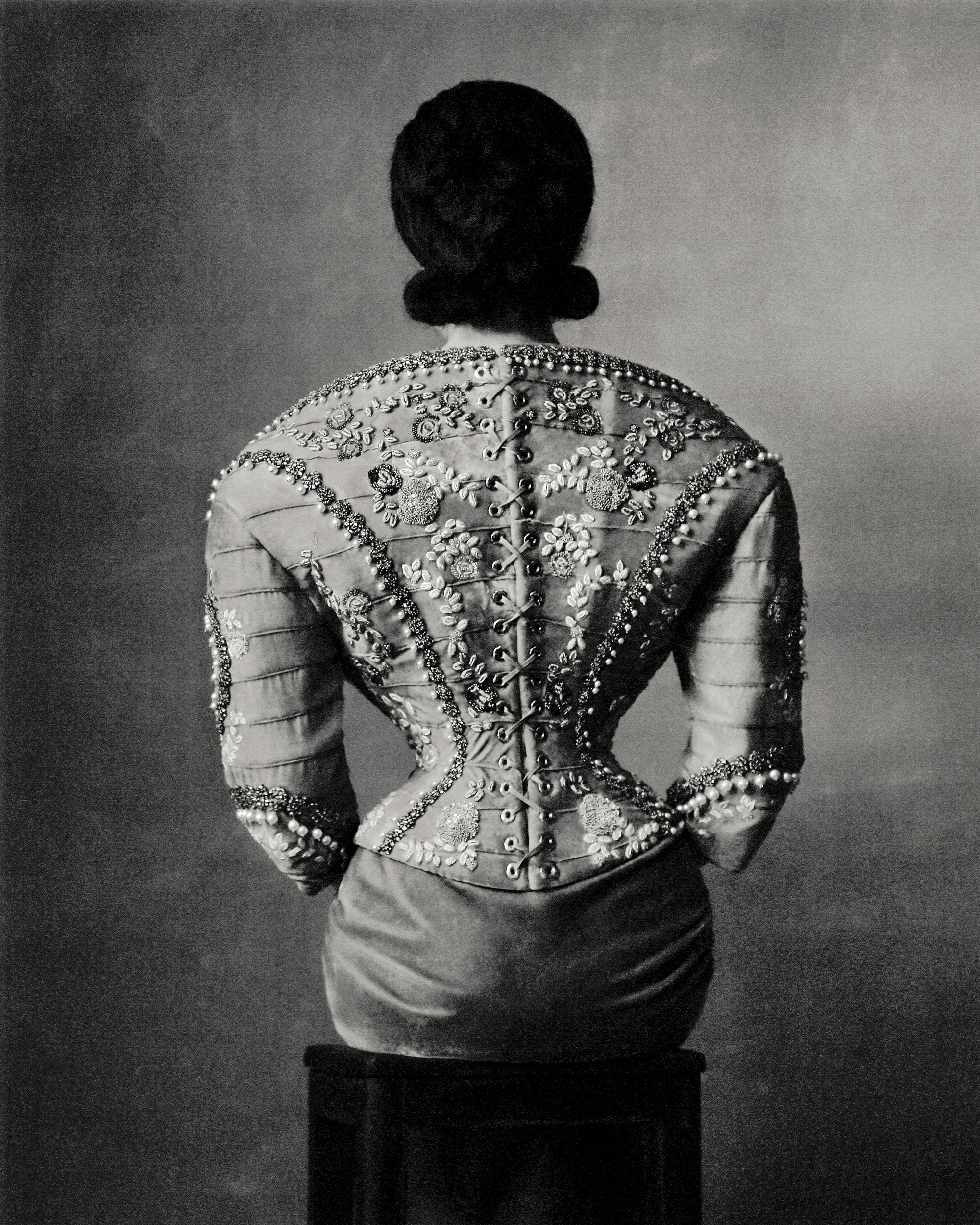
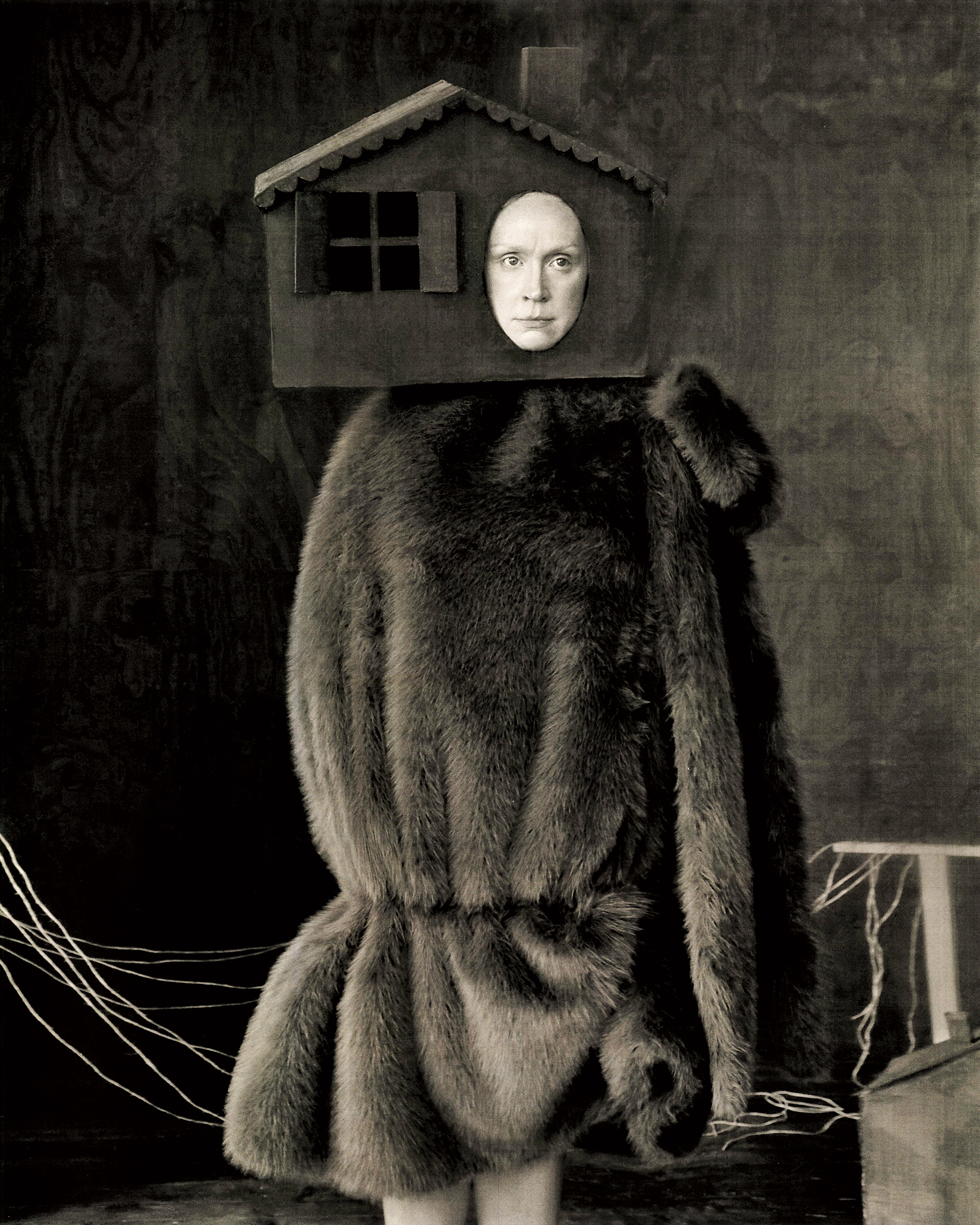
All photographs © the artist
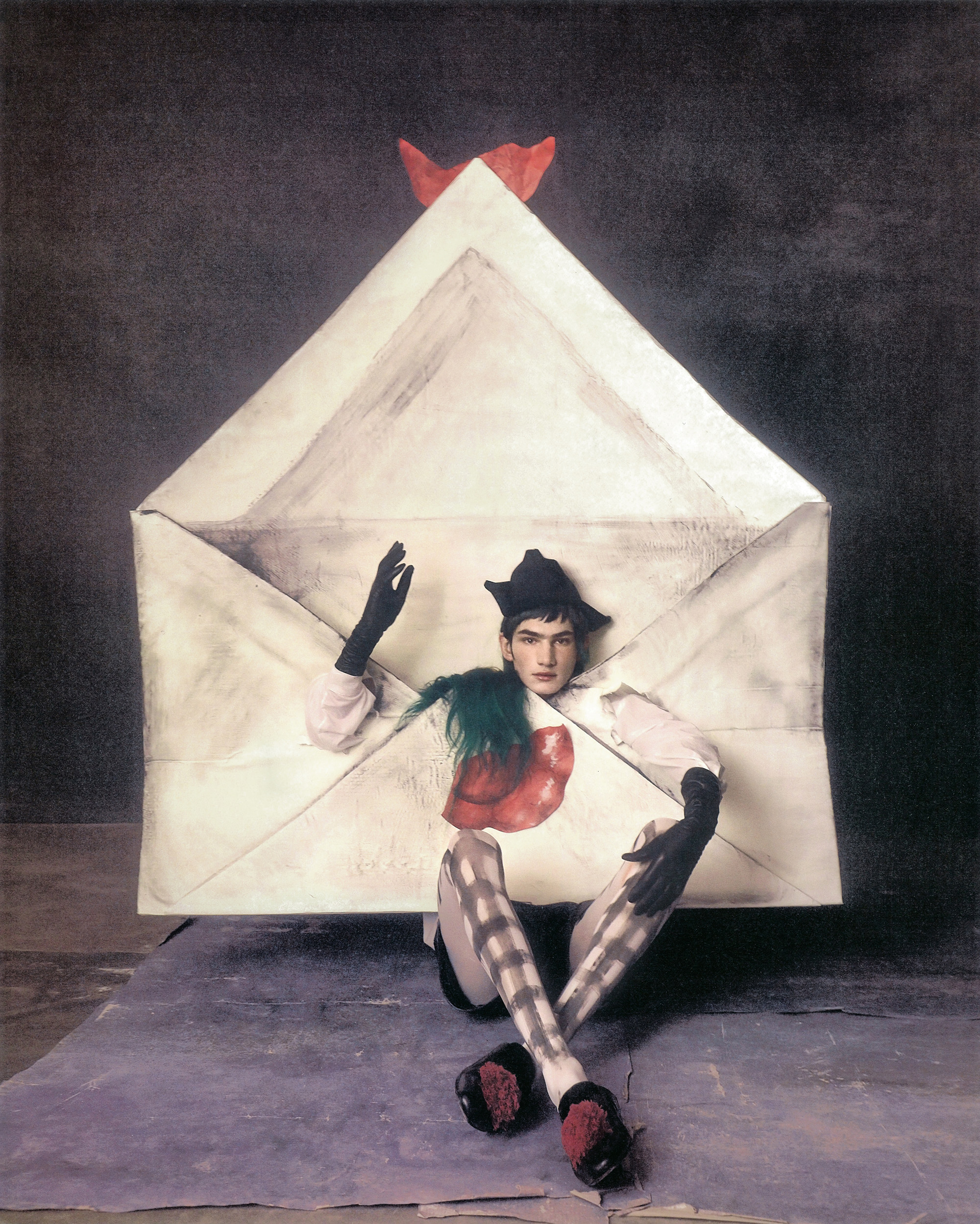
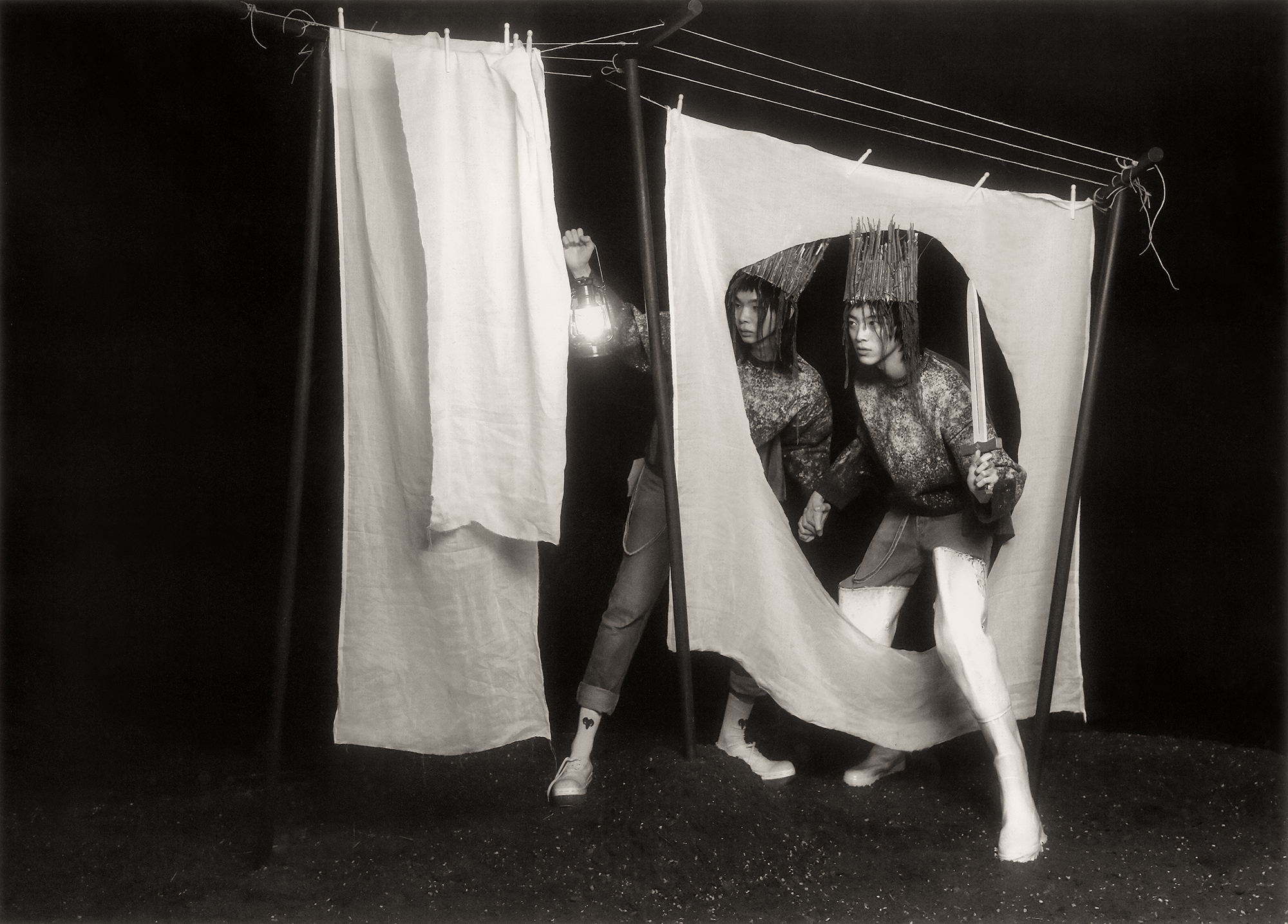
A cardboard box barely large enough to contain a body; a cardboard box disproportionately larger than one. Red-and-white checkered bedsheets. Several house-shaped headpieces. A Pinocchio nose. Pointed hats. A cardboard sword. These are just some of the things that recur again and again in Makó’s photographs.
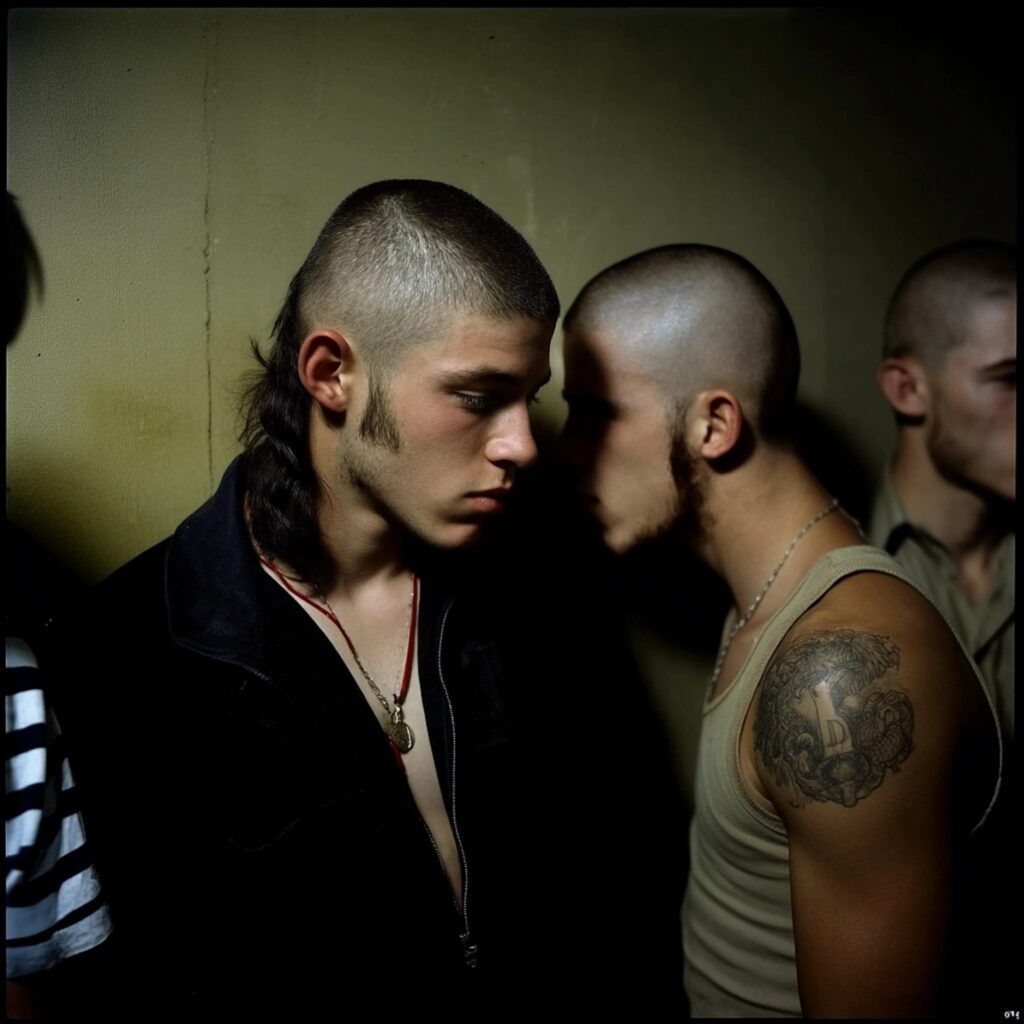
It matters to him that his sets and props are visibly handmade, textured, bearing the trace of touch, perhaps echoing his early training as a painter. They share the same muted, grainy surface he seeks in his photographs: a simplified, slightly degraded version of the everyday. In an era marked by digital fatigue, this emphatically handcrafted quality allows his photographs to stand apart, like children’s drawings come to life. He wants his pictures to be “dancing on the edge of being too much.” His images pull you in with beauty, then invite you to make up stories about what you see.
Makó often describes his mindset as “brutalist,” which may partly explain his decision to live and work in Milan. When he speaks about his inner architecture, though, the style morphs into something more intricate. He imagines “lots of little rooms,” each distinct, each filled with carefully gathered trinkets. Every object is collected and stored, separate yet connected in a sort of organized chaos; from the outside he thinks it would probably look very eclectic. “If it connects to other people,” he mused, “then I’m very grateful, but it’s highly unlikely.” But there are private rooms inside everyone. Makó simply chooses to render his visible—probably his only unkept secret.
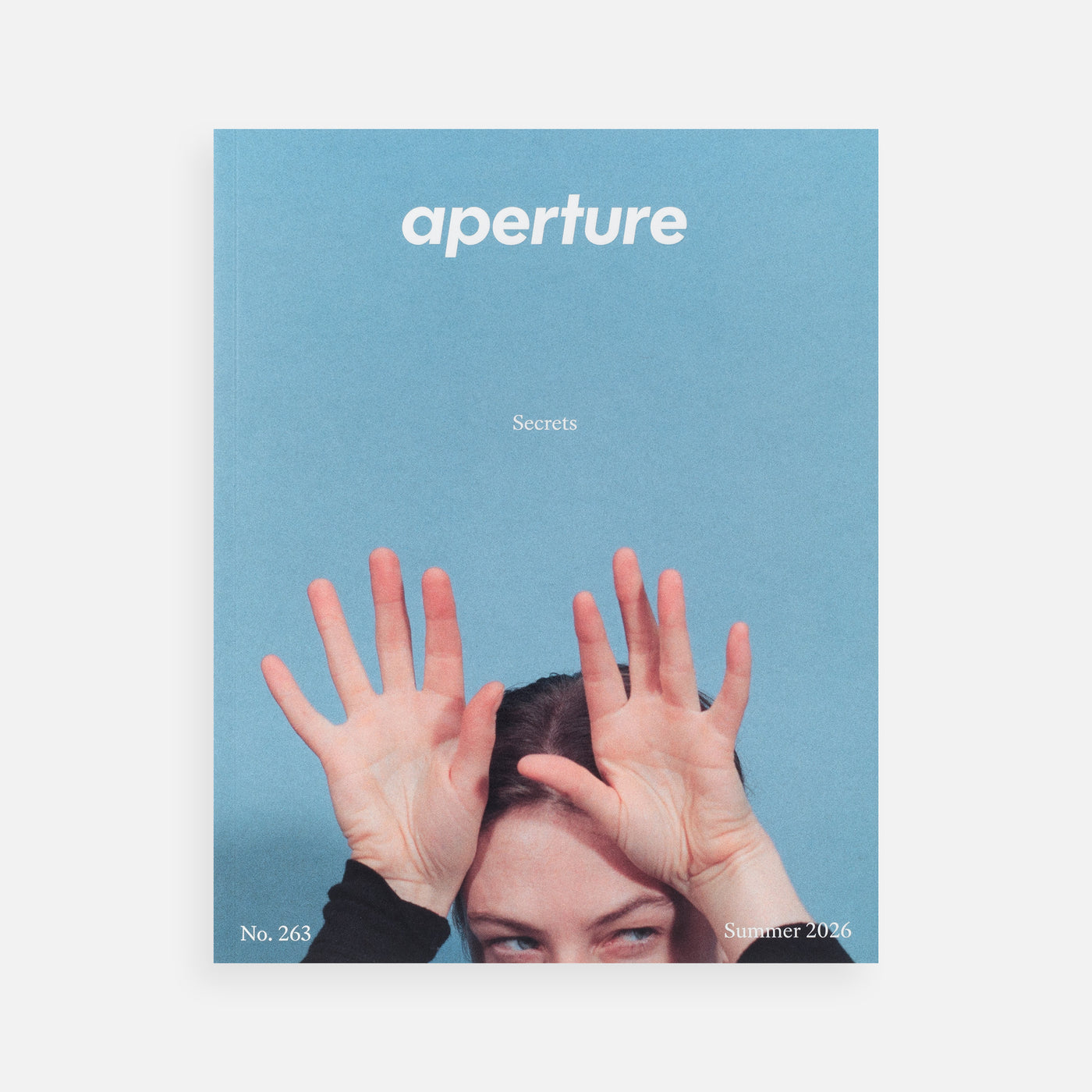
This article originally appeared in Aperture No. 263, “Secrets.”