Why an Influential Stylist Turned to AI
Years after retiring from an illustrious career as a stylist, Simon Foxton was lured back into image-making by fresh new faces. The only catch is, they don’t exist.
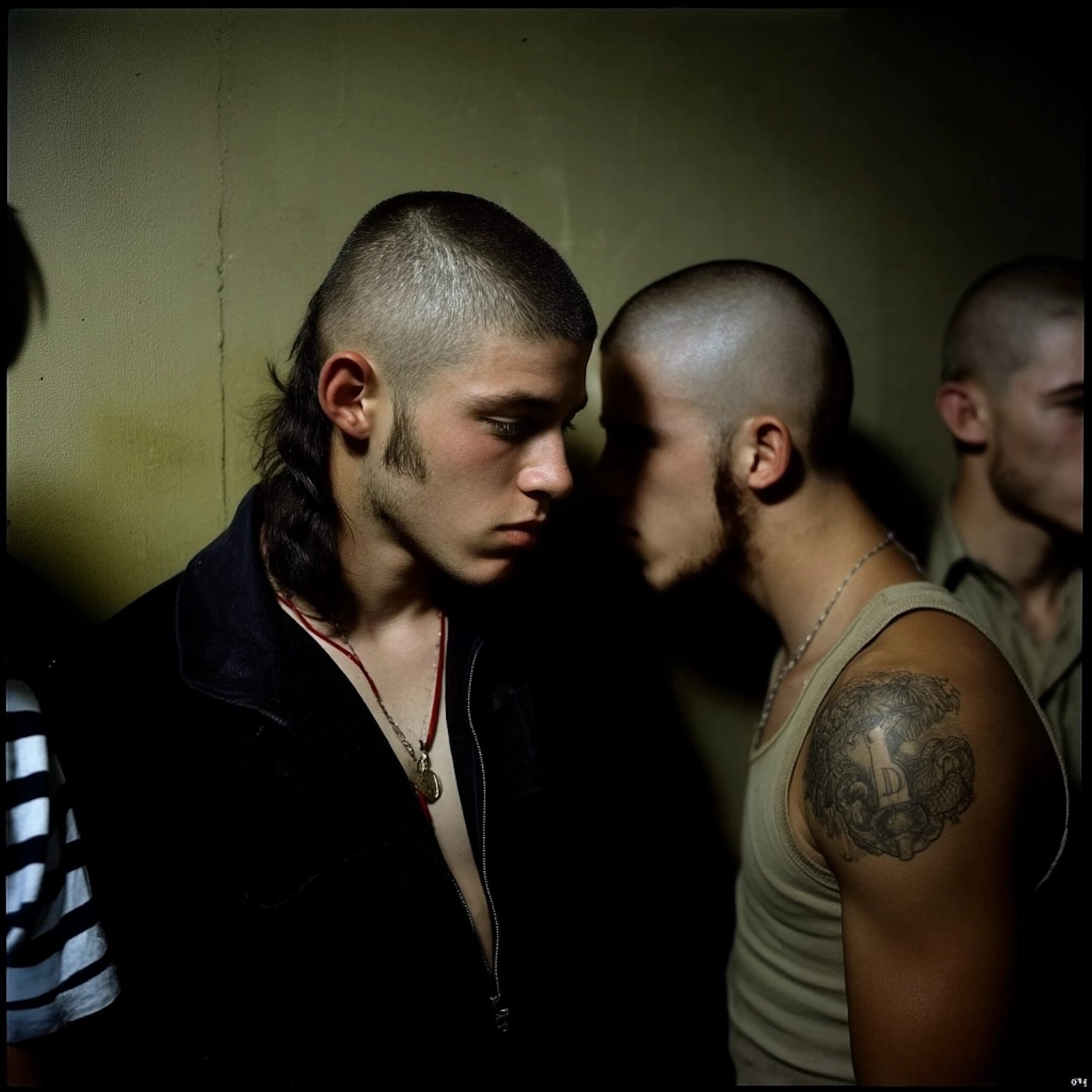
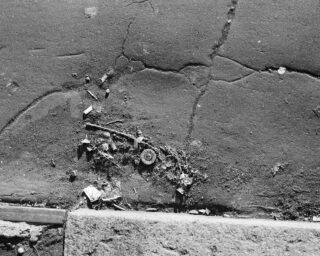
AI-generated image by Simon Foxton exploring a “made-up” Australian subculture centered on the mullet hairstyle, 2025
As a menswear stylist and art director, Simon Foxton spent decades shaping the image of men’s fashion and broader culture. From the mid-1980s, he was a regular contributor to i-D, Britain’s style bible, where he became photographer Nick Knight’s trusted collaborator and go-to menswear stylist. He also worked consistently with image makers Jason Evans and Alasdair McLellan, created stories for publications such as The Face and Arena Homme+, and partnered with clients like Levi’s and Stone Island. More recently, Foxton has shifted his creative practice from styling to AI image creation.
After graduating from Central Saint Martins in 1983, Foxton initially started his own short-lived label, Bazooka!, with fellow graduate Cheryl Eastap. His connection with i-D began somewhat tangentially with a freelance commission from art director and i-D owner Terry Jones to design a small capsule collection for Fiorucci. It developed more directly through an invitation to style a page for a magazine editorial— alongside his peers, stylists Caroline Baker and Ray Petri and the design duo Bodymap—shot by Mark Lebon. The styling process proved a revelation—“a bit of a lightbulb moment,” as Foxton recalls.
Terry introduced him to the young photographer Nick Knight, and the two “clicked” immediately, beginning a decades-long partnership that would produce some of i-D’s most memorable fashion moments, including an iconic fiftieth anniversary issue cover featuring Sarah Stockbridge. “When I started in about 1984, styling wasn’t really a recognized career path, so you had to make it up as you went along,” Foxton reflects. “The ‘style press’ was also in its infancy back then, so there was a great deal of experimentation and trial and error. We learnt on the job. We had a great deal of freedom back in those early days, no constraints of having to use particular credits or pander to advertisers’ needs. We just used whatever clothes we could beg, steal, or borrow. A lot of it looks very homemade and tatty now, but there was a rawness and an energy to it which I still like.”
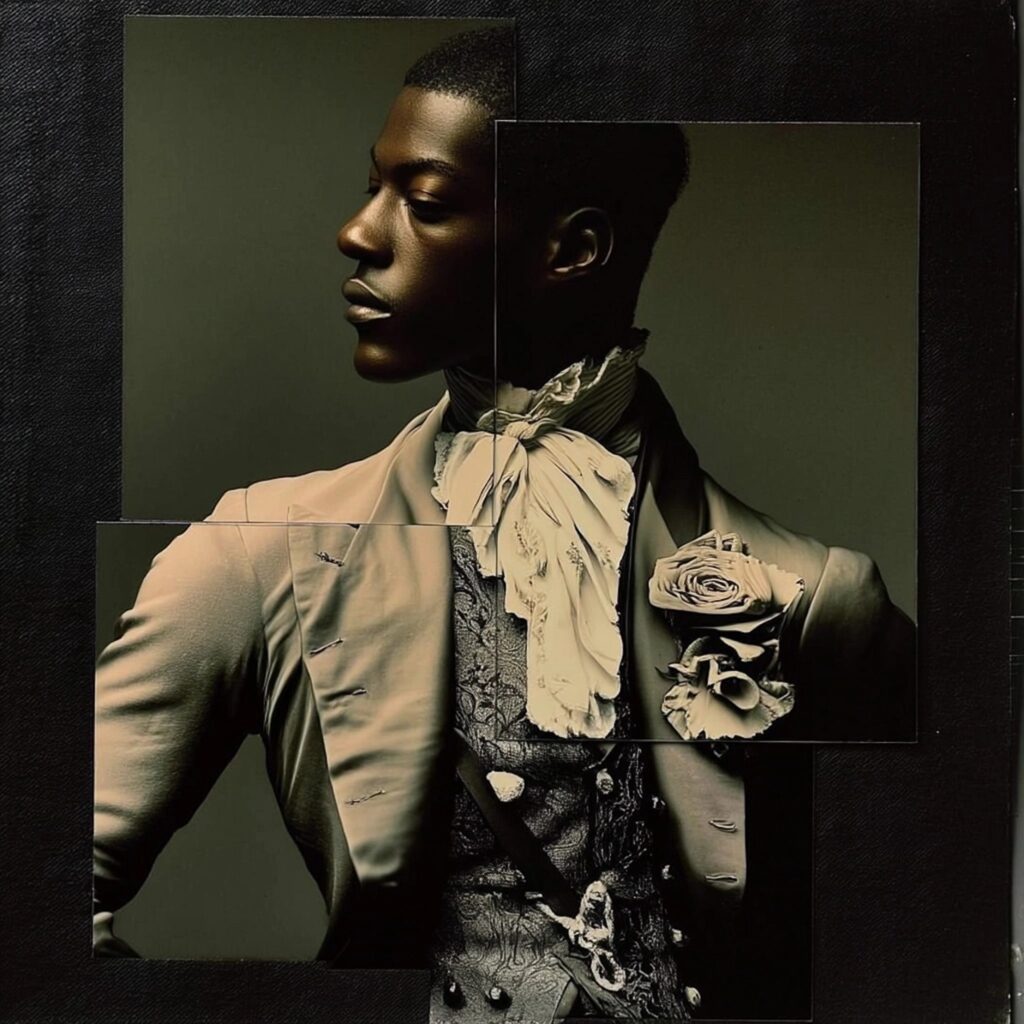
Foxton’s approach was instinctively eclectic. “I have always had a rather magpie approach when it comes to image-making and styling, taking bits from disparate sources and combining them in hopefully new ways,” he says. “I’ve always looked at my own styling more as image-making rather than fashion styling—the image was what was most important for me.” His casting choices were equally natural, championing diversity not from a political standpoint but simply because he was “reflecting the London I saw around me in clubs and bars and on the streets.”
This included discovering a very young Edward Enninful on the London Underground at Hammersmith. “He just kind of shone. He has a sort of inner light,” Foxton recalls. Enninful became both a model for a number of i-D shots and Foxton’s assistant. Foxton’s 1991 i-D shoot with photographer Jason Evans, featuring Enninful and his friends, all young men of color, and shot on suburban roads near his Ealing home, has endured. Both the Tate and the Victoria and Albert Museum have acquired editions for their permanent collections. Foxton’s talent for recognizing and nurturing emerging creatives extended to future luminaries, including fashion director Jonathan Kaye, magazine founder Elgar Johnson, collaborator Nick Griffiths, and even artist Steve McQueen, whom he convinced to model as a student.
Meanwhile, Foxton and Nick Knight’s collaboration has extended far beyond the pages of i-D into the present day via notable campaigns and editorials for magazines like Arena, including the acclaimed Faith series—shot around 1990 using a 8-by-10 inch plate camera positioned inside a transit van to capture panoramic countryside backdrops. “Every shoot with Nick is exciting and challenging,” Foxton reflects. “He likes to push himself and those around him to be as excellent as they can be.”
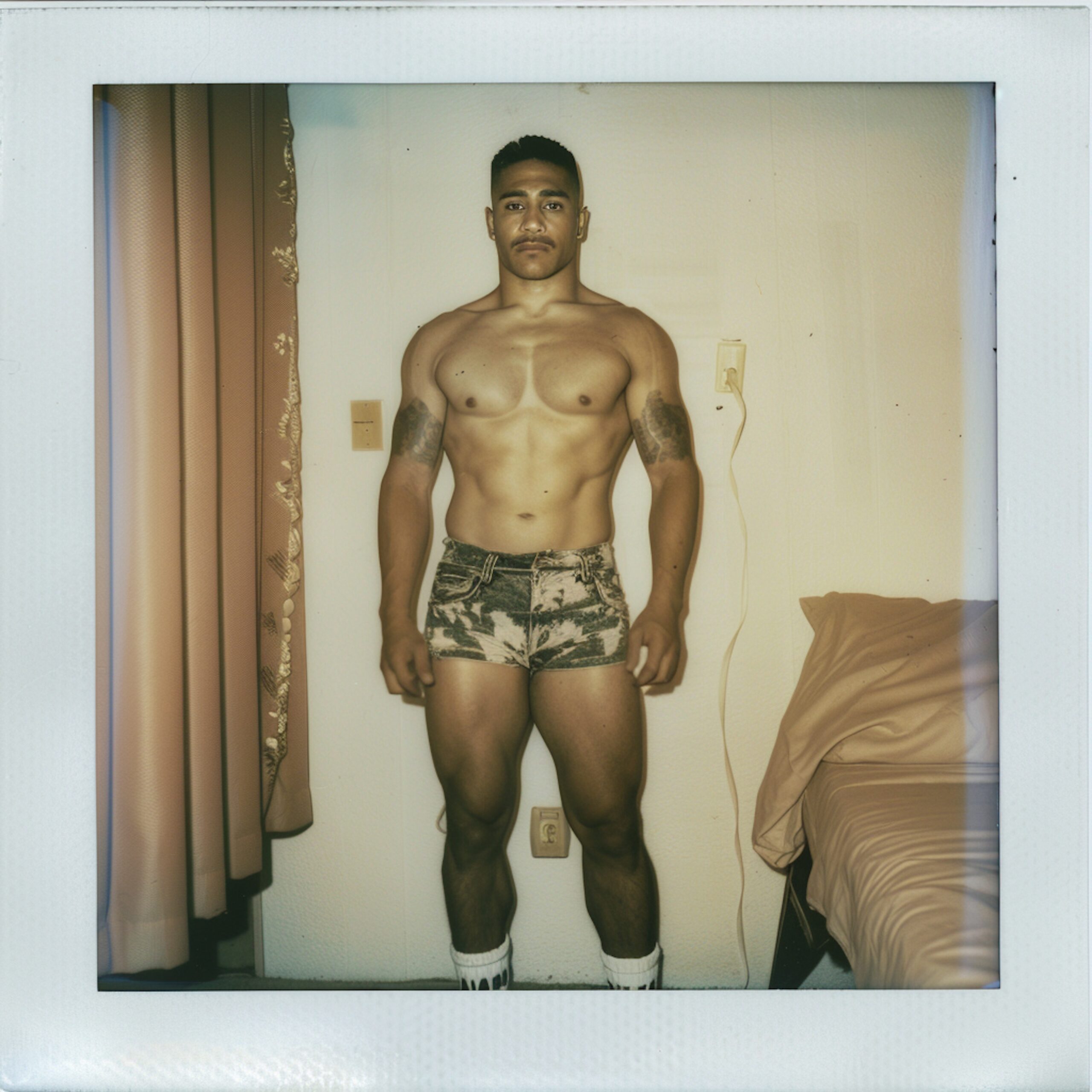
Now retired from the worlds of commercial and editorial fashion, Foxton has been experimenting with AI for the past two years, purely for his own personal pleasure. He’s been playfully tapping into the themes—including masculine imagery and style—that have long inspired him and informed his creative practice. His exploration serves as a catalyst to transport him and us to imaginary worlds both past and present, enabling him to travel the globe, explore different subcultures, and creatively reinterpret the past through fictionalized narratives—all through his artistic lens and without ever leaving his suburban home in West London.
Foxton was introduced to AI by his friend, the hairdresser Matt Mulhall. He started experimenting with Midjourney, which has continued to be his AI generation tool of choice. “What I immediately liked about it was the immediacy,” he says. “You could have an idea, type in the prompts, and within seconds you have a result. The path of least resistance has always been my preferred route.” He continues, “It was exciting, and somehow the process felt organic. My main approach is to convey a sense of realism. Of course, I know that it is the absolute opposite of that, it is totally digital and manufactured, but I want my images, for the most part, to be plausible.”
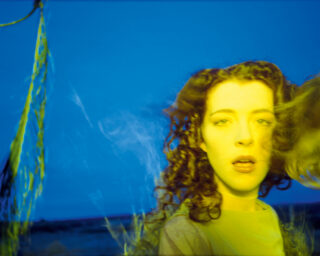
Foxton achieves plausibility through visuals that embrace candid and familiar documentary approaches, such as outtakes, behind-the-scenes shots, casting photos, and direct portraiture.
Foxton is well aware of the irony in his choice of adjectives to describe his process and goals, yet paradoxically they perfectly capture the essence of the resultant images. There’s a certain subtlety and nuance in Foxton’s AI work—an artfulness informed by his deep real-life understanding of photographic language, collaborative practice, and authentic casting—that lends his fantastical imagery a sense of verisimilitude.
Foxton’s AI work spans architecture, illustration, and innovative reinterpretations of historical events. However, the work that truly defines Foxton’s oeuvre is the AI imagery that ties back to his core interests, referencing queer male imagery, LGBTQ themes, club culture, and style. He achieves plausibility through visuals that embrace candid and familiar documentary approaches, such as outtakes, behind-the-scenes shots, casting photos, and direct portraiture.
“The documentary, ‘recording’ style of photography was something that I always liked,” he notes. “It was more about the subject and less about the photographer. It always felt more honest to me in some way.” This approach has been evident in his work from the early i-D magazine street photograph “straight-ups” to his later projects.
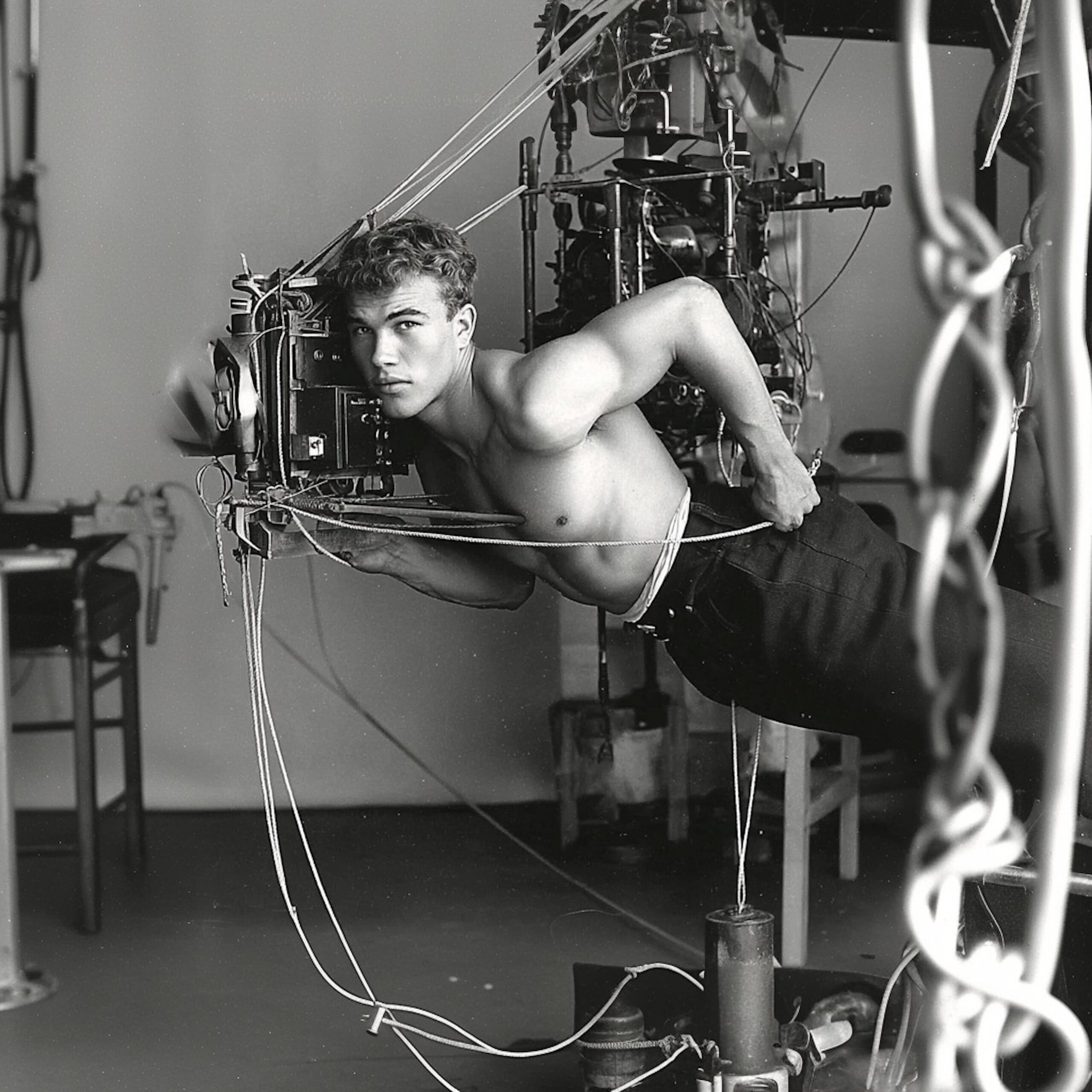
Throughout his career, a fundamental element of Foxton’s creative process has remained unchanged. “I’ve always collected images; in the past, I’d tear out magazine pages and create scrapbooks,” he says. “These books inspired ideas, juxtaposing styles and codes that sparked photoshoot concepts. Today, I draw from this archive and new images to inform my AI work.” Foxton begins by scrolling through his collected images, identifying correlations and stories, and then distilling his thoughts into words to inform his written prompts.
Many of Foxton’s images, where fiction borders reportage, purport to be sourced from the invented archive of the fictional photographer Boss Tweed (a pseudonym Foxton had previously used as a stylist for work he preferred not to be directly credited for). This persona and the accompanying fake descriptions that Foxton employs on his Instagram account (@simonfoxton) reflect his playful and tongue-in-cheek approach while adding an additional layer of depth to his creative narrative. But Foxton is careful to point out that deception is not the intent, and he accordingly tags his content with an AI disclaimer.
Despite the attention his AI work is now receiving, Foxton’s primary motivation remains personal enjoyment and experimentation. However, he recently collaborated with longtime collaborator and friend Nick Knight on a major fashion editorial using AI for the inaugural issue of Numero NY, published last fall. “I always enjoyed the collaborative process because quite often something new and unexpected would arise from it, which was always exciting, and the camaraderie of working in a creative team can be very inspiring. Nonetheless, I have to admit that I am very much enjoying my autocracy when it comes to AI. Just me and the computer, with no one else to answer to.”
“I’m retired now, and loving it! The thing I did with Nick is just creative fun,” Foxton adds. “I’m not interested in making a career out of it—I think that might take away the pleasure.”