The Precarious Beauty of Mumbai’s Influencer Culture
Megha Singha’s portraits of young women explore the forces that shape desire and online fame, playfully blurring the line between art and content.
Megha Singha, Gun on a tripod, Mumbai, India, 2025
In any given episode of Keeping Up with the Kardashians, very little happens. In palatial, coldly neutral mansions, the reality stars have minor conflicts and mundane conversations. Yet, every gesture, confessional, and side-eye, is a spectacle performed by people with exaggerated features, bodies, and wealth. In the world of reality television, life is lived to be seen—and, more precisely, to be shared. The seriousness with which we have adopted this absurd logic now extends far beyond television. It shapes how images are made and how beauty is performed. It is also the framework that inspired Megha Singha’s series I Love My Friends But They’re Killing Me (2024–ongoing).
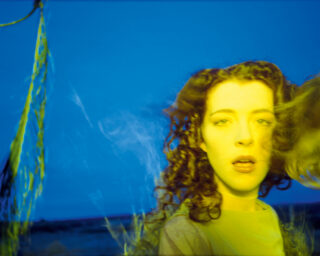
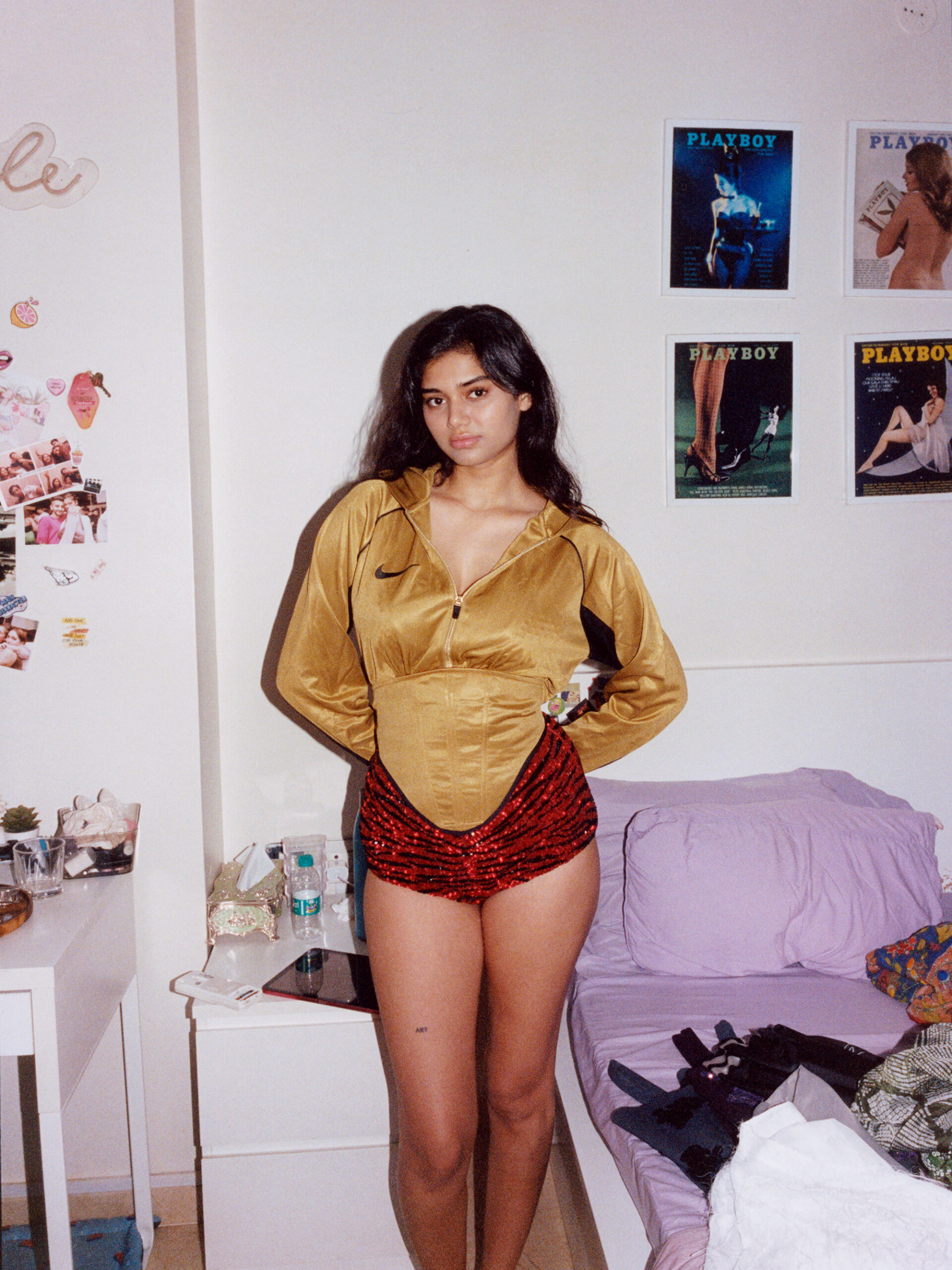
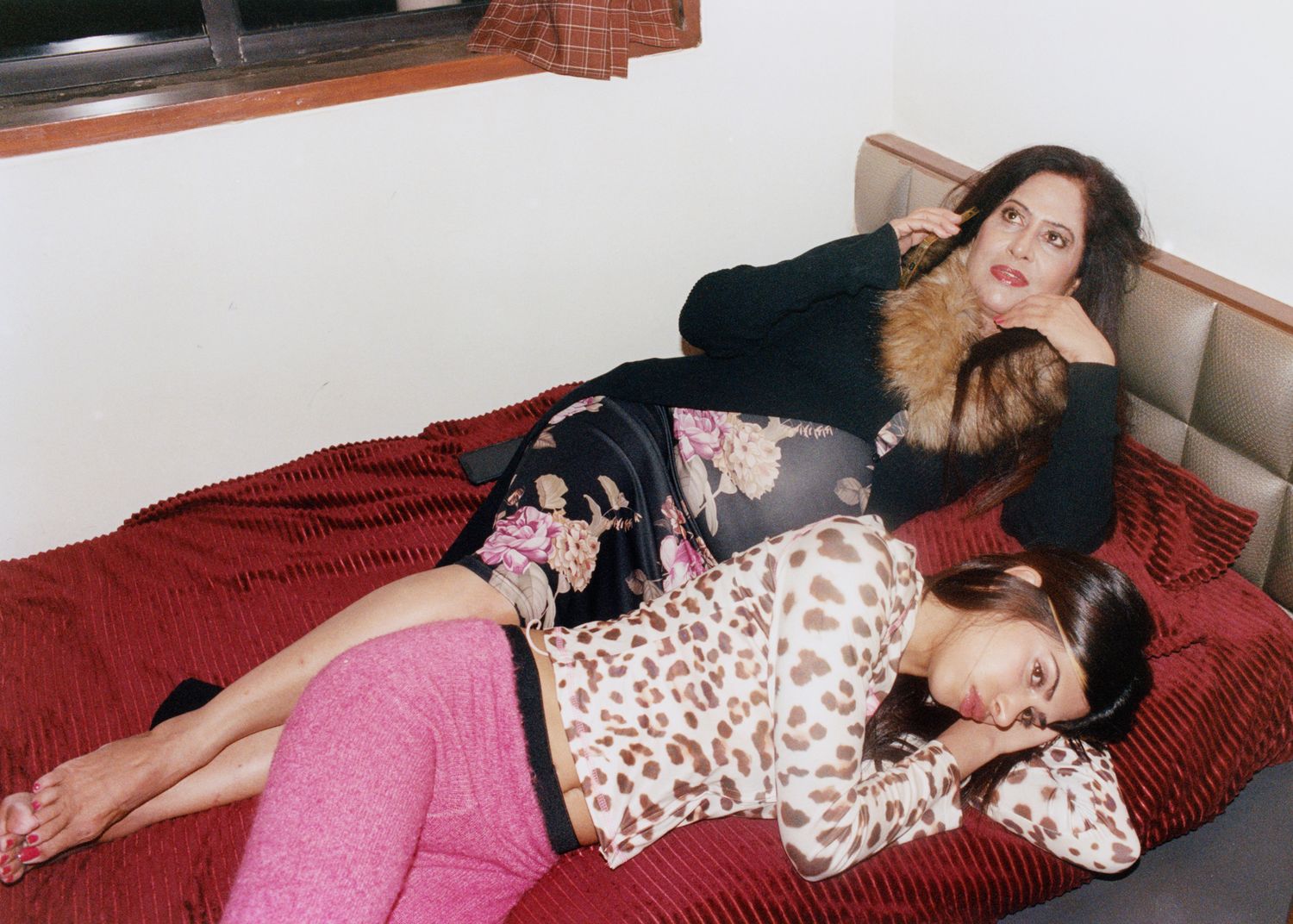
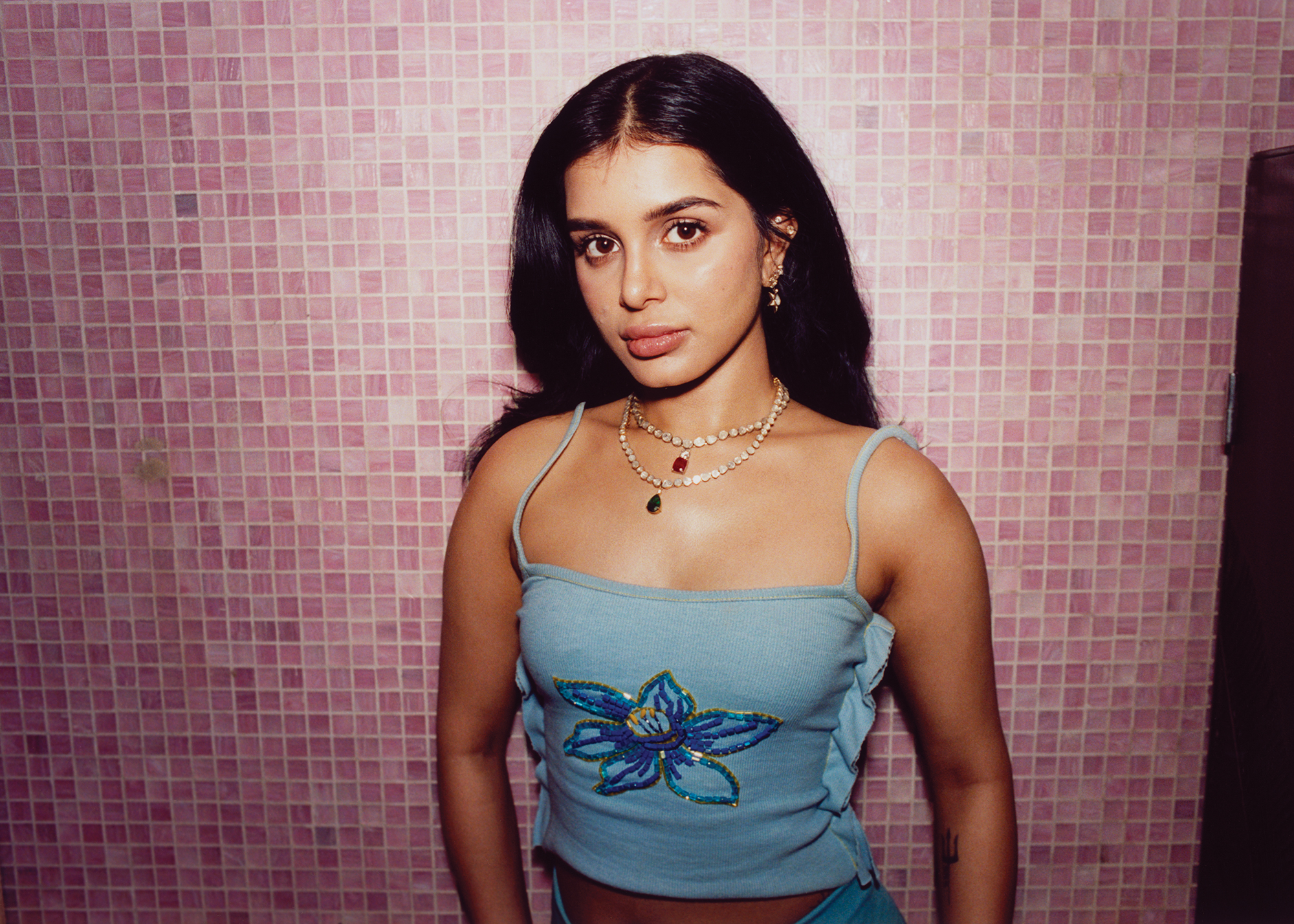
Singha’s subjects are young women in Mumbai who’ve built small degrees of online fame for themselves: influencers, reality TV stars, aspiring actors. At first glance, Singha’s images resist easy categorization as photographs from India. Instead of an explicit “Indian-ness” tinged by poverty and a fading grandeur, we encounter intimate, urban interiors. In Gun on a tripod, a woman named Nandini speculates about dissolving her lip fillers while sprawled on a pink, Swarovski-stamped bedsheet, pointing a toy gun at her head. In Blue Light Therapy, aspiring actor Rhea lies corpse-like under an expensive LED light therapy device.
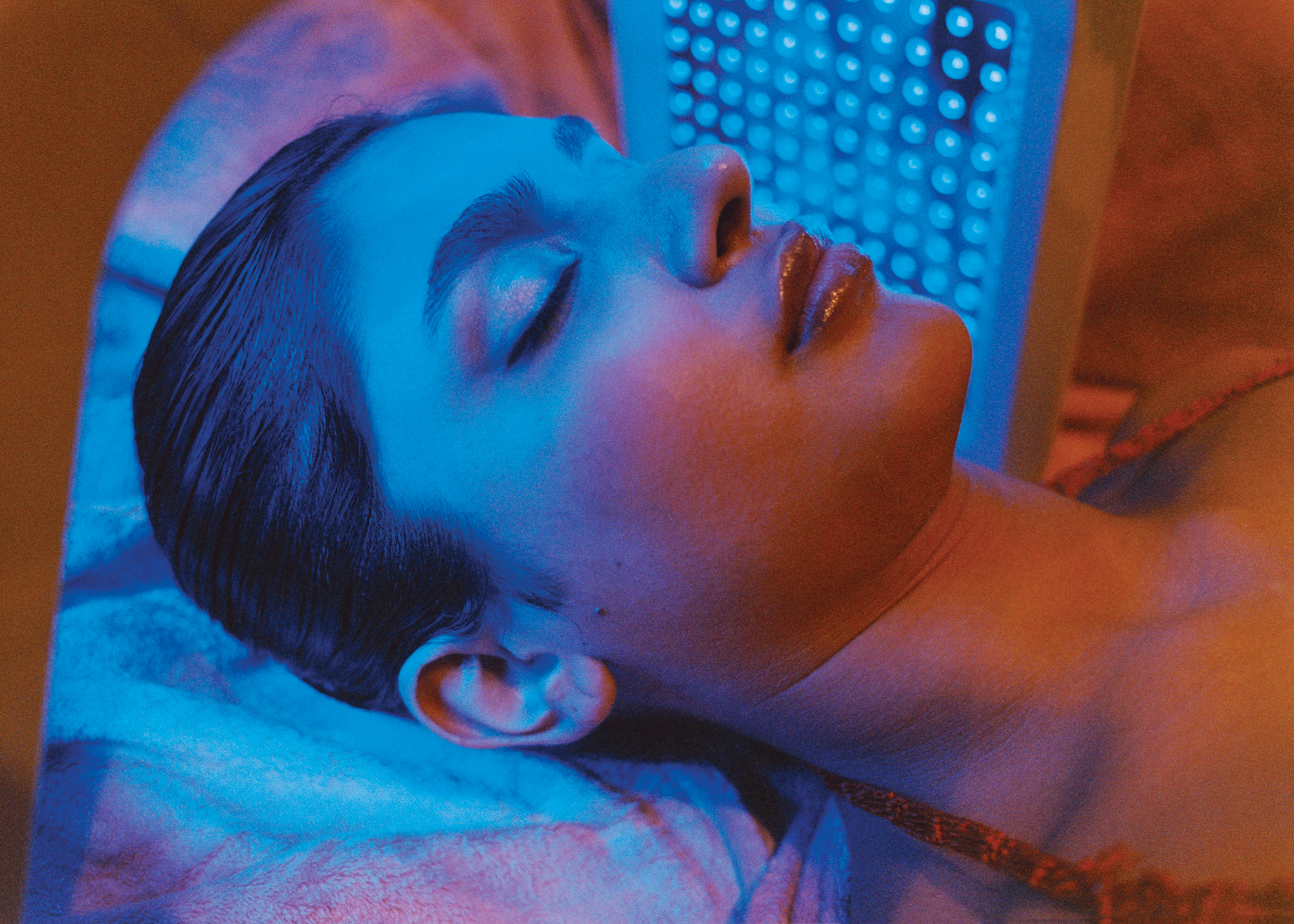
For audiences looking for a familiar visual shorthand of Indian culture, Singha offers something more unsettling. “I want my work to feel layered and complex—something that can’t be resolved quickly,” she says. “At the same time, I want it to be truthful to my reality, without bending to the expectations we have in India and abroad.” Shot primarily on 35mm film with direct flash, this series is not strictly local or international—instead, it reflects an India that lives within the friction between the two, shaped by the circulation of images across global media, and its ensuing culture of aspiration.
Singha, who is from the North East Indian state of Manipur and currently lives in Mumbai, set out to become an illustrator, but switched to photography midway through her visual communication degree after seeing a book of Nobuyoshi Araki’s photographs of flowers. “The images were so sensual and charged. I had never seen photography in this light, or known that a photograph could make me feel this way,” she says.
Today, she is morbidly curious about how beauty operates as a lived condition. She recalls her mother encountering a photograph of Kim Kardashian’s bloody face and becoming fascinated by the “vampire facial” it depicted and its promise of perfect skin, going so far as to seek out the procedure in Jorhat, a small town in northeast India. Kardashian’s 2013 photo was perhaps a reference for The Substance, a 2024 body-horror film about beauty and aging in which the protagonist injects herself with a mysterious drug to create a younger version of herself, with monstruous consequences: what once might have registered as grotesque now passes as routine. In Singha’s view, beauty, then, a spectacle none of us can look away from, spurred on by images that permeate through cultures and socioeconomic strata.
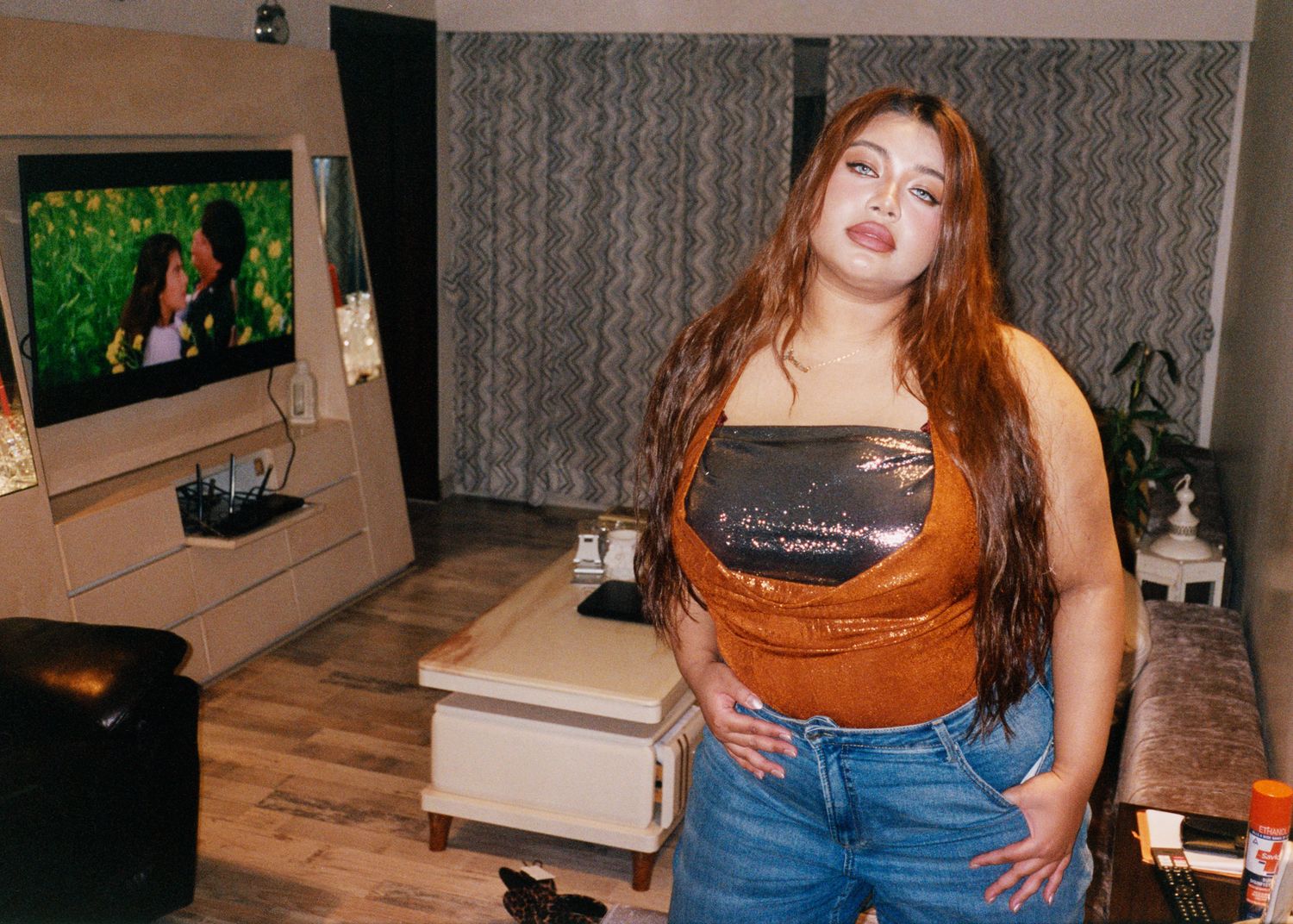
In India, this dissemination is further refracted by the additional issues of class, caste, Bollywood, and the remnants of colonial influence. In What’s more romantic than DDLJ?, Jemima, an aspiring makeup artist from a conservative Muslim family, looks fearlessly into the camera through light-colored contact lenses as Dilwale Dulhaniya Le Jayenge, one of Bollywood’s grandest romantic sagas, plays on the television in the background. While a picture of her dog-filter selfie is framed in their living room, Singha could only shoot Jemima without her father’s knowledge when he wasn’t home.
Her work does not resolve these complexities, nor is it an obvious critique. “I don’t like to have a moral,” she says. “I didn’t want to give people a clear headline. I like staying in negotiation.” That negotiation extends to her own role. While she draws on her experience in fashion and documentary photography, this series can’t be neatly classed as either. She is firmly present in the images as well. “When you work on something like this, I don’t think you can hide yourself,” she says. “The subject is stepping into my world, but I am also putting my own desires and my own ideas of beauty into the image.”
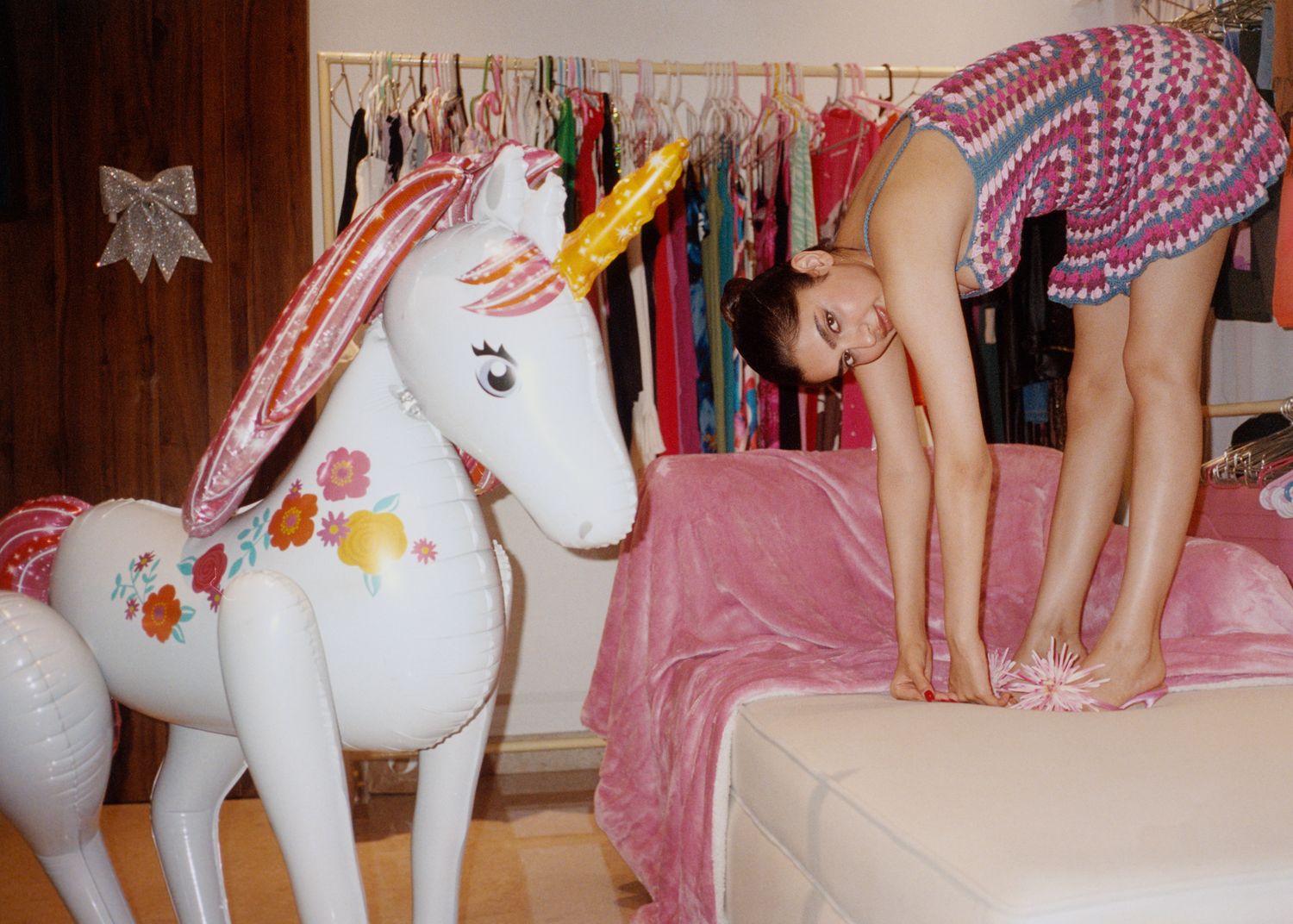
The styling was developed through a close interplay between Singha, stylist Rupangi Grover, the girls, and their environments. Most of the clothes came from the subjects’ wardrobes. “We made sure to spend time with the girls just trying out clothes, playing dress up,” she says. With her background in fashion photography, Singha was interested in clothing beyond the context of a fashion shoot—how it could act as a window into the girls’ lives. Beauty imagery can often be sexualized, and so Grover and Singha challenged themselves to style their subjects in lace and lingerie while still keeping the images grounded in reality.
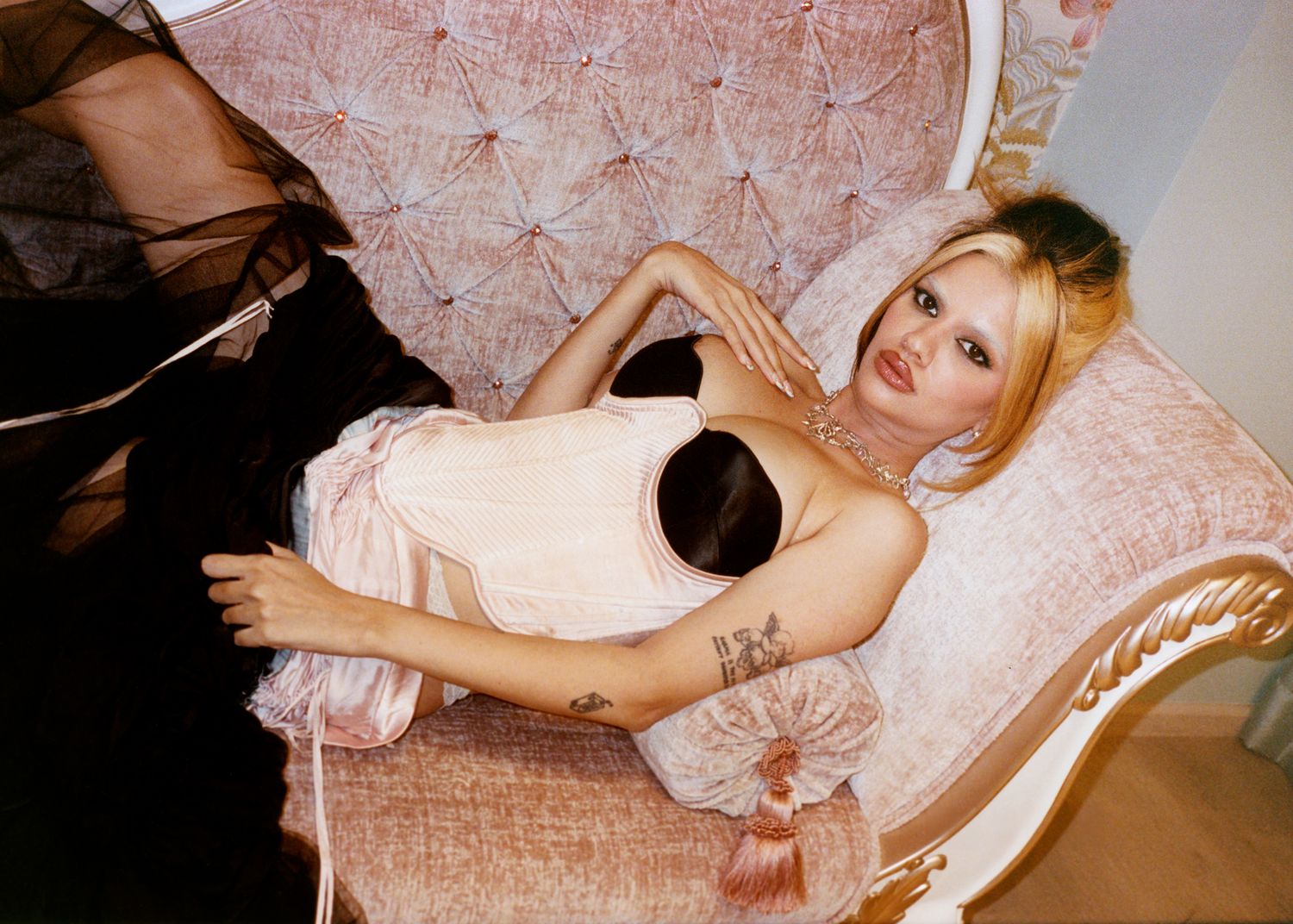
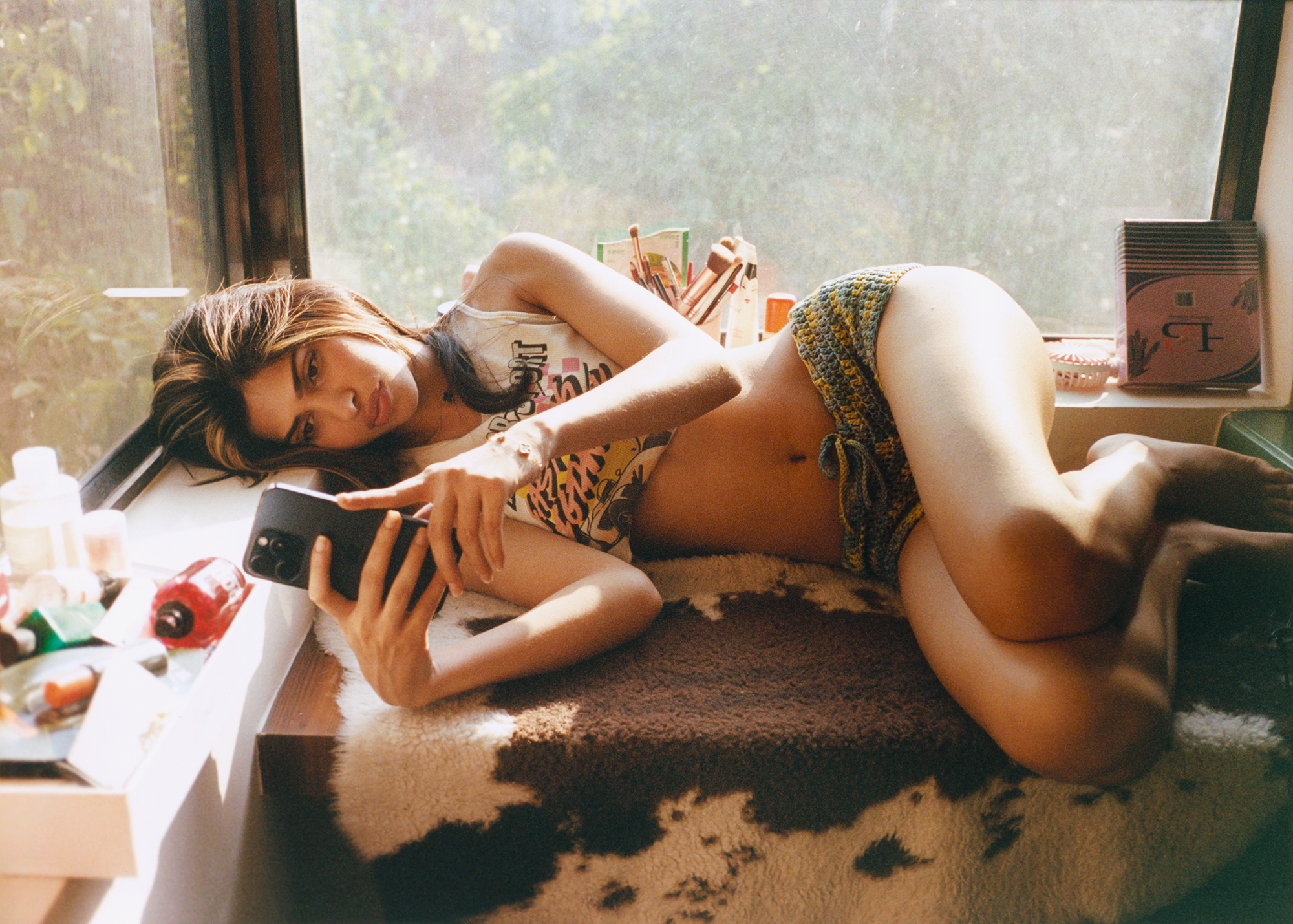
Singha’s subjects are already practiced image makers. They spend hours photographing themselves. They know their angles and the spots that get the best light in their apartments, with some of them even directing Singha as she shot them.
So what do they gain by being photographed in this way?
“The subject doesn’t gain anything,” Singha says. “They lose.”
To be photographed by someone else inherently involves giving up some control. For the women, the outcomes were varied. Some were drawn to the prospect of working with a female photographer and the uncertainty of the process, which is different from brand-driven shoots. One subject told Singha she felt like a “baddie” afterward, more confident in her own image. Others were excited to share the images as “fresh content.”
The irony persists. Despite being slowly and intentionally produced, Singha’s images return to the very systems that they scrutinize. But they succeed in showing the relation her subjects have to beauty for what it is: imperfect, irresistible, and often bizarre. As writer Jessica Delfino says about The Substance, “Beauty is our favorite fairy tale, and fairy tales work on all of us.”
All photographs courtesy the artist
Megha Singha is a shortlisted artist for the 2026 Aperture Portfolio Prize, an international competition that spotlights new talent in contemporary photography.