Featured
The Photographers Who Shaped Our Picture of New York
A look inside the inaugural installation at Aperture’s new space on the Upper West Side.
The inaugural installation at Aperture’s new space, Aperture Loves New York pays tribute to photographers who have shaped—and been shaped by—the city. Showcasing artists anchored in Aperture’s publishing history, the presentation brings together photographs alongside corresponding Aperture books that have advanced the medium of photography and captured the complex spirit of New York. Organized by Sarah Meister, Executive Director, the installation features photographs by more than twenty artists ranging from past to present—including Diane Arbus, Awol Erizku, Robert Frank, Justine Kurland, Stephen Shore, and more.
Courtesy the artist and Olney Gleason, New York
Tina Barney
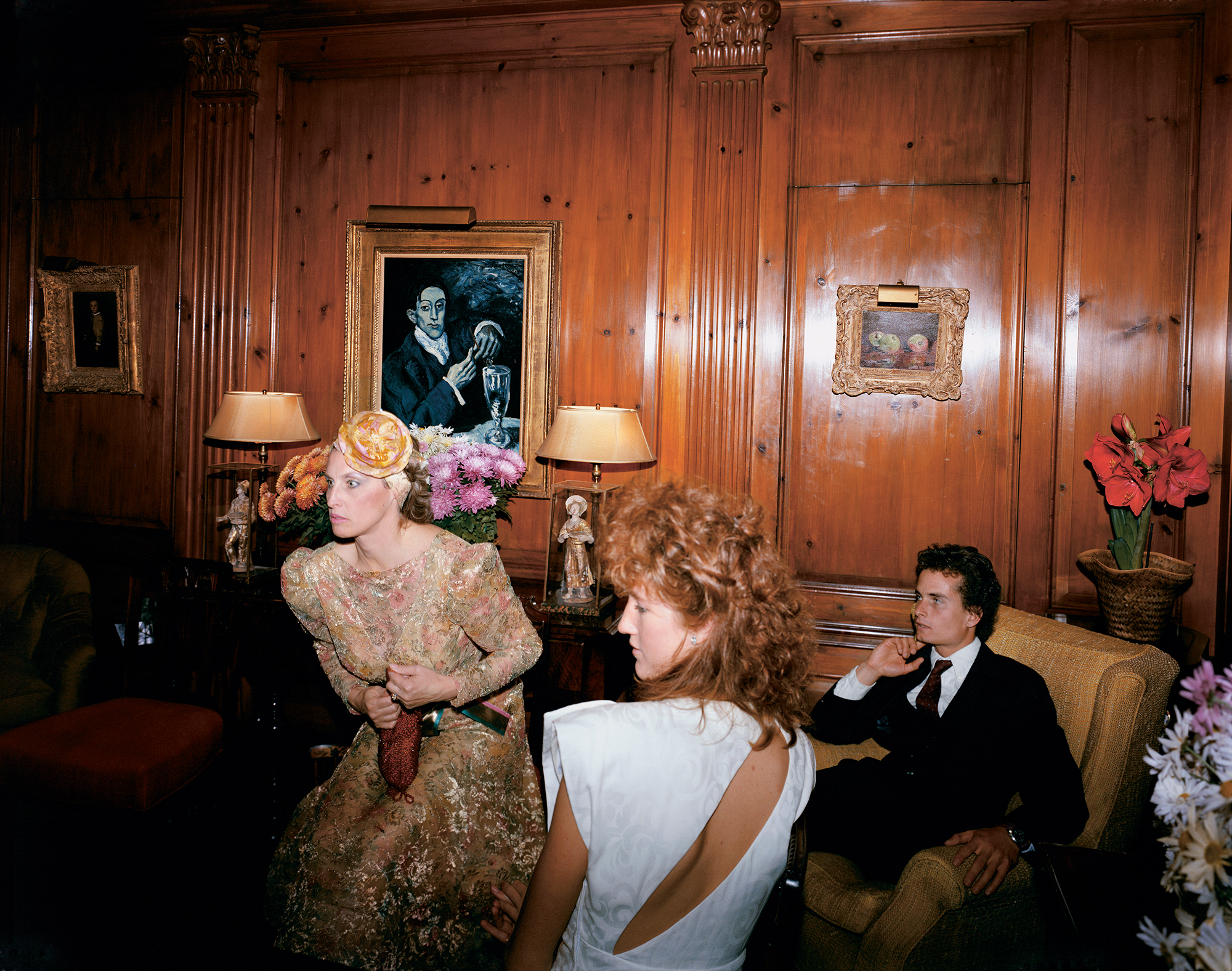
As she so often does, Tina Barney stages a familiar social ritual as a quiet psychological drama. In a wood-paneled room hung with paintings and ornamented with flowers, figures in formal dress seem gathered for celebration. Yet their gazes slide away from one another, and the seating arrangement feels oddly tense. What is happening beyond the frame that the women are paying attention to?
Barney is known for large-scale color photographs that look effortless but are carefully constructed, often using the language of the family portrait to reveal what manners can conceal: hierarchy, intimacy, impatience. Made in New York in the mid-1980s—an era of sharpened wealth, display, and social choreography—this picture turns privilege into a subject, and the “nice” occasion into something charged and unsettled.
© Ernest Cole Family Trust
Ernest Cole
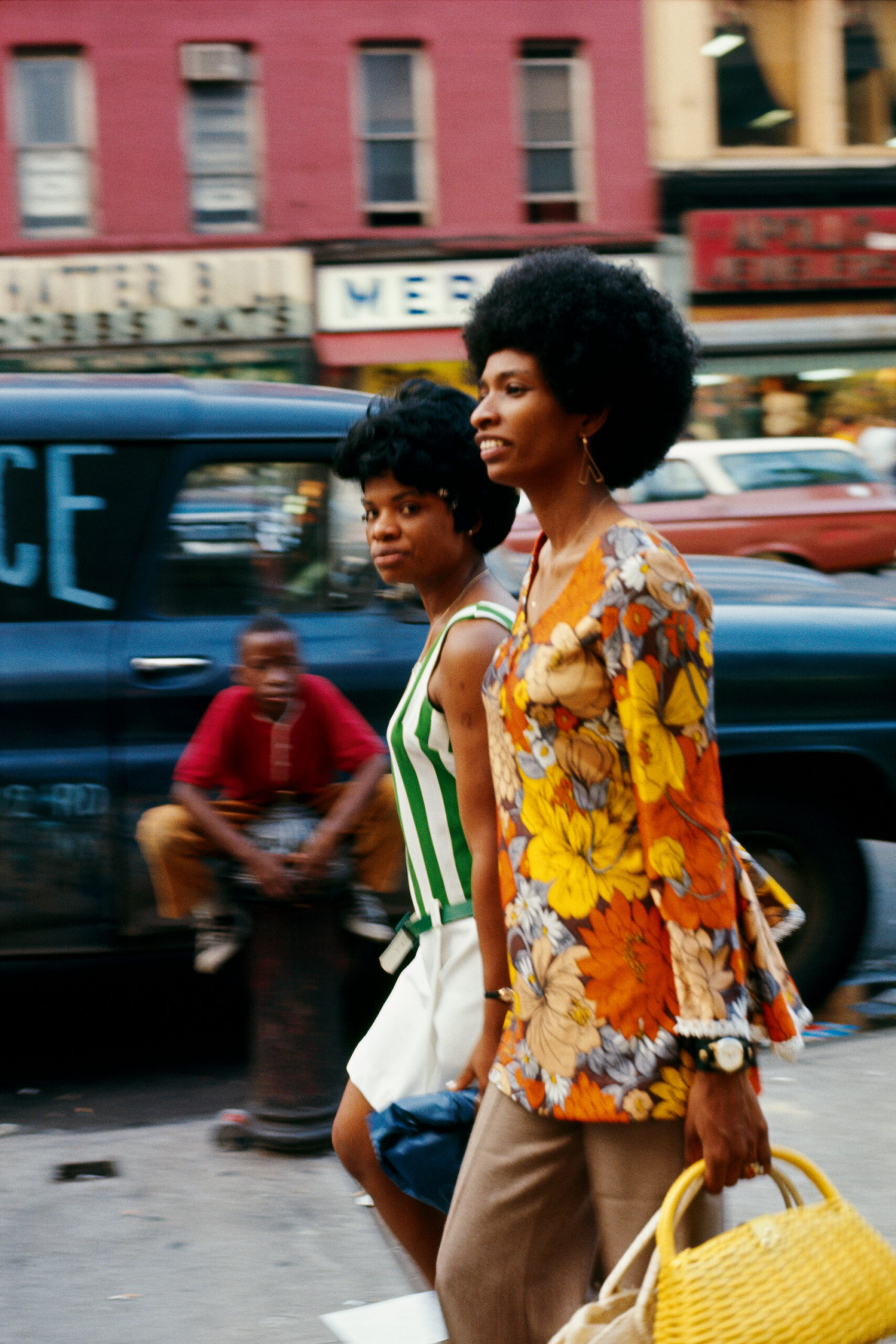
Ernest Cole captures the city in motion: two women stride through the frame in bright patterned clothing, their faces crisp against a gentle smear of traffic and storefront signs. The slight blur of the street behind them and the one woman’s knowing look make Harlem feel fast, lived-in, charged. The neighborhood offers public space as both a backdrop and a pulse.
Cole had arrived in New York only a short time earlier, after fleeing South Africa in 1966 to publish House of Bondage (1967), his devastating photobook on apartheid (reissued by Aperture in 2022). Living in exile, he turned his camera toward Black life in America, attentive to style, dignity, and the everyday theater of the sidewalk. Seen in the turbulent late 1960s—after civil rights victories, at the height of the Black Power movement, yet amid ongoing struggle—this photograph suggests both joy and urgency.
Courtesy the artist and Sean Kelly, New York
Awol Erizku
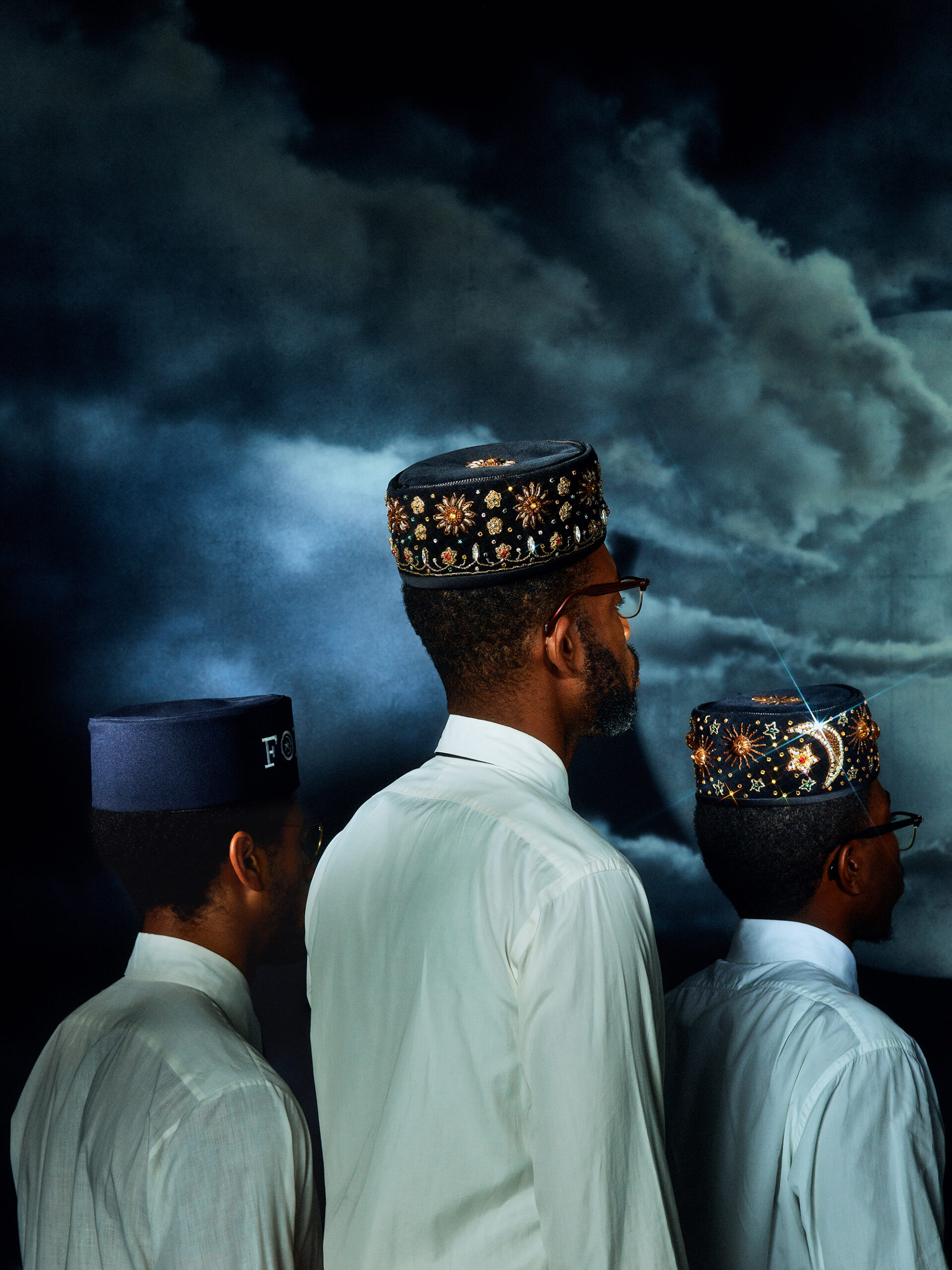
In this image made for The New Yorker, Awol Erizku depicts three kufis designed by Ruth E. Carter for Spike Lee’s Malcolm X. Set against a roiling, clouded backdrop, the hats read like small constellations: carefully patterned, slightly luminous, and charged with the weight of history carried by everyday objects. The figures appear in profile, as if the camera has caught a passing formation rather than a posed tableau.
Erizku moves fluidly between editorial commissions and a studio practice that quotes and reroutes art-historical forms, pop vernacular, and spiritual iconography. He may be best known for his 2017 portrait of Beyoncé announcing her twin pregnancy, in which almost archetypal symbols—the pose, the flowers, the veil—make contemporary fame feel like a myth already living in our collective imagination.
© and courtesy The Robert Frank Foundation
Robert Frank
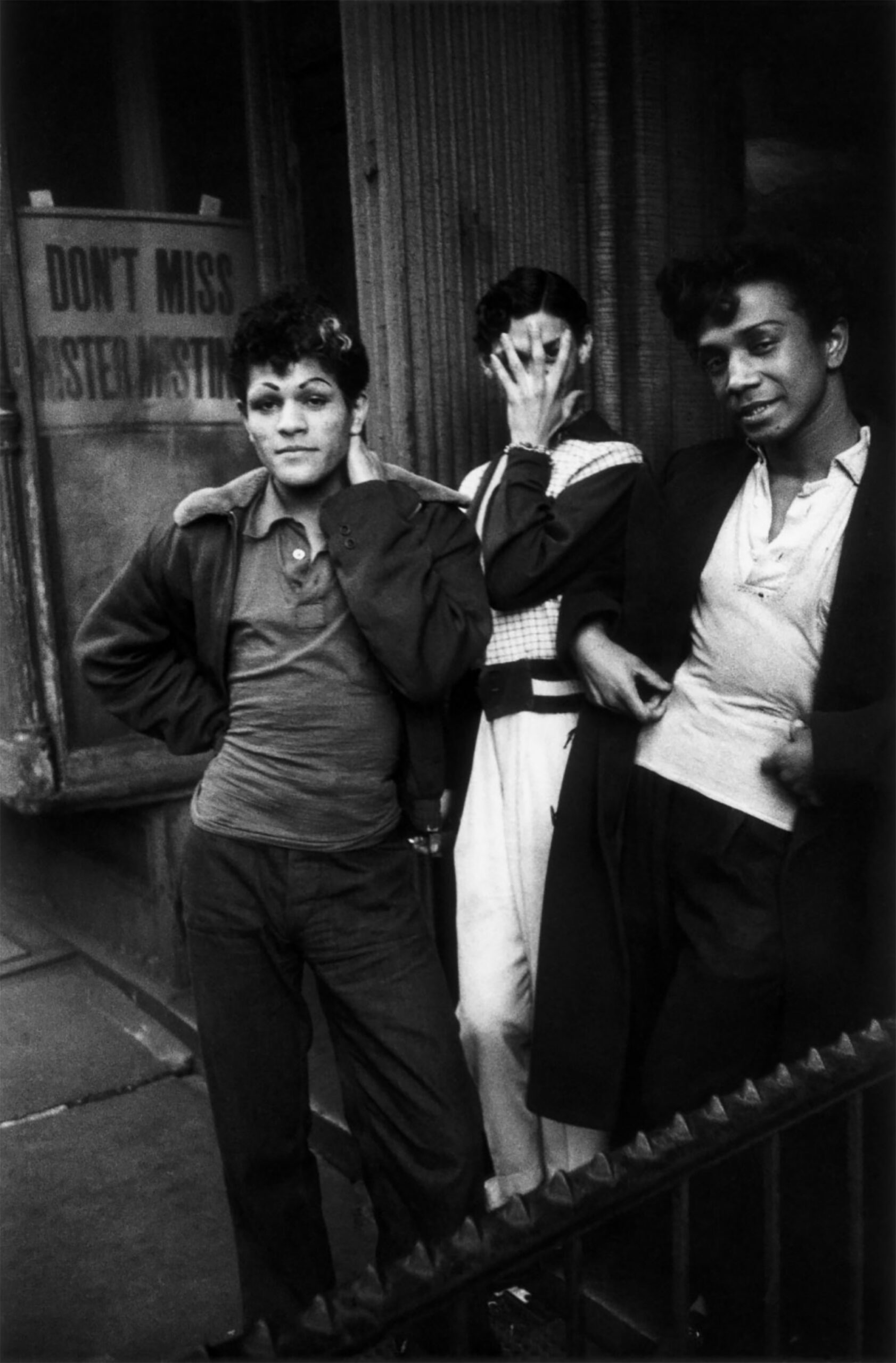
In this image, Robert Frank turns a street corner into a study of attitude. Three young people lean against what may be a storefront; one meets the camera head-on, one half-hides behind a hand, and one looks caught between performance and fatigue. Behind them, a sign warns “DON’T MISS,” as if the city itself were constantly advertising the next spectacle, while spikes on the railing in front of them hint that the spectacle could have an edge.
Frank, a Swiss-born photographer living in New York, made this picture while developing the restless, off-kilter style that would permeate his 1958 book The Americans and reshape documentary photography. (The book was published in English the following year, and first published by Aperture in 1968.) He gravitated toward everyday scenes, recasting them as part of a searching, unsentimental portrait of the country. In the mid‑1950s, the Lower East Side was a dense, immigrant neighborhood, where life played out on stoops, sidewalks, and thresholds like this one. As Frank said in a 2015 interview, “When I was young, I could walk around, day after day, and hunt for pictures.”
Courtesy the artist
Nan Goldin
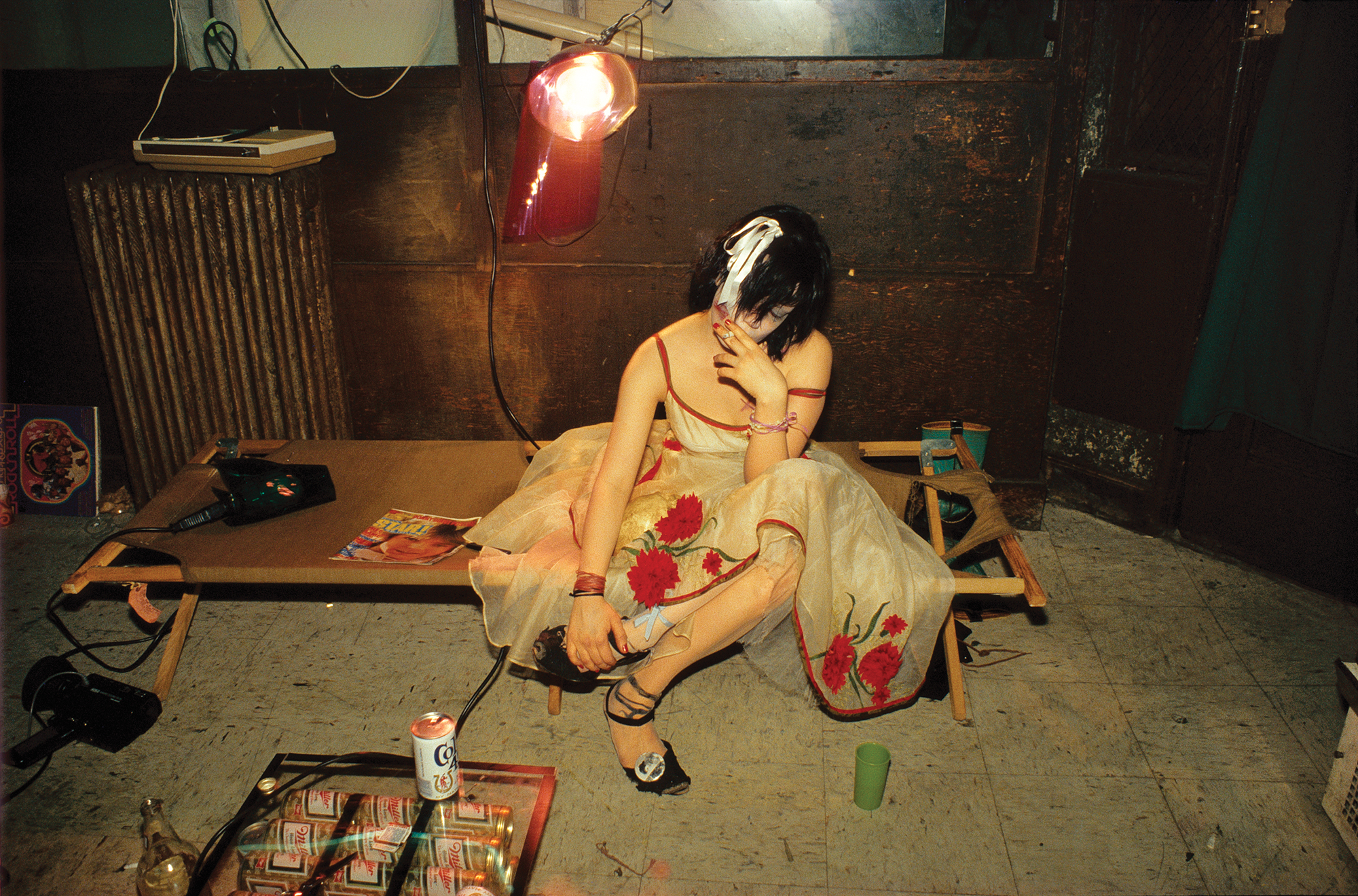
In Trixie on the cot (1979), Nan Goldin photographs a room with startling directness: a hard overhead light, a bar cot, and a figure resting on it in a dress and heels. The cluttered floor and improvised furnishings carry the atmosphere of hardscrabble downtown life: makeshift, intimate, often inscrutable to outsiders.
Goldin began photographing as a teenager and developed her approach within the subcultures she lived alongside—first in and around Boston, then in New York after moving there in 1978. Rather than looking in from the outside, she made pictures from within a “chosen family” of friends and lovers, recording desire, tenderness, glamour, and collapse with the immediacy of lived experience. Those pictures were turned into slideshows that were accompanied by music, and later into her landmark book The Ballad of Sexual Dependency, a visual diary that helped redefine documentary intimacy.
Courtesy the artist
Justine Kurland
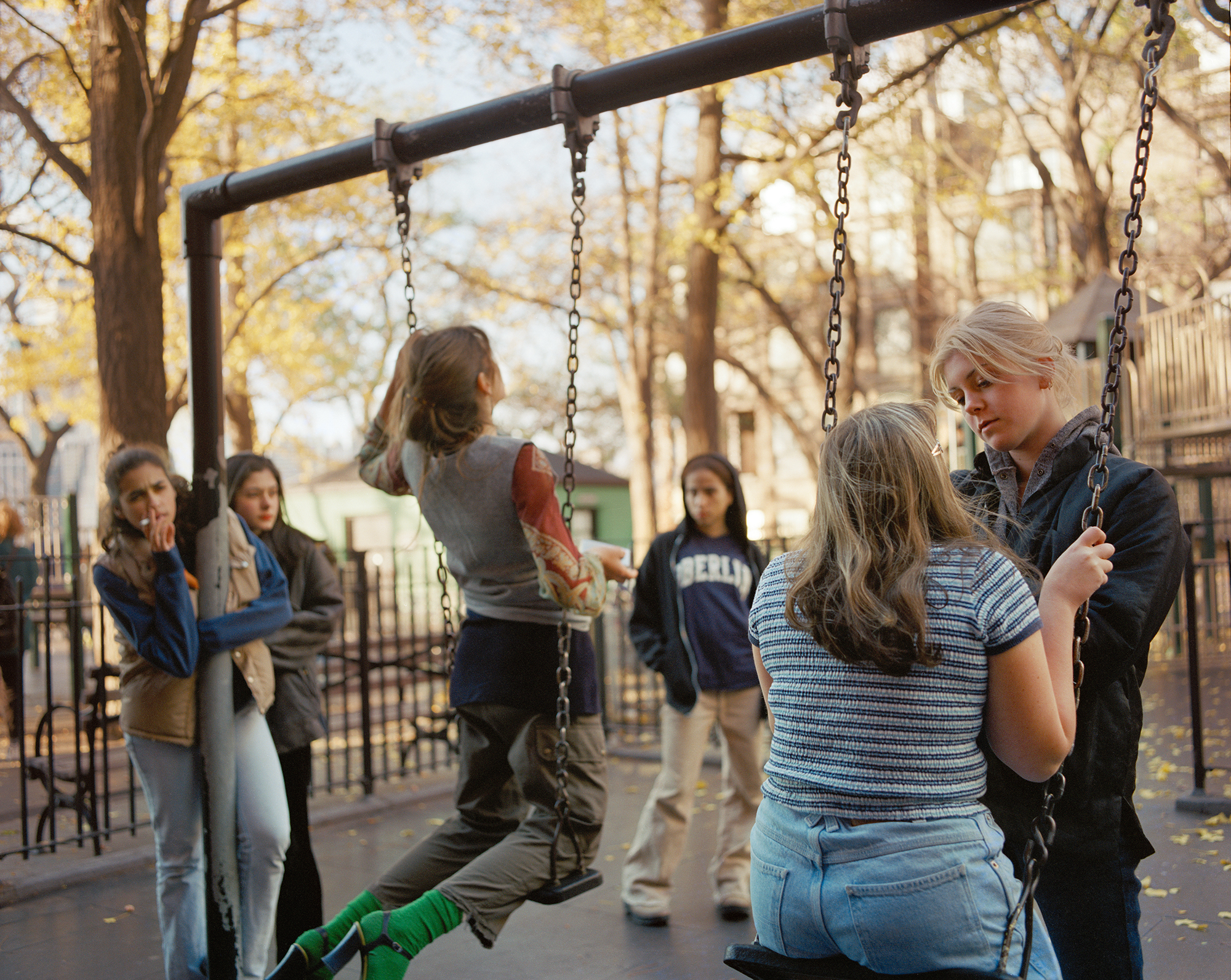
In Playground (1998), Justine Kurland turns an everyday New York scene into something quietly cinematic: a small group of girls clustered around the swings, one in motion, the others seemingly engaged in the serious, shifting politics of attention and belonging. The picture is a familiar city space, but it also hints at a world the girls control—they’re watched, but not fully available.
This image appears in Girl Pictures (Aperture, 2020), which gathers the artist’s now-iconic series made between 1997 and 2002. What began with a single teenage collaborator became trenchant social commentary, overturning the kinds of adventure stories that typically feature boys. As Kurland put it, “I staged the girls as a standing army of teenaged runaways in resistance to patriarchal ideals.”
© the artist and courtesy Howard Greenberg Gallery, New York
Danny Lyon
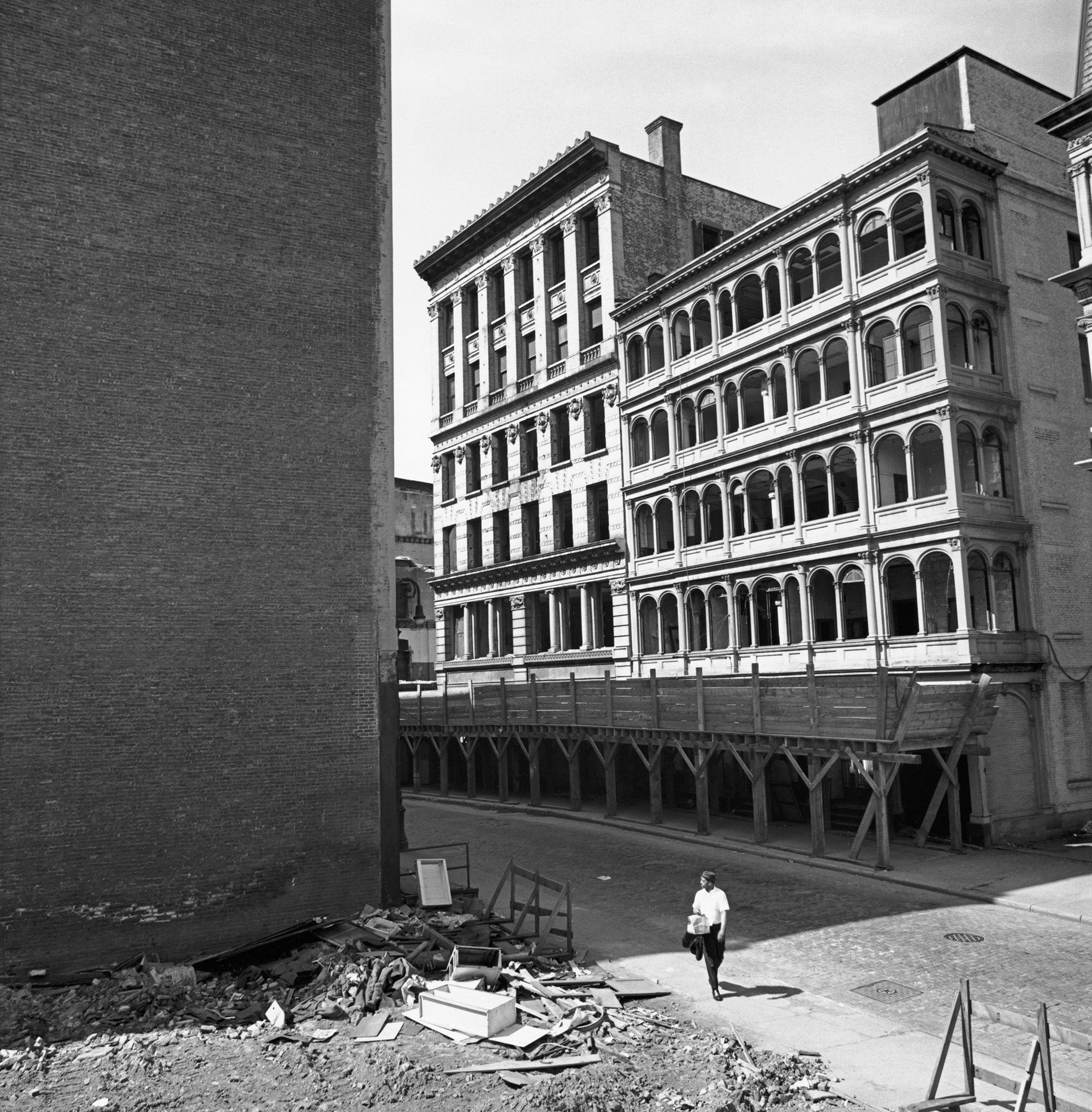
In this scene, Danny Lyon photographs Lower Manhattan as it’s being emptied out—cast-iron facades still upright, streets suddenly wide with absence, demolition debris gathering at the edges. A lone figure crosses the frame as if passing through a city that’s already becoming a memory.
Lyon, who was born in New York, in 1942, is one of the key postwar American documentary photographers. He has consistently been drawn to communities and places under pressure. Here he chronicled the “slum clearance” demanded by vast civic projects like the original World Trade Center, making pictures that feel like both record and eulogy. Aperture’s 2020 facsimile The Destruction of Lower Manhattan returns to Lyon’s original 1969 photobook, bringing its acts of witness before new audiences and reminding us of the downtown architecture this city once had.
© Estate of Sophie Rivera
Sophie Rivera
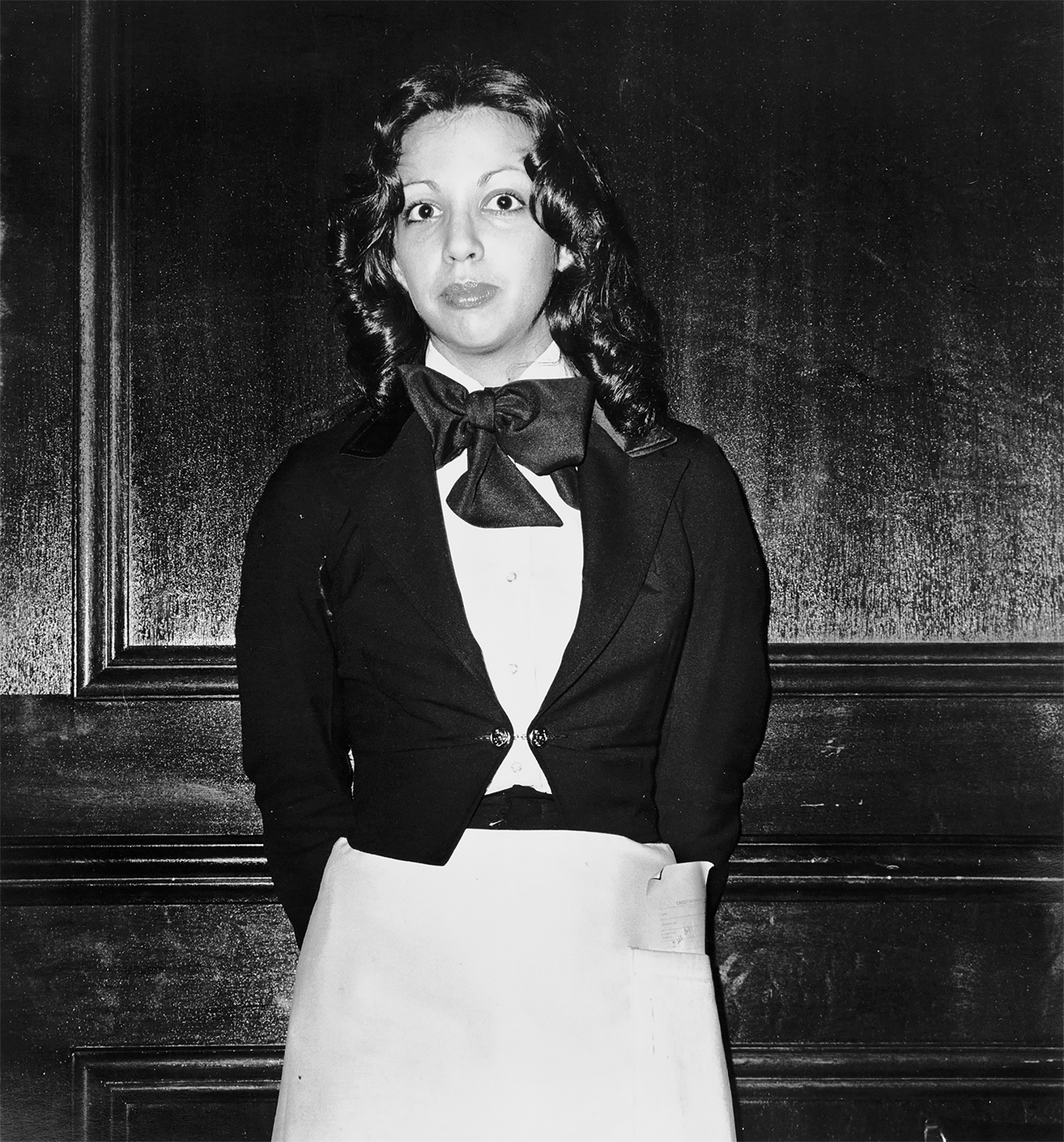
In this picture, Sophie Rivera photographs a server front-on, framed tightly against a dark wall so that the crisp bow tie, jacket lapels, and white apron read almost like a costume. The sitter’s expression is steady but hard to place—professional, guarded, a little weary—while the flash fixes them in a moment of work that might otherwise pass unnoticed. Made in New York as Rivera was developing a photography rooted in Nuyorican life, the picture turns everyday labor into a direct encounter. The image sits within a wider body of portraits and street photographs shaped by feminist and political consciousness, insisting that dignity, complexity, and self-definition can begin in ordinary rooms and routines.
Courtesy the artist
Coreen Simpson
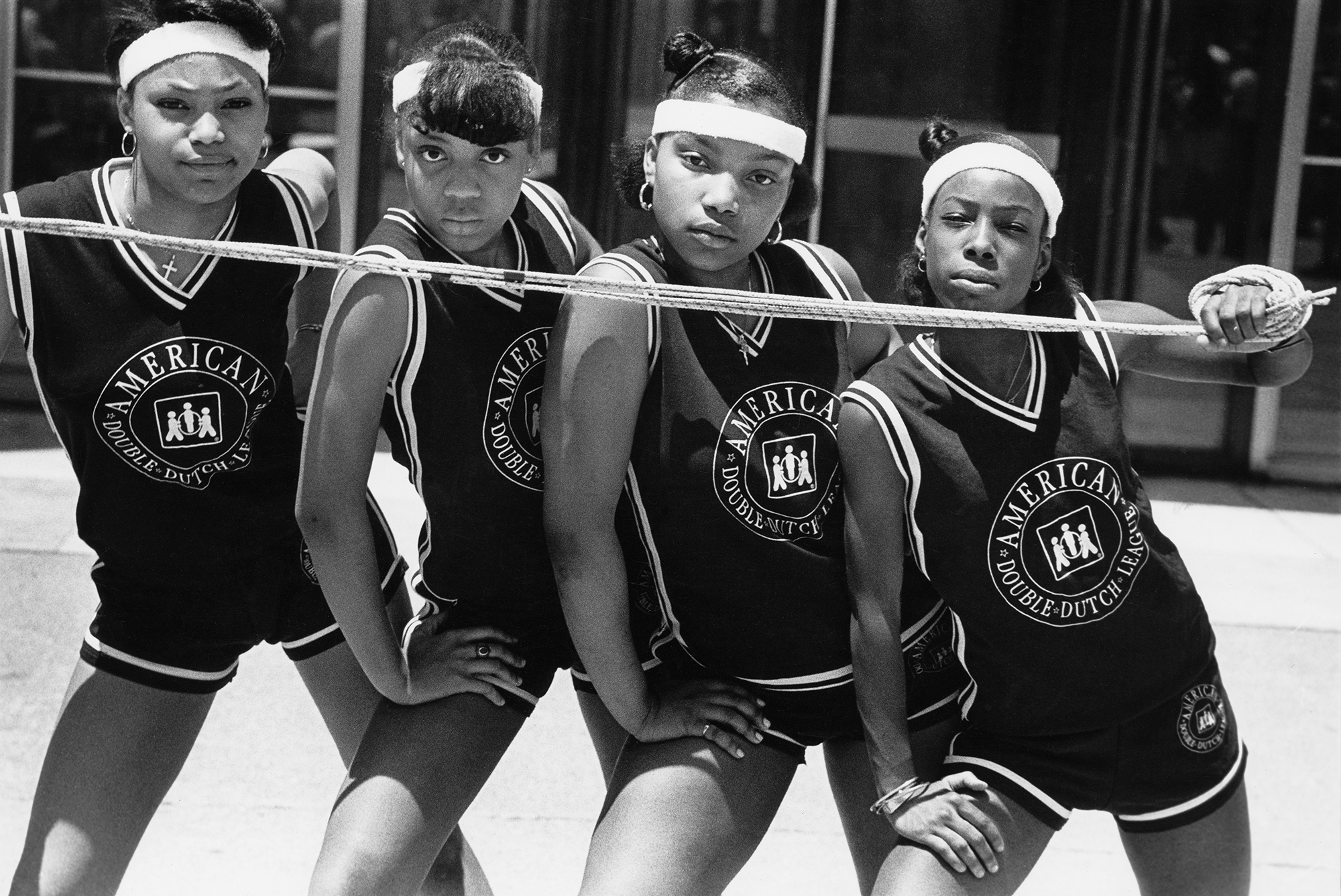
Coreen Simpson photographs four young champions as if they were a single unit—lined up shoulder-to-shoulder, knees bent, ready. The jump rope cuts across the frame like a drawn line, tightening the composition further. Matching uniforms and headbands signal pride and discipline, but what really holds your attention is the girls’ attitude: each face meets the camera with a different mix of cool, focus, and challenge.
Simpson made images like this while covering New York’s cultural life from the late 1970s onward, bringing the tools of editorial photography to scenes that mainstream coverage often overlooked. Here, the uniforms and headbands are part of the performance. The picture also captures an important New York continuum—girls’ games and street culture alongside the early hip-hop era’s emphasis on crew, stance, and self-making in public.
Aperture Loves New York is on view at Aperture through November 1, 2026.