14 Exhibitions to See This Fall
The season’s photography standouts traverse ’90s fashion, New York street life, and government intrigue.

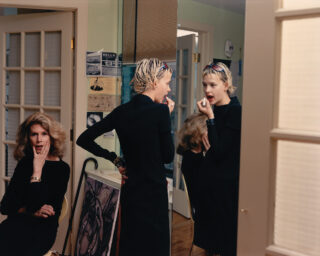
Eileen Perrier, Untitled, Afro Hair and Beauty Show, 1998
© the artist

Courtesy the artist
Hailun Ma — Amsterdam
It was only after moving to New York to study fashion photography that Hailun Ma began to recognize the artistic potential of her native Xinjiang—China’s westernmost region, home to twenty-five million people and more than forty ethnic groups, many of them Muslim majority. “If you search for images of Xinjiang online, you get these very National Geographic images,” she once told Vogue. “I wanted to present a younger perspective of what is happening.” Her first major solo show outside of China gathers photographs that delight in the everyday traditions and style of Uyghur teenagers, Kazakh cowboys, and other communities sidelined in mainstream depictions of the country.
Hailun Ma at Foam, Amsterdam, September 18, 2026–January 20, 2027

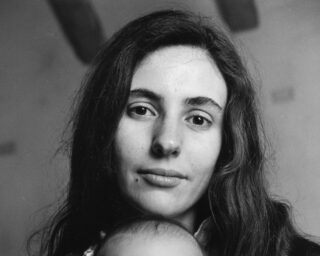
© 2026 Marianne Wex Estate and courtesy The Museum of Modern Art, New York, Committee on Photography Fund, and The Modern Women’s Fund
Taking Back Our Space — New York
From 1972 to 1977, Marianne Wex collected thousands of images tracing the connection between gesture and gender. The result, Let’s Take Back Our Space, juxtaposes Wex’s own snapshots of body language from the streets of Hamburg with sources reaching back to antiquity—showing, say, how the pose of a manspreader on a park bench descends from the uninhibited contrapposto of Doryphoros. In this exhibition, Wex’s opus, arrayed across systematized panels à la Aby Warburg, is paired with work by contemporary artists such as Nona Faustine, K8 Hardy, and Wendy Red Star, who extend observation of everyday public space into defiant acts of reclamation.
Taking Back Our Space: Photographic Perspectives at the Museum of Modern Art, New York, September 20, 2026–May 2, 2027

Courtesy the artist
Taryn Simon — New York
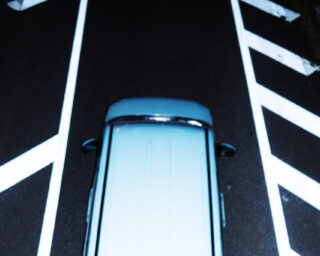
For over two decades, Taryn Simon has mined the hidden systems of power and influence that covertly order our lives. Father Country I Do Love You will be the largest debut of a new work ever at the Guggenheim, and the first single-artist exhibition by a photographer in the rotunda. Across forty-two works of photographs, text, video, and sculpture, Simon traces the life of a real, unnamed federal agent, examining how his individual decisions reverberated across lives and nations in ways he never knew. It’s Simon’s most personal project yet, as the work lives in the shadow her own father, who traveled the globe for the US government before transitioning into a career selling arcade games. “America is the best story on earth,” he once told her, “if you could find someone to tell it.”
Taryn Simon: Father Country I Do Love You at the Solomon R. Guggenheim Museum, New York, September 18, 2026–March 14, 2027

© The Estate of Roy DeCarava
Roy DeCarava — Los Angeles
Listening, for Roy DeCarava, was far from a passive act. For his series the sound i saw, he tuned his camera to the rhythms of midcentury New York’s jazz world, immortalizing titans—Trane, Count, Duke, Lady—in his signature palette of charcoal and smoke. He also captured peripheral scenes: tender embraces, dancehall silhouettes, quiet moments of downtime. The result is a deeply personal exploration of how American life, as Ralph Ellison once wrote, “comes to focus” through jazz. Curated by Ebony L. Haynes, this exhibition brings together 130 photographs from the series, accompanied by a listening room inspired by the records DeCarava cherished most.
Roy DeCarava: the sound i saw at David Zwirner, Los Angeles, September 19–October 31, 2026

© the artist
The 90s: Art and Fashion — London
Hoist the Union Jack: The 90s: Art and Fashion looks back at a decade when Britain’s irreverent cultural renaissance ruled the runways, airwaves, museums, and magazines. Curated by Edward Enninful, The 90s will bring together fashion by Vivienne Westwood, John Galliano, and Alexander McQueen; works by the (formerly) Young British Artists; and, of course, photographs by the likes of Corinne Day, David Sims, and Juergen Teller, who chronicled a new era of Swinging London in the pages of i-D and The Face.
The 90s: Art and Fashion at Tate Britain, London, October 8, 2026–February 14, 2027

© the artist
Deana Lawson — New York
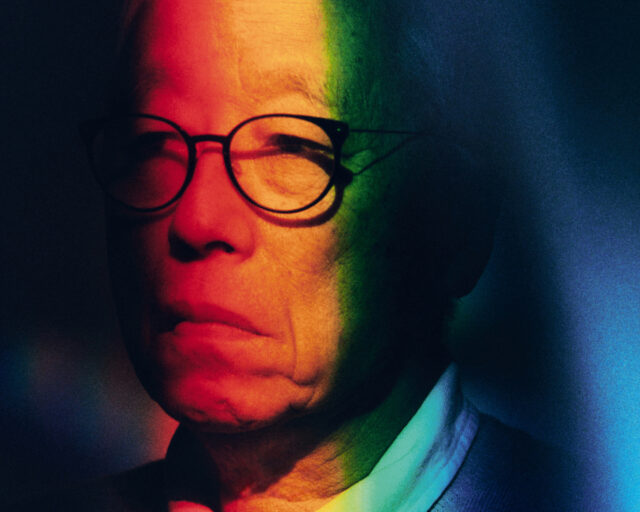
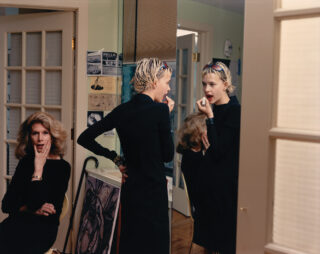
Diane Arbus has always been a north star for Deana Lawson, the artist renowned for her regal photographs of Black people she meets in various scenarios, often pictured in domestic settings and bestowed with a transcendent, otherworldly, yet sometimes strangely specific presence. Like Arbus, Lawson can astonish and unnerve. For her first solo exhibition with Gagosian since signing with the gallery in 2022, Lawson presents recent portraits that gesture to vernacular photography and Old Master painting, together with a new series called Edge Control, about the phenomenon of surveillance in beauty supply shops, where shoplifters are tracked on cameras and their likenesses posted to store windows to deter theft. Beauty—and scrutiny—is in the eye of the beholder.
Deana Lawson at Gagosian, New York, September 10–October 24, 2026

Courtesy the artist and Fellowship, Jessica Silverman Gallery, San Francisco, and Pace Gallery, New York
FotoFocus — Cincinnati
FotoFocus returns with its eighth edition, The Long View, offering seventy-four exhibitions in sixty-five venues throughout Greater Cincinnati, Dayton, Columbus, and Northern Kentucky. The “long view” of the title refers, in part, to the quarter-millennium of the United States, inviting artists and viewers to contend with the nation’s past, present, and possible futures. Standouts include exhibitions by Paul Mpagi Sepuya, Nancy Rexroth, and Trevor Paglen, whose work—spanning facial recognition technologies, alternate-reality games, and AI rabbit holes—probes the dark infrastructures of surveillance and power that govern how we see the world, and how it sees us.
FotoFocus Biennial 2026: The Long View, Cincinnati, Ohio, October 1–31, 2026

© the artist and Tezeta and courtesy David Hill Gallery
Sanlé Sory — London
Sanlé Sory cut his teeth photographing car crashes for newspapers. When he acquired his own equipment, in 1960, he opened the Volta Photo studio and turned to a more celebratory subject: the vibrant youth culture of newly independent Upper Volta (now Burkina Faso). Like his better-known peers Malick Sidibé and Seydou Keïta, Sory redefined the photography of West Africa by portraying its people on their own terms. This show focuses on his rarely exhibited color portraits—images of irrepressible panache made during the restive 1980s and ’90s, when his country sought a new identity focused on anti-imperialism and self-reliance.
Sanlé Sory: Colour Years at the Photographers’ Gallery, London, October 14, 2026–February 21, 2027

© President and Fellows of Harvard College and courtesy Harvard Art Museums
Barbara Norfleet — Cambridge, MA
In the 1970s, the sociologist and curator Barbara P. Norfleet began assembling a vast archive of images from the 1930s to 1960s taken by photographers working on commission across the United States. Consisting of over twenty-thousand photographs depicting social rituals from weddings to corporate gatherings, the archive formed what Norfleet called a “unique and valuable record of American life.” This fall, the Harvard Art Museum stages the exhibition The Way We Never Were, drawn from Norfleet’s archive. Thematic sections ranging from the rise of suburbia and cultural conformity to growing struggles for equal rights centers the role of the professional photographer and commissioned image in shaping how midcentury America came to define itself.
The Way We Never Were: The American Professional Photographers Collection at Harvard Art Museum, Cambridge, Massachusetts, through May 9, 2027.

© the artist
Flashback — Baltimore
In Paula Gillen’s Hostage Situation (1979), a young, masked child yanks a woman’s leg—clad in fishnets and yellow peep-toe heels—protruding through an unfinished ceiling. It’s one of countless gems in Flashback, an unprecedented survey of Baltimore photography spanning almost two hundred years, from daguerreotypes of Frederick Douglass, to A. Aubrey Bodine’s deadline-driven pictorialism, to the zany world of John Waters (that dangling leg belongs to Susan Lowe, a regular in Waters’s films), to younger talents such as Devin Allen and Gioncarlo Valentine who are shaping the city’s photographic landscape today.
Flashback: Two Centuries of Baltimore Photography at the Baltimore Museum of Art, October 4, 2026–February 7, 2027

© the artist and courtesy Howard Greenberg Gallery and Hunters Point Press
Baldwin Lee — New York
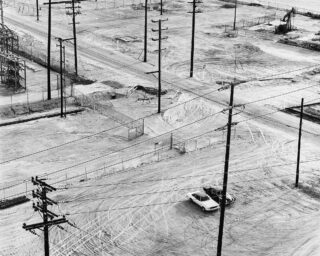
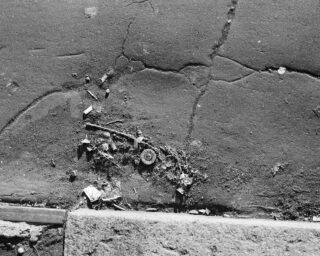
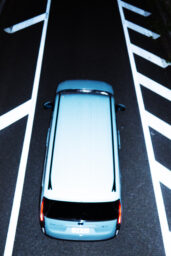
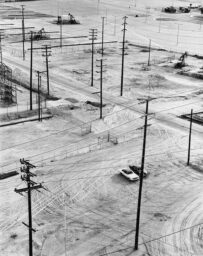
Raised in New York’s Chinatown, Baldwin Lee studied with Walker Evans at Yale in the early 1970s. He would return to New York in the following years to photograph the city’s empty, early-morning streets with a 4-by-5 camera. These images, which resonate with German photographer Thomas Struth’s similarly unpeopled streetscapes from the same era, were printed in 2025 for this exhibition at Howard Greenberg Gallery, which previously presented Lee’s now-celebrated large-format portraits made in the 1980s on road trips through the American South. Lee’s portrayal of New York shows how both the skyline and the sidewalk have changed, as in his image of seemingly abandoned Financial Center lofts beneath the Twin Towers of the World Trade Center—a monument to a bygone era.
Baldwin Lee: New York at Howard Greenberg Gallery, New York, September 18–October 31, 2026

Courtesy the artist and Gladstone
Arthur Jafa — New York
Named for the pioneering jazz drummer Tony Williams, Arthur Jafa’s exhibition I Am Tony presents video installations, paintings, photographs, and sculptures across two floors of the recently expanded New Museum. Renowned for his trenchant explorations of race and American culture, the artist will premiere new works alongside searing video montages including Love Is the Message, The Message Is Death (2016) and The White Album (2019), as well as early works such as the photograph Monster (1988), an unflinching self-portrait of the artist as a young man.
Arthur Jafa: I Am Tony at the New Museum, New York, September 24, 2026–January 3, 2027

Courtesy the artist
Japanese Women Photographers — New York
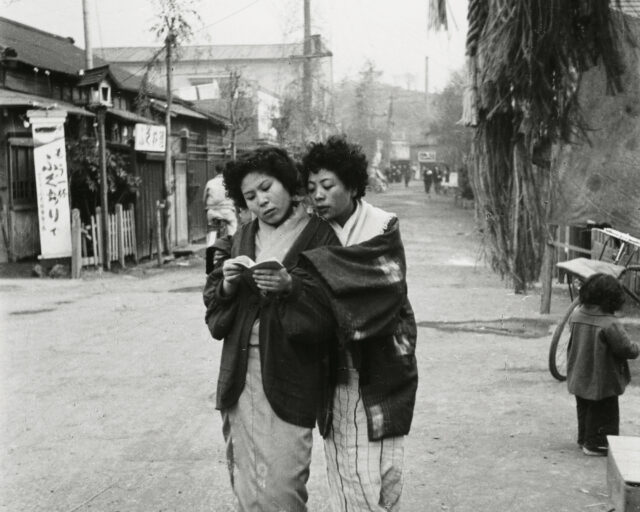
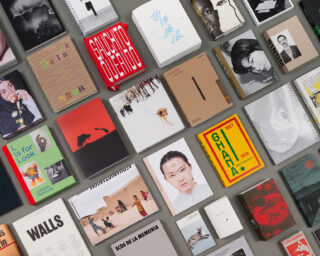
A much-needed counterpoint to the male-centric canon of Japanese photography, I’m So Happy You Are Here: Japanese Women Photographers from the 1950s to Now reframes the history of the medium through the work of twenty-eight intergenerational artists. Presented in partnership with Aperture in conjunction with the 2024 monograph, this exhibition is curated by the book’s editors, Pauline Vermare, Lesley A. Martin, and Takeuchi Mariko. I’m So Happy spans the medium from installations to photobooks, providing an indispensable introduction to the contributions of Japanese women to photography by showcasing intimate observations of everyday life, critical perspectives on history, and radical experiments with form.
I’m So Happy You Are Here: Japanese Women Photographers from the 1950s to Now at International Center of Photography, New York, October 15, 2026–January 11, 2027.

© the artist and courtesy 303 Gallery, New York
Aperture Loves New York — New York
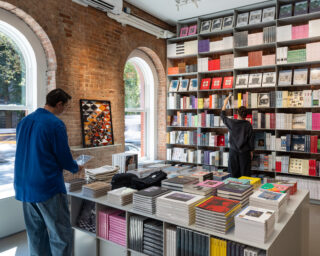
Aperture Loves New York pays tribute to photographers who have shaped—and been shaped by—the city. Showcasing artists long championed by Aperture and anchored in our publishing history, the presentation brings together important and memorable photographs with corresponding Aperture books that have advanced the medium of photography and captured the complex spirit of New York City. Organized by Aperture’s executive director, Sarah Meister, the installation features photographs by more than twenty artists ranging from past to present—including Diane Arbus, Deana Lawson, Stephen Shore, Awol Erizku, and more.
Aperture Loves New York at Aperture, New York, September 18–November 1, 2026.