Essays
How Tina Barney’s Mother Schooled Her in Fashion
Raised by a successful model, the acclaimed portrait photographer has long understood the power of getting dressed.
Tina Barney’s mother, Lillian Fox, was five foot two and from Brooklyn, yet she made her name in New York as a fashion model in the 1930s. She started out as a face on point-of-sale advertising for Gillette razor blades and as an ambassador for Kayser hosiery: “Miss Lillian Fox writes, ‘Kayser’s new Bon Voyage hosiery colors do such exciting things to my Spring clothes, it’s hard to choose from the grand array.’” Yet her proficiency as a model—her facial beauty, and the way she wore a hat—gained her work in high-end fashion magazines, notably Harper’s Bazaar and Vogue.
Fox was shot by émigré fashion photographers George Hoyningen-Huene and Horst P. Horst, who recast the props of European civilization—the classical pillar, the Louis XV gilt chair—as symbols of American refinement. In a Horst photograph published in the March 1940 issue of Vogue, Fox models an elaborately cut evening cape in contrasting green and purple silk panels by American fashion designer Charles James. Olga Tritt jewelry snakes around her wrist and ear, echoing the rococo plaster swirl of the backdrop.
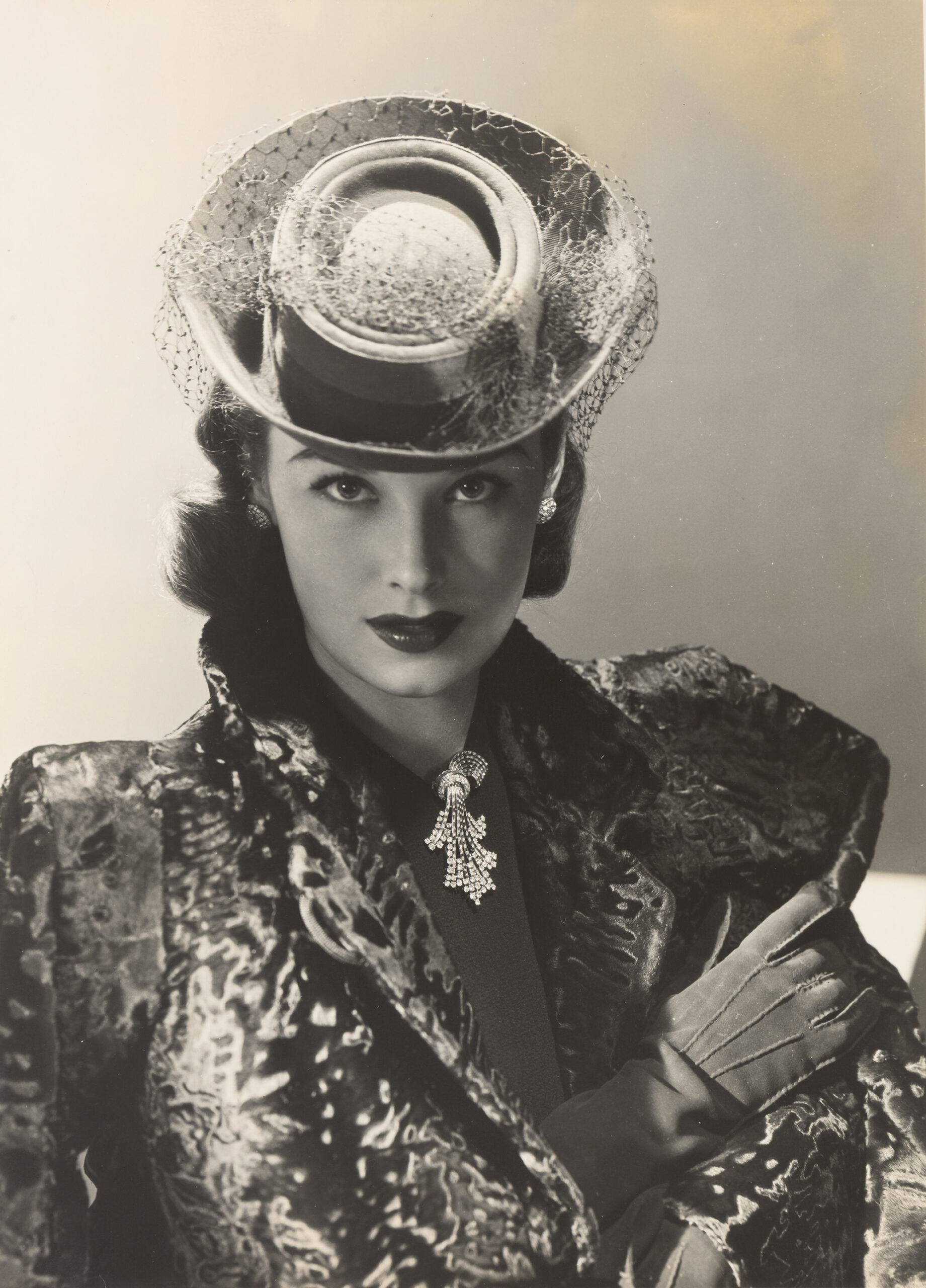
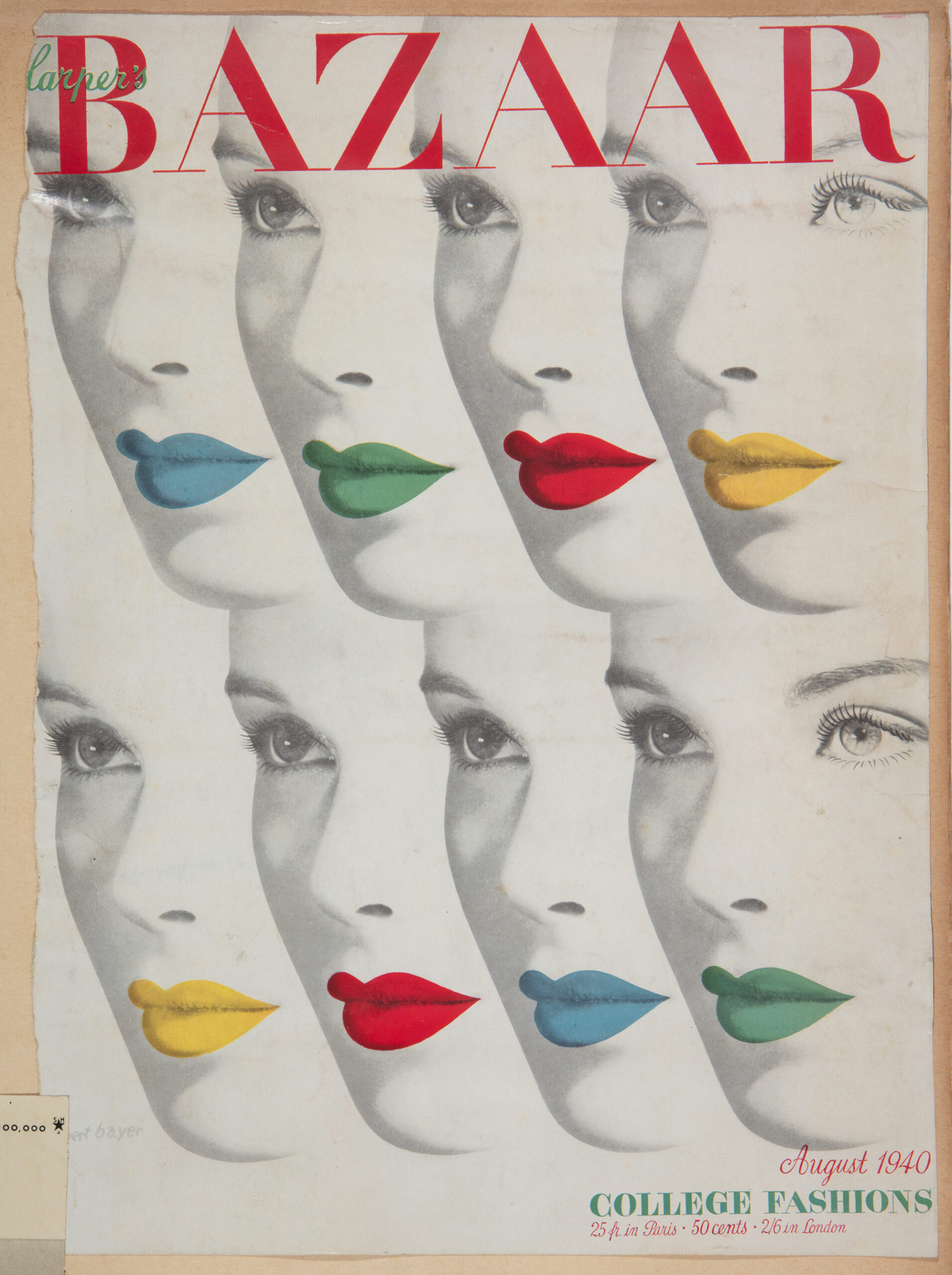
In another shot by Horst of four models arranged around a table laid in impeccable white linen, Fox sits furthest right while New York socialite Babe Paley inspects an oversized hat pin using a magnifying glass. Her exacting, almost imperious expression crystallizes the attention paid to designed goods in expressing elite American taste in the postwar era: a shaken cocktail of WASP understatement and meritocratic agency.
It was a world that Tina Barney was born to. From childhood, she was surrounded by art—her father’s family were collectors—and by the well-dressed, elegant women of her parents’ social circle. The family home bore her mother’s taste (Fox had a second career as an interior designer). As Barney recalls, “the interiors I grew up in were extraordinary in themselves.”
The young family appeared in Vogue, in 1949, on holiday in Long Island, and media attention followed Barney into married life. She and her family lived the American “good life,” roving the Upper East Side and the Rhode Island coastline. They exuded social poise and good dress sense at a time when fashion was becoming a reportable aspect of society life. By the 1960s, publisher John Fairchild had transformed the New York trade journal Women’s Wear Daily into WWD, a paper that covered the women who wore the clothes as much as the designers who made them. In 1968, WWD reported on a family party to which Barney wore “Oscar de la Renta’s short raspberry silver-beaded dress that’s been turning up at all the best parties this season.” Her sister Jill regularly appeared in The New York Times, dressed in the latest fashions, photographed by Bill Cunningham.

Tina Barney: Fashion
$65.00
Part memoir, part survey, Tina Barney: Fashion explores style and sartorial expression across the celebrated portraitist’s career.
Barney had studied art history as a teenager, but her interest in photography grew while she was married with two children. It started in 1972 when she worked as a volunteer in MoMA’s Department of Photography; a year later Barney relocated with her family from New York to Sun Valley, Idaho, where she enrolled at Sun Valley Center for the Arts (now Sun Valley Museum of Art) to study photography.
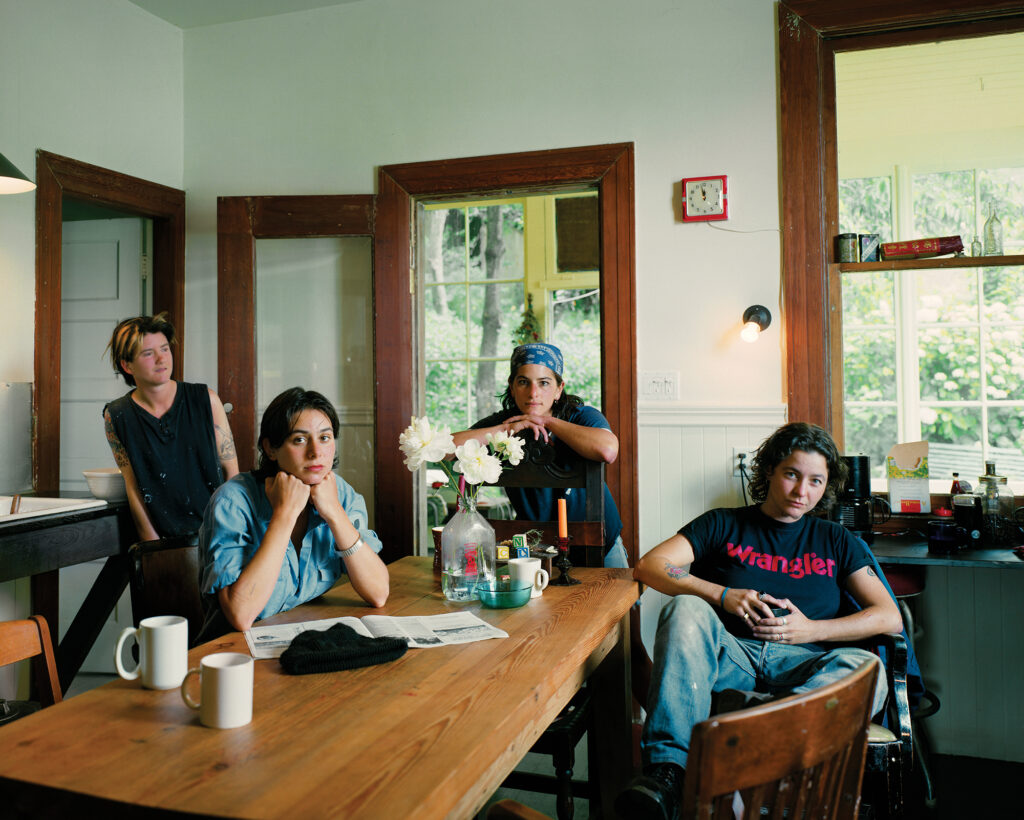
From the late 1970s, Barney used her extended family and their surroundings as the subject matter for her large-format color photographs. The resulting images were arrangements of domestic life, planned with the object-oriented symbolism of some of the art she was surrounded by, or according to the remembered words of her mother: “You should have different heights of furniture in your room to excite the eye.”
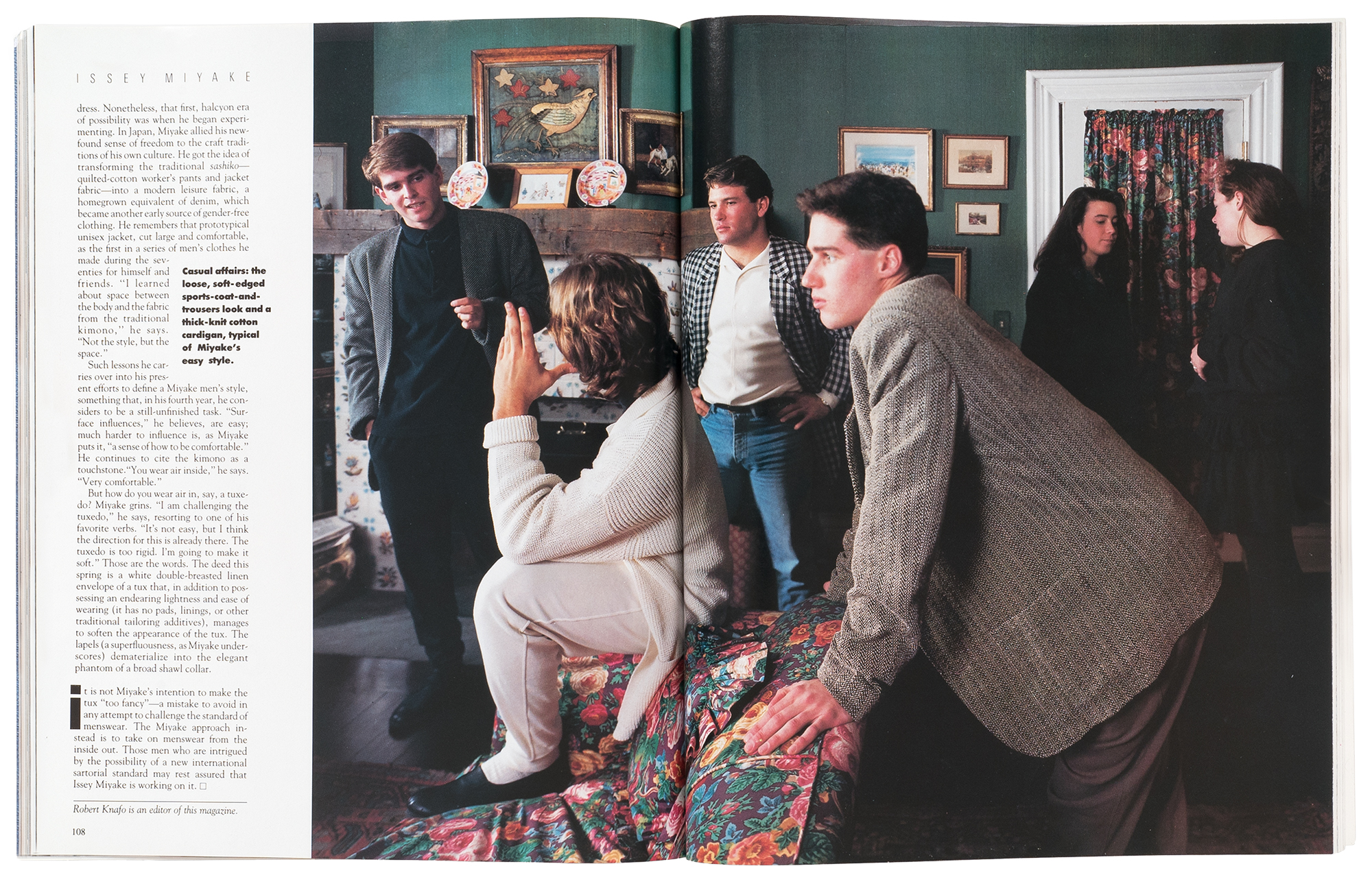
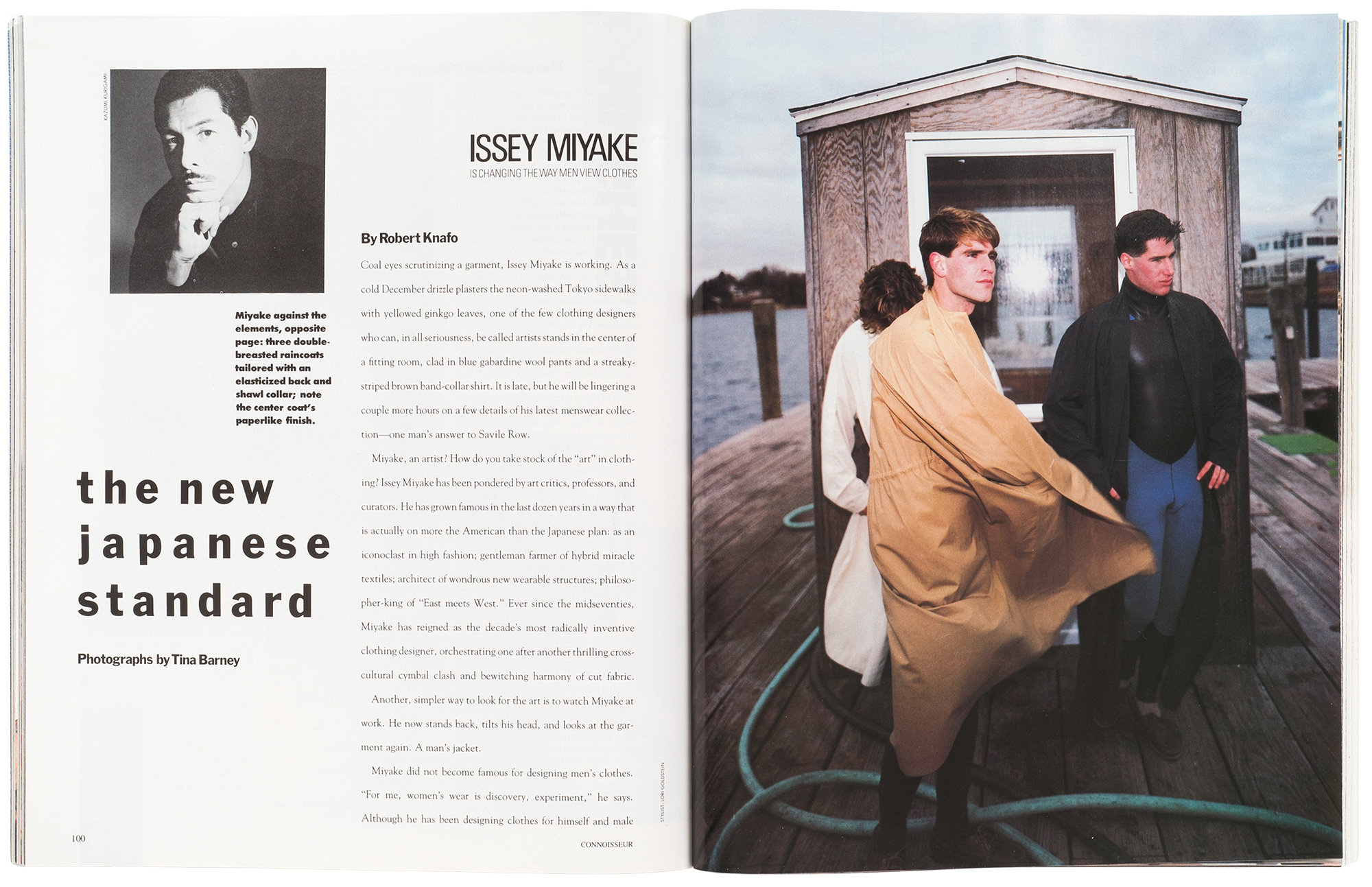
By 1987, as her work became better exhibited, her New York gallerist Janet Borden suggested Barney should accept a fashion editorial commission from Connoisseur magazine, the British art periodical for collectors that had been reinvented as a full-color Hearst magazine run from New York. Overseen by the former Metropolitan Museum of Art director Thomas Hoving, Connoisseur expanded its remit to the broader expression of taste. In his column My Eye, in the March 1988 issue, Hoving described that the magazine had “moved beyond the restricted world of art and antiques into a complex range of subjects. We suspected that our readers wanted to know about the best of everything.”
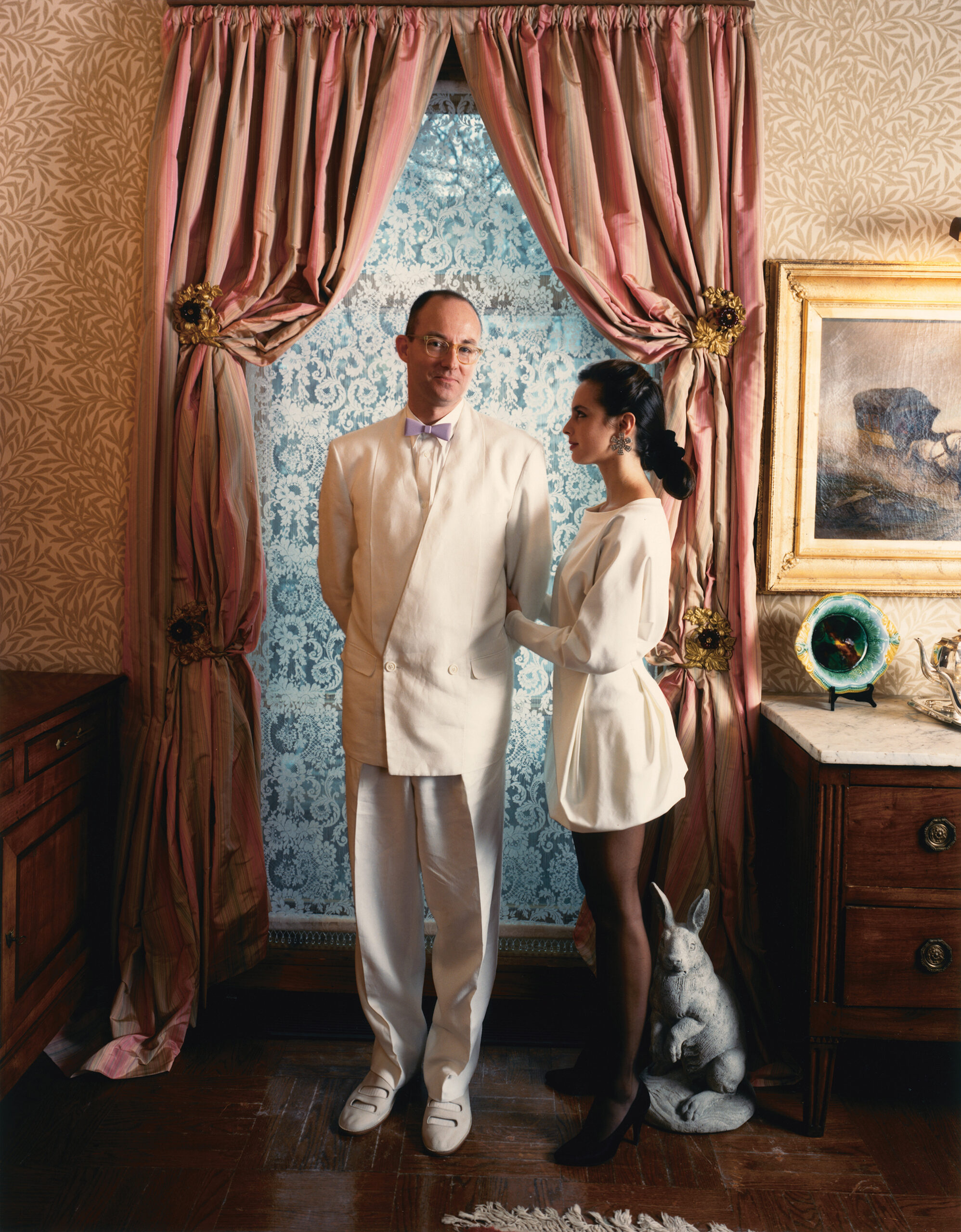
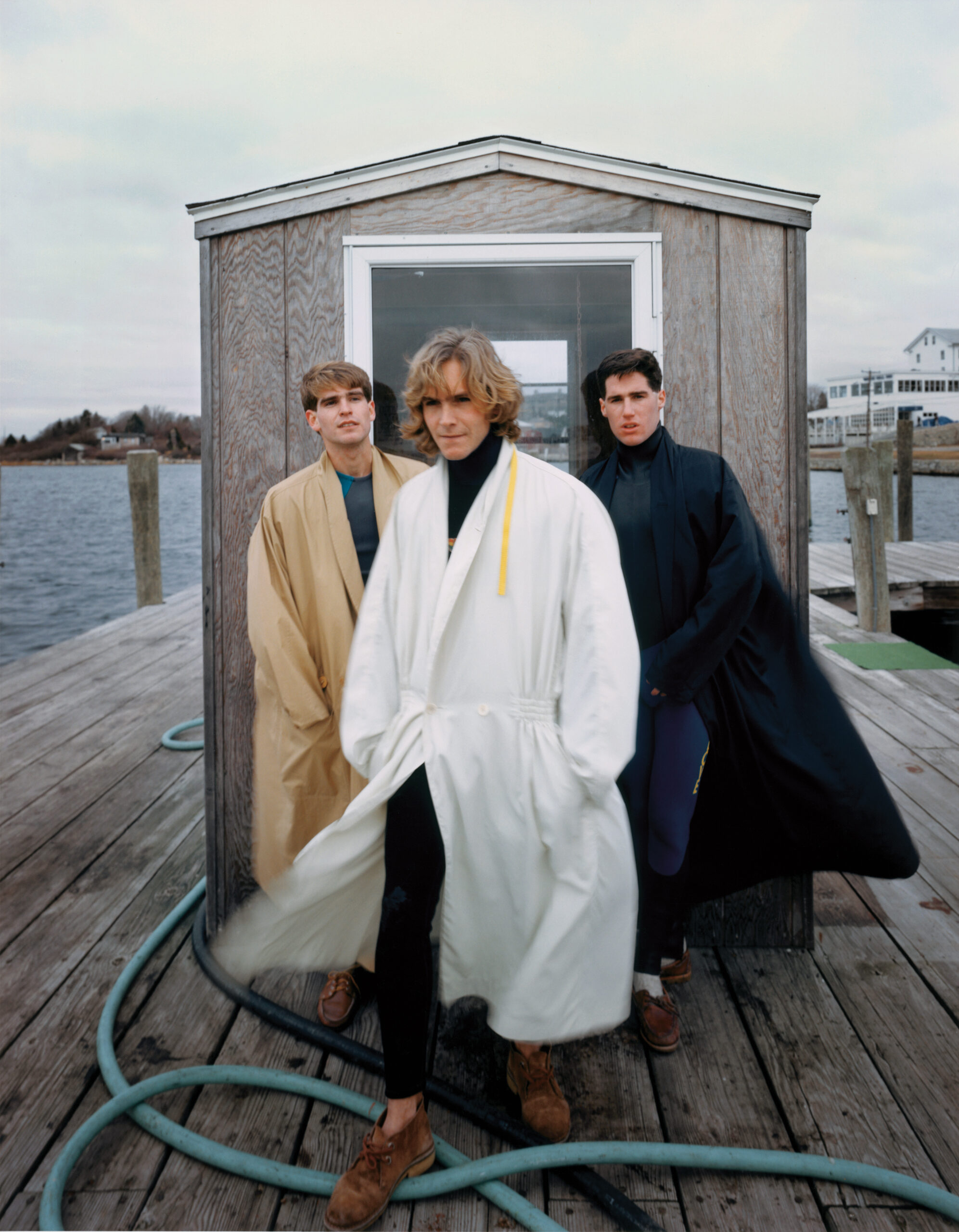
Barney’s front-page editorial in the same issue introduced the menswear of Japanese fashion designer Issey Miyake. Though the interview had been conducted in Miyake’s design studio in Tokyo, Barney shot her family and friends wearing his clothes at home in Rhode Island and New York. In one picture, Barney’s son and his friends sport Miyake raincoats over neoprene wetsuits and deck shoes, standing on a town dock as if about to clamber aboard a boat.
While the clothes are conceptually and technically rigorous—the man on the cover wears a white linen suit, its shawl collar described by the seams of the jacket; the lilac bowtie at his neck is cast silicone—they are presented with a bodily ease that makes the wearer look rich, relaxed, and most important of all, socially acceptable in an elite world. While this is the masterstroke of the editorial, Barney’s motivation lay elsewhere: “We were supposed to be advertising Miyake—but basically, I really did whatever I wanted to do. I wasn’t thinking about the clothes. Funnily enough, I was thinking about just making a good picture. I wasn’t really informed enough about Miyake’s clothes, I must say. But I think it was a different thing to do.” Up to this moment, Miyake’s advertising campaigns had been shot by Irving Penn, who made the garments look like abstract sculpture first, clothes second. Seen against this sanctioned, intellectual approach, Barney’s editorial was truly radical.
Her commercial work garnered further fashion commissions, brokered by her long-term agent, Norma Jean Markus. To date, Barney has produced campaigns for Dior, Self-Portrait, Gucci, Thom Browne, and Tory Burch, and for fashion magazines, including Arena Homme Plus, L’Officiel, POP, Vogue, and Vogue Italia. She remains best known, however, for her fashion work for W magazine.
W began as a bimonthly sister magazine to WWD in 1972, and in 1993 it was relaunched as a large-format, monthly fashion title with Dennis Freedman as creative director. Freedman set out to improve the quality of the magazine’s photography, and he began by commissioning a mix of established fine-art and emerging fashion photographers who took the kind of pictures in which you might not notice the clothes. Freedman offered image makers such as Philip-Lorca diCorcia, Larry Fink, Craig McDean, Martin Parr, Juergen Teller, Larry Sultan, and Bruce Weber carte blanche. He allowed them to retain control of the selection of images and guaranteed their photographs would be published uncropped and printed with high-quality ink on large-format, glossy paper. When he asked Barney if she might consider a commission, she had one condition: “I need to have interesting people who live in interesting locations.”
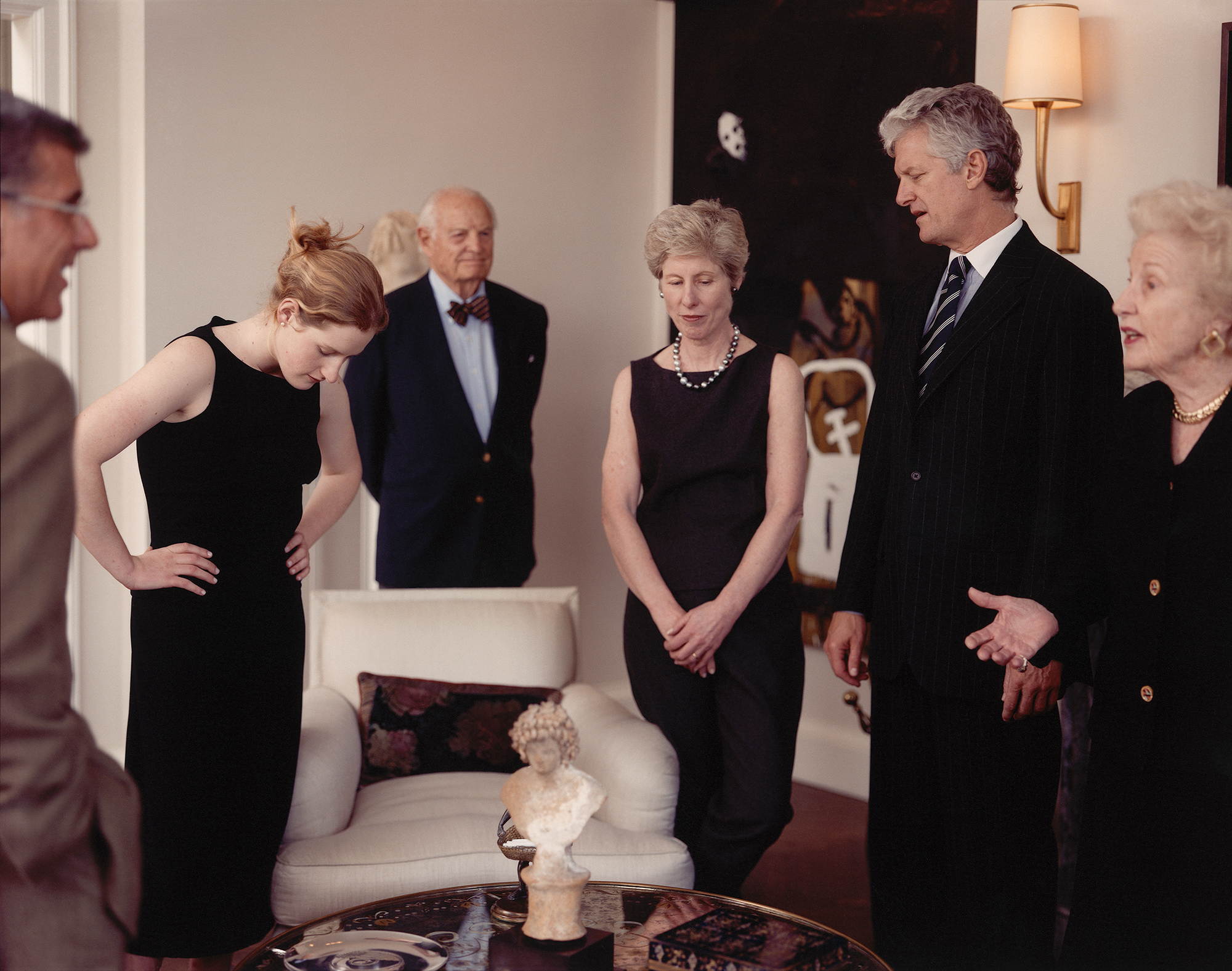
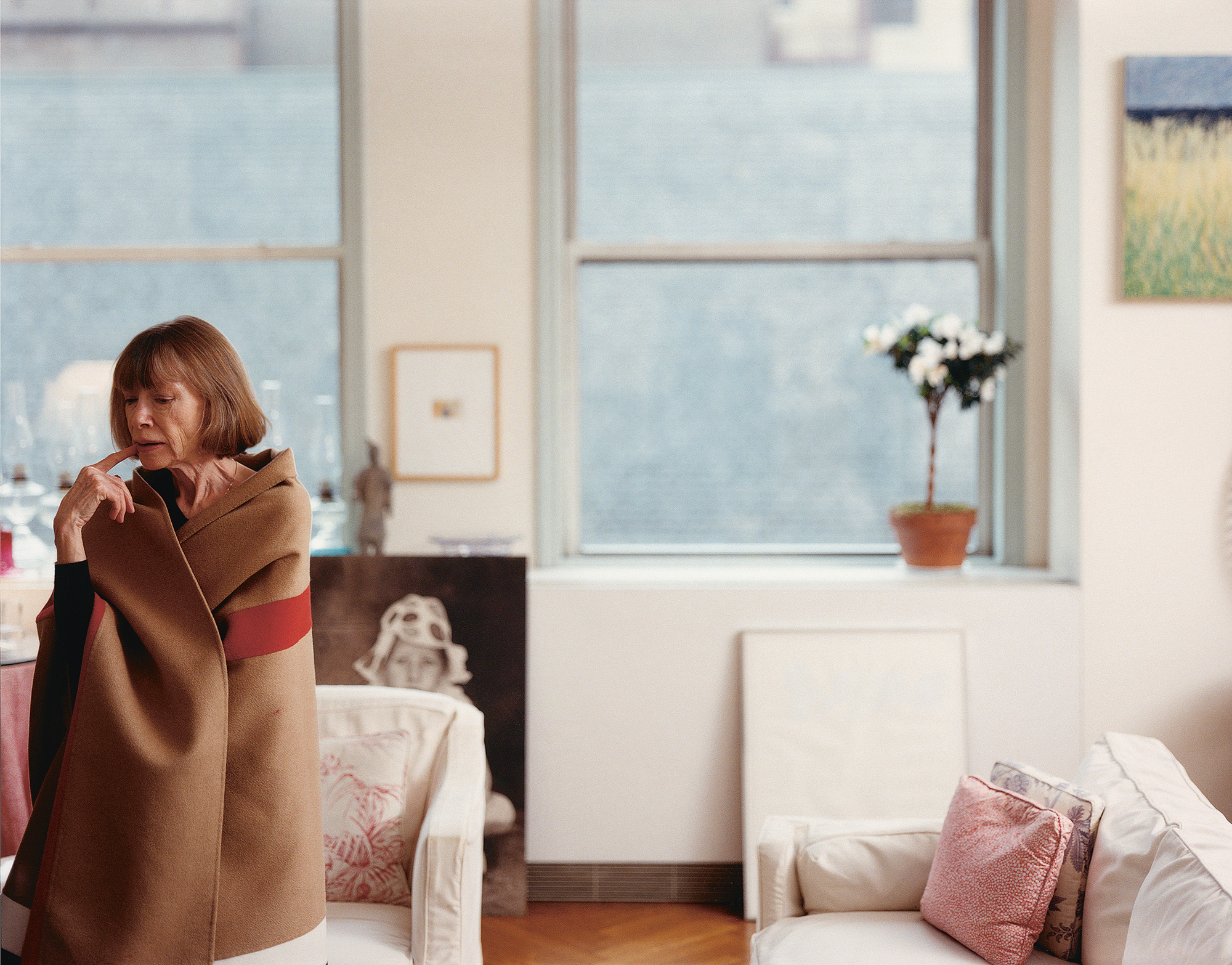
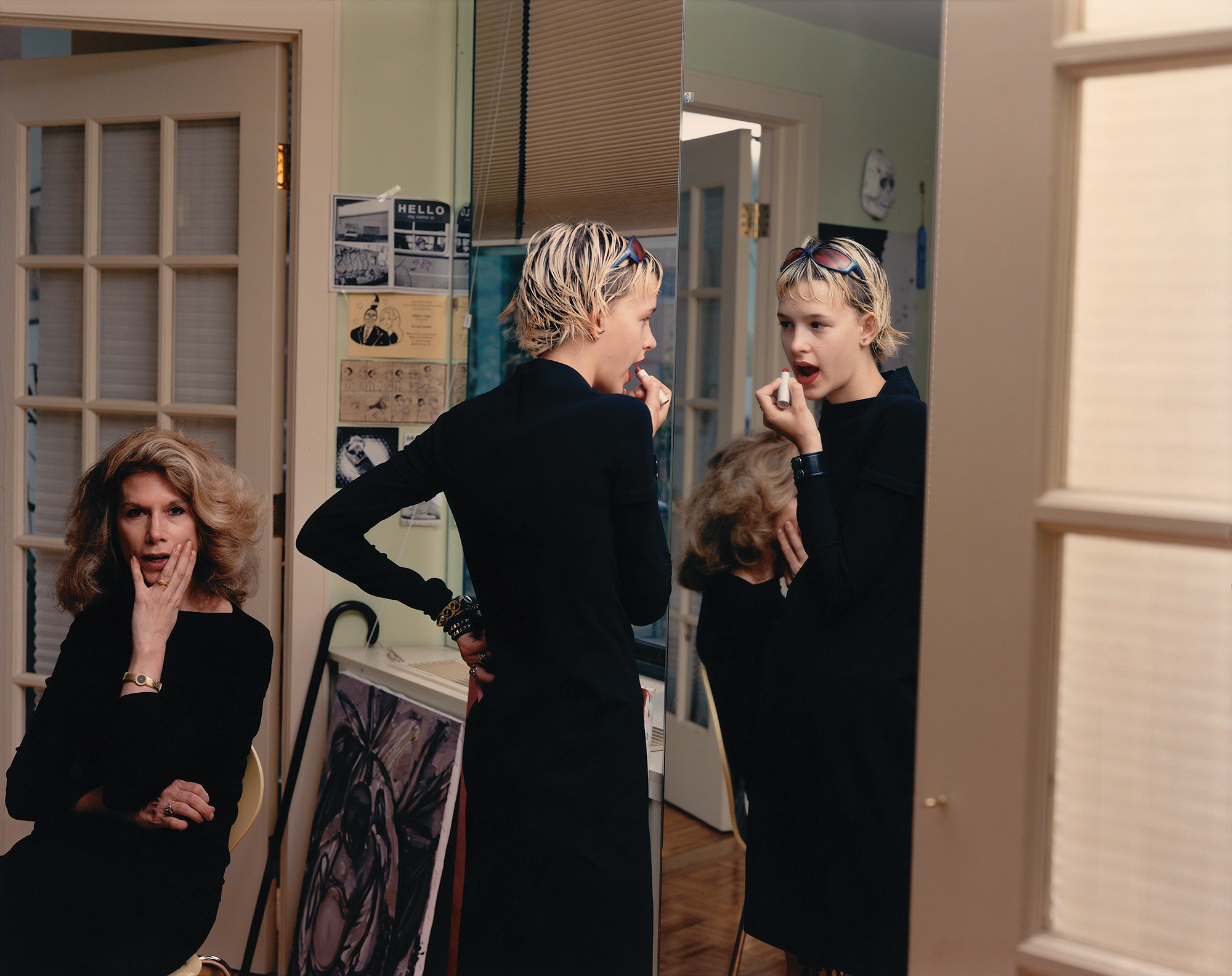
For the resulting editorial, “New York Stories,” published in October 1999, Barney took her usual approach to fashion pictures, but made it strange by photographing families that were not her own: the mother sitting on the stairs with her child is Julianne Moore; the mature woman lost in contemplation in her apartment is Joan Didion.
Freedman has openly spoken about the creative constraints of fashion pictures, of the inevitable tension between artistic ideals and commercial requirements. Yet he has also used the example of this editorial, in particular the image of the art dealer Angela Westwater’s family—dressed in black by Ralph Lauren—to demonstrate how the parameters of an assignment can, counterintuitively, add an element of the unexpected: “If this were one of Tina’s personal works, the Westwaters would have chosen their own clothes and the result would have been very different, but not necessarily ‘better.’” In Barney’s hands, the picture is about the unease of the group. The fashion adds the surprising air of a funeral gathering.
Many of the acclaimed W portfolios by art and fashion photographers went on to be exhibited, sold as editioned photographs, and published in book form. In their repurposed formats, they were stripped of the original context of the magazine issue. Barney’s “New York Stories,” for example, was produced for an issue dedicated to American society, from profiles of the Astors and von Furstenbergs, to coverage of guests at the launch of Tina Brown’s Talk magazine; from an excerpt of Vanity Fair reporter Dominick Dunne’s Hollywood memoir, to a feature on the magazine’s best pre-millennium party photographs. In context, “New York Stories” is a pictorial fable about a kind of über family—successful in all arenas, dynastic, dysfunctional, performing ordinary life in extraordinary outfits.
In 1988, Barney coproduced a short documentary about Horst P. Horst directed by Mark Trottenberg. In the documentary, Horst reflects that “early on there were no such thing as models. They were just people that you knew, or that turned up somewhere or other.” It might be Barney describing her relatives and friends.
In the late 1950s, Horst was commissioned by Vogue to photograph the homes and gardens of notable people with exquisite style for a Fashions in Living column. The first, in 1957, was “the special triumph of Christian Dior’s Paris house.” These formal interiors, informally framed, were eventually published as Vogue’s Book of Houses, Gardens, People. On the book’s cover is a portrait of Mariga Guinness, the former Princess Hermione Marie-Gabrielle von Urach, at home in Leixlip Castle, in County Kildare, Ireland. She sits uneasily on a Georgian stool, up against the swagged valance of her dressing table, which almost buckles under an excessive floral arrangement. With her silver vanity set lying precariously at the edge of the table by her resting arm, she seems to wonder at the very idea of getting ready in front of such a thing. Carefully composed, the photograph also permits a glimpse beyond the mystique, revealing the sacrifice and cost that must be borne in keeping up appearances.
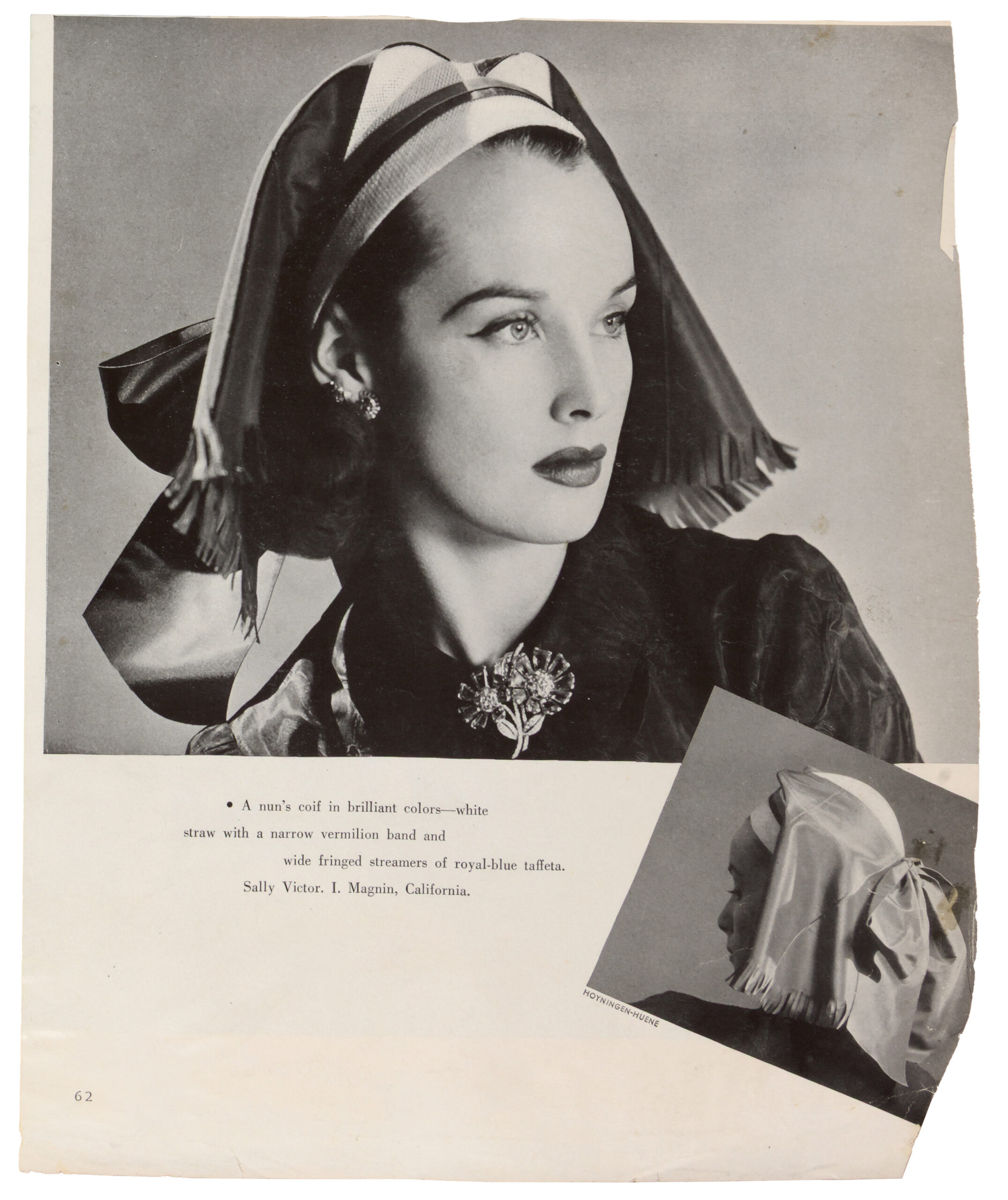
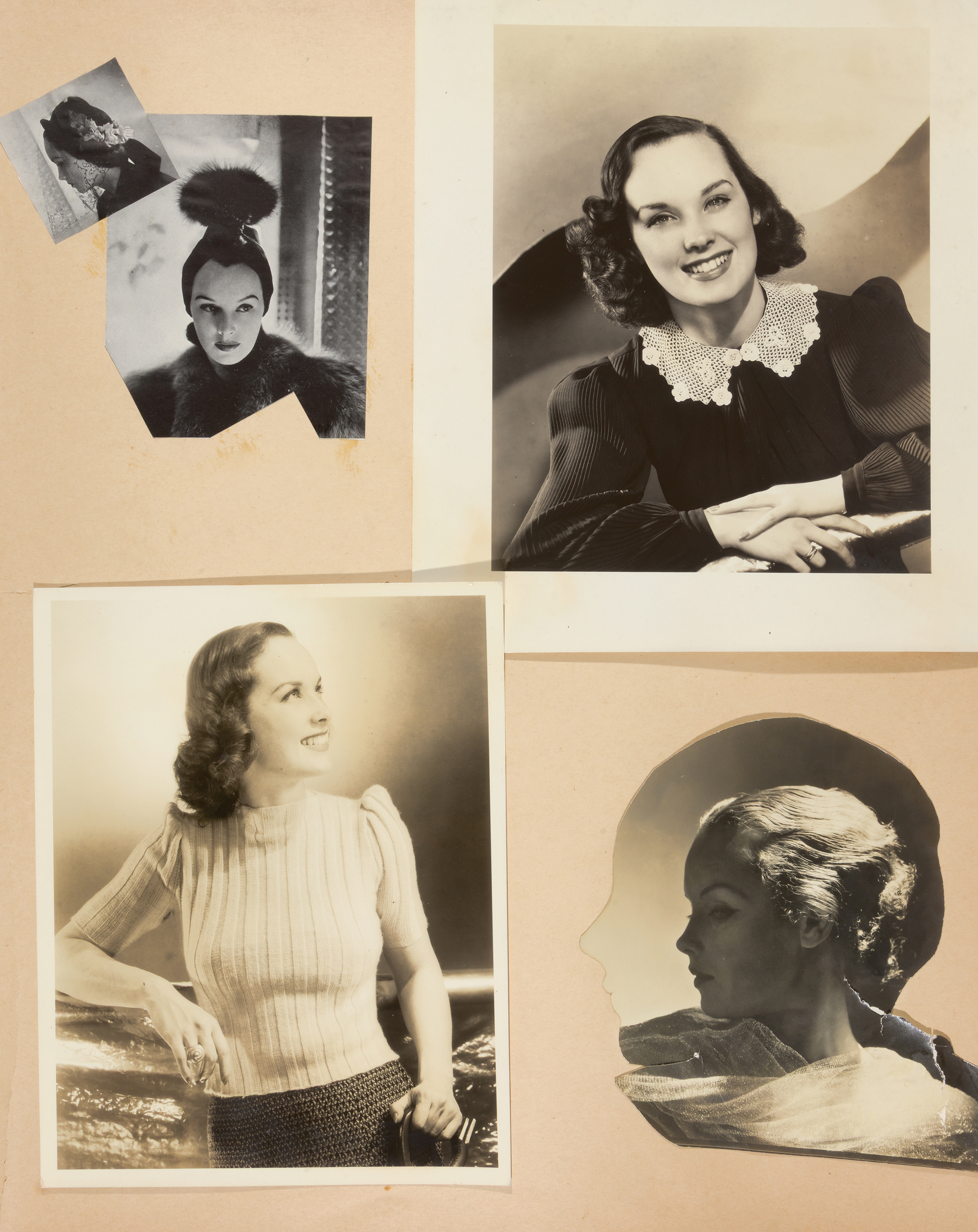
Horst’s photographs conjure la belle vie, the comfort and pleasure in being held in one’s environment, embodied as elegance. Horst was particular about his own definition of the term: “The most I can confidently say is that elegance is a way of making the best of one’s body without showing off, a way of feeling naturally at ease with one’s shape and stance and clothes and surroundings.” Horst might be describing Lillian Fox as depicted in one of his photographs, or equally, the artistry of Tina Barney.
Barney is a photographer with a deep fashion lineage. Her position is not that of the dispassionate observer; rather, it is formed from an understanding of a life lived camera-ready. Her fashion pictures materialize her maternal inheritance—that living well is the best revenge.
This essay originally appeared in Tina Barney: Fashion (Aperture, 2026).