Essays
Melissa Auf der Maur’s ’90s Grunge Diary
While playing bass for Hole, Melissa Auf der Maur created a searing record of life on tour in an offline world.

JFK Jr. is back on television, everyone is wearing straight-leg jeans, and carrying an analog camera around your neck is no longer seen as an affectation of hipster-dom. It’s 2026, and the perpetually online masses are sighing as they romanticize how great it must have been to be young in 1996, with lives yet to be suffocated by social media. But what so much of this current 1990s nostalgia overlooks is the anger and restlessness of those growing up in that era of seismic change—their cynicism and disdain for capitalist avarice and their inviolable distrust of corporations, just before everything was corporatized. To the then-teenage Gen Xers who were becoming adults in the 1990s, “selling out”—now a shameless imperative—was an unforgivable sin.
It was this moral compass that, in 1994, led a twenty-two-year-old musician from Montreal named Melissa Auf der Maur to reject the Smashing Pumpkins frontman Billy Corgan’s initial attempt to recruit her to Hole following the death of their bassist Kristen Pfaff. So skeptical was Auf der Maur of success and celebrity that she hesitated for a while aboutjoining the band—abrasively antiestablishment but signed to a major label—until Courtney Love (affectionately) bullied her into acquiescence. A photography student at Concordia University, Auf der Maur had taught herself how to use a camera by photographing herself nude in her bedroom from different angles. At most, she thought that she would end up a working photographer with some involvement in music. “That’s sort of what I assumed my job would be in life, because it seemed more realistic than a musician,” she told me.
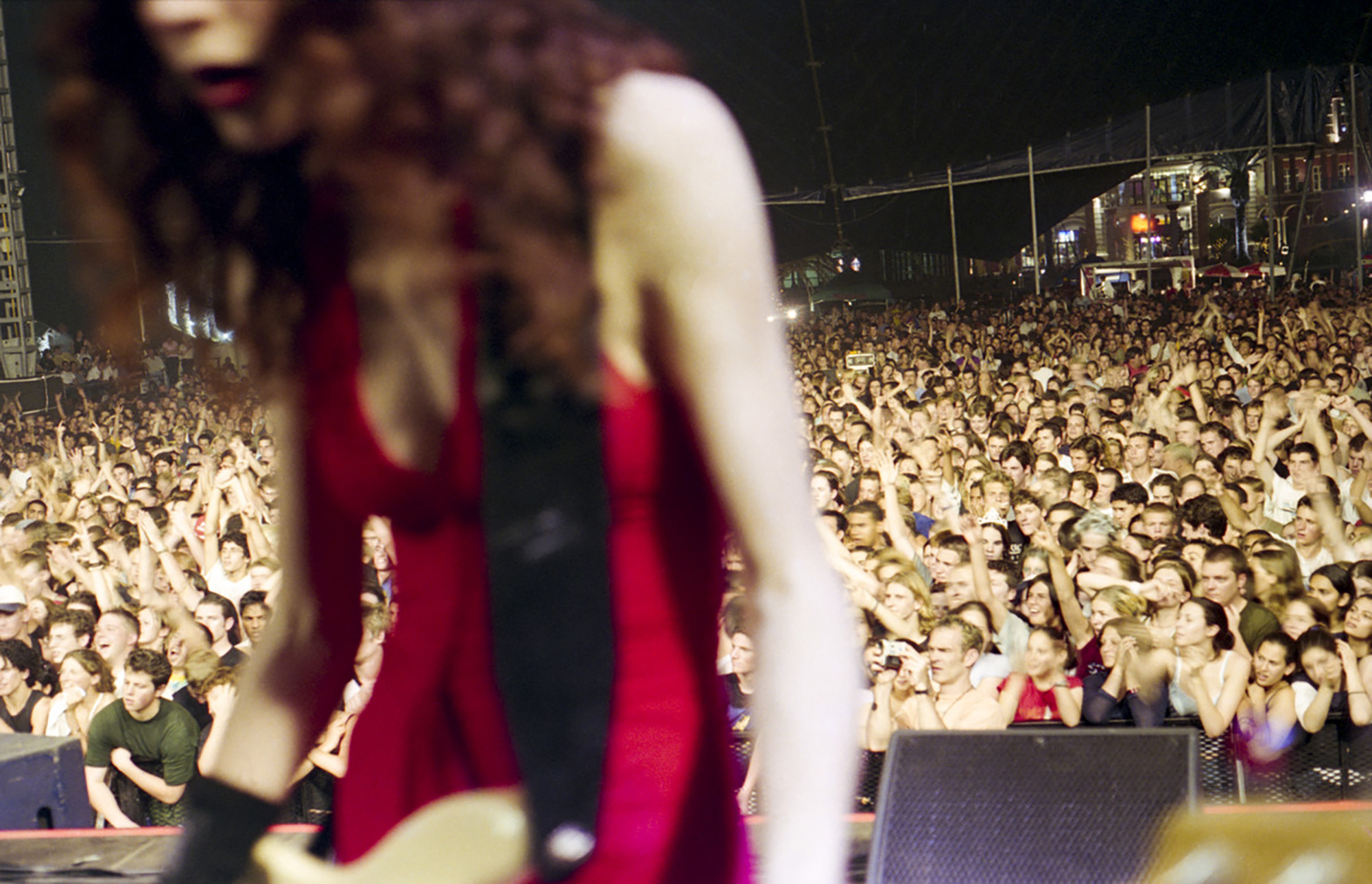
Despite her modest ambitions, she went on to spend nearly a decade traveling and performing on stages across the world as the bass player for Hole and the Smashing Pumpkins, two of the biggest alternative rock bands of the 1990s. Determined to continue her photography, she became a relentless documentarian of her life, relying on a 28mm point-and-shoot Nikon and the occasional one-hour photo lab whenever she could find one in between tour stops. During that period, she took nearly ten thousand photographs, most of which have languished in her attic in upstate New York—until now.

Aperture Magazine Subscription
This September, the exhibition Melissa Auf der Maur: My ’90s Rock Photographs opened at the Art Gallery of Ontario (AGO), where two hundred photographs from her personal archive will be on display. The show comes on the heels of Auf der Maur’s memoir, Even the Good Girls Will Cry: A ’90s Rock Memoir, published this past March. In 2020, when Auf der Maur began working on her memoir, she revisited the photographs for the first time and was struck by how she’d managed to capture an almost inconceivable dissonance in time and culture, back when the massive public fame that rock musicians experienced hadn’t entirely been subsumed by corporate machinery and the demands of the platform economy. “Even though from the outside my generation looked like disaster and self-destruction, on the inside it was so delicate and human,” she said. “These were armies of misunderstood people taken hostage by a corporate, digitizing, greedy world.” Youth culture was undergoing a “brutal loss of innocence,” she added. “It was death, death, death, plus fame, fame, fame. I was shocked by their shock.”
So much 1990s nostalgia overlooks the anger and restlessness of those growing up in an era of seismic change.
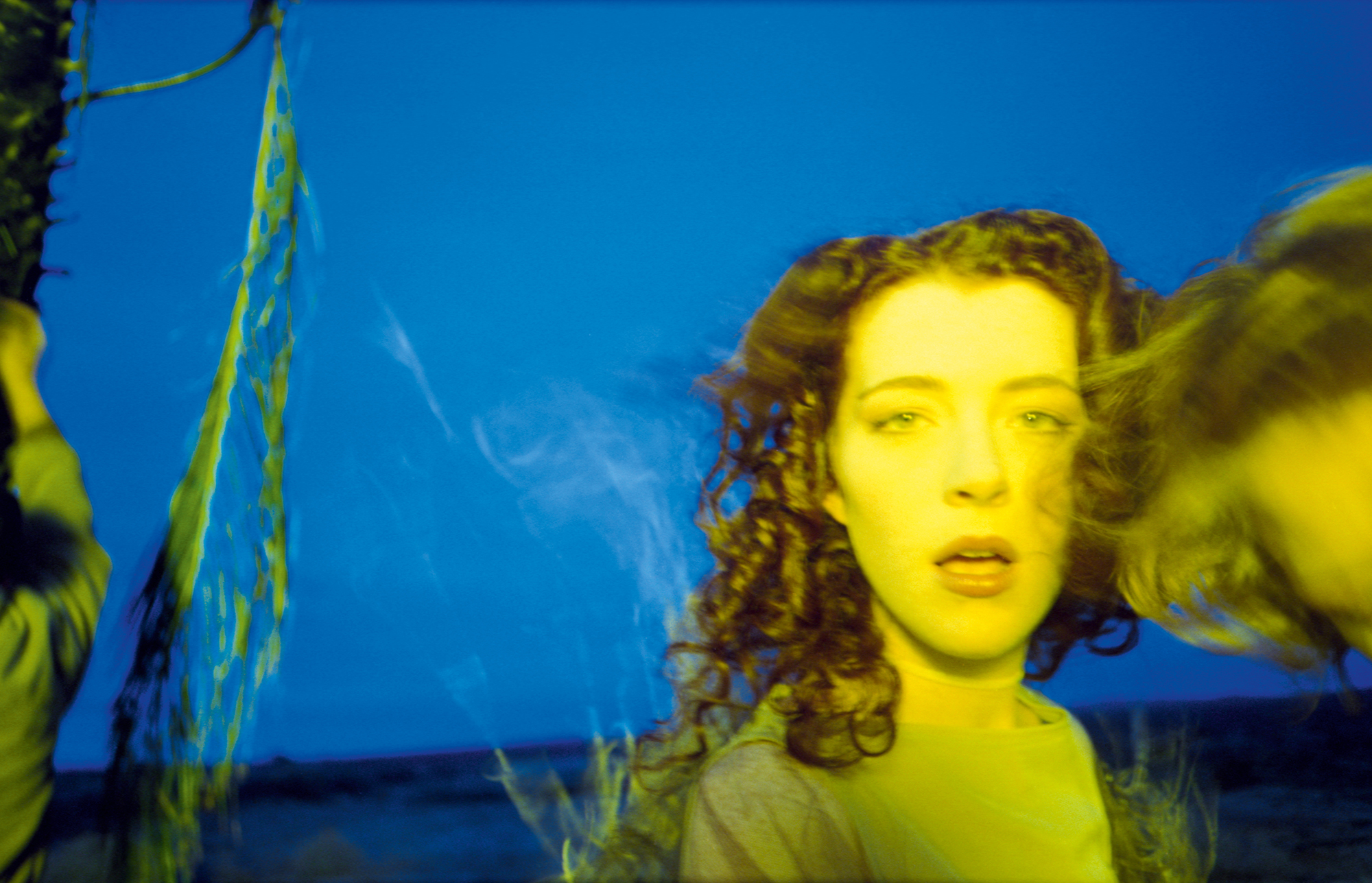
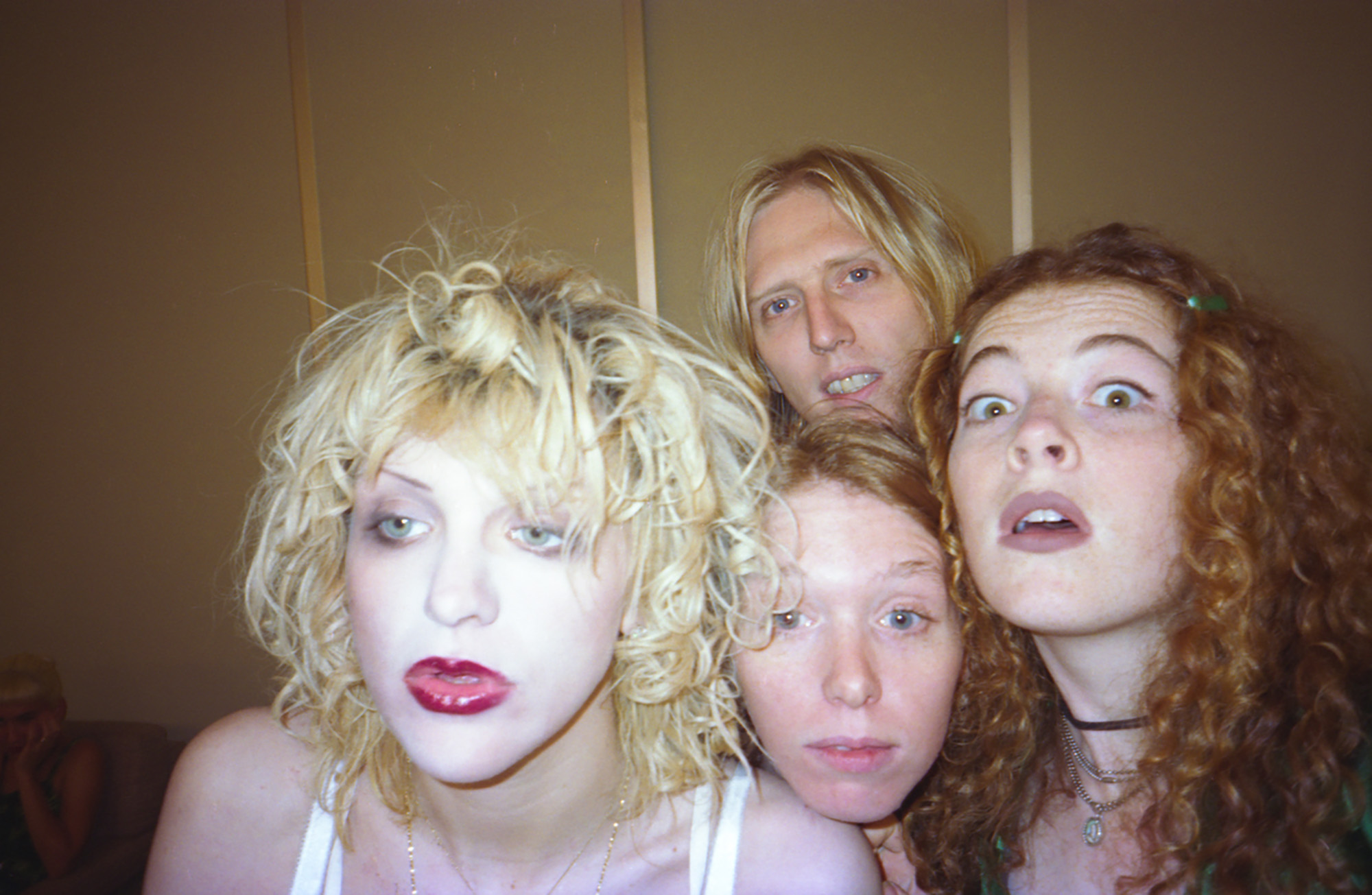
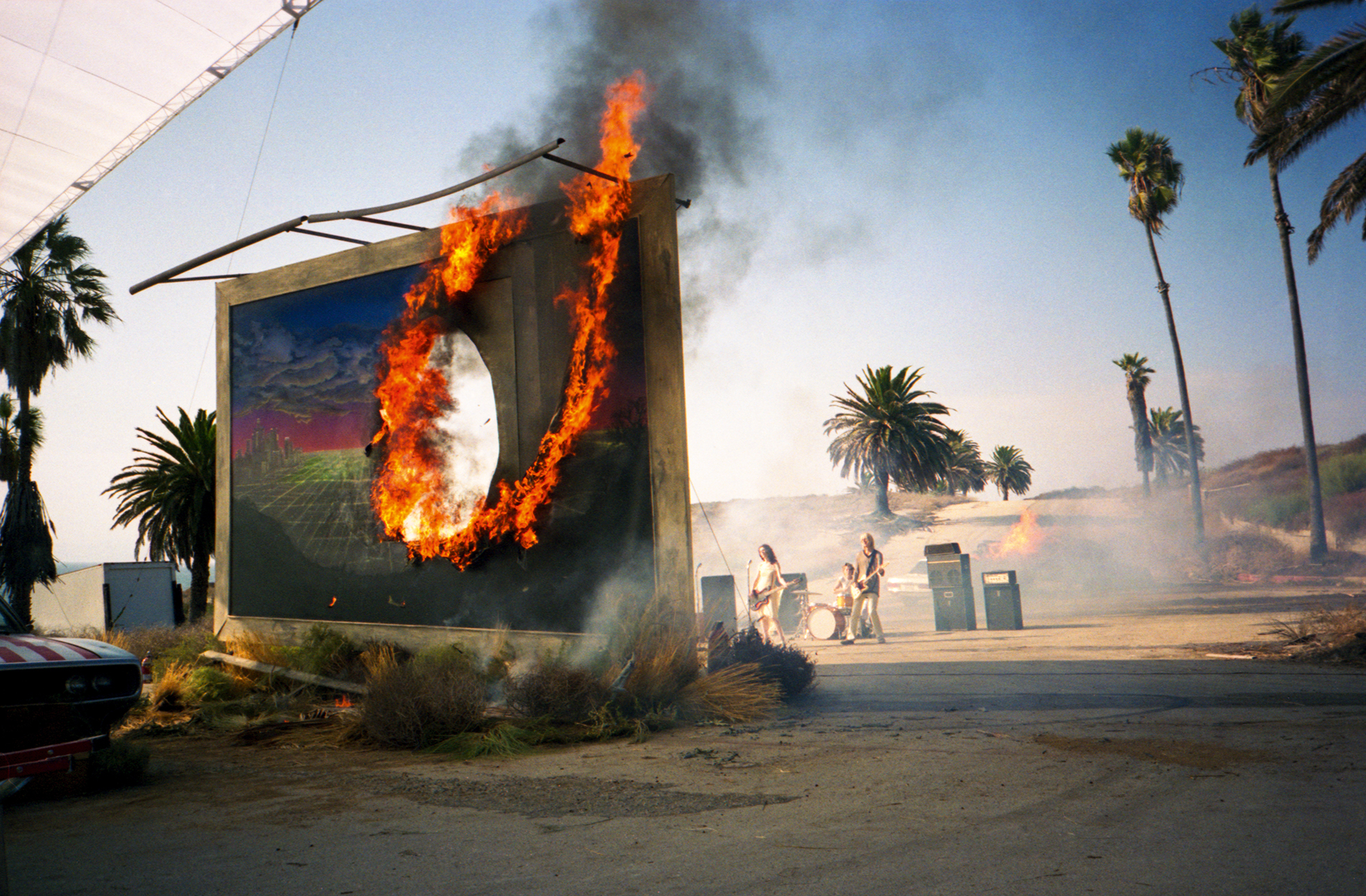
In tour buses, hotel rooms, dressing rooms, sets, stadiums, and arenas—where thousands of people convulsed around her electric presence onstage—Auf der Maur photographed her life as a musician and the people in it with a raw spontaneity and irreverence. In a hazy self-portrait, she curls her lip in a mock come-hither expression, ginger ringlets cascading around her face, as she’s playfully jostled by Love, a tender moment between two girls—except that they happen to be members of one of the most successful bands in the world. Behind her, an arm attends to a drooping frond, which we now know will be set on fire, since Auf der Maur snapped this selfie avant la lettre on the set of the photoshoot for the cover of Hole’s album Celebrity Skin (1998), which features the band posed against a conflagrant tree. The infamous blazing billboard and palm trees of Hole’s “Malibu” music video also make an appearance in an off-hand behind-the-scenes photograph of the band on set (the fires were all real).
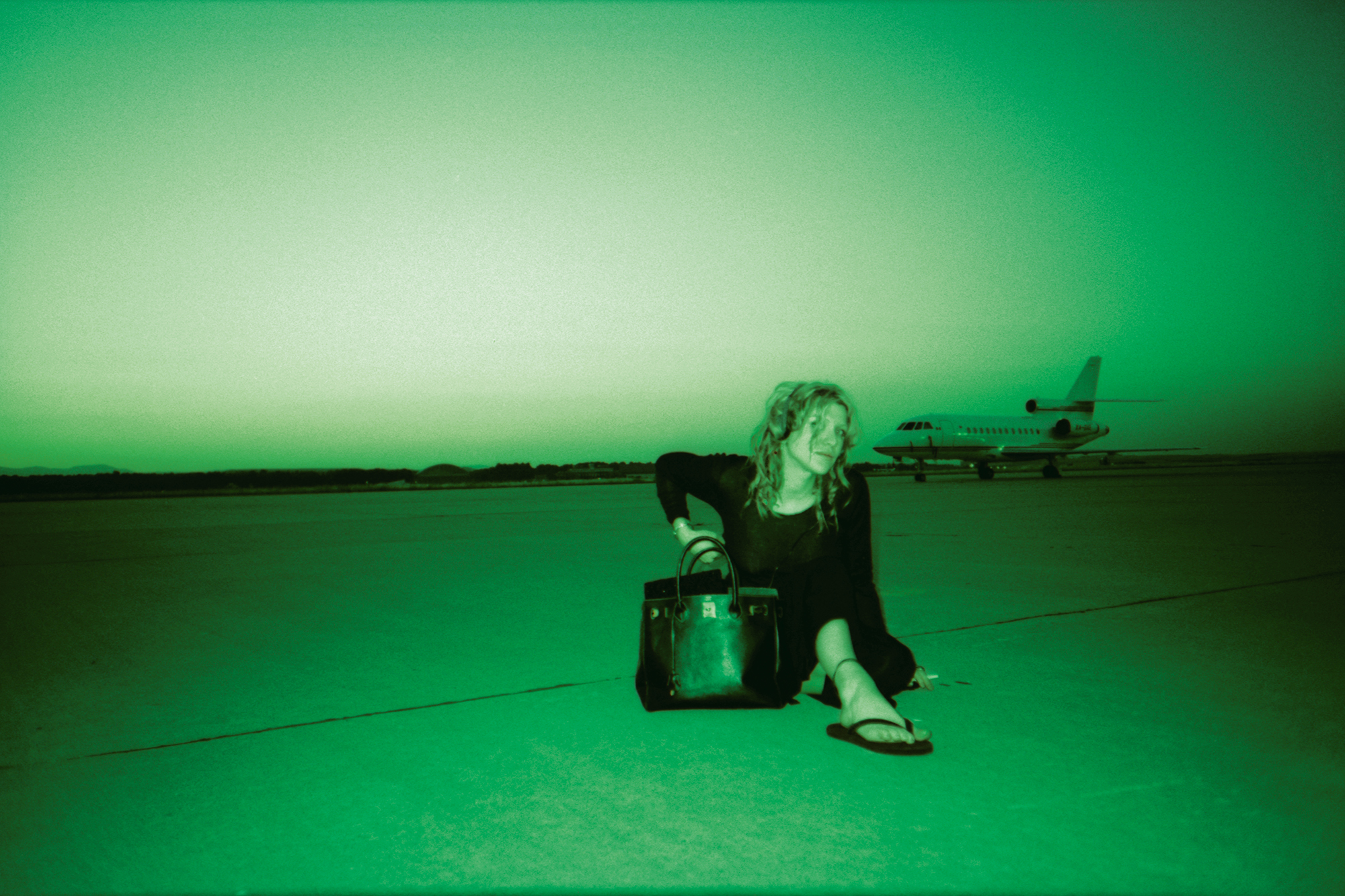
In a photograph dated 1999, a disheveled Love lounges on a tarmac in an anonymous location while a plane idles in the background. Tinted a toxic green, the picture seems to have been taken at some ungodly hour—could be midnight, could be morning. Such is life for musicians on the road. Auf der Maur captures her bandmate in a rare moment of vulnerability, the belligerence of her onstage (and offstage) persona set aside in favor of what Sophie Hackett, AGO’s curator of photography, calls Love’s “playfulness, quietude, and tenderness.” Here, Love looks a little drowsy: cigarette in hand, headphones on, flip-flopped, rummaging in her handbag, exuding an air of unguarded exhaustion.
Sometimes painterly, sometimes full of mischief, Auf der Maur’s photographs treat both the musicians and their fans—and the relationship between them—with a deep compassion, revealing the human and fallible faces of what was a generation-defining phenomenon. “Because the corporate greed of the ’90s music scene was so fast rising, I was also capturing the magic while it still lasted,” she said. To those of us who have only ever known fandom dictated by algorithms, overpriced concert tickets as Amex exclusives, and self-portraits referred to as “selfies,” the photographs are proof that there was, in fact, a brief moment in time when you could be famous but still have the freedom to revel in all your ugliness, both internal and external; when your imperfections, filth, and mess were not meant to be swept away but were proof of a full life while it was being lived. But that was 1996. Thirty years later, in Auf der Maur’s own words, “Our world is on fire, and our minds are melting.”
This article originally appeared in Aperture No. 264, “Stop Time,” under the column Redux.