Essays
The Untold Story Behind Larry Clark’s “Tulsa”
Clark’s legendary photobook may seem like a timeless portrait of youth and addiction, but its images emerged from failed policies that still haunt Tulsa today.
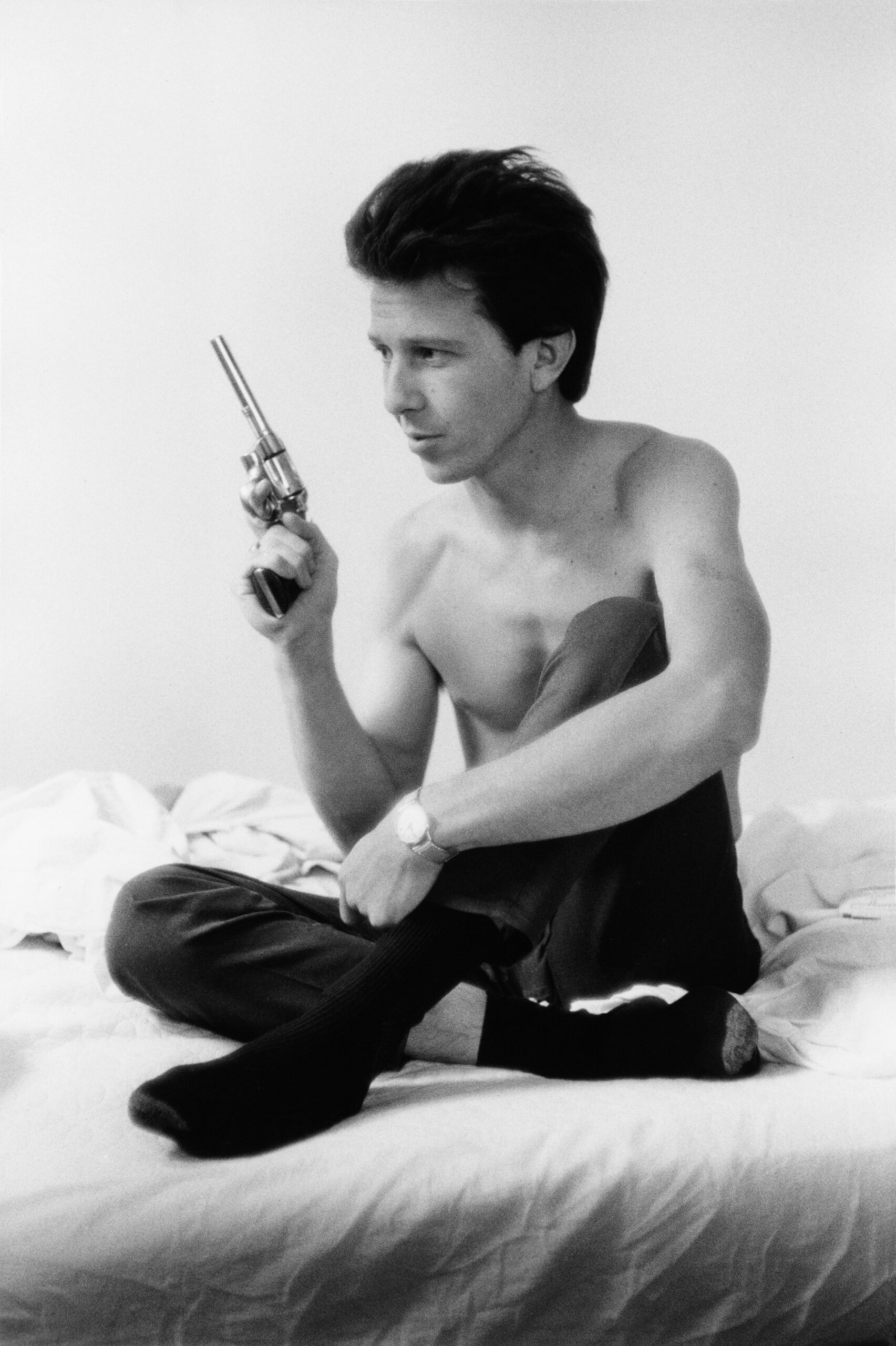

Among the most influential photobooks ever published, Larry Clark’s Tulsa (1971) conveys little sense of place. In its near-ecclesiastic treatment of life and death, Clark’s tight interiors of teenagers shooting up and acting out appear at once personal and broadly familiar, a commercially appealing vision of rebellion removed from the city that gives the book its name. Yet Clark’s images, far from being universal, belong to a particular history that is still unfolding.
At the same time that Clark photographed Tulsa, between 1962 and 1971, his hometown was upended by a series of federal, state, and local policies, chief among them the construction of an interstate highway that segregated the neighborhoods of Clark’s youth from the rest of the city. At the Greenwood Rising history center, in Tulsa, the construction of the Crosstown Expressway is considered the death blow to the city’s historic Black neighborhood nearly fifty years after a horrific race massacre. However, a racial-justice lens tells only part of the story. Tulsa can help us understand how so-called renewal policies have failed residents on the wrong side of the city’s economic divide.
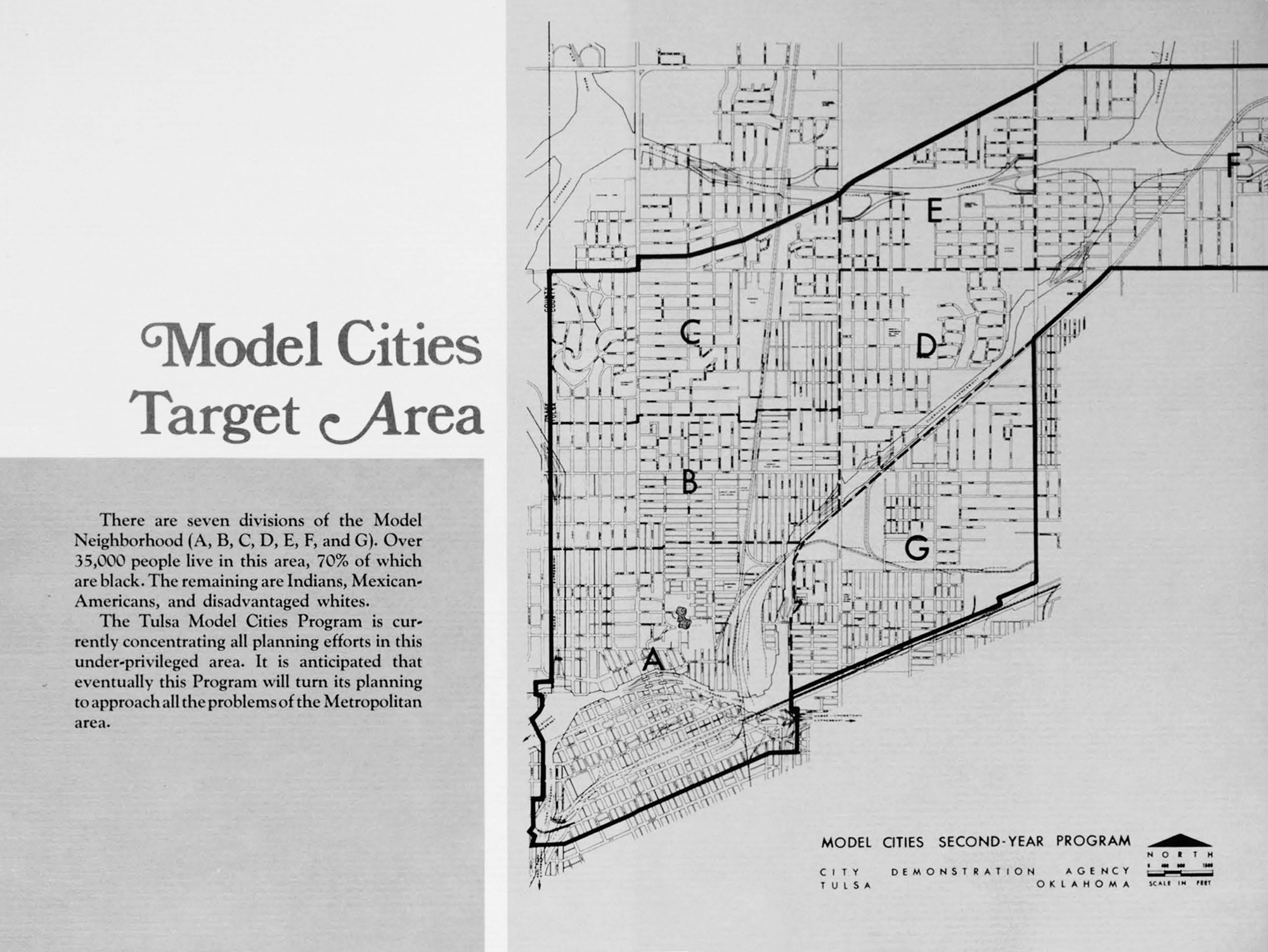
Tulsa’s eight-lane highway brought long-simmering class divisions to a boil. After wildcat drilling on a Muscogee farm in 1905 uncovered what was then the largest known oil reserve in the world, the city’s bankers, merchants, and real-estate speculators acquired federally designated lands from the Muscogee people to build lavish personal residences and profitable subdivisions. Meanwhile, a group of business leaders sought to establish worker housing for the “poorer classes” along the recently constructed railroad tracks and north into Cherokee territory. By the time of Clark’s childhood, in the 1940s, much of Tulsa’s oil, gas, and aviation industries had been sited on Cherokee lands. North Tulsa became a working-class enclave of factories and their employees; wealthy managers and executives continued to live on the former Muscogee lands on the city’s south side.
Clark’s images, far from being universal, belong to a particular history that is still unfolding.
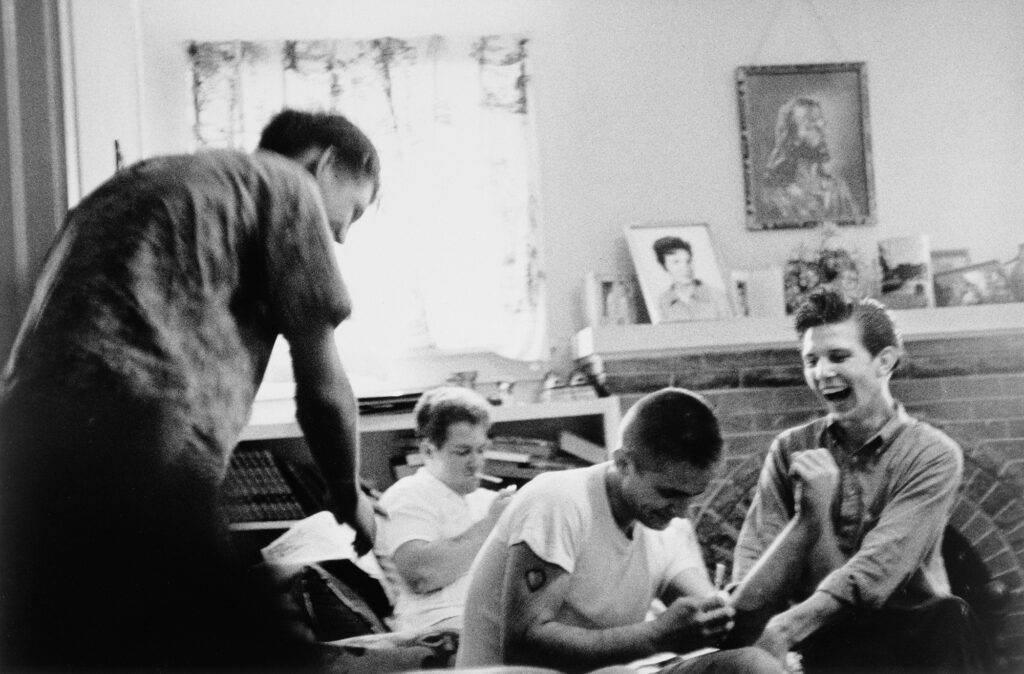
Furthering the city’s economic segregation, throughout the 1950s companies that had formed the basis of Tulsa’s economy reorganized and decamped for Texas—a flight of capital decades before other parts of the country would experience the devastating effects of deindustrialization. At this time, Clark, a middle-schooler who had grown up in a relatively middle-class subdivision, started attending school in North Tulsa’s blue-collar neighborhoods and met the children of boiler men and oil drillers who would later appear in his controversial photobook. “I got in a fight with a teacher. And then I had to go to a school across the tracks,” he wrote in 1981. “I went into that school, which was a lower-class school, right? . . . And so that’s when I started hanging out with [David] Roper and Billy Mann and all those guys.”

Aperture Magazine Subscription
Clark began injecting Valo, a cheap over-the-counter nasal inhaler containing amphetamines, during his parents’ financial troubles. By the time Clark was in high school his father was an unemployed door-to-door bookseller and his mother sustained the family by hustling up business as a baby and pet photographer. Clark began to photograph his circle of “police characters” (as they were named in the local press) and their drug use during a break from art school in Wisconsin in 1962.
By this time, the city’s plans for the highway were gathering force through a series of municipal bonds and federal matching grants. The new highway would span the entire length of the city to anticipate Oklahoma’s new suburbanites’ commute to the business district downtown. In 1965, when the state began acquiring through eminent domain the residences slated for demolition, the Clark home, situated in the center of the proposed roadway, was auctioned and sold for scrap. Clark’s parents relocated—with Larry’s early Tulsa negatives in tow—while he served in the Vietnam War.
All photographs © the artist and courtesy Luhring Augustine, New York
When Clark returned to Tulsa, the city’s transformation was well underway. Aerial photographs from the period show a gash of dirt spanning miles in the place where hundreds of houses once stood. Nested beside an article on Clark’s arrest while working on the 1968 section of Tulsa is a small item about the state’s purchase of even more North Tulsa land. Critics of the mid-century highway boom cite the federal government’s role in demolishing healthy neighborhoods with vital community resources. A set of survey photographs from 1955 charting the future highway route shows the site of Clark’s grandfather’s long-standing used-car business, a neighboring beauty parlor, tidy bungalows. The demolitions continued apace as Clark came in and out of the city to photograph his dwindling circle of friends.
A year after Tulsa’s publication in 1971, the final section of the Crosstown Expressway was completed, leaving Tulsa’s working-class neighborhoods in shambles. As Clark’s friends fell deeper into lives of crime and addiction, the city was unable to address the urban problems it had exacerbated. Mere blocks from the homes of Clark’s subjects, a massive federal program under Lyndon B. Johnson’s War on Poverty was devised to target crime, unemployment, and juvenile delinquency in Tulsa’s working-class neighborhoods; the bulk of the funds were used to relocate Black residents in the highway’s path.
The results of these policy failures are yet to be undone. After the state failed to create exit ramps to the area’s popular shopping centers, North Tulsa’s businesses could no longer survive. Residential streets that flanked the new roadway became undesirable and were rezoned for other uses. David Roper’s neighborhood eventually became a red-light district. Within two years of the publication of Tulsa, the oil shocks of 1973 led North Tulsa further down a path of corporate and municipal disinvestment. Habitat for Humanity now owns hundreds of abandoned lots in the neighborhoods Clark frequented. After decades of advocacy, things may be changing for the better. In 2025, Tulsa’s City Council and the Cherokee Nation both announced millions of dollars in investments to improve neighborhoods north of the highway. They share the hopes of civic groups, residents, and young artists in their vision to finally rebuild their communities.
This article originally appeared in Aperture No. 263, “Secrets,” under the column Viewfinder.