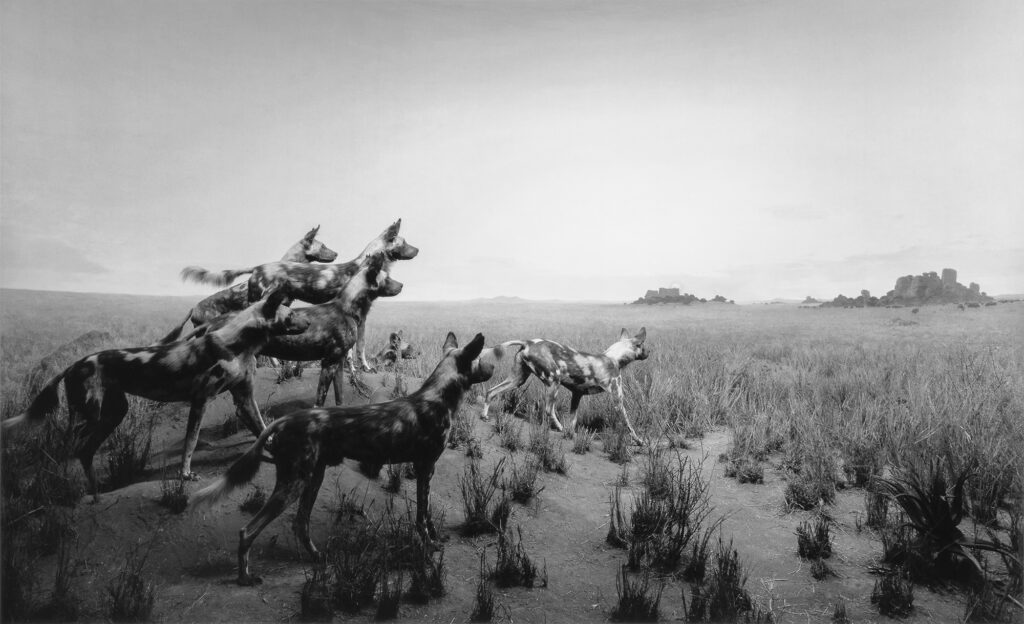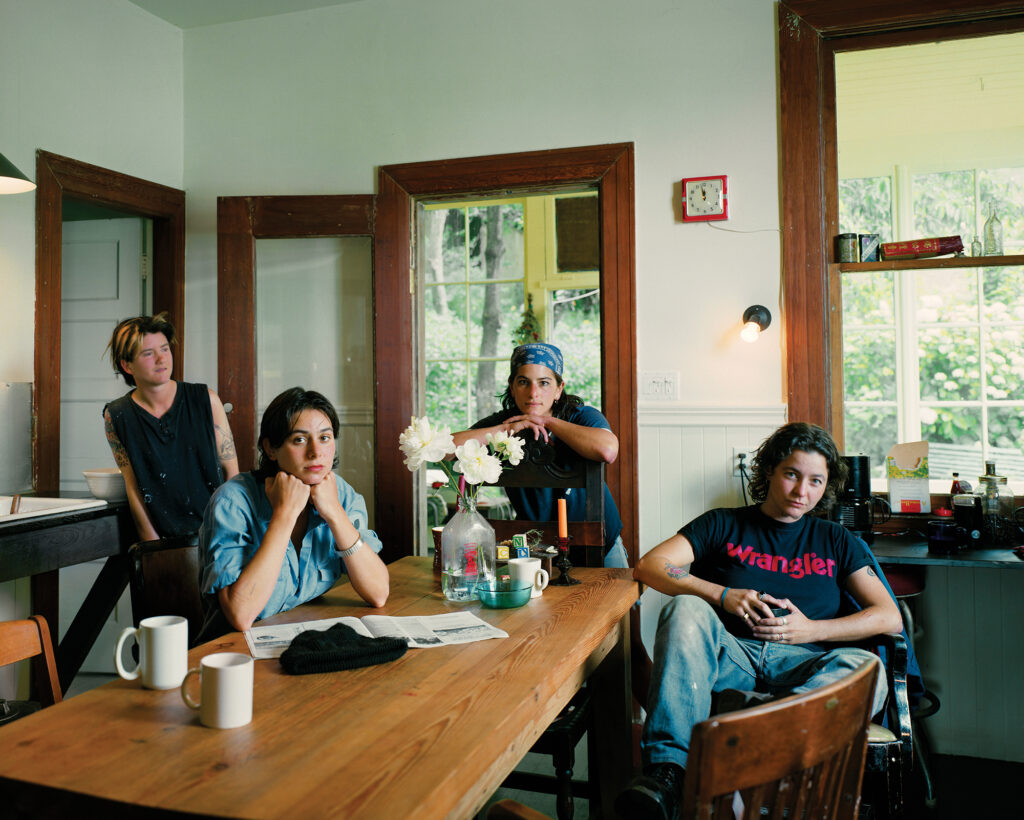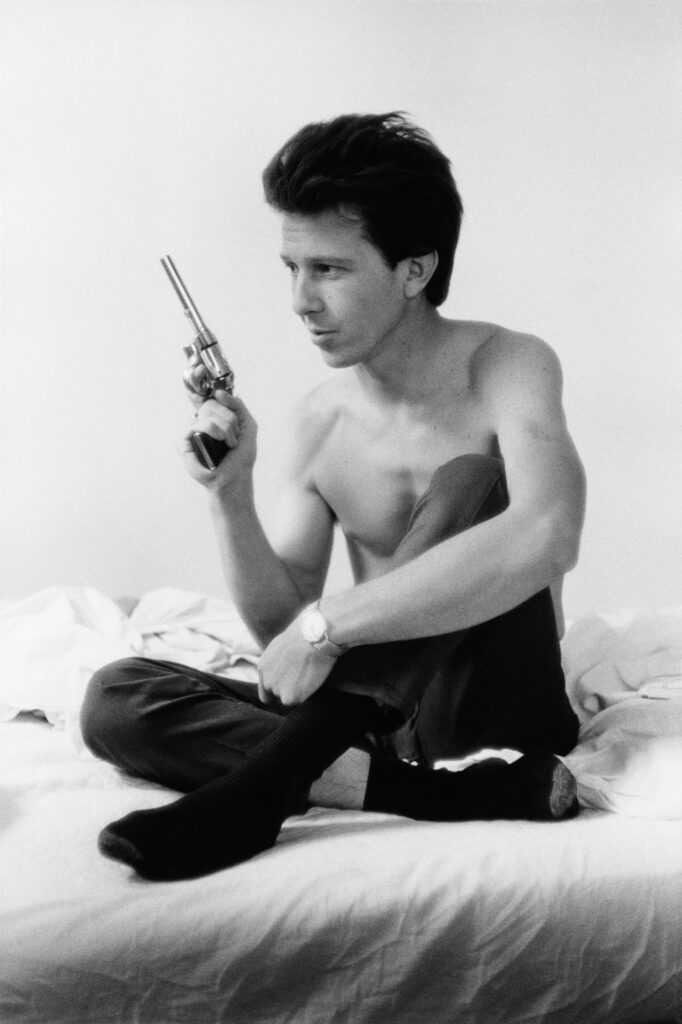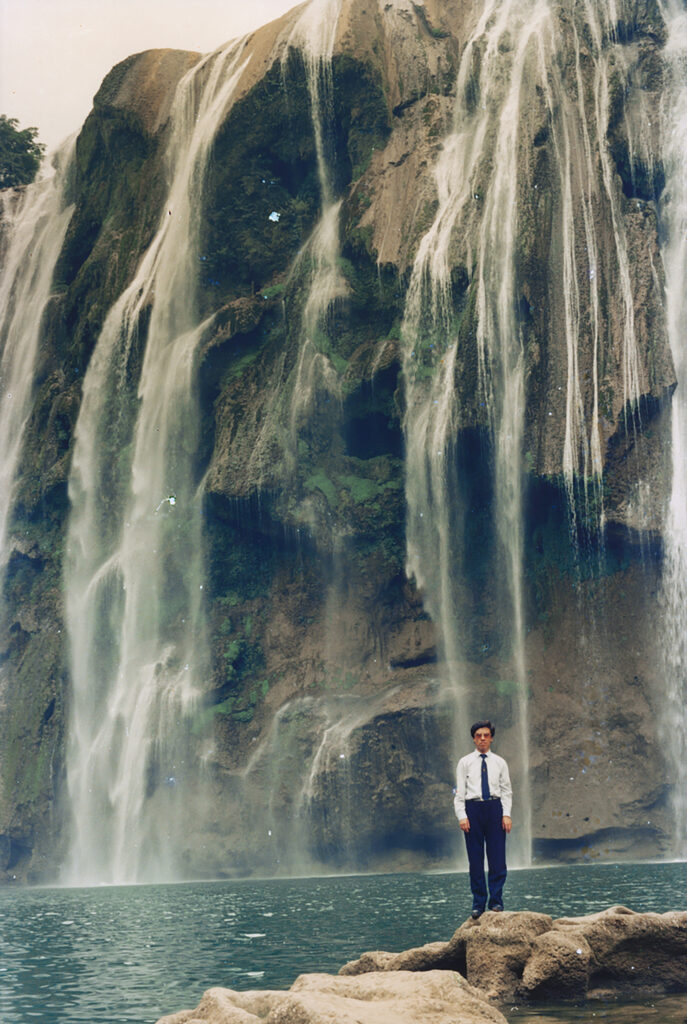
Courtesy the artist and Edwynn Houk Gallery
Essays
The Camera Obscura Turns Photography’s History Upside Down
Since antiquity, artists have stared at walls in dark rooms, watching the world become a waking dream.

To understand the appeal of miniature things, the philosopher Gaston Bachelard looks to the edges of our dreams. He claims that the power of miniaturized scenes is due to their resemblance to the moments between sleep and waking. As we regain consciousness, the phenomenal world seems at a distance; we can apprehend it, but we do not fully participate. An eerie and pleasurable sensation of simultaneous laxity and control washes over us. Our attention is absorbed, even as we remain free, lingering in reverie. Just as when we see objects, architecture, landscapes, and living things represented in miniature we undergo a shiver of emotional and physical joy. We can appreciate what the miniature shows but are fundamentally beyond it. We are fascinated—deeply satisfied—by the detail of the miniature because it offers us both comprehension and liberty, intimacy and escape.
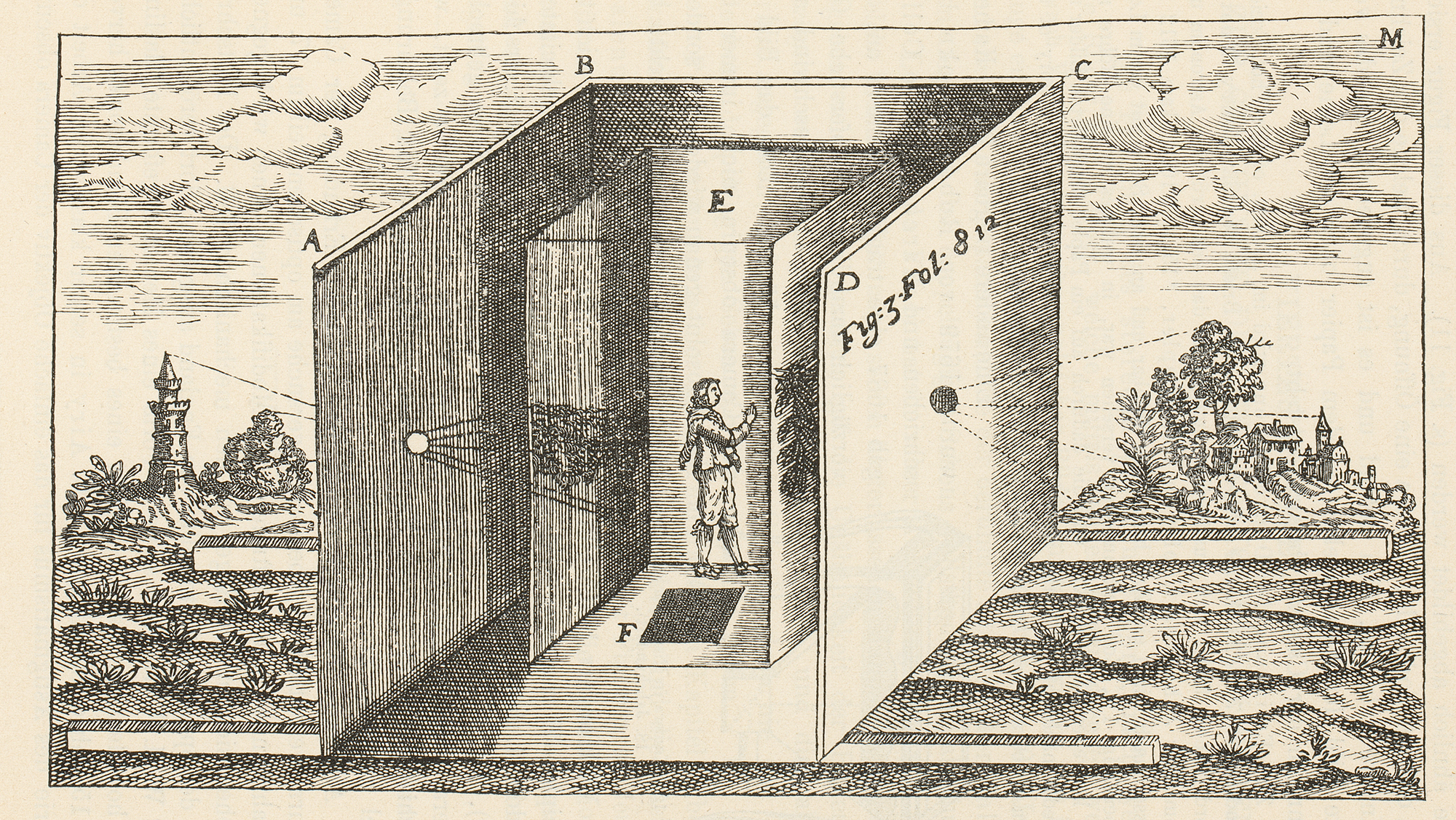
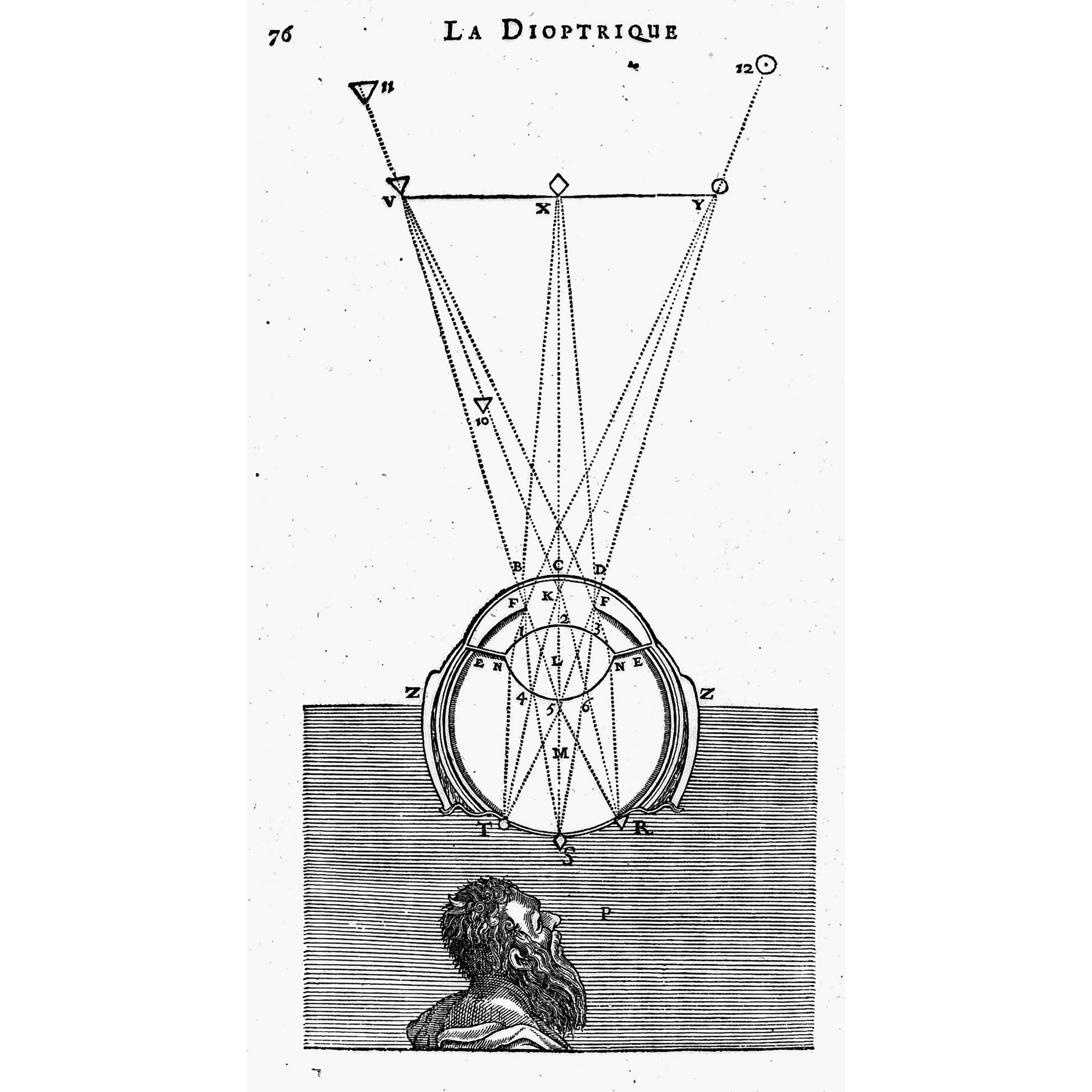
A camera obscura is produced when light moves through a restricted aperture into a dark enclosure, producing an image of external space at once upside down and back to front. Like Bachelard’s miniatures, the moving images generated by the camera obscura are supremely pleasurable—dreamy, alien renditions of sights nearby. They show the visual particularities of the familiar world at a projected remove, permitting us to study them at our leisure. Camera obscura images have long been celebrated for their uncanny beauty; as the journalist Joseph Addison wrote in a 1712 article, “The prettiest Landskip I ever saw, was one drawn on the Walls of a dark Room.” Or, as we see in a startling scene in Michael Powell and Emeric Pressburger’s 1946 film A Matter of Life and Death, in which a neurologist maintains a camera obscura in his home, the cinematic pictures generated by a camera obscura are arguably more enthralling than the cinema itself. These images are soft, lively, and swim with unforeseen detail. They arrive directly from reality and are unfixed, made of nothing but brightness. Yet we should remember that the camera obscura is both a natural phenomenon resulting from the interaction of light and matter and an optical device tied to Western notions of perspectival accuracy and the development of astronomy, surveillance, and warfare.
Courtesy Rijksmuseum, Amsterdam
Courtesy Division of Rare and Manuscript Collections, Cornell University Library
First, it must be said that another remarkable and anomalous quality of the camera obscura is its ability to relocate the historical origins of photography, pushing them farther into the human past. Although we may think of 1839 as modern photography’s year of origin, Louis-Jacques-Mandé Daguerre’s public announcement of his process for fixing images was preceded by numerous other techniques, including Johann Heinrich Schulze’s successful experiments with silver nitrate undertaken just a few years after the publication of the Addison article. The camera itself, which is to say, a “room” in which the projection of images may occur, is far older. The scholar Matt Gatton has argued that the first paleolithic image-making practices may have been tied to camera obscura effects produced by the movement of light through small apertures in tents or other rudimentary shelters. To speak of the Paleolithic, or so-called Stone Age, is to evoke quantities of time most people have difficulty conceptualizing—more than three million years in the past, when toolmaking began. In what seems by comparison recent history, chambered cairns created in Britain and Ireland around 3000 BCE may have been theaters for “luminous animated projections, spectral figures, and burning disks of light,” as Aaron Watson and Ronnie Scott speculate in an essay on megalithic projection techniques. The probable ancientness of the camera obscura as an integral tool and aspect of human perception, representation, and spirituality is a bit dizzying: The art historian Barbara Stafford observes, “Projective technologies have long been sacred technologies.”
© 2026 the artist and Artists Rights Society (ARS), New York, and courtesy the artist
© Estate of Barbara Ess and courtesy Magenta Plains, New York
The first written record of the projection of an image using a pinhole comes from Mozi, the egalitarian Chinese philosopher of the early Warring States period. Some one hundred years later, in the fourth century BCE, Aristotle observed crescent-shaped spots of light on the ground beneath leafy trees during a solar eclipse and wondered what caused them. Subsequent experimentation with the camera obscura during the first thousand years of the Common Era was mostly related to theoretical work in optics and astronomers’ attempts to observe the sun without blinding themselves. Writing on the use of a camera obscura in visual art and theater or in the political “arts”—as a tool for surveillance—does not appear until the thirteenth century. At this time, accounts of the magician Arnaud de Villeneuve’s proto-cinema describe the projection of dramatic scenes performed in sunlight into a darkened room, and Roger Bacon recommended using a mirror and pinhole device as a means of observing people passing below one’s window. In the early modern period, artists such as Leon Battista Alberti, Albrecht Dürer, and Leonardo da Vinci became involved with what was later called “photogenic” drawing, using various pinhole-related techniques to improve the accuracy of graphic representation—the first stages of what would become the camera obscura’s claim to fame in modernity, as it edged ever closer toward what today we term a “camera.”

Aperture Magazine Subscription
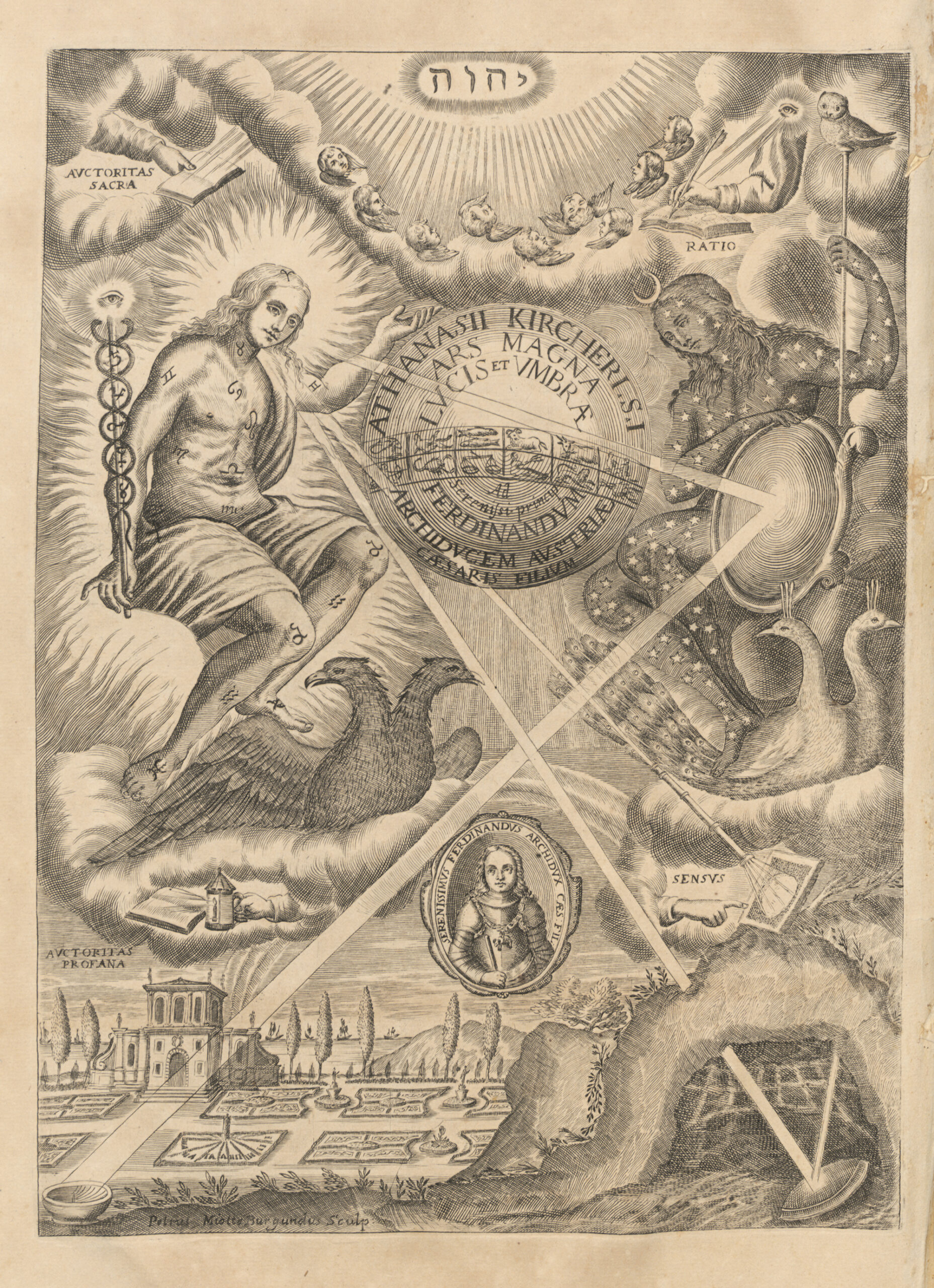
To confuse matters somewhat, the camera obscura did not go by this name until the seventeenth century. It was, by turns, the conclave obscurum, the cubiculum tenebricosum, and the camera clausa. The astronomer Johannes Kepler helpfully provided the contemporary name, and the polymath Athanasius Kircher lavishly illustrated it in his Ars Magna Lucis et Umbrae (1646). Still, it was not unusual for camera obscuras to be called simply “cameras” before the invention of photography, at which point camera took on a more precise meaning related to the fixity of images produced and the mechanical automation of the image-making process. Portability was key to the Enlightenment’s pre-photographic camera: The camera obscura was fashioned into a tent, a box, a folding structure in the shape of a book, a sedan chair, a lens system to be fitted into window shutters, a strange long-beaked hat like a plague doctor’s mask that rested on the wearer’s shoulders. The perspectival accuracy implied and abetted by the camera obscura dominated Western visual art and made numerous appearances in literature, including in Laurence Sterne’s Tristram Shandy (1759), where the narrator speaks of a mercurial artist who “will make a drawing of you in the camera.”
Courtesy Wellcome Collection, London
© the artist and courtesy Fraenkel Gallery, San Francisco, and Pace Gallery, New York
Simultaneously, the camera obscura was a tool for spying and military strategy, and was even used to observe and accurately detonate mined bodies of water in the early industrialization of warfare in the mid-nineteenth century. Even after the popularization of photography, viewing houses equipped with camera obscuras proliferated at shorelines and other sites of pleasure. The camera obscura allowed one to comprehend the world in an apparently total way for fun and for other forms of gain. Karl Marx and Friedrich Engels, writing in The German Ideology (1845–46), saw it as an excellent analogy for the historical conditioning of belief itself: “If in all ideology men and their circumstances appear upside-down as in a camera obscura, this phenomenon arises just as much from their historical life-process as the inversion of objects on the retina does from their physical life-process.”
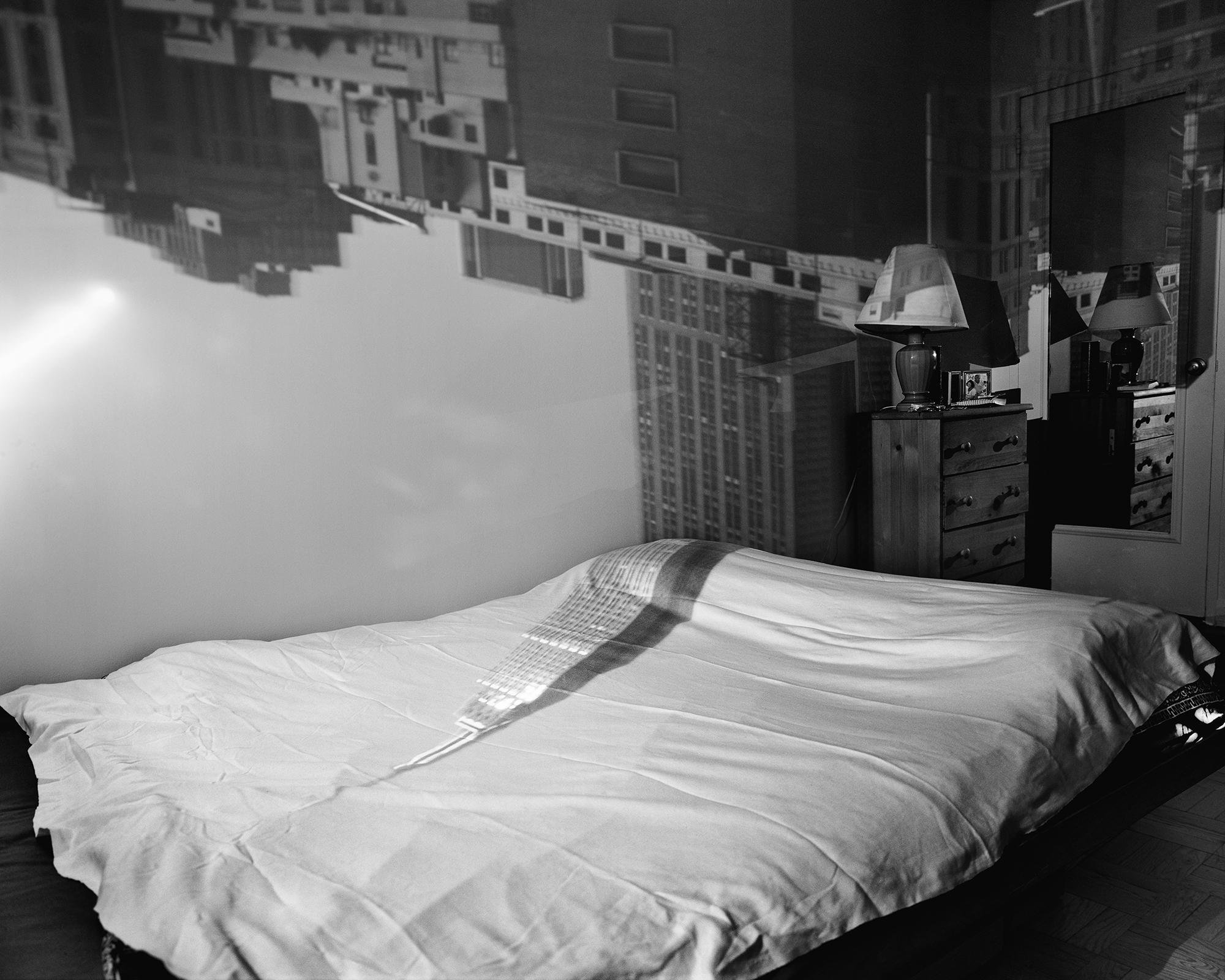
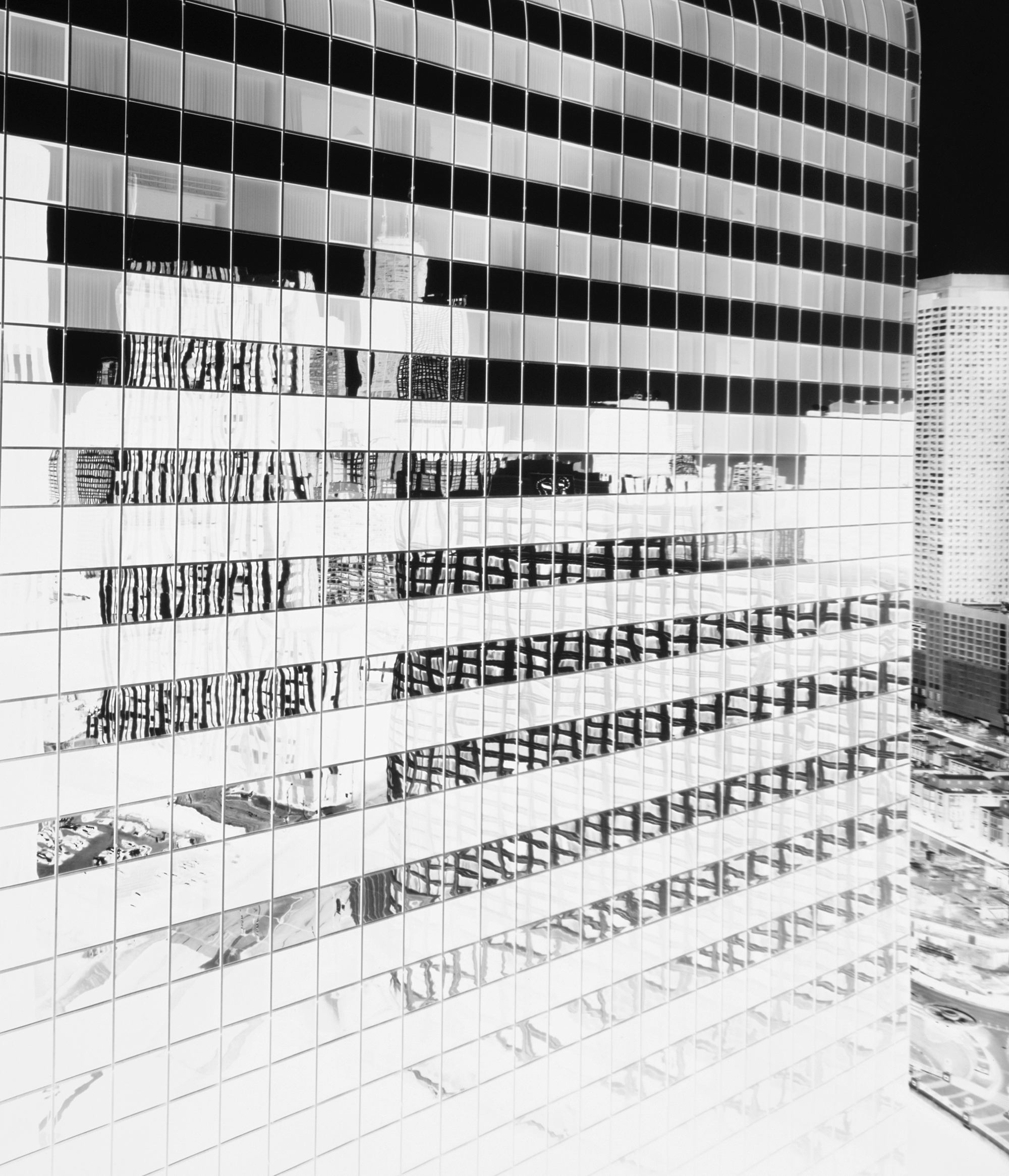
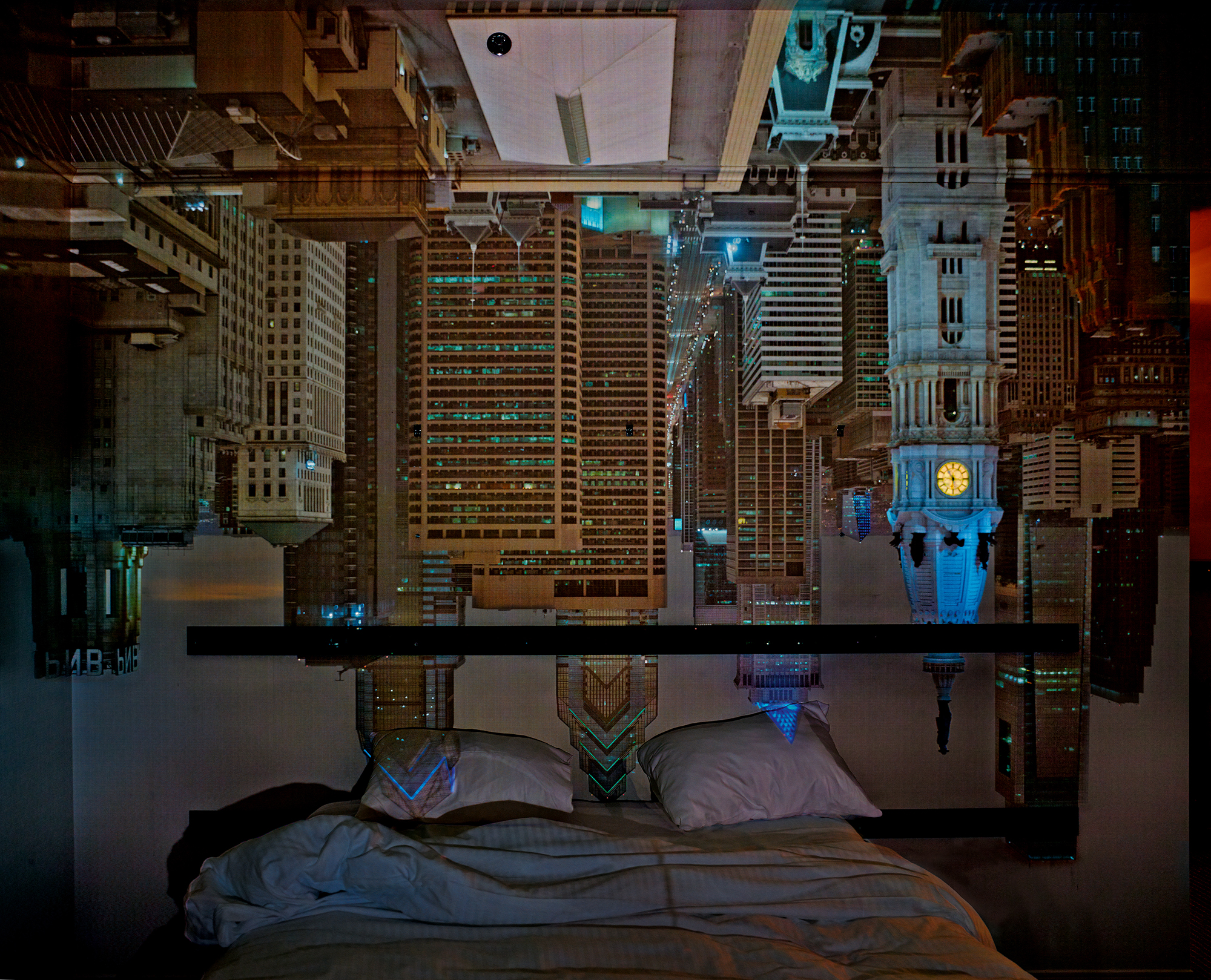
It is unsurprising, then, that the camera obscura has maintained a significant place in contemporary photography, appearing in the practices of such artists as Richard Learoyd, Vera Lutter, and Barbara Ess. Abelardo Morell, perhaps the leader in the postmodern resurgence of this premodern device, began transforming his homes in Brookline and Quincy, Massachusetts, into camera obscuras in 1991. In his disorienting yet serene images, inverted suburban streets hover on ceilings and upper walls above abandoned children’s toys, rocking chairs, or an unmade bed. Later images are set in New York and feature impressive views. Lucy Sante, discussing this work, quipped, “It is a bit as if [Morell] had taken his camera into the dream state and emerged with proof of what he saw there.” Morell himself has claimed that these pictures are attempts to compel photography to photograph itself. His first experiments with the camera obscura were inspired by his undergraduate students; he wanted to reveal the events that occur within the usually inaccessible interior of the camera. Transforming his own living quarters into a projection screen, he interrogates our intimacy with photographic images that, despite their artificiality and popularity, remain associated with light’s natural or “given” (Morell’s term) ubiquity.
Courtesy the artist and Edwynn Houk Gallery
Zoe Leonard’s gallery installations of camera obscuras, meanwhile, remove the fixity of the photographic image, returning viewers to a world of pictures previous to the invention of the chemical processes that made the photograph, as such, possible. Visitors to the camera obscuras she began to design in 2011, and that she further developed at the Whitney Museum of American Art with her 2014 intervention into the Breuer Building’s fourth-floor trapezoidal window, step into a flowing, oneiric realm. Here, as in Bachelard’s conception of the miniature, it is possible to feel one’s body and sense of sight mix with the details of the phenomenal world, even as one is beyond this world, enclosed by the white-walled gallery. Leonard’s camera obscura theaters are intensely pleasurable and welcoming, yet simultaneously suggest what a depopulated Earth, on which cameras continued to surveil without a human audience, might be like. This paradoxical aspect of the camera obscura is also reflected in recent work by Nina Porter, who has devised spherical wooden cameras intended to be employed decades in the future. By removing a mechanical shutter mechanism from these eyelike sculptural pieces that also resemble time capsules, Porter suggests that there is a significant sense in which photographic processes are beyond our control, generated by physical laws that are indifferent to consciousness and life. As the poet Jorie Graham reminds us, “It’s the light, you can’t keep it out.”
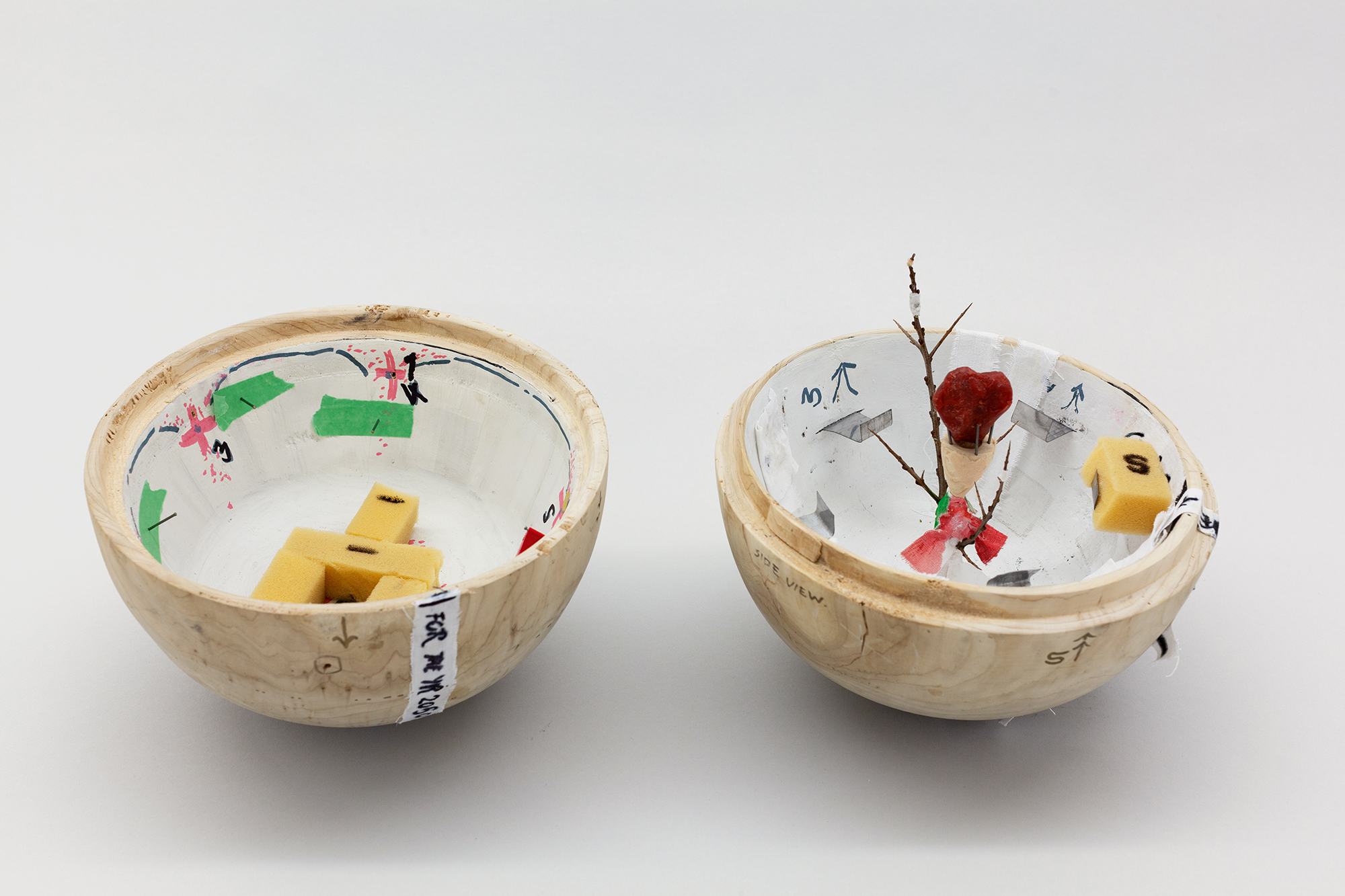
Courtesy the artist and Theta, New York
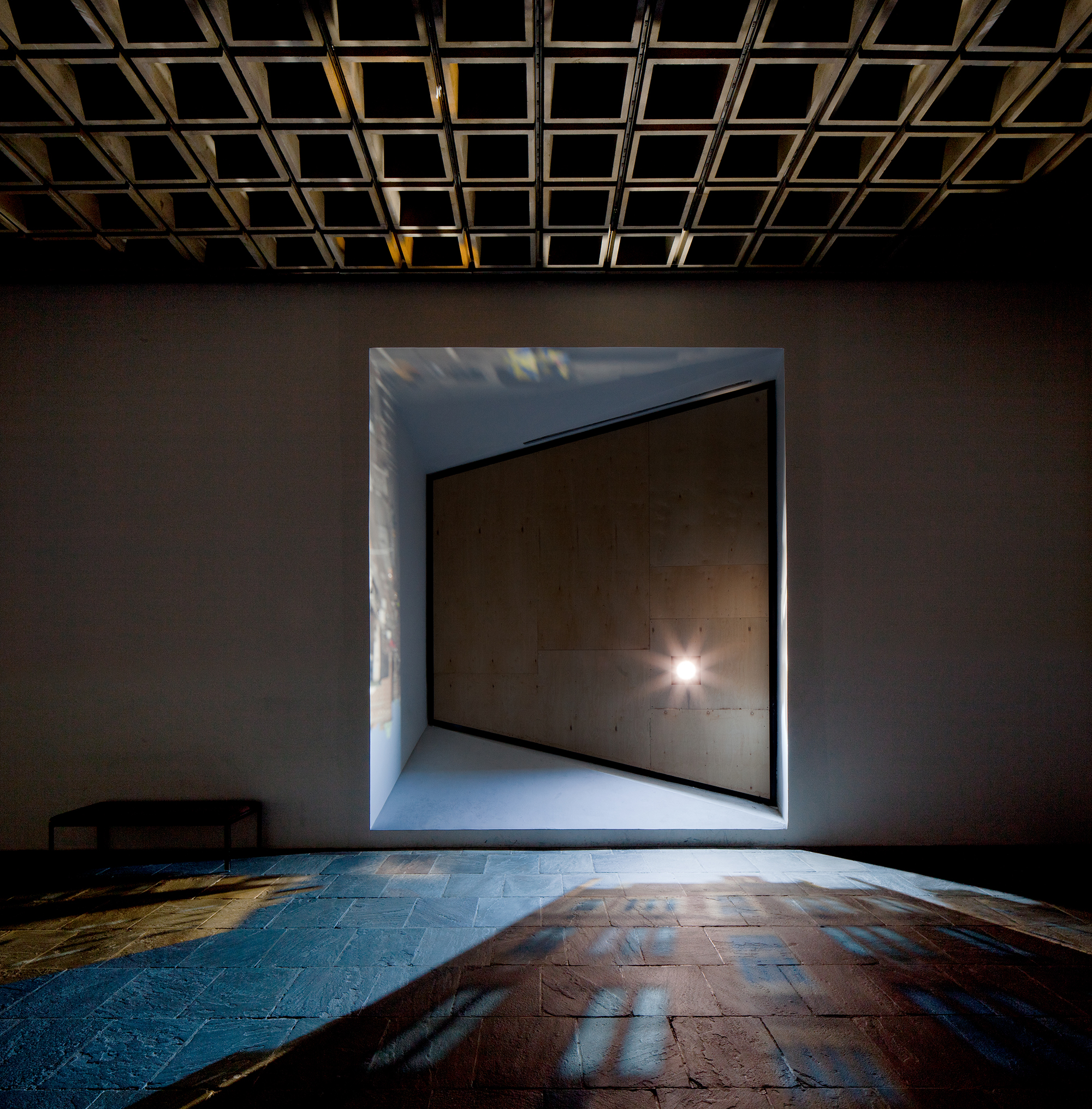
© the artist and courtesy the artist, Gisela Capitain, Cologne; Maxwell Graham, New York; and Raffaella Cortese, Milan
This article originally appeared in Aperture No. 264, “Stop Time,” guest edited by Hiroshi Sugimoto.