Photography has a new home in New York. Come visit us at 380 Columbus Avenue!
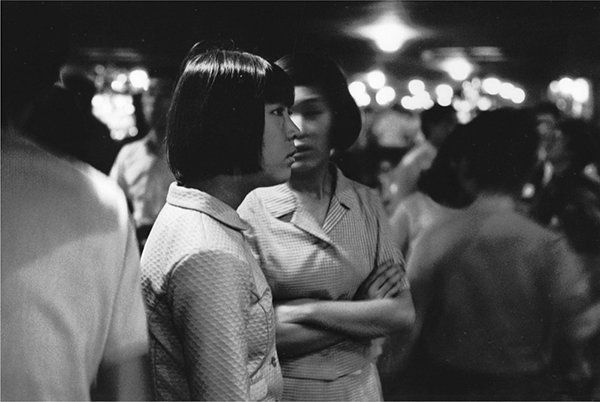
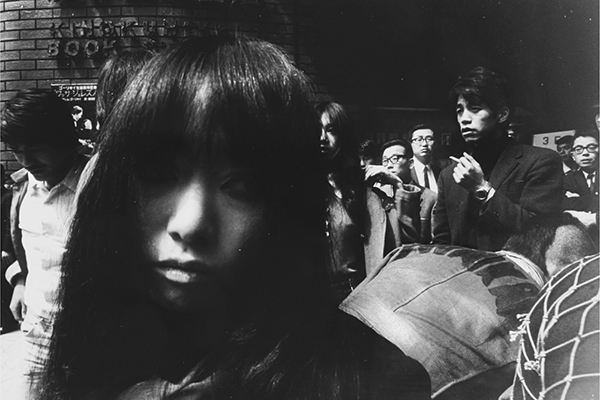
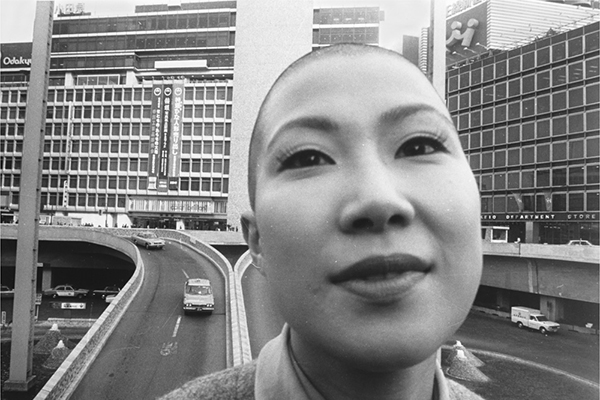
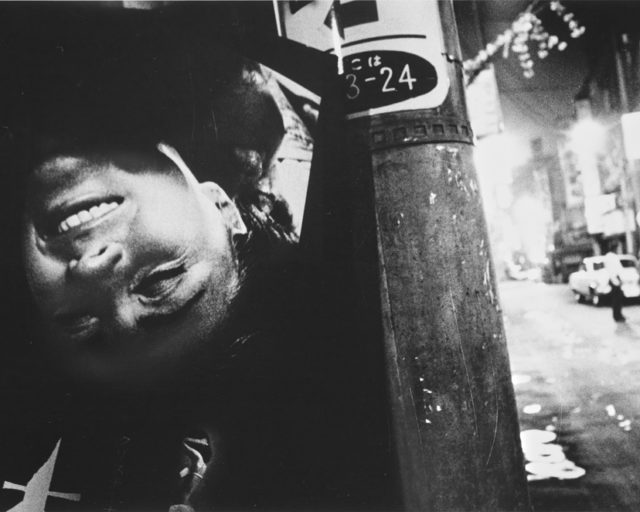
As Japan’s capital transformed, Yutaka Takanashi deployed a radical style to picture urban change.
For twenty-five years, Lauren Greenfield has chronicled the rise and fallout of consumerism and celebrity culture.
In a new film, photographer Mikhael Subotzky takes on two hundred years of white masculinity.
How have West Coast photographers subverted the mythology of California?
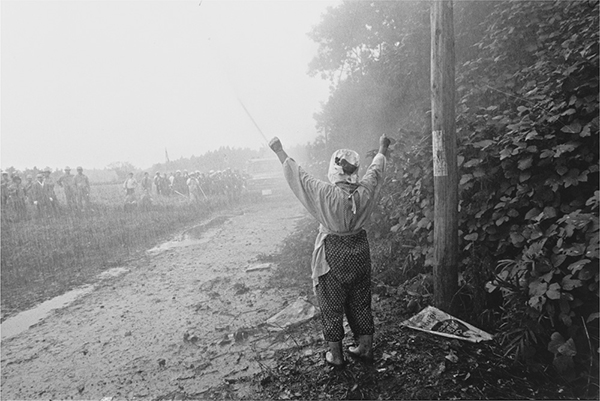
From student demonstrations to farmers in revolt, Kazuo Kitai captured the social tumult of 1960s Japan.
Japanese curator Rei Masuda discusses how postwar Japanese photographers adapted to a new era.
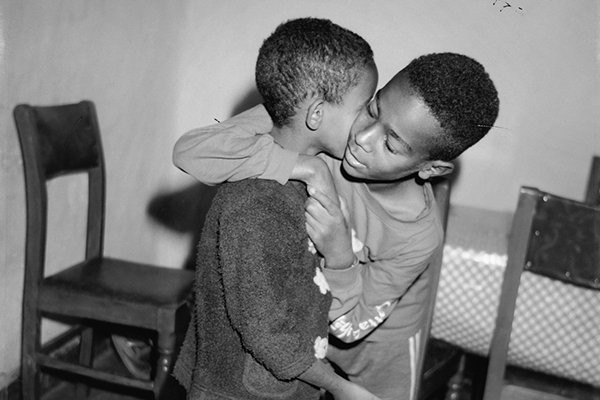
Aperture recently spoke with Eric Gottesman about photographic liberation.
Student protests shook late-1960s Japan. Hitomi Watanabe bore witness from inside the movement.
A new exhibition in Seattle explores the ambiguity of what is yet to come
In the first of an ongoing series of interviews about Japanese photography with Tsuyoshi Ito, Curator Simon Baker discusses the radical new vision of the 1960s.
Drawing inspiration from Walker Evans, Stephen Hilger photographed a city’s disappearing neighborhood.
A former Riot Girrl, Becca Albee’s photography unpacks the politics of color.
The four artists in Torrent Tea are redefining narratives of Black and Queer bodies on the Internet.
How a small, liberal-arts college became a birthplace of modern photography.
Amid the overwhelming barrage of news and ideas online, can an image change anything?
The influential photographer, who once worked for JCPenney’s, riffs on nostalgic Americana.
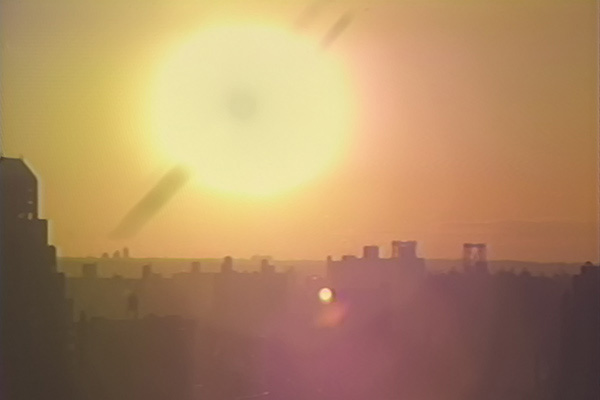
In the late 1970s, Mary Lucier pointed her camera at the sun and broke the rules of a new medium.
Lebanese photographer Rasha Kahil turns comments from online trolls into a powerful exhibition.
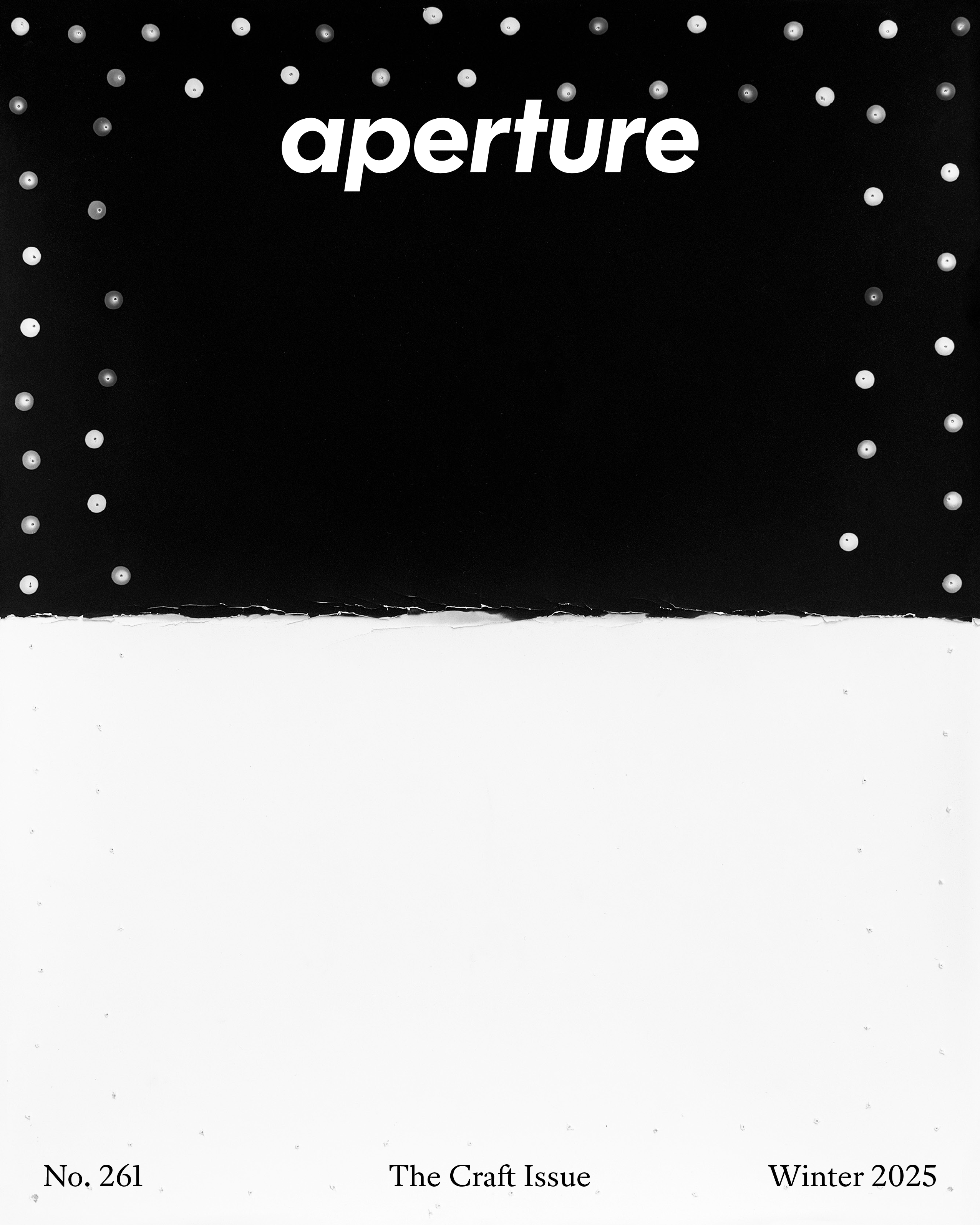
Aperture’s issue on craft features photographers who make pictures the slow way—building camera obscuras, creating photograms, and laboring in traditional darkrooms to make handmade, unrepeatable forms.