A Houston Biennial Looks Back to Look Forward
The twentieth FotoFest Biennial charts a sprawling history of global photography.
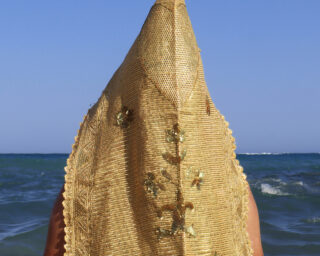
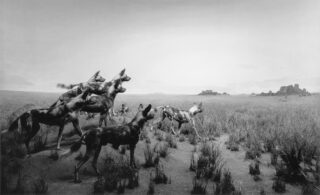
Sama Alshaibi, Shadows of Black, from the series Between Two Rivers, 2008
Courtesy the artist
Before Wendy Watriss and Frederick Baldwin conceived the idea for FotoFest in 1983, on a return flight from the French photo festival Rencontres d’Arles, similar events in Houston were almost unheard of. The sprawling oil and manufacturing metropolis was known more for its lax zoning laws and rodeo than it was for its art or photography scene. Yet, forty years later, FotoFest remains an ambitious and important meeting point for photographers from across the globe. While some festivals accrue charm through atmosphere and the romance of antiquity, FotoFest has traded on scope, scale, and commitment to a socially engaged ethos. Throughout its twenty previous biennials, FotoFest has presented diverse work from around the world with the mission of broadening perspectives and understanding through photography.
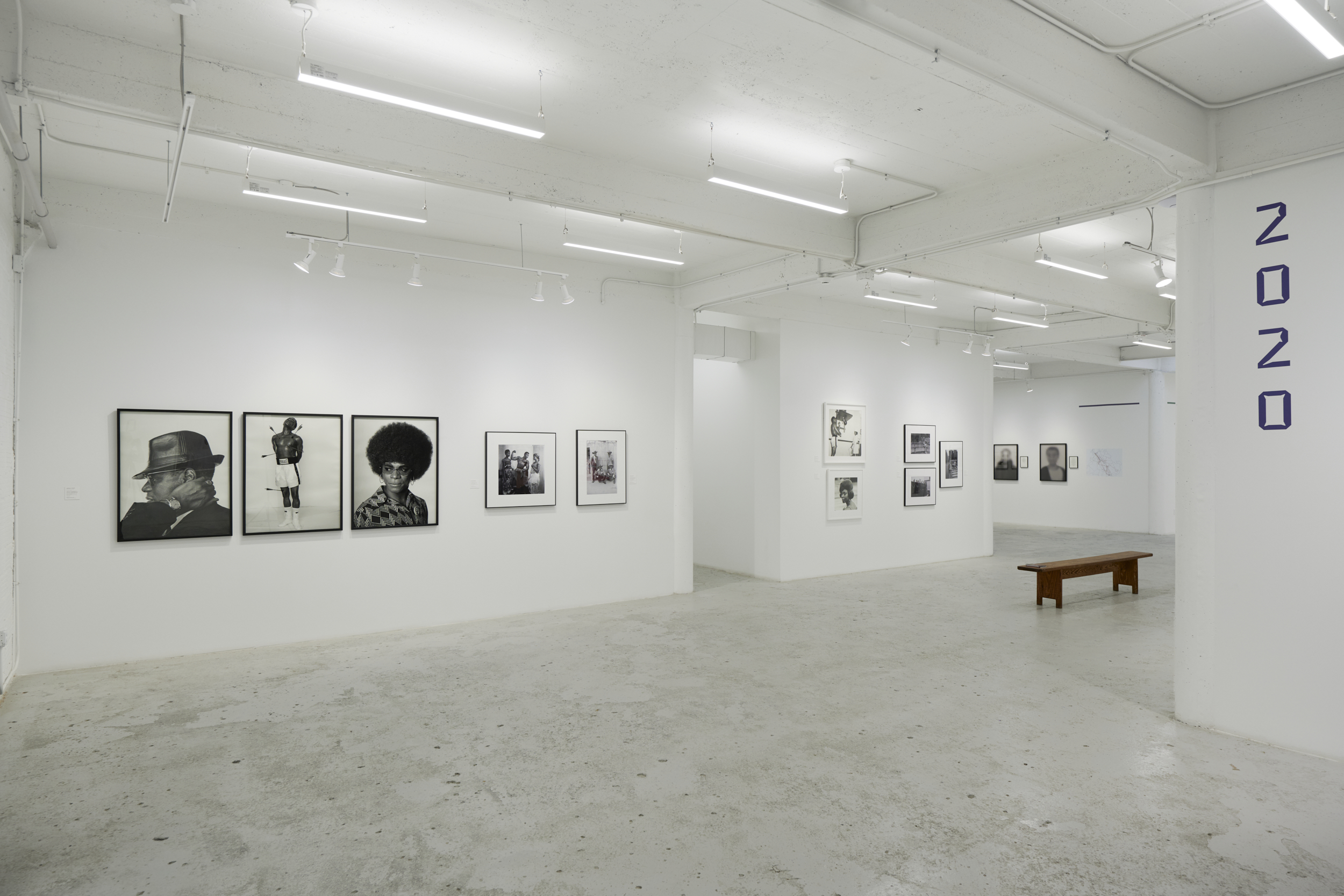
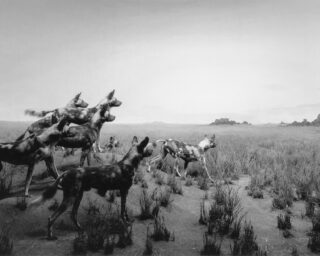
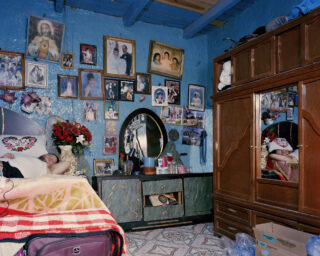
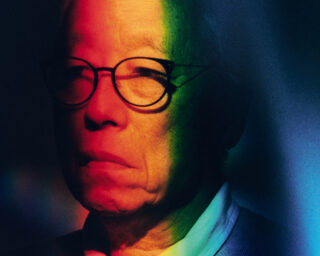
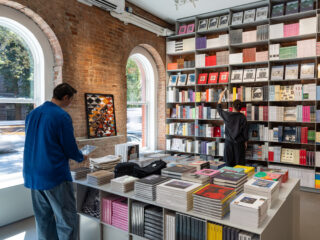
Since its founding, FotoFest has organized its proceedings thematically, with past years examining topics like climate change, photography from particular geographies, and social crises. This year’s biennial, Global Visions: FotoFest at 40, which opened in March, marks a different kind of ambition, taking a step back to offer a celebration of FotoFest’s own history. Curated by cofounder and former artistic director Wendy Watriss and executive director Steven Evans, alongside cocurators Annick Dekiouk and Madi Murphy, the 2026 biennial is organized chronologically across FotoFest’s twenty previous iterations from 1986 to 2024, reconstituting landmark exhibitions and presentations that have defined the festival’s four decades. Over 600 works from previous biennials adorn the Silver Street and Winter Street Studios in Arts District Houston’s Sawyer Yards, bringing together over 450 artists from more than fifty-eight countries. What emerges from this retrospective of four decades of FotoFest is a testimony to photography’s capacity to bear witness to, provoke, and respond to the world. For Watriss, Baldwin, and now Evans, the biennial has served as potent outlet for photography’s ability to record and interrogate the pressures and crises of the historical moment.
Courtesy the artist and Pace Gallery, New York
1980s
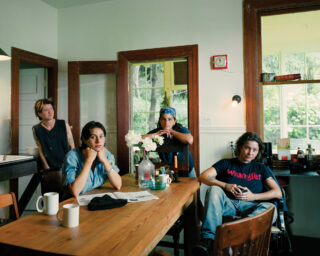
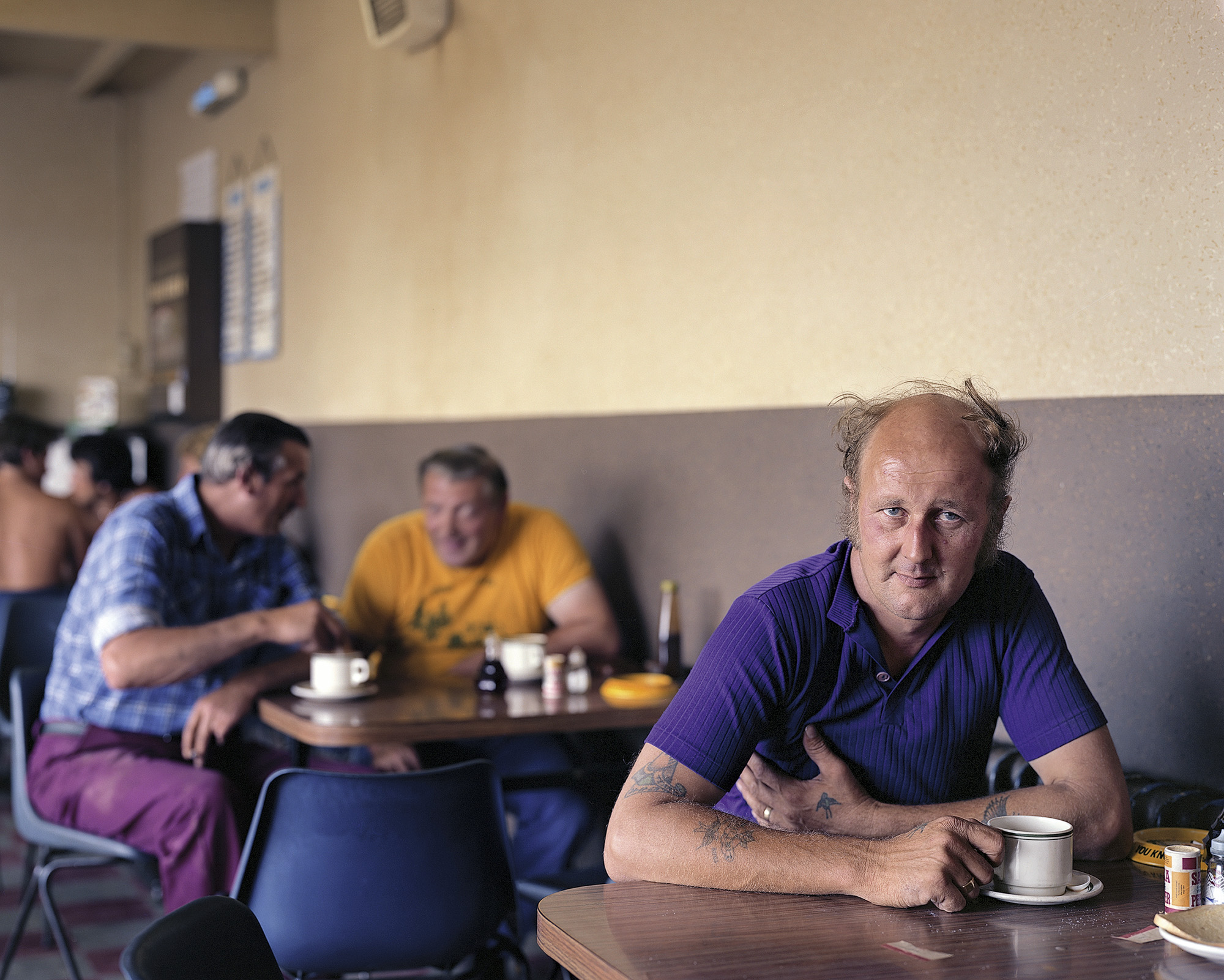
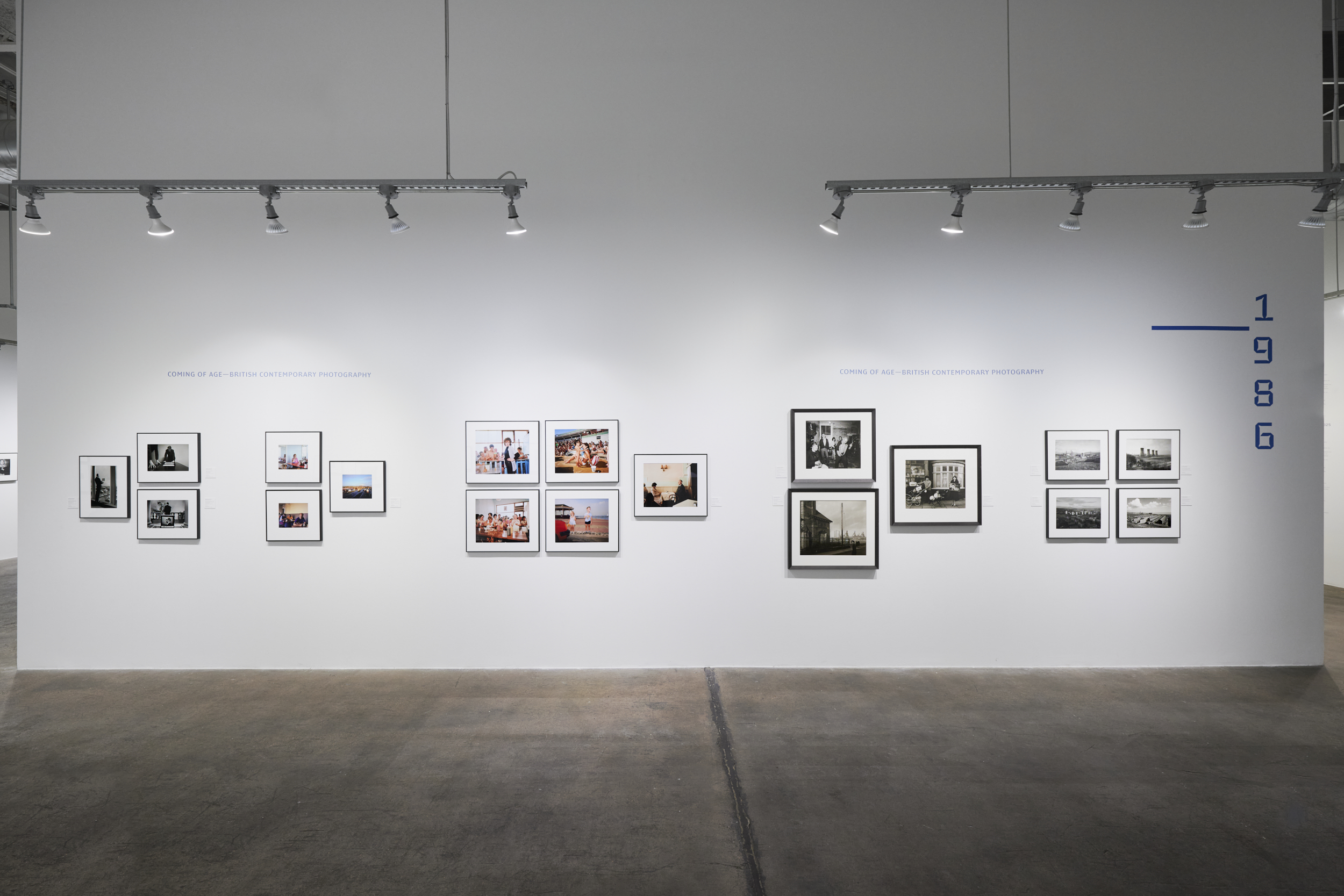
The first biennial, in 1986, established FotoFest’s goal of presenting works by non-American artists in order to garner them visibility and international attention. The main exhibition revolved around six young, contemporary British photographers who were documenting a period of intense social and economic change in Thatcherite Britain. Among them, Paul Graham and Martin Parr, both in their early thirties, exhibited their groundbreaking, color-soaked visions of Britain’s social climate: A-1: The Great North Road and The Last Resort. Forty years on, it’s still a pleasure to see Graham’s vision of labor in the north and Parr’s observations of leisure in the south. Both of these now canonical projects anchor the biennial’s socially curious outlook, but also its prescience.
1990s
Save for the Prague Spring in 1968, the Communist Party of Czechoslovakia maintained tight control over cultural and artistic life in the country from 1948 until the Velvet Revolution of 1989, determining what could be made, shown, and circulated. Photographers navigated this climate by working in two distinct registers: images destined for state-sanctioned publications and institutions and a separate, private practice, making work for themselves and a small circle of trusted peers that was kept carefully out of sight. Perspectives, Real and Imaginary, the main exhibition of the 1990 biennial, marked the first time many of these clandestine bodies of work had been seen in the United States. A particularly striking dual portrait attributed to Ivan Lutterer, Jan Malý, and Jiří Poláček pairs an older man and woman against a plain studio backdrop. The man’s face is the photograph’s quiet center of gravity, worn but gentle, guarded but friendly, its ambiguities of age and gender resisting the straightforward readings the composition seems to promise.
The 1994 biennial saw a shift toward marginalized artists within the United States. One of the marquee exhibitions, American Voices: Latino Photography in the United States, was widely recognized as a groundbreaking presentation of photography by Chicano, Puerto Rican, and Cuban American artists. Of particular interest are Max Aguilera-Hellweg’s and Sophie Rivera’s sumptuous, flash-lit, black-and-white portraits of their respective communities. Aguilera-Hellweg’s large-format Polaroids from Mexico City and East Los Angeles reflect a searching for identity across borders, while Rivera’s radiant portraits of strangers, staged and shot in her own home, reveal a disarming trust between photographer and sitter in her local New York.
Courtesy Moody Gallery, Houston, Texas
2000s
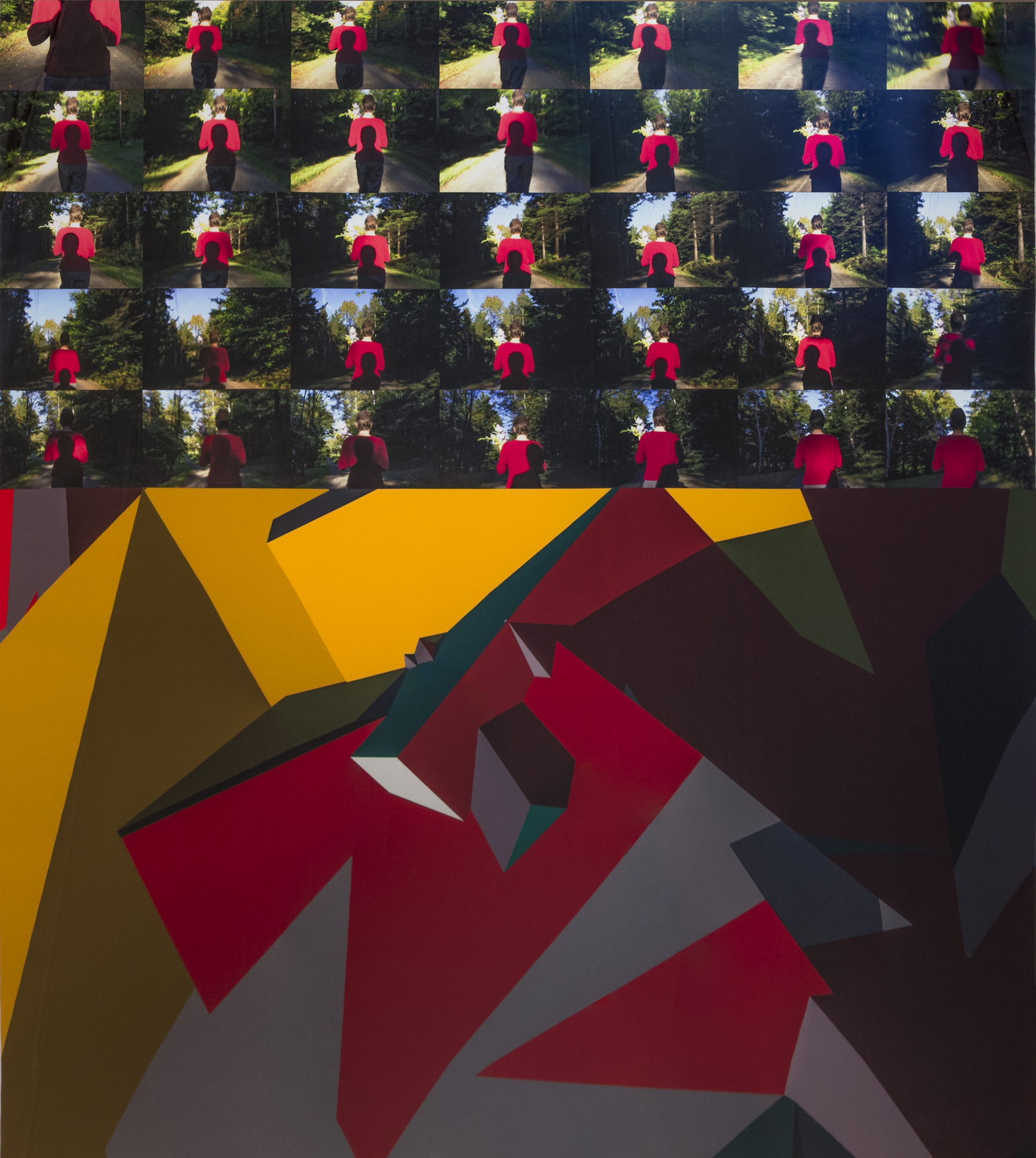
The turn of the century brought with it a reckoning with the medium as new technologies and techniques gained popularity and developed rapidly. The release of Adobe Photoshop in 1990 ushered in a new era of digital manipulation and, by the early aughts, had further complicated the quagmire of photographic truth. FotoFest 2002 staged classic analog photography—pictorialism, studio portraiture, and documentary street realism—against images made with new digital processes and early computer technologies. One early experiment, Kingdom Road | Exploding Cubes, by the pioneering husband-wife duo of Suzanne Bloom and Ed Hill, working together as MANUAL, combines grids of thirty-five digital photographs above abstract, computer-generated landscapes extracted from the photographs. The result is a questioning of photography’s relationship to time, the gaze, and the seductions of new digital forms of expression, an emblematic experiment for how artists of the era grappled with questions of media.
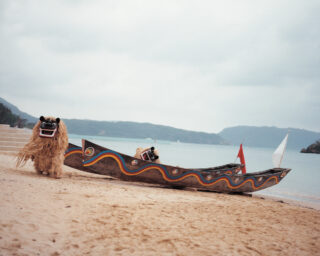
Environmental concerns came into sharp focus with the 2004 and 2006 biennials, which focused on the global water crises and the environment and violence, respectively. (Climate as a topic would recur as an organizing theme with increasing urgency, notably in the 2016 biennial Changing Circumstances: Looking at the Future of the Planet.) Taking an expansive view of photography, the 2004 iteration invited not just photographers but architects, policy experts, and other thought leaders to address the status of water resources. Yet the work that continues to feel the most poignant is the most abstract, and therefore the least didactic—Jungjin Lee’s gorgeously wrought seascapes reflect a more contemplative and enduring reflection on our relationship to and fascination with water.
Courtesy the artist and Jack Shainman Gallery, New York
2010s
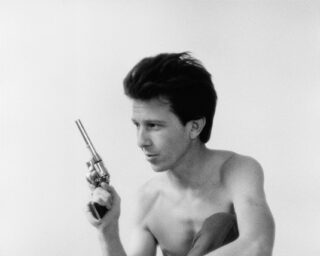
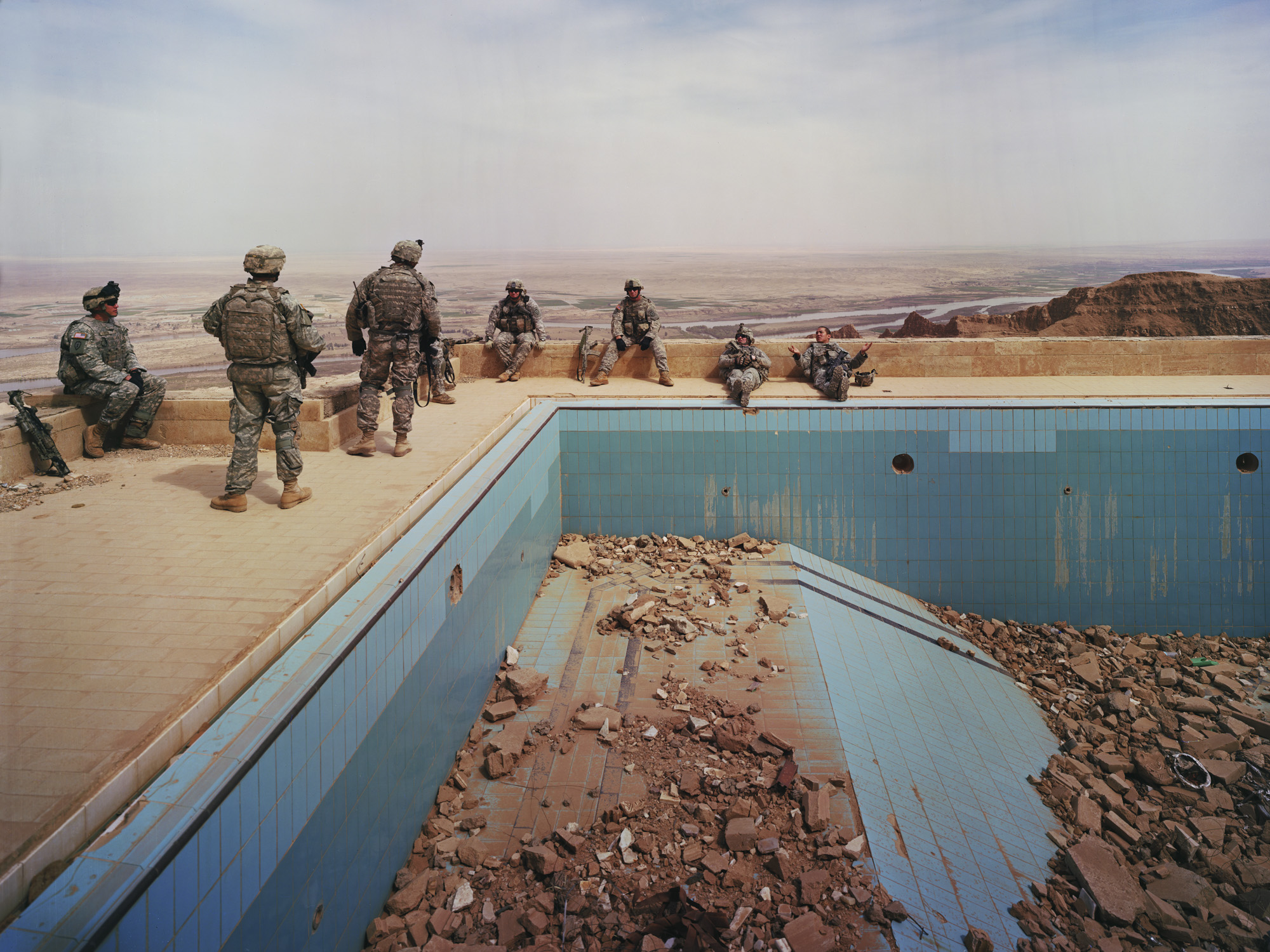
By the 2010s, FotoFest was ready to turn a critical eye back on the political climate of the United States. Deep into wars in both Afghanistan and Iraq, the public support that had been so fervid in the wake of 9/11 had slowly curdled into exhaustion and disillusionment. With no clean exit or easy sense of “victory” to satisfy the pollsters, the cataclysmic costs—human, financial, moral—had become untenable. The marquee exhibition at the 2010 biennial, featuring work by artists like An-My Lê, Trevor Paglen, and Richard Mosse, bore the title The Road to Nowhere?, precisely reflecting the growing frustration, fatigue, and pessimism around these “forever wars” and America’s morbid obsession with conflict.
The 2014 biennial was the first edition to focus on photography, video, and mixed-media art from the Middle East and North Africa. By 2014, much of the Arab world had been in turmoil for years, after Mohamed Bouazizi’s act of extreme defiance sparked the widespread protests and civil action across Tunisia, Egypt, Libya, Bahrain, Syria, and Yemen that would become known as the Arab Spring. Against this backdrop of conflict, revolution, and civil war, View from Inside, the primary exhibition of FotoFest 2014, opened as what was then the largest presentation of contemporary Arab photography ever shown in the United States. Sama Alshaibi’s Between Two Rivers is particularly powerful—her stalwart, black-and-white self-portraits work to counter the common Western narrative that US interventionism and war would bring increased freedoms for Iraqi women.
Courtesy the Library of Congress, Washington, DC
2020s
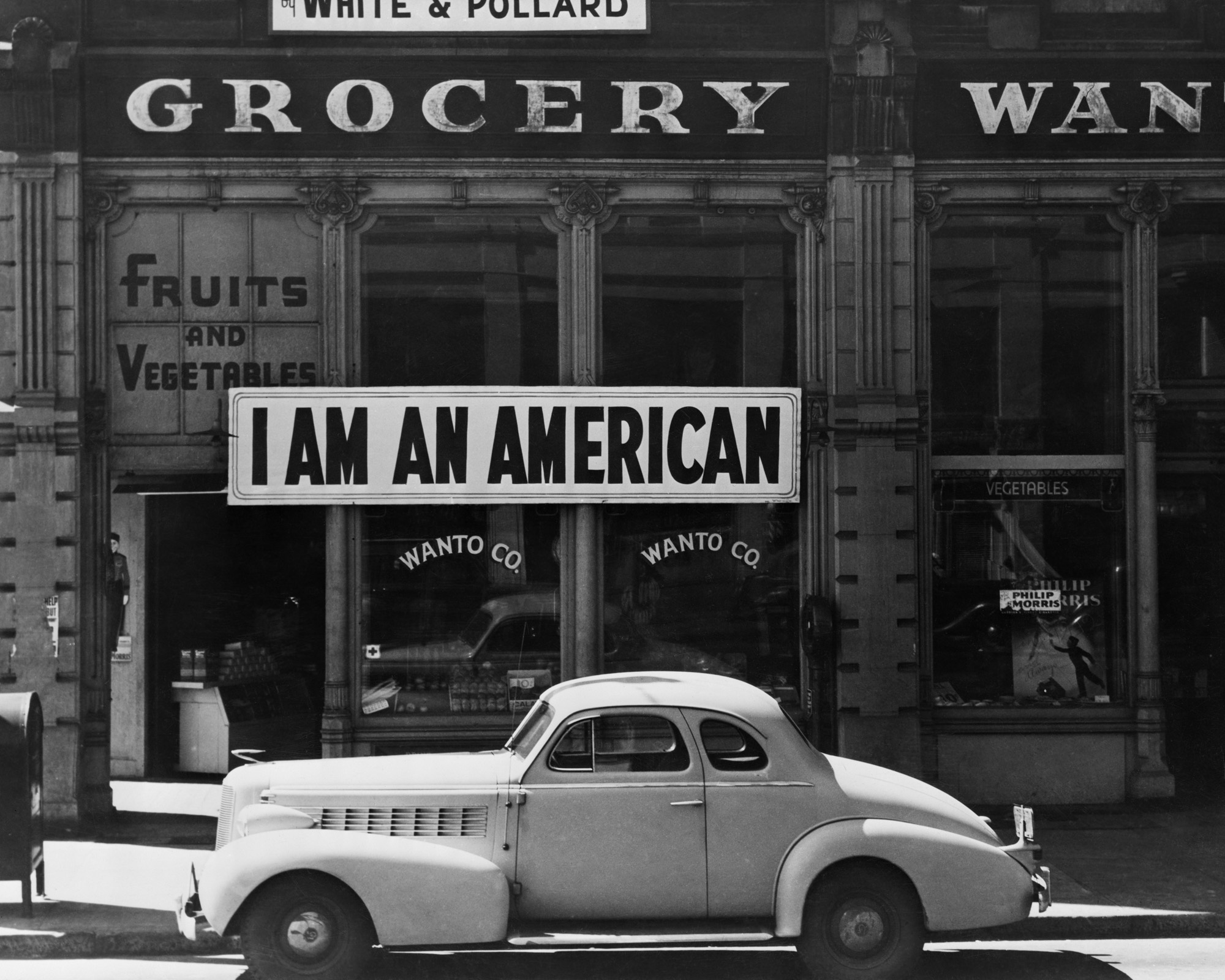
FotoFest 2022, titled If I Had a Hammer after Pete Seeger and Lee Hays’s folk standard, reconsidered photography’s role in social justice and civil rights movements—a biennial shaped unmistakably by the anxieties of the first Trump era, the rise of Black Lives Matter, and the effects of the COVID-19 pandemic. Dorothea Lange’s wartime documentation of Japanese American incarceration and Tōyō Miyatake’s clandestine photographs made from inside Manzanar still ground this exhibition in photo-history, while Bruce Yonemoto’s portraits and Reynier Leyva Novo’s eerie images of empty podiums bring the show’s political discourse into the present.
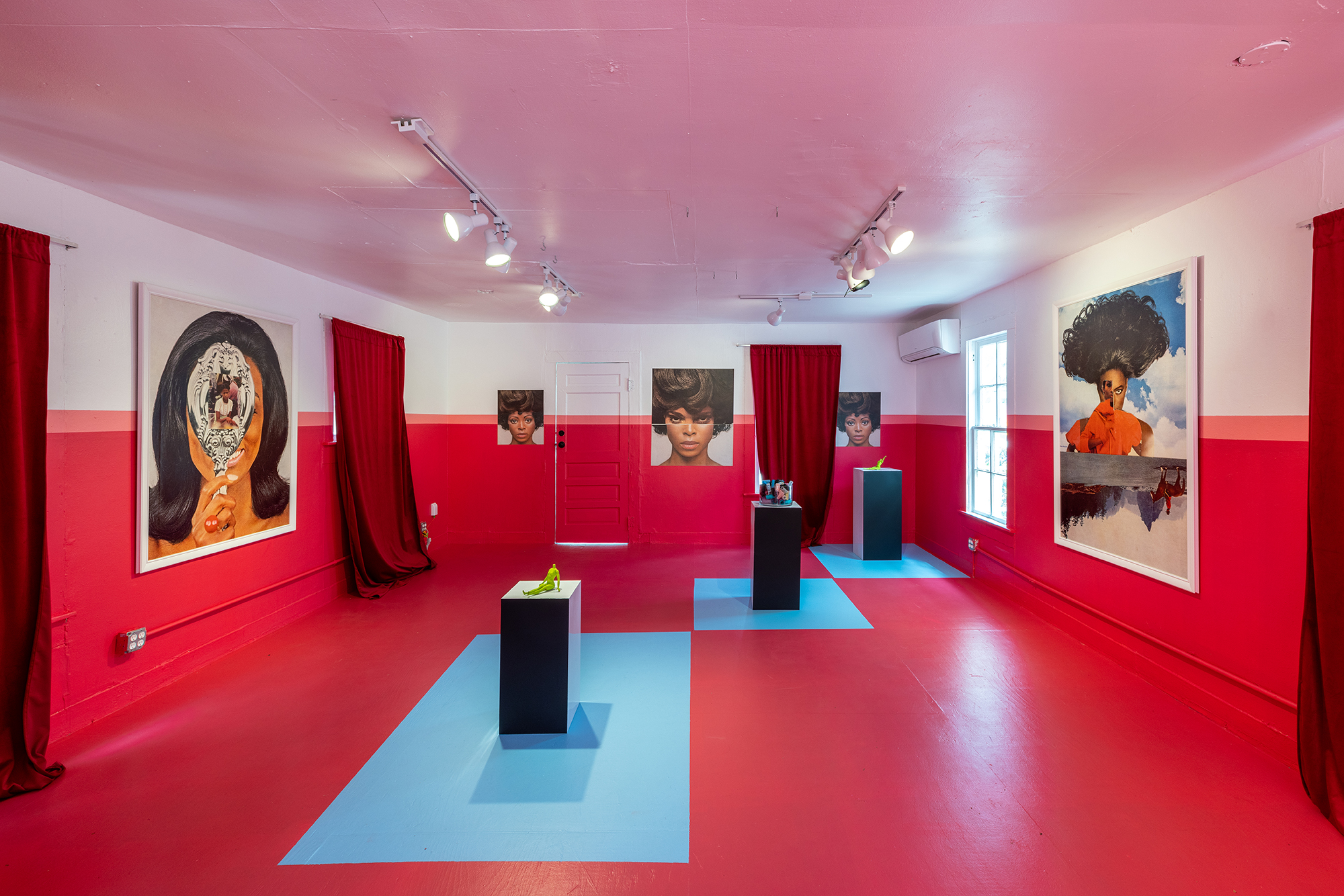
FotoFest 2024, Critical Geography, pursued related questions through a different lens, exploring photography’s role in constructing and critiquing our conception of place across a notably international program of more than twenty artists and collectives. Along with the 2022 biennial, these two previous editions of the decade cast FotoFest’s global ambitions in a sharper, politically urgent light—reaffirming photography’s ongoing power as a tool for change.
What Global Visions makes legible, across forty years of exhibitions, is that FotoFest has never been concerned with abstract themes. Rather, it has constantly responded to what photography has been asked to do at any given moment: Expand the canon, reckon with new technologies, address crisis. That responsiveness is FotoFest’s most durable quality, and it makes the new and notable commissions from Shavon Aja Morris and André Ramos-Woodard, presented at Project Row Houses, feel like more than a gesture toward the future. Even within a retrospective frame, the festival continues to ask what photography is being called upon to do in our given moment.
Global Visions: FotoFest at 40 is on view in Houston through May 10, 2026.