A Dizzying Snapshot of the Human Condition
At the New Museum, New Humans: Memories of the Future whirls through a century of human and humanoid evolution—and plenty of photography.
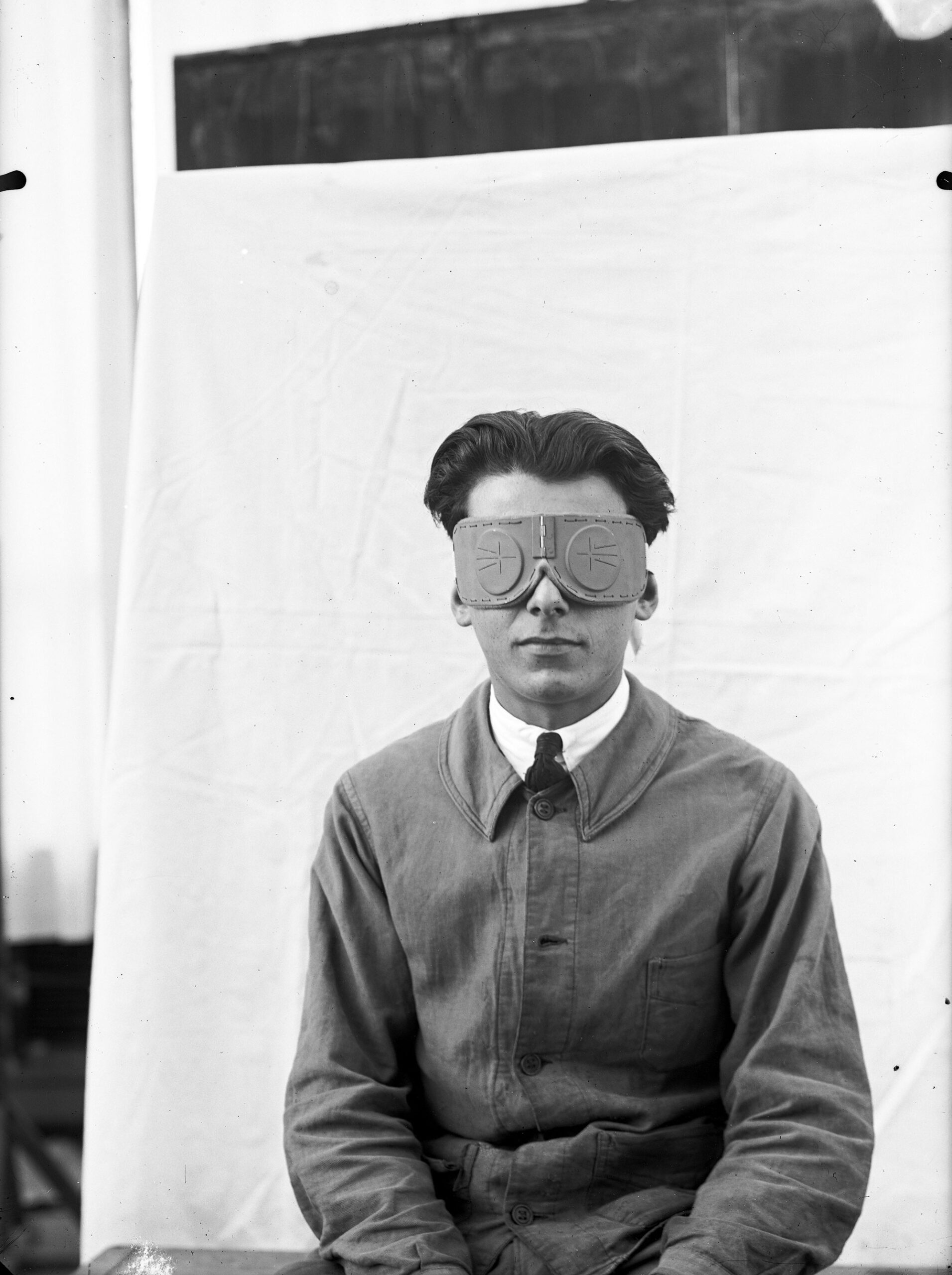
Unidentified photographer, Lunettes obturantes (Sight-obstructing goggles), December 1926
Courtesy the Centre national de la recherche scientifique (CNRS), Orléans, France
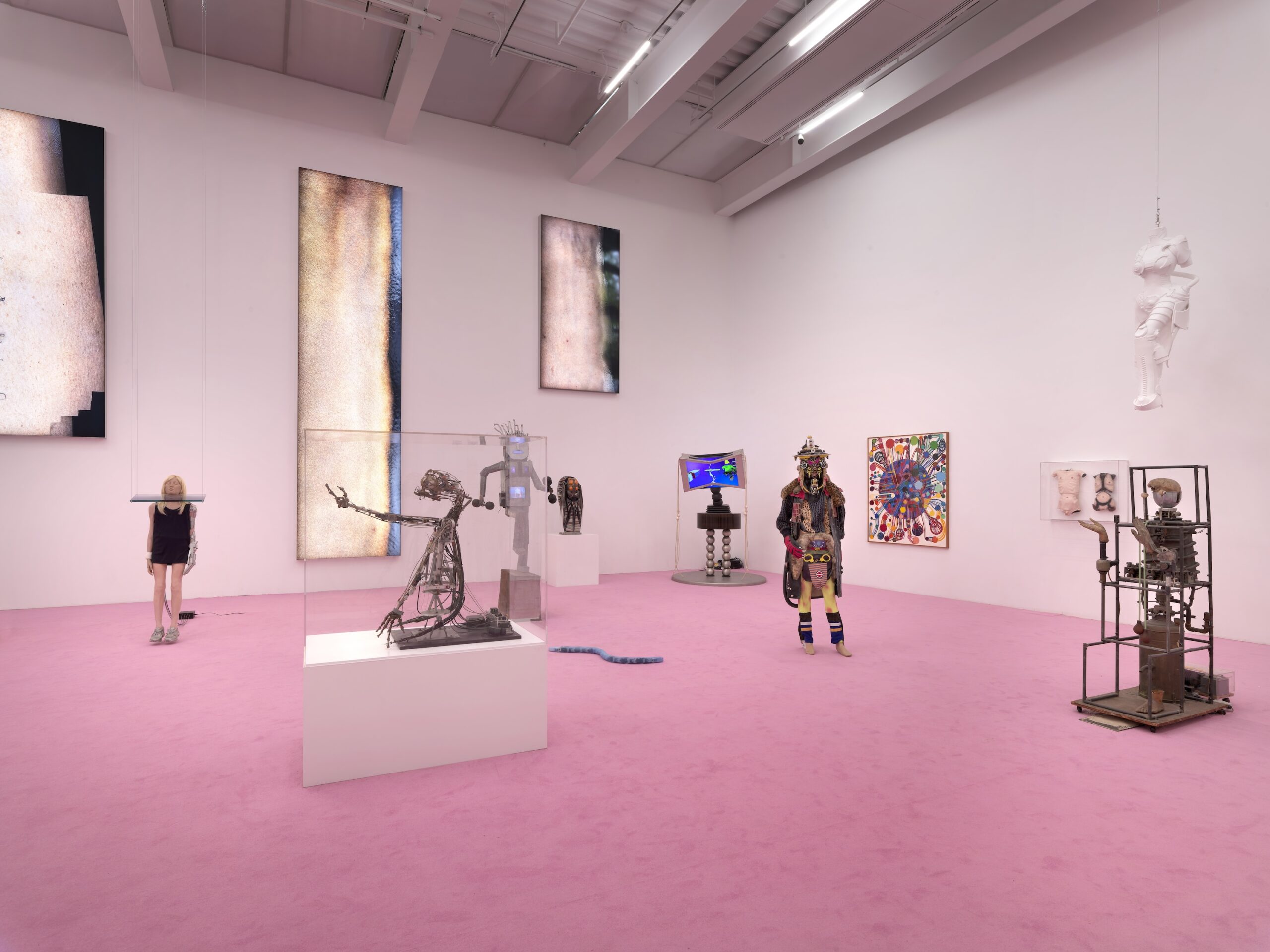
Following a multiyear and multimillion-dollar expansion, the New Museum in New York reopened this spring with the ambitious exhibition New Humans: Memories of the Future (2026). The show, debuting the museum’s much-improved exhibition spaces and curated by a team led by artistic director Massimiliano Gioni, is jam-packed with canonical masterpieces and intriguing artifacts from the turn of the twentieth century, alongside works by contemporary artists. In one way or another, the willfully chaotic installation tracks the ways that the human form has been understood and represented for the past one hundred years or so, paying particular attention to how various technologies have affected and modified the body. The cumulative effect of the over seven hundred objects on display is that of a cyborgian bestiary, cataloging the characteristically modern desire to remake and remodel every aspect of life—including life itself.
Courtesy the New Museum
Deluging the visitor with example after example of the conjunction of bodies and machines, whether in Expressionist portrait, deadpan document, or an animated array of sci-fi gadgetry, New Humans poses the question: What is a human in a high-tech world? Its findings, at least as presented by the specimens on view, are often frightening and not especially auspicious. The show appropriately begins with various responses to the mortal ravages of World War I and largely follows this trajectory of the long-simmering Promethean dread concerning humanity’s compulsion to invent ever more devious devices for self-destruction, culminating in the current fears surrounding artificial intelligence.
Courtesy Sprüth Magers and Vitamin Creative Space
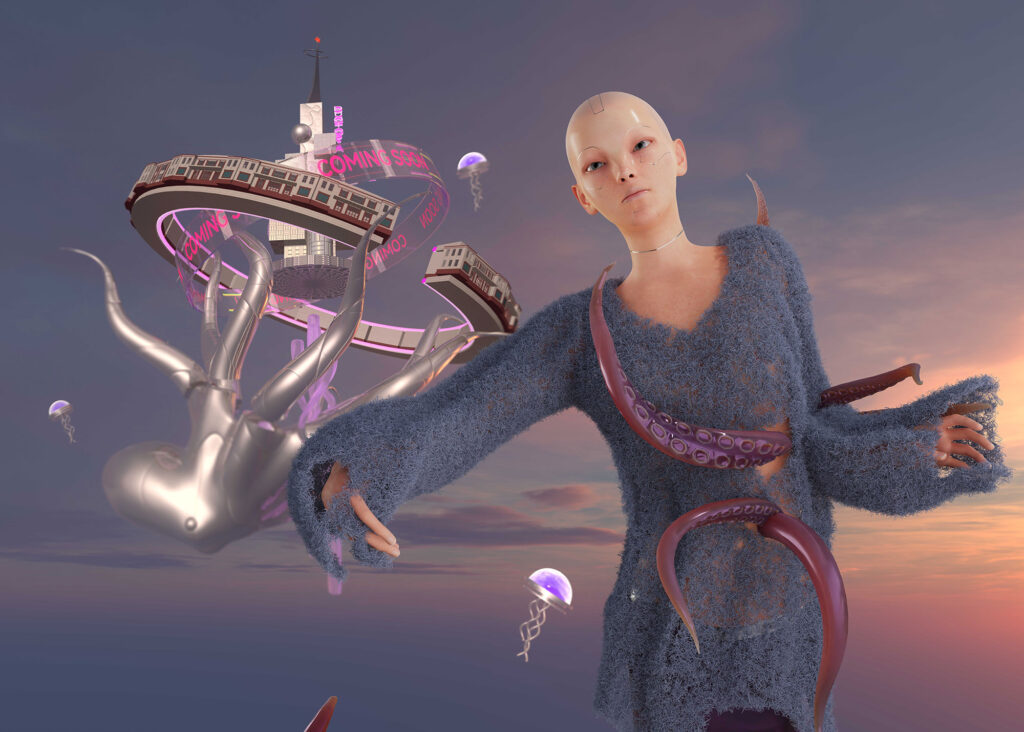
Anxieties about AI haunt the show as well as the essays collected in the handsome and hefty catalog. This newest and seemingly most powerful prosthetic extension of human faculties has considerable implications—as anyone who has navigated through the online sea of deepfakes knows—for questions of artistic creation and visual representation writ large. Numerous recent works in the show employ mimetic avatars and mutant monsters, as in Cao Fei’s disturbingly placid animation of an octopus-woman hybrid, Oz (2022), or the computer-generated Kim Kardashian look-alike who provides intermittent bien-pensant metacommentary on the perils and promises of AI in Christopher Kulendran Thomas’s engrossing video installation-cum-photojournalistic portrayal of the Tamil independence movement in Sri Lanka, The Finesse (2022). Hito Steyerl provides another example of this new form of artistic muckraking with Mechanical Kurds (2025), a video installation that exposes the hidden human labor behind AI, giving voice to a number of Kurdish workers based in a refugee camp in Iraq who classify images for Amazon.

Courtesy the artist and Andrew Kreps, New York. Commissioned by the Jeu de Paume, Paris, and New Museum, New York
A great deal of the imagery generated from AI, at least for current versions, is conceived as primarily photographic. (If you ask AI for a picture of a person, for instance, what results is most likely based on a photograph or rendered in a photographic style unless otherwise prompted.) This aspect of the technology is slyly registered in an unassuming—and notably uncredited—collection of black-and-white images that, according to the accompanying wall text, were “curated” by Google Gemini. Half of the ten framed inkjet prints are film stills from visionary movies such as Metropolis (1927), Blade Runner (1982), and Ex Machina (2014), which, according to the text (itself generated from the Gemini algorithm), illustrate the “prehistory of our technological anxiety.”
Courtesy the National Museum of American History, Smithsonian Institution, Washington, DC
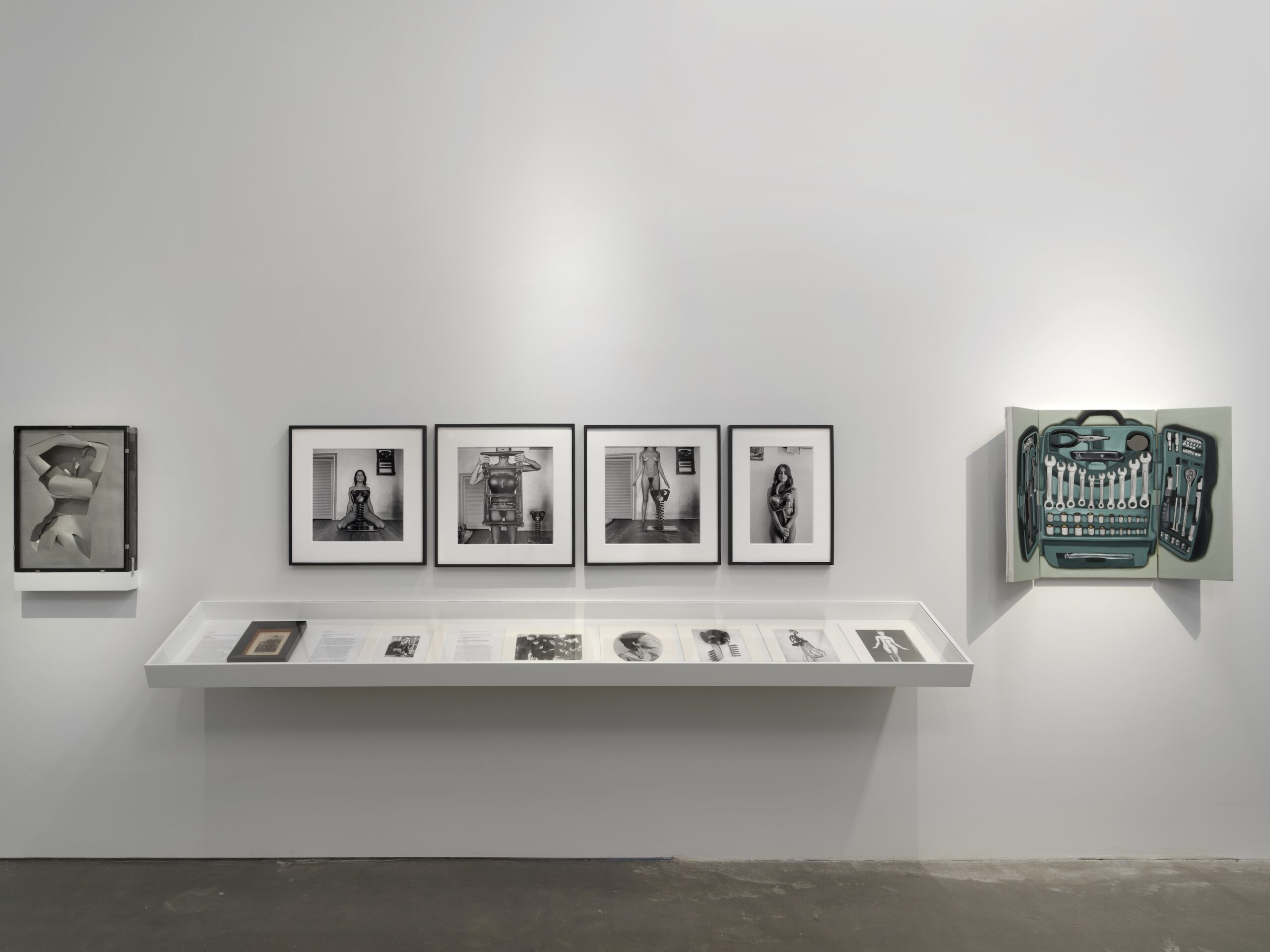
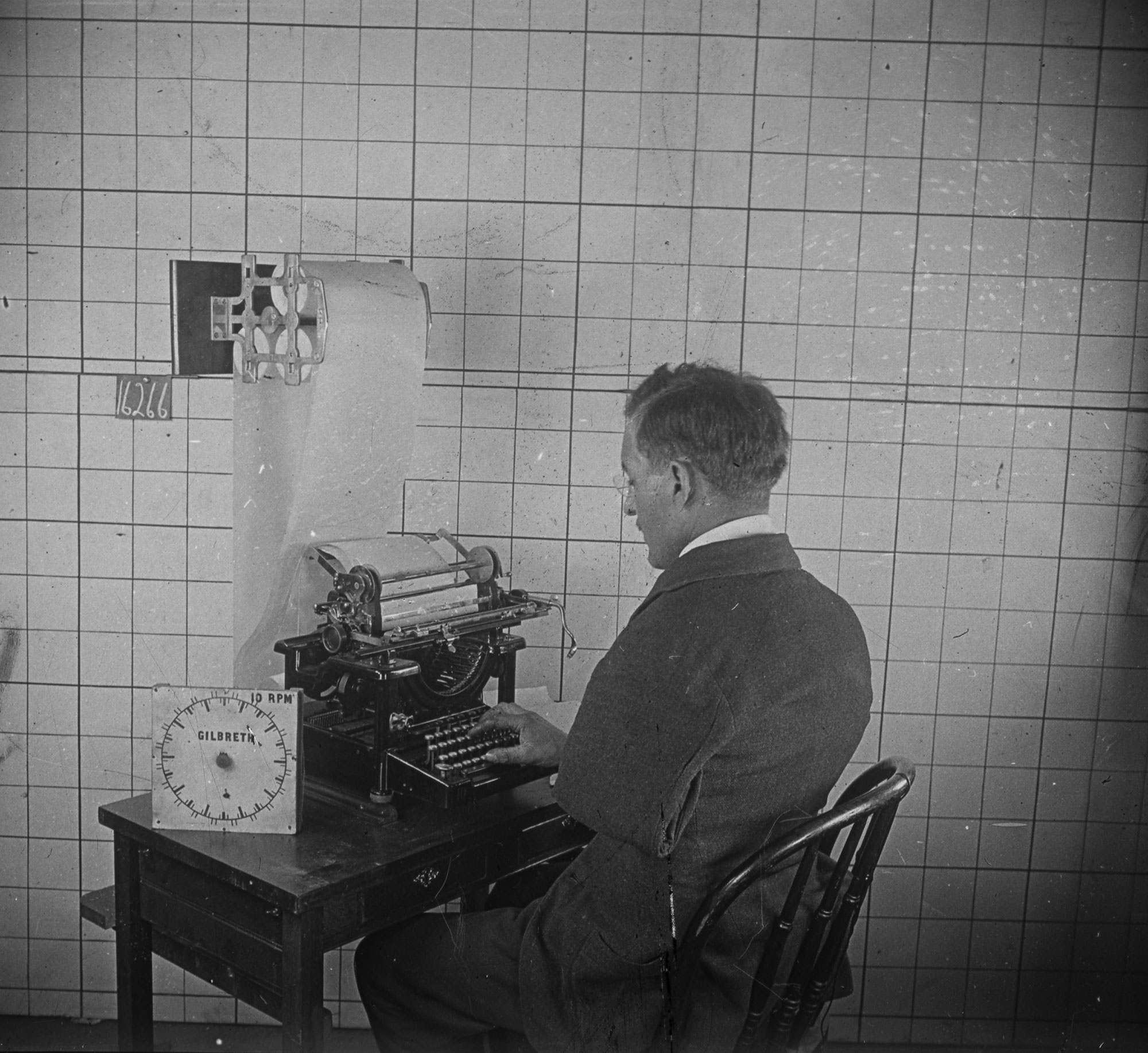
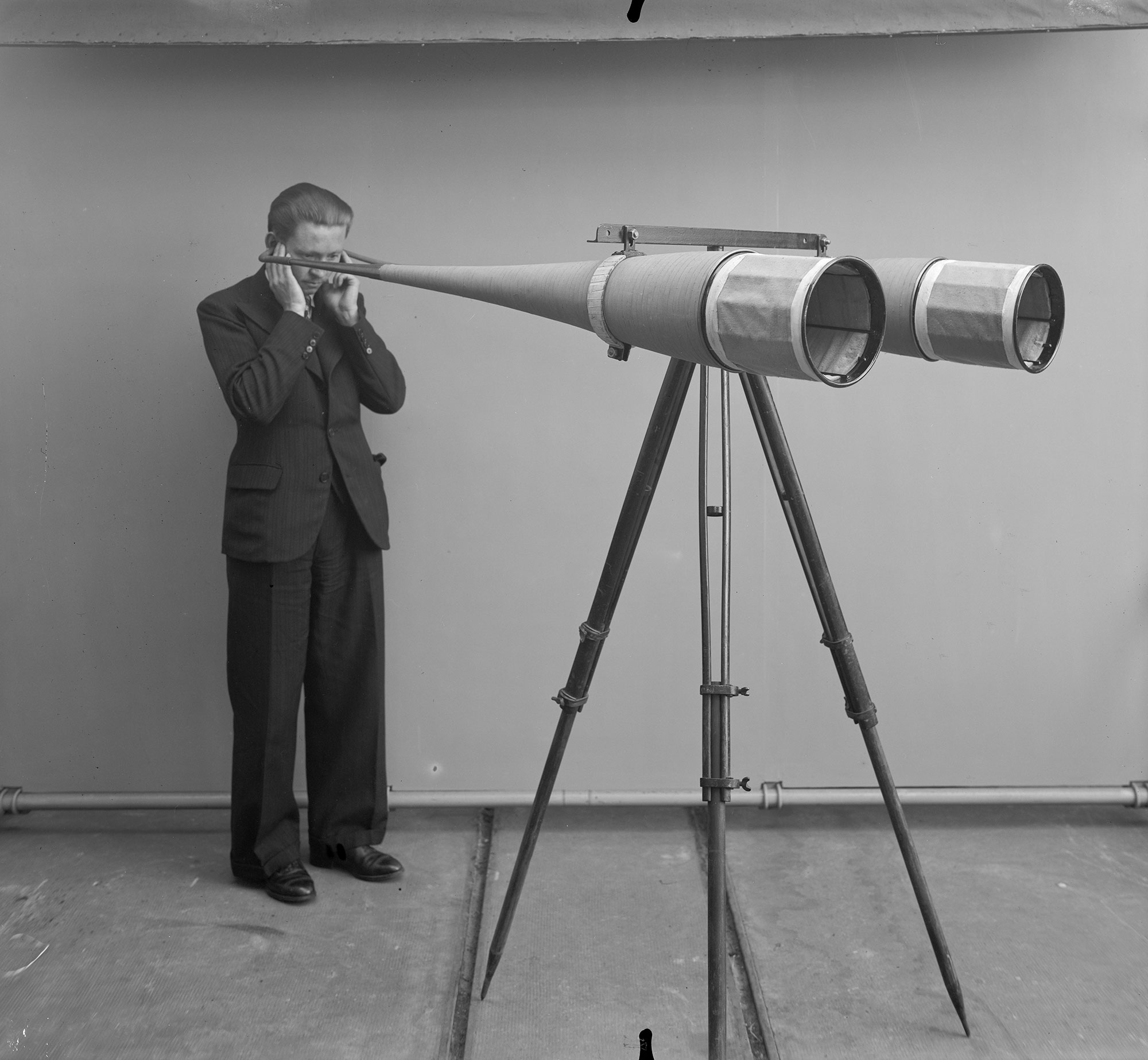
The medium of photography, with its chemical basis, precision optics, and push-button expediency, holds a special place in this technological prehistory, and New Humans contains numerous examples of how the camera’s celebrated objectivity has been marshalled to invest almost anything it documents into a startlingly surreal reality: from the fantastic juxtapositions of bodies and machines taken from the mass-market press in Hannah Höch’s photocollages to Frank Gilbreth’s equally surreal “cyclegraphs” (ca. 1914–16; represented in the show as exhibition prints), which sought to scientifically record Frederick Taylor’s time-motion studies for workplace efficiency. As is often the case, the most seemingly inartistic documents are the most uncanny, for example the twenty-seven anonymous black-and-white photographs drawn from the collection of the French National Office for Scientific and Industrial Research and Inventions. Created between 1925 and 1938 to document inventions in the years following World War I, these photographs of mechanical devices, presented in meticulous detail against blank backgrounds, creepily suggest the blurred boundaries between domestic and military uses of technology, so that a pair of “acoustic horns” that would extend from a wearer’s ears to amplify sound seem as sinister as a grenade or bomb.
Courtesy the Centre national de la recherche scientifique (CNRS), Orléans, France
The threat of war has long been a prompt for calls for new humanisms. This is most evident in a gallery stacked salon-style with paintings of ghoulish heads and a phalanx of sculptural figures that re-create the sort of art that appeared in two landmark postwar exhibitions of nuclear-era malaise: This Is Tomorrow (1956) at the Whitechapel Gallery, London, and New Images of Man (1959) at the Museum of Modern Art, New York. But it is another exhibition, unnoted in the show or catalog, that arguably best captures the humanist unconscious of this show: MoMA’s 1955 blockbuster photomural extravaganza The Family of Man. Like this earlier “theme show” (to borrow Barbara Morgan’s memorable description from a review published in the pages of Aperture), New Humans delivers a decidedly global purview of the state of humanity with a noticeable focus on those seemingly universal aspects of life such as birth (exemplified in Lennart Nilsson’s weirdly beautiful color photographs of human fetuses originally published in Life magazine in 1965), family (most strikingly captured in Aneta Grzeszykowska’s 2018 Mama series depicting her daughter interacting with a lifelike silicone torso of the artist that is in many ways more disturbing than Sally Mann’s still-scandalous portraits of her naked children), and death, especially as it is dispensed by war.

Courtesy the artist and Lyles & King, New York

Courtesy the artist and Lyles & King, New York
But whereas the central theme of The Family of Man was, as Morgan argued, “the universal passion to live,” this newer iteration offers something more morbid, more historical, and, at times, more political. Informed by theories coming out of Indigenous and Black studies and ecocriticism that seek to decenter the human within larger ecological systems and question its very basis as a Western technique of control, New Humans stresses the need to reconsider, if not reject, established concepts of humanity even as it repeatedly asserts the human body as the inescapable constant with which any consideration of these factors must contend. Replacing “Man” with “Humans” might propose a more capacious understanding of this predicament, but as the objects on view declare again and again, the problem of being human remains with us, whoever we humans are and might yet become.