How Three Friends Turned Photography into a Way of Life
In the 1970s, Minor White, Aaron Siskind, and Harry Callahan wrested photography into a deeply personal medium, using the camera to explore emotion and the possibility of transcendence.
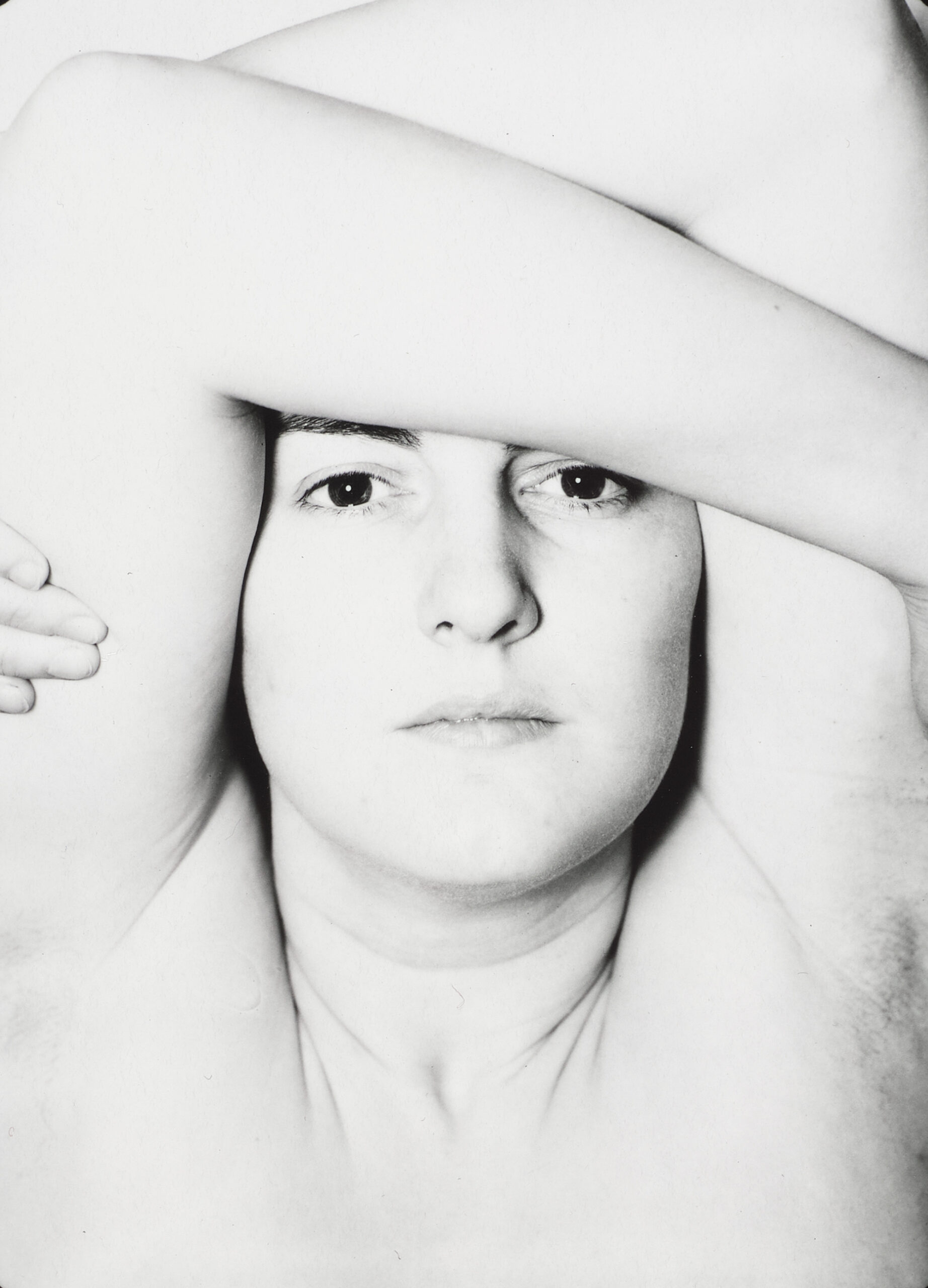
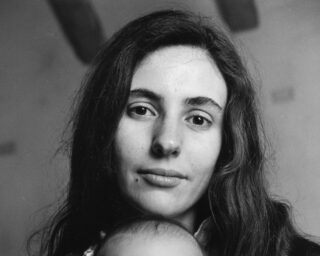
Harry Callahan, Eleanor, ca, 1947
© The Estate of Harry Callahan and courtesy Pace Gallery
Photography as a Way of Life: Minor White, Aaron Siskind, and Harry Callahan is a sprawling survey of works by the mid-twentieth-century American photographers on view at Princeton University Art Museum. With painstaking research and judicious selections from the museum’s own holdings, curator Brendan Fay charts the fruitful confluences of White’s, Siskind’s, and Callahan’s careers in the 1940s through ’70s. The assemblages of prints, slides, and archival publications track the three photographers from camera-club and documentary roots to influential tenures as the first generation of photography program directors in colleges across the United States. In bringing their works together in dialogue, Fay illustrates how White, Siskind, Callahan—each in his own way and as a spiritual collective—not only elevated photography into a way of making a comfortable living, but as a manifesto for how to be in the world. As fellow travelers, they would shape their medium into a discipline defined by an intentional and introspective way of seeing, that is, one that has a worldview, a morality.
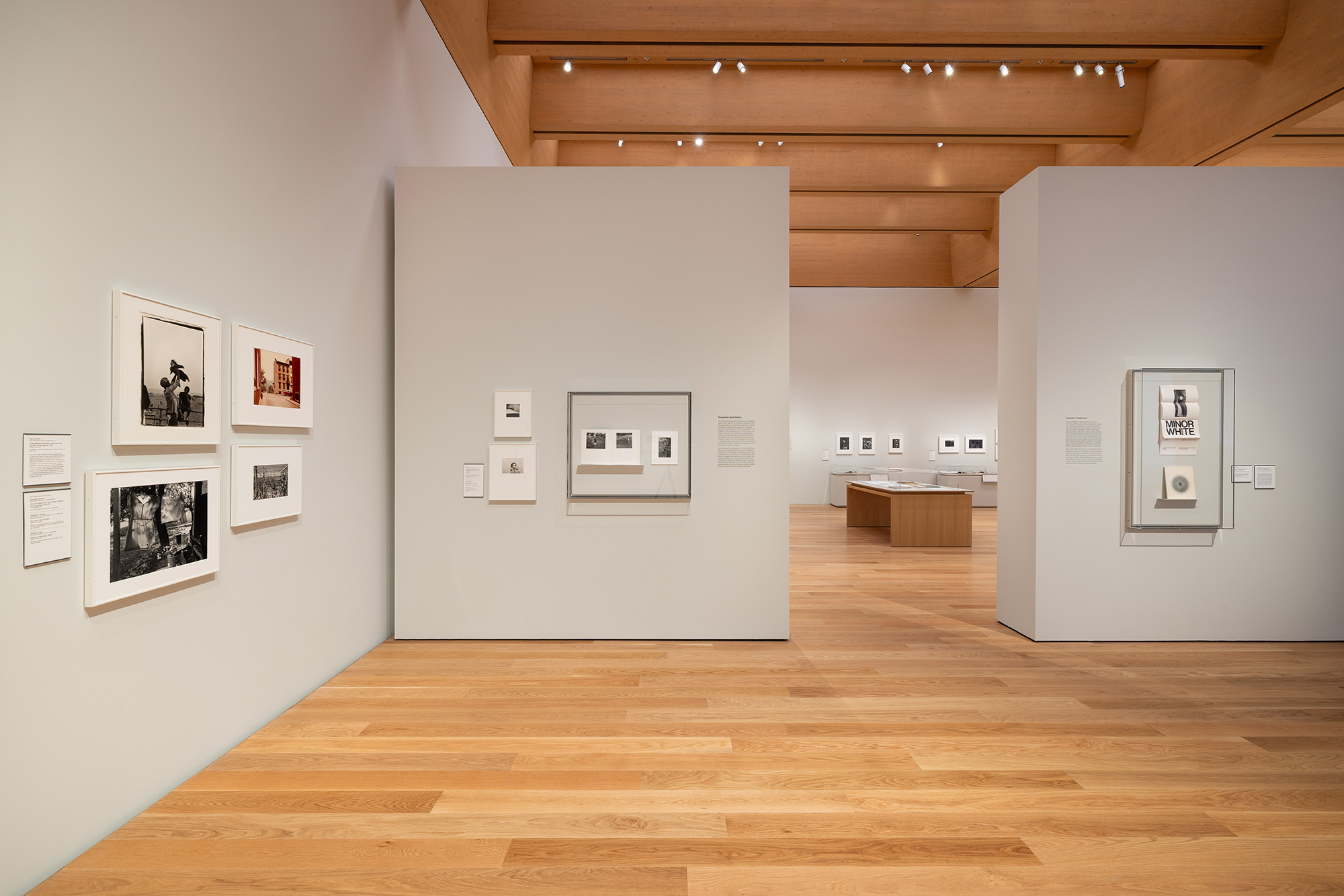
Moving through Photography as a Way of Life, I at first felt the strain of following the progression of three distinct lives and careers. It’s a daunting task for any curator or historian, let alone a viewer. I would be pulled away from my experience of a picture so that I could scan the wall text and attribute the work to the right photographer or make sense of how it fits in the overall tapestry of the project. But where the exhibition thrives is Fay’s choice to contextualize biography and history in the motifs, styles, and techniques that drew White, Siskind, and Callahan together as admirers of each other’s work and frequent collaborators. This gave me a thread to follow for more immersive and rewarding repeat viewings. (The exhibition catalogue copublished with Princeton University Press provides a detailed history of the photographers’ careers and deeper contextualization of their work.)
© the artist and Virginia Museum of Fine Arts
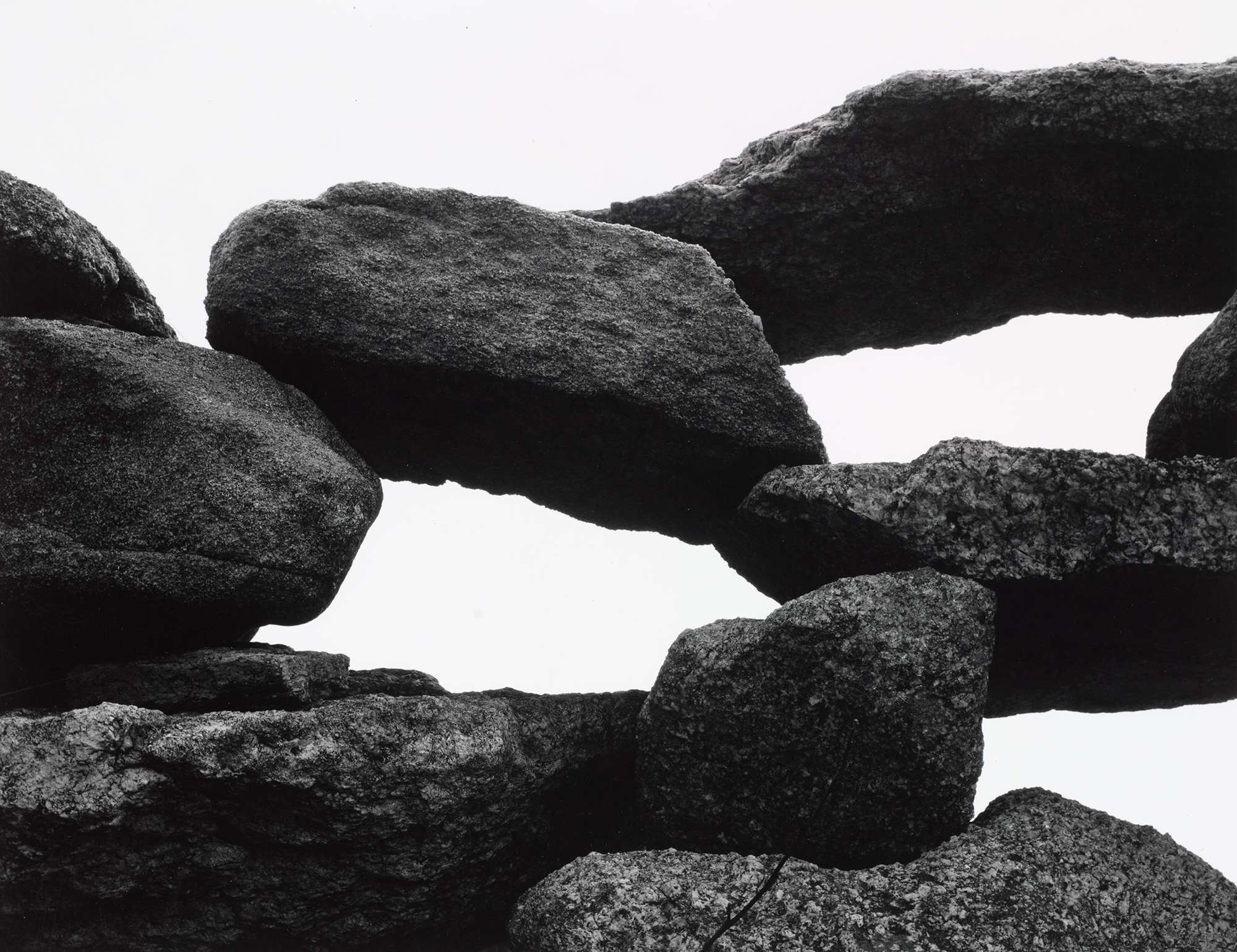
Minor White, Aaron Siskind, and Harry Callahan shared a propensity for abstraction, which set their vision apart from the post–World War II years when documentary photography, Kodak’s snapshots, and Magnum’s “decisive moments” dominated the market. They were steadfast in their artistic right to ambiguity and improvisation. They rejected reproducibility, resisted interpretation. They carried on the Romantic tradition of superimposing one’s emotional landscape onto natural terrain. They saw the ethereal in urban settings. They associated themselves with the Beat poets and Abstract Expressionists. White, in particular, carved out a space for so-called creative photography as the founding editor of this magazine and championed the works of Callahan and Siskind in its pages. (White co-founded Aperture in 1952 and was one of the magazine’s longtime editors. His archives are held by the Princeton University Art Museum.)
© Trustees of Princeton University
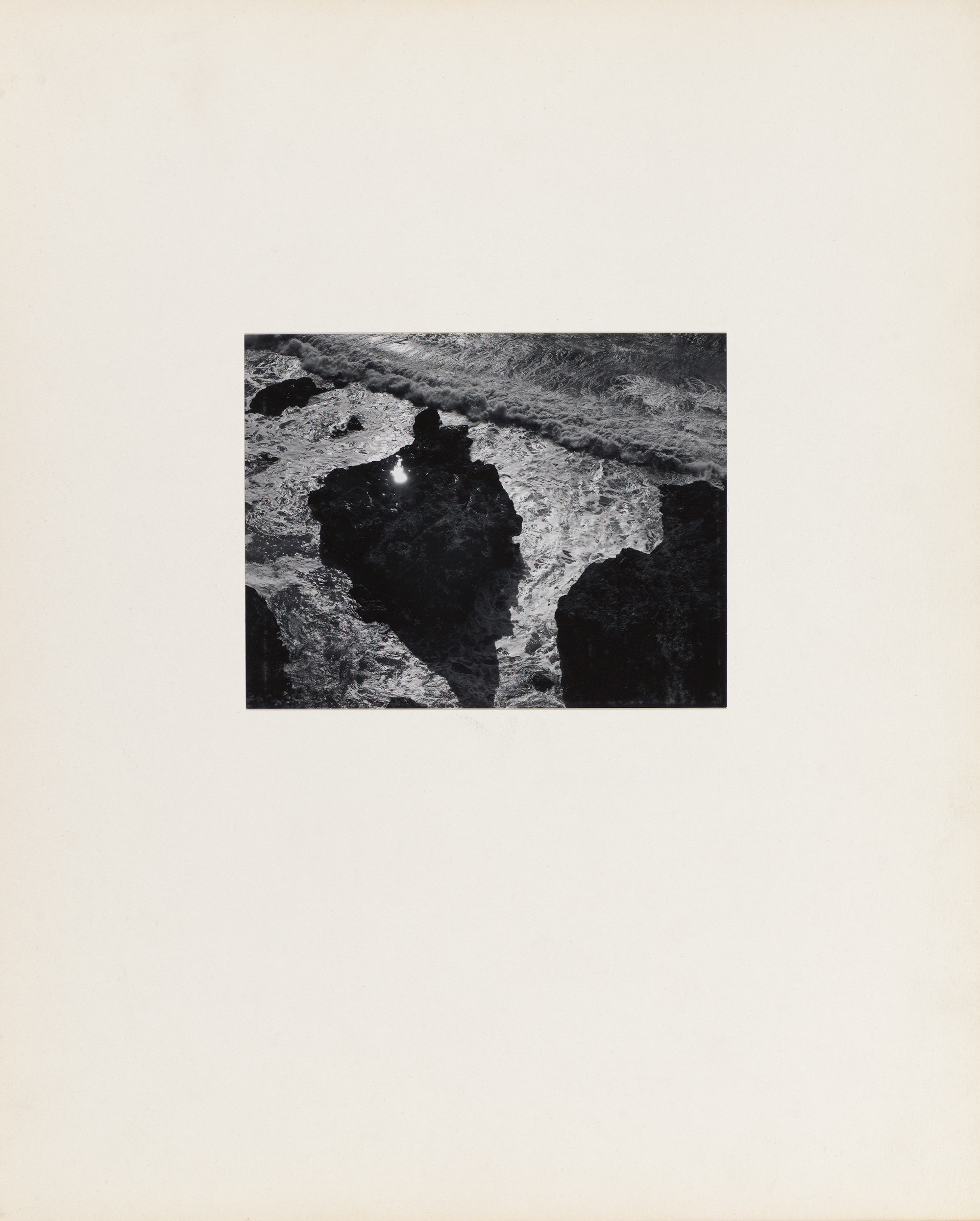
White was born in Minneapolis and graduated with a degree in botany from the University of Minnesota. He spent his mid-twenties and thirties in Portland, Oregon, as a photographer for the Works Progress Administration. He then began teaching at the California School of Fine Arts, during which time he would take many of his iconic photographs along the Pacific coastline. In scenes like Devil’s Slide, San Mateo County, California (1947), White employs light itself as medium. Picture him holding vigil until the clouds mask just the right places and the waves exhibit the desired array of textures. The final image is a seascape as well as a flat plane of contrasting tones. One view is no less evocative than the other.
© Trustees of Princeton University
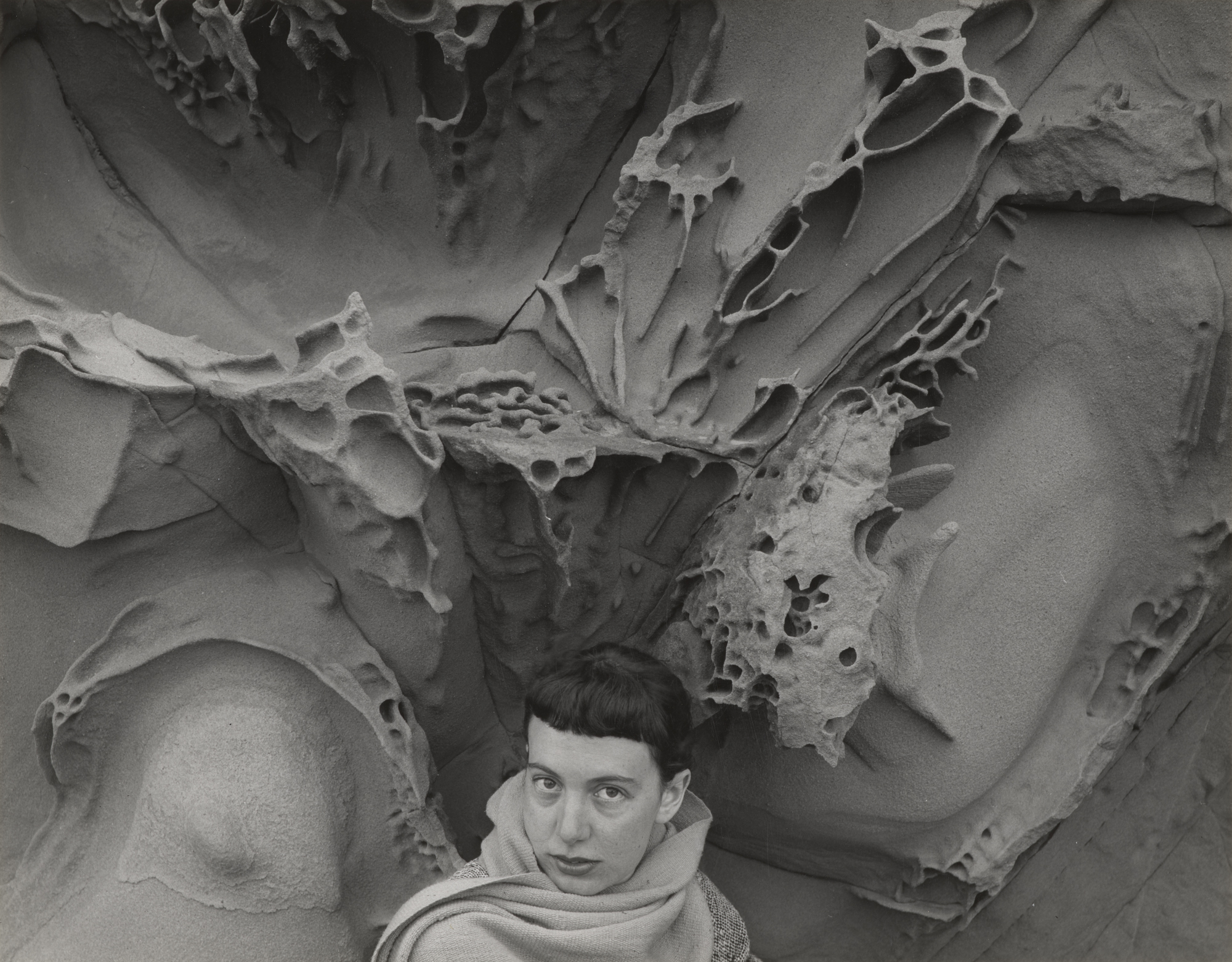
White spent his career interpreting his mentor Alfred Stieglitz’s concept of equivalence, which privileges the image as its own object, with a cognitive and emotional charge separate from any subject it may appear to represent. With his constructed seascapes, White was only beginning to toe the line between representation and abstraction. He pushed this tension to extremes with his later environmental portraiture. A student, friend, or lover in sharp focus roots us in reality while the backdrop of unruly nature pulls us into the dream world—or rather startles us into awareness of the dream that a photograph is. Jan Davis, vicinity of Pescadero, California (1951) has the subject posing at the bottom edge of the frame, dwarfed by an otherworldly rock formation. Shadows intensify the plasmodial patterns on the rockface as though it were a mutation engulfing the woman or a neural web spinning out of her head.
The movement away from subject matter put Aaron Siskind, a native New Yorker and public-school teacher, at odds with his comrades in the Workers Film and Photo League. He started out as a documentary and street photographer, in line with the league’s mission of bringing class and labor struggles to public view. But as an artist, he was bumping up against the limits of straight photography. This restlessness can be sensed in the early pictures. See the close cropping around Lady in Kitchen (1937), with the subject turning her face away from the camera, or the skewed angle from above that makes city life seem like such a drag in Street Scene 4 (1937). Siskind’s aesthetic shift led to a body of work that had more in common with Mark Rothko’s color fields and Franz Kline’s action paintings.
© the artist and Virginia Museum of Fine Arts
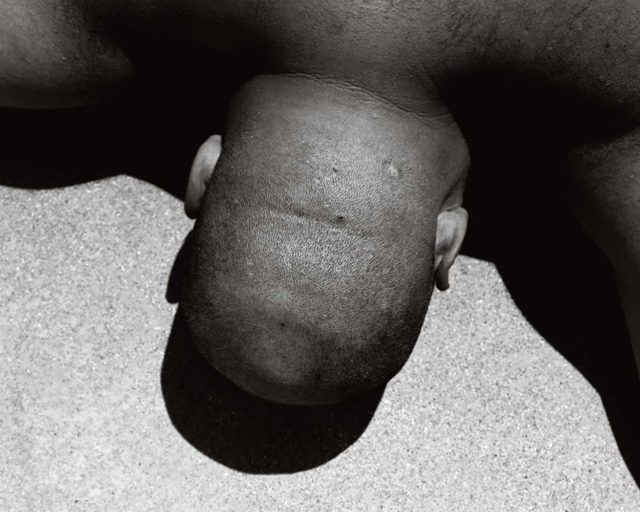
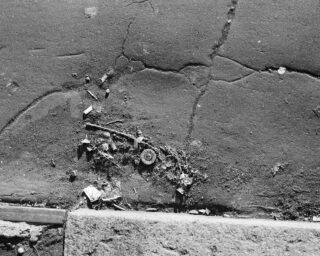
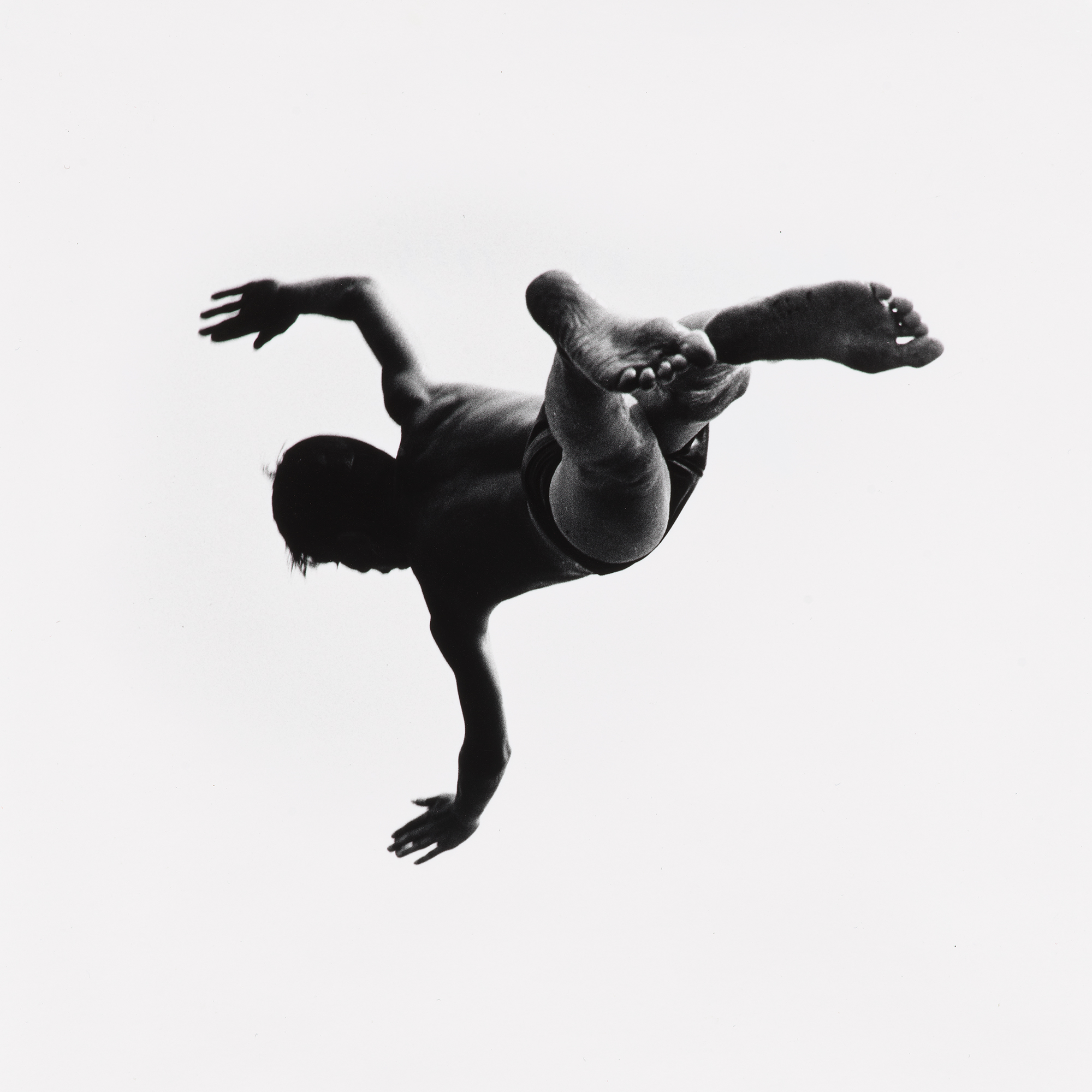
Siskind is perhaps best known for his images of peeling paint, like New York 6 (1951). He does away with the subject entirely and engages the viewer with what he called a “new object,” the photograph itself. He defamiliarizes an urban fixture, the poster-plastered wall, and evokes the weight of oppression and deterioration that one might feel from a documentary photograph. However, these images demand more of the viewer’s time and attention, and in so doing get deeper under the skin. I do love how Siskind brings the subject back on his terms in Pleasures and Terrors of Levitation (1953). Shooting with a handheld camera from a low angle, he captures divers in elegant forms on a white plane like endless sky. There’s so much beauty in these freeze frames, a confident sense of liberation.
Harry Callahan, a Detroit native and former Chrysler engineer, approached his abstracts like experiments. He decided to take up photography seriously as a trade after meeting Ansel Adams through his local camera club. He first worked for the General Motors Photographic Laboratories and was then recruited by László Moholy-Nagy to teach at The New Bauhaus, which later became the Institute of Design, in Chicago. Thus, Callahan applied engineering and Bauhaus principles in assembling images like complex systems of meaning.
© The Estate of Harry Callahan and courtesy Pace Gallery
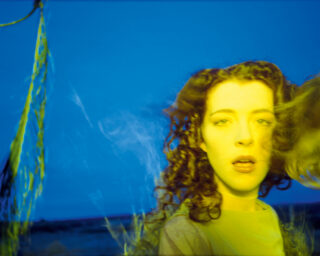
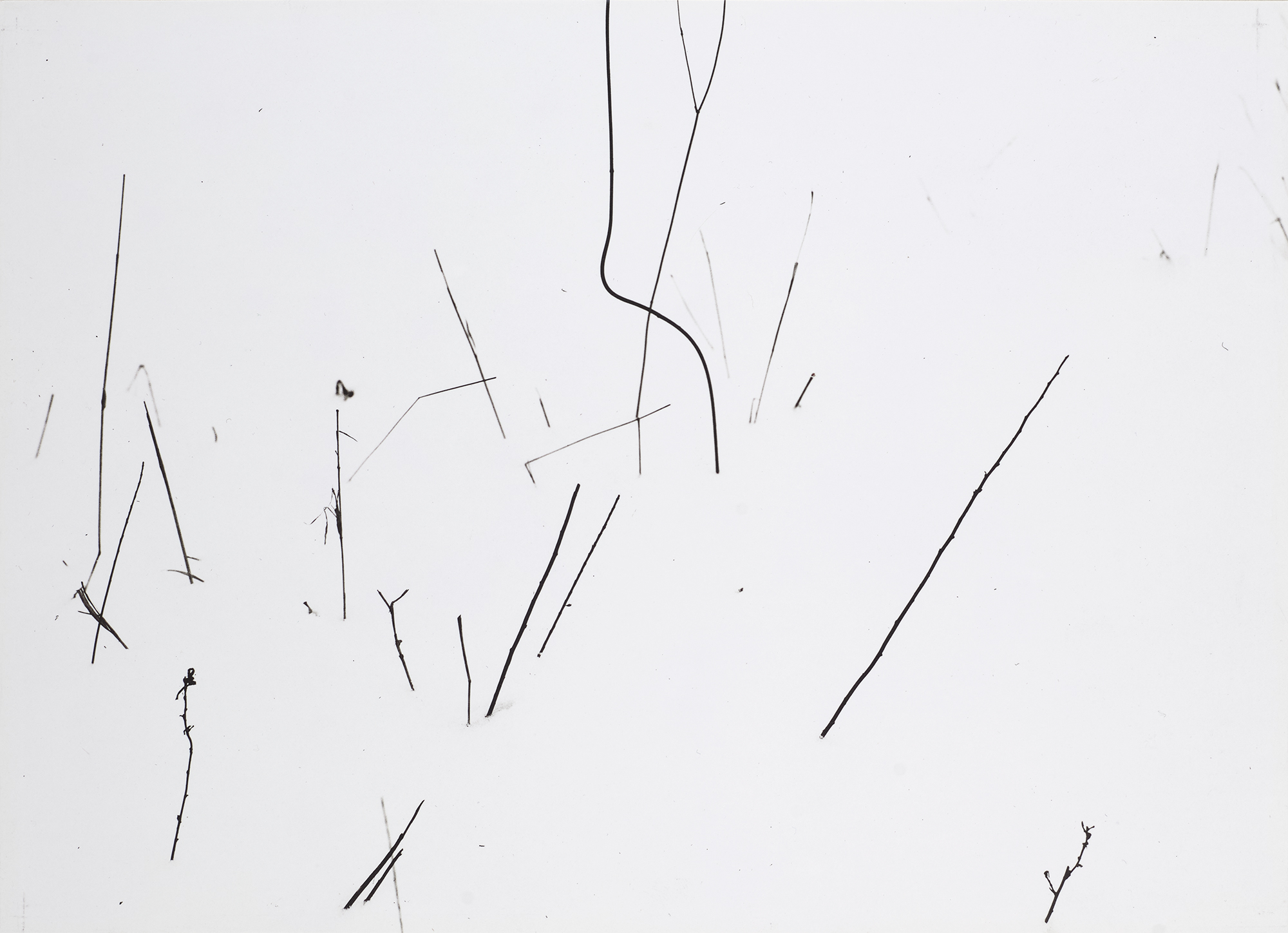
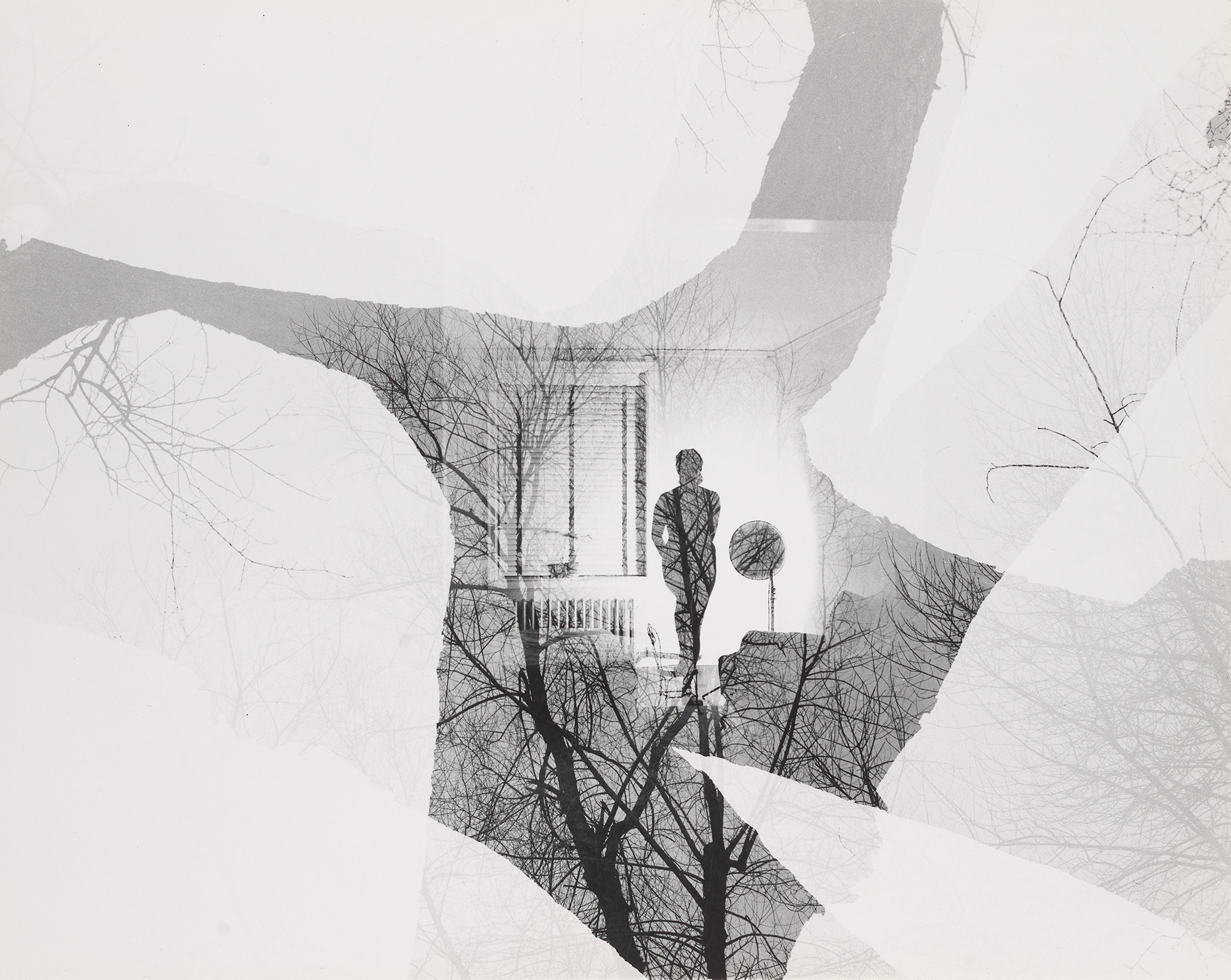
Before I read its title, I teared up trying to decipher the black hashes on a stark white plane in Grasses in Snow, Detroit (1943). I was touched by the emotional life with which Callahan imbued stalks of dead weeds in a winter landscape, transmitted to the viewer by doubling the exposure and overdeveloping the negative. On the same wall is Eleanor (ca. 1947), a portrait of Callahan’s wife and muse, her arms raised and folded over her head, framing her face. The heightened tonal contrast of her pale complexion makes her appear altogether disembodied. Like White, Callahan later juxtaposed nature and flesh in stunning collages made using multiple exposures on the same film, like Eleanor, Chicago (1952). Time and space splinter into a spectacular kaleidoscope. Nature is personified while the domestic is laid bare to the elements.
© The Estate of Harry Callahan and courtesy Pace Gallery
Unrestrained as they were as artists and unconventional as teachers, White, Siskind, and Callahan did not compromise on rigor. They valued craft as an assertion and celebration of being alive. Callahan wrote in “An Adventure in Photography” for Minicam Photography in 1946: “The photographs that excite me are photographs that say something in a new manner . . . ones that are different because the individual is different and the individual expresses himself.” Today’s popular modes of image-making presuppose meaning for the sake of production and reproduction, but as White, Siskind, and Callahan exemplified in their photography, art should be an experience before it is a product, if it has to be a product. It’s a fabrication that does not merely mimic reality but grapples with it. And in the most successful, often unexpected instances, art can become the conduit for our communion. In venturing beyond documentation, White, Siskind, and Callahan realized their medium’s seemingly boundless potential for personal expression, philosophical inquiry, and spiritual transcendence.
Photography as a Way of Life: Minor White, Aaron Siskind, and Harry Callahan is on view at the Princeton University Art Museum through September 7, 2026.