How Schiaparelli Reimagined the Fashion Photograph
Beyond her innovations in Surrealist dress, Elsa Schiaparelli was perhaps the first designer to fully grasp how the camera could extend and refine the visual language of couture.
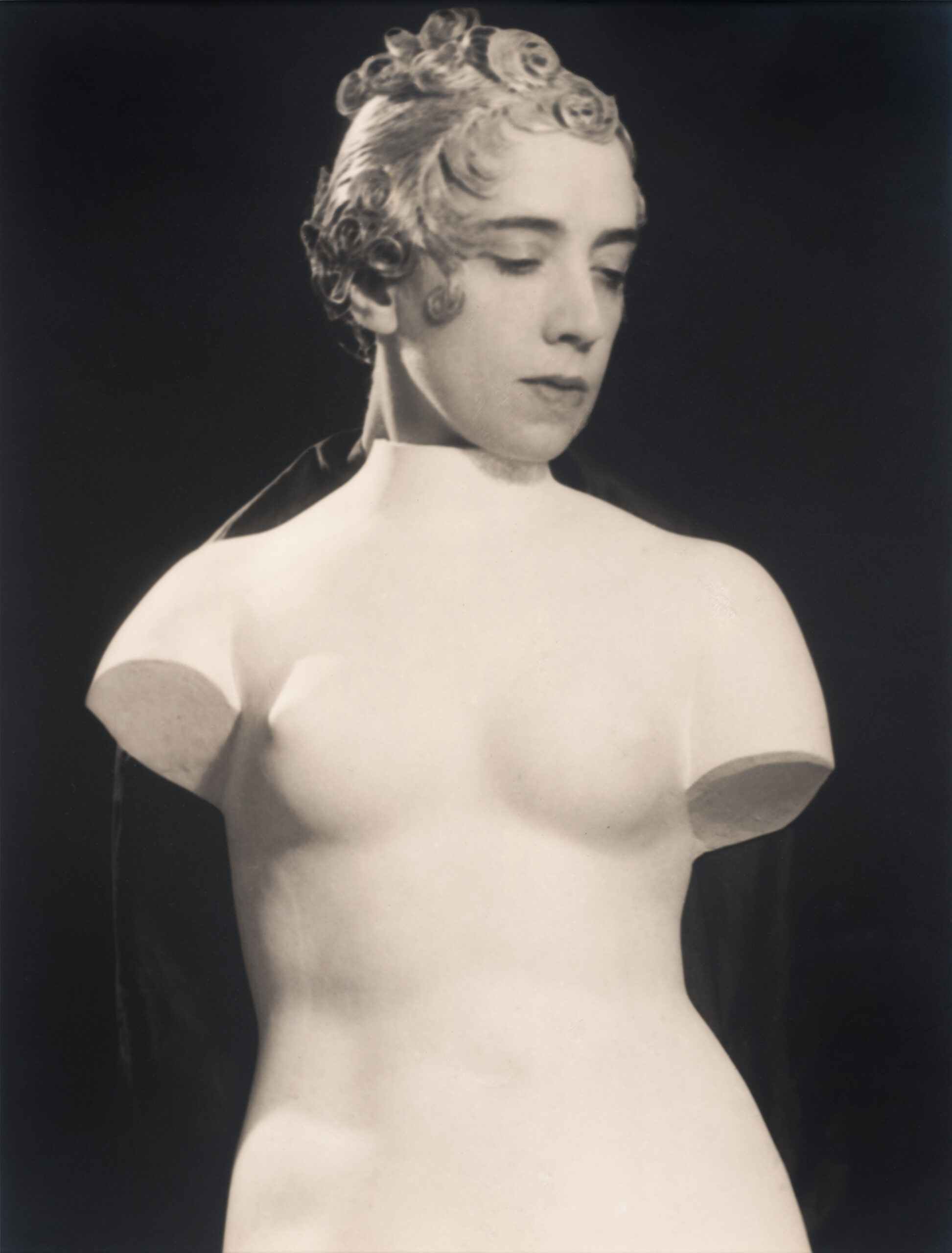
May Ray, Portrait of Elsa Schiaparelli, 1933
© Man Ray Trust
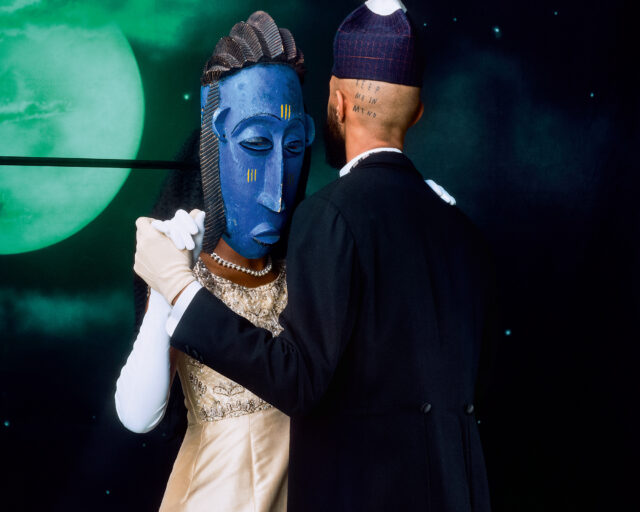
Schiaparelli: Fashion Becomes Art at London’s Victoria and Albert Museum is an object lesson in how Surrealist fashion still carries the potential to provoke and scintillate. The successful revival of Maison Schiaparelli in 2019 in the hands of creative director Daniel Roseberry has reintroduced many Surrealist motifs—chimeric fusions, trompe-l’œil trickery, dream logics, and puckish displacements—to contemporary fashion, though their first exploration by couturier Elsa Schiaparelli is now almost a century old. In her hands, the Surrealist principle of bodily displacement was fashioned into a shoe that rose up to fit the head like a hat; the uncanny was expressed by buttoned flap pockets on a tailored black jacket reshaped as cabinet doors. Today, the work of the maison continues in a similar vein: a lion’s head rearing from a bustline, facial features adorning a handbag.
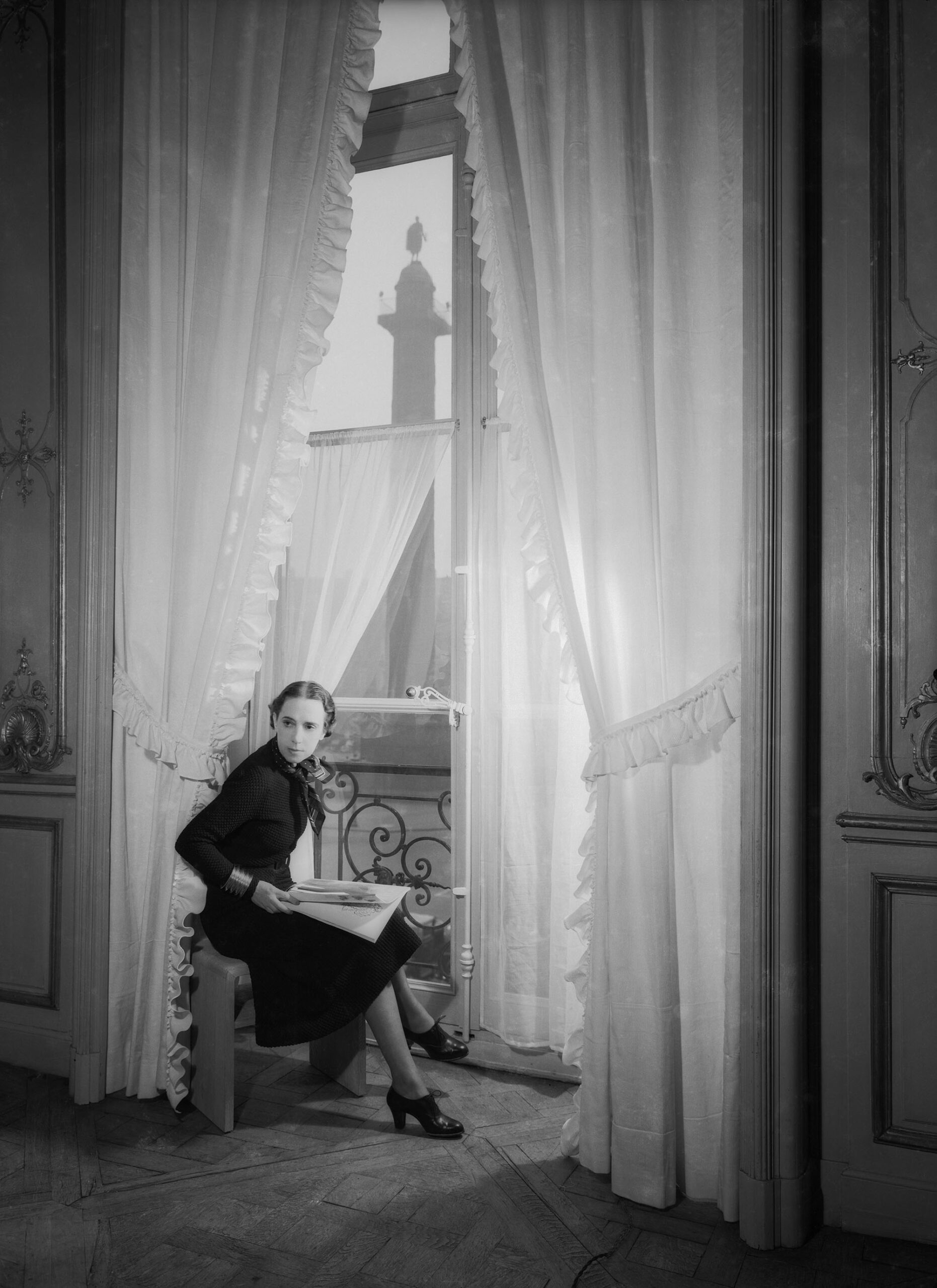
© the artist/GrandPalaisRmn
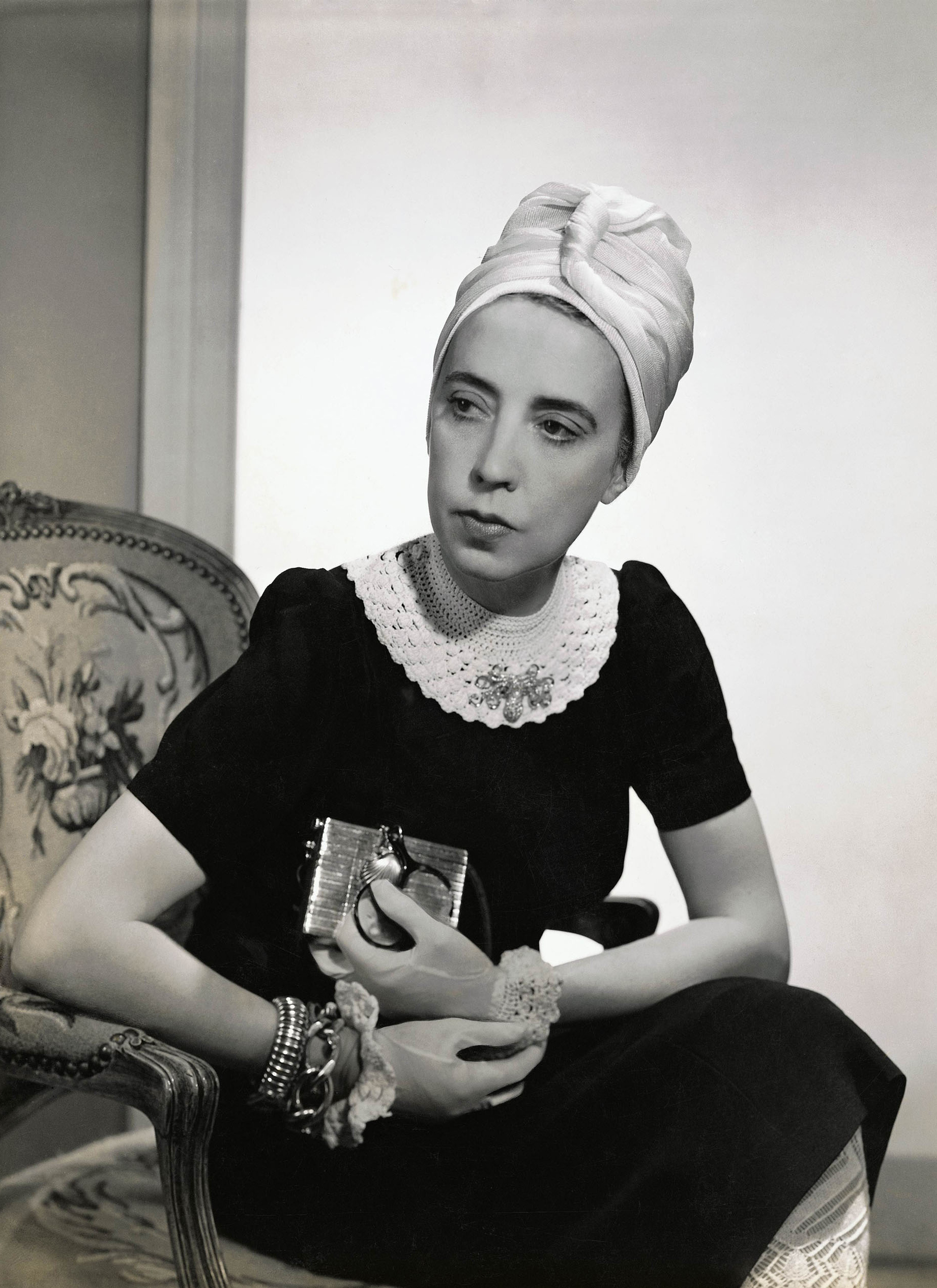
Courtesy Condé Nast via Getty Images
Visitors to the exhibition are greeted by an ever-dissolving projection of the print culture of the interwar years—Schiaparelli on the cover of Time magazine, her designs illustrated in Women’s Wear Daily or photographed by the Séeberger brothers in the fashionable resort of Deauville. The projection animates a textile print she designed for a 1935 collection titled Stop, Look and Listen, a collage of clipped-out headlines her garments and personal life received. Part of Schiaparelli’s charm to the press was that she loved to shock, as made clear by her signature lipstick Shocking Pink and her memoir Shocking Life. Schiaparelli was bent on transforming fashion into an unruly frontier of the avant-garde, and she was unafraid of probing the psychology of how women relate to fashion. “Twenty percent of women have inferiority complexes,” she once wrote. “Seventy percent have illusions.” Schiaparelli’s great contribution lay in designing women a wardrobe to overcome such neuroses by literally wearing unconscious impulses as decoration.
The show underscores that Schiaparelli worked in an era when print media was being transformed by the greater integration of color printing and in the shift from hand-drawn illustration to photography. One could argue that Schiaparelli was the first twentieth-century couturier to fully grasp the pictorial reinforcement and visual refinement offered by the camera. She understood print media as a living organism—in the same way that she brought the inner working of the body to its surface as the means to decorate a dress—that needed to be drip-fed fashion constantly; the promotion of biannual collections was merely one of its slower biological rhythms.
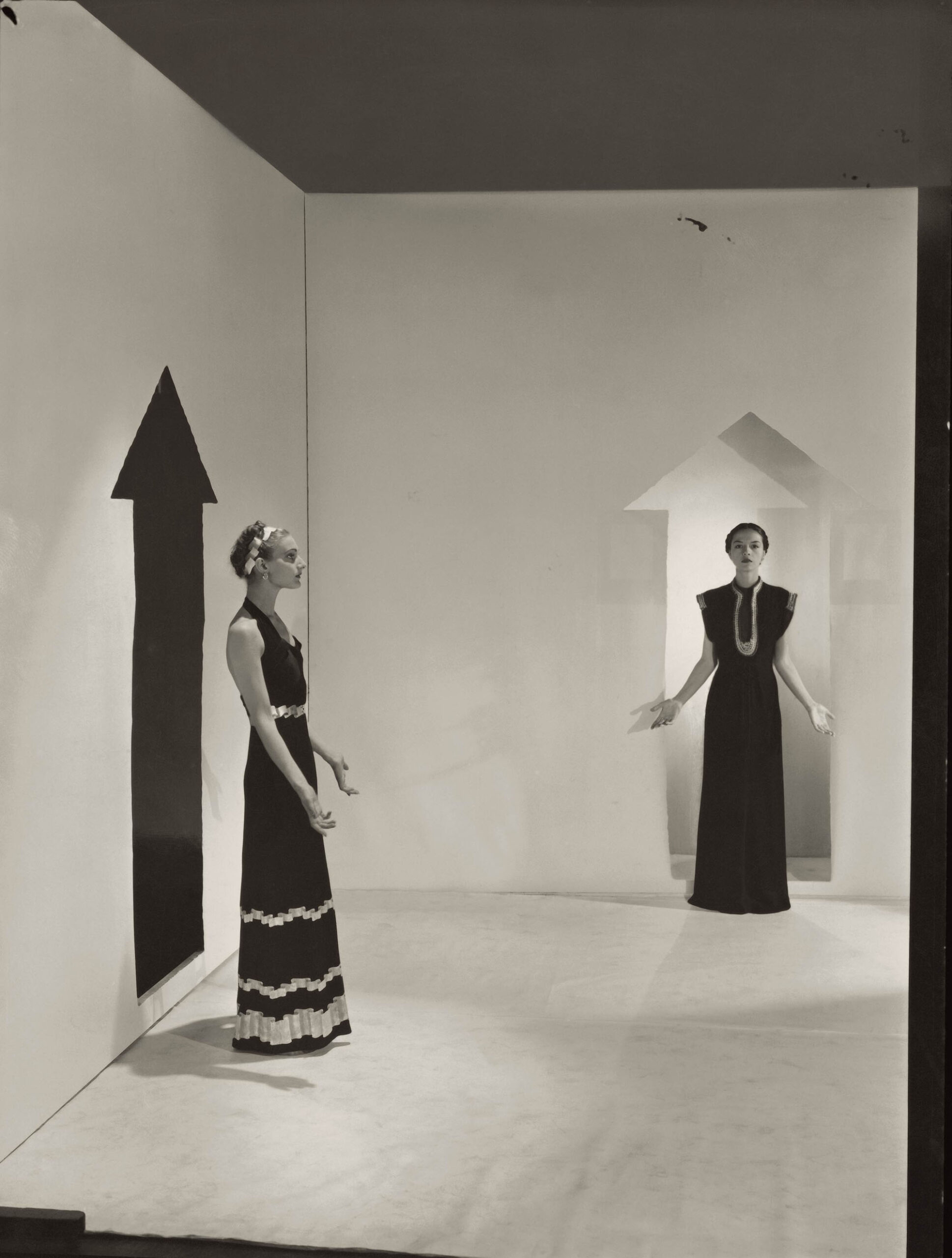
Courtesy Condé Nast via Getty Images
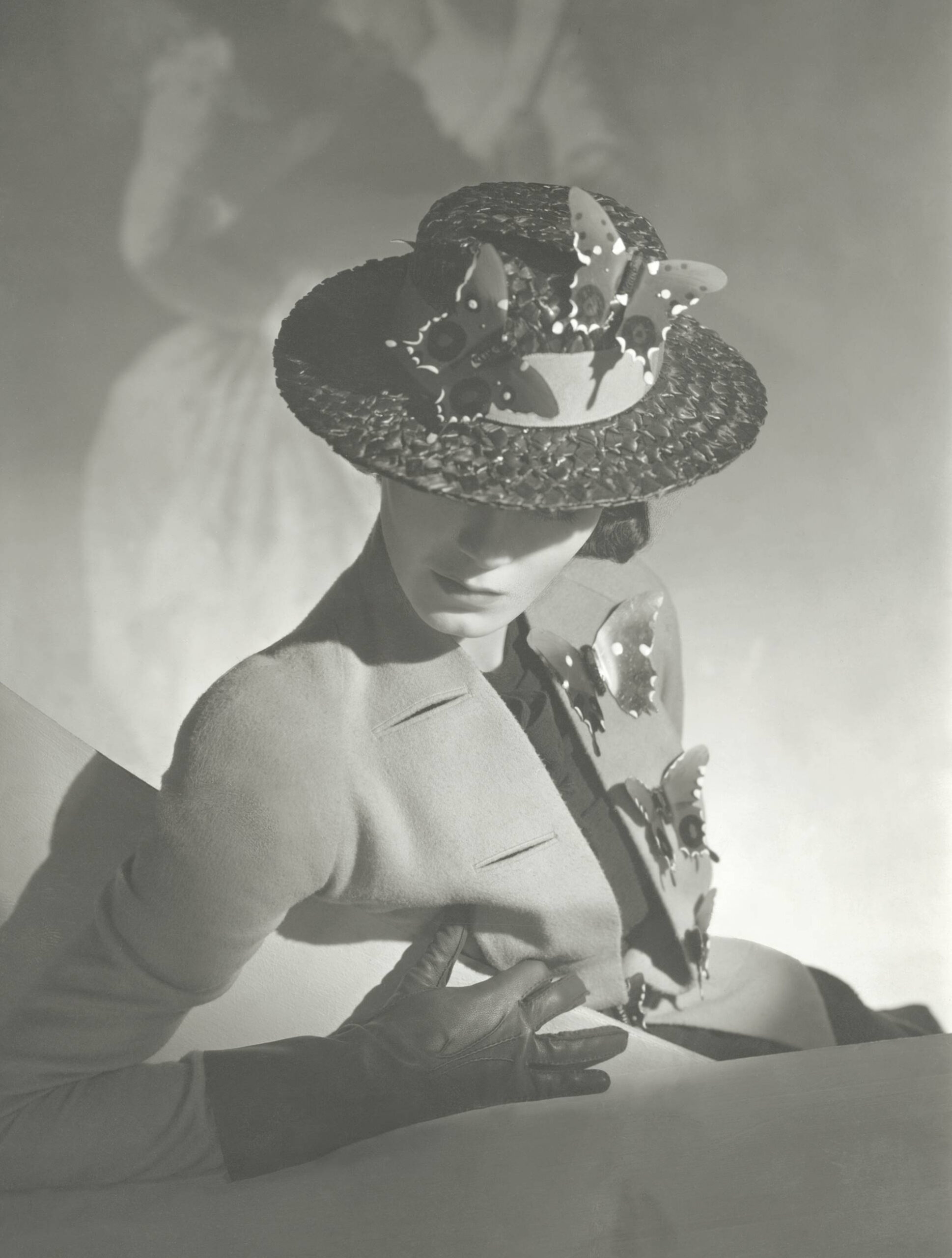
Courtesy Condé Nast via Getty Images
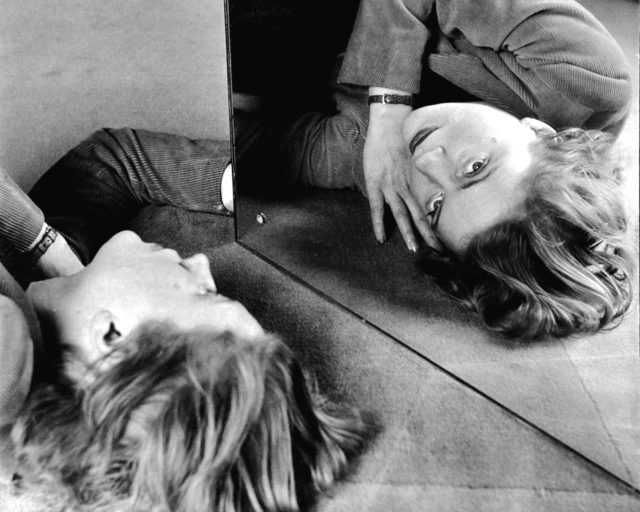
The exhibition serves to remind us that Schiaparelli’s work is recalled as much by images as by surviving examples of her designs and that the photographers who made such images—Man Ray, Georges Hoyinguen-Heune, Horst P. Horst, Cecil Beaton—were predominantly men. Indeed, it is in their portraits of the couturier (Schiaparelli claimed she wasn’t photogenic) that their respective qualities are revealed. According to British photo-historian Susanna Brown in the exhibition catalog, “Huene depicted her as angelic and aristocratic; for Horst, she seemed enigmatic and distant; and for Beaton, she was sometimes vulnerable and sometimes stoic.” Yet at the heart of these portrayals of Schiaparelli lies Surrealism’s gender inequality—that, as a form of artistic enquiry in the hands of men, it predominantly served to objectify women. As the art critic and historian Hal Foster reminds us, if Surrealism was about the liberation of the unconscious, then women were regarded “as sites of desire rather than subjects of desire; women were asked to represent it more than inhabit it.”
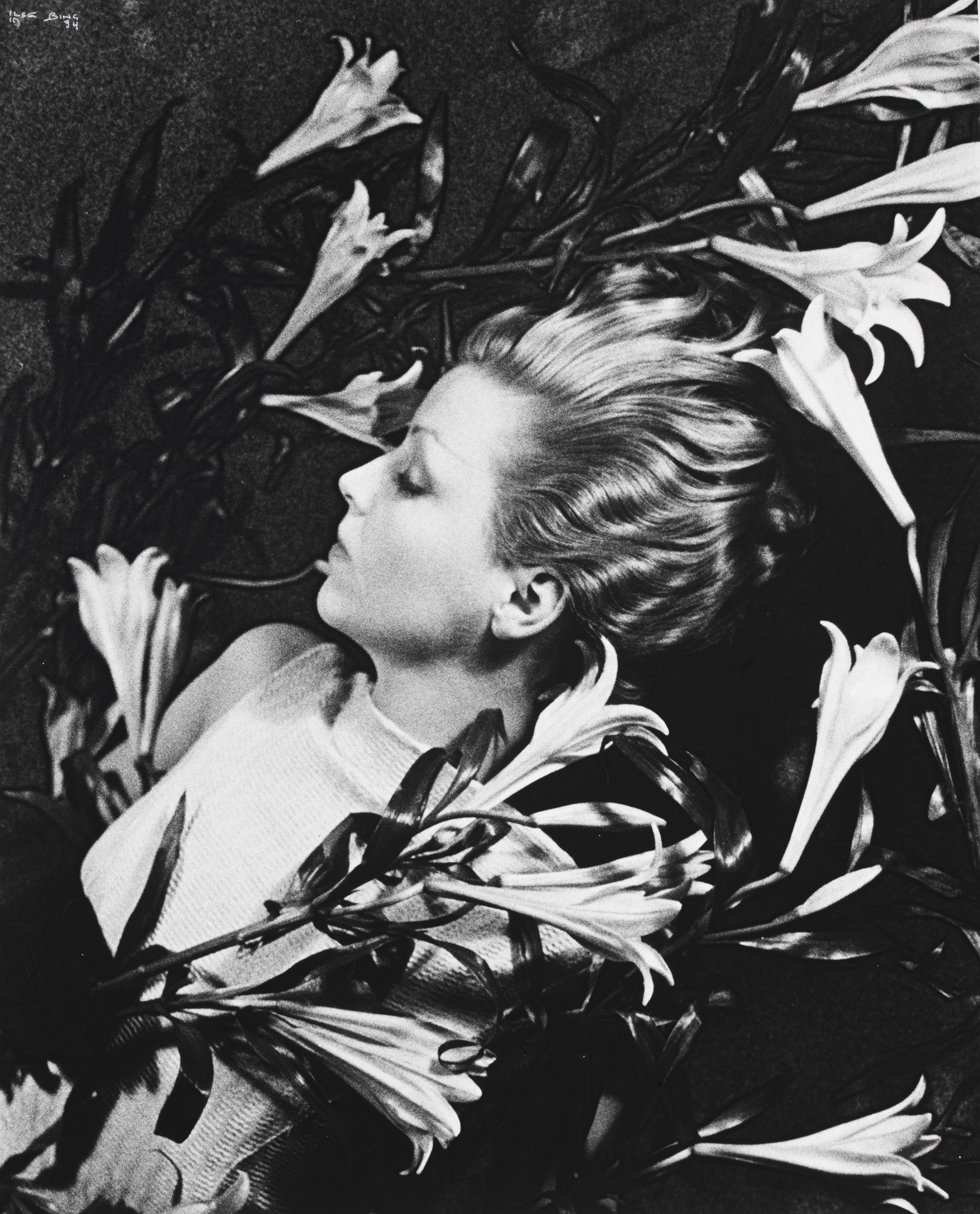
© Estate of Ilse Bing and Victoria and Albert Museum, London
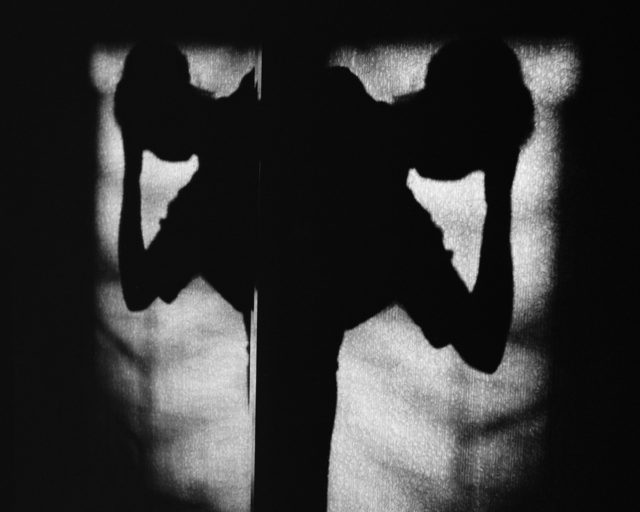
What is therefore liberating about the exhibition is the way it shows another side to Schiaparelli’s relationship to photography, structured by women who took images and by women who wore her sartorial provocations. The campaign image for the perfume Salut de Schiaparelli by German photographer Ilse Bing is a solarized portrait of Bettina Bergery surrounded by lilies—not a model but Schiaparelli’s right-hand woman, who ran the maison at Place Vendôme. A portrait by American photographer Lee Miller of British artist Eileen Agar wearing a Schiaparelli hat captures her shadow as a grotesque outline of lumps and bumps, while another by French artist Claude Cahun of British artist Sheila Legge as a Surrealist phantom has her standing in Trafalgar Square—her head covered in rose blooms, her hands outstretched feeding pigeons—like a statue of the oddest order upstaging Nelson’s Column. Legge’s outfit was inspired by Salvador Dalí’s 1936 painting Necrophiliac Spring, which was in fact owned by Schiaparelli. These fascinating examples prove how women (both heteronormative and gender fluid) mobilized Surrealism in ways that took it beyond the confines of the gallery wall or plinth, truly dislocating everyday life as spectacular fashion.
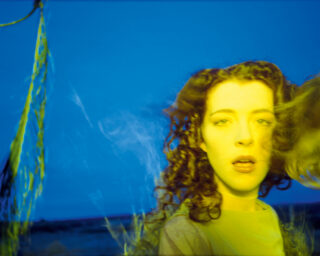
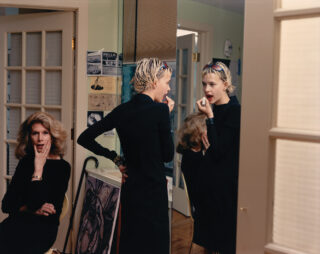
Photography is also used in the exhibition’s last gallery to show how image makers still bear the responsibility of upholding the maison’s relevance and meaning in contemporary media. It is an unfortunate conclusion to note that out of the sixteen works displayed, only three of them are by women photographers: Nadia Lee Cohen, Nadine Ijewere, and Charlotte Wales. It might be more hopeful to turn to the women who wear Schiaparelli today: perhaps Lauren Sánchez Bezos, dressed in custom for the 2026 Met Gala as John Singer Sargent’s Madame X (1884) come to life? Fancy dress of the highest order. Beyond shocking.
Schiaparelli: Fashion Becomes Art is on view at the Victoria and Albert Museum, London, through November 8, 2026.