A People’s History of Puerto Rico
Ricardo Alcaraz has spent five decades documenting the island’s movements for labor rights, land, and independence.
Ricardo Alcaraz, Entierro de Santiago “Chagui” Mari Pesquera, 1976
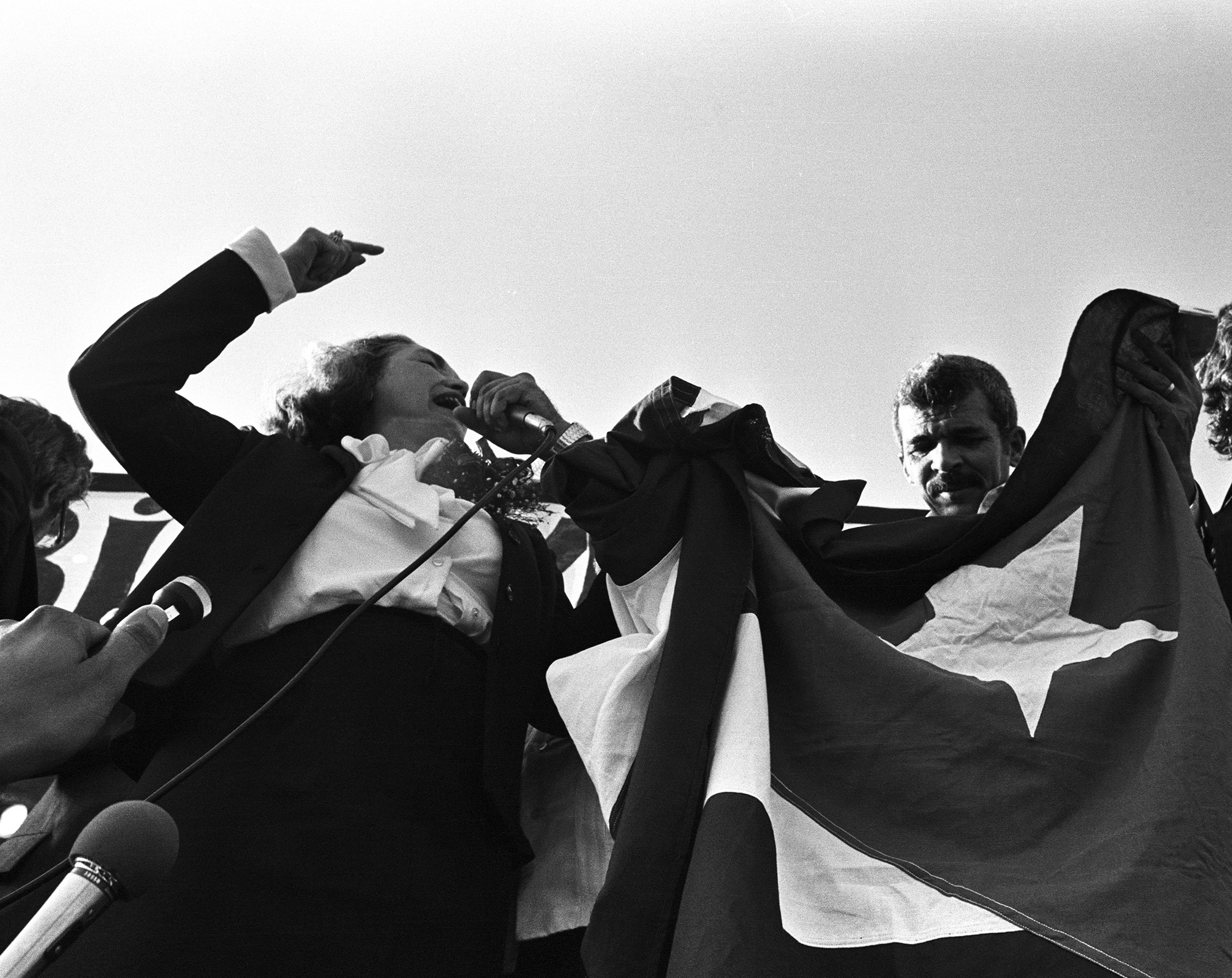
The photograph is almost audible. Taken during the 1979 repatriation of Lolita Lebrón and Rafael Cancel Miranda to Puerto Rico after twenty-five years of federal imprisonment, Ricardo Alcaraz’s Lolita y Rafael depicts the nacionalistas as arcs of defiance against a cloudless sky. Lebrón, in a voice devout and large, declares the victory of courage over fear, while Cancel looks to the star on the flag gathered over his heart with a steady and private tenderness. Both were convicted for their roles in the 1954 armed attack on Congress. Alongside Irvin Flores and Andrés Figueroa Cordero, Lebrón and Cancel had fired shots into the US House of Representatives Chamber and unfurled a Puerto Rican flag to protest the archipelago’s colonial status. As Lebrón said upon arrest: “I did not come to kill anyone. I came to die for Puerto Rico.” Long branded by American authorities as terrorists, the four are widely revered within the Puerto Rican independence movement as symbols of sacrifice. “It is extremely important to preserve these moments for future generations,” Alcaraz told me earlier this summer. “I want my images to become an archive of shared memory.”
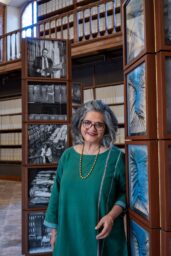
Such an archive is now on view in Cazador de Milagros (Miracle Hunter), an exhibition that surveys over five decades of Alcaraz’s photography at the Museo de Arte Contemporáneo de Puerto Rico in San Juan. Documenting music, dance, strikes, sit-ins, and quiet moments of everyday life and labor in Puerto Rico, Alcaraz has built a record of Borikén resistance that is marginalized in official archives. Several of the exhibition’s vintage prints bear marks of flooding—an intentional inclusion by curator Christopher Gregory-Rivera, a Puerto Rican photographer whose own work draws on police archives to unsettle state-sanctioned accounts of the past. The water damage points to the precarious conditions under which collective visual memory persists amid state neglect. For decades, Alcaraz’s work has resided not in a museum or university but in filing cabinets in the photographer’s own home. It survives because of his insistence that these images and the people they depict are worth seeing, protecting, and remembering.
Alcaraz’s initiation into photography is inseparable from his political involvement. As a student at the University of Puerto Rico in the mid-1970s, he worked as a graphic designer for Poder Estudiantil, the newspaper of the Federación de Universitarios Pro Independencia (Federation of University Students for Independence). After the staff collectively purchased a secondhand Yashica rangefinder, Alcaraz became a photographer. Poder Estudiantil shared its darkroom with Claridad, the official newspaper of the pro-independence movement and later the Puerto Rican Socialist Party. It was there that Alcaraz met photojournalists central to the social documentary movement in Puerto Rico in the 1960s and ’70s—José “Pucho” Charrón, Rafi Robles, Luis Castro, Rafael “Changui” Díaz—and received his education in photography. Claridad’s team regularly held evening workshops to study the humanist tradition of photographers such as W. Eugene Smith, Alberto Korda, and Héctor Méndez Caratini and to critique each other’s work. “The newspaper was very much identified with working people, with student movements, and with struggles for independence.” Alcaraz said. “In this combative publication with its photographers is where I was formed.”
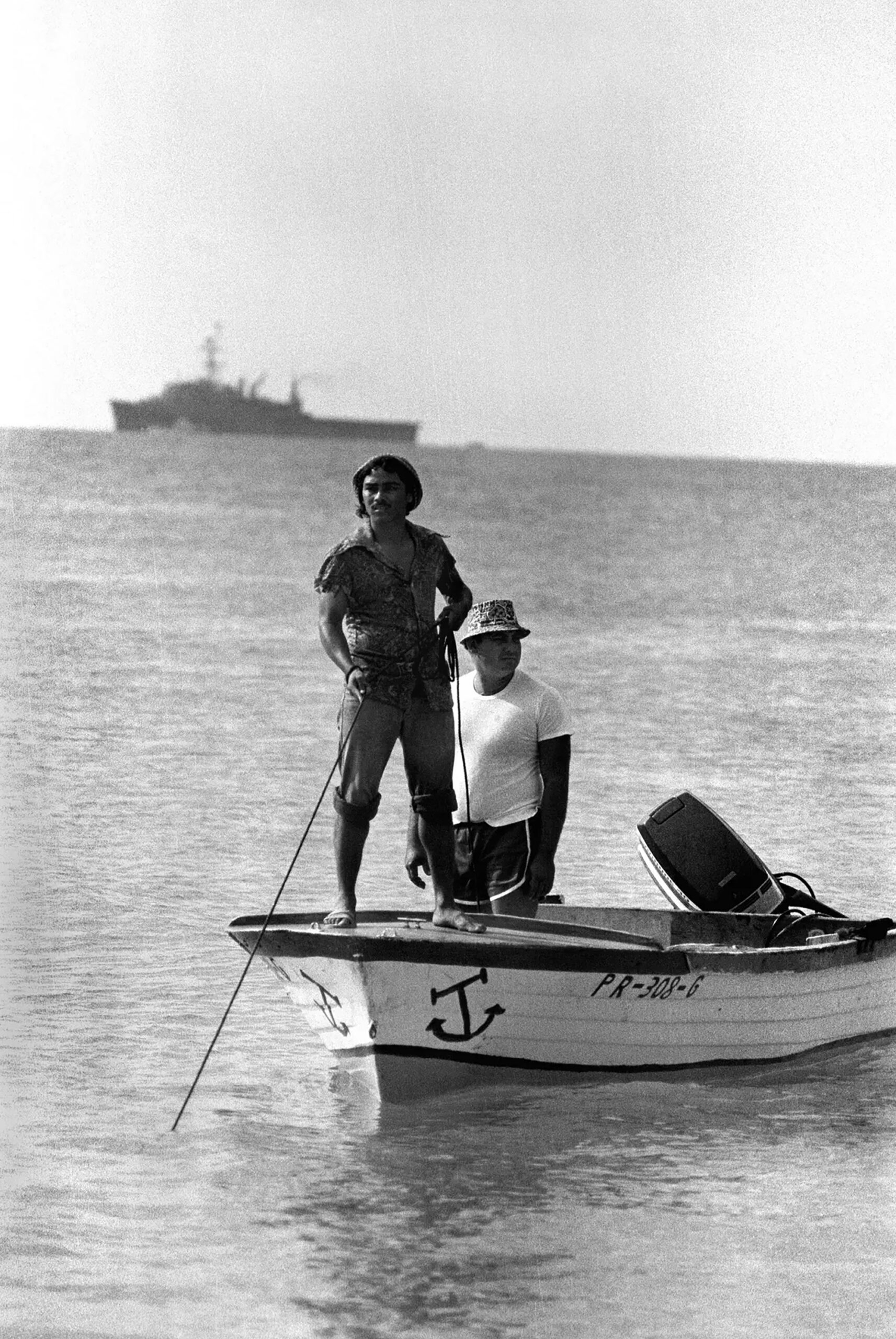
In 1979, anti-Navy protests erupted in Vieques, where the US military had, four decades earlier, expropriated more than three-quarters of the island in an effort to construct a “Caribbean Pearl Harbor.” Viequenses were forcibly removed to the middle of the island, sandwiched between an ammunition depot to the west and a vast training range, with active bombing, to the east. The island’s fishermen, faced with the Navy’s threat to their subsistence, launched the “Fishermen’s War” (1978–83) to reclaim the island. Maneuvering their wooden boats into direct lines of missile fire, the men halted military exercises and international war games.
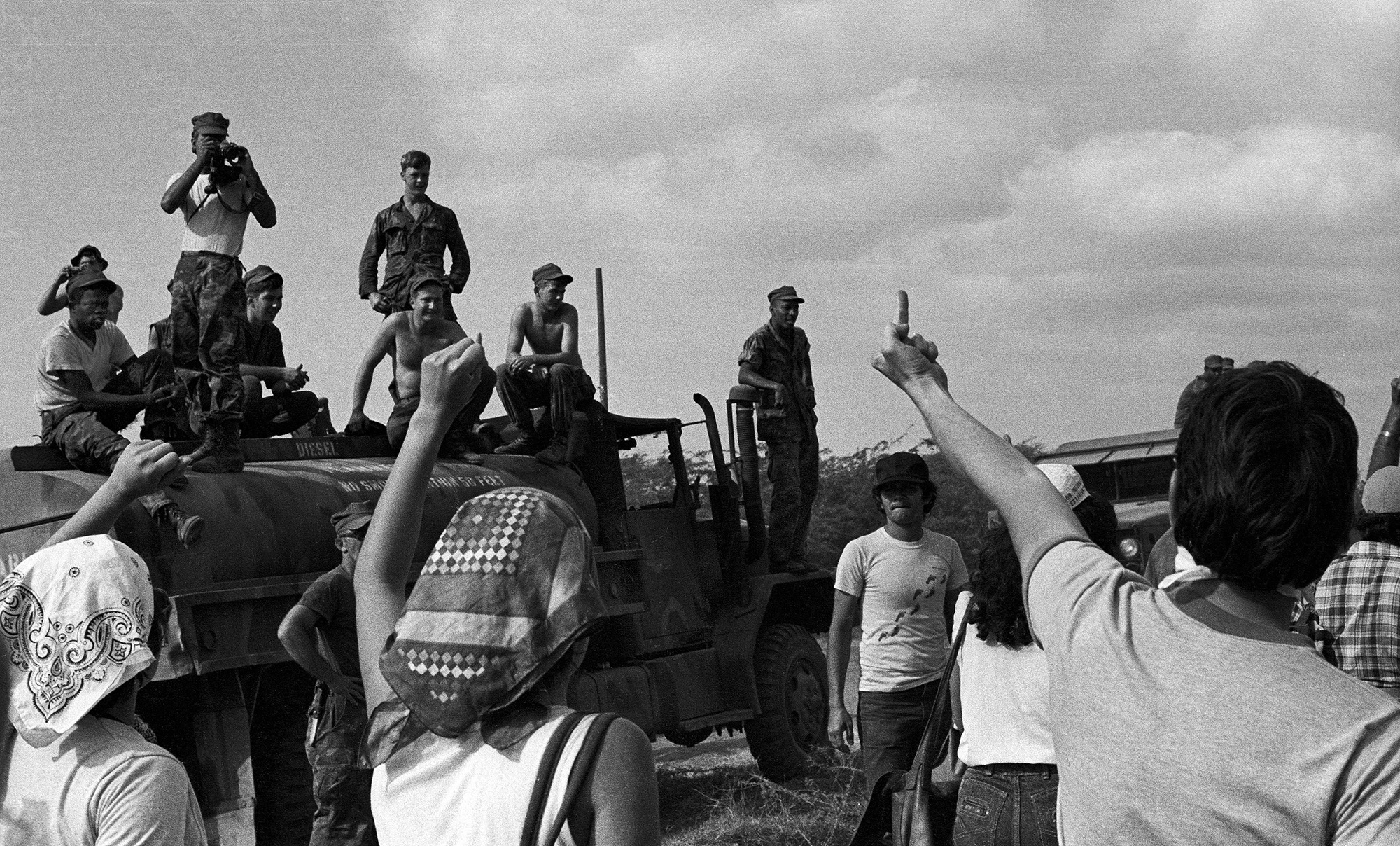
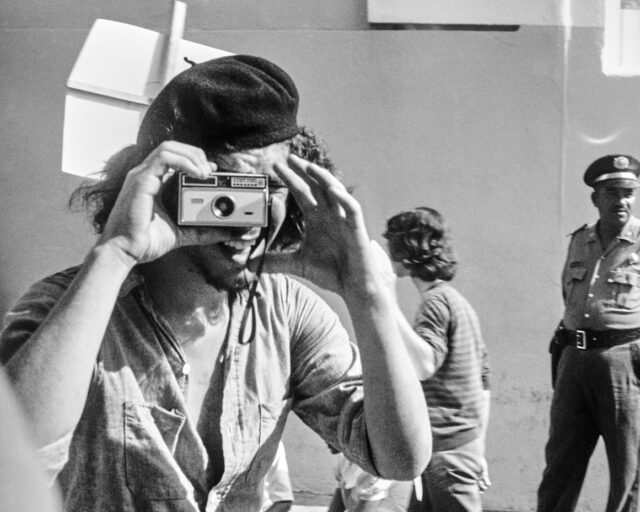
In Desobediencia Civil En Vieques (1979), a series featured last year in Bad Bunny’s music video for “LA MuDANZA,” Alcaraz photographed one of these fishermen-led forays. “I went with my camera but I also went as a participant,” Alcaraz said. Dispensing with the photojournalist’s pose of distance and detached solicitude, Alcaraz made images that insist upon their involvement. The fishermen’s heroism is frank in his pictures, as is the militancy of the photographer’s position. In a photograph of civilian protesters’ confrontation with the Navy, Alcaraz trains his eye on a US soldier who has pointed his camera lens toward the crowd. The image stages a contest of witnessing, each side seeking to frame the scene for posterity. Against the military’s counter-narration of this event as a criminal trespass on naval property, Alcaraz records the righteousness of a middle finger thrown up against the island’s besiegement. Photographing from the ground, as opposed to the soldier’s elevated perspective from the rear of a tanker truck, Alcaraz sees the smallness of the most powerful military in the world and the protesters’ adrenalizing victory.
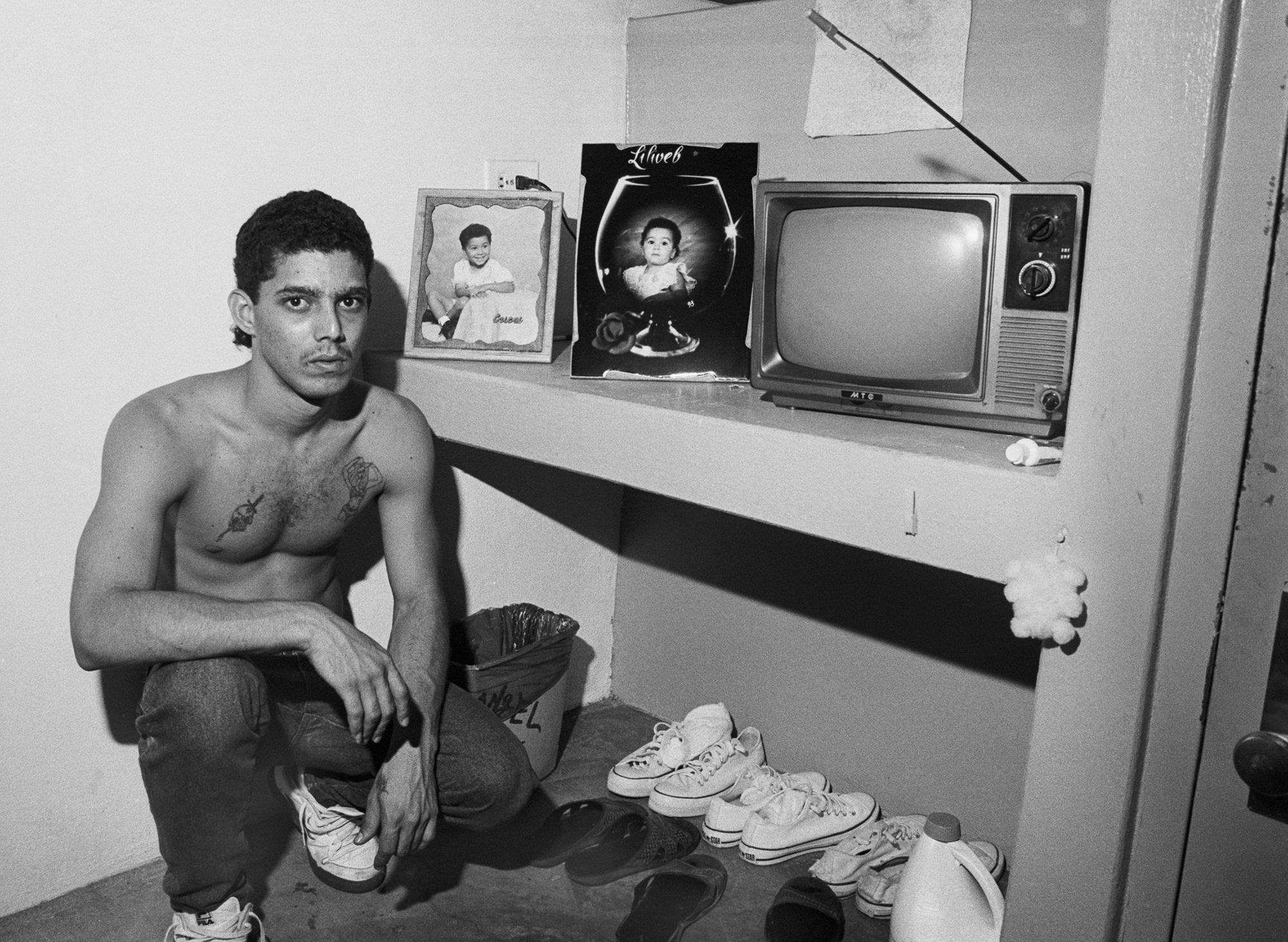
Alcaraz’s preservation of movement histories is especially significant in the case of Villa Sin Miedo, a land rescue project that was brutally destroyed in May 1982. Tired of waiting for promised but perpetually deferred parcels of land, a group of rescatadores pushed back on “commonsense arrangements” of property and occupied sixty-five acres of government-owned land in Rio Grande in 1980. The villagers organized themselves and built the infrastructure they needed: roads, water, electricity. They also developed a lateral governance structure that guaranteed the participation of all residents in the village’s decision-making process, including children.
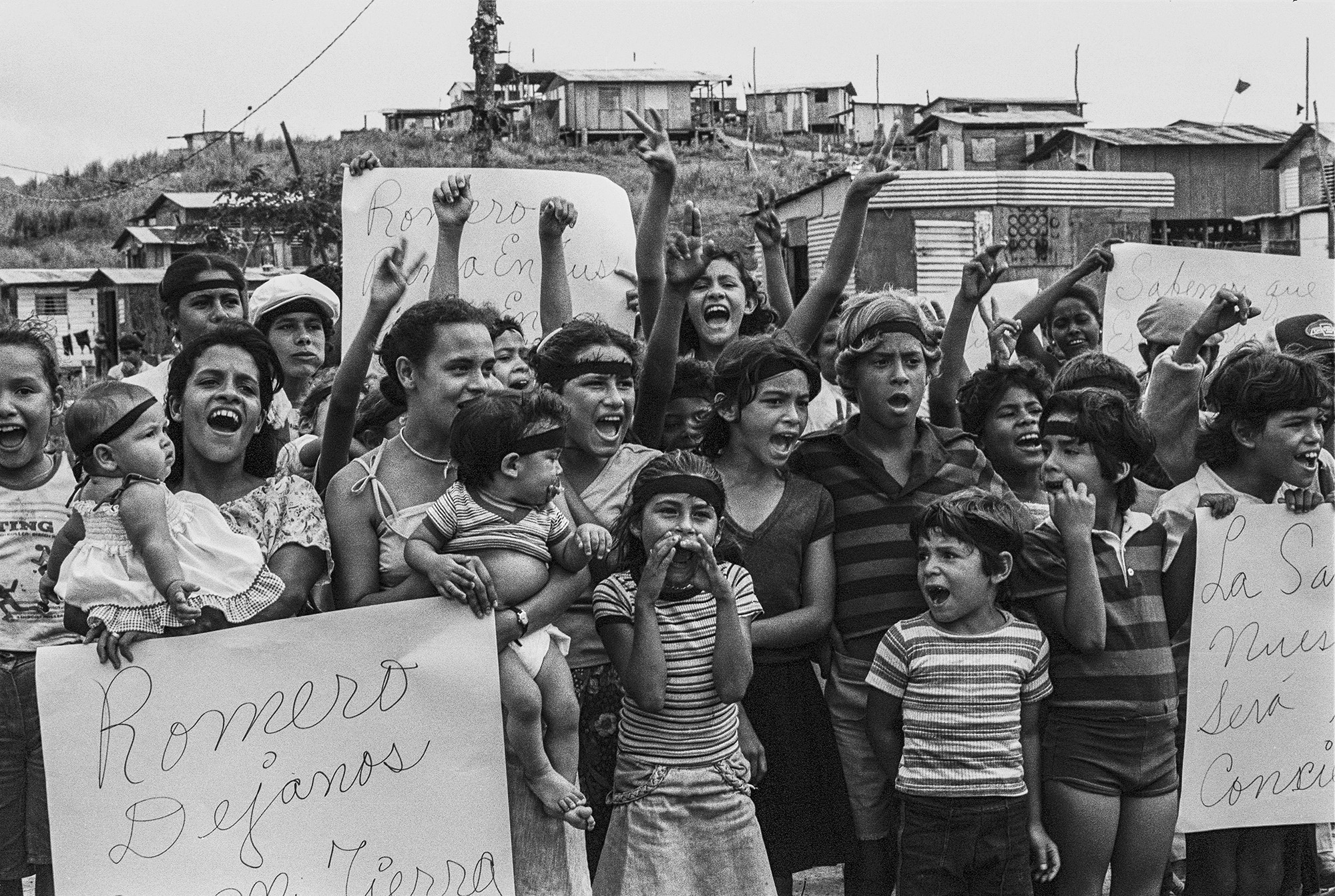
As sociologist Eduardo Bonilla-Silva writes, the community had to be destroyed by state forces due to its level of self-organization and its challenge to the “sacred bourgeois right to private property.” Calling the rescuers “land invaders,” Governor Carlos Romero Barceló ordered the village’s demolition by riot police in 1982. Alcaraz’s Villa Sin Miedo (1982) refutes Romero Barceló’s distortion. In his photograph, children stand in defense of their village; their signs state that they know who the real invaders are, and their striped shirts and coordinated headbands echo the corrugation on the roofs of their homes. Compare Alcaraz’s picture with former Farm Security Administration photographer Jack Delano’s Villa Sin Miedo, an illegal community of homeless squatters (1982) and One of the squatters in the community known as Villa Sin Miedo (1982). Where the liberal humanitarian eye discerned a landscape of dilapidation in need of reform—or, at best, the poor’s “dignity” in the face of “the most appalling adversity”—Alcaraz sees a vital ingenuity, an unruly, splendorous experiment in collective living, and a prefigurative practice for a world without property.
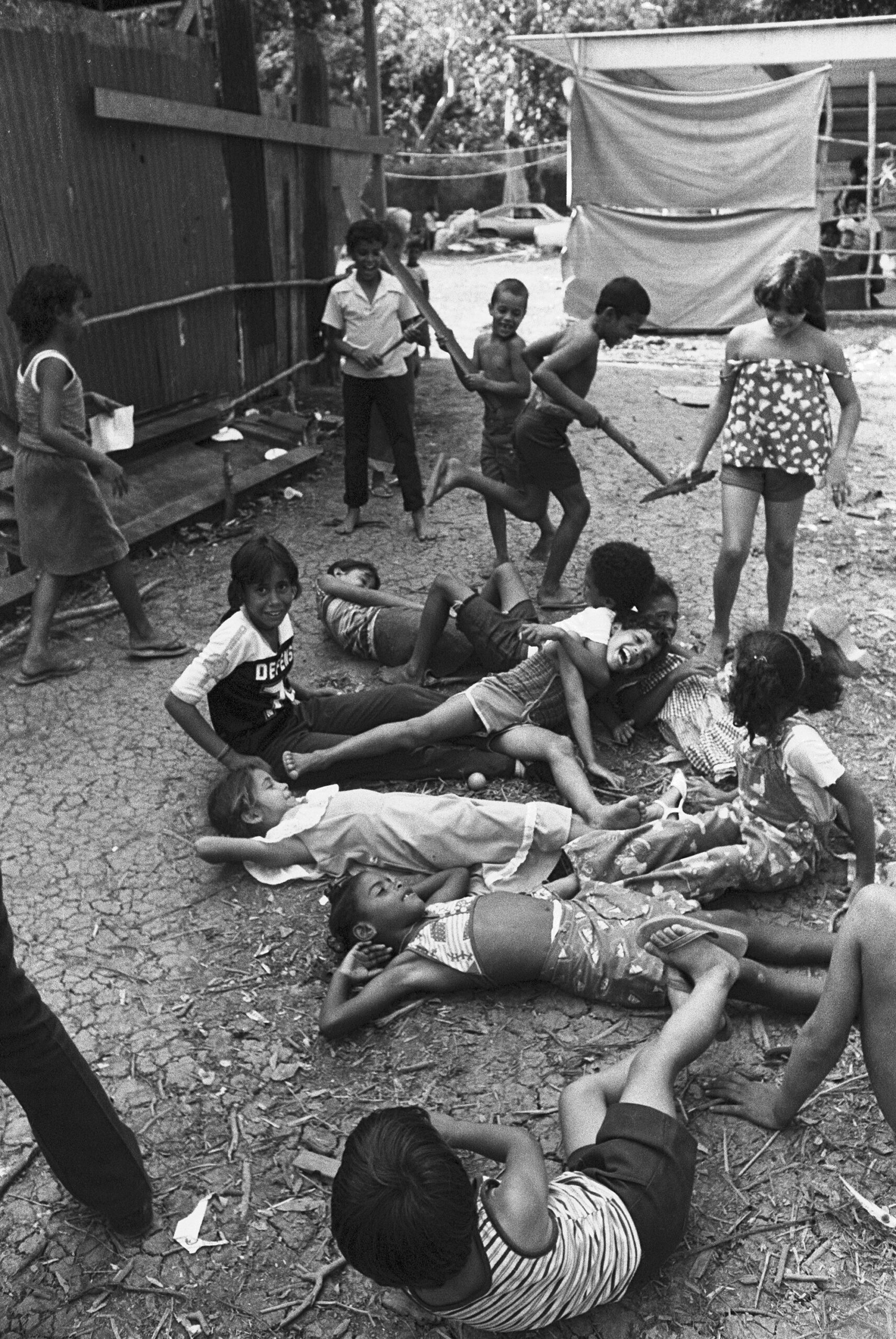
In Recrean Desalojo (1982), taken following Villa Sin Miedo’s temporary relocation to Trujillo Alto, Alcaraz photographs children at play. They reenact the day of their eviction. Four children play the riot police, chasing after “villagers” with wooden “batons.” The “villagers” fall to the ground. In the center of the photograph: an unshakeable smile. Childhood here emerges not as innocence but as clarity: a heliotropic transfiguration of violence, an adamant refusal of despair.