Dayanita Singh Dreams of Archives
The artist speaks about her recent installation in Venice and the democratic nature of photography.
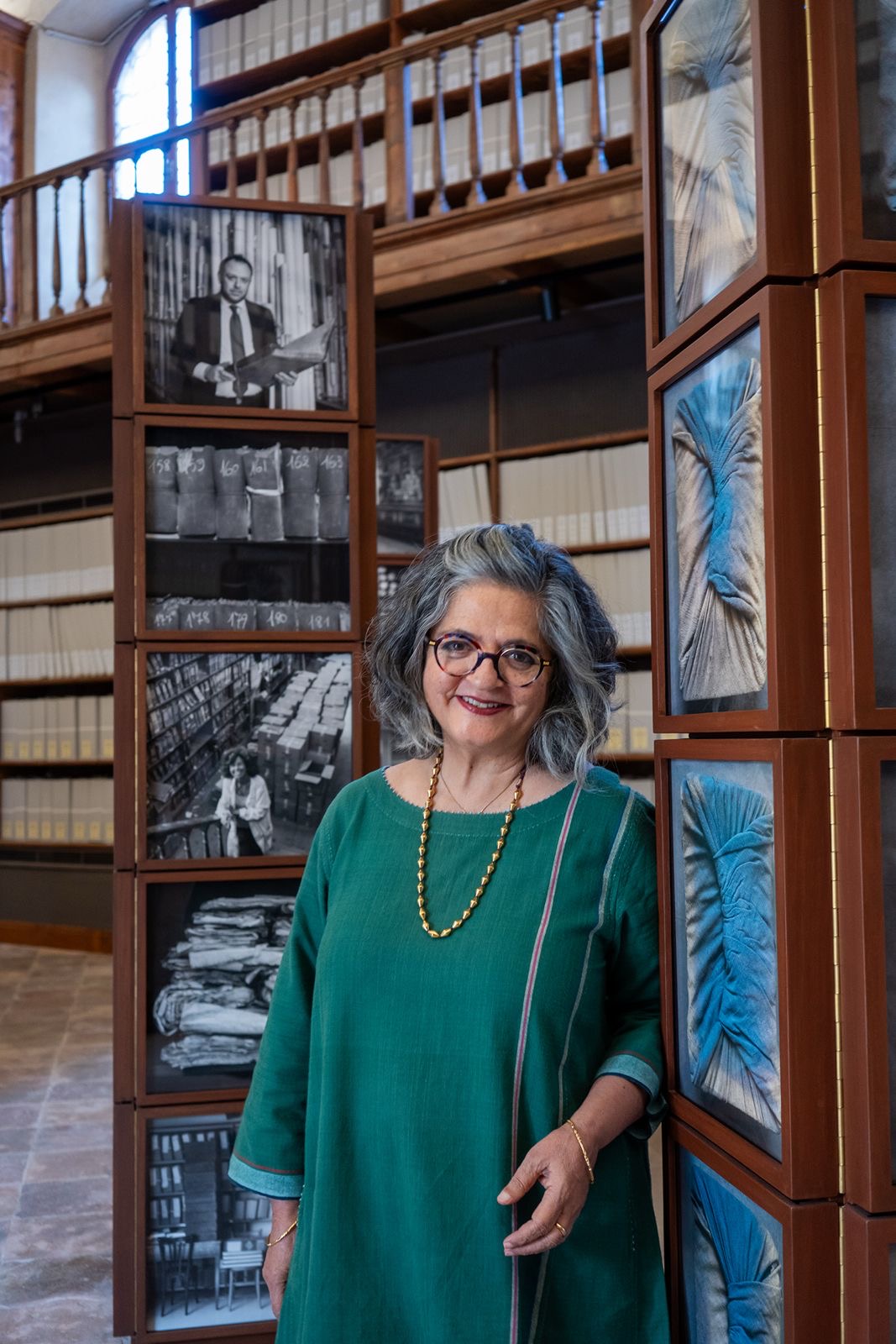
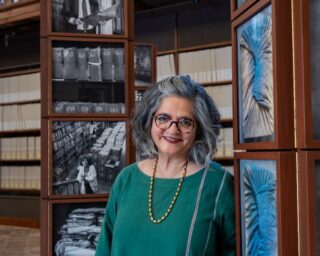
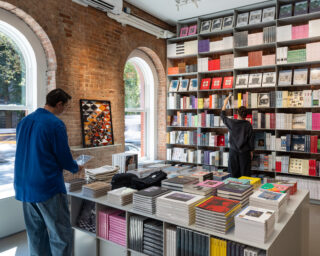
Dayanita Singh at ARCHIVIO, Archivio di Stato, Venice, 2026
Photograph by Mark Henley
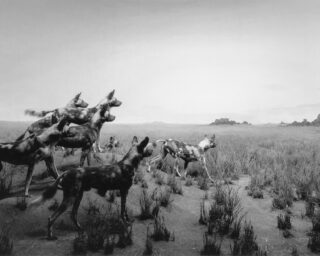
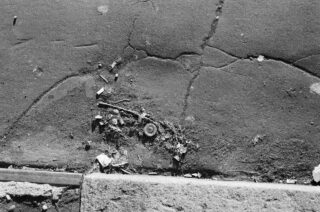
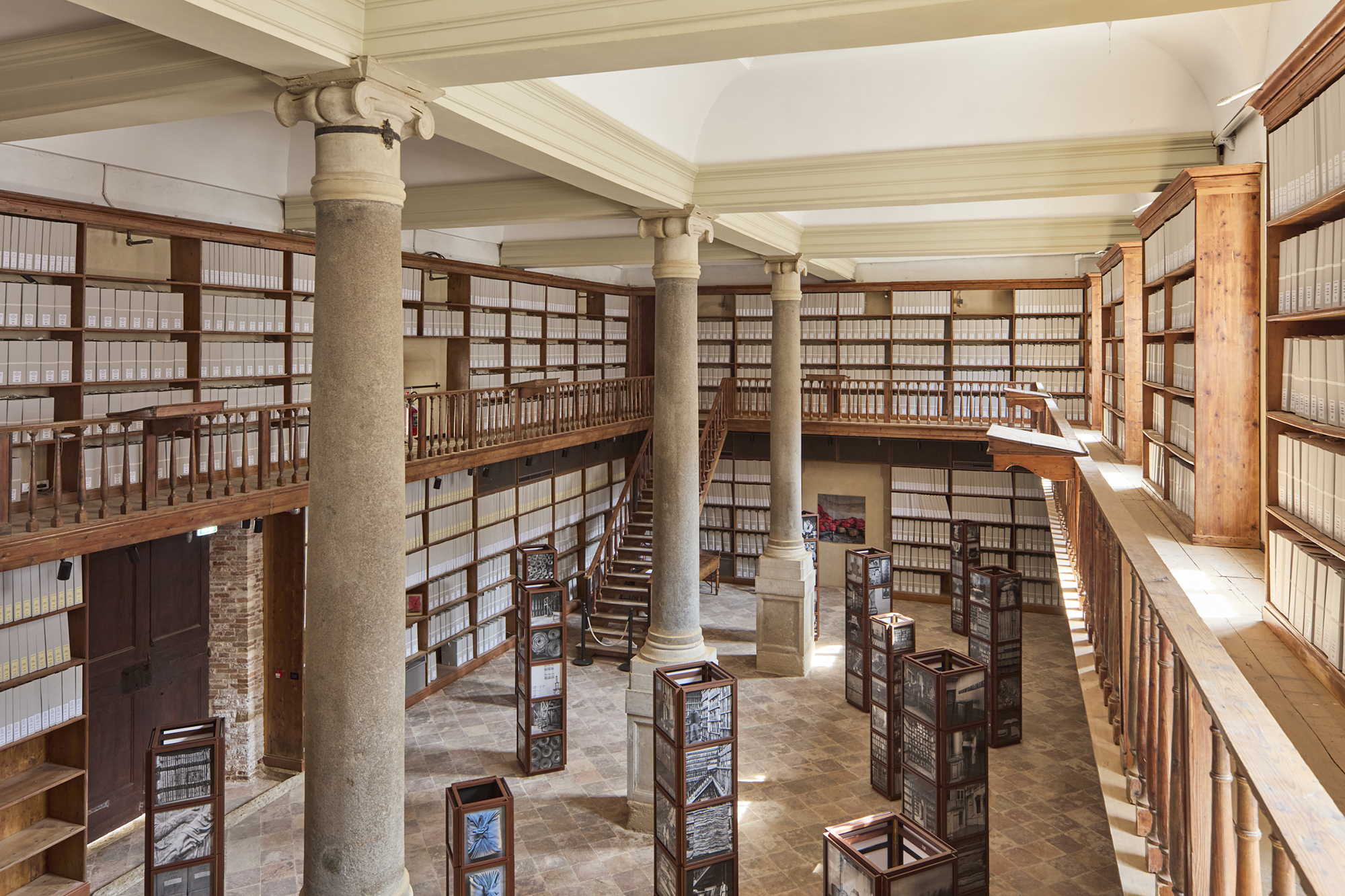
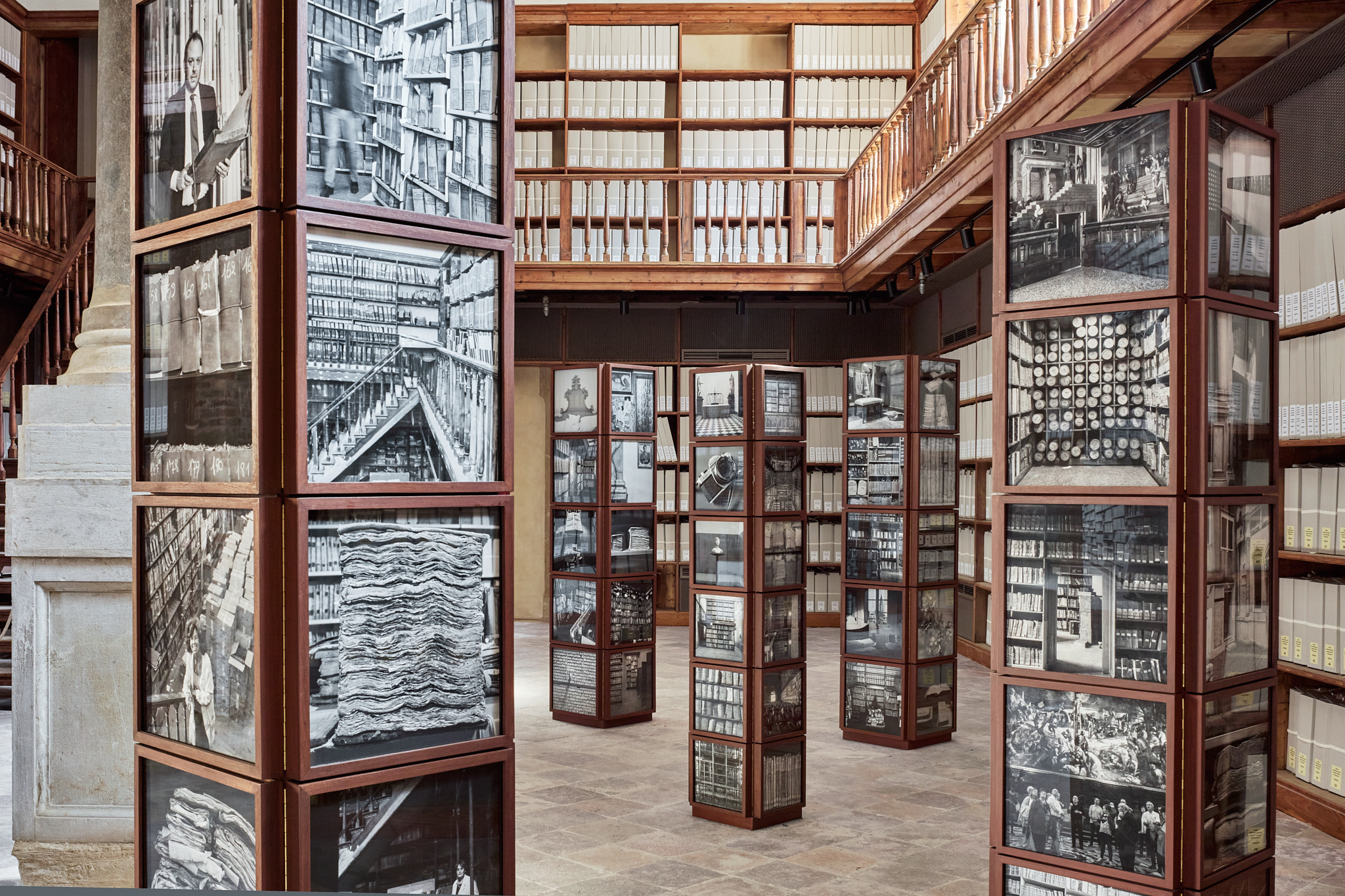
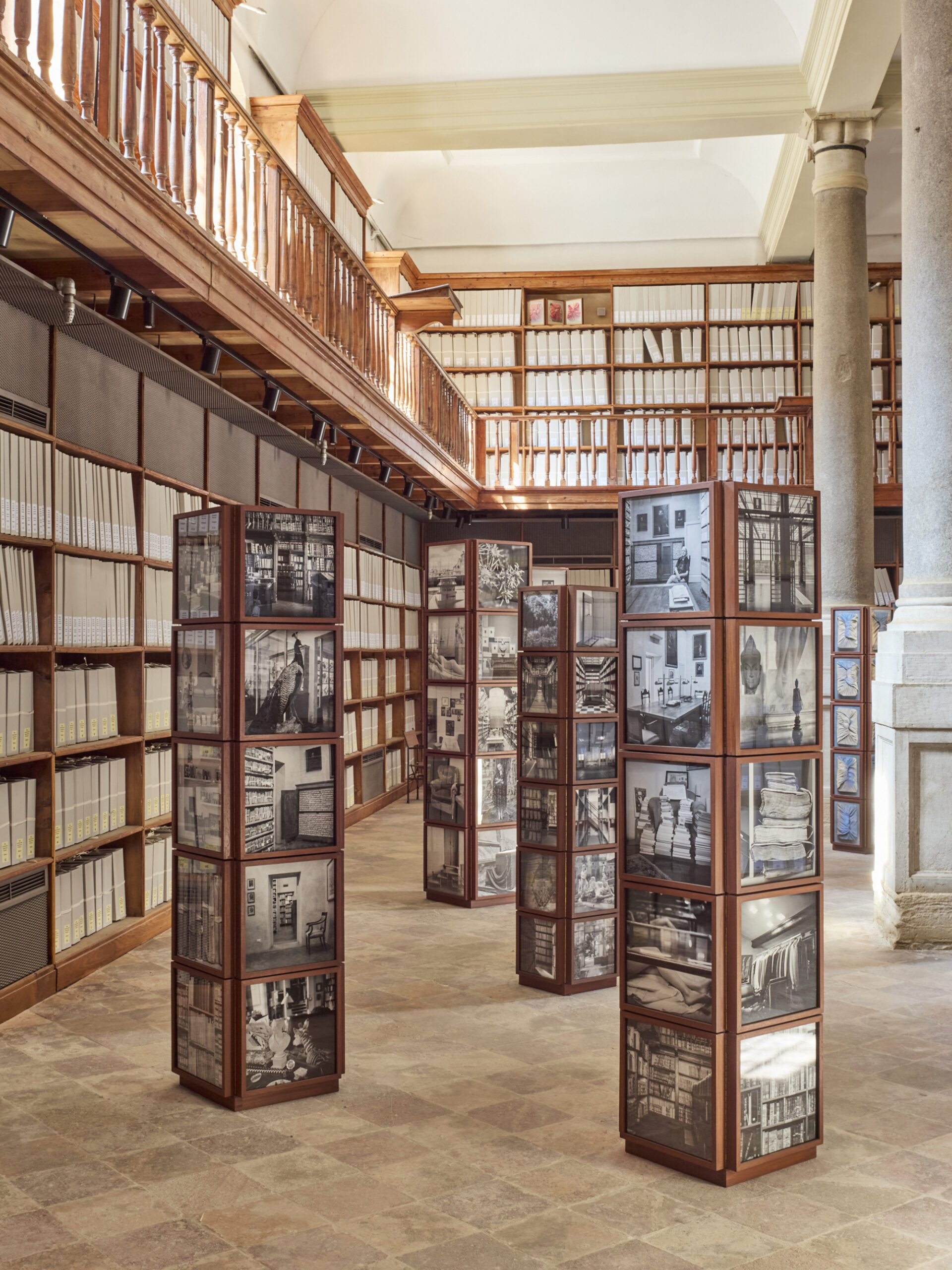
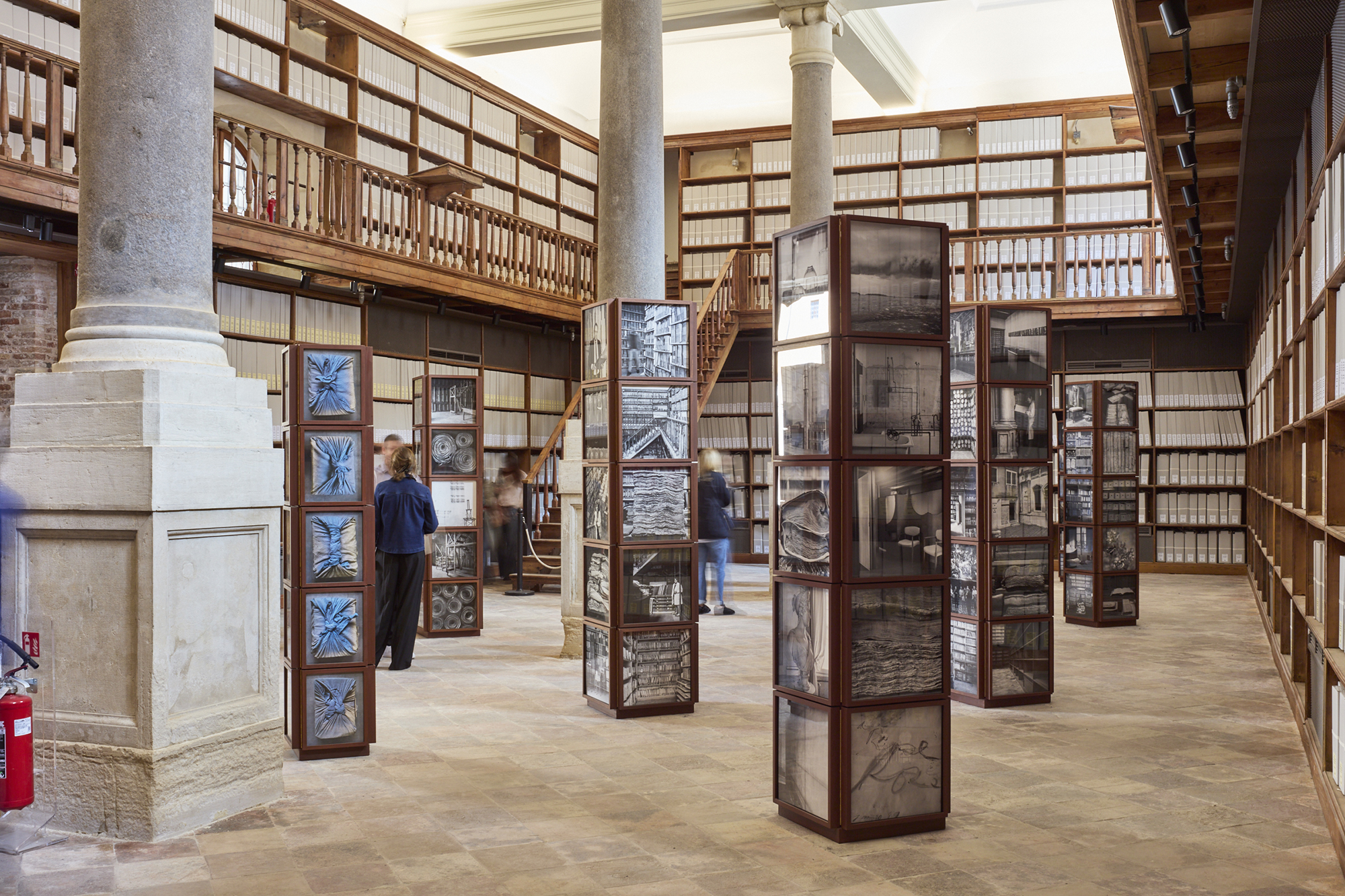
Earlier this year, the artist Dayanita Singh staged an unusual exhibition in Venice. She wanted to present a project during the Venice Biennale but to avoid the enormous financial and practical costs associated with the world’s most famous art extravaganza. Singh, who has photographed archives in Italy for more than a decade—and whose own voluminous archive has been the subject of many inventive installations—worked with the national archives at the Archivio di Stato, which provided an airy, double-height storage room (otherwise closed to the public) where shelves were lined with boxes of official documents. Singh’s own black-and-white photographs were arranged on fifteen four-sided, freestanding (but collapsible) wooden structures, inviting visitors into a choreographic experience arranged with minimal shipping expenses. Students served as docents in exchange for Singh’s mentorship, part of what she calls the “friendship economy” she relied upon to produce ARCHIVIO. In June, I visited the space with Singh, who told me why she considerers herself an archivist and how photography can democratize the art world.
Sarah Meister: How did your ARCHIVIO exhibition come about? And how did you learn about the Archivio di Stato?
Dayanita Singh: In 2002, I was an artist in residence at the Isabella Stewart Gardner Museum in Boston. And I was photographing chairs, because at the Gardner Museum, what can you do, right? So that’s where my chair obsession started. And then, Pieranna Cavalchini, the curator of contemporary art, said, “If you’re going to focus on chairs, you have to photograph some Renaissance chairs.”
So, she brought me to Florence, to Fausto Calderai, who’s a furniture historian, who also introduced me to chairs, but he also introduced me to his friend who looked after the Corsini Archive. When I went to the Corsini Archive, my jaw dropped. A little bit like when I first went to the Vespa factory in India.
Meister: That’s an amazing archive.
Singh: But then, as you know, I did a lot of work with archives in India. Later, around 2013 and 2014, Pieranna introduced me to Barbara Bianchini and Luigi Vigevani, who have an apartment in Venice. They’re professors in Milan, and they offered to let me to stay there. I walk into the apartment, and they had acquired work from my Hamburger Bahnhof show in 2003. So they said, “Stay.” [laughs]
I had been in the Venice Biennale in 2011 and in 2013, so I was familiar with Venice. My friend Massimo Warglien, a professor at Ca’ Foscari University, said that they’re doing a project with Archivio Stato with IBM. He thought it would be interesting for me to see this archive. So, it was because of Massimo that I got permission to come to the archive. This was maybe 2015. And from then on, every time I could come to Venice, I came because of this archive.
I’ve been photographing in this room for ten years, and then the director of the archive invites me to do a show here, about a year and a half ago. And I said, “Of course. It’s a dream. I would love to.”
Meister: One of the things that I think you and I both love about photography is how it helps us catalog and understand the world around us. I just saw the Spanish Pavilion, where Oriol Vilanova installed thousands of postcards. The space where you have been working is a space where the impulse to catalog is functioning almost on a municipal level. How do photographs and memories move from that institutional idea into something else for you?
Singh: You know what it’s made me realize is that for all the things I’m not—I’m not a photographer, I’m not this, I’m not that. I am an archivist. And I think that’s what I’ve done my whole life, is to archive places, people that I’ve been drawn to. So, of course, it’s a completely subjective archive. It was impossible to make these pillars just with images of the archives, so instead I started to excavate my own archive of twenty-five years.
Meister: All in Italy.
Singh: Yeah, all in Italy. Because, because of this friendship network that got set up.
Meister: These institutional archives are organized according to a certain municipal function. But the archives in your own home are different. How do you approach that? Because I’ve seen you sort and re-sort and re-sort.
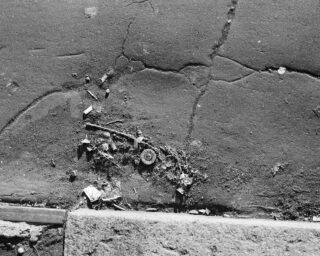
Singh: So, the archive keeps shifting, much to the annoyance of anyone who might want to look through it. These were cataloged as chairs, and there’s a chairs folder. For ARCHIVIO, we have cities—Palermo, Naples—and that made it the most direct connection to this show. But I’m not sure. I mean, here is Rome. Other than say the Colosseum there, you don’t see Rome. You don’t see Palermo. And yet friends from Rome tell me this is more Rome than any big image of Rome. So, I went from my cataloging things like glass or statues to places. The other thing was to try and think of the form.
Meister: I do feel for whoever is responsible for your archive eventually, because they’re bound to wonder, “Was she thinking about stone? Was she thinking about place?”
Singh: Yeah. But every time I look at my archive, it changes, you know?
Meister: Andrea Anastasio described your work as a “relational cartography,” which I thought just beautifully captured the idea of the human centeredness but also the expansiveness. It’s a cartography of the world. What do you think of that idea?
Singh: I loved that he saw it was a human cartography—such a lovely word.
Meister: One of the interesting things around archives I think is the question of access. I’m curious how you approach that in your work?
Singh: For one, it was to make this space accessible so that people who live in the neighborhood, you know, it’s the first time those doors have been opened to the public.
For me, art is dissemination. So, when I call myself an offset artist, it’s not just the printing. It’s the dissemination.
Meister: And when they pulled them open, it was monumental.
Singh: Exactly. One of the main intentions of ARCHIVIO was to make the archive accessible in some form. People can’t go everywhere else, but at least they can see one cloister, and the room. And the work doesn’t even feel like an exhibition, because to me, it feels like it just grew out of the floor.
An interesting thing comes up in talking to the director of the archive and archivists. See, when I go to an archive, I don’t really open up anything. I don’t ask them. The archivist said, “You’ve never asked me to look at any document.” It’s the way archivists work, because in a lifetime you might only go through one shelf.
But you have to be able to read the code of the archive. And I thought that’s so much like my photography, where I have a certain map with which I enter a place. So, if I was coming to see you in Texas, I would first find out if there was a house museum there because that tells me something about a place. You know, people go to markets, people go to museums. This idea of the archivist photographer has become quite an important thought for me.
Meister: I think preservation is such an interesting thing. And there are different ways of thinking about preservation. I remember so fondly when you were at MoMA and all you wanted was for people to be able to touch your work.
Singh: Yeah.
Meister: I’d love to hear you speak about how you navigated the question of preservation here, from touching to organizing to temperature.
Singh: What I did here was I made exhibition copies. Because one of the things I don’t like about photography is that it’s so sensitive. That it has to be dark. You couldn’t be showing in a museum, you couldn’t have this kind of light for four months. And so I made exhibition copies.
Meister: I chuckled when I read Aruna D’Souza’s review in The New York Times, where she wrote, “What if I told you the most compelling art show in Venice right now consisted of black-and-white photos of Italian archives?” I love that what seems so incredible to the art world of course feels very natural.
Singh: Yes.
Meister: Would you talk about a few of the ways in which ARCHIVIO was so different from any other kind of installation in Venice now?
Singh: Well, mainly there was no sponsor. And I analyzed the costs involved in Venice. It would be about 150,000 euros, not for making the work, but just for various things. And each of those became a challenge for me. If I wanted docents for six months, 25,000 euros. Instead, we made a collaboration with Ca’ Foscari. So, I have docents here. They get credit. I mentor them.
Then I was told that lighting here would be 10,000 euros to light a show like this. And I said, “I’m perfectly happy with it.” But they said, “It’ll become dark early.” So, I said, “We’ll close the show early. We don’t have to have it till November. I’m not connected to this biennale.” And in fact, I didn’t open with the biennale. I opened with the literature festival to make that point. And that is the strength of photography, that it can go into so many different areas, no?
Meister: I agree. I’d be interested to hear you just share a little bit about where you see the democracy of photography, where you see its frailty, its edges, its constraints. Both how they’re operating here and about a way they might function, let’s say, in a space like Aperture in New York.
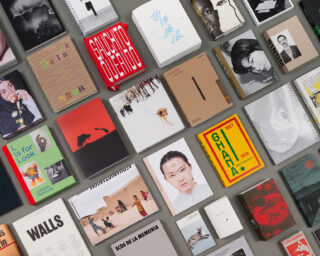
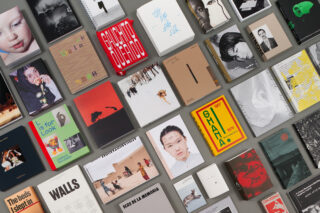
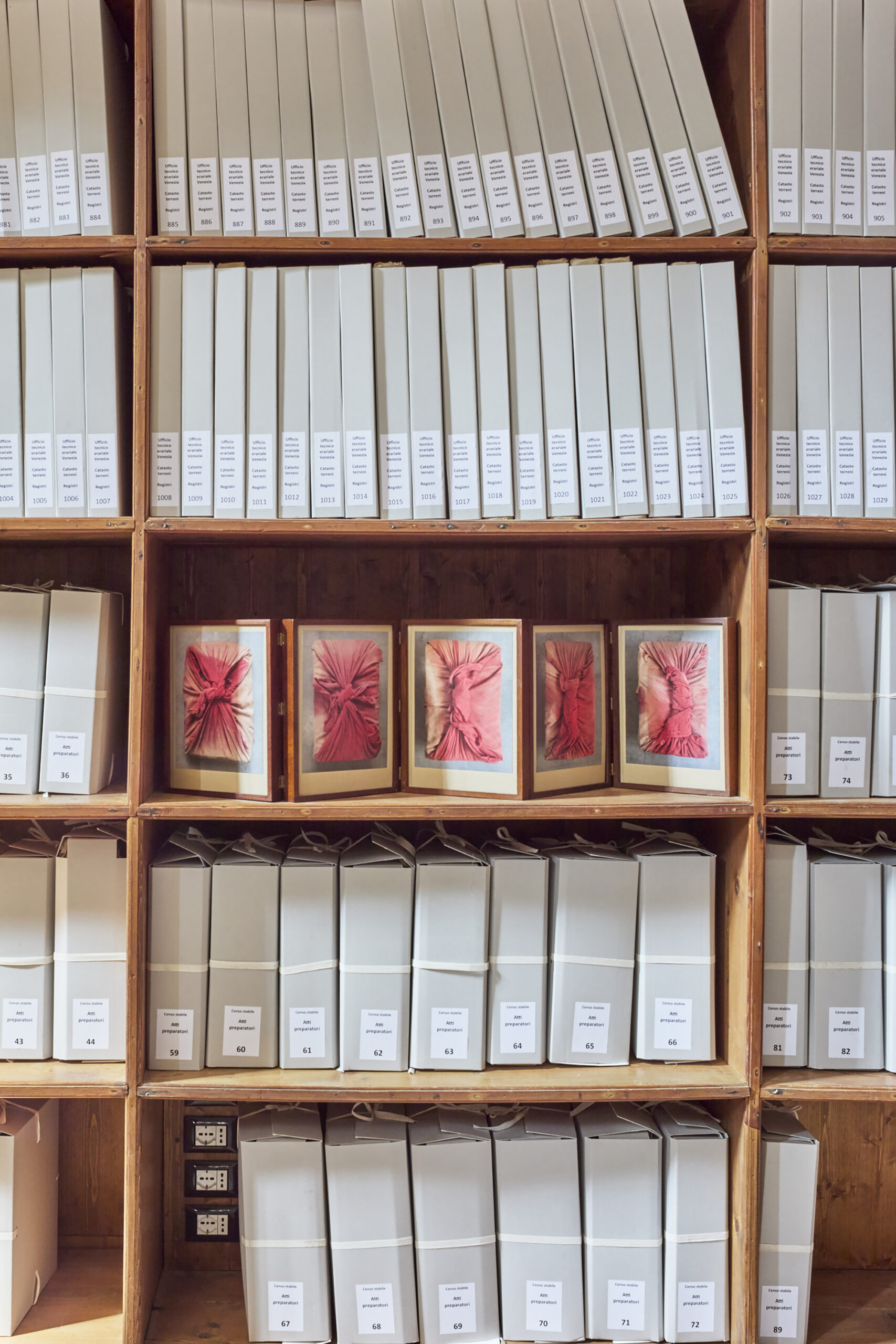
Singh: I think, I think going forward, it’s going to be the wall book for me. A wall book is that delicious space between being a print on the wall and a book in your bookshelf. I want to make a book that can be displayed on the wall as you would a watercolor, but still remain true to the book.
Meister: Are they different sizes?
Singh: No. It’s all the same size. They have sixty images and sixty different covers. And that’s all that would be available at one time. So, if you want this one, you have to get there in time.
Meister: Because otherwise there are only fifty-nine images left.
Singh: Yeah. Otherwise, you can get this one.
Meister: The work is the book. The covers are what vary and they reflect each of the pages of what’s inside. But the interiors of the books are the same.
Singh: Exactly. Like the Museum of Chance.
Meister: Everyone ultimately has access to the same thing.
Singh: And photography can really democratize the art world. But instead, we’ve gone the same route, right? With larger, larger prints, smaller, smaller editions—I’m part of that world—and higher prices. I think with the book object, everybody will find their own forms for it. I come from photography. For me, art is dissemination. So, when I call myself an offset artist, it’s not just the printing. It’s the dissemination.
ARCHIVIO was on view at the Archivio di Stato, Venice, from April 17–July 31, 2026.