How Can Photographs Inspire Social Change?
An exhibition in North Carolina considers the way artists have portrayed historic milestones—from the civil rights era to Black Lives Matter.
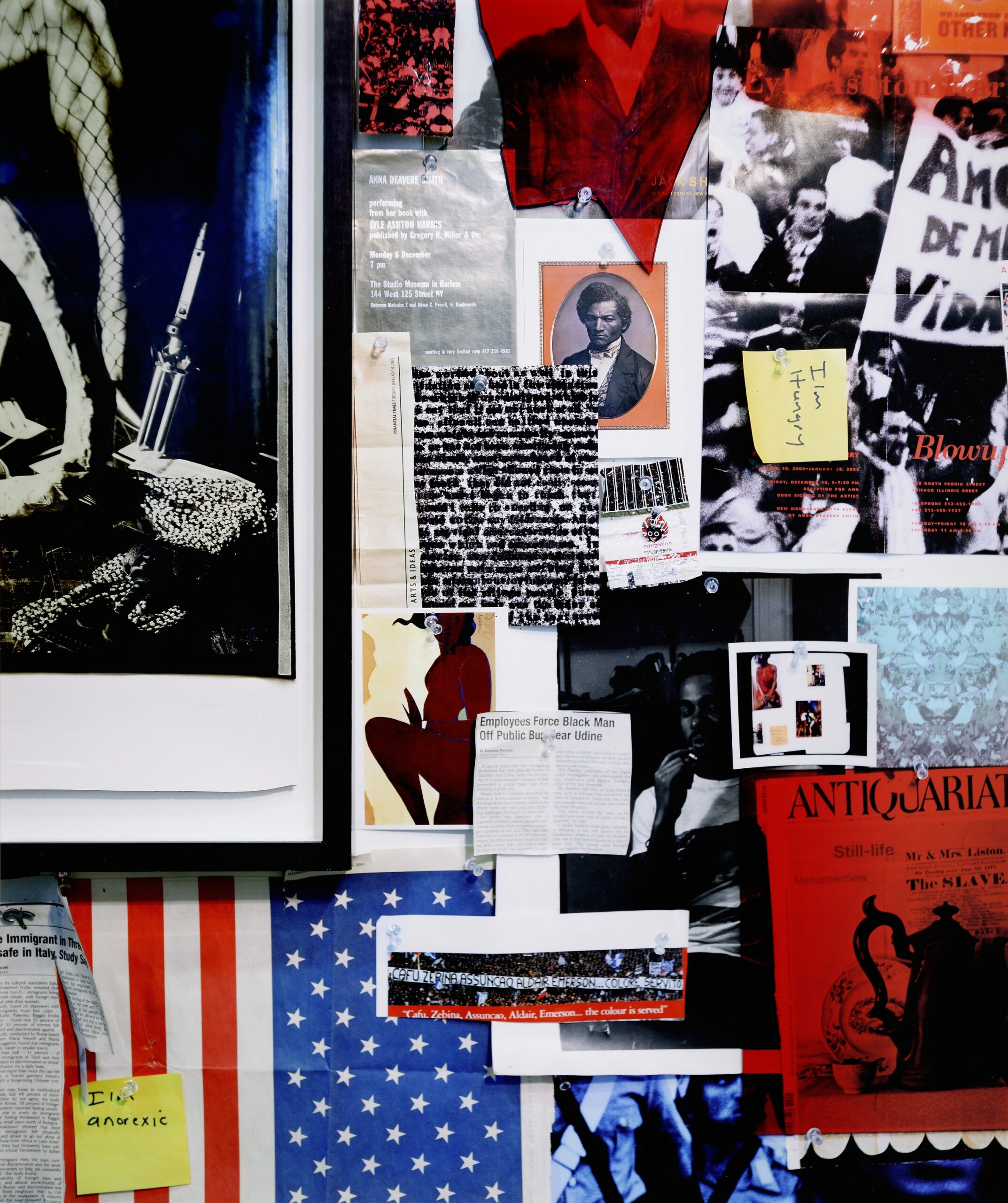
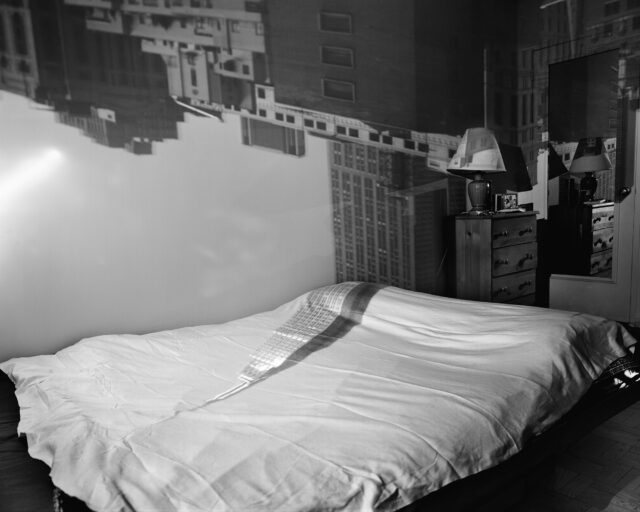
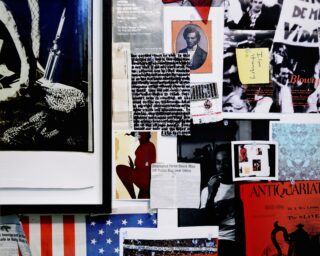
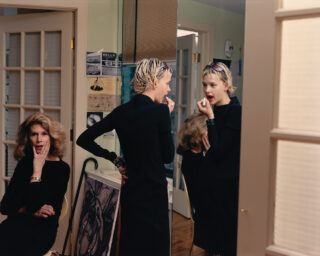
Lyle Ashton Harris, Blow Up II (Armory), from America: Now and Here, 2005 (detail)
Courtesy the artist and David Castillo, Miami
The late civil-rights leader and US Congressman John Lewis championed community organizing. From his early days as a founding member and chairman of the Student Nonviolent Coordinating Committee (SNCC) to the frontlines of the 1963 March on Washington and ultimately enduring the brutal violence of Bloody Sunday in Selma, Alabama, his core message never wavered: How are you showing up for your community? How will you make a difference as an active participant? In his 2012 memoir, Across That Bridge: Life Lessons and a Vision for Change (2012), Lewis urged us to speak up and speak out for a better tomorrow. He reminded us that “nothing can stop the power of a committed and determined people to make a difference in our society.”
Today, our collective voice remains vital in the fight for justice and equality, as shown in the exhibition Turn the volume up! at the Nasher Museum of Art at Duke University, Durham, North Carolina, which was organized by Xuxa Rodríguez and examines the broader history of American democracy through the lens of civic action.
To explore these themes further, I recently met with Rodríguez, the Patsy R. and Raymond D. Nasher Curator of Contemporary Art at the Nasher Museum of Art. Together, we explored how everyday actions like voting, petitioning, and protesting can fuel a lifelong commitment to social change. We discussed Zohran Mamdani’s historic mayoral victory in New York—a milestone that made national and international headlines and sparked a rising wave of democratic socialism across the country.
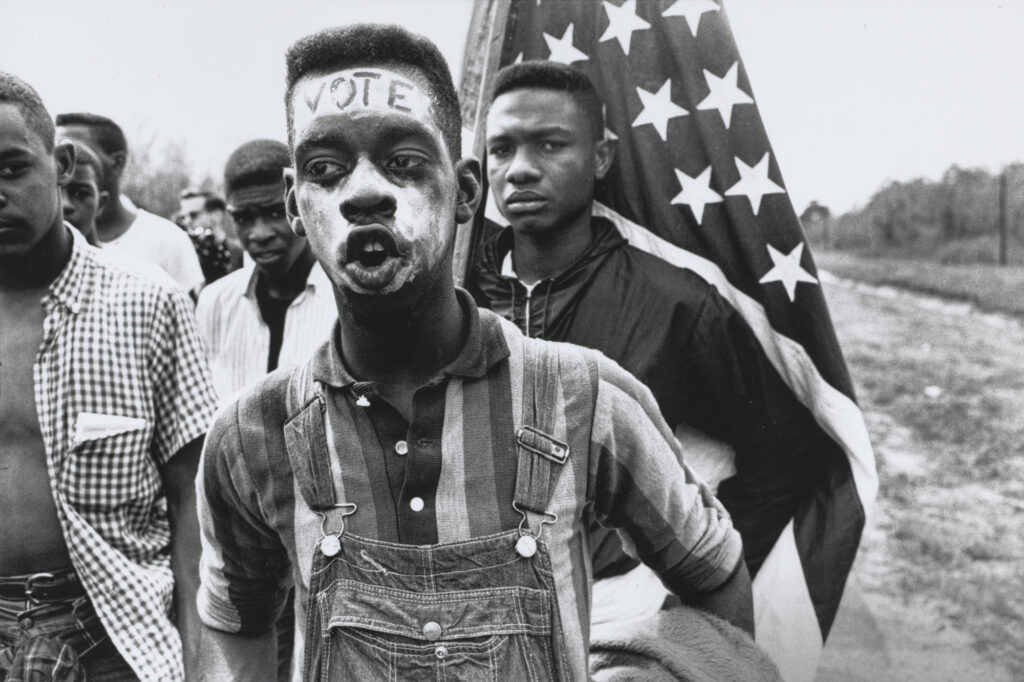
“What would happen if everyone voted? What kind of change could we unlock?” asks Rodríguez. We also discussed the profound impact of documentary photographers like James “Spider” Martin, Bruce Davidson, and Leonard Freed, whose work captured ordinary people uniting to prove that everyday moments can forge an unstoppable force for change.
Courtesy the artist
Iesha Coppin-Forde: Turn the volume up! has distinct thematic sections: “Remarks,” “Organize,” “Records,” “Dissents,” and “Petitions.” Can you discuss the inspiration behind the various themes and how visitors should navigate each part of the exhibition?
Xuxa Rodríguez: The show originally had the working title Know Your Rights and focused on protest and demonstration. While digging through our collection, I noticed the mayoral election happening in New York City, where Zohran Mamdani quoted Bronx rapper KRS-One’s 2020 anthem “Turn the Volume Up,” influencing the exhibition’s current title. It was remarkable to see over two million people show up to vote, the first time since 1969. Could you imagine if everyone in the United States voted? I was like, Oh, what’s a way to connect what seems really far away, which is our federal, state, even local politics that seem very distant, and then connect it to an everyday experience? Where are the threads that show commonality between how the federal government functions in some respects and how a local community organization can function?
When thinking about “Remarks,” I was inspired by New Jersey Senator Cory Booker’s filibuster, which lasted twenty-five hours and five minutes. I framed this section around the term “leaving one’s remarks,” a phrase people recognize not only in congressional hearings but also in everyday community organizing. I looked at cross-terms, different vocabulary lists on Congress’s website, local community organizations, and the news, which led to other section titles, such as “Dissent.” Once I found those commonalities, I saw that each term existed in relation to the others. I also found this to be true in the way artists create their work.
© the artist and Briscoe Center for American History
Coppin-Forde: As a native New Yorker myself, I understood what the importance of that moment was for a city that needed change—some would say radical change. How did Zohran Mamdani’s mayoral victory underscore the show’s significance given the current political climate?
Rodríguez: This election made national and international headlines—I was like, Well, I’m not in New York; I’m in Durham, North Carolina. Why am I hearing about this mayoral race? The news made it far. Participating in our own local mayoral elections, I was heartbroken by the end of the night, because it seemed everyone showed up in New York City. At the same time, I was watching Durham’s ticker; our county has about three hundred thousand people strong and forty-something thousand people turned out. Seeing those two numbers in contrast broke my heart. Do people feel like their voices aren’t heard or don’t matter? Many said it wouldn’t be possible for Mamdani to win. It’s clear to see that change is possible when we work together.
That moment really resonated with me. To witness how everyday action and ordinary people can make such a difference is powerful. I think of my work as a curator as a practice of radical hope. Every day I come to work and I build exhibitions and care for a collection. Beyond the present, I see a future where upcoming generations will learn, grow, and thrive from these very shows.
Courtesy the artist
Coppin-Forde: In many ways, we are still having the same conversations about radical discourse, American democracy, and collective action that were at the forefront in the 1950s. While Turn the volume up! highlights historic milestones from the civil rights era, does it also raise awareness of today’s shift toward radical justice by connecting to contemporary movements like Black Lives Matter, Campaign Zero, and Color of Change?
Rodríguez: I hoped the timing of the show would work in my favor. I started at the Nasher Museum of Art on Earth Day in April 2024, intentionally. I thought, Oh, my first day would be Earth Day, because I wanted to say something about the kind of work I’m doing. At the time, my first assignment was a permanent collection show, By dawn’s early light (2024), which explored American democracy, civil rights, and protest art. Looking at the history of the United States through founding documents such as the US Constitution and its amendments, I quickly realized how problematic these documents and systems were, and how many people were omitted from the conversation. That show would later become the springboard for Turn the volume up!
When I saw this fall was open in the calendar, I took the opportunity. Like By dawn’s early light coinciding with the 2024 presidential election, Turn the volume up! also opened during an election cycle accompanied by the commemoration of the US’s 250th anniversary—I thought, we’re going to try again and continue the conversation differently. To discuss the importance of democracy and becoming active participants in our communities, we must remember people fought for these rights, and we need to utilize them to the best of our abilities.
Courtesy the artist and Jack Shainman Gallery, New York
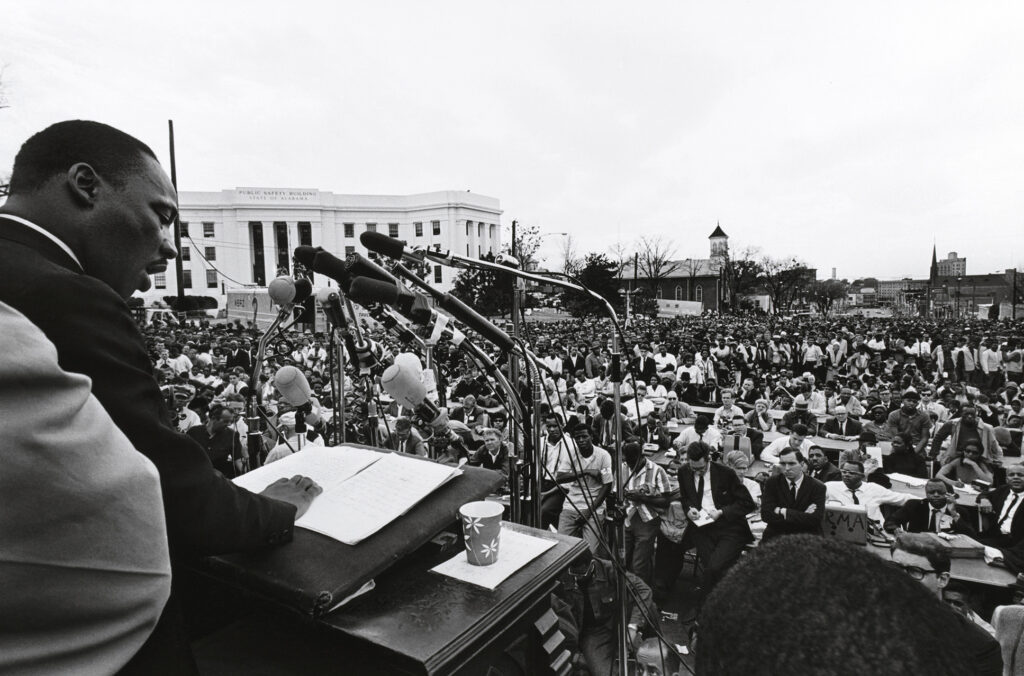
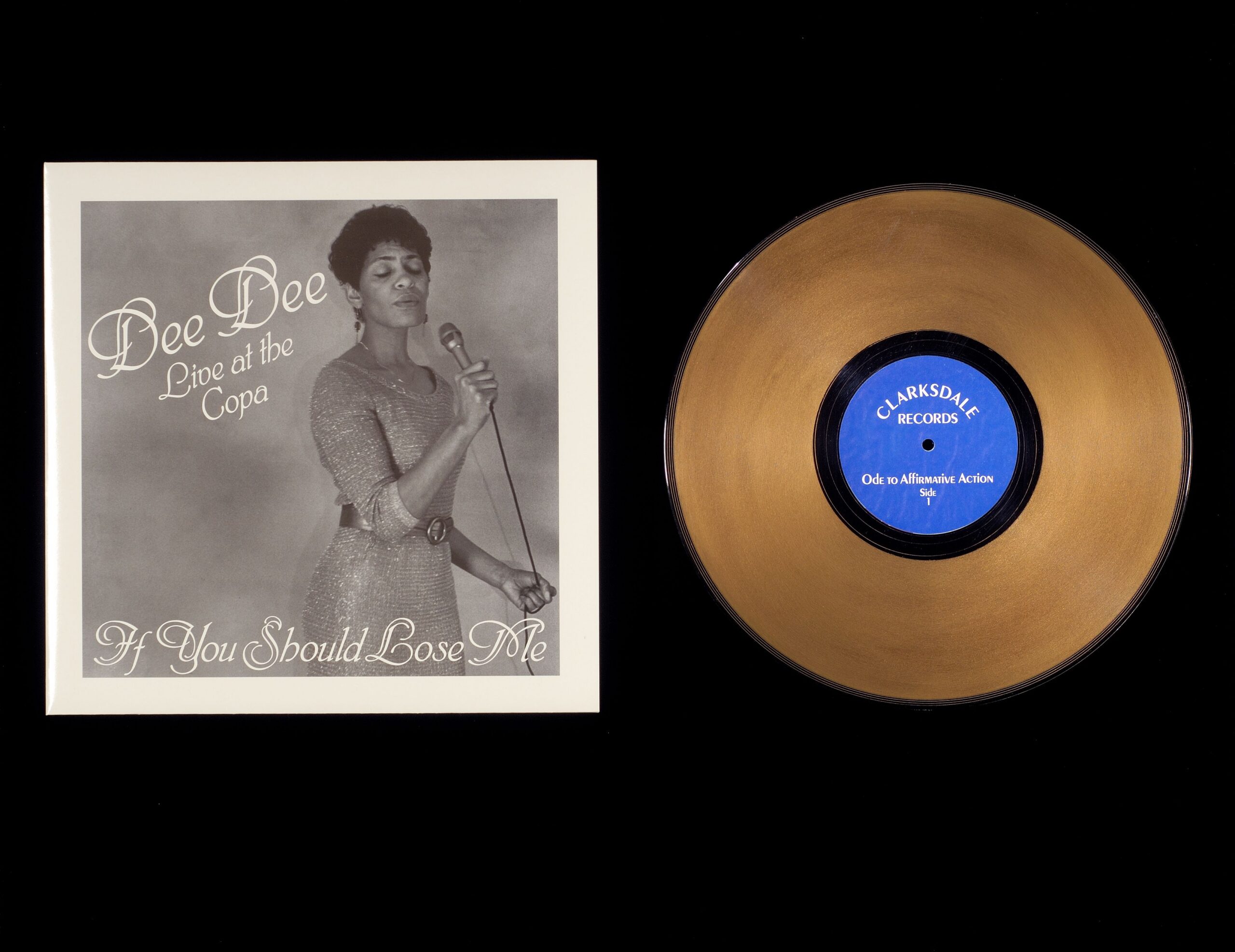
Coppin-Forde: We often take for granted the importance of our right to vote and how our active participation can ultimately make life-altering changes towards a better future. This sentiment is depicted in many of the influential photographs shown throughout the show, including Carrie Mae Weems’s Ode to Affirmative Action (1989); Bruce Davidson’s Time of Change (1961–65); and Spider Martin capturing Dr. Martin Luther King Jr. delivering his “How Long, Not Long” speech in Montgomery, Alabama, in 1965. How has the photographic legacy of the civil rights era informed and shaped the storytelling of Turn the volume up!?
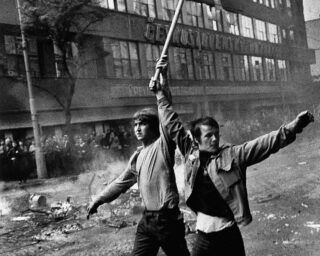
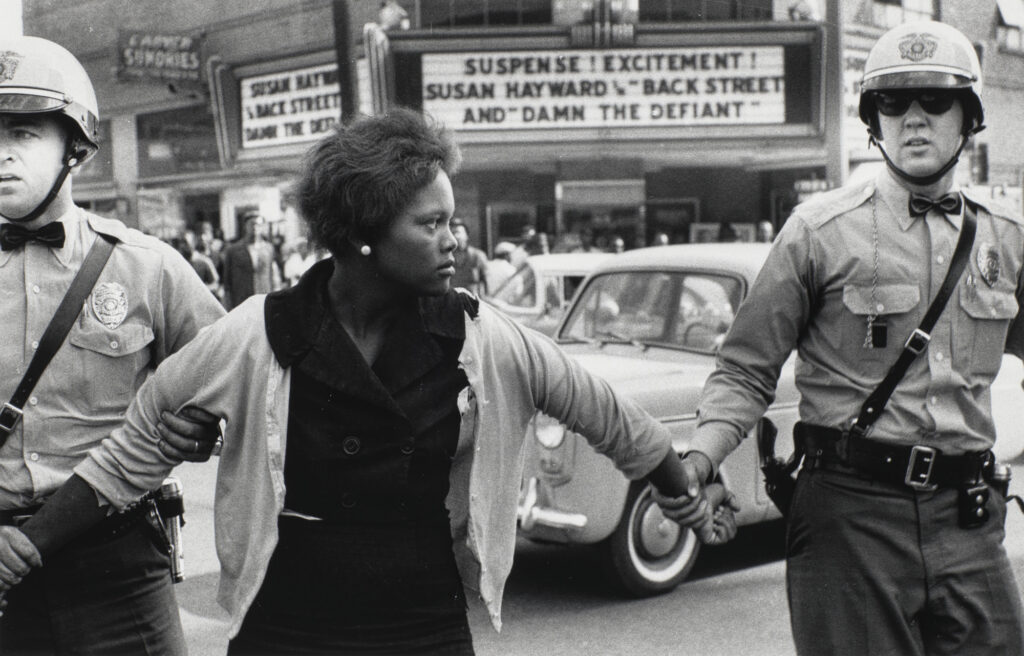
Rodríguez: Imagine the early days of photography, Louis Daguerre’s invention of the daguerreotype in 1839, when taking a photo meant using a machine that weighed over one hundred pounds. Physicality aside, the daguerreotype process was a complex chemical procedure; there was, and still is, true mastery to the art of photography. It’s extraordinary to see how photography has advanced over the years. Turn the volume up! does a great job of showing how photography became more accessible through the work of Bruce Davidson, Spider Martin, and Leonard Freed. Through their images, you can see how radical that era was for photography, as the Kodak Instamatic came out in 1963, the same year as the pivotal March on Washington. I also think of Danny Lyon’s photographs during the 1960s as he attended sit-ins, which were nonviolent protests where Black college students peacefully occupied segregated “all-white” spaces. As in the show, these historical records document turning points and social justice movements.
Coppin-Forde: From the Kodak camera to the iPhone, do you think the advancement of photography makes us more aware of the social change we can create?
Rodríguez: It was Hank Willis Thomas who said, “there are more images taken in a millisecond than any of us can make sense of in our entire lives.” It’s wild to think this handheld device we carry in our back pocket can be used as such a powerful tool. Unfortunately, I don’t know if folks think about our phones in such a revolutionary way. Think of the people who pull out their phone when someone is detained by police; you can potentially help someone who may not have a voice in that moment.
© Estate of Carol Summers
Coppin-Forde: These difficult moments of individuals in distress or fighting for their rights are hard to view. What guided your choice between featuring photographs of intense physical conflict versus quiet moments of community organizing and joy?
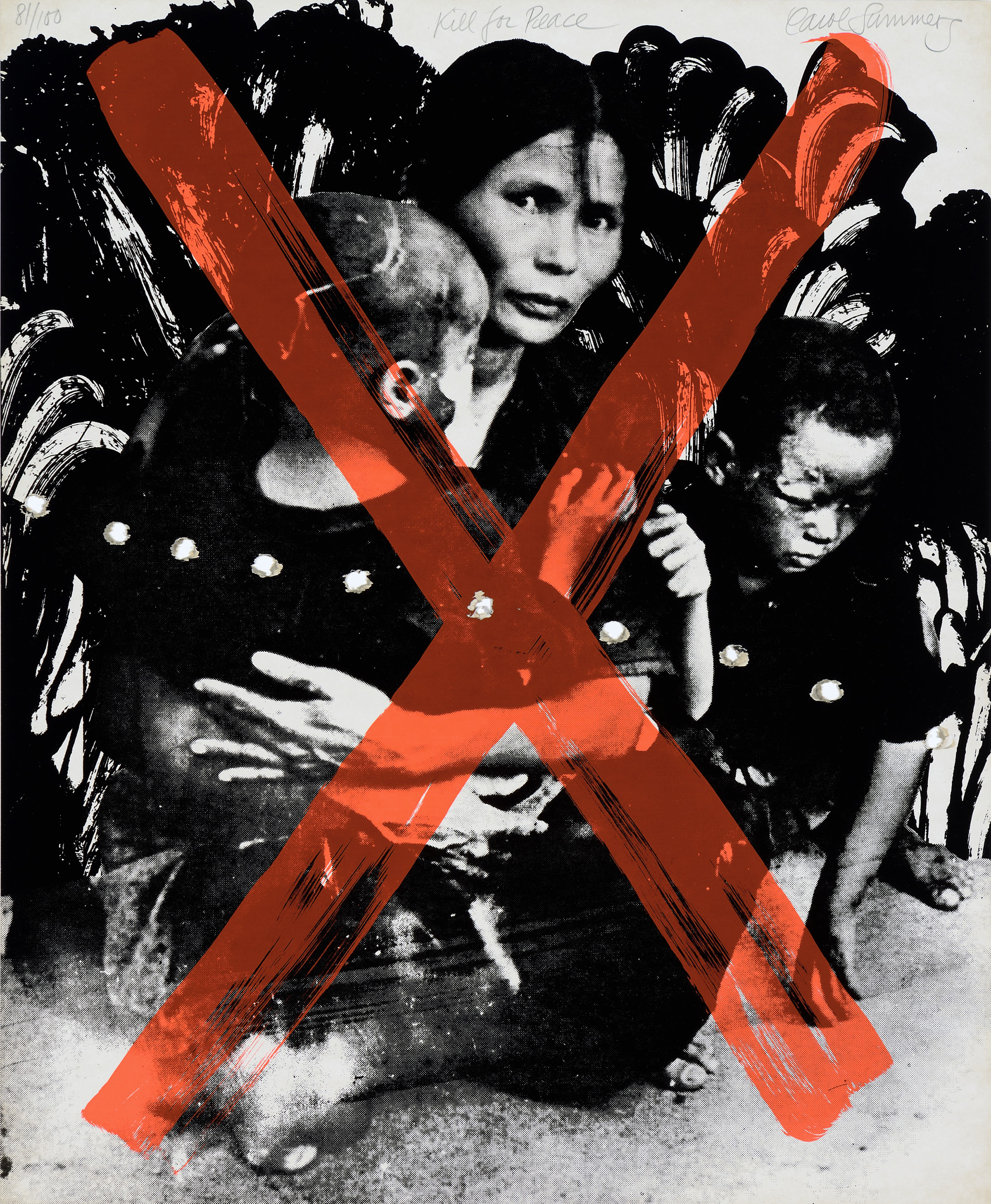
Rodríguez: Partially, it was a practical strategy because of the photos we had available in the collection. We needed to balance showing photos of conflict in a way that isn’t traumatizing while also depicting the unglamorous truth of individuals on the frontlines at demonstrations and protests. In the show, we feature a work by Carol Summers, Kill for Peace (1967). It’s clear it’s not the original image, and that the intervention is a lithographic print over it. Still, it conceptually responds to the history of conflict without showing someone being removed from existence by the scope of the rifle. At the same time, the quiet moments are critical too. When we talk about the civil rights movement in the past, and even today, people reference that period as all action. That is true, but much of the action was also quiet, in the form of relationship-building and being present. Like photography, it’s taken for granted, but those moments matter.
Coppin-Forde: You mentioned that some artwork will rotate over the next few months. Will any of the photography be rotating?
Rodríguez: Because photographs are light sensitive at the three- or four-month mark, we’ll rotate the photographs. The photographs will be from the same photographers whose series are currently on view—for example, more images from Bruce Davidson’s Time of Change.
Coppin-Forde: On a personal note, you’ve said Nasher Museum thinks “deeply about the historical impact of the work that it does in relationship to our sociocultural moment and our futures.” Two years into your appointed role as the Patsy R. and Raymond D. Nasher Curator of Contemporary Art, do you still believe this to be true? How does your broad curatorial practice, ranging from Latin American art and the African diaspora to time-based media, speak to this ideology?
Rodríguez: Nasher is still about its business, very much so. They actively pay attention to the social, cultural, and political histories and lived experiences of not only their artists but also everyday people: How are we impacted? And how can a historical institution respond? Nasher is really good at acknowledging these important, sometimes difficult sociopolitical events quickly, in a way that is insightful and respectful to varied audiences. You saw this through By dawn’s early life (2024), and we’ve also made the connection through Turn the volume up!
Courtesy the artist
Coppin-Forde: Were there any objects or archival materials you wanted to include but couldn’t obtain for the show?
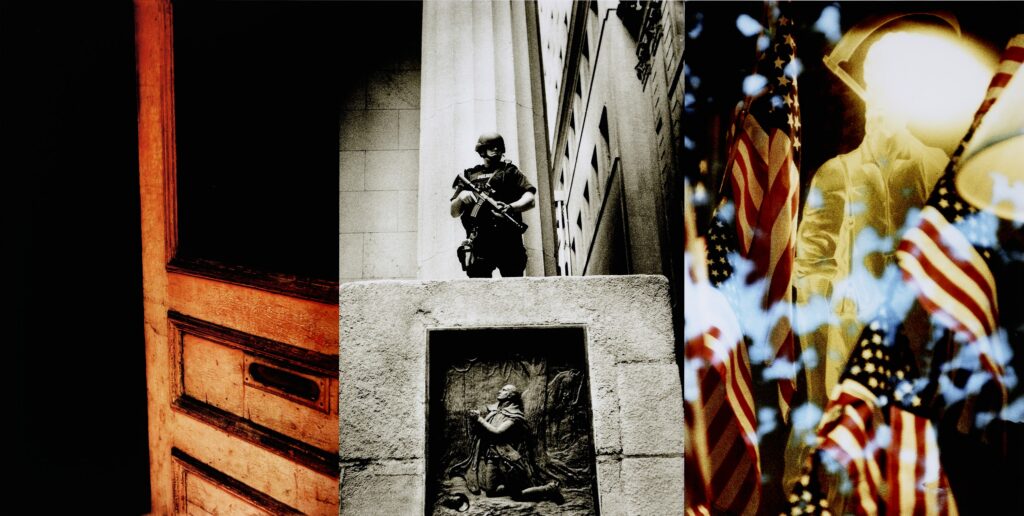
Rodríguez: A Hank Willis Thomas piece, Ain’t Gonna Let Nobody Turn Us Around (2015–16), a mixed-media installation I showed in By dawn’s early light. It’s a beautiful set of photographs on reflective surfaces that incorporate images from the civil rights era and recent histories of demonstrations. The work was up for an entire year, and it needed to rest. I hope guests who saw that show and see Turn the volume up! can make the connection between the artwork included in both shows. The other work we had in the collection but couldn’t include in this show due to photosensitivity was Wendy Red Star’s Delegation series (2014/2017). This work had also been on view for an extended period.
Coppin-Forde: Wendy Red Star, of course, is part of the Aperture family; we still swoon over her monograph Wendy Red Star: Delegation (Aperture, 2022).
Rodríguez: We love her to pieces. We were lucky to have Dr. Courtney Lewis, Crandall Family Associate Professor of Cultural Anthropology, do a show on contemporary Indigenous pop art, including Wendy’s early White Squaw series (2014). I hope to show the Delegation series soon.
Coppin-Forde: What should visitors take away from viewing Turn the volume up!?
Rodríguez: I truly hope that when visitors walk through these galleries, they feel a deep sense of belonging and as an essential part of the conversation. I want visitors to leave feeling empowered, asking themselves how they can show up for their community—whether that’s by making art, taking photographs, or writing an essay. What you care about matters. Your presence and your perspective are important.
Turn the volume up! is on view at Nasher Museum of Art at Duke University, Durham, North Carolina, through July 11, 2027.