In Mexico City, Two Exhibitions Blend Offbeat Humor and Sly Sensuality
Claudio Mansour and Enrique Garcia’s recent photography-based shows dramatized the endurance of sex and exhaustion, exercise and caffeine.
Claudio Mansour, Gabriel, 2018
Drama is a window-display gallery in Mexico City’s historic center at the far end of an atrium in a mall whose shops sell collectibles like Yu-Gi-Oh! trading cards. Above its long, tall vitrine hangs a large neon sign for Cine Savoy: a two-story porn cinema that’s occupied the building since 1943 (it went blue in 1970). When I paid seventy pesos and popped in recently, there was heterosexual porn playing—maybe Italian, maybe from the 1970s, definitely featuring double penetration—but all the patrons were men, who, even if they weren’t homosexual, were certainly putting to use the semidarkness of this still-active gay cruising site.
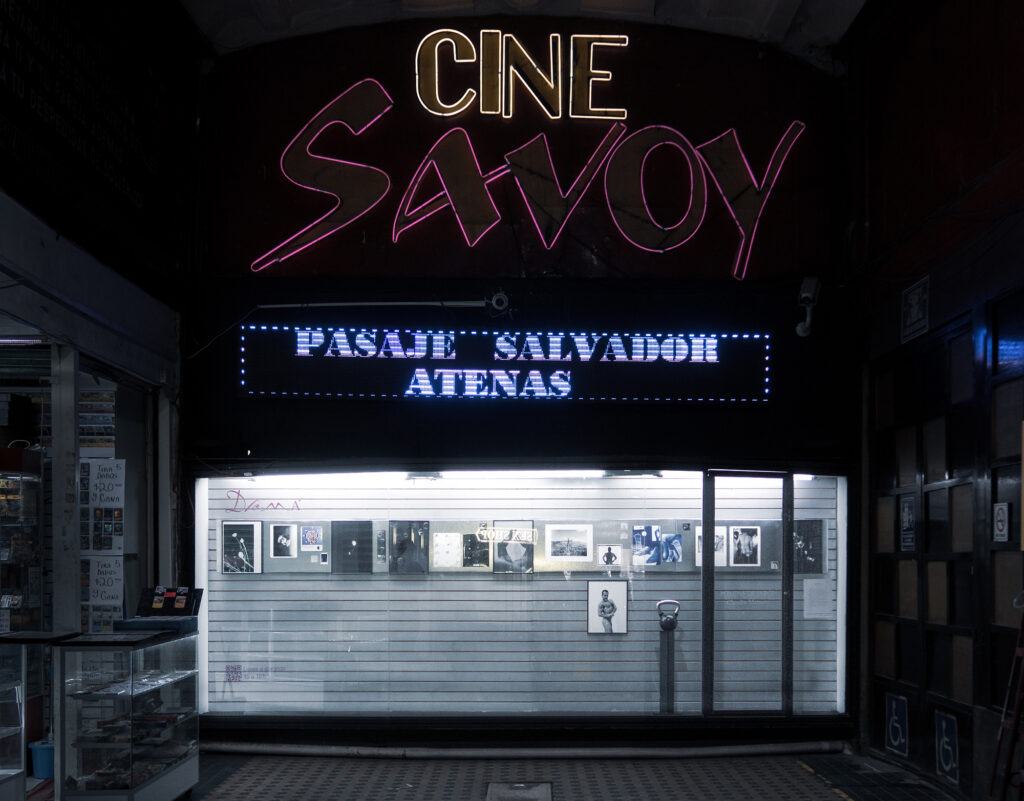
Cine Savoy provided a fitting spatial echo and temporal wormhole for Claudio Mansour’s exhibition Pompas de jabón in the window display outside, which combined original photographs and collages with archival works, as well as a readymade kettlebell sculpture and coin-grip flooring. During the show’s closing event, Mansour entered the vitrine for a salivatory, gooning-inflected performance.
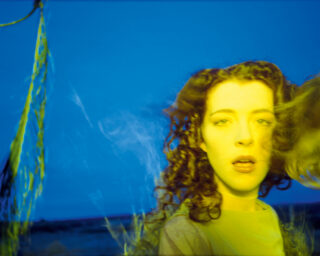
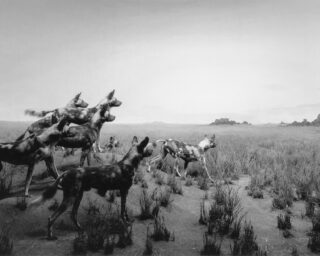
The subjects of Mansour’s images ranged widely—desert landscapes, interiors trapped in bubbles, and modified portraits—and belonged to bodies of work created between 2018 and 2025. Small, circular magnets attached the pictures to a metal panel. Spiraling (2025), a portrait of a bodybuilder, hung below. Arrayed horizontally, the images formed something like a deconstructed book, demanding a slow, sidelong gaze. Hung like this, the pictures created resonances in their gaps, intensifying the sense of a “symbolic taxidermy,” to borrow a phrase from the show’s curator, Carlo Canún.
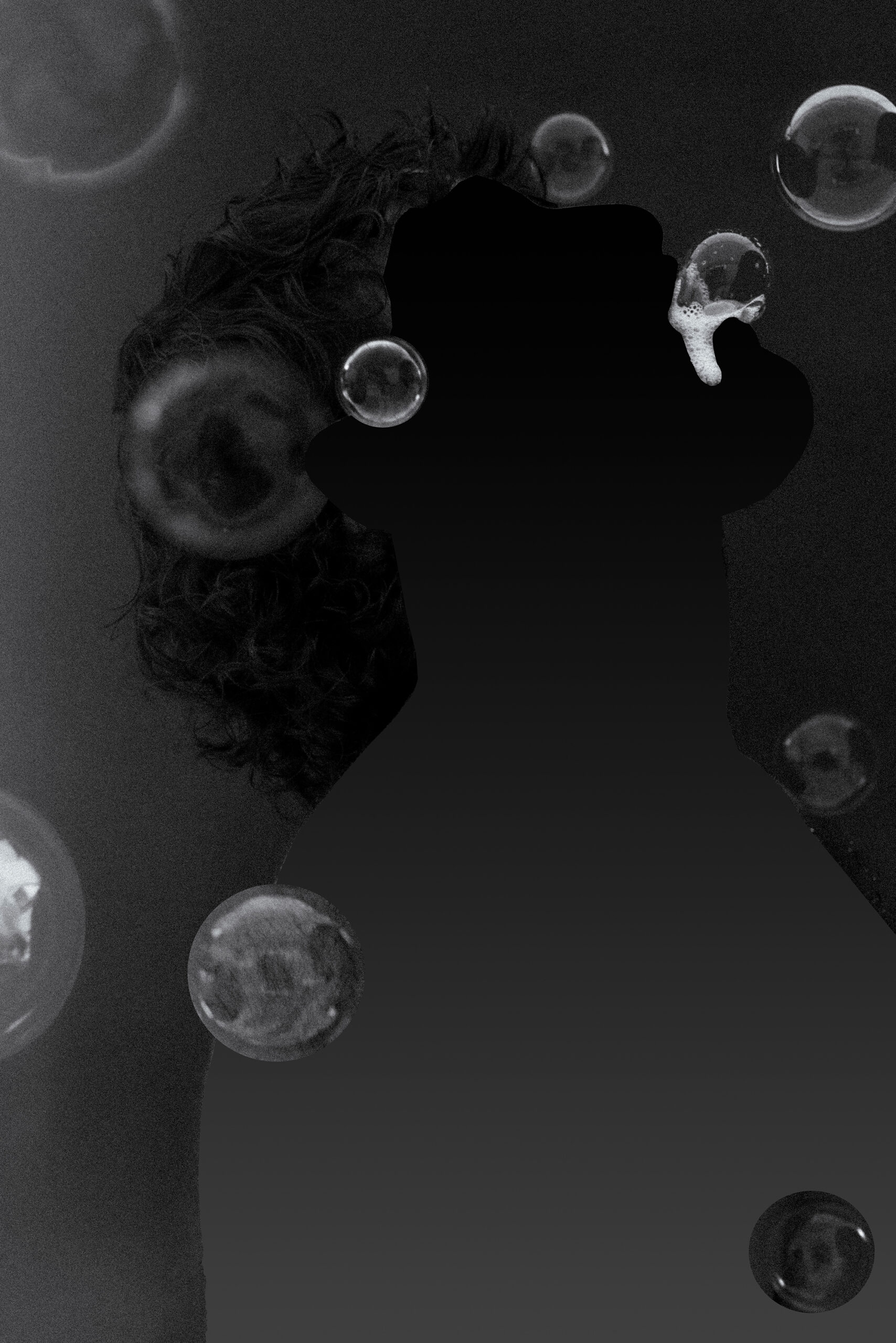
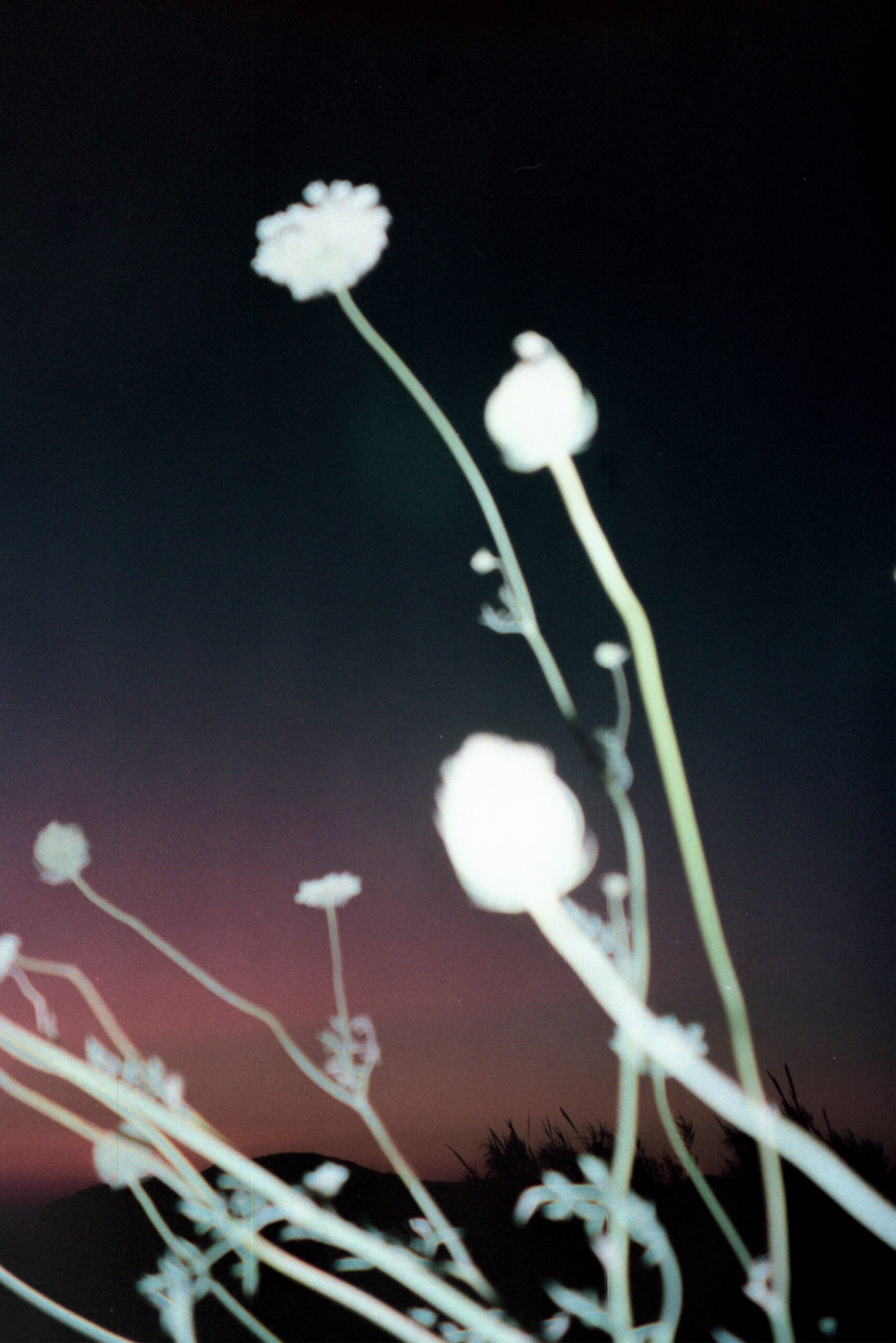
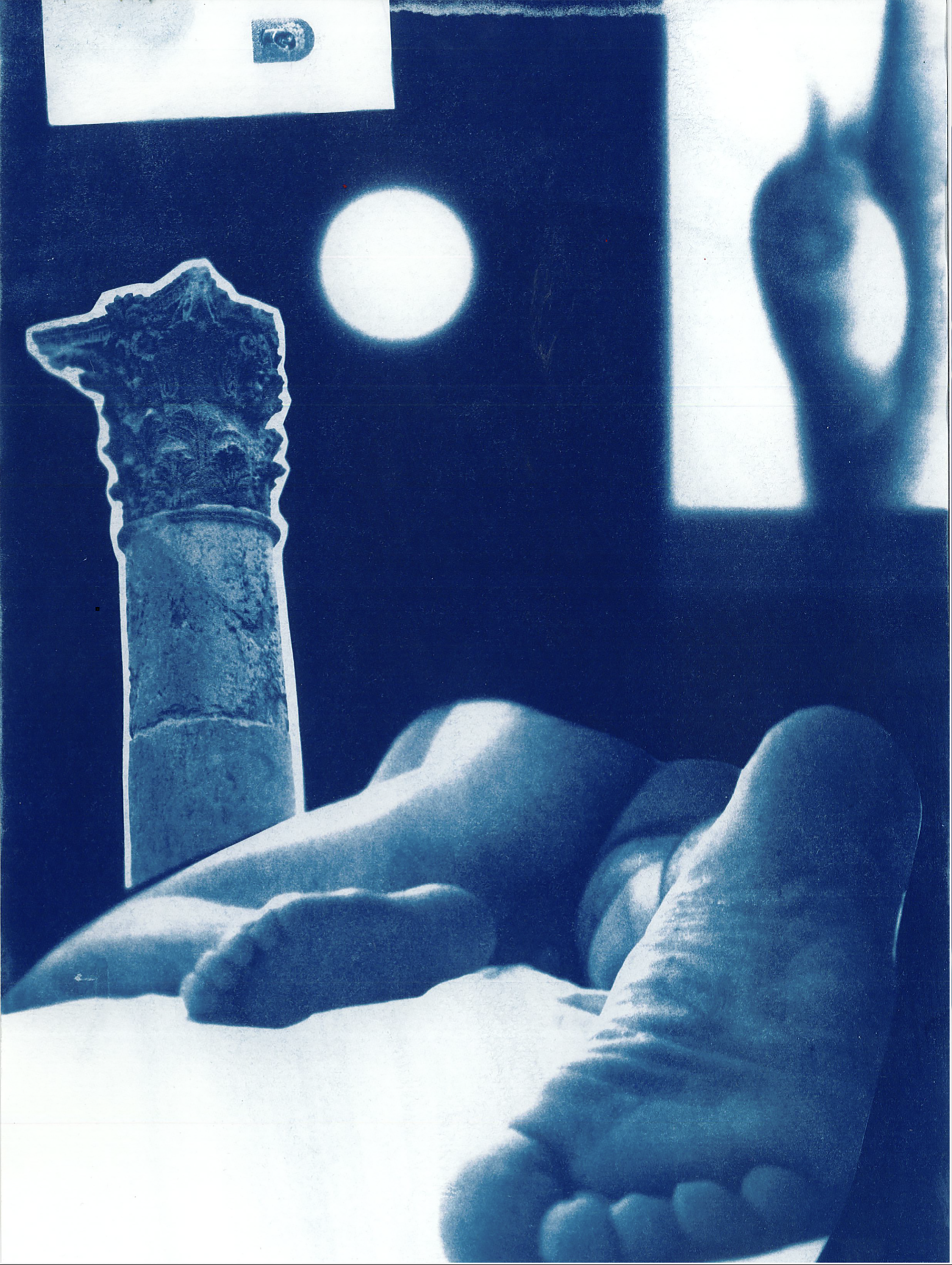
Bodies were redacted or abstracted in black-and-white images and on contact sheets; they were fragmented in cyanotypes, layered with architectural remnants; and in all but one of the other collages, they were chopped up or had their backs turned to the viewer, in one case with an F-hole etched onto a man’s lats—turning him into an open object, into something to be played like a cello. Mansour digitally and physically modified photos and reprinted them—for example, on cotton—“to suggest an archival condition,” he said. Mansour included works by the late Jesús Magaña—known for his photos of vedettes (softcore or burlesque stars)—introducing a sense of historic frisson and an expressive liveliness to the show. Drawn from Mansour’s family holdings (his parents collect photographs), these images of contact sheets showing women making kooky faces (tongue out, feigned screaming, and so on), as well as a Speedo-ed man, evoke a bygone eroticism.
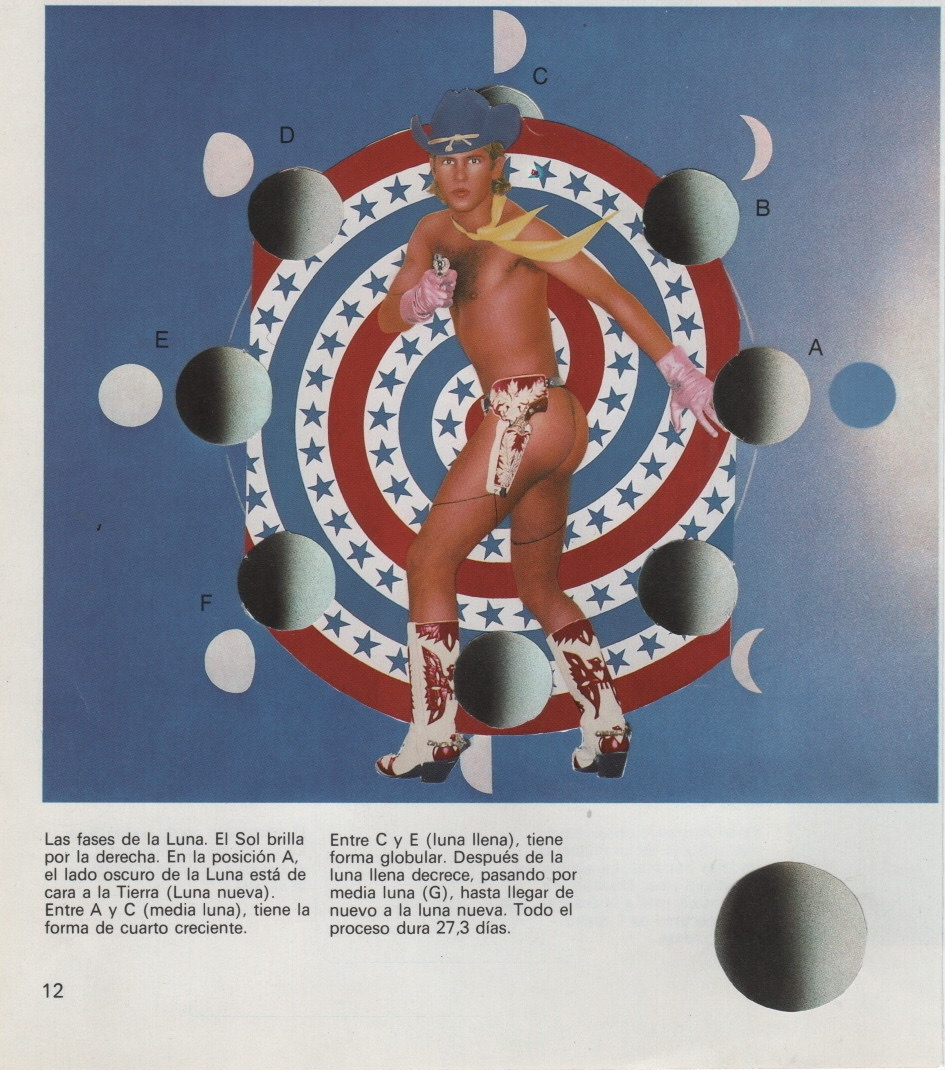
One undated photograph by Magaña of a woman on her back wearing stockings and high heels holding up her feet, the shadows of which obscure her eyes, serves as a leitmotif in Pompas de jabón. (The title means “soap bubbles,” but in Mexican Spanish, pompas can also mean “butt cheeks.”) In Mansour’s Cuarto menguante (2024), a black-and-white print on cotton paper, feet are shown pointing up, shot from the subject’s own point of view. Menguante means “waning,” and the moon too recurs in Mansour’s work—another spherical echo alongside the bubbles, floor, and kettlebell, and an object whose shadow defines it as much as its reflective presence. Beneath the grand, retro sign of the porn cinema, Pompas de jabón suggests sight as a sited phenomenon, as a process, like cruising, of mediating the seen and unseen in order to get what you want.
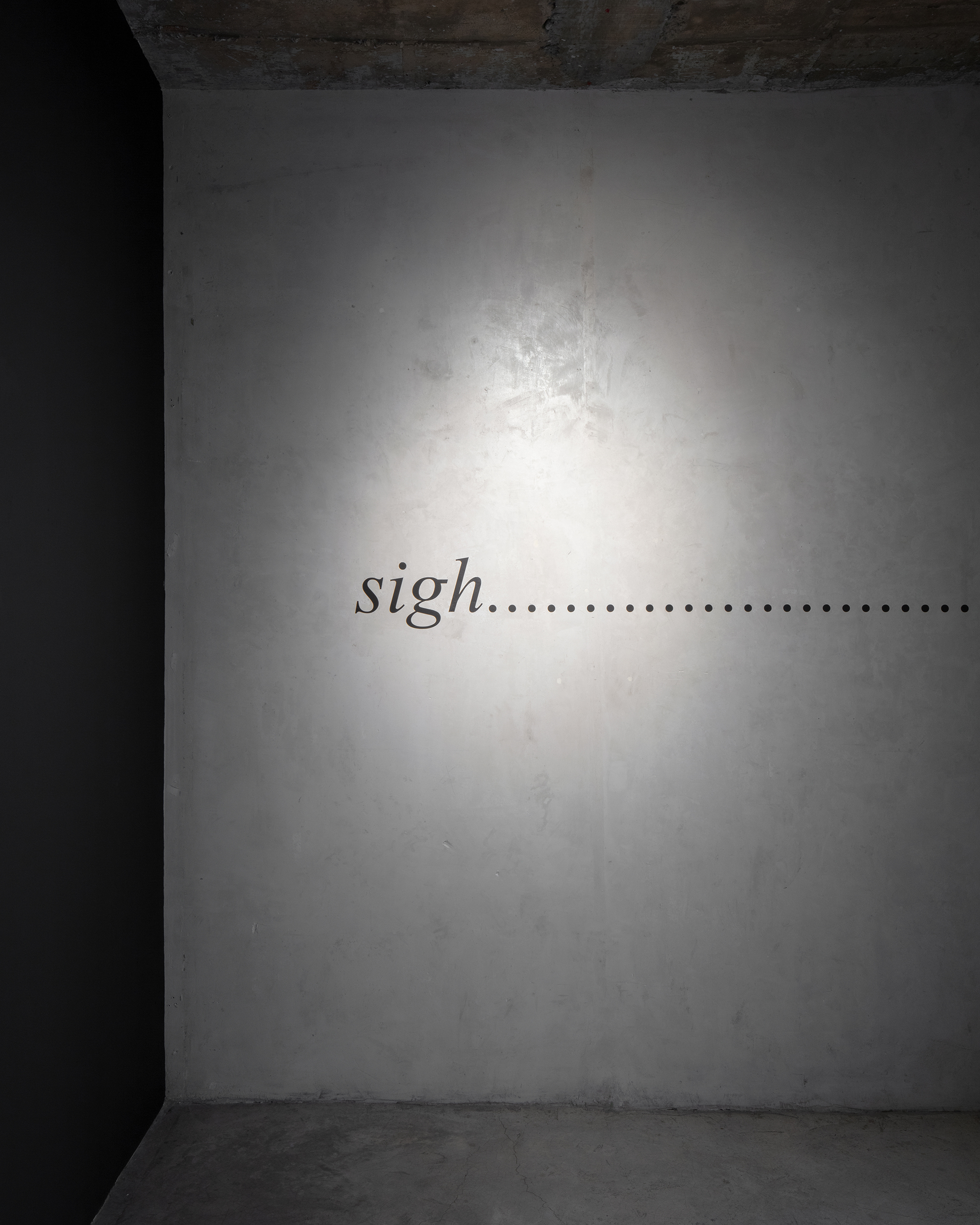
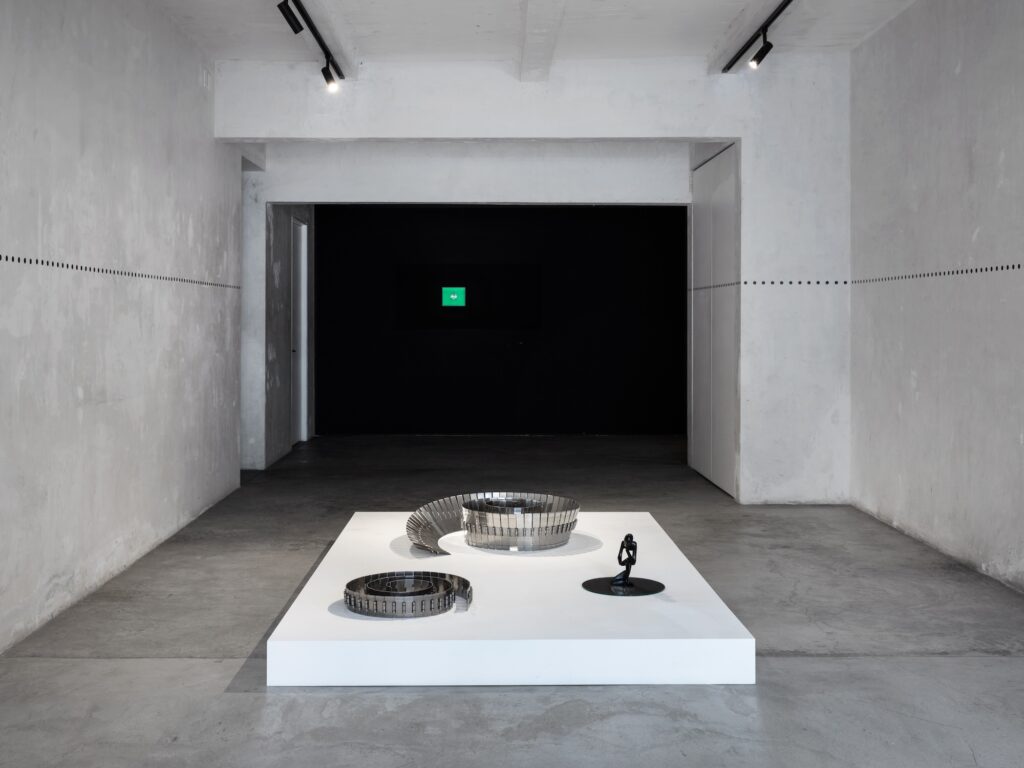
For Enrique Garcia, circles, spirals, cups, and dots suggest continuity, infinity, or sameness. Vinyl dots ring the walls in the New York–based artist’s show. Where the Void Begins at N.A.S.A.L., a gallery in Mexico City’s Roma Norte neighborhood. When I visited, I discovered, upon reaching the gallery’s obscured back corner, that these dots, one every 3.7 centimeters for twenty meters, were ellipses emanating from the word sigh also adhered in vinyl to the wall. The void begins over and over again out of this: the continual renewal of a dot dot dot.
Void comprised four wall works and an arrangement of found-object sculptures on a low, wide plinth on the floor. Garcia polished conveyor belts previously used in a Veracruz water purification plant and a bottling factory to a near-mirror finish on one side while leaving the other worn. Coiled, they suggested a serpent or spiral—a recurring motif in his first solo presentation at N.A.S.A.L., in 2024—but I also imagined them as something like shrunken Richard Serras for the biomorphic “Thinker” figurine (an eBay find) that sat on a circular mirror nearby.
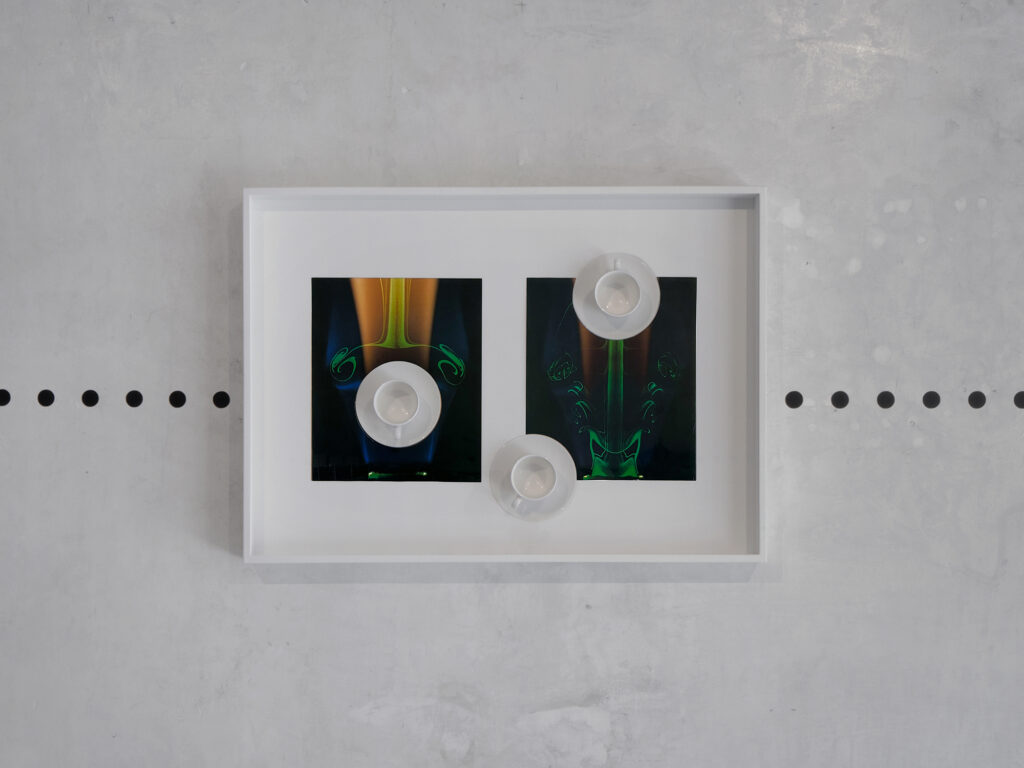
The readymade arrangement oriented the viewer by creating a surrogate version of them while providing an emotional counterpoint to the four wall-mounted works placed sparsely across this ground-floor gallery. The piece immediately to the entrance’s right, Half-life (2026), featured two highly saturated photographs of snaking fluid set on a white mat with three espresso cups atop, their rims flush with the frame’s plexiglass such that they broke its plane. Garcia sourced the images—schlieren photographs, or photographs of otherwise transparent airflow—from a science textbook. Invented in the nineteenth century, schlieren photography is still widely used in fields like ballistics and aeronautics.
Espresso cups recurred twice more in Void. In Nested Ellipsis (Black Field) (2026), a glass cup, mirrored at its base, has been inserted into a frosted acrylic box, tinted a tad-more-pastel shade than chroma green. Atmosphere arises. I had the uncanny sensation that my eyes were misinterpreting this object’s physicality, the green a kind of impossible, spectral—if friendly—presence. Despite being very much a physical cup set in the box, the translucency’s interaction with the pigment felt almost like a glowing render that hadn’t quite loaded; the real world of stuff became strange.
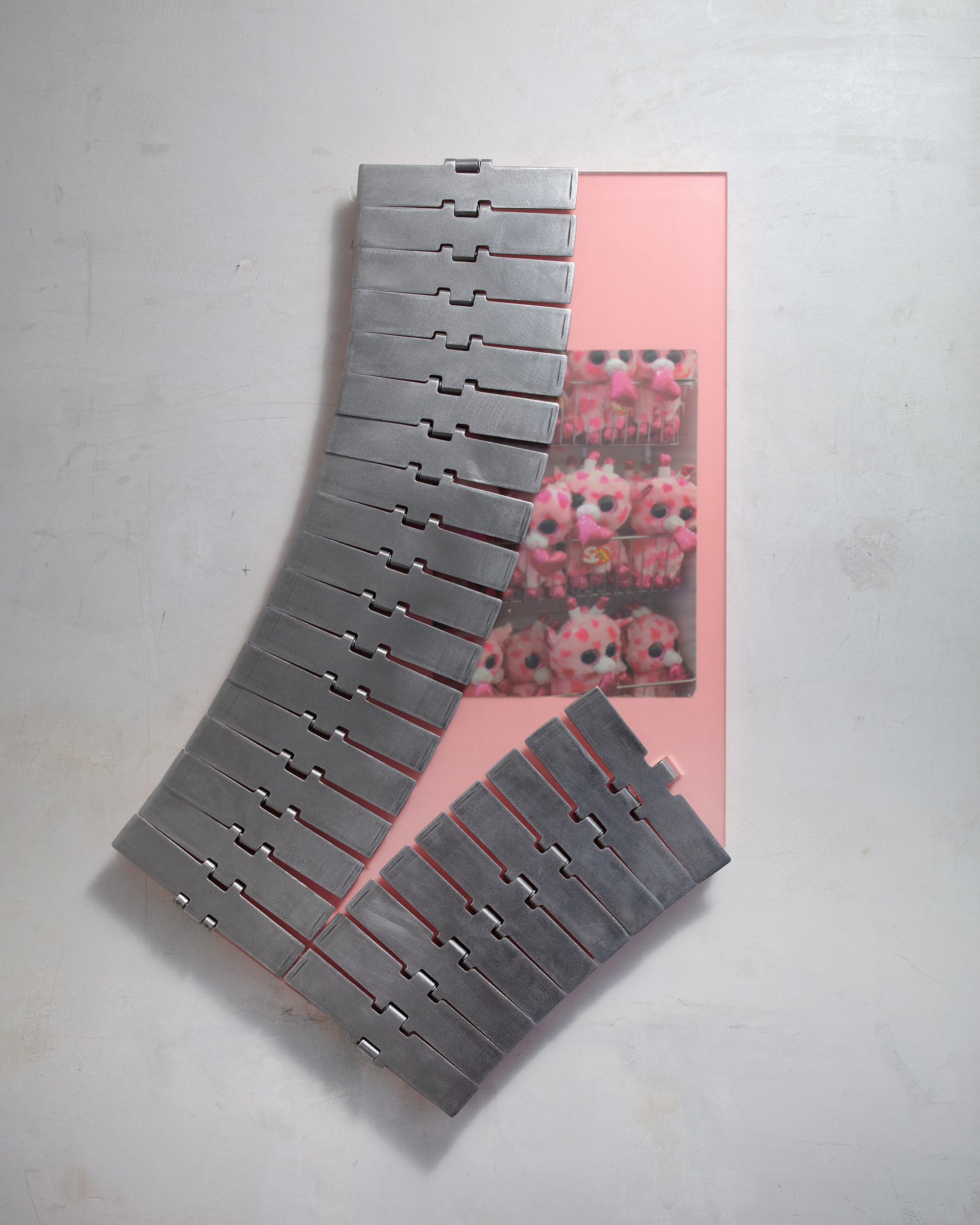
For the shaped assemblage Fiebre (2026), a pink field in frosted plexi has been layered with a found magazine photo of Beanie Babies on a shop shelf. Flattened conveyor belt elements sprout V-like from the bottom left, matching the curvature of the frame. Here, and throughout Void, surface and shape subordinate representation or at least blur the boundary between image, object, and space. The cheeky deployment of everyday objects and surprising use of saturated shades invites an almost down-the-rabbit-hole sensibility to a “common” world, an offbeat humor balancing against stoic big-sigh resignation and evocation of the repetitive, mechanistic aspects of modernity. The fixed machinery, cutesy toys, and the empty potential of the espresso cups point to the imperative to conjure “endless” energy from wells of resources that are far from bottomless but, in the consumerist psyche, masquerade as such.
Mansour and Garcia each toy with, or even deny, the picture’s prerogative to fix. In their works, we are reminded of how far we, the living, breathing we, are from any portrait: their images and objects (if such a distinction can be made) return us to how we enjoy or endure the physicality of sex or exhaustion, exercise or caffeine. In Mansour’s work, the body is ever present, if truncated, vulnerable, obscured, or waning. Garcia displaces bodies into functions: production, consumption, perception, cognition—even the “Thinker” sculpture has a void for a torso. Both artists produce meaning through negation while refusing the present’s overriding, false sense of dematerialization. They revel in layering and occlusion. They physicalize color—or evacuate it. Through distinct means, Mansour and Garcia reject numbing visual excess, insisting that beneath screens and surfaces, life remains.
Claudio Mansour: Pompas de jabón was on view at Drama, Mexico City, in April and May 2026. Enrique Garcia: Where the Void Begins was on view at N.A.S.A.L., Mexico City, from April 9 to May 30, 2026.