Walter Pfeiffer’s Atlas of Desire
The Swiss photographer’s pictures of youth, sex, and other delights exult in a hedonism haunted by the transience of life.
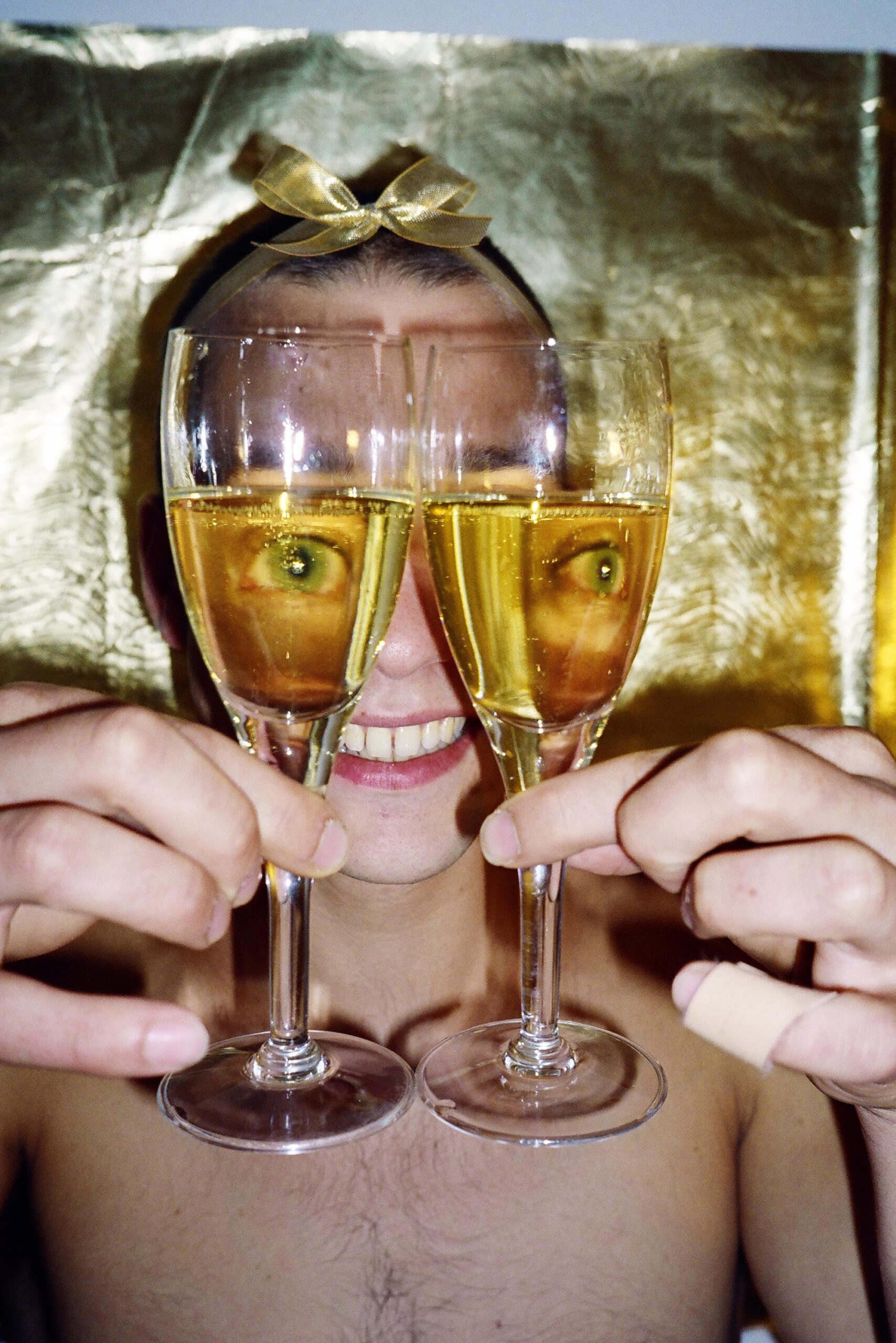
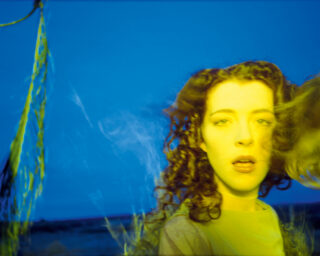
Walter Pfeiffer, Untitled, 2004
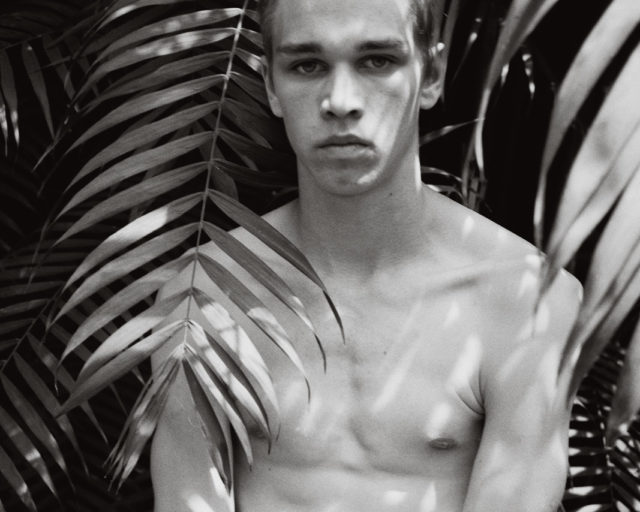
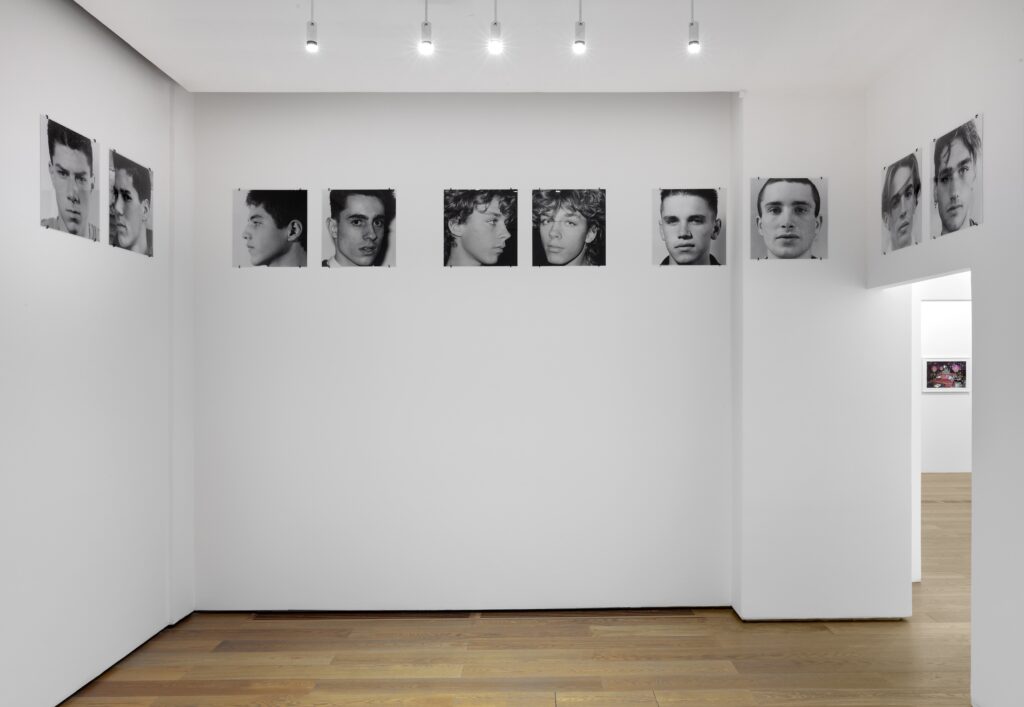
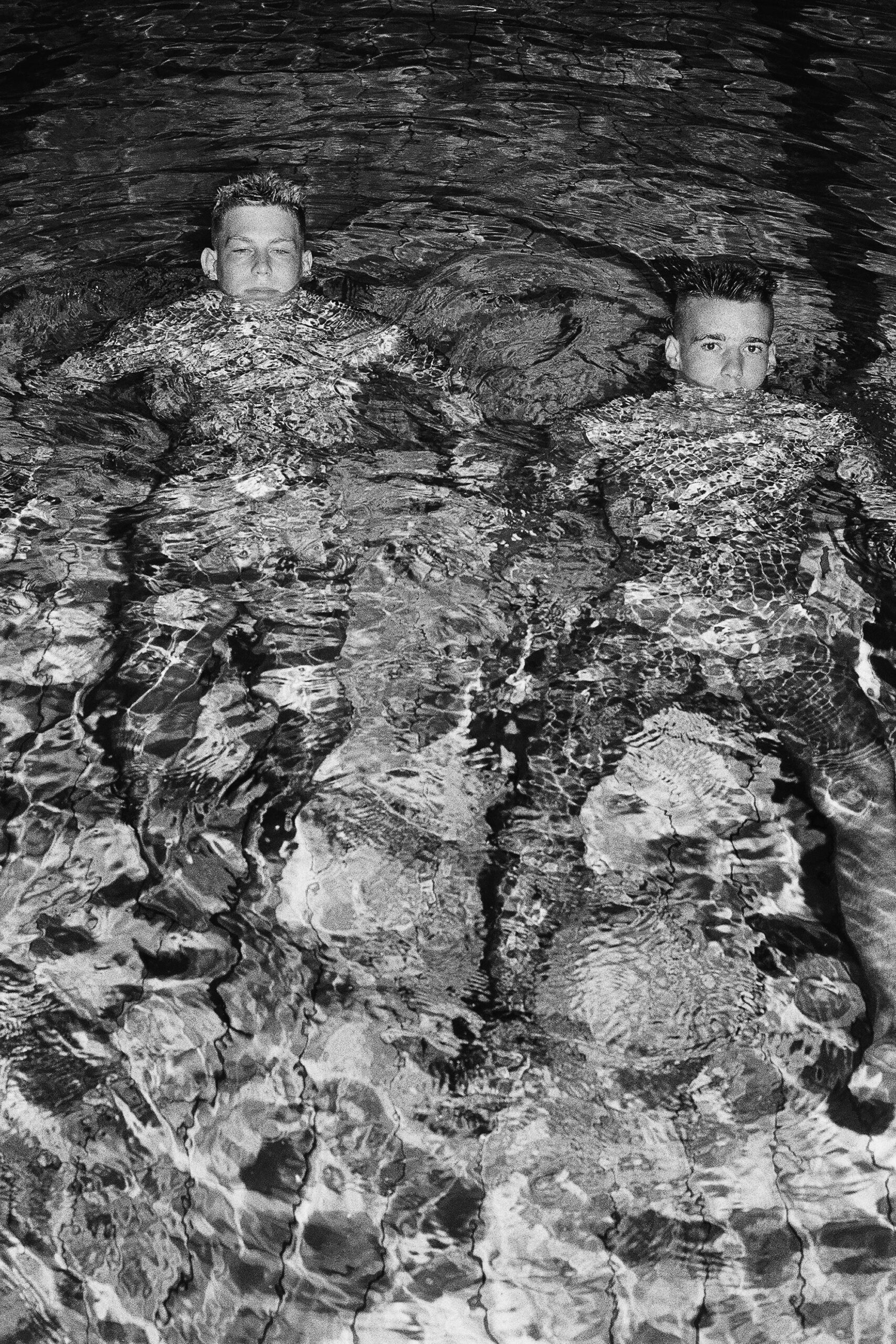
I was halfway through Walter Pfeiffer’s exhibition In Good Company at Pinacoteca Agnelli—the artist’s first European survey outside his home country of Switzerland and his first solo show in Turin—when I encountered a sudden break. Up to that point, I had been face to face with the photographer’s lifelong preoccupations: images of food and flowers, cocks and cats, soldiers and supermodels, all flush with color and densely hung on walls where they glistened beneath bright fluorescent lights. Then, suddenly, I found myself in a small, dim room, craning my neck to see a group of pale, young men, their black-and-white faces lined up just below the ceiling like Roman funerary portraits. All in the bloom of post-adolescence, all barely legal, all dumbly handsome, and yet—as Pfeiffer shot them from a uniform distance, cropping squarely around their ears—all somehow already dead.
Pfeiffer met these ephebes while cruising the streets of Zurich and Paris, and his portraits of them formed his 1986 series and book Das Auge, die Gedanken, unentwegt wandernd (The eyes, the thoughts, ceaselessly wandering). Think of it as a gay answer to W. G. Sebald. The curators for this survey, Simon Castets and Nicola Trezzi, have installed the work to imitate the layout of the book—though, as they note in a wall text, Pfeiffer described the experience of shooting it as a search for “El Dorado,” the city of gold. The viewer’s eye follows the faces like a line on a map; it’s unclear if this particular road leads to riches or to perdition.
Perhaps in this case the two are the same thing. The road leads right back to where it started. It always does with Pfeiffer, who has returned to the same subjects again and again over more than fifty years. He has produced lifelike portraits of products and people as well as lush landscapes and still lifes throughout his career. The aesthetics of fine art and of fashion photography intermingle in his work with the strategies of conceptual art and of commerce. Small dates below the pictures, which are not displayed chronologically, offer some clues to these abiding obsessions, but there is little formal unity save Pfeiffer’s use of a film camera and a flash.
Courtesy Pinacoteca Agnelli, Torino
Courtesy Pinacoteca Agnelli, Torino
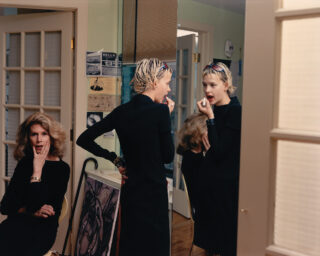
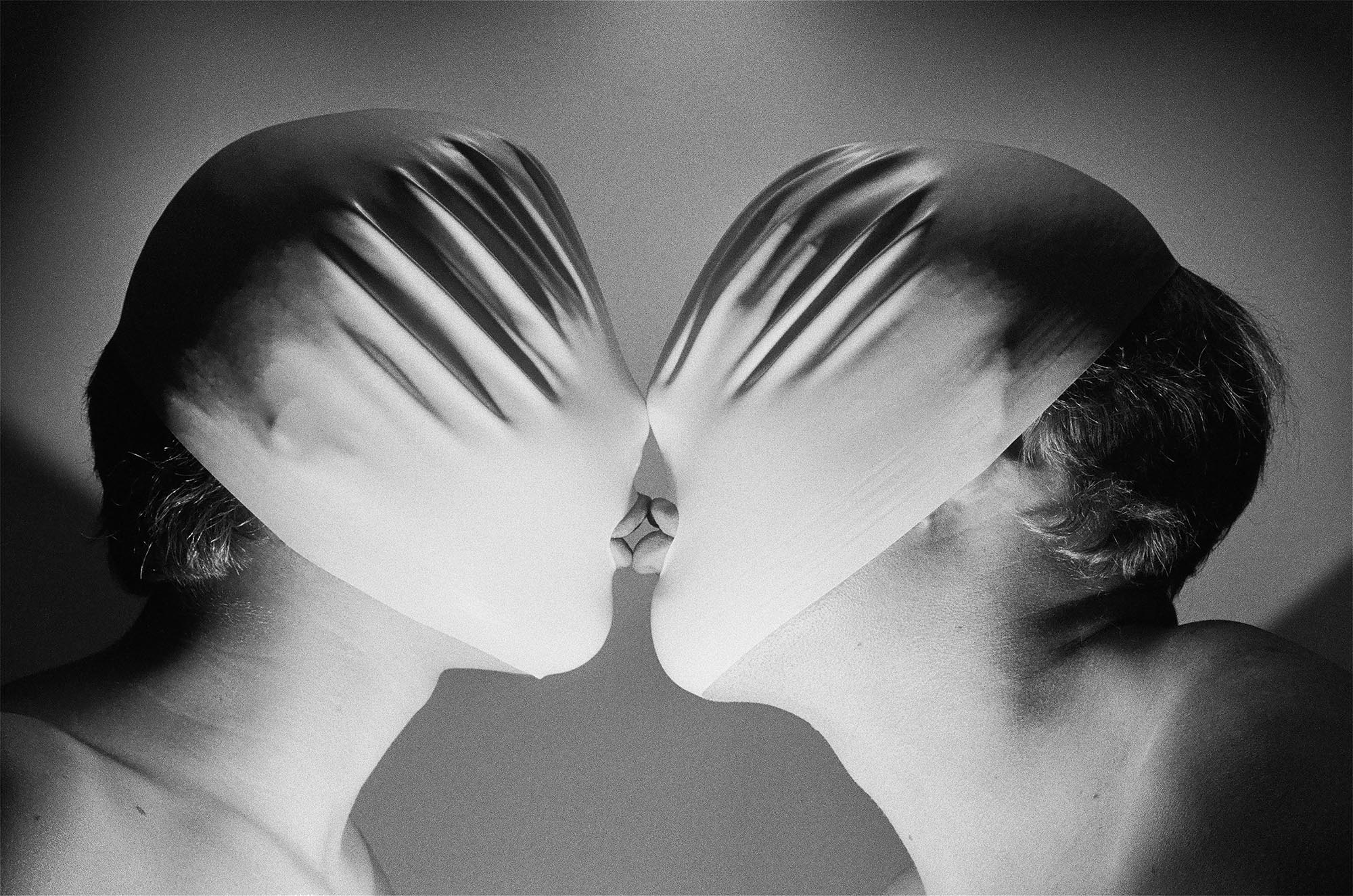
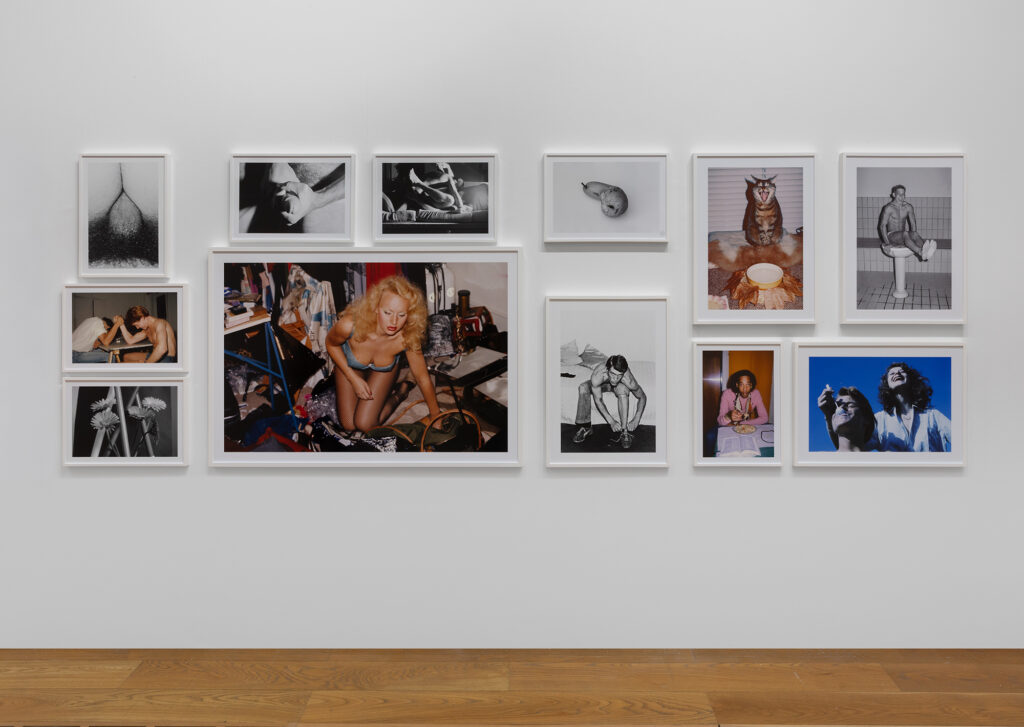
There are the bracing bedroom shots from the 1970s, taken in the years just after gay liberation, of men entwined, mid-coitus, on couches and beds—and one photograph of a hand tugging at a young twunk’s hairy “happy trail” in a bathtub that is utterly soaked with tenderness. (An older Italian woman beside me gasped at a close-up from 1979 of a cock going into an ass.) A boy with an upturned chin shot in 1974 as an homage to Man Ray’s 1929 portrait of Lee Miller, Anatomies, resurfaces in an image from 2013 with the sultry addition of a trail of cigarette smoke.
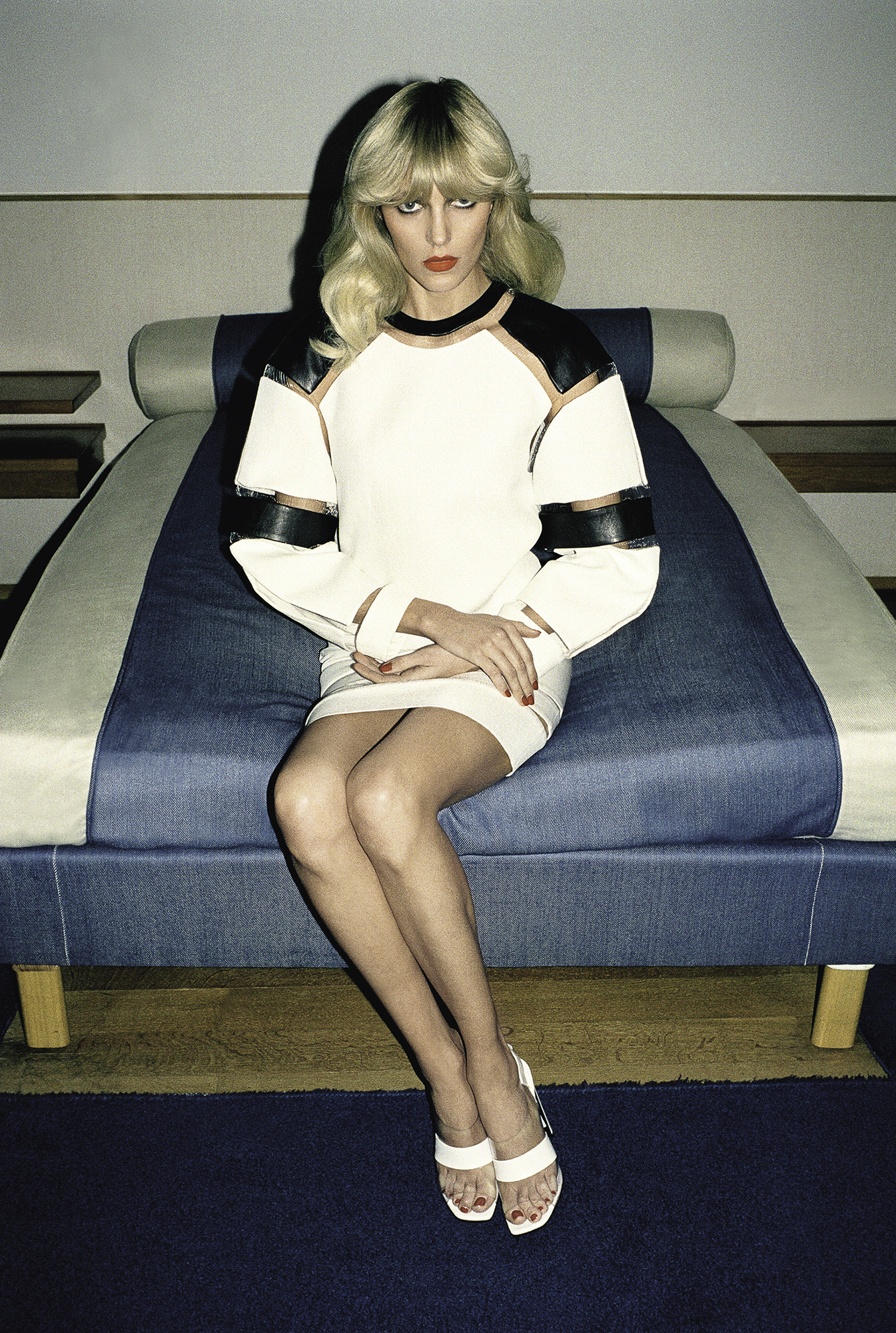
There are lithe, partially sheathed bodies: a man taking off a sweater, another lying on a beach towel, a cluster of legs in knee-high red-and-blue socks. Pfeiffer also seems to have his favorite sitters: a chiseled blond who always appears wet (here emerging from the surf, there dipping his butt into a sink) in pictures taken throughout the 1980s and supermodel Eva Herzigová, who rolls around on the carpets and zebra-skin rugs of the Meurice Hotel in a 2009 shoot for Vogue Paris.
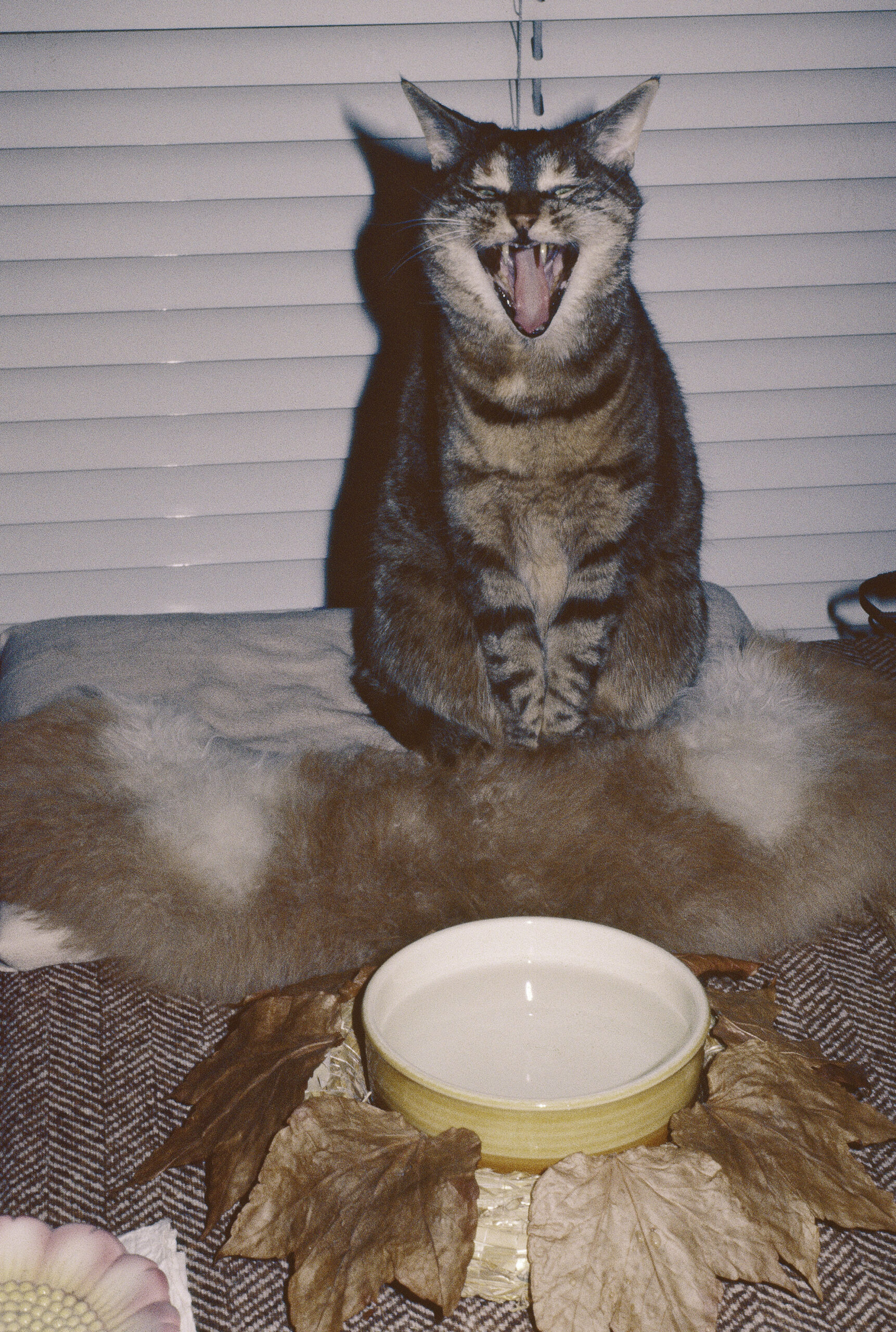
And there are the kind of pictures you’d expect from a European itinerant—hotel breakfasts, kitschy gift shops, spectacular train views—but always from a startling perspective. The curators have wryly paired many of these pictures. Hung beside a beautiful mountain vista, a graying Swiss sausage in a bun appears almost comically emasculating. Bejeweled clocks sit atop an ornate bureau like a crowd of the painted ladies who look on from other photographs in the same room. A sharply illuminated picture of tourist bric-a-brac—miniaturized versions of classical marbles stacked in a shop display—appears above a photograph of a crate of raw shrimp, equally pale and glistening.
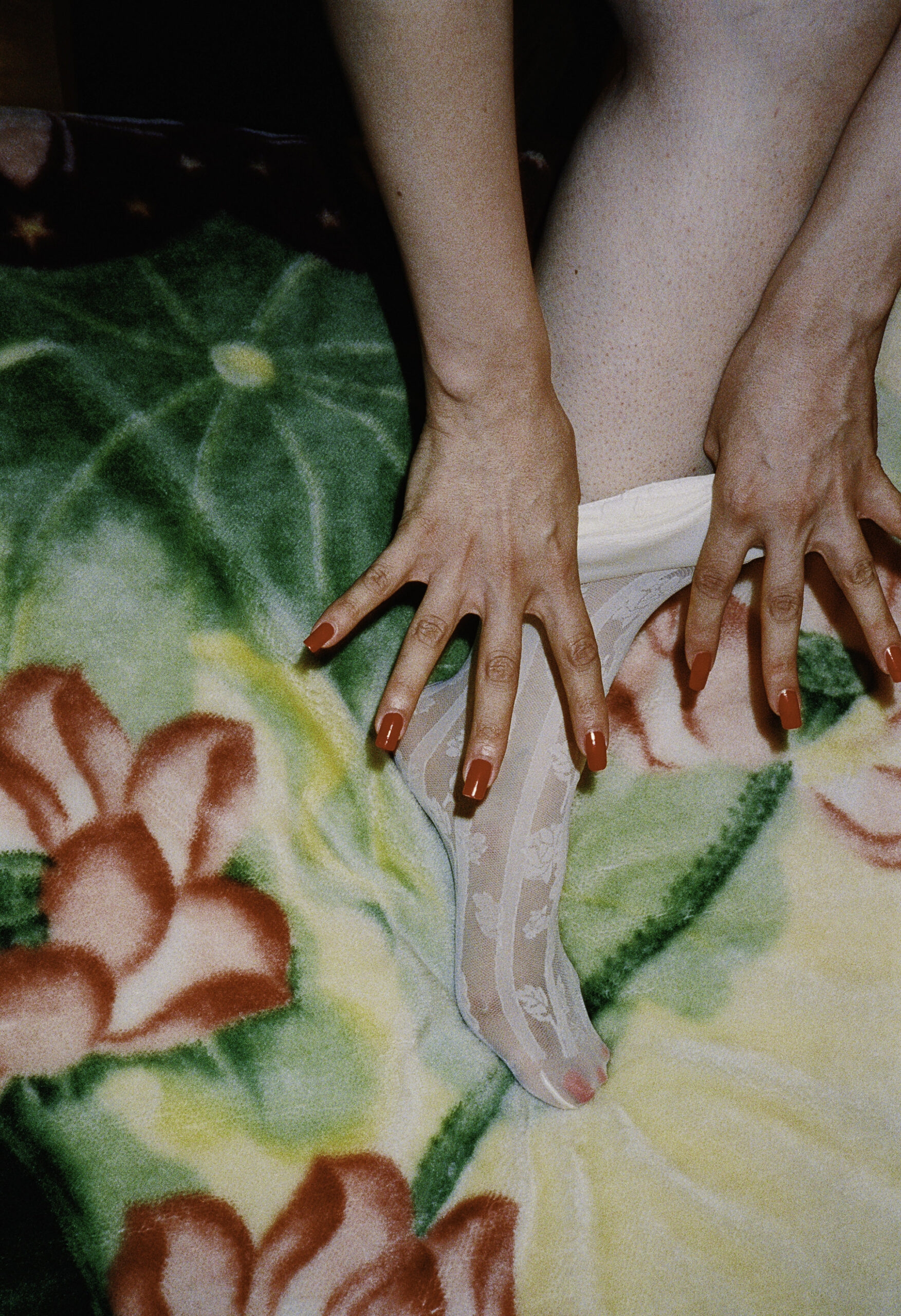
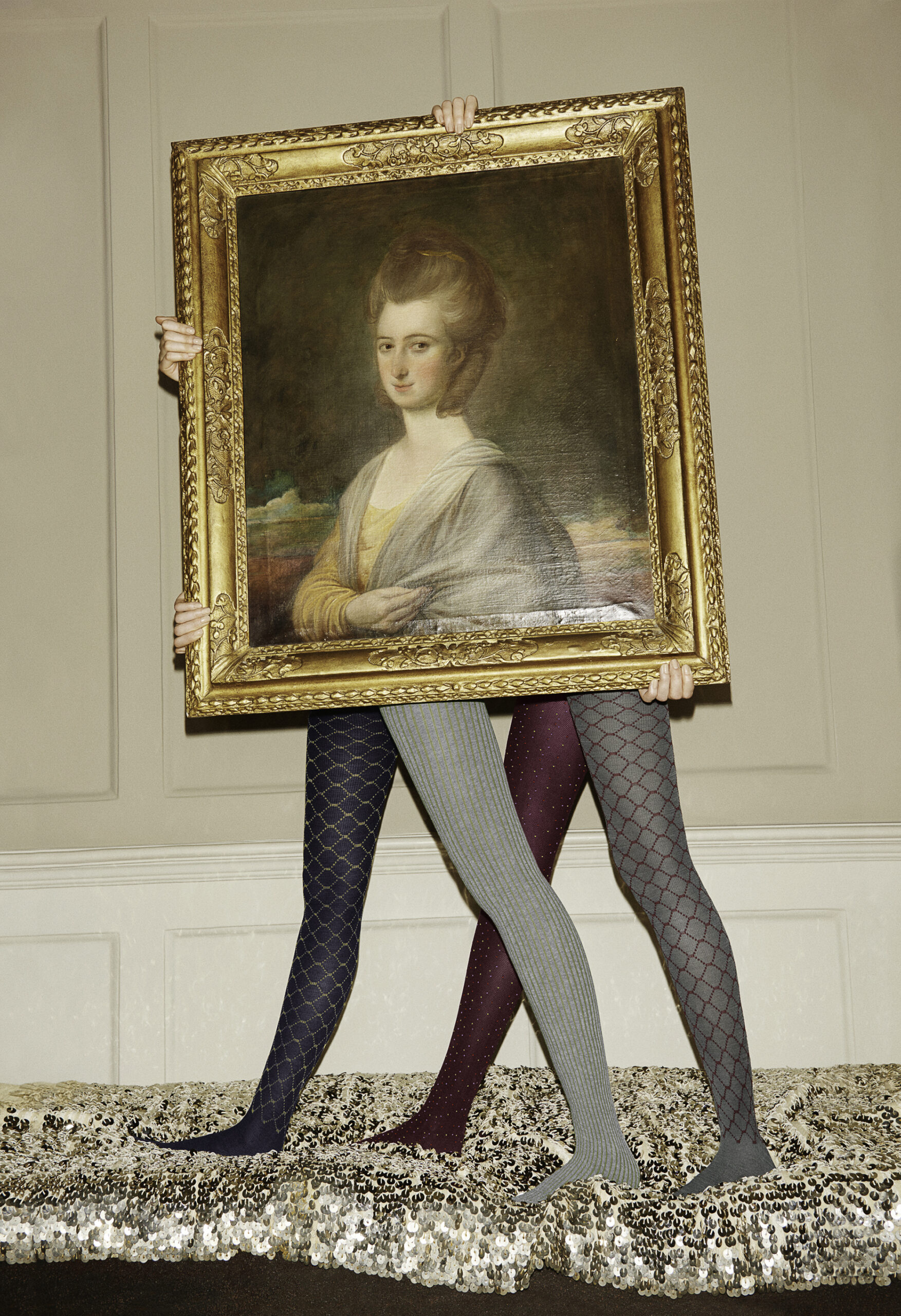
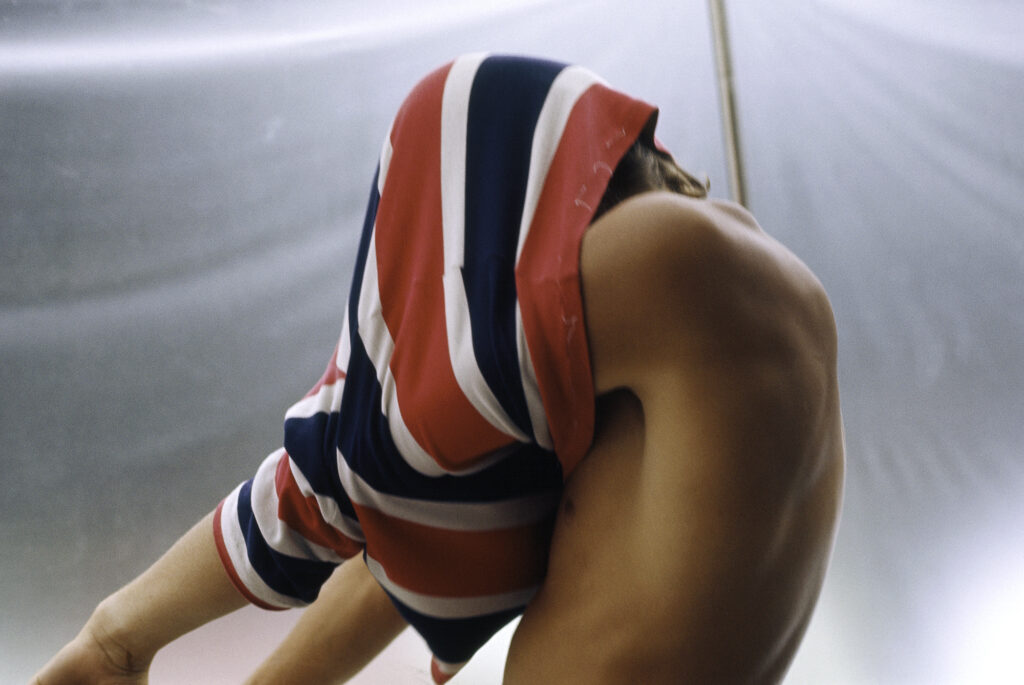
The curators have organized the show in five thematic groups that seem almost entirely arbitrary and interchangeable: Isn’t all of Pfeiffer’s work an “Atlas of Desire”? Doesn’t it always exude a “Helvetic Glamour”? All these perfect piles of commodities—inert, almost preserved in aspic—confront us with our own gluttony like late twentieth-century vanitas paintings. Consumption has rarely looked so grotesquely good. Still, Pfeiffer never moralizes. As with El Dorado, sensorial pleasure is always haunted by the inevitability of its disappearance.
Pfeiffer has often called himself an amateur, perhaps to insist that he always shoots from the hip. His are not staged photographs, despite their improbable levels of perfection. It’s difficult to think of a photographer who is so stylistically—and stylishly—promiscuous: That may be one reason why Pfeiffer has never enjoyed the celebrity of some of his imitators, such as Wolfgang Tillmans or Juergen Teller.
All photographs © the artist and courtesy Galerie Gregor Staiger, Zurich/Milan
Of the various themes, “El Dorado” proves the most durable, a specific body of work that offers a view out from Pfeiffer’s practice as much as a way in. That erotic journey is also a good way of thinking about Agnelli, based in a former Fiat factory where Italian industry flexed its muscles for over sixty years. Pfeiffer doesn’t seem much interested in cars or other machinery—his eye mostly lingers over the mechanics of the human body, taut beneath pale, young flesh—but after a stroll on the museum’s rooftop pista, a former racetrack that’s now Turin’s answer to New York’s High Line, walking through the exhibition feels like a joyride. Your eye leaps across decades in the span of a single wall as it cruises Pfeiffer’s work at the speed of life.
Walter Pfeiffer: In Good Company is on view at Pinacoteca Agnelli, Turin, Italy, through September 12, 2026.