The Emotional Saturation of William Eggleston’s “Last Dyes”
In the 1970s, Eggleston’s pictures were called “perfectly banal.” Fifty years later, the intensity of color in his dye-transfer prints is rarified and precise.
William Eggleston, Untitled, 1970
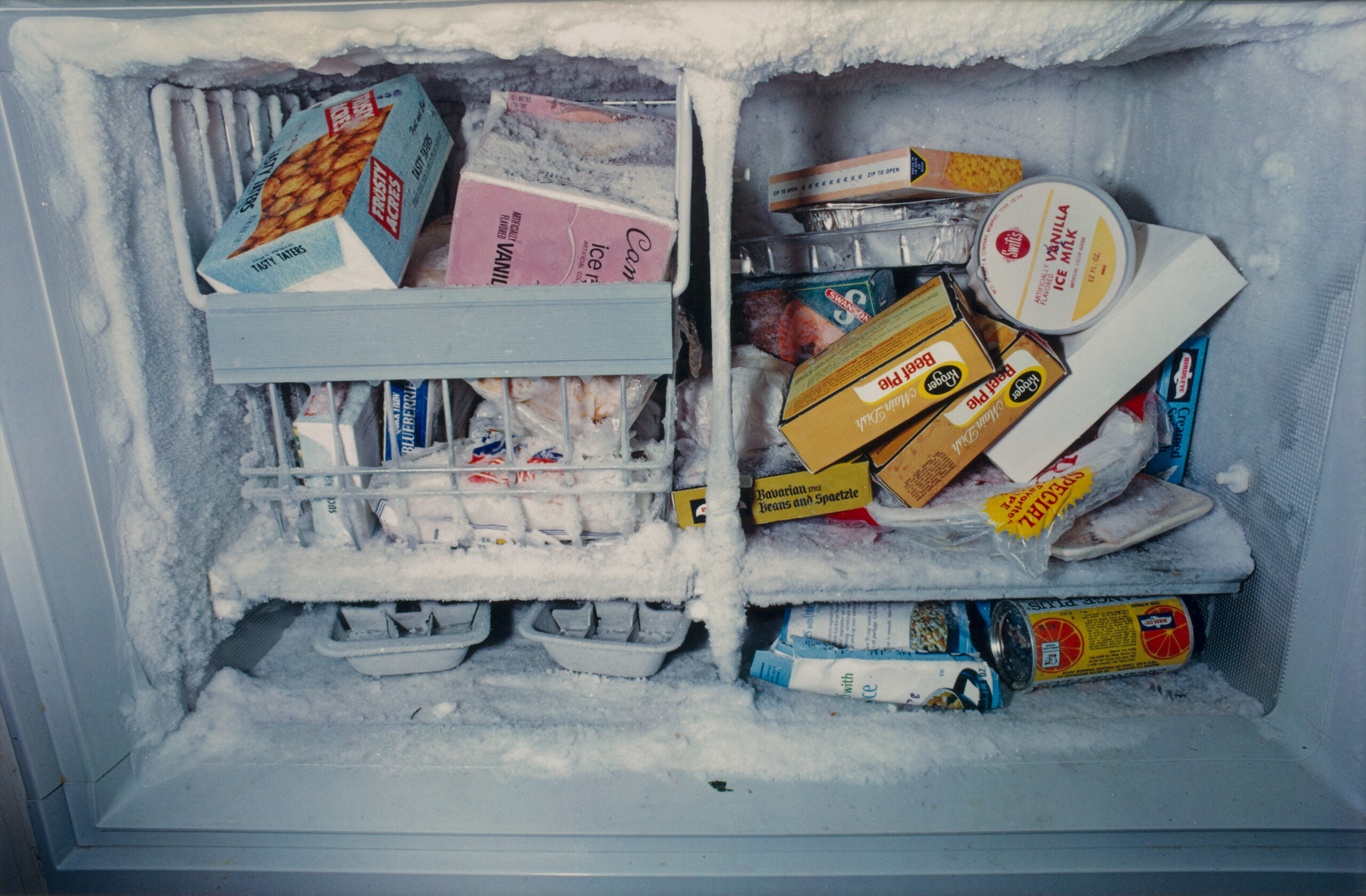
Remember that the familiar was once a stranger. In the late 1960s and early ’70s, when William Eggleston began photographing in color, he traveled to what he described as the “foreign landscapes” of the American South: the shopping centers and gas stations and treeless housing developments that had begun to crop up around Memphis, where he still lives (he is eighty-six), and along the roads in and around Mississippi, where he was born and raised. He lowered himself to the asphalt, seeming to identify with the lonesome cars parked outside solitary, identical houses. But when he stared into the kitchen freezer, he found an almost mystic portal, framed in frost, whose haphazardly stored ice trays, TV dinners, and Tasty Taters made a painterly palette, a perfect harmony of form and color.
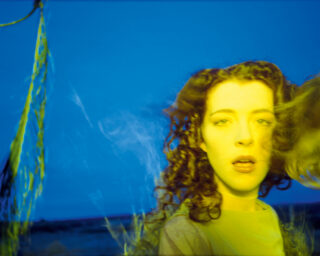
William Eggleston: The Last Dyes, an exhibition currently on view at David Zwirner in New York, is a suite of the final dye-transfer prints ever to be made from his negatives—and is as bittersweet as its title suggests. It arrives fifty years after his first exhibition at the Museum of Modern Art, New York, and includes previously unseen work from the early 1970s, when he first adopted the analog printing method that yielded uncanny, vivid prints. Color was rare in art photography then, but to view these pictures now, in a world inundated with screamingly loud, bright images, Eggleston’s range of color still feels remarkable. The intensity is not only a matter of simply turning up the temperature of the image, but also discovering a kind of precise, emotional saturation—a feeling close to music (he is also a talented classical pianist). For Eggleston, the early ’70s were the years when color had become existential, essential to the whole of the photograph—“as if the blue and the sky were one thing,” as the MoMA curator John Szarkowski wrote.
By the time the MoMA show opened in 1976, many of the once-foreign sights in Eggleston’s pictures had invaded the psychic geography of the Delta as insidiously and quick as kudzu creep, becoming assimilated, normalized. Perhaps this is why Hilton Kramer of The New York Times, among those initially reluctant critics, pronounced Eggleston’s pictures “perfectly banal.” Perhaps Kramer’s vision was obscured by the times, for in these pictures the apparently benign is revealed as ignominous and slippery and strange, resulting in images lodged somewhere between the mundane and the utterly surreal.
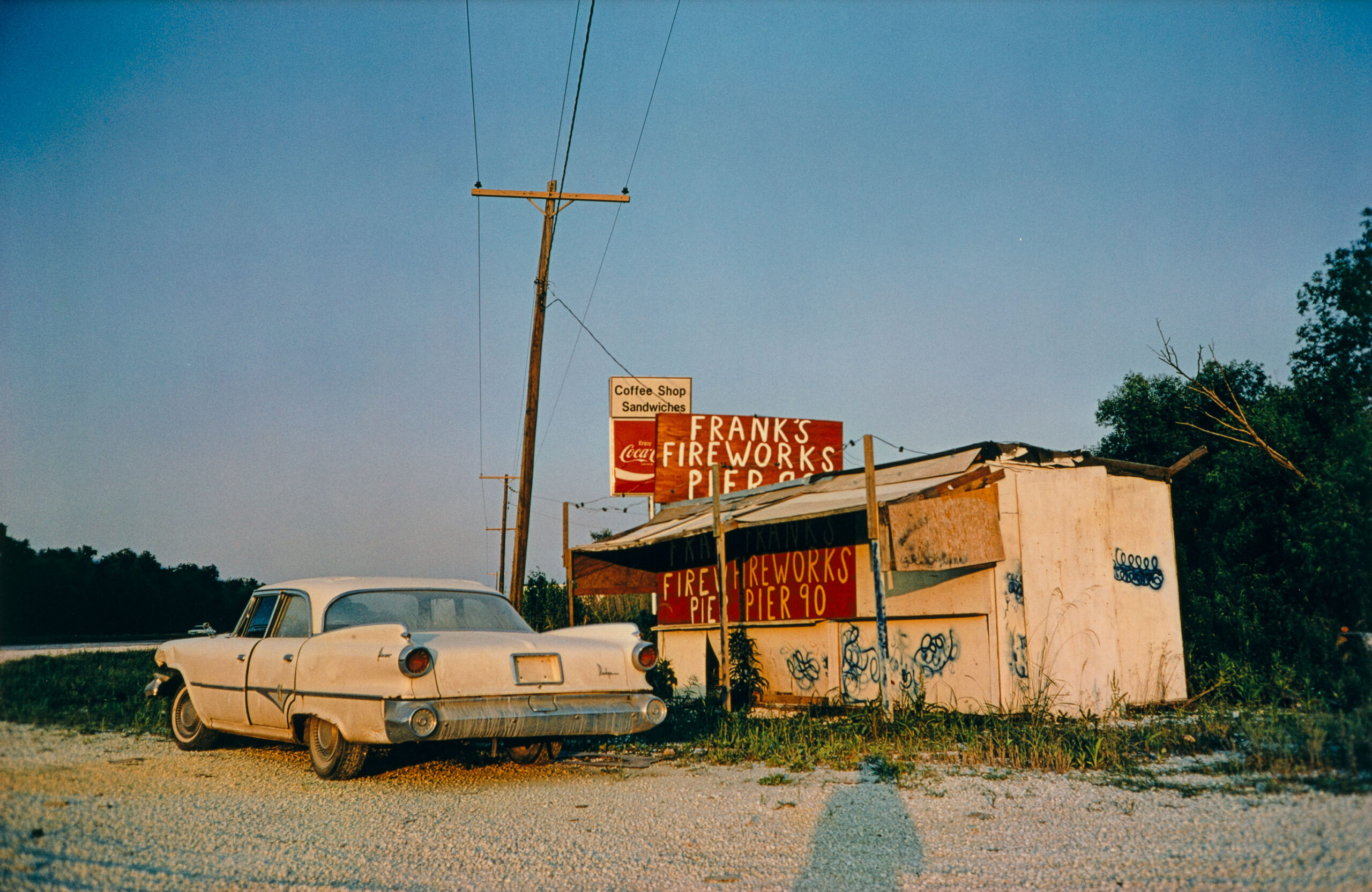
The title of the MoMA catalog, William Eggleston’s Guide, positioned both book and show as a kind of travelogue to a realm that Eggleston made his own, just as the great writers of place in the South had done. Here was a territory in which reality is skewed as fiction in order to ring as truth: where a revolver is trained on a patchwork quilt, where a child’s tricycle looms resplendent and larger-than-life, where a lone dog roams through a former plantation, where discarded white bottles (the size and shape of containers of bleach) roll in the dirt like trashed tumbleweeds.
The inclusion of that debris in the frame, Janet Malcolm wrote in a belated and more nuanced appraisal of the show, is what gives Eggleston’s photographs a “Proustian reverberation” of a sensation of memory: “We can feel that we have been there, on that piece of road, on that day, with those clouds and those plastic bottles.” All of it, whether we want it or not—the oneness of blue and sky, the grotesque history embedded in those plantations—now belongs to us too. Eggleston described his aims more succinctly. His oft-quoted phrase, “I am at war with the obvious,” serves as a complete and concise artist’s statement. For more than a half century, one of his most crucial weapons has been color, and never more resonantly than in the form of the dye transfer. His name has become synonymous with it.
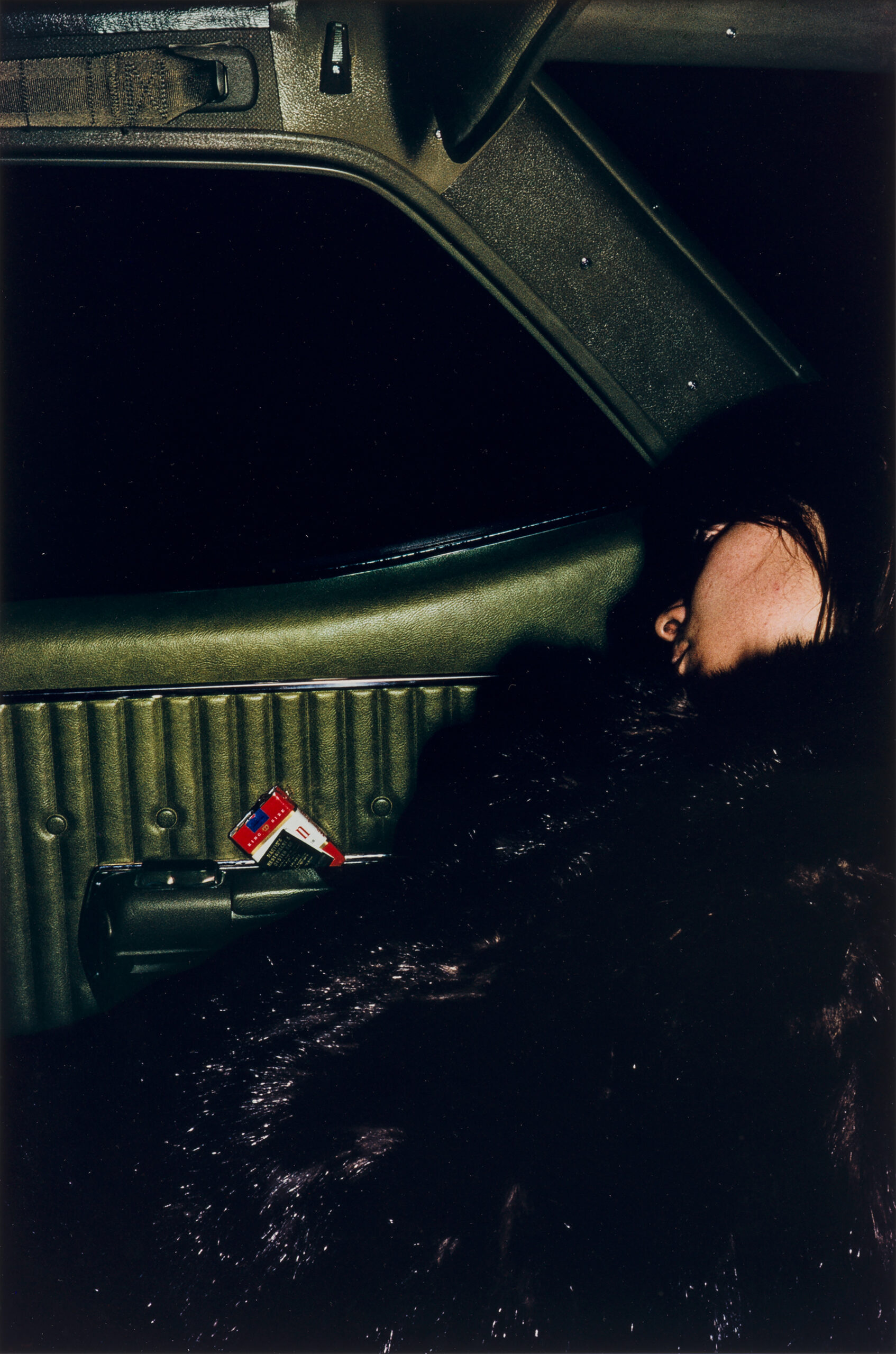
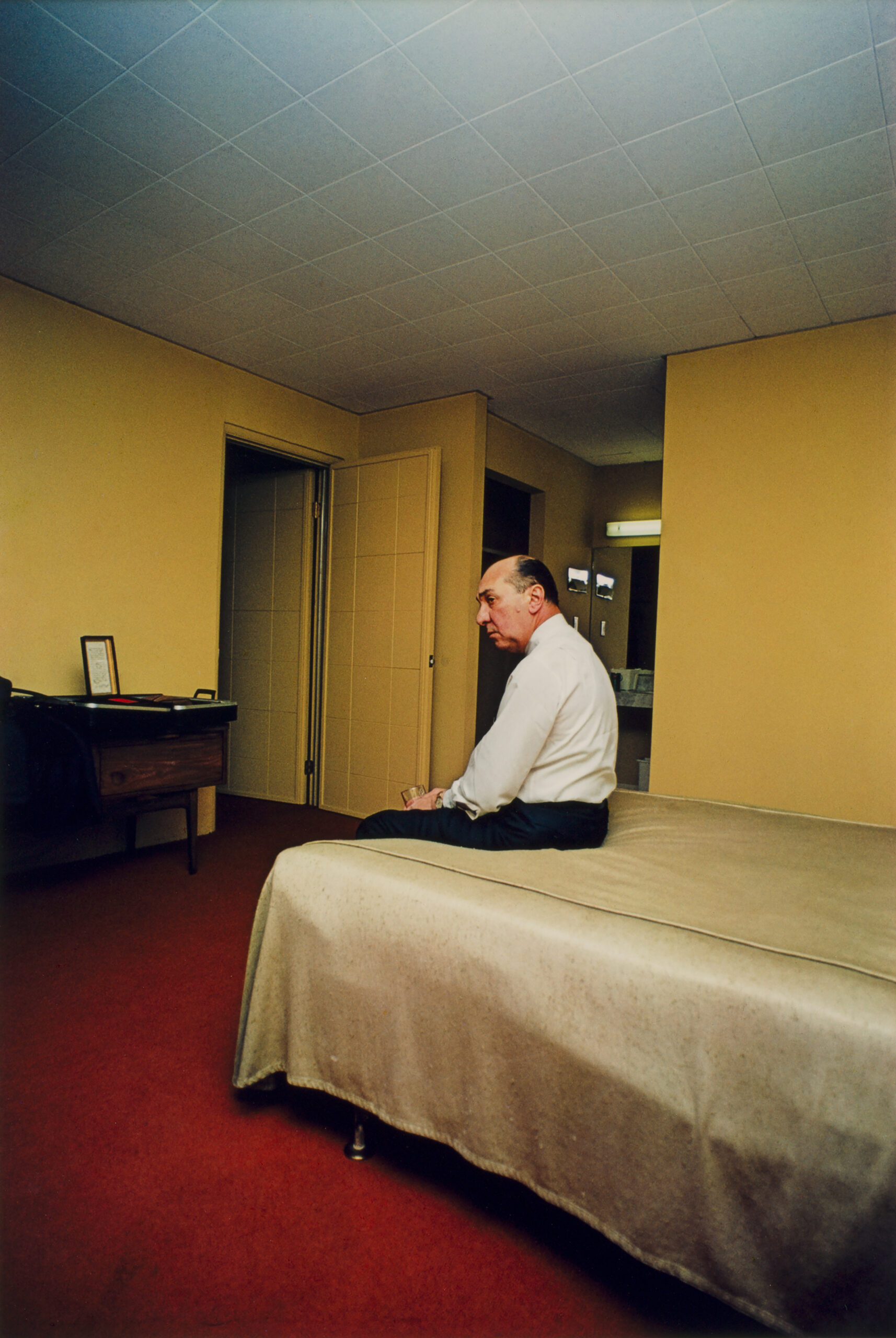
Before he first tried the method in the early 1970s, Eggleston had encountered the effects of the dye-transfer method without knowing it by name. The rich hues it produced made it appealingly ubiquitous in commercial printing and, from the 1920s through mid-1970s, in Technicolor films (Francis Ford Coppola’s The Godfather: Part II was among the last to use the method). In The Wizard of Oz, dye-transfer Technicolor accounted for ruby-red slippers, the yellow-brick road, the Emerald City. But most influential for Eggleston were the indelible tones of Alfred Hitchcock, particularly North by Northwest. You can feel the imprint of Hitchcock’s film everywhere in The Last Dyes, from an airplane parked in a field to the haunting glow of a toilet, to the solitary figures in Eggleston’s painterly interiors: a man sitting on the end of a motel bed or a young woman slouched on a mustard-brown carpet with her cigarette, the shade of the cushion below her echoing her box of Marlboro Reds.
“William, color is bullshit,” Eggleston’s hero, Henri Cartier-Bresson, once told him at a party. But for Eggleston, adopting the dye transfer was transformational: It instigated his embrace of color photography as his primary mode. To make a dye-transfer photographic print, three color separations are created from the original negative. Each is then transferred to a film matrix and bathed in a dye of cyan, magenta, or yellow. Finally, the three film matrices, coated in light-sensitive material, are rolled out consecutively onto the printing paper, in light, overlaid precisely. Everything is done by hand. “Every photograph I subsequently printed with the process seemed fantastic and each one seemed better than the previous one,” Eggleston told curator Mark Holborn in 1991.
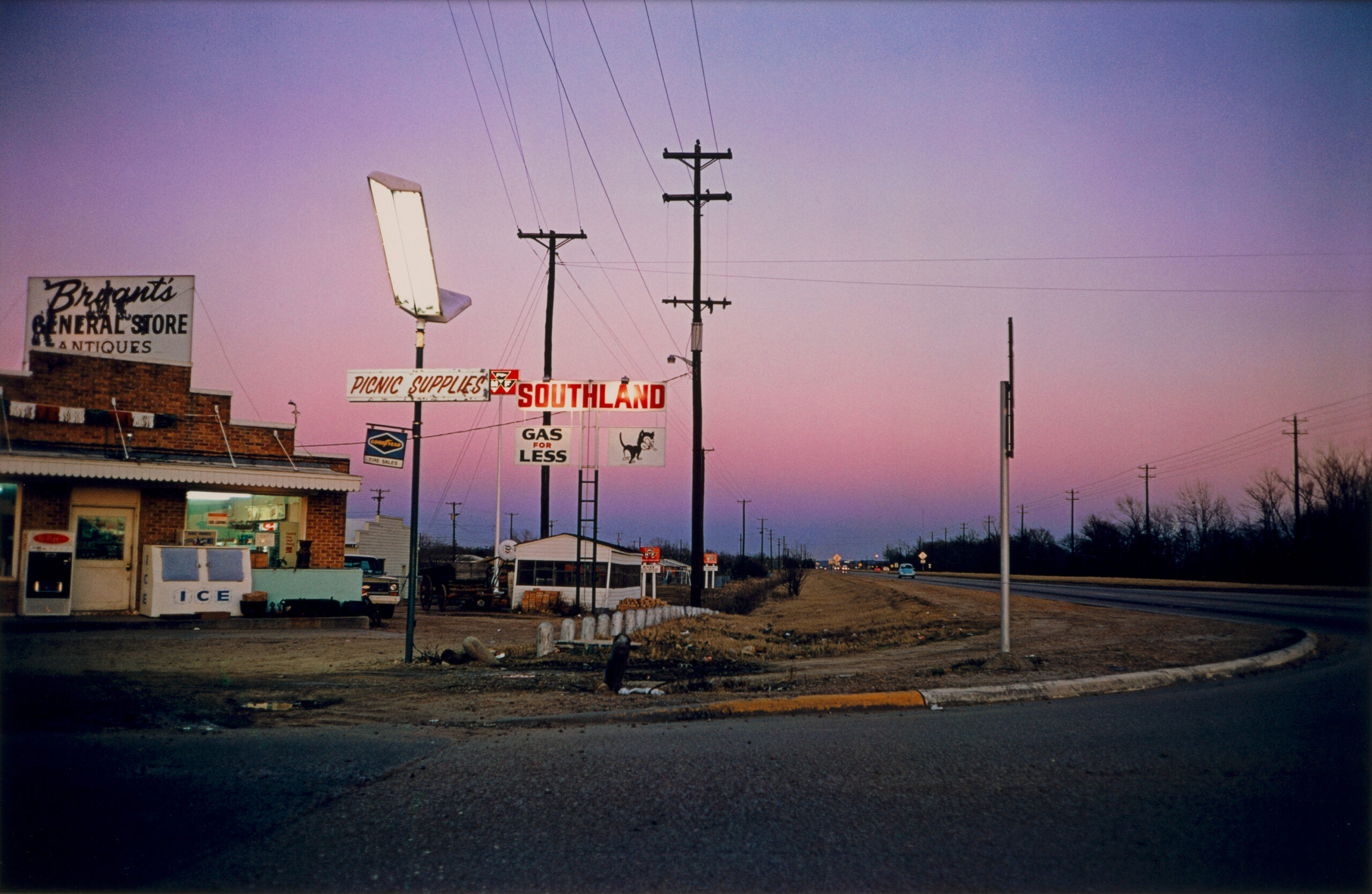
Sometime after 1994, when the Eastman Kodak Company stopped producing the last of the dye-transfer materials, Eggleston and his sons, Winston and William III, began to procure and stockpile all the remaining supplies they could get their hands on. Eggleston made an arrangement with his printers, Guy Stricherz and Irene Malli, the husband-and-wife duo behind CVI Labs, who agreed to make dye-transfer prints exclusively for him. This was nearly three decades ago. (A video produced last year for the exhibition shows the printers in their lab in Vashon Island, Washington, commenting on the process.)
Over time and across numerous exhibitions, retrospectives, and dozens of books, not all of which were produced in dye transfer, the reserve of materials began to dwindle like waning light. “It was like watching an hourglass,” Winston told me recently. Scarcest of all was the gelatin-coated fiber paper itself. They exhausted the stock of 16-by-20; then 20-by-30. Finally, all that was left was 20-by-24, and it became clear that there was enough paper left only for about a suite of about fifty prints, in small editions (five each), with a margin for error. These “last dyes” would be the last of their kind.
Choosing fifty was difficult; for the photographer himself, impossible. “All of my pictures are my favorites,” Eggleston declares the video, as he inspects a box of prints. The choices and deletions were guided by others and by other factors. They returned to the beginning, 1970 to 1971. “It’s my favorite period of Dad’s photography,” said Winston, who supervised much of the printing of The Last Dyes. Many beloved favorites reappear here—that luminous freezer, a young Dennis Hopper at the wheel, a self-portrait of the photographer lying in bed—along with some, according to Winston, that hadn’t been given their utmost justice in previous editions.
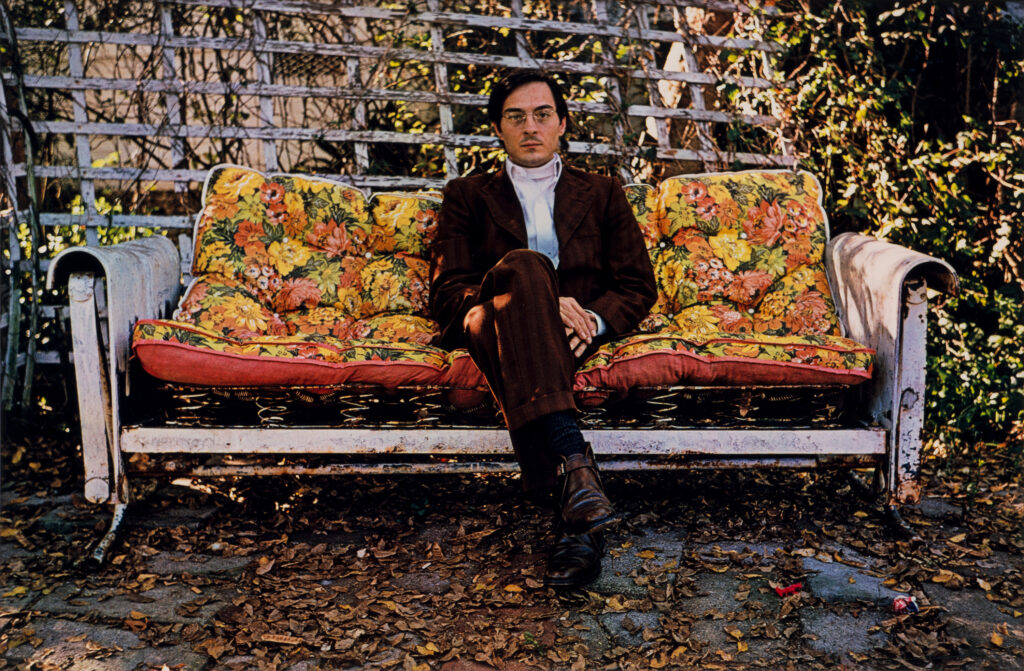
Some arose from discoveries in the archives, yielding unconscious echoes of the Guide. A glass of iced tea on a diner table, appearing to glow from within, recalls an iconic photograph of a mid-flight cocktail catching the sun as the plane cuts through the clouds. Here, in Mississippi, is another vibrant flowered sofa, only now it is Eggleston himself in the seat, in the tall riding boots he favors. Here is a station wagon on a suburban street. “The color, the sky, the temperature, it had to have been made the same day as the tricycle,” Winston said, referring to his father’s famous 1969 photograph (which was not printed in The Last Dyes), also made in a newly developed neighborhood, of a heroic-looking child’s tricycle.
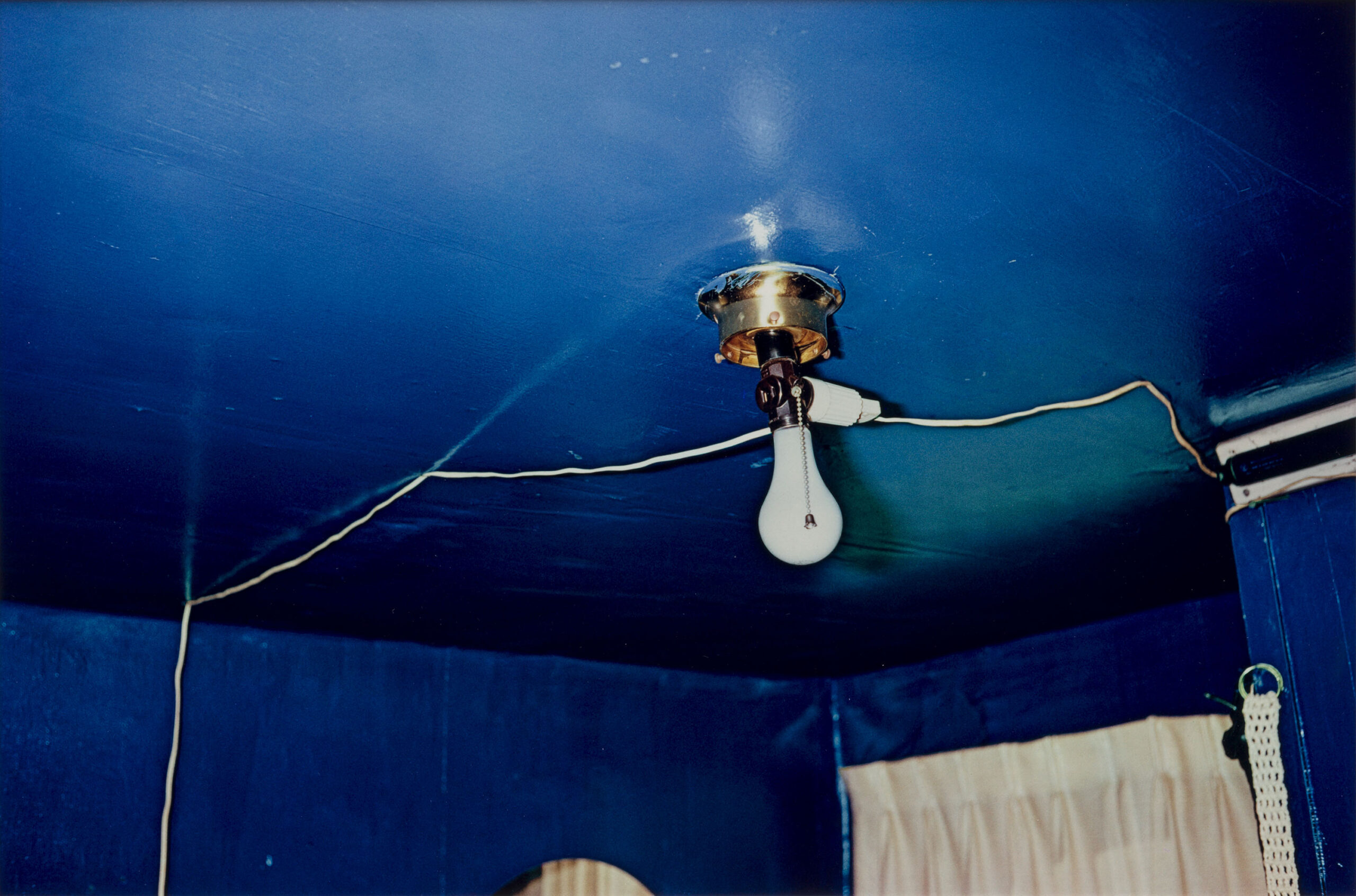
And it is impossible to see the lone bulb dangling from a ceiling whose blue color extends to the walls without thinking of the red. Untitled (Red Ceiling) (1973)—my own introduction to Eggleston, via Big Star’s Radio City album—is lurid, radiant with danger—“wet like blood,” Eggleston has described it. The red ceiling is in the primary bedroom of a house owned by Greenwood, Mississippi, dentist T. C. Boring, Eggleston’s best friend, who shared his affinity for wild times, the absurd, and a general rebuke of conventionality in all forms. Boring, who died in 1980, appears in several of Eggleston’s images, sometimes memorably nude and smoking next to an oxygen tank in a dim room, surrounded by spray-painted graffiti, or in his 2005 film Stranded in Canton (originally shot in 1973) of the nocturnal and Quaalude-fueled Delta demimonde. The red-ceiling photograph was made under relatively relaxed circumstances: While lounging on the bed below, Eggleston saw a picture. He pointed his camera upward.
After years of looking at the red, it’s a revelation to encounter the blue. The blue and the sky are one thing, as are the walls and ceiling, save for the electric wires from the bulb, the top edge of a curtain and white trim and a braided belt hanging by a doorway, all the color of clouds. The predominant hue is closer to Marian blue, associated with the Madonna. Though the composition is similar to the red image, down to the reflection of the bulb, the feeling of these rooms could not be more opposite. Yet they had to have been in the same house.
Winston confirmed this. “We went through edits over the years, and we always knew there was a ‘Blue Ceiling,’” he said. “I’m so happy we printed it. T. C. was so eccentric—I’ve seen other pictures where he’d painted a room some crude-green glossy green; pictures of an open medicine cabinet. But he had this backhouse, and that’s where he painted each room all a different color: red, yellow, and blue.” Perhaps T. C. appreciated the irony of the religious color. Perhaps he was aiming for a version of the primary dyes: cyan, magenta, yellow. Perhaps he was just having a spur-of-the-moment good time, wild with paint.
No “Yellow Ceiling” photograph is known to exist, but the trio of colors recurs in the next gallery. A single white loaf remains on an otherwise emptied grocery shelf. Its brand name, Wonder Country Style, is doubly ironic and accurate to the extrasensory feeling that is transmitted by Eggleston’s pictures. The packaging is dotted with circles of yellow, red, and blue.
All photographs © Eggleston Artistic Trust and Courtesy Eggleston Artistic Trust and David Zwirner
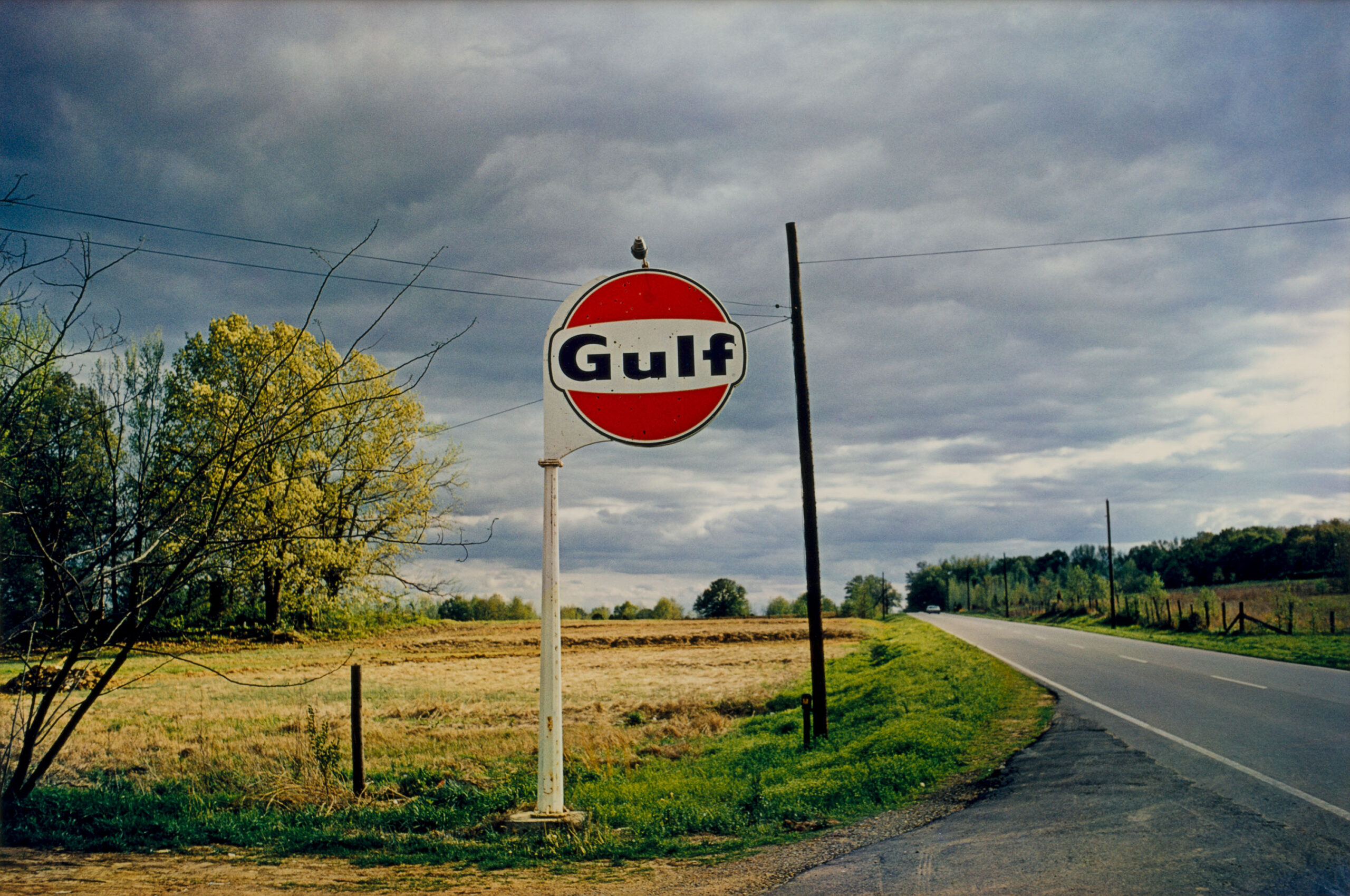
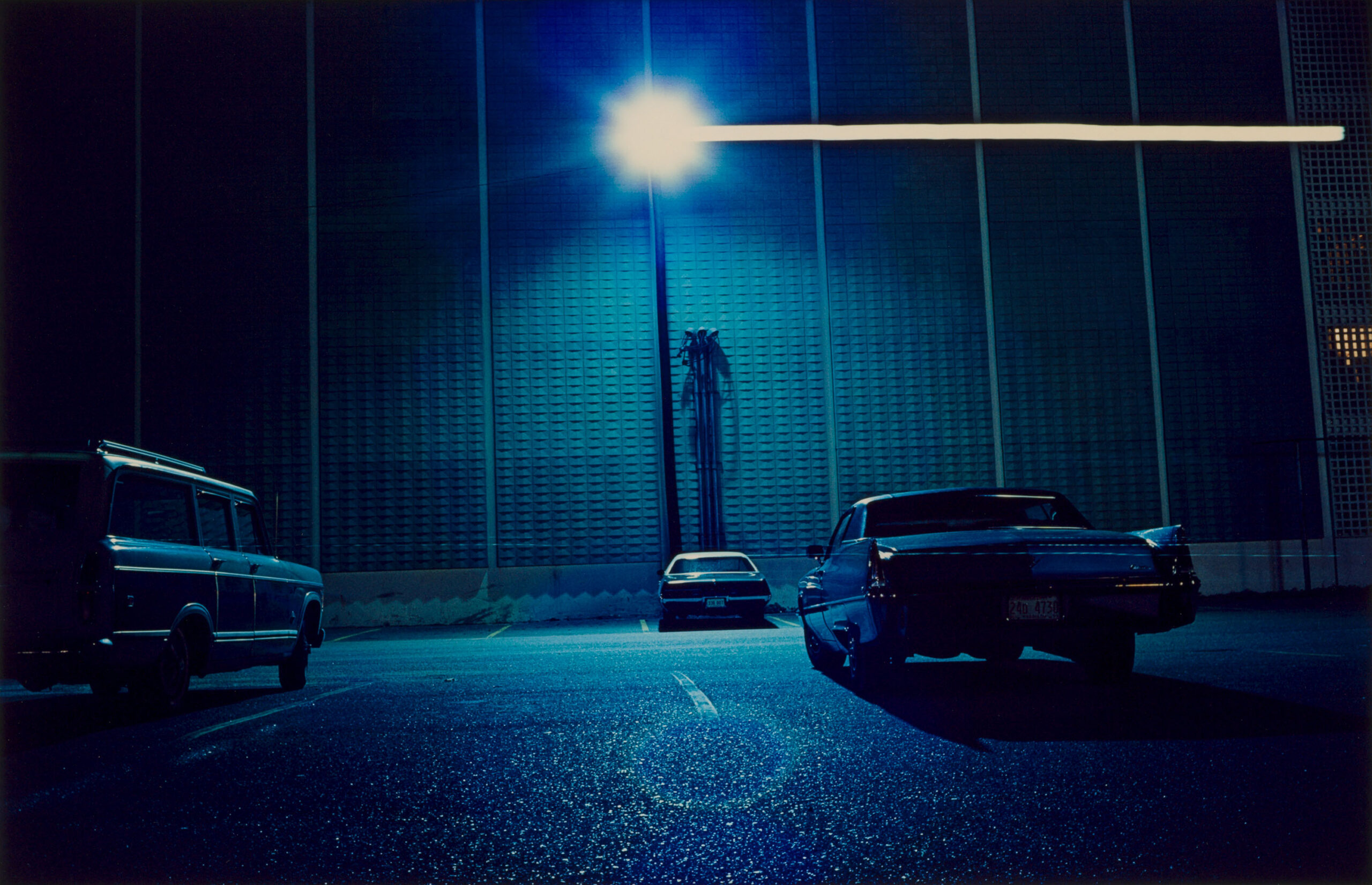
For this is also a show of blues; the Last Dyes has to contain a bit of melancholy. Consider another gas pump, its blue-and-orange sign in a storm-lit parking lot, its emblem lettered Gulf, suggesting an isolated abyss. Consider the horizons; the cars; the dramatic gray-blue sky contrasting the brilliant red of a child’s sweater; the chlorinated blue of backyard swimming pools; the reemergence of a truck partially concealed by flowering wisteria, yet still visible, like a little kid who believes they are hidden. And finally, consider the blue light pooling over a Hitchcockian nighttime parking lot, casting over the nearby walls and cars, a lone white streak (“a light leak as he advanced the camera?” Winston wonders) pointing out the dazzle of asphalt glitter below. Picture it as the floor of the blue ceiling, an outdoor room.
It was a complicated image to print, Malli says in the exhibition video, describing the day she went into the darkroom to expose the last set of matrices, before handing them to Stricherz, who died last year, for processing. Dye transfer is “so rarified now,” Stricherz says, but it used to be a “big industry in the graphic arts”—silkscreens, magazines. Both, suddenly, were conscious of the arrival of a long-anticipated conclusion, printing the last dye transfers for the man who had made them famous. “It was a little sad,” Malli acknowledges. A minor-key feeling hangs in the air: the finality of the moment. The end of an era.
William Eggleston: The Last Dyes is on view at David Zwirner, New York, through March 7, 2026.